Tag Archives: fake news

Librarians take up arms against fake news | Family | herald-review.com

Source: Librarians take up arms against fake news | Family | herald-review.com
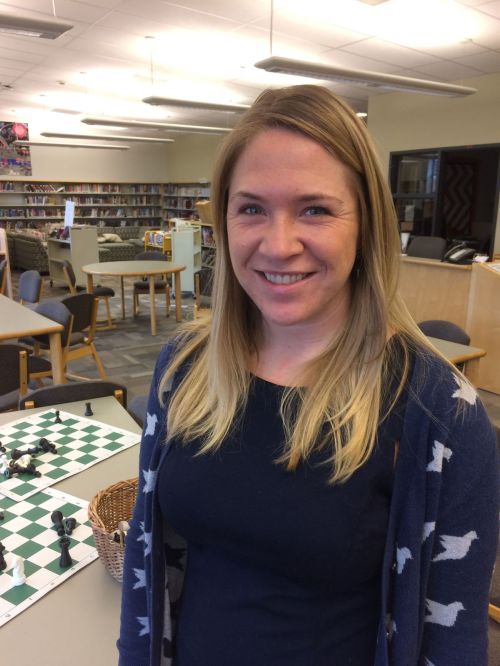
SEATTLE — Janelle Hagen is a school librarian whose job goes far beyond checking out books. She and many other librarians are equipping students to fight through lies, distortion and trickery to find their way to truth.
Helping students become smarter evaluators of the information that floods into their lives has become increasingly necessary in an era in which fake news is a constant.

Two University of Washington professors recently announced a new class that will focus on the ways data are misused to mislead the public. Younger students may need guidance even more.

Hagen, the middle-school librarian at Lakeside School in Seattle, said the students she serves are online every day, and they need to be able to figure out what’s trustworthy and what isn’t.

Besides running the library, Hagen said, she teaches a class called “digital life.” She meets with fifth-graders twice a week and with eighth-graders once a week. The classes are a mix of technology and information-literacy skills, but since the presidential election, she’s increased the focus on the latter.”It was because of all of the buzz (about fake news). You can look at the Google analytics, and the search for ‘fake news’ was unprecedented.” she said. “It’s our job as teachers to address what’s going on in the world.”

One Monday morning, her eighth-graders took a group quiz in which they were asked to identify different kinds of information — advertising, publicity, propaganda, news, opinion pieces. They worked on their laptops choosing from multiple options, and their choices showed up on a big screen at the front of the classroom. There was discussion after each question, especially when not everyone got the answer right.

Hagen introduced the new focus to students by showing them the results of a Stanford History Education Group study in which students from college, high school and middle school were tested on their understanding of various types of information.

Most middle-school students were able to distinguish advertisements from news stories, but more than 80 percent confused native advertisements with news stories. Native advertisements are designed to look like news stories, but they carry a label that sets them apart, usually “sponsored content.” That wasn’t enough.

There is a great need for more education in the critical-thinking skills that are part of information literacy.

Remember when many people thought librarians were going to become obsolete because the world of information was migrating to the web? But then we became enthralled by the possibilities of big data, and library schools became information schools, turning out people who could help navigate vast troves of online data. That’s where the discipline was when Hagen graduated from the University of Washington Information School in 2011.

Librarians and libraries are still with us, and those new data skills are increasingly valuable, but an older skill is now rising in importance. Hagen said librarians have always helped people sort fact from fiction, reliable sources from deceptive ones. Usually that happened as students worked on research papers, but now those lessons need to cover daily life.

“It’s a difficult time to work in education because we are seeing what’s happening in the world and how opinions are really first and foremost rather than facts,” Hagen said.

Lakeside’s high-school librarians put up a display in the entrance to their building that offers several tips for spotting fake news. One says: “What’s the evidence?” Underneath a flap there’s more detail: “As you read an article, make sure to see if they have any evidence to back up their claims. Furthermore, research the evidence to see if it is real, made up, or used in a way not intended by its creators.”

Are claims in an article backed up by verifiable facts? Check the authors’ backgrounds to see if they have credibility on the topic they are writing about.

Hagen likes The News Literacy Project, a collaboration between journalists and educators to improve students’ information literacy through lessons in the classroom and its online program Checkology.

Hagen’s eighth-graders use AllSides, a website that rates the bias of news stories and other articles, labeling them according to where they fit on a political spectrum from left to center to right. And it posts multiple versions of major stories and their ratings. Readers can test their own biases on the site.

As the site says, “if you have a pulse, you have a bias.” And Hagen tells her students that even the most honest media have biases, but they also try hard to be fair, and articles must past muster with layers of editors, so a reader or viewer is more likely to get a more reliable version of a given story.
Awareness is the key, she said. And it is. Read, listen, watch with an active, questioning mind.

Leave a comment

Filed under 2017, library

Fighting Fake News | American Libraries Magazine

Librarians can play a vital role in helping everyone, of any age, fight fake news and become critical and reflective media consumers.

Source: Fighting Fake News | American Libraries Magazine

Librarians—whether public, school, academic, or special—all seek to ensure that patrons who ask for help get accurate information.

Given the care that librarians bring to this task, the recent explosion in unverified, unsourced, and sometimes completely untrue news has been discouraging, to say the least. According to the Pew Research Center, a majority of US adults are getting their news in real time from their social media feeds. These are often uncurated spaces in which falsehoods thrive, as revealed during the 2016 election. To take just one example, Pope Francis did not endorse Donald Trump, but thousands of people shared the “news” that he had done so.

Completely fake news is at the extreme end of a continuum. Less blatant falsehoods involve only sharing the data that puts a proposal in its best light, a practice of which most politicians and interest group spokespeople are guilty.

The news-savvy consumer is able to distinguish fact from opinion and to discern the hallmarks of evasive language and half-truths. But growing evidence suggests that these skills are becoming rarer. A November 2016 study by the Stanford History Education Group (SHEG) showed that students have difficulty separating paid advertising from news reporting, and they are apt to overlook clear evidence of bias in the claims they encounter. These challenges persist from middle school to college.

According to SHEG Director Sam Wineburg, professor at Stanford Graduate School of Education, “nothing less than our capacity for online civic reasoning is at risk.”

Librarians and journalists: natural allies
Librarians can help change this trend. “Librarians are natural allies for educators in helping students become critical news consumers,” says Wineburg. The profession’s deep commitment to verified sources and reliable information mirrors similar values—accountability for accuracy, careful research before drawing firm conclusions, and a willingness to correct errors—that drive responsible journalism.

One emerging solution among journalists is the Trust Project, an initiative of the Markkula Center for Applied Ethics at Santa Clara (Calif.) University.

Headed by longtime reporter Sally Lehrman, director of Santa Clara’s journalism ethics program, the Trust Project has partnered with nearly 70 media organizations to develop a collection of color-coded digital “Trust Indicators” that signify reliable and responsible reporting. Indicators include a commitment to seeking diverse perspectives, linking out to credible sources of further information, offering clear markers regarding whether an article presents opinion or news, and providing information about an article’s author. The complete set is available at the Trust Project website.

Still in the works for the project is computer code that will allow partner media organizations to note when they have achieved a Trust Indicator, which serves as a proxy for reliable journalism. This code should be broadly available by mid-2017. Services such as Facebook and Google would surface these materials more prominently in news feeds and search results, while readers would see clear visual icons that demonstrate fulfillment of the Trust Indicators. As Lehrman explains, “These icons would be cognitive shortcuts to route readers to more reliable sources of news.”

She also notes a strong desire by consumers to be active participants in the shaping of the news, rather than merely a passive audience. In that spirit, she welcomes input and feedback from librarians about how to best achieve the aims of the Trust Project.

Direct collaboration with journalists is another route to increasing media literacy. For example, the Dallas Public Library (DPL) will host an eight-week training course in community journalism for high school students. Its “Storytellers without Borders” project, one of the winners of the 2016 Knight News Challenge, includes oversight from professional librarians as well as reporters at the Dallas Morning News. Students will rotate among three DPL branch locations that represent the socioeconomic and cultural diversity of the city. Journalists will mentor students on how to ask focused questions, while librarians will describe how to use research databases to find accurate information. Library staffers will also provide instruction on how to use multimedia editing tools. In April 2017 these budding digital journalists, with their new skills in the art of providing credible and engaging content, will showcase their efforts at the Dallas Book Festival.

Information literacy at your library
The Trust Project and “Storytellers without Borders” are high-profile efforts, but any library can lead educational programs about the importance of media literacy.

As the SHEG study reveals, this training should begin with young students and continue through college. Resources that range from free LibGuides to enhanced school curricula are available for libraries around the country.
Librarians at Indiana University East in Richmond have developed a LibGuide about how to identify fake news, complete with detailed images of what questions to ask while perusing a site. The News Literacy Project, founded by former Los Angeles Times reporter Alan Miller, offers a comprehensive curriculum of classroom, after-school, and e-learning programs for middle and high school students; the Center for News Literacy at Stony Brook (N.Y.) University offers similar resources for teaching college students.

Despite the clear need for increased media literacy, one risk is that this topic will always be perceived as optional—nice to know but not essential. Wineburg argues that this is misguided. “Online civic literacy is a core skill that should be insinuated into the warp and woof of education as much as possible,” he says. In a paper for College & Research Libraries News, Brian T. Sullivan, information literacy librarian, and Karen L. Porter, sociology professor, of Alfred (N.Y.) University map out how to convert those one-shot information literacy training sessions into full programs with embedded librarians.

Librarians can play a vital role in helping everyone, of any age, become critical and reflective news consumers. One positive outcome of the current furor about fake news may be that information literacy, for media and other types of content, will finally be recognized as a central skill of the digital age.

Leave a comment

Filed under 2017, library