Tag Archives: detective fiction

Unholy modernity and the shamanic powers of the detective | Aeon Essays

Shamanic powers of insight and the power to bring order out of chaos. Is the detective a priestly figure for our times?

There are many criteria by which to judge a society. Dostoyevsky recommended examining its prisons. Gandhi said to look at how it treats its weakest members. If you want to discover a society’s attitude towards authority, or to gauge the power of its official belief system, I suggest that you could do worse than look at its relationship with detective fiction.

Crime stories are one of the oldest literary genres, dating back at least as far as Cain and Abel. But the genre that concerns me here is the crime story’s modern descendant, in which a felony is committed in mysterious circumstances and then an individual follows clues and makes deductions to discover what happened. This is a relative innovation: the first modern detective novel is usually attributed either to William Godwin’s Caleb Williams (1794), or to Edgar Allan Poe’s The Murders in the Rue Morgue (1841). There is no doubt, however, that the 1860s saw the arrival of detective fiction as a whole. This was the decade that saw the publication of Wilkie Collins’s The Moonstone (1868), ‘the first, the longest and the best modern English detective novel’, in the opinion of T S Eliot. In France, Émile Gaboriau published his first roman judiciaire in 1866; L’affaire Lerouge was a big success and spawned a series of novels starring the detective Monsieur Lecoq. Methodical and smooth — certainly in his later cases — Lecoq was an inspiration for Sir Arthur Conan Doyle (although in A Study in Scarlet Sherlock Holmes dismisses him as a ‘bungler’).

Why should detective fiction have emerged at this time? There are some conspicuous material factors. Industrialisation and the growth of literacy meant that more people than ever before were able to read. To satisfy this new market, new machinery was developed that could produce cheap books in vast numbers. Booksellers in Britain set up stalls in stations. Their best-sellers were sensationalist, the kind of stories sneered at by literary types: ‘the tawdry novels which flare in the bookshelves of our railway stations,’ the poet and critic Matthew Arnold complained in 1880, ‘and which seem designed, as so much else that is produced for the use of our middle class, for people with a low standard of life’. Unabashed, ordinary readers were hungry for this kind of stuff; when the first detective novels came along, they lapped them up.

Source and the rest of the essay: Unholy modernity and the shamanic powers of the detective | Aeon Essays

Leave a comment

Filed under 2018, detective fiction

‘It’s All One Case’ is a revealing look at detective master Ross Macdonald – The Washington Post

The sprawling book includes previously unpublished interviews and hundreds of photos.

Source: ‘It’s All One Case’ is a revealing look at detective master Ross Macdonald – The Washington Post

“It’s All One Case” is a book that any devotee of American detective fiction would kill for. For fans of Ross Macdonald, the finest American detective novelist of the 1950s and ’60s, it’s an absolute essential.

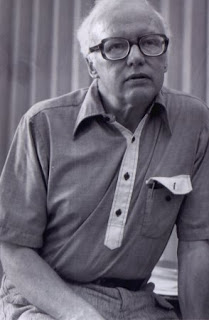
First off, this huge album contains the transcript of 47 hours of talk between Kenneth Millar — Macdonald’s real name — and Rolling Stone reporter Paul Nelson. The conversations, which took place in 1976, were intended for an article that never got written. Soon after the interviews were over, Millar began to exhibit symptoms of Alzheimer’s disease and would never write another book. He died in 1983. Nelson’s life would gradually just fall apart. He died in 2006.

Largely because of Kevin Avery’s devotion and hard work this major work of mystery scholarship has finally appeared in print.

Yet there’s still another reason to covet this book — its pictures, hundreds of them. Virtually every page shows off Jeff Wong’s awe-inspiring collection of material relating to Millar.

Here one can see every Ross Macdonald novel in every hardcover and paperback edition and seemingly all the periodicals — from Ellery Queen’s Mystery Magazine to Cosmopolitan and Gallery — in which Millar published a story or article; reproductions of the writer’s handwritten letters, spiral notebooks and typed manuscripts; pages from Knopf galleys; and even VHS tapes and DVDs of the movies and TV series based on private eye Lew Archer.

In addition, “It’s All One Case” includes dozens of photographs of Millar, as a boy in Canada, at his longtime home in Santa Barbara, and with his wife, the comparably gifted mystery writer Margaret Millar (whose works Soho Press has recently reissued in several omnibus volumes).

Nearly all Lew Archer’s cases — “The Zebra-Striped Hearse ,” “The Chill ” and a half dozen others — deal, more or less, with the sins of an earlier generation wreaking havoc in the present. In the interviews here, Millar admits that he consciously worked and reworked variations on this theme because of its personal relevance: His father walked out on his mother when he wasn’t quite 4, and little Ken grew up being shunted among various relatives, so much so that he had lived in 50 different houses or apartments by the time he was 16.

At an early age, Millar decided to become a writer. He tells Nelson that important influences included Poe and Twain but that F. Scott Fitzgerald’s “The Great Gatsby” was, for him, “the central novel of the century.” He reveres Dashiell Hammett’s “The Maltese Falcon” and deeply admires the early work of James M. Cain: “Nothing has ever been done in its field better than ‘Double Indemnity.’ ” Among favorite contemporary writers, Millar names Nabokov, “who doesn’t really make mistakes.” He regards Dostoevsky “as probably the greatest of all fiction writers.”

To write his detective novels, Millar says he spends months scribbling plot details in notebooks and that he deliberately uses symbolic imagery as a structural element. His books are, consequently, both complicated and precisely engineered: “I don’t aim at simplicity.” He also stresses that it’s “the stories of the other people” — Archer’s clients rather than the detective himself — “that really interest me more. Archer is just a means of getting to them and showing them as they are.” Indeed, some of his books, he would argue, “are tragedy or at least aim at it.”

Nonetheless, Millar explains, “I don’t start out with a character. I start out with an idea, which is generally a moral situation. . . . The characters are just notations which together form the book. They do represent energies of course, various kinds of imaginative energy going in different directions, and all that has to be orchestrated and unified. That’s what really is so difficult: to get it all in a proper balance so that each of these energies represented by the twenty or so characters in a book gets its proper place, its proper presentation, and its final place in the structure.” He emphasizes that structure is “the one thing I can do better than my competition, so I spend a lot of time on it.”

Clearly Millar, who earned a Ph.D in English from the University of Michigan, isn’t your average pulp mystery hack. Instead his books honor the hard-boiled tradition, even as they complicate and slightly soften it. These days, however, I suspect that Millar’s novels —despite being reprinted in the Library of America — have fallen into literary limbo, remembered but not much read. Yet his mysteries still pack a wallop, as I discovered when, after many years, I again picked up my copy of “The Galton Case.” From the start, Archer’s voice exhibits the laconic factuality and low-keyed wit we associate with Hammett and Raymond Chandler:

“The law offices of Wellesley and Sable were over a savings bank on the main street of Santa Teresa. Their private elevator lifted you from a bare little lobby into an atmosphere of elegant simplicity. It created the impression that after years of struggle you were rising effortlessly to your natural level, one of the chosen.”

As Millar talks about his life and work in “It’s All One Case,” he does repeat some of the same points again and again. Nonetheless, he absolutely refuses to discuss his daughter Linda, who accidentally killed a young boy when driving drunk at the age of 16 and later died at 31. While Millar admits that his fiction is replete with troubled adolescents, he contends that any personal or autobiographical material has been sublimated, shaped and refracted. He is an artist, after all, and that’s what artists do.

Michael Dirda reviews books on Thursdays in Style.

Leave a comment

Filed under 2016, author tribute

Book review: John D. MacDonald Before Travis McGee

Book Review: John D. MacDonald Before Travis McGee – WSJ.

There’s a special kind of poignancy—amounting at times to pure excruciation—in seeing a great writer get famous for his worst books. When people bring up John D. MacDonald, they are almost always thinking of the dopey series of adventure stories he wrote about a Florida beach bum named Travis McGee. Ignored and forgotten are his early novels, 40 of them, which he poured out in one decadelong creative rush in the 1950s—thrillers, crime dramas, social melodramas, even science fiction—that taken together make him one of the secret masters of American pop fiction.

John D. MacDonald

John D. MacDonald

There is some hope that the situation may be about to change. Random House is engaged in a major effort to make almost all of MacDonald’s work available again. Inevitably, pride of place is being given to the McGee series, now reissued in spiffy trade paperbacks—all 21 of them, written between the early 1960s and MacDonald’s death in 1986, identifiable by their cutesy color-coded titles (“Darker Than Amber,” “Dress Her In Indigo,” “Pale Gray for Guilt”) as though they were a noir-inflected line of designer paint chips.

They were meant to be commercial products, and their main appeal today is nostalgia. They’re a kind of mausoleum of postwar American machismo. McGee is the classic wish-fulfillment daydream: an idler on a permanent vacation, who lives on a houseboat on Florida’s Atlantic Coast. He is tanned, ruggedly handsome and muscular; irresistible to women (something about his rueful romantic melancholy and his preference for athletic, commitment-free sex); and intimidating to men (in the late and feeble “Free Fall in Crimson,” where McGee should by rights be filling out membership forms for AARP, his superior masculinity awes and humbles a motorcycle gang).

In novel after novel, nobody ever bests McGee, nobody ever seriously challenges him—though the bad guys do sneak up behind him and knock him unconscious so many times you wonder if he needs a neurologist on speed dial. Meanwhile, the action keeps grinding to a halt so McGee can vent his opinions on contemporary life: the best power tools, the perfect cocktail, the proper way to set up stereo speakers, the menace of air conditioning in grocery stores. These opinions are notable mainly for their unconscious philistinism—as when the perfect dinner menu proves to be this staccato bark: “medium rare, butter on the baked, Italian dressing.” No real man in those days ever ate anything but steak, potato and salad.

But then there’s the rest of MacDonald’s oeuvre. Random House is issuing these in a jumble of paperback reprints and e-book exclusives, but at least they’re there, and no longer need be scrounged out at ruinous prices from the secondhand market. These are the books MacDonald did before he invented McGee, when he was trying out every conceivable pop genre of the postwar market, from soft-core sex comedies to psychological horror.

Article continues at: http://online.wsj.com/news/articles/SB10001424127887323324904579040672688388630

2 Comments

Filed under book review, John D. MacDonald