Tag Archives: definition

New word: “Untree”

What is a succinct way to say the main course of your meal, your entree is not up to expectation?

You can stick any number of adjectives before the noun. For example, bad entree, lackluster entree, limp entree. But in our fast-paced society, maybe there is a need for a one-word noun that covers the issue.

That’s why we, to collective perspicacity of this blog suggest this new word: “untree.”

For example, “Waiter, my untree.”

That is all you would have to say. You wouldn’t have to say, “Waiter, my entree is unacceptable.”

Just say: “Waiter, my untree.”

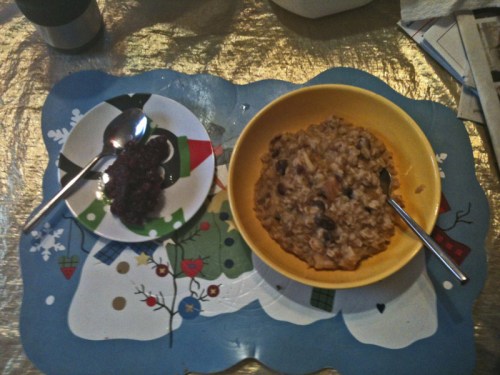
bowl of oatmeal

Sometimes breakfast is the most untree of the day.

Leave a comment

Filed under new word, Photo by author

The Devil’s Dictionary: Poetry

Every now and then, it is good to revisit a classic, or even a curiosity from the past. The Devil’s Dictionary by Ambrose Bierce was originally published in newspaper installments from 1881 until 1906. You might be surprised how current many of the entries are.

For example, since April is poetry month, here is a definition for the words poetry and blank verse. The Old definition is Bierce’s. The New definition or comment are mine (and in this case a few other folks, too. Sometimes, you need help).

From time to time, just as it was originally published, we will come back to The Devil’s Dictionary, for a look at it then and how it applies today. Click on Devil’s Dictionary in the tags below to bring up the other entries.

OLD DEFINITIONS:
Poetry, n. A form of expression peculiar to the Land beyond the Magazines.

Blank verse, n. Unrhymed iambic pentameters — the most difficult kind of English verse to writer acceptably; a kind, therefore, much affected by those who cannot acceptably write any kind.

NEW DEFINITIONS:
Poetry, n. In this age of digital publishing, to say that poetry is peculiar to the Land beyond the Magazines is more prescient than sarcastic. Maybe I will call upon some other folks give a modern perspective, if not definition of poetry:

Poetry and consumption are the most flattering of diseases. –William Shenstone
(If I have to choose, I’ll take poetry, though I would probably be better at consumption.)

Poetry is nobody’s business except the poet’s, and everybody else can f*&k off. –Philip Larkin
(If true, no wonder poets feel misunderstood, unappreciated, and beyond the Land of Magazines.)

I know that poetry is indispensable, but to what I could not say. –Jean Cocteau
(Probably more indispensable than this blog.)

I think that one possible definition of our modern culture is that it is one in which nine-tenths of our intellectuals can’t read any poetry. –Randall Jarrell
(And what is the percentage of the non-intellectuals?)

Free verse, n. Free verse is like free love; it is a contradiction in terms. –G.K. Chesterton
(Yeah, but paid love is illegal in most states.)

2 Comments

Filed under Ambrose Bierce, definitions, Devil's Dictionary, poetry

The Devil’s Dictionary: Love and Marriage

Every now and then, it is good to revisit a classic, or even a curiosity from the past. The Devil’s Dictionary by Ambrose Bierce was originally published in newspaper installments from 1881 until 1906. You might be surprised how current many of the entries are.

For example, in this as Valentine’s Day approaches, here is a definition for the words Love and Marriage. The Old definitions are Bierce’s. The New definitions or comments are mine. From time to time, just as it was originally published, we will come back to The Devil’s Dictionary, for a look at it then and how it applies today. Click on Devil’s Dictionary in the tags below to bring up the other entries.

Old definition

Love, n. A temporary insanity curable by marriage or by removal of the patient from the influences under which he incurred the disorder. This disease, like caries and many other aliments, is prevalent only among civilized races living under artificial conditions; barbarous nations breathing pure air and eating simple food enjoy immunity from its ravages. It is sometimes fatal, but more frequently to the physician than to the patient.

Marriage, n. The state or condition of a community consisting of a master, a mistress, and two slaves, making all, two.

New definition

Love, n. A state of insanity cured by death, taxes, divorce, children, or being told you have to. Being told you can’t only encourages it. You know you are under its influence when money is no object, but the object of your affection is. When hope has replaced reason, and longing is just one more step on the way to ecstasy, then it is love.

But remember, love and libido come from the same Latin root: libet, meaning “that is pleasing.” If love would only stop there, it might be okay, but it often does not, heading, instead, into marriage.

Marriage, n. Terminal state of love. An institutional condition at which point that which was pleasing no longer is. Especially so when defined by the state, and enshrined with all the solemnity the government can bestow.

4 Comments

Filed under Ambrose Bierce, Devil's Dictionary, humor, love, marriage, satire, Uncategorized

The Devil’s Dictionary: Trust

Every now and then, it is good to revisit a classic, or even a curiosity from the past. The Devil’s Dictionary by Ambrose Bierce was originally published in newspaper installments from 1881 until 1906. You might be surprised how current many of the entries are.

For example, here is a definition for the word abasement. The first definition is Bierce’s. The second one is mine. From time to time, just as it was originally published, we will come back to The Devil’s Dictionary, for a look at it then and how it applies today. Click on Devil’s Dictionary in the tags below to bring up the other entries.

Old definition
Trust, n. In American politics, a large corporation composed in greater part of thrifty working men, widows of small means, orphans in the care of guardians and the courts, with many similar malefactors and public enemies.

Updated definition
Trust, n. In American politics, trust is that which is used to cover up what the “truth” won’t hide. For example, U.S. Senators and Representatives who beat the drum and say don’t trust the government, but do trust them. Truth is, once elected, they are the government and very few want to leave, even those crying out for smaller government. Along the way, they wish to create widows and retirees of small means, orphans in the care of of somebody else, and similar malefactor and public enemies, such as the ever shrinking middle class.

Leave a comment

Filed under Ambrose Bierce, Definition, Devil's Dictionary, humor, satire

The Devil’s Dictionary: then and now: abasement

Every now and then, it is good to revisit a classic, or even a curiosity from the past. The Devil’s Dictionary by Ambrose Bierce was originally published in newspaper installments from 1881 until 1906. You might be surprised how current many of the entries are.

For example, here is a definition for the word abasement. The first definition is Bierce’s. The second one is mine. From time to time, just as it was originally published, we will come back to The Devil’s Dictionary, for a look at it then and how it applies today.

Abasement, n. A decent and customary mental attitude in the presence of wealth or power. Particularly appropriate in an employee when addressing an employer.

Recent chart showing what a CEO makes versus the average worker makes in several developed nations throughout the world:

Pay ratio

Comparison of pay rate ratio in U.S. and other countries

Abasement, n. Where we are all going to be living as the wealthy 10 percent in the U.S. accumulate even more wealth beyond the 2/3 percent of the net wealth they already have, and the rest of us have to go live in a basement somewhere.

http://www.huffingtonpost.com/2011/04/05/us-inequality-infographic_n_845042.html#s261411&title=Wage_Inequality

http://motherjones.com/politics/2011/02/income-inequality-in-america-chart-graph

2 Comments

Filed under Ambrose Bierce, demons, satire, sign of the times, words, writing

Definition: Saint

Saint, n. A dead sinner revised and edited. —Ambrose Bierce

To learn a little more about this American writer, humorist, and satirist, try The Ambrose Bierce Appreciation Society

Leave a comment

Filed under Ambrose Bierce, Definition, humor, saint, satire, word play, writer