

Conflict is the difference between expectation and result.
Conflict is the difference between expectation and result.
Filed under 2016, writing tip, Writing Tip Wednesday
On Saturday, February 1, 2014, I took a workshop sponsored by the Knoxville Writers’ Guild (www.knoxvillewritersguild.org) and led by nationally published author Pamela Schoenewaldt (www.PamelaSchoenewaldt.com and on Facebook at https://www.facebook.com/pages/Pamela-Schoenewaldt/158580547517755?ref=tn_tnmn).
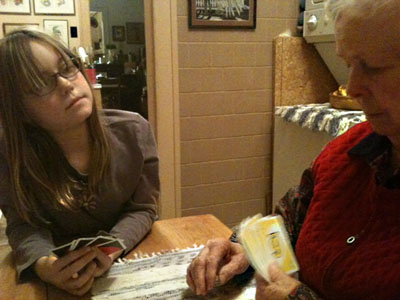
Even a friendly game of cards might harbor some conflict.
CONFLICT WORKSHEET
Answer without worrying about grammar or logic. Emotions can be messy and illogical. The point is that they MATTER.
1. More than anything, my character wants. . .
2. Getting it matters so much because . . .
3. But the problem/obstacle is . . .
4. My character feels (use 4+ adjectives)
5. Giving up would mean . . .
6. To “win” the character must overcome . . .
7. Who will help and how?
8. Name 3 possible LOCATIONS where this conflict will play out. What OBJECTS will be important?
9. The outcome/ resolution will change the character. Now s/he will . . .
Filed under writing tip, Writing Tip Wednesday, writing tips
In the last installment of this feature, I put forth a little paradigm about writing that started off with “Drama is conflict….” But what is conflict? Is it open hostilities between two armies? It can be. It is the harsh words a husband has for a wife? It can be that, too. It is dealing with opposing desires or wants, such as deciding between love and honor? Yes, it can be that as well.
But all three examples listed above and in a host of others there is a common thread, something unspoken, and as important as words are, it is often the unspoken or unwritten element that defines a scene in a story and sometimes the story itself.
As I said in the previous article, I learned the paradigm that begins “Drama is conflict …” in 1993. Some twelve years later, and even though I wasn’t looking, I learned from author, screen writer, and teacher Steven Womack a definition of conflict that adds depth and, dare I say, meaning to the word conflict and the entire paradigm. He credits learning it from Bob McKey, a script doctor. McKey has made a living and a small fortune fixing other people’s scripts though he often doesn’t get screen credit for it. All scripts need conflict; conflict drives the story forward. How will the protagonist react? What will she do? But conflict is not car chases, gun battles, or galaxies spiraling out of control. Conflict, McKey said, is the gap between expectation and result. That’s it.
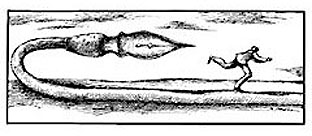
Conflict can be a small thing, or a large one, real or imagined.
Filed under advice, Bob McKey, building a better story, novel, Steven Womack, tension, words, writer, writing, writing tip
My writing is distinctly middle brow. Just ask anybody who has suffered through it. Still, I like to think that even in my middling way, I can offer some helpful advice when I stumble across it. Therefore, from time to time, I will post some writing advice, but not from me. The advice will come from established sources. I will endeavor not to make it overlong or overreaching, and sometimes it will simply be reminders of what we all probably already know, but it will be some tips I have picked up from reading, from attending writing conferences, or it may even come from you.

Darma is conflict, sometimes even self-inflicted
Drama is conflict;
Without conflict no action;
Without action no character;
Without character no story;
Without story, who cares?
In a future entry, I’ll give you a short, crisp definition for conflict that I learned at a more recent one-day writing seminar. It comes from a very highly regarded script doctor in Hollywood, but applies just as well to other forms of fiction writing. Stay turned.
Filed under advice, building a better story, character, conflict, drama, story, tension, words, writing, writing conference, writing tip
Writing tip: conflict
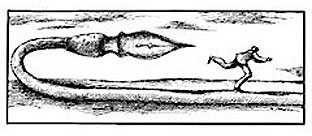
Conflict: expectation vs result
But all three examples listed above and in a host of others there is a common thread, something unspoken, and as important as words are, it is often the unspoken or unwritten element that defines a scene in a story and sometimes the story itself.
As I said in the previous article, I learned the paradigm that begins “Drama is conflict …” in 1993. Some twelve years later, and even though I wasn’t looking, I learned from author, screen writer, and teacher Steven Womack a definition of conflict that adds depth and, dare I say, meaning to the word conflict and the entire paradigm. He credits learning it from Bob McKey, a script doctor. McKey has made a living and a small fortune fixing other people’s scripts though he often doesn’t get screen credit for it. All scripts need conflict; conflict drives the story forward. How will the protagonist react? What will she do? But conflict is not car chases, gun battles, or galaxies spiraling out of control. Conflict, McKey said, is the gap between expectation and result. That’s it.
Conflict can be as small as being overcharged a dime and how your protagonist reacts or as great as losing a battle when the protagonist fought hard to win. In both examples, there is a gap between expectations and results. How your protagonist deals with that gap and what steps he takes to close it are what drives a story forward, whether the story is a script, a short story, or a novel. The obstacles in the way preventing the protagonist from easily closing that gap are what are called tension, but that is a discussion for another time.
Filed under the perils of writing, writing, writing tip


 Booker's Blog