Tag Archives: character development

Writing tip Wednesday: “Character Dimensions and Sketch”

On Saturday, February 1, 2014, I took a workshop sponsored by the Knoxville Writers’ Guild (www.knoxvillewritersguild.org) and led by nationally published author Pamela Schoenewaldt (www.PamelaSchoenewaldt.com and on Facebook at https://www.facebook.com/pages/Pamela-Schoenewaldt/158580547517755?ref=tn_tnmn).

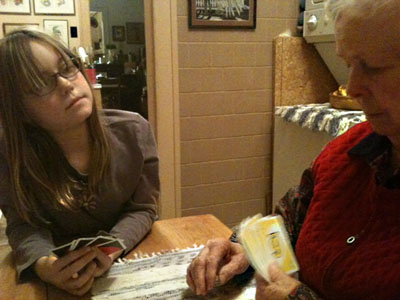
Answering questions beforehand could save you heartburn later.

Answering questions beforehand could save you heartburn later.

The workshop was on character development. What you have below is the third of the three handout exercises from the workshop. The first one, “Who are you?” was posted two Wednesdays ago. The second one, “Conflict Worksheet” was posted last Wednesday.

Each previous worksheet / exercise could be done in ten minutes or less, and oftentimes not pondering too long is best. This worksheet may take a little longer, but like the others can be used for the both the protagonist and antagonist of the story or novel you are working on, or just about any character you want to use it on. It might also be helpful if writing a memoir or biography.

CHARACTER SKETCH EXERCISE

Answer without worrying about grammar or logic.
• NAME your character

• LEARN your character by considering these dimension (writing notes on each or most is ideal)

• REMEMBER that your goal is a rounded character (not all good or bad) with a capacity for moving action.

• SKIP dimensions which repeat information.

• BEWARE of main characters who are very young, psychotics, or whose condition severely restricts their capacity for change.

• KNOW everything about this person.

CHARACTER DIMENSIONS

1. Age, physical appearance and attitude to body.

2. Significant health issues.

3. Distinctive physical signs: scars, handicaps, beauties, tics, tattoos, gestures.

4. Manner of speaking (level of language, accent, peculiarities). Manner of dress.

5. Living situation (where, with whom, how living space reflects character).

6. Socio-economic level and attitude to this level (satisfied, indifferent, ambitious?).

7. Work/ profession/ main activity.

8. Performance in Work/ profession/ main activity.

9. Sexuality and relationship to it (fears, doubts, longings, obsessions).

10. Quality of childhood.

11. Current relationship with family – how does it affect the person?

12. Significant intimate relationships and how they reflect the person.

13. What friends does character have? Attitude to friends, their attitudes to him/her.

14. Significant interests, hobbies, passions, obsessions.

15. Religious/spiritual practice and faith.

16. Fundamental belief about life/self (“The most important thing is . . . “)

17. How does the way the character sees him/her self compare to others’ views of him/her?

18. Major strength (include hidden strengths which could be mobilized).

19. Major success/failure or secret of past. (Any significant patterns?)

20. Typical way of dealing with stress or crisis… (Does it work? Should it change?)

21. Major weakness and fear.

22. Ambitions and blocks to achievement.

23. Shaping force/person/event of past.

24. What is not working for your character now?

25. What would your character sacrifice or fight for?

26. Where does your character experience a major conflict in values?

27. Where does your character draw the line: s/he wouldn’t do this….

28. What might push your character up to the line?

29. What conflict, choice or crisis faces the character now?
Leave a comment

Filed under Photo by author, writing tip, Writing Tip Wednesday, writing tips

Writing tip Wednesday: “Conflict”

On Saturday, February 1, 2014, I took a workshop sponsored by the Knoxville Writers’ Guild (www.knoxvillewritersguild.org) and led by nationally published author Pamela Schoenewaldt (www.PamelaSchoenewaldt.com and on Facebook at https://www.facebook.com/pages/Pamela-Schoenewaldt/158580547517755?ref=tn_tnmn).

Even a friendly game of cards might harbor some conflict.

Even a friendly game of cards might harbor some conflict.

The workshop was on character development. What you have below is the second of the three handout exercises from the workshop. The first one, “Who are you?” was posted last Wednesday. Each handout can be done in ten minutes or less, and oftentimes not pondering too long is best. The first exercise was called “Who are you?” The you refers to the character. This worksheet can be used for the both the protagonist and antagonist of the story or novel you are working on, or just about any character you want to use it on. It might even be helpful if writing a memoir or biography.

CONFLICT WORKSHEET

Answer without worrying about grammar or logic. Emotions can be messy and illogical. The point is that they MATTER.

1. More than anything, my character wants. . .

2. Getting it matters so much because . . .

3. But the problem/obstacle is . . .

4. My character feels (use 4+ adjectives)

5. Giving up would mean . . .

6. To “win” the character must overcome . . .

7. Who will help and how?

8. Name 3 possible LOCATIONS where this conflict will play out. What OBJECTS will be important?

9. The outcome/ resolution will change the character. Now s/he will . . .

Leave a comment

Filed under writing tip, Writing Tip Wednesday, writing tips

Writing tip Wednesday: “Who are you?”

On Saturday, February 1, 2014, I took a workshop sponsored by the Knoxville Writers’ Guild (www.knoxvillewritersguild.org) and led by nationally published author Pamela Schoenewaldt (www.PamelaSchoenewaldt.com and on Facebook at https://www.facebook.com/pages/Pamela-Schoenewaldt/158580547517755?ref=tn_tnmn).

The workshop was on character development. What you have below is one of the three handout exercises from the workshop. I will be posting the others over time. Each handout can be done in ten minutes or less, and oftentimes not pondering too long is best. The first exercise is called “Who are you?” The you refers to the character. This worksheet can be used for the both the protagonist and antagonist of the story or novel you are working on, or just about any character you want to use it on. It might even be helpful if writing a memoir or biography.

WHO ARE YOU?

Your name is . . .

Your age is . . .

I can see that you are . . . (location)

And you’re looking at . . .

And you’re feeling . . . .

Your great strength is . . . .

Your fear or weakness is . . . .

It’s too bad that . . . .

You’d really laugh if . . . .

Most people don’t know that you . . .

Very soon you must . . . .

The challenge will be . . . .

You will get strength from . . . .

Looking in your eyes, I know that . . .

Leave a comment

Filed under writing tip, Writing Tip Wednesday