Tag Archives: character building

There’s a real-life Michael Connelly character in the LAPD, and she’s gunning for Harry Bosch’s job – Los Angeles Times

Mitzi Roberts always wanted to talk to serial killers.

A Los Angeles bartender and diner manager, Roberts was used to seeing cops stagger into her establishments, seeking a bite or a beer after their shift. Conversation between the investigators and Roberts, a self-described true-crime “fanatic,” came easily.

She told them of her desire to chase predators. At some point, one of them suggested a career change.

The move from diner manager to detective set Roberts on a career path that saw her climb the ranks of the Los Angeles Police Department — from a graveyard shift that is sometimes home to cops who have “screwed up” to a treasured spot in the elite Robbery-Homicide Division. After years spent fighting an uphill battle as a woman traversing a department long regarded as a boys’ club, Roberts found herself zipping around the southeastern United States on a collision course with one of America’s most prolific killers.

The veteran detective’s career history may read like it borrows a bit from the jacket copy of a popular crime novel, but it’s actually the other way around. In her 24-year career, Roberts has not only found herself involved in some of L.A.’s most infamous cases, but she’s also served as a muse to the city’s modern master of detective fiction.

In recent years, Roberts became the inspiration for Renee Ballard, the newest protagonist to grace the pages of Michael Connelly’s bestselling novels. Ballard — a Hollywood Division detective exiled from Robbery-Homicide who shares Roberts’ real-life love of surfing, knack for swift verbal jabs and dogged dedication to the job — is more than just a passing interest for Connelly. According to the author, Ballard could one day replace Harry Bosch, the beleaguered LAPD detective who appears in 22 of his novels.

swift verbal jabs and dogged dedication to the job — is more than just a passing interest for Connelly. According to the author, Ballard could one day replace Harry Bosch, the beleaguered LAPD detective who appears in 22 of his novels.

Source: There’s a real-life Michael Connelly character in the LAPD, and she’s gunning for Harry Bosch’s job – Los Angeles Times

Leave a comment

Filed under 2019

Writing tip Wednesday: “Creating a Series Character”

5 Secrets to Creating a Compelling Series Character

Source: http://www.writersdigest.com/editor-blogs/guide-to-literary-agents/5-secrets-creating-compelling-series-character?utm_source=wir&utm_campaign=wir-nl-cmf-gla&utm_content=964941_EDT_GLA170823&utm_medium=email

By Barry Lancet

When I began my first book starring Jim Brodie, my goal was simply to write the best book I could. I didn’t have visions of a series. Then, as I polished the final draft, readying the manuscript for submission to an agent, new story ideas for Brodie began to pop into my head.

I took a step back to consider the possibility of making Brodie a series character, realizing that a lot depended on how Japantown was received. But I decided to give myself a little more breathing room just in case.

It’s vital to point out that even as I contemplated the idea of a series, I held nothing back from Japantown. Why? Because to make the team you have to bring your best game. That’s what I did and the book sold to Simon & Schuster and would go on to make a number of “best-of” lists and win the Barry Award for Best First Mystery.

By the time Japantown reached print, I was immersed in writing my second novel, Tokyo Kill, again with Brodie at the helm of another contemporary tale that, this time, veered back to the days of World War II. Why another Brodie book instead of a standalone? I’ll get to that in a minute, but first let me tell you what I did to create a little “breathing room.”

Over the years, I’d gleaned from interviews with other authors that the planning of their series characters followed one of two paths: either they allowed themselves flexibility for the future, or they moved hastily, and inadvertently penned themselves in. With this information at hand I made the following moves, and offer them here for you to think about:

  1. Keep the backstory detailed but open-ended enough to give yourself maneuverability.

For example, Brodie is an American born in Japan to American parents, an art dealer with a struggling antiques shop in San Francisco, and half-owner of a security firm built by his father in Tokyo. He’s also the father of a six-year-old girl. All of this gives me plenty to work with. He has the need to travel so I’m not pinned down with my setting. Two careers provide a multitude of opportunities for trouble; and he’s a single parent, which offers the chance for emotional exploration. Each of my books takes advantage of Brodie’s backstory.

  1. But you shouldn’t give too many extended details about the backstory.

Backstory, by nature, slows a story down, so for that reason alone it should be parsed out in drips over time. And when you do, make sure not to pin yourself down too much.

Which leads us to the next point: What should a series character be? Much will be specific to the setting, goals, and genre you choose, but here are three major aspects to consider:

  1. Make your character attractive to both male and female readers.

(Unless you’re working in a genre that zeroes in on one over the other.)

  1. Avoid common character clichés.

If your hero is a spy, steer away from the melancholy, burned-out agent, or the slick, overly smooth operator. If your protagonist is a private investigator, avoid the recovering alcoholic trope (it’s been done hundreds of times), or the lady’s man with an ex-wife or two.

That said, no rule or suggestion is all-inclusive, nor goes unbroken. If you must approach a stereotype, do so with the freshest point of view you can muster. Jeffery Deaver brilliantly turned the “wounded cop/private investigator” trope on its head in The Bone Collector by making his hero a nearly complete paraplegic, mentally fit but able to move little more than a finger. Michael Connelly handled the ex-wife syndrome with humor and pathos in the Lincoln Lawyer.

  1. I’ve saved the most intriguing item for last:

You don’t have to stray too far from home to find at least a portion of your protagonist’s personality, and here’s why.

Over the last five years, I’ve met and listened to any number of bestselling authors. What I’ve noticed (sometimes despite claims to the contrary) is that their series characters often exhibit a number of personality traits they themselves possess.

I’ve seen this too many times to ignore. The character may drive a different car, wear different clothes, and live in a different state, but, whether consciously or unconsciously (as in my case too), underlying similarities often emerge. At the same time, I saw the upside. These similarities give the authors a solid grasp on their characters, and their character a solid anchor in reality.

The lesson here is that you don’t have to bend over backwards to divorce yourself entirely from your character. Which is another way of saying you don’t need to be nervous about borrowing a part of yourself for your character.

The five factors above helped bring Jim Brodie to the printed and digital page. And how did that turn out?

After I finished Japantown, I sent it out to agents. Soon thereafter, I was fortunate enough to land my top choice in a list of ten (Robert Gottlieb of Trident Media Agency). Japantown was preempted by Simon & Schuster and optioned for TV for two years by J.J. Abrams (the series is now under consideration with a new producer).

When the dust settled, a contract for two books landed on my desk, soon to be followed by a second contract for two more books. The additional three books were contingent on Brodie putting in an appearance as the main character. His name appeared prominently in the contract, and he is the focus of each book. Brodie’s most far-flung adventure to date is his most recent, The Spy Across the Table, where his backstory has been fleshed out a tad more to include a choice secret.

In more ways than one, Jim Brodie has taken on a life of his own.


Leave a comment

Filed under 2017, writing tip, Writing Tip Wednesday

Writing tip Wednesday: “Conflict”

On Saturday, February 1, 2014, I took a workshop sponsored by the Knoxville Writers’ Guild (www.knoxvillewritersguild.org) and led by nationally published author Pamela Schoenewaldt (www.PamelaSchoenewaldt.com and on Facebook at https://www.facebook.com/pages/Pamela-Schoenewaldt/158580547517755?ref=tn_tnmn).

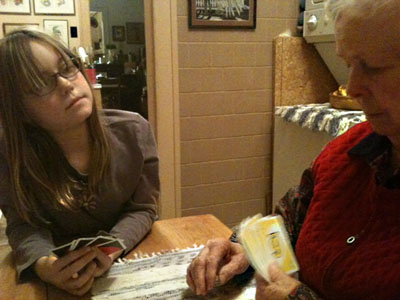
Even a friendly game of cards might harbor some conflict.

Even a friendly game of cards might harbor some conflict.

The workshop was on character development. What you have below is the second of the three handout exercises from the workshop. The first one, “Who are you?” was posted last Wednesday. Each handout can be done in ten minutes or less, and oftentimes not pondering too long is best. The first exercise was called “Who are you?” The you refers to the character. This worksheet can be used for the both the protagonist and antagonist of the story or novel you are working on, or just about any character you want to use it on. It might even be helpful if writing a memoir or biography.

CONFLICT WORKSHEET

Answer without worrying about grammar or logic. Emotions can be messy and illogical. The point is that they MATTER.

1. More than anything, my character wants. . .

2. Getting it matters so much because . . .

3. But the problem/obstacle is . . .

4. My character feels (use 4+ adjectives)

5. Giving up would mean . . .

6. To “win” the character must overcome . . .

7. Who will help and how?

8. Name 3 possible LOCATIONS where this conflict will play out. What OBJECTS will be important?

9. The outcome/ resolution will change the character. Now s/he will . . .

Leave a comment

Filed under writing tip, Writing Tip Wednesday, writing tips

Writing tip Wednesday: “Who are you?”

On Saturday, February 1, 2014, I took a workshop sponsored by the Knoxville Writers’ Guild (www.knoxvillewritersguild.org) and led by nationally published author Pamela Schoenewaldt (www.PamelaSchoenewaldt.com and on Facebook at https://www.facebook.com/pages/Pamela-Schoenewaldt/158580547517755?ref=tn_tnmn).

The workshop was on character development. What you have below is one of the three handout exercises from the workshop. I will be posting the others over time. Each handout can be done in ten minutes or less, and oftentimes not pondering too long is best. The first exercise is called “Who are you?” The you refers to the character. This worksheet can be used for the both the protagonist and antagonist of the story or novel you are working on, or just about any character you want to use it on. It might even be helpful if writing a memoir or biography.

WHO ARE YOU?

Your name is . . .

Your age is . . .

I can see that you are . . . (location)

And you’re looking at . . .

And you’re feeling . . . .

Your great strength is . . . .

Your fear or weakness is . . . .

It’s too bad that . . . .

You’d really laugh if . . . .

Most people don’t know that you . . .

Very soon you must . . . .

The challenge will be . . . .

You will get strength from . . . .

Looking in your eyes, I know that . . .

Leave a comment

Filed under writing tip, Writing Tip Wednesday

Take Two ‘Normal’ People, Add Money To Just One Of Them, And Watch What Happens Next

Take Two 'Normal' People, Add Money To Just One Of Them, And Watch What Happens Next.

View this as a character study. Information to be used when building a story character.

Leave a comment

Filed under character study

Building a better story: three elements to character building

You can’t always get what you want
But if you try sometimes you just might find
You just might find
You get what you need

So goes the chorus from The Rolling Stones song, “You Can’t Always Get What You Want.”

Those are perfect lyrics in which to briefly discuss the three elements that can help a writer build a character.

When creating a main character, ask yourself three questions:
1) What does your main character (protagonist) want?
2) What does your character need?
3) How can these two things be brought into conflict?

Despite what advertising might try to convince about having hunger pangs that only a certain hamburger can cure, there is a difference. Hunger is a need. The body needs food to live. The hamburger (Or whatever other food you wish to insert) is a want. Hunger can be alleviated by a wide range of foods, not just the one being advertised at the moment you feel hunger.

Dear Dorothy

What a character needs is often more important than what she wants.

You can also think of this way: want is often an external thing; need an internal thing. The hamburger is an external manifestation of something that is an internal need: hunger. They come into conflict when you find out you don’t have enough money for that hamburger, or if having that hamburger will cause you to break out in hives, due to an allergic reaction you may have recently developed to ground beef.

The same is also often true of your story’s main character. There is something he wants. There is something he needs. The want and the need to come into conflict.

Take for example, Huckleberry Finn in Mark Twain’s The Adventures of Huckleberry Finn.

What is it wants: to escape his alcoholic father who has kidnapped him and locked him in an old cabin in the woods, because the father wants the money that Huck is entitled to. He escapes from his dad and hides out on an island as part of his plan to keep from being kidnapped again. What he needs, though he is not willing to even admit it to himself, is an adult who will accept him for how he is (and won’t try to civilize him), but still be willing to take care of him, even guide if not raise him, and love him. Huck finds that in the runaway slave Jim, and at the point of the novel where Huck should turn Jim in as runaway slave, Huck decides not to do what society wants him to do, he sides with Jim because Jim is somebody whom Huck needs, and who also needs Huck. Much of the rest of the novel from that point on is about handling the consequences of that decision and the temptations to still turn Jim in.

There are many other examples in fiction and in film, on the stage and even sometimes in long story poems.

You can have your protagonist side with what he wants over what he needs. This often leads to more trouble or even tragedy. You can have you protagonist win by losing. He loses what he wants, but wins what he needs and is the better for it. He can find a way to make the two work together, with the want being a true outward manifestation of the inward need.

So, decide what it is your character wants (that job promotion, the girl next door, the pot of gold) and what he needs (validation of his self-worth, love, money to buy the thing he always wanted), and then bring those two into conflict.

[Editor’s update/note: click on “building a better story” in the Category listings to find several other blog pieces of information I have put together from classes, books, and other sources (including my own experiences).]

2 Comments

Filed under building a better story, cartoon by author, character, writing tip