
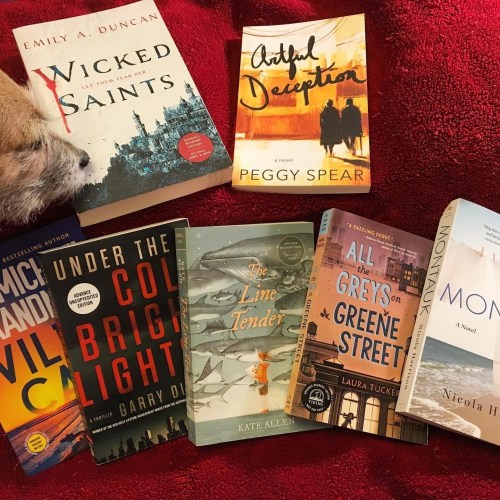
Old North Knoxville Reads
Union Ave., thank you. /
Our Little Free Library /
Holds new adventures.
.
.
#oldnorthknoxville #poem #haiku #davidebooker #unionavebooks #poem #poetry #writer #writing #littlefreelibrary #books
062919
Old North Knoxville Reads
Union Ave., thank you. /
Our Little Free Library /
Holds new adventures.
.
.
#oldnorthknoxville #poem #haiku #davidebooker #unionavebooks #poem #poetry #writer #writing #littlefreelibrary #books
062919
Filed under 2019, haiku, photo by David E. Booker, Poetry by David E. Booker
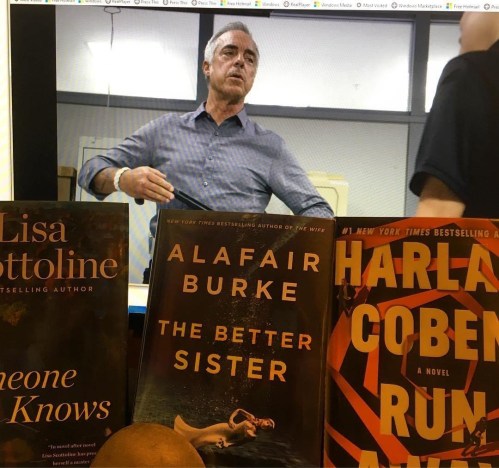
Mystery
Three books, new season. /
Mysteries in print on screen. /
More than flowers bloom.
.
.
#haiku #poem #davidebooker #poetry #writer #writing #harlancoben #lisascottoline #alafairburke #mysteries #books #screen #screenshot #oldnorthknoxville
@lisascottoline @harlancoben @alafairb @michaelconnellybooks
Filed under 2019, haiku, photo by David E. Booker, Poetry by David E. Booker
There once was a writer named Elf,
Who wanted to see all his books up on the shelf.
In bookstores and in homes
He wanted his stories to roam.
So he hid them among Santa’s present wealth.
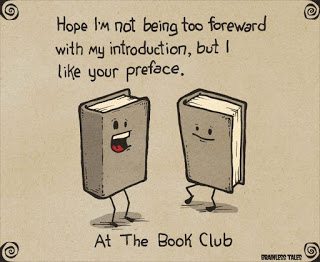
Filed under 2020, books, CarToonsday
1. China
2. US
3. UK
4. France
5. Germany
6. Brazil
7. Japan
8. Spain
9. Italy
10. South Korea
11. Argentina
12. Netherlands
13. Saudi Arabia
14. Denmark
15. Switzerland
16. Thailand
17. Philippines
18. Sweden
19. Norway
20. Belgium
(IPA)
 Being yourself starts with knowing yourself.
Source: 12 Books That Will Improve Your Self-Knowledge – Darius Foroux – Pocket
Every piece of personal or professional growth you achieve in life starts with one thing: Self-knowledge.
Lao Tzu, the ancient Chinese philosopher, who lived in the 6th century BC, put it best:
“He who knows others is wise; he who knows himself is enlightened.”
Whether you want to make a million bucks, build a strong relationship with your partner, or get in the best shape of your life — you can’t improve yourself without knowing yourself.
Self-knowledge is a skill, not a trait, talent, or divine insight. I used to live my life without one bit of introspection. Naturally, I had no idea who I was. Now, I’m getting better at it with practice. And the impact on my life has been huge.
I believe that knowing yourself is the key skill that predicts happiness and success in life.
So I’ve made a list of 12 books that have helped me to know myself. I hope they will serve you too.
The book’s description starts with, “The path to your professional success starts with a critical look in the mirror.” I can’t agree more.
This HBR collection also includes one of my all time favorite pieces on self-awareness, Managing Oneself by Peter Drucker. It also includes another article that I’ve found very useful: “How Will You Measure Your Life?” by Clayton M. Christensen.
This collection does not disappoint. Every piece will make you think more about your mission, vision, strengths, weaknesses, and how you can advance your career.
In today’s world, it’s probably not you IQ that’s going to make you successful — it’s your EQ. Daniel Goleman is the key expert when it comes to emotional intelligence.
Most people think emotional intelligence is about managing other people’s emotions.
Well, there’s something that’s more important: Identifying and managing your own emotions. I believe that you can’t be an effective leader without EQ. This book helps you to get better at it.
This is one of my favorite books of the past year. No other person could have written this book better than Ryan Holiday.
He has an impressive career. And a lot of bragging rights. But if you follow his work (which I’ve been doing for three years), you can tell he is a humble person who lets his work speak for him.
To me, that’s the perfect example of someone who has his ego in check. Because we have to be real, everyone has an ego. The question is: How do you manage it? Ego Is The Enemy helps you to do that.
A collection of 20 essays by Alan Watts. His work was greatly inspired by Zen. And I think that Zen is a great source of internal knowledge.
I’ve tried reading different things about Zen. Watt’s writing is clear, practical, and beautiful. That makes it easier to read and think about. When you apply all the advice in this book, you’ll learn more about yourself and others.
I usually stick to books for grown-ups. But I just couldn’t resist mentioning this book here. One of my friends bought this book for his daughter a while back. And he loved the book as much as his daughter did.
I checked it out and it’s actually really fun. I can imagine that kids would love it too. It’s a great way to teach kids self-awareness.
I wish I had this book by Karen Beaumont as a child. So if you have kids, buy this book. And if you don’t have kids, get it for your family or friends who do.
I only recently read Brené Brown’s book. I’d seen some of her videos and interviews and always appreciated her calm approach.
This book is exactly that. The Gifts of Imperfection helps you to understand that you’re good enough. We’re often too hard on ourselves. And that’s detrimental for our self-awareness.
When you learn that you have nothing to prove, you actually start living.
Do you feel bad that you haven’t caught your big break yet? If so, read this book. You’ll feel different about it. Ray Kroc, who turned McDonald’s into a billion-dollar business, had to wait until his fifties to find some form of success.
It’s not only an inspirational story. It also helps you to put things in perspective. That’s a key aspect of self-awareness. It’s also good to read the perspective of a businessman. You can’t make a living by meditating all day.
It’s no secret I’m a fan of Drucker. This book provides a practical perspective on productivity that I think every knowledge worker should read.
The most important lessons I’ve learned about work is this: It’s not about what you do, it’s about the results you get. That’s the difference between efficiency and effectiveness.
Sending 100 emails per hour might be very efficient use of your time. But what results does it bring you? That’s what matters the most.
Even though I like scientific research, there are things science can’t teach you.
In this book, McCormack shares everything that people in business schools or companies will never tell you. He talks office politics, standing up for yourself, getting results, job-boredom, and making things happen.
The best thing? McCormack is street smart. His knowledge came from experience. And it’s still relevant.
This book was recommended to me last year by a reader. Prather was a minister. When I first learned about that, I didn’t think I could relate to the book. But I gave it a try, and I really enjoyed it.
Notes To Myself is a good example of the fact that people are all the same internally. You might be from Japan, Chile, Portugal, Canada, Vietnam — you name it. At the end of the day, we face the same internal struggles.
Like Watts, George Leonard was also inspired by Zen. And his approach to life, learning, and mastery, is one that I’ve learned to appreciate a lot recently.
To me, it’s never about external things like praise, likes, sales, views, etc. Self-awareness has no end-destination. It’s about the process.
You might think, “what does a book about running have to do with self-awareness?” To that, I say: Read this book.
It’s difficult to summarize What I Talk About When I Talk About Running other than that it’s a look inside the mind of a human being. It’s worth reading even if you don’t like running or Murakami. This is one of my all-time favorite books because it’s the most honest book I’ve read.
As you can see, there are no books about self-knowledge or self-awareness on this list. The best way to develop self-knowledge is to look inwardly. Do that enough, and you’ll know yourself better.
Yes, you can read about the thoughts of other people for inspiration. But remember they are NOT YOU.
To know yourself, you must follow that little voice inside of you. You might not hear it yet, but it’s definitely there.
You just have to find it. Within.
Filed under 2019, Writing Tip Wednesday, writing tips

Record £12m sales last year were driven by younger readers, with experts saying hunger for nuance amid conflict and disaster were fuelling the boom
Source: Poetry sales soar as political millennials search for clarity | Books | The Guardian
A passion for politics, particularly among teenagers and young millennials, is fuelling a dramatic growth in the popularity of poetry, with sales of poetry books hitting an all-time high in 2018.
Statistics from UK book sales monitor Nielsen BookScan show that sales grew by just over 12% last year, for the second year in a row. In total, 1.3m volumes of poetry were sold in 2018, adding up to £12.3m in sales, a rise of £1.3m on 2017. Two-thirds of buyers were younger than 34 and 41% were aged 13 to 22, with teenage girls and young women identified as the biggest consumers last year.
Rupi Kaur, a 26-year-old Canadian poet with 3.4 million followers on Instagram, leads the bestsellers list and was responsible for almost £1m of sales. “You tell me to quiet down / cause my opinions make me less beautiful,” she writes in Milk and Honey, the No 1 bestselling collection of 2018, “but I was not made with a fire in my belly / so I could be put out.”
Works by Leonard Cohen, John Cooper Clarke, Seamus Heaney, Carol Ann Duffy and Homer also sold well.
Andre Breedt, for Nielsen, said that sales were booming because in times of political upheaval and uncertainty, people turn to poems to make sense of the world: “Poetry is resonating with people who are looking for understanding. It is a really good way to explore complex, difficult emotions and uncertainty.”
He added that the form’s brevity also meant it could be easily consumed on phones and shared on social media.
In the immediate aftermath of the Manchester bombing, Tony Walsh’s reading of his poem, This Is the Place, at Manchester town hall was shared thousands of times online and became instantly famous worldwide. Ben Okri’s poem Grenfell Tower, June, 2017, written in the aftermath of the fire, followed a similar trajectory.
“At these moments of national crisis, the words that spread and the words that were heard were not the words of politicians, they were the words of poets,” said Susannah Herbert, director of the Forward Arts Foundation, which runs the Forward prizes for poetry and National Poetry Day. “Almost everything a politician says is incredibly forgettable. There is a hunger out there for more nuanced and memorable forms of language.”
People wanted to cut through the verbiage of Brexit to see the bigger picture in 2018, she said: “Language gets stale in politics. Words begin to lose their meaning. Poetry occupies a different space to the humdrum. It is a way of renewing what words actually mean. It offers you a different way of looking at the world.”
A comparable boom in the popularity of poetry was seen during the miners’ strike in the 1980s and during the rise of Chartism in the 19th century, according to Katy Shaw, professor of contemporary writings at Northumbria University.
“To me, it’s no coincidence that poetry as a form is being used to critically discuss events like Grenfell, the Manchester bombing and Brexit as well,” she said. “It’s being repurposed as this really dynamic and vital form that can capture, in a very condensed way, the turbulent nature of contemporary society – and give us the space to struggle with our desire to understand and negotiate a lot of what is going on at the moment.”
Like the miners and Chartists did before them, people are reading and sharing poetry not to passively reflect on what’s going on in society, but as a way of engaging, said Shaw. “Poetry as a form can capture the immediate responses of people to divisive and controversial current events. It questions who has the authority to put their narrative forward, when it is written by people who don’t otherwise hold this power,” she said. “Writing poetry and sharing it in this context is a radical event, an act of resistance to encourage other people to come round to your perspective.”
Social media and technology have made poetry much easier to access and pass along, magnifying its impact, Shaw said: “In the miners’ strike, we had poetry being written on the side of instruction manuals and printed on typewriters, distributed by hand or sent through the post. Similarly, we have evidence of a lot of Chartist poetry being publicly read out and shared between different groups of workers.
“But poetry has a strong oral tradition – it wasn’t always written down, people would learn it and recite it. The one great advantage we have now is the speed at which we can share new work.”




 Booker's Blog