Tag Archives: book

Haiku and photo: “Benched”

Benched

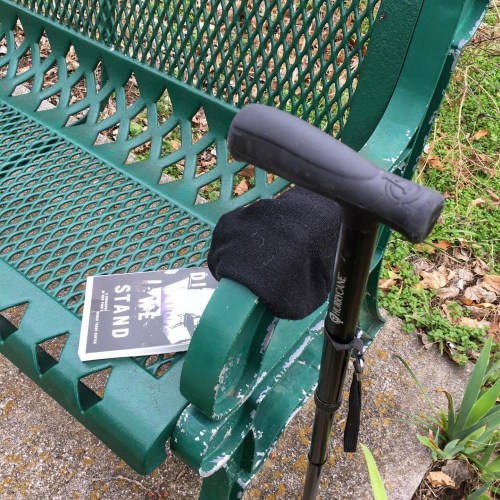
Cane at a park bench. /

Borrowed book and found cap. /

Cold weather, warm words.

.

.

#haiku #poem #poetry #writing #writer #february #friday #2020 #davidebooker #park #bench #oldnorthkmoxville #book #cane #knoxville #tennessee #oldnorthknoxvillepark #words #weather

Leave a comment

Filed under 2020, haiku, photo by David E. Booker, Poetry by David E. Booker

cARtOONSdAY: “tHE rAIN dRAIN”

Leave a comment

Filed under 2020, books, CarToonsday

Haiku to you Thursday (and photo): “Read, Donnie, Read”

Savor every word. /
Turn the pages respectfully. /
Arm the mind and heart.

Teacher holding sign


Leave a comment

Filed under 2019, Haiku to You Thursday, poetry by author

cARtOONSdAY: “bOOK hAWK”

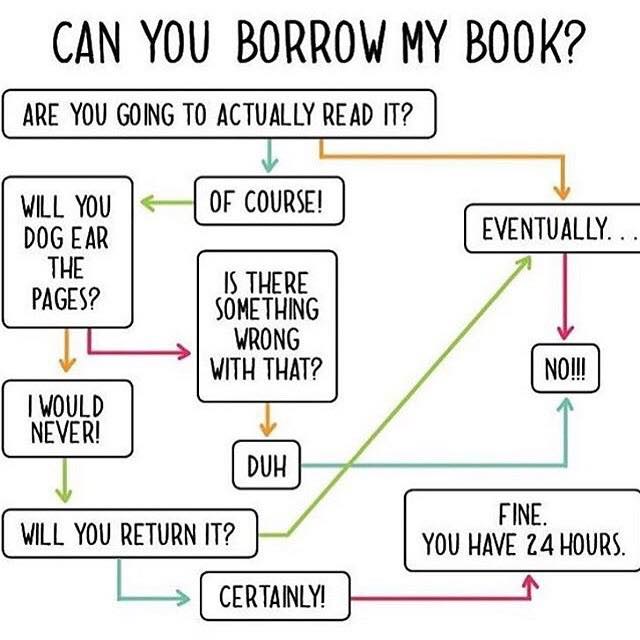
Can you borrow my book diagram

The day rate can be a killer.

Leave a comment

Filed under 2018, CarToonsday

cARtOONSdAY: “lOST iN a gOOD bOOK”

Anne wasn’t sure which was more pleasing.

Leave a comment

Filed under 2017, cartoon by author, CarToonsday

Top 7 Ways Authors Are Using Instagram – The Book Designer

Follow Other Authors Especially if you are a new author, following more experienced authors certainly can’t hurt. Even the most experienced author is not exempt from gaining insight from other authors. Networking with other authors as a new or previously unpublished author can be eye-opening and present you with opportunities you may not have otherwise come across.Instagram is one of the best social apps you can use as an author, because not only does it give us a rest from all those words, but it can be used in so many ways—personally or professionally. You just have start thinking less in words and more in pictures.

Source: Top 7 Ways Authors Are Using Instagram – The Book Designer

By Adrienne Erin (@adrienneerin)

I don’t know about you, but I’ve often wondered if the very popular but visually-oriented social media sites like Instagram are a good place to market books (over 300 million visitors a month, more than 70% of them from outside the U.S.). After all, books are words, not pictures (usually). Adrienne Erin knows that authors can get a lot of attention they might not otherwise get for their books with some savvy tactics in hand. Here’s her report.

Words are for us as writers what computers are to office workers. They are the lifeline to pretty much every facet of our work. Not only do we use them to communicate our art form, but we obsess, play, hate, love and need them in order to do what we do. Sometimes we need a rest from all the word playing—and hating.

Where can we find that rest without cutting ourselves off even further from social exchange, but also without having to use even more words? It can be done—with Instagram. Not only can you use Instagram, but as an author, you should be using Instagram. For more than one or two reasons.

Why You Should Use Instagram as an Author

There are a lot of authors who use Instagram in ways that may be entertaining. It’s entertaining in the same way the crazy lady in the grocery store is who pulls out every gallon of milk from the dairy cooler in order to get the one that has the furthest date of expiration. Yeah, it’s weird and maybe a little funny, but mostly kind of pathetic.

There are plenty of famous authors who evoke that kind of reaction on Instagram. Don’t be one of those authors. Instead, consider some of the following rational ways to use Instagram to help further your author name and influence.

  1. To Follow Bloggers Who Review Books
    This reason really shouldn’t have to be explained. I mean, duh – if you follow enough book-bloggers, you increase the chance that one or more of them will review your book, which is read by said blogger’s audience. Whether that audience is 100 or 100,000 – isn’t it worth it to reach that amount of potential buyers of your book for free?
  2. For Self-Promotion and Marketing
    Instagram can be used for promoting your name or your newest book. You can host a contest with a free copy of your book as the prize. You can ask for photo submissions that revolve around the theme of your book or you can just use photos to connect to your fans and readers. As BuzzFeed’s article on book covers altered to include James Franco shows us, humor can be a great marketing strategy.
  3. Inspire Yourself and Your Fans
    Visual imagery can be the source of inspiration on a daily basis. All you need to do is catalogue it and you have your own visual diary for defeating the worst case of writer’s block. Not only can these photos inspire you, but they may equally inspire your readers and fans, who will in turn, recommend their network to follow you as well. Many writers use inspirational tweets and Facebook posts to reach their readers. Your followers will respond well to inspirational messages that reaffirm their beliefs.
  4. Collaborate with Your Fans
    This could be a marketing project or it could be research for a new novel. Projects can range from social research to just-for-fun, to things like #100HappyDays, which seems to be a combination of both. 100HappyDays is inspirational, fun, challenging and engaging. Hosting a project like this could provide you with tons of material for your next book, or it could simply attract a ton of followers — aka, readers.
  5. Cover Art Photos = Free Book Promotion
    What better place to advertise your stunning new book cover than Instagram? Book covers are certainly one of the most powerful tools you have in your arsenal for attracting a new reader. I don’t know about you, but if I come across an author I’ve never heard of, but they write in a genre I like to read and they have a fantastically interesting book cover – I am much more likely to purchase that book. By the way, this is also another reason to never cut any corners on your cover art.
  6. Give Fans/Readers an Inside Look at Your Life
    You don’t have to reveal all the skeletons in your closet, but a few pictures of your most recent vacation, your adorable pets, a weekend trip to the harbor and a ride on a boat will get you noticed — people love this kind of stuff. The more you draw in your readers and fans by showing that you’re just like them, the more they will be inclined to follow you and interact with your more professional work.
  7. Follow Other Authors
    Especially if you are a new author, following more experienced authors certainly can’t hurt. Even the most experienced author is not exempt from gaining insight from other authors. Networking with other authors as a new or previously unpublished author can be eye-opening and present you with opportunities you may not have otherwise come across.


Instagram is one of the best social apps you can use as an author, because not only does it give us a rest from all those words, but it can be used in so many ways—personally or professionally. You just have start thinking less in words and more in pictures.

Leave a comment

Filed under 2017, Writing Tip Wednesday, writing tips

cARtOONSdAY: “nICHE mARKETS”

Specialty writing.

Specialty writing.

Leave a comment

Filed under 2016, CarToonsday

cARtOONSdAY: “pOWER-lESS”

Powered by imagination.

Powered by imagination.

Leave a comment

Filed under 2016, CarToonsday

X-rays reveal 1,300-year-old writings inside later bookbindings

The words of the 8th-century Saint Bede are among those that have been found by detecting iron, copper and zinc – constituents of medieval ink

By Dalya Alberge

Source: https://www.theguardian.com/books/2016/jun/04/x-rays-reveal-medieval-manuscripts
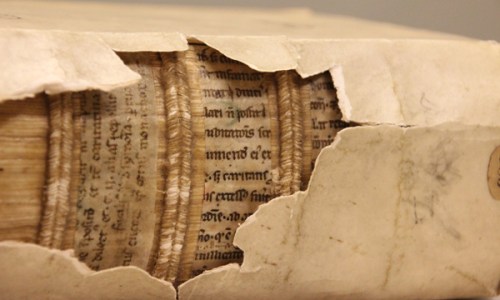
Ancient book reveraled 100dpi_6x4_4c

Medieval manuscripts that have been hidden from view for centuries could reveal their secrets for the first time, thanks to new technology.

Dutch scientists and other academics are using an x-ray technique to read fragments of manuscripts that have been reused as bookbindings and which cannot be deciphered with the naked eye. After the middle ages manuscripts were recycled, with pages pasted inside bindings to strengthen them. Those fragments may be the unique remains of certain works.

Dr Erik Kwakkel, a medieval book historian at Leiden University, told the Observer: “It’s really like a treasure trove. It’s extremely exciting.”
Professor Joris Dik, of the Delft University of Technology, described the potential for finding new material with clues to the past as “massive”. The technology does not just make hidden texts visible, but legible.

Access to such “hidden libraries” has been made possible by macro x-ray fluorescence spectrometry (MA-XRF), which allows pages to be read without removing the bookbinding.

Bindings made between the 15th and 18th centuries often contain hidden manuscript fragments that can be much older. Bookbinders used to cut up and recycle handwritten books from the middle ages, which had become old-fashioned following the invention of printing. These fragments, described by Kwakkel as “stowaways from a distant past”, are within as many as one in five early modern age printed books.

Kwakkel added: “Much of what we’re finding is 15th or 14th century, but it would be really nice to have Carolingian material, so from the ninth century or even older. It would be great to find a fragment of a very old copy of a Bible, the most important text in the middle ages. Every library has thousands of these bindings, especially the larger collections. If you go to the British Library or the Bodleian [in Oxford], they will have thousands of these bindings. So you can see how that adds up to a huge potential.”

Experiments have found a fragment from a 12th-century manuscript that includes excerpts from the work of Bede, the 8th-century monk and scholar. The researchers were even able to disassemble multiple pages that had been pasted on to one another, making the text legible. In one case, they could read each of three medieval pages that had been glued together. Elsewhere, they found two fragments stuck together underneath the cover of a 16th-century binding.

Dik’s team originally developed the technology, in collaboration with others, to “visualise” hidden layers in Old Master paintings. In 2011, for example, they discovered a previously unknown self-portrait by Rembrandt beneath another work. Although faint and unfinished, it dispelled doubts about the surface picture’s attribution to the 17th-century Dutch master, to the excitement of art historians.

Now the technology has proved to be “equally efficient in the visualisation of hidden medieval inks,” he said. “A thin beam of x-rays is used to scan the object, charting the presence and abundance of various elements below the surface. That is how iron, copper and zinc, the main element constituents of medieval inks, could be viewed, even when covered by a layer of paper or parchment.”

The problem, though, is that the current methodology is painfully slow, with scans sometimes taking more than 24 hours. Faster techniques are being explored. Dik said: “Right now, we’ve shown that it works.”

The research has been subsidised by the Young Academy, a branch of the Royal Netherlands Academy of Arts and Sciences.

Last year it emerged that techniques had been developed to decipher ancient papyrus scrolls that were burned black and buried in ash when Mount Vesuvius erupted 2,000 years ago. Vito Mocella, a scientist in Naples, found that they could read some of the scrolls without unravelling them by peering inside with x-rays.

Referring to Mocella’s technology, Dik said: “It’s different. The papyrus texts are hidden inside papyrus. We’re looking at stuff that is covered by something that is much thicker. Parchment and papyrus are quite different. Parchment is a much thicker, denser material.”

Leave a comment

Filed under 2016, books

Monday morning writing joke: “Dog on it”

An editor couldn’t believe a book he was helping to publish was written by a dog, so he requested a meeting. The dog and the owner walked into the office and each sat down in a chair.

“I’d like to ask you a few questions,” the editor said.

The dog yawned, which the editor took to mean go ahead.

“Since you are the first dog author I have dealt with, can you tell me what it was like to write this book?”

“Rough,” said the dog.

The editor decided he should be a little more specific. “What did you think of the line edits we sent to you for changes in the manuscript?”

The dog glanced over at his owner and then cocked back his head and howled.

The editor looked at his watch. He didn’t have much more time until his next meeting. He was finding it hard to believe this wasn’t some stunt cooked up by the dog’s owner. He sighed, glanced down at the contract, and asked a question he knew the dog wouldn’t be able to answer with a bark or howl. “As a first-time author, what do you think of our book advance structure and royalty payments?”

The dog immediately hopped from the chair to the editor’s desk, hiked his leg, and peed all over the contract.

Leave a comment

Filed under 2016, joke by author, Monday morning writing joke