Tag Archives: book review

A short review: The Good Dog

The Good Dog

The Good Dog by Walker Jean Mills

My rating: 4 of 5 stars


You wouldn’t think a slim volume with eye-catching illustrations would wait on the shelf so long before being read, but that’s what happened. This mostly picture book has a simple message: that if we acted more in the manner of the best qualities of our dogs, the world would be a better place. Kindness, concern, and service to others. A good book for young readers and older ones as well to take to heart.


View all my reviews

Leave a comment

Filed under 2020, book review

Book to read?

How to Think Like a Roman Emperor: The Stoic Philosophy of Marcus Aurelius by Donald J. Robertson

My rating: 4 of 5 stars


I wasn’t sure what to expect when I began How to Think Like a Roman Emperor: The Stoic Philosophy of Marcus Aurelius, but I had an interest in Stoic philosophy and decided to delve in with this book. In the end, I found it an interesting and often entertaining mixture of history, philosophy, and psychology, mostly Cognitive Based Therapy. I both read and listed to this book on tape. My only knock in regards to the audio version is that at times the author / reader’s accent got in the way of my understanding some words. Overall, I found it a good grounding in Stoicism and even how other philosophies of the time, such as Epicurean philosophy influenced Stoicism. And as much as it provides some background and history, it is also a book with some concrete suggestions for how to deal with issues today and how to remain grounded.


View all my reviews

Leave a comment

Filed under 2020, book review

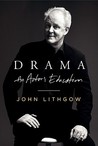
Book Review: “Drama: An Actor’s Education”

Drama: An Actor's Education

Drama: An Actor’s Education by John Lithgow

My rating: 4 of 5 stars


I listened to the author perform this book, and it was a good choice. John Lithgow is fine actor who can, by turns, be serious and funny. And by turns, so is this memoir and hearing a practiced performer read his own interesting and entertaining book as an extra dimension.

This is a book as much about Lithgow’s father as about himself. His father was an actor and theater entrepreneur, though like most entrepreneurs, Lithgow’s father had many downs or wrong turns. Lithgow learned many things from moving from place to place with his peripatetic family: how to be an “actor” to try to fit into his new schools, what it was like to be lonely, the need for approval to the point that you give up maybe too much of yourself, but also discovering his passion for performing, following in his father’s footsteps, and succeeding in many ways that his father did not.

As with most memoirs, it skips over parts of his life, parts, such as his relationship with his older brother, that I wanted to know a little more about. And also, the memoir doesn’t include any experiences involving what many folks may know him best for: the character of Dr. Solomon on Third Rock From the Sun. But even with these omissions, I highly recommend this memoir, and it really deserves 4.5 stars, but I’m not allowed to do half stars. Thank you, Mr. Lithgow for writing this book and for providing the dramatic reading for the audio version.


View all my reviews

Leave a comment

Filed under 2019, book review, books

The best recent science fiction – review roundup

Eric Brown on Chris Beckett’s Mother of Eden; Becky Chambers’s The Long Way to a Small, Angry Planet; Stephen Palmer’s Beautiful Intelligence; Ian Sales’s All That Outer Space Allows; SL Grey’s Under Ground; Alex Lamb’s Roboteer

by Eric Brown

Source: http://www.theguardian.com/books/2015/jul/31/science-fiction-roundup?CMP=twt_books*gdnbooks

Chris Beckett won the 2013 Arthur C Clarke award for his novel Dark Eden, about the survival and adaptation of human colonists on a world without light. The sequel, Mother of Eden (Corvus, £17.99), begins generations later, charting the growth and political divisions between the colonists. It follows the rise of Starlight Brooking, a humble fishergirl, and her quest to bring equality and revolution to Edenheart, a settlement ruled by a conservative patriarchy. Beckett doesn’t do traditional heroes and villains: Starlight Brooking is contradictory and flawed, at once brave and vulnerable, and likewise his villains are portrayed with sympathy and understanding. He also eschews easy answers and formulaic plotting; where a hundred other writers would have Starlight triumph over her enemies, her victories are on a more profound and personal level, and not without tragedy. Mother of Eden is a masterpiece.

When the captain of the Wayfarer starship is offered a job travelling to a faraway planet that could make him and his crew financially secure, he agrees despite the dangers involved.Such a precis might suggest that Becky Chambers’s first novel, The Long Way to a Small, Angry Planet (Hodder & Stoughton, £18.99), originally self‑published and shortlisted for the Kitschies awards, is an action-adventure space opera. But this is a slow, discursive novel of character as the motivations of the diverse and likable crew, comprising humans and aliens, are laid bare for the reader’s delight. It is a quietly profound, humane tour de force that tackles politics and gender issues with refreshing optimism.

Stephen Palmer’s marvellous ninth novel, Beautiful Intelligence (Infinity Plus, £8.99), posits a beleaguered 22nd century in which oil has run out, water is scarce, and in a neat inversion of the contemporary world order, Europe is an economic ruin and Africa the promised land. Two techno wizards abscond from a Japanese laboratory, each attempting to develop artificial intelligence according to their own philosophies – one based on the social intelligence theory of consciousness, the other on a linguistic approach – but billionaire tech-mogul Aritomo Ichikawa will stop at nothing to get them back. What follows is a thrilling chase across a ravaged Europe, a burgeoning North Africa and balkanised US, interleaving excellent action set-pieces with fascinating philosophising on the nature of consciousness. A gripping read to the poignant last line.

More at: http://www.theguardian.com/books/2015/jul/31/science-fiction-roundup?CMP=twt_books*gdnbooks

Leave a comment

Filed under 2015, book review, books

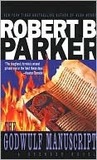
Book Review: “The Godwulf Manuscript”

The Godwulf Manuscript (Spenser, #1)The Godwulf Manuscript by Robert B. Parker
My rating: 4 of 5 stars

This was actually a reread, having read all the Spenser novels. Shows signs of being a first novel and the Spenser here is not quite the Spenser of the later books, but the elements are here. It is worth reading and enjoying either as a first-time reader or coming back to it again.

View all my reviews

Leave a comment

Filed under 2015

Book review: John D. MacDonald Before Travis McGee

Book Review: John D. MacDonald Before Travis McGee – WSJ.

There’s a special kind of poignancy—amounting at times to pure excruciation—in seeing a great writer get famous for his worst books. When people bring up John D. MacDonald, they are almost always thinking of the dopey series of adventure stories he wrote about a Florida beach bum named Travis McGee. Ignored and forgotten are his early novels, 40 of them, which he poured out in one decadelong creative rush in the 1950s—thrillers, crime dramas, social melodramas, even science fiction—that taken together make him one of the secret masters of American pop fiction.
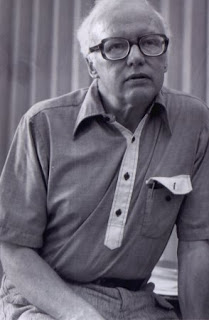
John D. MacDonald

John D. MacDonald

There is some hope that the situation may be about to change. Random House is engaged in a major effort to make almost all of MacDonald’s work available again. Inevitably, pride of place is being given to the McGee series, now reissued in spiffy trade paperbacks—all 21 of them, written between the early 1960s and MacDonald’s death in 1986, identifiable by their cutesy color-coded titles (“Darker Than Amber,” “Dress Her In Indigo,” “Pale Gray for Guilt”) as though they were a noir-inflected line of designer paint chips.

They were meant to be commercial products, and their main appeal today is nostalgia. They’re a kind of mausoleum of postwar American machismo. McGee is the classic wish-fulfillment daydream: an idler on a permanent vacation, who lives on a houseboat on Florida’s Atlantic Coast. He is tanned, ruggedly handsome and muscular; irresistible to women (something about his rueful romantic melancholy and his preference for athletic, commitment-free sex); and intimidating to men (in the late and feeble “Free Fall in Crimson,” where McGee should by rights be filling out membership forms for AARP, his superior masculinity awes and humbles a motorcycle gang).

In novel after novel, nobody ever bests McGee, nobody ever seriously challenges him—though the bad guys do sneak up behind him and knock him unconscious so many times you wonder if he needs a neurologist on speed dial. Meanwhile, the action keeps grinding to a halt so McGee can vent his opinions on contemporary life: the best power tools, the perfect cocktail, the proper way to set up stereo speakers, the menace of air conditioning in grocery stores. These opinions are notable mainly for their unconscious philistinism—as when the perfect dinner menu proves to be this staccato bark: “medium rare, butter on the baked, Italian dressing.” No real man in those days ever ate anything but steak, potato and salad.

But then there’s the rest of MacDonald’s oeuvre. Random House is issuing these in a jumble of paperback reprints and e-book exclusives, but at least they’re there, and no longer need be scrounged out at ruinous prices from the secondhand market. These are the books MacDonald did before he invented McGee, when he was trying out every conceivable pop genre of the postwar market, from soft-core sex comedies to psychological horror.

Article continues at: http://online.wsj.com/news/articles/SB10001424127887323324904579040672688388630

2 Comments

Filed under book review, John D. MacDonald