Tag Archives: best books on writing

The Absolute Best Books On Writing | BookBaby Blog

The list of favorite books on writing can be very different from one author to another. I’ve scoured 10 “top” lists to see which titles spanned the gamut.

Source: The Absolute Best Books On Writing | BookBaby Blog

By Dawn Field

What are your favorite books on writing? Do you have a large collection? How do you expand your corpus when you feel like reading another? Which would you recommend?

There are a huge number of books on writing and if you want to pick the absolute “best,” you have two choices. The first is to pick books that the most people have read and enjoyed. The second is to admit that the best books for each writer will be different. If you are a poet, nonfiction writer, or romance aspirant, you might want specialist advice and information.

Popularity contest

To find the books that are most popular, I looked at the intersection of lists of favorites — and I found an interesting pattern. If you combine the top books on Amazon and the picks found in a range of “top book” articles (Steven Spatz‘ 5 favorites, Shaunta Grimes‘ top 10, Jerry Jenkins’ “12 best,” Jeff Goin‘s “best books,” SmartBlogger‘s “9 Essentials,” The Write Life‘s “9 of the best,” Barnes & Noble‘s “6 best,” and Paste‘s “10 best”) we see some perennial favorites, but overall, surprisingly little overlap.

A few classics appear repeatedly, but most of the recommended books on writing only appear once. This is because excellent, but specialist, books fall down the ranks. The perfect book for you might never rank a “top 10” list of general writing books.

So, who are the winners? Two books stand head and shoulders above the rest in the tally of appearances. The winning category is “writers writing on writing” and the two top books are Stephen King’s On Writing: A Memoir of the Craft and Anne Lamott’s Bird by Bird: Some Instructions on Writing and Life.

Other books often in the top lists are Strunk and White’s The Elements of Style and two on creativity: Julia Cameron’s The Artist’s Way: A Spiritual Path to Higher Creativity and Steven Pressfield’s The War of Art: Break Through the Blocks and Win Your Inner Creative Battles.

Most at the rarefied top of the normative lists have some good years on them. Remember the classics now “too old” to rank on such modern lists. This includes Joseph Campbell’s The Hero With a Thousand Faces which describes the hero’s journey that inspired Star Wars, Aristotle’s Poetics (which comes in various translations and interpretations from modern authors), and John Gardner’s The Art of Fiction: Notes on Craft for Young Writers.

New books continuously appear. Harvard linguist Stephen Pinker’s The Sense of Style: The Thinking Person’s Guide to Writing in the 21st Century already ranks as a modern classic update to the Elements of Style and writer and teacher John McPhee’s Draft No. 4: On the Writing Process is just out for nonfiction.

If you want to hear the advice of an expert editor and you are interested in nonfiction, go for Sol Stein’s On Writing. Blake Synder’s Save the Cat: The Last Book on Screenwriting You’ll Ever Need is a textbook in screenwriting.

And the lists go on and on.

Just look at this list by Booker prize-winning author DBC Pierre in The Guardian to see how different and unique a personal choice list can be. It includes The Prince by Niccolò Machiavelli to “discover what villains are born knowing.”

The best books to add to your collection fill the biggest gaps in your knowledge or provide the most inspiration. This could mean getting a tip from a colleague or mentor or scrolling curated lists to seek out something that matches your interests. Book Riot has a list of “100 Must-read, Best Books On Writing And The Writer’s Life.”

The choices might seem overwhelming, but it helps that you can download opening chapters for free on Kindle to have a look at style and content.

How many have you read? Which should you read next? In the end, pick to match your tastes and needs. The absolute best are the ones that help you most.

Leave a comment

Filed under 2019, book list, writing tip, Writing Tip Wednesday

The 27 Best Books on Writing

Writing is hard, and defining yourself as a writer can be even harder. Here’s our exhaustive list of the best books on writing when the blank page beckons.

Source: The 27 Best Books on Writing

Writing is, as a general rule, hard. Defining yourself as a writer can be even harder. Sure, there are other difficult practices like law and medicine out there, but a person becomes a lawyer or a doctor when he or she passes a series of exams and graduates from a certain school. Writing doesn’t always work that way. There aren’t tests to study for and facts to memorize. Where are we supposed to learn how to write?

From grammar rules to publishing advice to personal narratives, these books on writing reveal in intimate detail the ins and outs of what it means to call yourself a writer. Sometimes harsh, sometimes funny, but always honest, they can be thought of as a kind of syllabus for writing. Whether you’re an aspiring artist working on your first drafts or a seasoned veteran in the publishing world, these are some of the best books on writing with insight and wisdom that can support you at all stages of your writing process.

Books listed include:

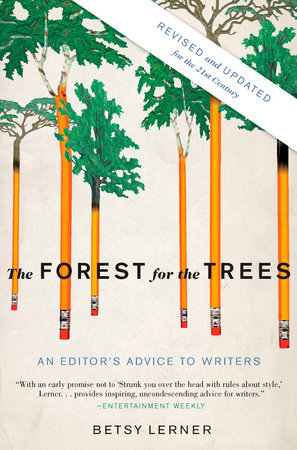
The Forest for the Trees (Revised and Updated)
An Editor’s Advice to Writers

by Betsy Lerner

For both established and prospective authors alike, the publishing house can seem like a jungle. Luckily, Betsy Lerner is here to lead a safari, citing her vast collection of experiences as an editor as her field guide. The Forest for the Trees motivates writers by helping them get over their fear of the unknown. It’s less about taming the wilderness and more about facing the demons of self-doubt and sloth that live in every person’s own mind.

***

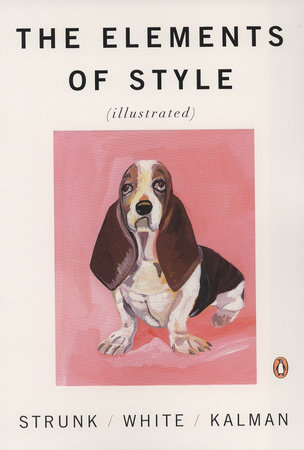
The Elements of Style Illustrated

by Strunk, White, Kalman

William Strunk and E.B. White’s The Elements of Style is so widely known that we’re sure you already have a copy, but of course we had to mention it. The only style guide to ever appear on a bestseller list, this book should be your go-to if your writing is in need of an infusion of clarity. Plus, this particular edition is illustrated by Maira Kalman, adding a visual element of style to the classic.

***

Story Engineering

by Larry Brooks

Larry Books turns a technical eye to the writing process in Story Engineering. If you don’t properly plan out your story prior to setting pen to paper, he argues, your storytelling won’t be as effective as you’d like it to be. To remedy this, he takes readers through six core elements of storytelling: concept, character, theme, story structure, scene construction, and voice.

***

Naked, Drunk, and Writing
Shed Your Inhibitions and Craft a Compelling Memoir or Personal Essay

by Adair Lara

Adair Lara’s Naked, Drunk, and Writing is a must-read for any memoirist or personal essayist. With experience as a teacher, editor, and, of course, writer, Lara’s know-how will help readers through problems like how to face your family after they’ve read your work and how to find an agent who will fight for you. The perfect mix of tough love, comic relief, and passion, Lara’s book is invaluable for anyone who needs a little help telling their story.

***

How to Write a Damn Good Novel

by James N. Frey

James N. Frey’s overarching guide will be of use to both the novice and the seasoned, published writer. He provides advice for how to overcome writer’s block and fear of the blank page, how to turn a critical eye to your own writing, and more. Frey’s book is one to keep within arm’s reach while writing, to grab during those moments when you need to take a step back from your work and get back to basics.

***

On Moral Fiction

by John Gardner

Morality and art have a complicated relationship, but John Gardner faces it fearlessly in this book-length essay. By Gardner’s way of thinking, all real art is moral, but morality doesn’t necessarily have to do with codes of conduct and submission to a Higher Power; it is the ability of art to point to some human value. The harsh lines he draws to distinguish “art” from “not art,” may frustrate some, but even in that case, this book’s ideas stick in the reader’s head.

***

On Writing

by Stephen King

If you’ve ever read a book by renowned American horror novelist Stephen King, you’ve probably wondered just how he comes up with his ideas. For the answer, look no further than On Writing, King’s memoir where he describes his writing process, including anecdotes about how he started some of his most iconic stories. In addition to recounting his personal experiences, he dedicates a whole chapter to grammar and offers his advice on form. It’s a great read for anyone in need of inspiration, and how better to make you pay attention than Mr. King?

***

The Writer’s Journey

by Christopher Vogler

Movie lovers will appreciate this book from Christopher Vogler. He exemplifies his writing tips with movies, a practice that makes this instructional especially helpful for screenwriters. Having received praise from writers and directors such as Darren Aronofsky (Black Swan) and Bruce Joel Rubin (Ghost), The Writer’s Journey can boast its status as an essential to anyone looking to write the next Oscar nominated film. It’s also an excellent field guide for a novelist stuck in a plot maze and desperate to get out.

***

A Poetry Handbook

by Mary Oliver

Imagine if you could get help with the very basics of writing poetry from a Pulitzer Prize-winning poet? Fact is, you can via Mary Oliver’s book A Poetry Handbook. The handbook is written in a way that makes it a perfect resource for both teens and adults as they start on their poetry journey – and is a useful refresher for veteran poets as well.

***

For the full list, with brief descriptions and links to buy them, go to http://www.signature-reads.com/2016/10/the-27-best-books-on-writing/?ref=PRH6E5971A08F&aid=randohouseinc31159-20&linkid=PRH6E5971A08F

Leave a comment

Filed under 2016, advice