Tag Archives: authors

Why have we forgotten Jack the Ripper’s victims? – books podcast | Books | The Guardian

Historians Hallie Rubenhold and Lindsey Fitzharris discuss their books The Five and The Butchering Art

Source: Why have we forgotten Jack the Ripper’s victims? – books podcast | Books | The Guardian

For hundreds of years, people have been fascinated by true crime and death, but the blurred line between real stories and entertainment can uncomfortably inflect our knowledge of the truth – and our empathy for people in the past.

Two historians are doing their bit to make us reappraise what we know about such histories. Hallie Rubenhold is the author of The Five, tracing the lives of the five women killed by Jack the Ripper. And Lindsey Fitzharris’s The Butchering Art is a history of Victorian medicine and the life of pioneering surgeon Joseph Lister, which includes details of riveting medical cases and shows the reality behind the gory details.

Reading list

The Five by Hallie Rubenhold (Hodder)
The Butchering Art by Lindsey Fitzharris (Penguin)

Leave a comment

Filed under 2019, authors

6 Famous Authors With Shocking Beliefs | Inverse

Source: 6 Famous Authors With Shocking Beliefs | Inverse

When we fall in love with a novel, we sometimes believe we come to know its author just by reading the book. From reading the Harry Potter novels one can easily conclude that its author — J.K. Rowling — is intolerant of oppression, politically progressive, a strong believer in diversity, and most certainly, British. All of these things about Rowling are overwhelmingly true, though if we found out she hated children, we’d probably be totally scandalized. (She doesn’t, thankfully).

Similarly, if you read Robert A. Heinlein’s Stranger in a Strange Land you might erroneously assume the author was a free-love hippie, when in fact, Heinlein’s libertarian and conservative views couldn’t be further from the tone of that particular novel. With Robert Heinlein and Stranger in a Strange Land, it’s almost as if the novel’s free-love protagonist offers a mirror image to the novelist — it’s Dr. Jekyll to a Mr. Hyde, say — something that is true of other writers on this list. Here are six super-famous writers with beliefs that are either inversions of their literary reputations, or just straight-up fascinating.

Philip K. Dick Thought He Was a Robot and, Also, the Spirit of Elijah

Okay, so this one isn’t too shocking. In addition to believing he was contacted by intelligences from beyond, the prolific and visionary sci-fi writer Philip K. Dick also toyed with the idea that he may, in fact, have been a robot. While the events of many of his novels (notably Do Androids Dream of Electric Sheep?) certainly check with this passing fancy of Dick’s, he also flirted with the idea that he was possessed by the spirit of the biblical prophet Elijah. So, next time you’re at a Seder, ask if you can leave something out for Philip K. Dick and see if anyone gets it.

Sir Arthur Conan Doyle Believed in Fairies

In Conan Doyle’s short story “The Adventure of the Sussex Vampire” the protagonist — the great Sherlock Holmes — says, “This Agency stands flat-footed upon the ground and there it must remain. The world is big enough for us. No ghost need apply.” Throughout the 56 short stories and four novels chronicling the adventures of Sherlock Holmes, never once does the stoic detective flirt with a belief in the supernatural or paranormal. And yet, late in his life, the creator of the uber-rational Sherlock Holmes, Sir Arthur Conan Doyle himself, asserted frequently that he had seen fairies and other supernatural creatures. Perhaps when Conan Doyle attempted to kill off Sherlock Holmes, he was attempting to destroy his rational side to have more fun with fairy thoughts. Either that, or fairies are totally real.

Anne Rice Found God
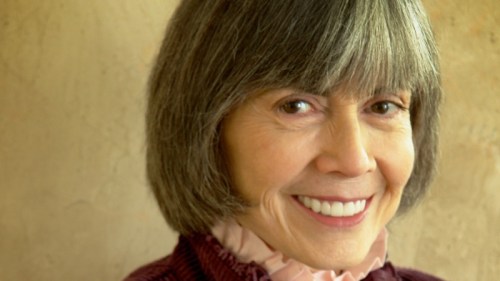
The author of Interview With the Vampire briefly became extremely pious, and even authored Christian texts (including her novel Christ the Lord: Out of Egypt). While the steamy and grotesque nature of her vampire books seems to be in stark opposition to traditional Christianity, as of 2010, Anne Rice maintains that she is still “committed to Christ.” But to be clear, Rice did officially leave the Catholic Church because she felt that being a “Christian,” was “quarrelsome” and “hostile.” It’s unclear if there are any parallels between her feelings about quarrelsome religious folks and the frequently quarrelsome vampire, Lestat.

James Joyce Thought Radio Controlled the Weather

In Sylvia Beach’s excellent memoir, Shakespeare and Company, the publisher and proprietor of the famous Parisian bookstore recounts her fascinating dealings with the late author of Ulysses, James Joyce. One interesting tidbit was Joyce’s growing impatience with the rise of radios in culture. Specifically, Joyce thought there was obviously some kind of correlation between the surge of radios use and rainstorms in France. Climate change deniers, take that! Or actually, don’t. Let James Joyce have it.

Hemingway Wanted to Work for the KGB?
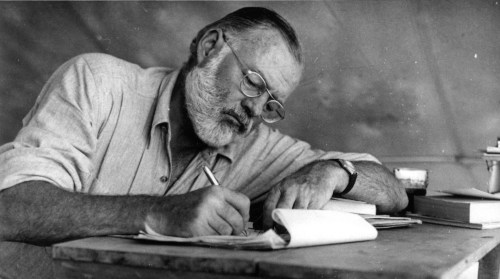
While this one is disputed, there is some indication that Ernest Hemingway was recruited by the KGB in 1941 and that he was a secret agent named “Argo.” The only problem is that apparently Hemingway was really bad at being a double agent — assuming he really wanted to be one — as he never really supplied the KGB with any good intelligence. While we tend to think of Hemingway as an American man of his time (as he’s portrayed in Midnight in Paris), his real-life political leanings were certainly all over the place. While it might be surprising that Hemingway had communist beliefs in the ‘40s, it’s not totally implausible.

Stephen King Hates Adverbs

Stephen King may be the undisputed master of horror, but there’s only one thing truly fears: adverbs. King maintains that adverbs were created with “the timid writer in mind.” He may be an extremely creative guy, but I don’t want to even think about how many grotesque and sickening adverbs I’ve overzealously employed to get my points across throughout the years.

Leave a comment

Filed under 2017, authors

Amazon Is NOT the Vladimir Putin of the Publishing World – The Daily Beast

Amazon Is NOT the Vladimir Putin of the Publishing World – The Daily Beast.

by Nick Gillespie

In its battle with Hachette, Amazon is being compared to Putin and the Mafia—by critics who want you to pay more for books.

Can you believe those…those…those…sons of bitches at Amazon? After launching almost 20 years ago and making virtually every book—new, used, dead-tree, electronic, audio, and I’m guessing any day now, olfactory—available to everyone in America at good-to-great prices, the company’s true character now stands revealed. It’s not pretty, folks. Despite a huge market share, Amazon apparently still wants books, especially the e-books that everyone agrees are the future of the medium, to be cheaper than what publishers and big-name authors want you to pay for them.

Just who the hell does Amazon think it is? Maybe a bare-chested tyrant who used to work for the KGB? Amazon is “like Vladimir Putin mobilizing his troops along the Ukrainian border,” a proprietor of an “e-book discovery site” tells The New York Times. “A bully,” offers Richard Russo, the novelist and president of the Authors Guild (which knows exactly how to bully mere “writers”). Amazon, says author James Patterson, who published 13 detective books last year, is waging “war” and doing unspeakable things for which “the quality of American literature will suffer.” No, wait. That’s all wrong. Amazon isn’t like a Russian despot waging a war, says Dennis Loy, proprietor of the small publisher Melville House. It’s more like “the Mafia.”


More at: http://www.thedailybeast.com/articles/2014/06/05/amazon-is-not-the-vladimir-putin-of-the-publishing-world.html

1 Comment

Filed under Amazon, book publishing, publishing

E-book pricing: lawsuit filed

Source: http://www.latimes.com/entertainment/news/la-et-apple-authors-20120413,0,6062761.story

Lawsuit against Apple: Writers wary of action by Dept. of Justice

Michael Connelly and Sherman Alexie are among authors who view the Justice Department’s suit against Apple and five publishers as acting against writers’ interests.

By Carolyn Kellogg, Los Angeles Times

April 13, 2012

When the Department of Justice and state officials announced their lawsuits against Apple and five major publishers Wednesday, it sent a ripple of anxiety through the talent at the industry’s heart.

“I’m in a bit of an awkward position because this has pitted my publisher against the retailer that far and away sells more of my books than any other,” says Michael Connelly, the bestselling mystery novelist. “I don’t want to bite the hand that feeds me, and both of these hands feed me.”

Connelly is published by Little, Brown, which is owned by Hachette, one of the publishers named in the suits that has since agreed to settle.

The scrutiny given to Apple’s alleged arrangement with the publishers — they are accused of colluding to raise the price of e-books, which they have denied — is largely perceived in publishing as shifting the balance of power in bookselling to Amazon. Publishers rely on Amazon as a major source of print book sales and have generally cooperated with its policies. When it launched the Kindle, Amazon deeply discounted e-book prices and offset the loss with profits from other parts of its business. Apple has been the first significant alternative to Amazon as an e-book retailer.

“I think the DOJ’s suit is misguided,” explains Andrew Wylie, the most powerful agent in publishing, who counts a number of Nobel Prize-winners among his 800 clients. “I think it is acting against the interests of culture and diversity in publishing. I think it is acting against the interests of authors.”

In part, that’s because the pricing of e-books directly affects the way authors can earn a living — and the publishing ecosystem that sustains them. “I know for a fact that my publishers and my editors publish books that they know are going to lose money but they think should be of the world,” says National Book Award-winning writer Sherman Alexie. “The John Grishams of the world support the experimental nature of publishing.” The DOJ’s suit, he says, “gave Amazon explicit permission to go for a total monopoly.”

Connelly observes that the DOJ suit seems to be unbalanced. “I believe in fair play. So I feel that if the government is going to step in and put controls on how publishers act to ensure a competitive marketplace, then I hope the government will be just as vigilant in guarding this amazing, creative and important industry from being monopolized by one entity,” he says. ” Amazon spreads my work far and wide. You can’t beat that. I’m very grateful. But I don’t want a world where there are no bookstores or other venues for discovering my work or the work of any other writers.”

For a writer just starting out, the suit served as a reminder that publishing is in flux. “I love writing and am going to continue writing, but having all my eggs in one basket is kind of scary,” says Elliott Holt, whose debut novel will be published by Penguin in 2013.

carolyn.kellogg@latimes.com

Copyright © 2012, Los Angeles Times

[Editor’s note: while I read and enjoy the works of Michael Connelly and Sherman Alexie, I don’t think the lawsuit is “misguided.” I think colluding to fix prices is misguided and as history shows, only furthers to protect the profits of those on the inside (Those fixing the prices.) at the expensive of those on the outside (Those having to pay them). Apple should not be allowed to set prices and neither should Amazon, but in this case it appears that Apple with the aid of publishers was doing just that, which profited them at the expense of book buyers. To read earlier articles on this, click on one of the Category listings below: e-book, publishers, or publishing.]

Leave a comment

Filed under authors, e-book, publishers, publishing