
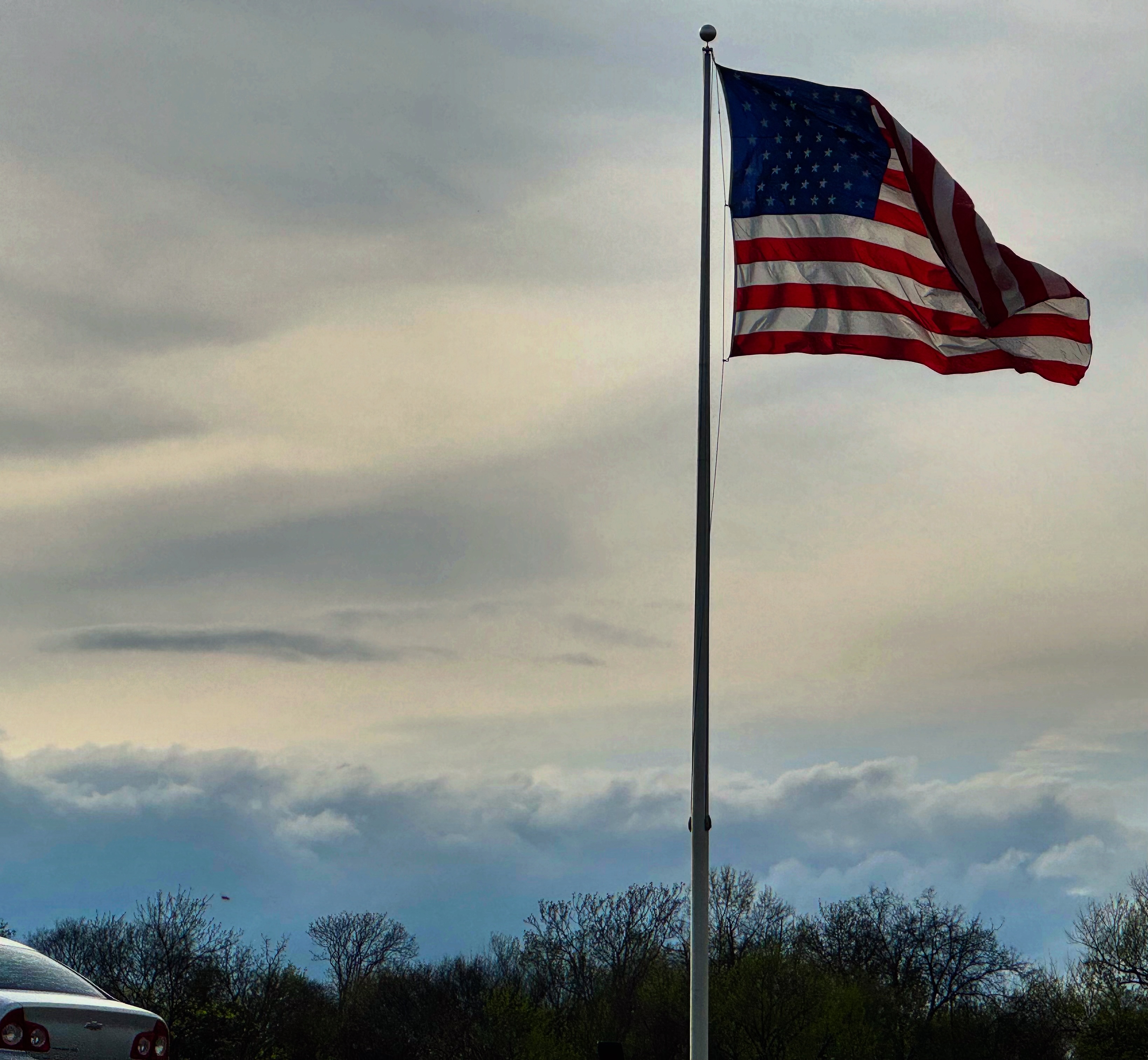
Wind
Wind ripples the flag, /
slapping at the stars and stripes, /
tattering the dreams.
.
.
#wind #flag #slapping #tattering #dreams #haiku #poem #poetry #haiga #photo #knoxvilletn #davidebooker #april #thursday #040425 #2025
Wind
Wind ripples the flag, /
slapping at the stars and stripes, /
tattering the dreams.
.
.
#wind #flag #slapping #tattering #dreams #haiku #poem #poetry #haiga #photo #knoxvilletn #davidebooker #april #thursday #040425 #2025

America is…
America is a /
flatbed adventure with /
pink insulation.
.
.
#haiku #poem #poetry #photooftheday #america #america_is #insulation #adventure #flatbed #monday #september #2020 #knoxville #tennessee #davidebooker #091420
Filed under 2020, haiku, photo, Photo by author, photo by David E. Booker, poem, poet, poetry, poetry by author, Poetry by David E. Booker
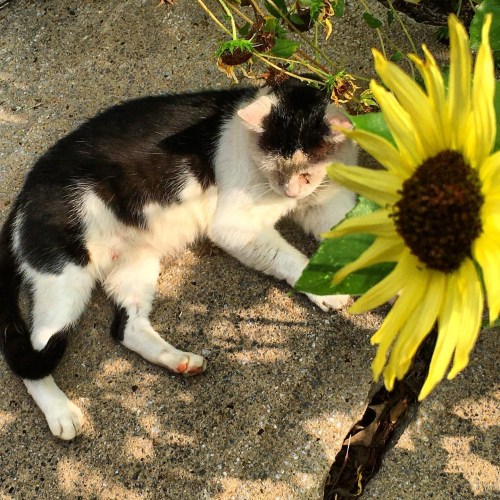
America is…
a found cat resting /
beneath sun and sunflower /
old dreams and concrete.
.
.
#haiku #poem #poetry #wednesday #september #2020 #sun #sunflower #cat #dreams #concrete #photooftheday #davidebooker #oldnorthknoxville #knoxville #tennessee #091620
Filed under 2020, haiku, Old North Knoxville, photo, photo by David E. Booker, poem, poetry, Poetry by David E. Booker
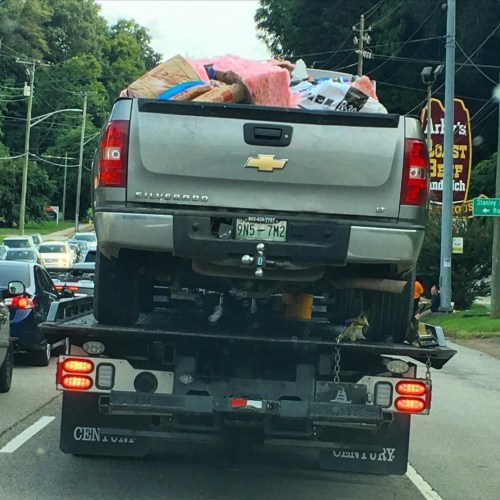
America is…
America is a /
flatbed adventure with /
pink insulation.
.
.
#haiku #poem #poetry #photooftheday #america #america_is #insulation #adventure #flatbed #monday #september #2020 #knoxville #tennessee #davidebooker #091420
Filed under 2020, haiku, photo, photo by David E. Booker, poem, poetry, Poetry by David E. Booker

Fantasyland: How America Went Haywire: A 500-Year History by Kurt Andersen
My rating: 5 of 5 stars
I rarely give a book five stars, because that would mean it is perfect. While this book is not perfect, it deserves its high rating because of the focus, the breath, and the aim of the book. Part social history. part commentary. This review of American exceptionalism (in both senses of the word) is based around the concept of what Andersen refers to as the Fantasy Industrial Complex, and how for both good and ill, that complex has shaped America, and how, at present, it is undoing America. The style of the book is readable. It is far from a “dry tome.” It goes back as far as the Puritans and comes up to the present and the election of the Fools Gold president currently occupying the Oval Office. A book worth your time.
View all my reviews
Filed under 2020, book review
 About a quarter of American adults (26%) say they haven’t read a book in whole or in part in the past year. Who, exactly, are these non-book readers?
Source: Who doesn’t read books in America? | Pew Research Center
by Andrew Perrin
About a quarter of American adults (26%) say they haven’t read a book in whole or in part in the past year, whether in print, electronic or audio form. So who, exactly, are these non-book readers?
Several demographic traits correlate with non-book reading, Pew Research Center surveys have found. For instance, adults with a high school degree or less are about three times as likely as college graduates (40% vs. 13%) to report not reading books in any format in the past year. A 2015 Pew Research Center survey shows that these less-educated adults are also the least likely to own smartphones or tablets, two devices that have seen a substantial increase in usage for reading e-books since 2011. (College-educated adults are more likely to own these devices and use them to read e-books.)
Adults with an annual household income of less than $30,000 are about twice as likely as the most affluent adults to be non-book readers (33% vs. 17%). Hispanic adults are also about twice as likely as whites (40% vs. 23%) to report not having read a book in the past 12 months.
Older Americans are a bit more likely than their younger counterparts not to have read a book. Some 29% of adults ages 50 and older have not read a book in the past year, compared with 23% of adults under 50. In addition, men are less likely than women to have read a book, as are adults in rural areas compared with those in urban areas.
The share of Americans who report not reading any books in the past 12 months is largely unchanged since 2012, but is slightly higher than in 2011, when the Center first began conducting surveys of book-reading habits. That year, 19% of adults reported not reading any books.
Given the share that hasn’t read a book in the past year, it’s not surprising that 19% of U.S. adults also say they have not visited a library or a bookmobile in the past year. The same demographic traits that characterize non-book readers also often apply to those who have never been to a library. For example, men, Hispanics, older adults, those living in households earning less than $30,000 and those who have no more than a high school diploma or did not graduate from high school are the most likely to report they have never been to a public library.


 Booker's Blog