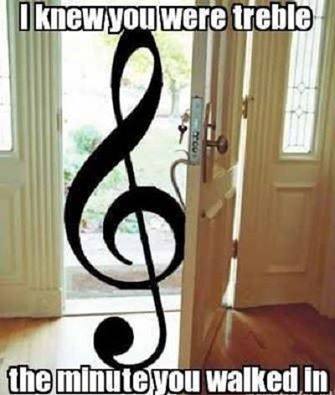
New words to live by: “Freeman’s palate”

It is time, once again, for New words to live by. This is a word or phrase not currently in use in the U.S. English lexicon, but might need to be considered. Other words, such as obsurd, crumpify, subsus, flib, congressed, and others, can be found by clicking on the tags below. Today’s New Word might be considered a portmanteau word. It is created by combing a proper man and a noun. Without further waiting, Freeman palate.

OLD WORDS
Freeman, n. 1. Proper name.

palate, n. 1. Roof of the mouth (both hard and soft palate), separating the oral cavity from nasal cavity. 2. A sense of taste. 3. Mental appreciation, aesthetic or intellectual taste

NEW WORD
Freeman’s palate, n. 1. To be out at a restaurant and want what your lunch or dinner partner ordered once it has arrived over what you have ordered. It comes from Mark Freeman often hearing that from his lunch partner. That is, “Yours looks good. I should have ordered that instead of what I ordered.”

2. Can also be used in an aesthetic or intellectual sense as well. (“If he only had Freeman’s palate, he would have chosen a better dinner companion.”)

Leave a comment

Filed under 2016, new word, New words to live by

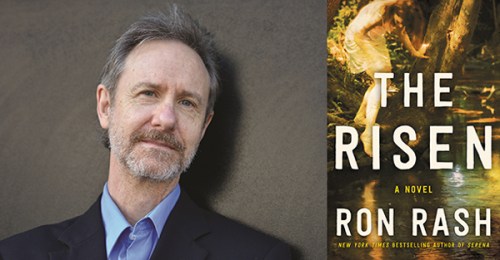
Not Just a Southern Writer: Ron Rash

Ron Rash talks about his latest novel and his attachment to the natural world.

by Kelly Crisp

Source: http://www.publishersweekly.com/pw/by-topic/authors/profiles/article/71271-not-just-a-southern-writer-ron-rash.html

Ron Rash has become established as a representative of Southern Literature, although after more than two decades writing poetry, stories, and novels, he transcends the notion of a southern writer. Rash’s works have embraced a universal humanism and naturalism: his characters are both sustained by and compromised by the unpredictable natural world.

The Risen by Ron RashIn his latest novel, The Risen (Ecco, Sept.), the narrator, Eugene, while fishing with his brother during the summer of 1969, sees a naked teenaged girl with flowing red hair in the creek, the vision of her so fleeting that he wonders if he’s seen a mermaid. Visiting from Florida, Ligeia is no mermaid, but she is an exotic and free-spirited creature who introduces the boys to the excitement of the 60s, experiences they keep secret from their small town, and the watchful eyes of their controlling grandfather.

Ligeia vanishes, as does the close relationship between the brothers as they move into adulthood. When her body surfaces 46 years later, so do the memories of that summer.

The mystery is central to this plot, and like many of Rash’s novels, the story is driven by suspense. But just under the surface, there are difficult questions involving poverty, child neglect sanctioned by religion, and abuse authorized by a self-righteous class system. These are challenging themes, and yet, there is nothing forced in Rash. His prose is clean and without affectation.

Describing fishing: “When a rod tip trembled, one of us got out to reel in what tugged the line. Often it was a knottyhead or catfish, but if a trout we gilled it onto our metal stringer.” And when Eugene’s brother would lift the string of fish from the cooling waters: “Through a gap in the canopy, the declining sun brightened the stringer’s silver sheen, flared the red slashes on the trout’s flanks.”

During our conversation on the eve of Rash’s trip to France for an Eco-Literature convention, where the theme was “Enchantment,” he tells me that “One thing that’s important for me in my work is to remind people that there is a natural world. It’s very easy to think we are not connected to it anymore, but we are, whether we want to be or not.”

His easy reverence is in direct opposition to the rendering of the natural world in TV and film as a creepy, possibly demonic, adversary—or at the very least a place to be wary if you wander too far without an iPhone. “It’s amazing,” Rash says. “When anyone goes out in the woods in a movie, you know something horrible is going to happen.”

While there is danger to irresponsible humans, and the body count can be intense in some of Rash’s more tragic works, often the most profoundly felt loss is that of a formerly protected, or undisturbed natural resource.
Family folklore, passed down from his older relatives, gave Rash the idea that the world is fundamentally enigmatic. “I want the world to be mysterious, I don’t want to know everything,” he says. “One of my great delights is when an animal, that is allegedly extinct, fools people. Jaguars have recently come back into the United States; I love those moments when the natural world surprises us, and reminds us maybe we don’t know as much as we think we do.”

To hear him describe childhood summers on his grandmother’s farm near the Blue Ridge Parkway in N.C., it’s clear why he’s a celebrated voice among the eco-engaged. “I was like Huck Finn,” he says. “My grandmother would let me go, let me wander. It was a gift. I was not afraid. I just reveled in it. The connections I made with the natural world stayed with me.”

Rash is aware that writing about the south brings the possibility, as he has said, of being softly dismissed as “just” a southern writer. Southern writing, he says, “is like any writing. It’s either good or it isn’t. It either transcends the region, or it doesn’t. The best writers from the south transcend the south. Ultimately Faulkner’s goal is not to show how exotic the south is. He has deeper concerns, and certainly Flannery O’Connor did too.”

That doesn’t mean the south is not Rash’s territory. His collection of poems entitled Eureka Mill, based on the mill where his grandparents and parents worked, draws attention to the suffering and loss of humanity that rural southerners felt (and feel) when they leave the farm for the mill. Narratives of southern exploitation are seamlessly woven into the poems, as in “The Stretch-Out,” when a girl of seventeen is exhausted from a brutal day at the mill, and miscarries a child during the night. She explains, “I cried but cried quietly/ and let the bed sheets clot and stain, so that my man and me might save/ what strength a full night’s sleep might give/ I closed my eyes and slept again.”

Constructions like “my man and me,” exhibit Rash’s ear for speech patterns. His stories are known for capturing the voice of a region, but, rendering that voice universally, so that it rings true to any ear, takes a great deal of care and modulation. To Rash, Richard Price is one of the best at translating regional voices onto the page. “In many ways I feel a much deeper connection to him than other writers in the United States,” Rash says. “He’s trying to capture the patois of New York cops and young people in the city, and at the same time, he is working toward the universal. People wouldn’t think that, because of what I write, I would connect with Richard Price, but I feel a real kinship with him.”

As exhibited in Eureka Mill and other collections, his finely honed craftsmanship is most salient in his poetry, which has a casual, addictive appeal. Often compared to Seamus Heaney, the association is especially apt considering the Celtic musical, oral, and folkways ties running deeply through the Appalachians. Palimpsest and layered possession are intrinsic realities for rural North Carolinians. Plowing a field in “The Vanquished” from this year’s Poems: New and Selected turns up “pottery and arrowheads/ bone-shards that spilled across rows/ like kindling, a once-presence/ keen as the light of dead stars.”

By situating himself as the faithful observer of the natural world, Rash makes land, and landscape, available to readers. His dramatizations aren’t driven by sentimentality, but rather complex dilemmas usually centered on a question of land exploitation, or the exploitation of former land-workers, like those stuck in North Carolina’s Eureka Mill, fleeced of their land and sense of purpose. With his latest novel, Rash again creates an irresistible conceit that transcends the South. But, of course, the importance of the South is undeniable.

Source: http://www.publishersweekly.com/pw/by-topic/authors/profiles/article/71271-not-just-a-southern-writer-ron-rash.html

Leave a comment

Filed under 2016, author

Photo finish Friday: “Picture of health”

The doctor is in ... the frame.

The doctor is in … the frame.

Commemorating 50 years of Star Trek. One of the original, iconic characters, Dr. Leonard “Bones” McCoy.

Leave a comment

Filed under 2016, photo by David E. Booker, Photo Finish Friday

Haiku to you Thursday: “Clamber”

Dark forest, empty trees /

Fog clamber over brown hills. /

Fall evening lives on.

Leave a comment

Filed under 2016, Haiku to You Thursday, poetry by author

Writing tip Wednesday: “Surviving rejection”

How the World’s Most Frequently Rejected Playwright Survives

written by Donald Drake

Source: http://www.pdc1.org/viewthisarticle.php?article=8

Several years ago, I made a profound discovery that has enabled me to weather the storm of criticism, rejection and inevitable, transient depression that is the lot of so many playwrights. What I discovered was how to make rejection work for me. Since playwrights spend far more time dealing with rejection than watching their plays being produced, every playwright should know about this.

I will explain how I made this discovery and what it has meant to me.
Might not be the best way to survive rejection, but it might work.

Might not be the best way to survive rejection, but it might work.

Might not be the best way to survive rejection, but it might work.[/caption]When I started writing plays 26 years ago and finished my first script, I mailed it out to several theaters and waited. And I waited. And I waited some more. I was still waiting as I finished my second play six months later. I sent my second script out to several theaters. And I waited. I was not enjoying playwriting.

Finally I got a response, in the form of my self-addressed, stamped envelope, which contained my first script and a form letter saying the theater didn’t want my script.

Though this was disappointing, in a strange way I felt validated. At least someone had read the script. There was a living, breathing human being on the other end of the line, or so I assumed in my naiveté. Other experienced playwrights conceded that a living, breathing human being probably did put the script into the return envelope, but what proof did I have that anyone actually read it.

Two months later I received my second rejection. The letter attached to the script said “I enjoyed learning about the characters; they are multi-dimensional. Also, I enjoyed the dialogue and how it worked effectively and moved the plot along.” But the theater didn’t want to do my play. This rejection surely proved that the living breathing person had read the script before putting it into the return envelope, though my more cynical fellow playwrights pointed out that no specific characters or specific plot points were alluded to.

Then I got the best rejection ever. The letter said: “I want to let you know that I intend to give my whole-hearted support to your play as a potential candidate for our season. Thank you for a fascinating new play.” Again no specifics were mentioned, but could theater people be so sadistic to say this about a play they had never read? Yes, I was told. I never heard from the theater again.

I brushed the cynicism aside. “Thank you for a fascinating new play.” The phrase kept coming back to me several times during the next couple of months as I pounded away at my computer with renewed enthusiasm, working on my third play. My initial sadness over not getting a production was being replaced by the joy of knowing that my work was being appreciated, though, admittedly, not enough to be produced. Every day when the post lady arrived with my mail, I eagerly looked for the tell-tale, 11-by-13-inch manila envelope, which would contain my script and hopefully an encouraging rejection letter.

I had discovered that I could lift my spirits by simply changing focus. Instead of looking for a production, which rarely if ever happens, I started anticipating nice rejections, which were now happening fairly frequently. I decided to capitalize on the discovery by keeping detailed records of the rejections. And so the Drake Rejection Database (DRD) was born. Ultimately the DRD would show what theaters sent the best rejections (by far the best come from England), the elapsed time between submission and rejection, the number of plays or sample dialogue pending, the total number of rejections to date and many other facts.

I started attacking rejection with abandonment. I came up with a clever way to identify theaters that did not even open envelopes but just threw scripts onto a pile or even worse into the trash can (though I suppose the trash can is no worse than a stack of scripts that will never be looked at). Slyly, I included with the synopses and sample dialogue I sent to theaters a self-addressed postcard with three boxes the assistant, to the assistant, literary manager could check.

“Please send script ___”

“Please don’t send script ___”

“Don’t send any more scripts ___.”

Theaters that never sent back postcards could be assumed to never open envelopes that contained unsolicited scripts. This ploy identified the bad theaters, the ones to stay away from. But how could I identify the good theaters? The answer to this question was contained in the rejection letters I was receiving. Any theater that actually commented on one of my plays was by definition a good theater. I made use of this vital information by including in the DRD abbreviated comments from theaters. For instance, a DRD entry for my play Final Edition looked like this:

COMMENT-FINAL “We are interested in your writing and would be eager to read and consider any other new plays that you might have.”

By doing a computer search for just “COMMENT,” I could identify theaters that were actually reading plays and choose them as the first theaters for future submissions.

Though I didn’t realize it at the time, the DRD would turn out to be an invaluable tool in quantifying the way theaters handled scripts and treated playwrights.

A few of the discoveries:

  • The likelihood that your unsolicited script will be rejected or totally ignored by a theater is 99.57 percent. That means no production, no showcase, no staged readings. Zip.
  • A little more than 41 percent of your scripts won’t even be read. I base this on the fact that 597 of my submissions prompted no return postcard or any other response. It was as if I had thrown the scripts into the trash bin on the way to the Post Office.
  • The chances of winning a competition are much better than having an unsolicited script done by a theater. Four percent of the 300 plays I submitted to contests won first or second prize.
  • Four hundred and thirty-five theaters in the U.S., Canada and Great Britain (and this includes the tiniest of the tiniest) claim to produce unsolicited scripts, but you can’t prove it by me. I sent 22 different plays, mostly full-lengths, to these theaters and got no productions. My reward was 835 rejection letters, mostly form letters. If you assume that the 597 submissions that were totally ignored constituted rejections, that would bring my rejection total to 1,432. The grand total rises to 1,720 if you include competitions that I didn’t win. Surely that entitles me to the title “The World’s Most Frequently Rejected Playwright.” So much rejection is not necessarily bad. In writing about a hugely successful playwright who had had experienced much rejection in his career, a Philadelphia Inquirer columnist wrote: “The irony of it, of course, is that the people who succeed the most are the people who have failed the most, because they are people who have tried the most.” (I have that quote enlarged and in a frame next to my computer, just below the framed manila envelope a theater returned to me with the words “REFUSED Return to Sender” scrawled in filter-tip blue across the front of it.)
  • There is a thin, silver lining to this growing dark cloud that I am presenting. Twenty percent of your rejection letters will include encouraging comments. The comments contain such words and phrases as: “promising,” “exciting,” “well crafted” “thought provoking,” “eager to read any other new play you might have,” “much to admire,” “remain interested in your work,” “compelled by your writing,” “moved by the brave way you handled such a delicate situation.” I’ve received 167 such rejections but none of the theaters offered to do anything with the plays they were commenting on.
  • The chance of getting an agent, if you haven’t had a major production, is about zero, though I don’t have large figures to support this. Just for the hell of it, I sent letters, CV and sample dialogue to 10 agents listed in the Dramatists Sourcebook asking to be represented by them. Only three bothered to reply and none of them wanted to represent me. One of the three replies was from a playwright, working as an agent, I had met in a competition where our two plays were being done. She said she wasn’t taking on new playwrights but she would pass my script on to other agents in her firm. I never heard from anyone.

I don’t want to give the impression that I have never succeeded with any of my plays. I have been a winner in 11 national competitions. One of my plays was done at the O’Neill. I’ve had four showcases, three of them in New York City, and seven productions. One of the productions was done in a theater where the literary manager was a best friend and another production was done in a theater where I was well known to the artistic director, which in itself says a lot about how to get a play produced.

In the 26 years I have been writing plays, I have made about $10,000 in grants, winnings from competitions and actual payment by a theater for a script. This is offset by the $8,876 I spent for script duplication, stationery and postage. Still I made a profit of $1,124. Having spent 34,000 hours writing plays during this period, my compensation comes to 3 cents an hour. (This doesn’t include the $3,000 or so I spent mailing scripts to competitions, so I guess I can’t even claim that meager profit.)

If I had achieved none of these things, would my philosophy and the DRD have been enough to sustain me? I would like to say yes, but I doubt it. I don’t think I could keep on writing if I cut out the middle man and threw all my scripts into the trash can myself after finishing them the way crossword puzzles are discarded once they’re completed. The distant hope that something could come from all this writing is probably necessary.

But this doesn’t change my take-home message. I have proven beyond doubt that any playwright who writes stage plays primarily to get produced or make money is delusional or masochistic. The joy must come from the writing itself, solving the myriad of problems that arise in creating a play, just as you enjoy fitting together the pieces of a puzzle to form a picture with no other reward expected.

I’m in particularly good spirits at this moment, which probably accounts for the fact that I am writing this, after thinking about doing it for several years. Much of the good feeling is coming from writing this essay and discovering that I have accomplished more than I thought. And one of my plays, written with another playwright for the Philadelphia Fringe, is currently in rehearsal. But even after the play closes and regardless of how the critics respond, or don’t respond, I’m sure I will continue to be a happy playwright.

I have scripts or sample dialogue pending in 78 theaters. And the DRD tells me that I will assuredly be receiving 15 letters of rejection with very encouraging comments in the coming months.

Leave a comment

Filed under 2016, writing tip, Writing Tip Wednesday

cARtOONSdAY: “nOTE tHIS”

Continuing the musical theme from yesterday’s joke:

The moment you walked in, the mood turned sharply, then flat-out became annoying.

The moment you walked in, the mood turned sharply, then flat-out became annoying.

[Editor’s note: yeah, it’s not a cartoon in the sense of being hand drawn fun.]

Leave a comment

Filed under 2016, CarToonsday

TMR Submissions | Just another The Missouri Review Sites site

Source: TMR Submissions | Just another The Missouri Review Sites site

A chance to get published. You can submitted electronically or by mail.

Leave a comment

Filed under 2016, contest

Monday morning writing joke: “Euphemism”

Isn’t that nice

Two Southern ladies were conversing on the porch swing of a large white-pillared mansion.

The first woman said, “When my first child was born, my husband built this beautiful mansion for me.”

The second woman commented, “Well, isn’t that nice.”

The first woman continued “When my second child was born, my husband bought me that fine Cadillac automobile you see parked in the drive.”

Again, the second woman commented, “Well, isn’t that nice.”

The first woman boasted “Then, when my third child was born, my husband bought me this exquisite diamond bracelet.”

Yet again, the second woman commented “Well, isn’t that nice.”

The first woman then asked her companion, “What did your husband buy for you when you had your first child?”

The second woman replied “My husband sent me to charm school.”

“Charm school!” the first woman cried “land sakes, child, what on Earth for?”

The second woman responded, “So that instead of saying ‘who cares?’, I learned to say ‘Well, isn’t that nice.'”

Leave a comment

Filed under 2016, Monday morning writing joke

Read This: The story behind Star Trek’s iconic, ceaseless sound effects · Great Job, Internet! · The A.V. Club

Very few programs in television history can be easily identified by their sound effects alone. The original 1966-69 run of Gene Roddenberry’s Star Trek belongs in that select fraternity, thanks to the efforts of sound mixer Doug Grindstaff and other craftsmen who toiled on the classic science-fictio

Source: Read This: The story behind Star Trek’s iconic, ceaseless sound effects · Great Job, Internet! · The A.V. Club

Leave a comment

Filed under 2016, TV show

Science Fiction Books For People Who Don’t Read Science Fiction

In case you thought the genre wasn’t for you.

By Tobias Carroll

Source: http://www.readitforward.com/bookshelf/science-fiction-books-people-dont-read-science-fiction/

Science fiction can be an acquired taste. Some readers grew up on it; others never quite saw the appeal of stories involving time travel, alien contact, space exploration, or the ways in which these concepts can be used to explore moral and intellectual debates. But if you’re a reader who’d like to ease their way into the genre, there are a few great places to begin. Some provide a well-written introduction to key science fictional tropes and concepts, while others juxtapose intensely human stories with headier conceptual elements. Here’s a look at fourteen books that introduce big ideas in accessible ways and present readers with a host of directions they can go from there.

Example:

Use of Weapons

IainBanks UseofWeaponsMuch of Iain M. Banks’s science fiction was set in the world of The Culture, a utopian society that encompasses massive amounts of space, and includes artificial intelligence, alien species, simulated afterlives, and more. But for all of that, Banks is also adept at writing memorable characters, and at the center of Use of Weapons, readers will find exactly that, in the person of the memorably-named Cheradenine Zakalwe—along with a structurally innovative method of telling the story.

Other books include:

  • The Water Knife by Paolo Bacigalupi
  • The Book of Strange New Things by Michel Faber
  • Bloodchild and Other Stories by Octavia E. Butler
  • Embassytown by China Miéville
  • Elvissey by Jack Womack
  • Definitely Maybe by Arkady Strugatsky & Strugatsky Boris
  • Midnight Robber by Nalo Hopkinson
  • Oryx and Crake by Margaret Atwood
  • The Einstein Intersection by Samuel R. Delany.

Details: http://www.readitforward.com/bookshelf/science-fiction-books-people-dont-read-science-fiction/

Leave a comment

Filed under 2016, books