Random Acts of Poetry: “O’ Motivation”

O’ Motivation, /

You lost gyration /

Of agitation /

And sometimes vituperation, /

Why can’t I overcome /

This constipation, /

This consternation /

And subjugation of mental triangulation /

That I feel /

Keeping me from my goals? /

O’ this usurpation /

Of my concentration /

Is no vacation /

But abdication /

Surreal. /

Must I face with total resignation /

The certain and declining titration /

Of the limpid constellation /

That is my soul?


–David E. Booker

Leave a comment

Filed under 2017, poetry by author, Random acts of poetry

Writing tip Wednesday: “How to find free classic books online — Quartz”

How to access free and legal copies of English and American classic literature online

Source: How to find free classic books online — Quartz

Add up all the textbooks and calculators that students need to buy and September can be rough for American parents and their children. While schools require purchases of the latest textbook editions each year, parents can acquire some books that never go out of date—and cost nearly nothing.

Many of the American and English literary works that are required reading are available online. You don’t need to know how to torrent, or hurt your eyes reading poorly scanned illegal PDFs, either; these books are available legally through publisher licenses. Here’s a few resources for finding To Kill a Mockingbird, The Great Gatsby, 1984, Of Mice and Men, Lord of the Flies, and other commonly required reading for free:

Your library and a device

If you’re not a member of a public library, join one. Many public libraries use OverDrive, an app that lets you borrow ebooks and audiobooks. Download OverDrive on a device, or use the site on your computer browser, and log in with your library card number. You could also try Libby, an app recently released by OverDrive with the same functionality and a better interface.

Availability depends on your branch, but there will be tons of classics. Some of the most popular may be on hold, but here are some currently available at my libraries in New York City and central New Jersey.

Available: Harper Lee’s To Kill a Mockingbird; Zora Neale Hurston’s Their Eyes Were Watching God; Amy Tan’s The Joy Luck Club; George Orwell’s 1984 and Animal Farm; Toni Morrison’s Beloved and The Bluest Eye; Lois Lowry’s The Giver; The Elements of Style; William Golding’s The Lord of the Flies; John Steinbeck’s Of Mice and Men.

Project Gutenberg (Australia)

Project Gutenberg collects ebooks in the public domain in the US. Its Australian counterpart does the same thing for books in the public domain in Australia, where laws are more lax than the US.

Available on the US site: Jane Austen’s Pride and Prejudice and Emma; Charles Dickens’s A Tale of Two Cities; Mark Twain’s The Adventures of Tom Sawyer and The Adventures of Huckleberry Finn; Leo Tolstoy’s War and Peace; Herman Melville’s Moby-Dick; Franz Kafka’s Metamorphosis; James Joyce’s Ulysses; Beowulf; Oscar Wilde’s Picture of Dorian Gray; Herman Hesse’s Siddhartha; Mary Wollstonecraft Shelley’s Frankenstein.

On the Australia site: George Orwell’s 1984 and Animal Farm; Virginia Woolf’s Mrs. Dalloway, A Room of One’s Own, and To the Lighthouse; Sinclair Lewis’s It Can’t Happen Here; Margaret Mitchell’s Gone with the Wind; F. Scott Fitzgerald’s The Great Gatsby and Tender Is the Night.

Open Library

A project of Internet Archive, Open Library plans to catalog every book in existence. A subset of the books in the database are accessible for free right now; others you can borrow after you join a waiting list. Below are some of the ones perpetually available.

Available: Leo Tolstoy’s Anna Karenina; Joseph Conrad’s Heart of Darkness; Henry James’s The Portrait of a Lady, The Ambassadors, and Daisy Miller; Edith Wharton’s Ethan Frome; Jane Austen’s Persuasion and Sense and Sensibility.

For any work by Shakespeare

All of Shakespeare’s poems and plays are in the public domain. MIT has a complete database.

Available: Every written work.

Scribd

Scribd is a subscription-based database of books and audiobooks, along with articles from paywalled sites like The New York Times and the Wall Street Journal. It costs $9 a month, but if you’re in a bind for one or two books, you can get a free 30-day trial.

Available: F. Scott Fitzgerald’s The Great Gatsby; Ray Bradbury’s Fahrenheit 451; Jack Kerouac’s On the Road; Aldous Huxley’s Brave New World; Margaret Atwood’s The Handmaid’s Tale; Ernest Hemingway’s For Whom the Bell Tolls and A Farewell to Arms.

Google Books

Google once had huge ambitions for a massive digital library of all the world’s books, but got defeated by copyright battles. If you choose “Free Google ebooks” when you search, you can find a few that are old enough to be in the public domain.

Available: Emily Brontë’s Wuthering Heights; George Eliot’s Middlemarch; Dante’s The Inferno.

Read.gov

The Library of Congress’s site has a few classics if you don’t mind reading directly in your browser.

Available: ‎Lucy Maud Montgomery’s Anne of Green Gables; Mark Twain’s The Adventures of Huckleberry Finn; Herman Melville’s Moby-Dick.


Source: https://qz.com/1064159/how-to-access-free-and-legal-copies-of-english-and-american-classic-literature-online/


Save

Save

Leave a comment

Filed under 2017, writing tip, Writing Tip Wednesday

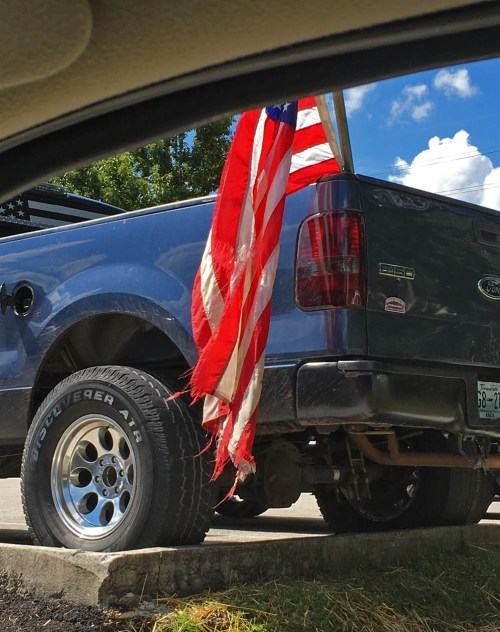
Photo finish Friday: “Frayed Flag”

These colors may not run,
but sometimes they do fray.
I think it’s time to retire this one
and use a new one, today.

Leave a comment

Filed under 2017, photo by David E. Booker, Photo Finish Friday

Haiku to you Thursday: “Will hope”

Will our hope return, /

or has the bloated sky, /

made one more refugee?

Leave a comment

Filed under 2017, Haiku to You Thursday, poetry by author

cARtOONSdAY: “bLOCKING tHE gLARING”

It also hid the occasional tear.

Leave a comment

Filed under 2017, cartoon by author, CarToonsday

Monday morning writing joke: “Tart”

There once was a woman named Tart /
who thought she would be rather smart. /
She wore her bra on her head /
so when she took men to bed, /
they’d start near head, not her heart.

Leave a comment

Filed under 2017, Monday morning writing joke, poetry by author

Haiku to you Thursday: “Sanded edges”

Time piled up as sand, /

the edges, then the center, /

undertaking dreams.

Leave a comment

Filed under 2017, Haiku to You Thursday, poetry by author

Writing tip Wednesday: “Creating a Series Character”

5 Secrets to Creating a Compelling Series Character

Source: http://www.writersdigest.com/editor-blogs/guide-to-literary-agents/5-secrets-creating-compelling-series-character?utm_source=wir&utm_campaign=wir-nl-cmf-gla&utm_content=964941_EDT_GLA170823&utm_medium=email

By Barry Lancet
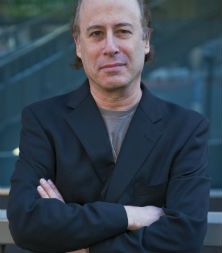
When I began my first book starring Jim Brodie, my goal was simply to write the best book I could. I didn’t have visions of a series. Then, as I polished the final draft, readying the manuscript for submission to an agent, new story ideas for Brodie began to pop into my head.

I took a step back to consider the possibility of making Brodie a series character, realizing that a lot depended on how Japantown was received. But I decided to give myself a little more breathing room just in case.

It’s vital to point out that even as I contemplated the idea of a series, I held nothing back from Japantown. Why? Because to make the team you have to bring your best game. That’s what I did and the book sold to Simon & Schuster and would go on to make a number of “best-of” lists and win the Barry Award for Best First Mystery.

By the time Japantown reached print, I was immersed in writing my second novel, Tokyo Kill, again with Brodie at the helm of another contemporary tale that, this time, veered back to the days of World War II. Why another Brodie book instead of a standalone? I’ll get to that in a minute, but first let me tell you what I did to create a little “breathing room.”

Over the years, I’d gleaned from interviews with other authors that the planning of their series characters followed one of two paths: either they allowed themselves flexibility for the future, or they moved hastily, and inadvertently penned themselves in. With this information at hand I made the following moves, and offer them here for you to think about:

  1. Keep the backstory detailed but open-ended enough to give yourself maneuverability.

For example, Brodie is an American born in Japan to American parents, an art dealer with a struggling antiques shop in San Francisco, and half-owner of a security firm built by his father in Tokyo. He’s also the father of a six-year-old girl. All of this gives me plenty to work with. He has the need to travel so I’m not pinned down with my setting. Two careers provide a multitude of opportunities for trouble; and he’s a single parent, which offers the chance for emotional exploration. Each of my books takes advantage of Brodie’s backstory.

  1. But you shouldn’t give too many extended details about the backstory.

Backstory, by nature, slows a story down, so for that reason alone it should be parsed out in drips over time. And when you do, make sure not to pin yourself down too much.

Which leads us to the next point: What should a series character be? Much will be specific to the setting, goals, and genre you choose, but here are three major aspects to consider:

  1. Make your character attractive to both male and female readers.

(Unless you’re working in a genre that zeroes in on one over the other.)

  1. Avoid common character clichés.

If your hero is a spy, steer away from the melancholy, burned-out agent, or the slick, overly smooth operator. If your protagonist is a private investigator, avoid the recovering alcoholic trope (it’s been done hundreds of times), or the lady’s man with an ex-wife or two.

That said, no rule or suggestion is all-inclusive, nor goes unbroken. If you must approach a stereotype, do so with the freshest point of view you can muster. Jeffery Deaver brilliantly turned the “wounded cop/private investigator” trope on its head in The Bone Collector by making his hero a nearly complete paraplegic, mentally fit but able to move little more than a finger. Michael Connelly handled the ex-wife syndrome with humor and pathos in the Lincoln Lawyer.

  1. I’ve saved the most intriguing item for last:

You don’t have to stray too far from home to find at least a portion of your protagonist’s personality, and here’s why.

Over the last five years, I’ve met and listened to any number of bestselling authors. What I’ve noticed (sometimes despite claims to the contrary) is that their series characters often exhibit a number of personality traits they themselves possess.

I’ve seen this too many times to ignore. The character may drive a different car, wear different clothes, and live in a different state, but, whether consciously or unconsciously (as in my case too), underlying similarities often emerge. At the same time, I saw the upside. These similarities give the authors a solid grasp on their characters, and their character a solid anchor in reality.

The lesson here is that you don’t have to bend over backwards to divorce yourself entirely from your character. Which is another way of saying you don’t need to be nervous about borrowing a part of yourself for your character.

The five factors above helped bring Jim Brodie to the printed and digital page. And how did that turn out?

After I finished Japantown, I sent it out to agents. Soon thereafter, I was fortunate enough to land my top choice in a list of ten (Robert Gottlieb of Trident Media Agency). Japantown was preempted by Simon & Schuster and optioned for TV for two years by J.J. Abrams (the series is now under consideration with a new producer).

When the dust settled, a contract for two books landed on my desk, soon to be followed by a second contract for two more books. The additional three books were contingent on Brodie putting in an appearance as the main character. His name appeared prominently in the contract, and he is the focus of each book. Brodie’s most far-flung adventure to date is his most recent, The Spy Across the Table, where his backstory has been fleshed out a tad more to include a choice secret.

In more ways than one, Jim Brodie has taken on a life of his own.


Leave a comment

Filed under 2017, writing tip, Writing Tip Wednesday

FutureScapes: Write your story, change the world

Novelist Robert A. Heinlein autographing one of his works.

FutureScapes is an annual writing competition that asks writers to envision a particular future, and tell us its story. We could run projections and publish reports, but there’s a reason why Oscar Wilde didn’t say, “Life imitates empirical studies.” We want to help writers of excellent potential find their voice while shaping tomorrow.

2017 Theme

For 2017, the Futurescapes Contest theme is “Blue Sky Cities.” We’re seeking stories set in a near-future city where significant strides have been made toward improving air quality, climate adaptation, or even net positive impacts on climate and air quality.

We want to see your vivid ideas and concepts, but don’t forget the basics of story: strong voice, compelling characters driven by real desires, facing serious obstacles that sum to an engaging plot and story.

You need not paint us a utopia – we don’t really believe in those. We believe that at any given time, depending on individual perspective, every city has dystopian and utopian aspects. The key is to show us a solution, but don’t strip it of realistic political, scientific, or logistical obstacles, and don’t neglect the possibility and ramifications of unintended consequences from even the best solution.

Source: http://www.futurescapescontest.com/

Contest Rules

-NO ENTRY FEE FOR SINGLE ENTRY, OPTION TO SUBMIT SECOND ENTRY FOR A FEE

-FINAL AWARDS DETERMINED BY PROFESSIONAL AUTHORS

-$2,000 PRIZE FOR FIRST PLACE

-5 RUNNERS UP EACH RECEIVE PRIZE OF $500

-PUBLICATION IN ANTHOLOGY DISTRIBUTED TO MAYORS, GOVERNORS & MEMBERS OF THE U.S. CONGRESS

  1. No entry fee is required to submit one (1) entry to the contest. However, an author may opt to submit a second story for consideration in the contest for a fee of twenty-four dollars ($24).
  2. By entering the contest, contestants acknowledge that they have read the instructions.
  3. Prize money constitutes compensation to the winning authors in exchange for the purchase by the contest of exclusive print and electronic rights of the story for a period of one (1) year following the first date of publication of the story.
  4. All entries must be original works written in English. Plagiarism of any kind will not be tolerated.
  5. Professional authors are not eligible to enter the contest. A professional author is defined as someone who has accepted payment and/or signed contracts for published fiction in the amount of either; a) four paid published works of short fiction at a minimum average compensation rate of 6 cents per word with a total compensation of at least $1,000; or b) a work of long fiction (40,000 words or greater) for which the author was paid at least $2,500 in compensation.
  6. Entries must be works of prose not to exceed 8,000 words in length.
  7. Excessive or gratuitous violence, language, or sexual content will not be tolerated.
  8. The story must be written on and conform to the official theme of the contest year. The theme for the 2017 contest year is: Blue Sky Cities.
  9. All entries must be submitted electronically through the submission form available on the contest website.
  10. Entries must be double-spaced, follow standard manuscript format, with the title and page number on each page. The entry should include a cover page listing the author’s name. The author’s name should appear nowhere else in the document.
  11. Each contestant may submit only one entry per contest year.
  12. The prizes for the contest shall consist of one (1) first place prize in the amount of $2,000, and five (5) runner up prizes in in the amount of $500 each. As noted, prize money is considered compensation in exchange for the purchase of story publication rights by the contest. As such, compensation will consist of a minimum amount of $.0625 (6.25 cents) per published word.
  13. Winners will be individually notified by contest staff.

Source: http://www.futurescapescontest.com/


Leave a comment

Filed under 2017, contest

Photo finish Friday: “Ant-sy”

“The world was built by ants,” the first ant said.
The second ant didn’t disagree, but added, “We are not alone.”
“We are never alone,” the first ant said, “but that makes our triumph all the more delicious.”
“Like these leaves,” several ants said, including the second.
I guess the second overthrow of the world can wait, the first ant thought. Can’t do it on an empty stomach. He bit of a section of the leaf he was one.

Leave a comment

Filed under 2017, photo by David E. Booker, Photo Finish Friday