Writing tip Wednesday: “Margaret Atwood’s rules for writing fiction”

Don’t expect it to be easy and sometimes it won’t be fun, but it is largely up to you how far you go and how well you do, and most of the tools are easily obtainable. Don’t forget to stretch your back while stretching your mind.

  1. Take a pencil to write with on airplanes. Pens leak. But if the pencil breaks, you can’t sharpen it on the plane, because you can’t take knives with you. Therefore: Handmaid's Tale by Atwoodtake two pencils.
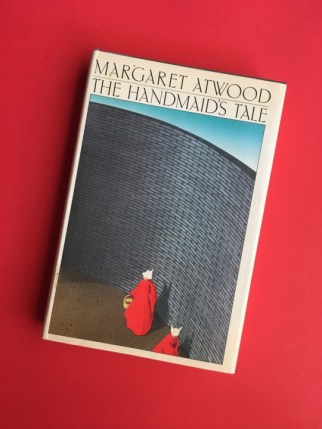
  2. If both pencils break, you can do a rough sharpening job with a nail file of the metal or glass type.
  3. Take something to write on. Paper is good. In a pinch, pieces of wood or your arm will do.
  4. If you’re using a computer, always safeguard new text with a ­memory stick.
  5. Do back exercises. Pain is distracting.
  6. Hold the reader’s attention. (This is likely to work better if you can hold your own.) But you don’t know who the reader is, so it’s like shooting fish with a slingshot in the dark. What ­fascinates A will bore the pants off B.
  7. You most likely need a thesaurus, a rudimentary grammar book, and a grip on reality. This latter means: there’s no free lunch. Writing is work. It’s also gambling. You don’t get a pension plan. Other people can help you a bit, but ­essentially you’re on your own. ­Nobody is making you do this: you chose it, so don’t whine.
  8. You can never read your own book with the innocent anticipation that comes with that first delicious page of a new book, because you wrote the thing. You’ve been backstage. You’ve seen how the rabbits were smuggled into the hat. Therefore ask a reading friend or two to look at it before you give it to anyone in the publishing business. This friend should not be someone with whom you have a ­romantic relationship, unless you want to break up.
  9. Don’t sit down in the middle of the woods. If you’re lost in the plot or blocked, retrace your steps to where you went wrong. Then take the other road. And/or change the person. Change the tense. Change the opening page.
  10. Prayer might work. Or reading ­something else. Or a constant visual­isation of the holy grail that is the finished, published version of your resplendent book.

Leave a comment

Filed under 2018, writing tip, Writing Tip Wednesday

Why You Should Surround Yourself With More Books Than You’ll Ever Have Time to Read | Inc.com

An overstuffed bookcase (or e-reader) says good things about your mind.

Source: Why You Should Surround Yourself With More Books Than You’ll Ever Have Time to Read | Inc.com

Lifelong learning will help you be happier, earn more, and even stay healthier, experts say. Plus, plenty of the smartest names in business, from Bill Gates to Elon Musk, insist that the best way to get smarter is to read. So what do you do? You go out and buy books, lots of them.

But life is busy, and intentions are one thing, actions another. Soon you find your shelves (or e-reader) overflowing with titles you intend to read one day, or books you flipped through once but then abandoned. Is this a disaster for your project to become a smarter, wiser person?

If you never actually get around to reading any books, then yes. You might want to read up on tricks to squeeze more reading into your hectic life and why it pays to commit a few hours every week to learning. But if it’s simply that your book reading in no way keeps pace with your book buying, I have good news for you (and for me; I definitely fall into this category): Your overstuffed library isn’t a sign of failure or ignorance, it’s a badge of honor.

Why you need an “antilibrary”

That’s the argument author and statistician Nassim Nicholas Taleb makes in his bestseller The Black Swan. Perpetually fascinating blog Brain Pickings dug up and highlighted the section in a particularly lovely post. Taleb kicks off his musings with an anecdote about the legendary library of Italian writer Umberto Eco, which contained a jaw-dropping 30,000 volumes.

Did Eco actually read all those books? Of course not, but that wasn’t the point of surrounding himself with so much potential but as-yet-unrealized knowledge. By providing a constant reminder of all the things he didn’t know, Eco’s library kept him intellectually hungry and perpetually curious. An ever-growing collection of books you haven’t yet read can do the same for you, Taleb writes:

A private library is not an ego-boosting appendage but a research tool. Read books are far less valuable than unread ones. The library should contain as much of what you do not know as your financial means, mortgage rates, and the currently tight real-estate market allows you to put there. You will accumulate more knowledge and more books as you grow older, and the growing number of unread books on the shelves will look at you menacingly. Indeed, the more you know, the larger the rows of unread books. Let us call this collection of unread books an antilibrary.

An antilibrary is a powerful reminder of your limitations — the vast quantity of things you don’t know, half-know, or will one day realize you’re wrong about. By living with that reminder daily you can nudge yourself toward the kind of intellectual humility that improves decision-making and drives learning.

“People don’t walk around with anti-résumés telling you what they have not studied or experienced (it’s the job of their competitors to do that), but it would be nice if they did,” Taleb claims.

Why? Perhaps because it is a well-known psychological fact that it’s the most incompetent who are the most confident of their abilities and the most intelligent who are full of doubt. (Really. It’s called the Dunning-Kruger effect.) It’s equally well established that the more readily you admit you don’t know things, the faster you learn.

So stop beating yourself up for buying too many books or for having a to-read list that you could never get through in three lifetimes. All those books you haven’t read are indeed a sign of your ignorance. But if you know how ignorant you are, you’re way ahead of the vast majority of other people.

Leave a comment

Filed under 2018, books

Photo finish Friday (and haiku): “Colors”

The colors of stars /
Constellations in bloom /
Heavens underfoot.

Flower 100dpi_7x7_4c_5320

Leave a comment

Filed under 2018, photo by David E. Booker, Photo Finish Friday, poetry by author

Haiku to you Thursday (and cartoon): “Not a race”

Life is not a race, /
said the no-kneed man, smiling. /
There is no leg up.

2018_Ninja_Worrier 100dpi_7x7_4c_5318 copy

Leave a comment

Filed under 2018, Haiku to You Thursday, poetry by author

Writing tip Wednesday: “Tinker Mountain Writers”

2018 Tinker logo 100dpi copy

2018 Tinker Mountain Writers 100dpi

Date: June 10 -15, 2018 at Hollins University in Roanoke, VA. Details at www.hollins.edu/tmww.

From novice to advanced. Since 2005, Tinker Mountain Writers has been nuturing and empowering writers though workshops in poetry, fiction, and nonfiction.

Leave a comment

Filed under 2018, writing tip, Writing Tip Wednesday

cARtOONSdAY: “bOOK hAWK”

Can you borrow my book diagram

The day rate can be a killer.

Leave a comment

Filed under 2018, CarToonsday

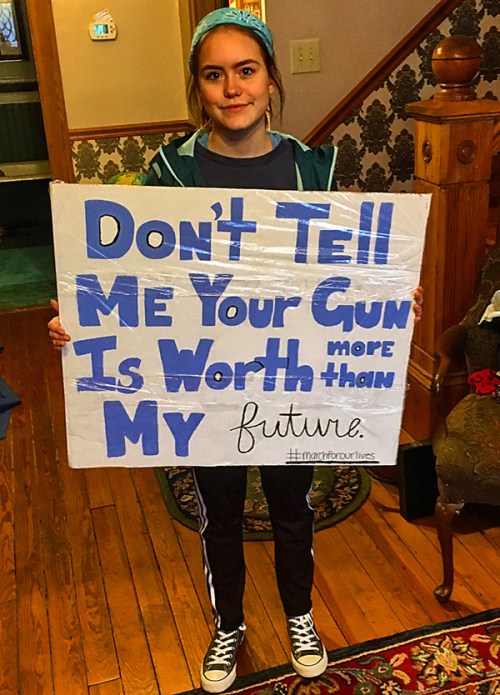
Haiku and Photos: “Signs and Voices”

Hurray for those who /
lift their voices and their signs. /
Behold a new Day.

Signs and voices 100dpi_7x7_4c_5193 copy


Rain will not dampen /
nor NRA lies decide /
the truth, nor the youth.

Sign of protest 100dpi_6x8_4c_5187 copy

Leave a comment

Filed under 2018, Photo by Beth Booker, photo by David E. Booker, poetry by author

Why Reading Books Should be Your Priority, According to Science | Inc.com

You’re not doing yourself any favors if you’re in the 26 percent of American adults who haven’t read even part of a book within the past year.

Source: Why Reading Books Should be Your Priority, According to Science | Inc.com

More than a quarter–26 percent–of American adults admit to not having read even part of a book within the past year. That’s according to statistics coming out of the Pew Research Center. If you’re part of this group, know that science supports the idea that reading is good for you on several levels.

Reading fiction can help you be more open-minded and creative

According to research conducted at the University of Toronto, study participants who read short-story fiction experienced far less need for “cognitive closure” compared with counterparts who read nonfiction essays. Essentially, they tested as more open-minded, compared with the readers of essays. “Although nonfiction reading allows students to learn the subject matter, it may not always help them in thinking about it,” the authors write. “A physician may have an encyclopedic knowledge of his or her subject, but this may not prevent the physician from seizing and freezing on a diagnosis, when additional symptoms point to a different malady.”

People who read books live longer

That’s according to Yale researchers who studied 3,635 people older than 50 and found that those who read books for 30 minutes daily lived an average of 23 months longer than nonreaders or magazine readers. Apparently, the practice of reading books creates cognitive engagement that improves lots of things, including vocabulary, thinking skills, and concentration. It also can affect empathy, social perception, and emotional intelligence, the sum of which helps people stay on the planet longer.

Reading 50 books a year is something you can actually accomplish

While about a book a week might sound daunting, it’s probably doable by even the busiest of people. Writer Stephanie Huston says her thinking that she didn’t have enough time turned out to be a lame excuse. Now that she has made a goal to read 50 books in a year, she says that she has traded wasted time on her phone for flipping pages in bed, on trains, during meal breaks, and while waiting in line. Two months into her challenge, she reports having more peace and satisfaction and improved sleep, while learning more than she thought possible.

Successful people are readers

It’s because high achievers are keen on self-improvement. Hundreds of successful executives have shared with me the books that have helped them get where they are today. Need ideas on where to start? Titles that have repeatedly made their lists include: The Hard Thing About Hard Things by Ben Horowitz; Shoe Dog by Phil Knight; Good to Great by Jim Collins; and Losing My Virginity by Richard Branson.

Leave a comment

Filed under 2018

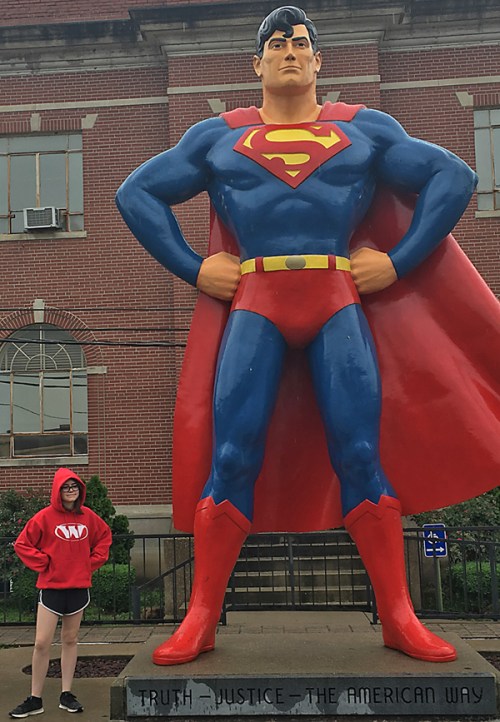
Photo finish Friday (and haiku): “Heroes”

Have our heroes left? /
Skipped a generation? /
Children move mountains.

Superman and girl 100dpi_6x9_4c_6167 copy

Leave a comment

Filed under 2018, photo by David E. Booker, Photo Finish Friday, poetry by author

Haiku to you Thursday (and photo): “Invasion”

Aliens arrived, /
bringing their wall with them. /
“KEEP OUT” their plaques charged.

Keep Out 100dp_7x6_4c_6214 copy

Leave a comment

Filed under 2018, Haiku to You Thursday, photo by David E. Booker, poetry by author