Category Archives: writing tip

Bad memories: Colm Tóibín urges authors to lose the flashbacks | Books | The Guardian

Speaking at the Hay literary festival, the Irish novelist said modern writers should emulate Jane Austen and stop overdoing the backstory

Source: Bad memories: Colm Tóibín urges authors to lose the flashbacks | Books | The Guardian

By Mark Brown

Colm Tóibín has issued a rallying call against what he sees as the scourge of modern literature: flashbacks.

The Irish novelist said the narrative device was infuriating, with too many writers skipping back and forward in time to fill in all the gaps in a story.

“We are living in the most terrible age,” Tóibín told the Hay literary festival in Wales. “I know people are worried about Brexit and I know people worry about Donald Trump. But I worry about the flashback.

“You can’t read any book now – any book – without suddenly, on chapter 2, [the writer] taking you back to where everybody was 20 years ago. How their parents met, how their grandparents met.”

Tóibín was taking part in a panel discussion on Jane Austen, who, he said, wrote complex, layered characters without ever contemplating a flashback.

For example, he said, Mr Bennet in Pride and Prejudice is a number of different characters, with the reader feeling less on his side as the novel progresses. Fanny Price in Mansfield Park, meanwhile, is not very bright and then she is. “That lack of being obvious gives her a depth, especially her stubborn feelings.”

Tóibín urged writers to leave it to readers to figure out a person’s character. “I like the business of: we don’t know, it is left out, just imagine it yourself… you do it! I do not want to know how Mr Bennet met Mrs Bennet.” Having said that, how they met is a complete mystery, he said. “What happened that night?”

Tóibín said that although Mr and Mrs Bennet are not physically described in Pride and Prejudice’s first chapter, you know how to read both of them straight away from the things they say.

The panel was one of a number of Austen-themed events taking place in the run-up to the 200th anniversary of her death on 18 July. Tóibín was also launching his new book House of Names, a retelling of the classical Greek tales of the house of Atreus, including the stories of Agamemnon and his wife Clytemnestra, their son Orestes and daughters Iphigenia and Electra.

Leave a comment

Filed under 2017, writing tip, Writing Tip Wednesday

Writing tip Wednesday: “Small break”

Leave a comment

Filed under 2017, writing tip, Writing Tip Wednesday

My Top Tips For Writing a Time Slip Novel By Kim Fleet


My Top Tips For Writing a Time Slip Novel By Kim Fleet

Source: My Top Tips For Writing a Time Slip Novel By Kim Fleet

A time-slip novel contains two or more stories, each set in a different time period, told in parallel with each other. In my latest novel, Holy Blood, one story line is in contemporary Cheltenham, the other in the Elizabethan Cotswolds. Writing time-slip brings its own joys (exploring new characters and situations) and challenges (double the research), so here are some tips to keep you time travelling painlessly.


Decide which is the main story: it helps you to plan your story arc and focus on the main themes of the novel. It also helps to keep characters under control – especially the bolshy ones who think it’s all about them.

Question everything. First ideas aren’t always best, and I rely on my secret weapon, the question, ‘What if?’ when I’m planning and writing a book to ensure I’ve explored all possibilities and chosen the ones that I think will work best. I ask myself, ‘What if this was set in the war? What if this character was a girl, not a boy?’

Use at least three sources for your research. I use the internet for initial research, but I always cross-check using reputable books. It’s a great excuse to get absorbed in the past. Visiting locations can help you pick up details you wouldn’t get from books.

Don’t overdo the historical details by shoehorning everything you’ve researched into the book as it makes the narrative stodgy. If you can keep the sense of the time in your mind while you write, somehow it comes out on the page.

Ensure the stories in the two time periods link up by having situations, objects or places that appear in each. Ideally, both story lines should resolve each other, even better!

Mind your language. Slightly more formal speech and the occasional thee or thou is enough to remind the reader we’re in the past. Under no circumstances use ‘Hey nonny’.

Avoid anachronisms by checking your facts rigorously and remember that not everyone uses an invention the moment it comes out. Words change their meaning, fall out of fashion, and new words come in.

Use coloured pens and index cards, allocating one card for each scene in the book, and different colours to indicate time periods. When you set them out in order you can easily see where you spend too long in one time period and need to break things up.

Use cliff hangers. One of the joys of writing time-slip is that you get a double whammy by ending a chapter on a cliff hanger and by changing time period. It makes the pace very fast.

Get your crayons out and map the connections between all your characters. A character with only one link needs to be given more to do, or be amalgamated with another ‘thin’ character. The density of connections shows where you need an extra sub-plot.


Leave a comment

Filed under 2017, writing tip, Writing Tip Wednesday

Guidelines | Ploughshares

Ploughshares logo


Emerging Writer’s Contest

Deadline is May 22, 2017

The Emerging Writer’s Contest is open to writers of fiction, nonfiction, and poetry who have yet to publish or self-publish a book. The winner in each genre will be awarded $2,000. Read past winners of the contest here. To submit to the Emerging Writer’s Contest, please visit our submission manager.

The 2017 contest judges are Garth Greenwell (fiction), Meghan Daum (nonfiction), and Natalie Diaz (poetry).

Publication
The winning story, essay, and poems from the 2017 contest will be published in the Winter 2017-18 issue of Ploughshares, and each writer will receive $2,000 and two copies of the issue in which their work appears.

Eligibility
You are eligible if you:

  • Have yet to publish a book (including chapbooks, eBooks, translations, books in other languages/countries, and self-published works).
  • Have no book forthcoming before April 15, 2018.
  • Are not affiliated with Ploughshares or Emerson College as a contributing author, volunteer screener, blogger, intern, student, staff member, or faculty member.
  • Will not have a relationship with Emerson before April 15, 2018 (example: if there is a chance you will attend the Emerson MFA program in the coming year or if your work has been accepted for publication for an upcoming issue).

Submitting
The contest opens March 1, 2017 at noon EST and has been extended to May 22, 2017 at noon EST. We will announce winners in mid-September, 2017.

Fiction and Nonfiction: Under 6,000 words
Poetry: 3-5 pages

Submit one entry per year via our online submission manager.

  • No entries via email or mail will be considered for the contest.
  • Submitted work must be original and previously unpublished in any form.
  • For poetry, we will be reading both for the strongest individual poem and the general level of work, and may choose to publish one, some, or all of the winner’s submitted poems.
  • Cover letters are not necessary. All identifying information will be removed from submissions.

Entry Fee
Entry to the contest requires a $24 fee, which is waived if the submitter is a current subscriber. The fee is:

  • Payable by Visa or MasterCard through the online submission system.
  • Includes a 1-year subscription to Ploughshares (beginning with the Spring 2017 issue and ending with the Winter 2017-18 issue).
  • Includes free submissions to the 2017 reading period

Current subscribers—through the Winter 2017-18 issue—may submit for free.*

*If you are a current subscriber, you will still be prompted to checkout, but you will not be required to enter your credit card information and will not be charged.

To submit to the Emerging Writer’s Contest, please visit our submission manager.

Source: Guidelines | Ploughshares

Leave a comment

Filed under 2017, contest, writing tip, Writing Tip Wednesday

Writing tip Wednesday: “Say what?”

What you say (or write) says something about you or your characters.

1 Comment

Filed under 2017, writing tip, Writing Tip Wednesday

Writing tip Wednesday: “Advice on Short Story”

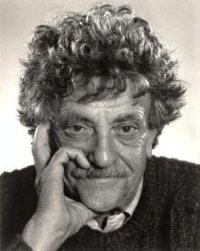
Kurt Vonnegut’s Advice on Short Stories

  1. Use the time of a total stranger in such a way that he or she will not feel the time was wasted.
  2. Give the reader at least one character he or she can root for.
  3. Kurt Vonnegut
    (1922 – 2007)

    Every character should want something, even if it is only a glass of water.

  4. Every sentence must do one of two things—reveal character or advance the action.
  5. Start as close to the end as possible.
  6. Be a sadist. No matter how sweet and innocent your leading characters, make awful things happen to them—in order that the reader may see what they are made of.
  7. Write to please just one person. If you open a window and make love to the world, so to speak, your story will get pneumonia.
  8. Give your readers as much information as possible as soon as possible. To heck with suspense. Readers should have such complete understanding of what is going on, where and why, that they could finish the story themselves, should cockroaches eat the last few pages.

The greatest American short story writer of my generation was Flannery O’Connor (1925-1964). She broke practically every one of my rules but the first. Great writers tend to do that.

Leave a comment

Filed under 2017, writing tip, Writing Tip Wednesday

Author Padgett Powell offers writing tips

For Padgett Powell, the Word of South literary festival was something of a homecoming.

Source: Author Padgett Powell offers writing tips

For Padgett Powell, the Word of South literary festival was something of a homecoming.

The award-winning novelist and author grew up in the capital city.

“I went to Hartsfield Elementary. We lived on Gadsden Street and then we moved over to Indian Head Acres,“ he said.

Before his reading Sunday, Powell trekked through his old neighborhoods.

“Nothing’s changed in the Wahalaw Nene house… It’s got some siding on it. You know, it looks crappy…Nothing’s changed,” he said.

After the personal journey, he unintentionally inspired the crowd at the literary festival at Cascades Park.

It is unintentional because he does not view himself as anything but a man set on making sense.

He has taught writing for 34 years at the University of Florida. On April 9, he read to an audience of about thirty hosted by the Midtown Reader.

There was continuous laughter throughout the reading.

“It should not be an ordeal. It shouldn’t be painful. It should be fun,” Powell said afterward. “What it comes down to is this: make up some good s—. You just write a sentence and another one.”

From his decades of teaching, Powell said his chief lesson can be summed up in two words on a blackboard: “Make sense.”

“That’ll do it. That’s it.”

But his students don’t always believe it’s that simple.

“They don’t think that’s really what happens. Or, they don’t think that’s really what’s supposed to happen. ‘The sense I have to make isn’t very good, so I can make it better if people don’t grasp it, if people don’t understand it.’ The mystery of nonsense.”

He is careful about what kind of autobiographical information he includes in his work.

“Mistakes are made using too much biography,” he warned. “You don’t write your life and change some names. For several reasons, one of which is it’s impossible to actually get it right. You’d kill yourself trying to get it right. How your heart actually got broken, you’re not going to be able to explain that to someone by reconstructing what happened.”

Leave a comment

Filed under 2017, writing tip, Writing Tip Wednesday

7 Strategies for Revising Your Novel | WritersDigest.com

7 Strategies for Revising Your Novel

Source: 7 Strategies for Revising Your Novel | WritersDigest.com

You’ve done it: typed The End. Those two wonderful words mark your graduation from always-wanted-to-write-a-novel to someone-who-did. Congratulations. Other ideas might be cooking away in the back of your brain, making you eager to start a new project. Often, this is where the spirit wanes as new writers lose momentum for the old manuscript. Because, you didn’t finish, did you? You only finished the draft. Now you have to focus on revising your novel.

Here’s the bad news (and there’s no good news): The rewrite is tougher than the draft. The draft is infatuation. The right rewrite strengthens your fiction into something that lasts to publication and gains a significant readership.

You know this task needs triage, so you won’t copyedit too soon. You line edit for tone, consistency and language, but you want more ways to improve.

Boost your novel-polishing skills with these seven strategies.

  1. Embrace the doubt.

Those murky feelings that cloud your mind when contemplating the massive task of revision? Welcome those doubts, that hesitation. A skeptical eye confers an appropriate attitude for rewriting. Every word in every sentence must carry its weight, either revealing character or advancing the story. Now be brave enough to cut or improve weak writing.

  1. Go back-to-front when possible.

Let’s say your plan for one brief session is a specific checkpoint. You’re verifying that sensory detail engages every scene, or perhaps you just want to note how many pages are in each chapter to ensure there aren’t twenty-five chapters of about fifteen pages while one chapter sprawls to thirty-five pages. If the revision item does not have to be done starting on page one and working to the last page, flip it and work backwards. This strategy prevents paging through in a direction that can distract you into an unintended sentence-by-sentence reread. The danger of that accidental read is that it risks dulling your reaction to the prose and worse, lets you fall in love with some passages while neglecting others.

  1. Structure your novel.

It’s not too late. Whether you’re a pantser, pantser-outliner hybrid, or an outliner, your finished draft can benefit from a new, careful outline. Note what questions and stakes the protagonist faces. How does he change in the end? What about the secondary cast?

Off the top of your head, do you know how many chapters are in your book? How does each chapter start and end? Where are the key actions and turning points found? How many scenes shape each chapter? Bracket each scene on a hard copy to reveal whether too much exposition lurks between the scenes. Is the climax close enough to the end that the bulk of the tale is composed of an uphill climb? Is the denouement placed to allow a satisfying, thoughtful resolution?

Gleaning the structure is a terrific exercise in critical examination. Graph and bullet point the features as though deconstructing someone else’s novel. This is not a time for emotional attachment to the piece; just factually note everything that displays the arc of the story, then see what surprises you or doesn’t fit.

  1. Revisit characterization.

With an accurate structure in hand, revisit your character construction while remembering the point of every passage. Did you use particularity in their descriptions? Is the reader shown what motivates every main character?

Crack open the draft to any chunk of dialogue. How obvious is it which of your well-crafted characters is speaking based on the sentences within the quotes? (Ah, yes, that’s just how a pilot/mad scientist/cowgirl would say such a thing.)

Perhaps your setting approaches the standing of character. Lovely, but don’t let the prose get flabby or insignificant—this is an opportunity for imaginative choices.

  1. Task your computer.

Various software programs highlight potential weak spots such as poor grammar and punctuation, or an overuse of modifiers, but any word processing program can be employed to help electronically. Do you have a pet phrase? Use the search function to find those repeats, then fix them. If you gave a person a verbal tic (perhaps she says “Nah” instead of “No”), do a quick find for the special term to ensure it’s not overused. And if another character displays the same tic, make it intentional, not an author slip.

When creating another hard copy to hand edit, select a different font for the second printing. Because of the different spacing, switching from Times New Roman to Courier can help freshen your eyes to the words.

  1. Listen to it.

Hopefully, you read aloud when revising, but you can do more. When my publisher sent author copies of my debut novel’s audio version, I reveled in that first experience of listening to a voice-acting pro read Orchids and Stone. However, I had heard it before, read by my computer.

There are good programs available—I use Natural Reader, which offers a free trial—that lets you listen to any document. This computer-generated reading will be flat, but the robotic affect is a good thing, because your writing must stand on its own, without inflection to carry the drama and dialogue. Chances are you’ll keep putting the program on pause and clicking back to the document to make edits.

Unintended alliterations, assonance and consonance borne in every sentence and surrounding paragraph are much more apparent when voiced. You might marvel over having missed some of these now-obvious editorial problems in print or on the monitor. You’ll hear repetitions that you didn’t see.

Good reading programs allow you to select the speed and gender of the speaker. After a significant rewrite, choose the other gender for the computer’s reading voice, then listen to the entire manuscript a second time. Chances are, you’ll still discover small improvements to make.

  1. Continue to study the craft.

While your polished draft gets some drawer time or is out with beta readers, reread diverse books on writing, studying instruction on revision. Let Robert Olen Butler admonish you to avoid abstraction, interpretation and izing (don’t generalize, summarize or analyze). Pay attention when David Morrell asks if you really want to publish that sentence in that form. Listen to Sol Stein’s warning about tunnel revision—the mistake of only tweaking small ticket items on a rewriting pass while missing the big picture and exposing your pages to excessive front-to-back reading, which makes your editing eye grow cold.

Improving your knowledge of the craft will improve your rewriting skills.

Here’s the deal: new writers often mire themselves and their work in the world of the unpublished due to a lack of self-editing their way to a polished manuscript. The only hope your draft has of becoming a well-read novel is you, and how much effort you put into the rewrite. Go all in.

***

Lisa Preston. Preston is the author of Orchids and Stone as well as several nonfiction books on animal care. Her experiences as a mountain climber, fire-department paramedic, and police sergeant are channeled into fiction that is suspenseful, fast paced, and well acquainted with human drama. She has lived in Arizona, California, and Alaska and now makes her home in western Washington. Visit her at lisapreston.com and on Facebook at facebook.com/lisa.preston.3152.

Leave a comment

Filed under 2017, writing tip, Writing Tip Wednesday

J.K. Rowling Just Gave The Best Advice Any Aspiring Writer Will Ever Receive

“Just because it didn’t find an audience, that doesn’t mean it’s bad work.”

Source: J.K. Rowling Just Gave The Best Advice Any Aspiring Writer Will Ever Receive

She went on to explain that, even if a particular piece of work doesn’t find an audience, the things you learn while creating it will be invaluable to you in the future.

***

And that just because something doesn’t find commercial (or critical) success, that doesn’t mean you shouldn’t be proud of it!

***

“Once you’ve done it, you’ll know you can do it again,” she wrote. “So do not ever quit out of fear of rejection.”

Leave a comment

Filed under 2017, writing tip, Writing Tip Wednesday

Writing tip Wednesday: “Writer and writing”

George Saunders: what writers really do when they write

A series of instincts, thousands of tiny adjustments, hundreds of drafts … What is the mysterious process writers go through to get an idea on to the page?

https://www.theguardian.com/books/2017/mar/04/what-writers-really-do-when-they-write

George Saunders


by George Saunders


1

Many years ago, during a visit to Washington DC, my wife’s cousin pointed out to us a crypt on a hill and mentioned that, in 1862, while Abraham Lincoln was president, his beloved son, Willie, died, and was temporarily interred in that crypt, and that the grief-stricken Lincoln had, according to the newspapers of the day, entered the crypt “on several occasions” to hold the boy’s body. An image spontaneously leapt into my mind – a melding of the Lincoln Memorial and the Pietà. I carried that image around for the next 20-odd years, too scared to try something that seemed so profound, and then finally, in 2012, noticing that I wasn’t getting any younger, not wanting to be the guy whose own gravestone would read “Afraid to Embark on Scary Artistic Project He Desperately Longed to Attempt”, decided to take a run at it, in exploratory fashion, no commitments. My novel, Lincoln in the Bardo, is the result of that attempt, and now I find myself in the familiar writerly fix of trying to talk about that process as if I were in control of it.

We often discuss art this way: the artist had something he “wanted to express”, and then he just, you know … expressed it. We buy into some version of the intentional fallacy: the notion that art is about having a clear-cut intention and then confidently executing same.

The actual process, in my experience, is much more mysterious and more of a pain in the ass to discuss truthfully.

2

A guy (Stan) constructs a model railroad town in his basement. Stan acquires a small hobo, places him under a plastic railroad bridge, near that fake campfire, then notices he’s arranged his hobo into a certain posture – the hobo seems to be gazing back at the town. Why is he looking over there? At that little blue Victorian house? Stan notes a plastic woman in the window, then turns her a little, so she’s gazing out. Over at the railroad bridge, actually. Huh. Suddenly, Stan has made a love story. Oh, why can’t they be together? If only “Little Jack” would just go home. To his wife. To Linda.

What did Stan (the artist) just do? Well, first, surveying his little domain, he noticed which way his hobo was looking. Then he chose to change that little universe, by turning the plastic woman. Now, Stan didn’t exactly decide to turn her. It might be more accurate to say that it occurred to him to do so; in a split-second, with no accompanying language, except maybe a very quiet internal “Yes.”

He just liked it better that way, for reasons he couldn’t articulate, and before he’d had the time or inclination to articulate them.

An artist works outside the realm of strict logic. Simply knowing one’s intention and then executing it does not make good art. Artists know this. According to Donald Barthelme: “The writer is that person who, embarking upon her task, does not know what to do.” Gerald Stern put it this way: “If you start out to write a poem about two dogs fucking, and you write a poem about two dogs fucking – then you wrote a poem about two dogs fucking.” Einstein, always the smarty-pants, outdid them both: “No worthy problem is ever solved in the plane of its original conception.”

How, then, to proceed? My method is: I imagine a meter mounted in my forehead, with “P” on this side (“Positive”) and “N” on this side (“Negative”). I try to read what I’ve written uninflectedly, the way a first-time reader might (“without hope and without despair”). Where’s the needle? Accept the result without whining. Then edit, so as to move the needle into the “P” zone. Enact a repetitive, obsessive, iterative application of preference: watch the needle, adjust the prose, watch the needle, adjust the prose (rinse, lather, repeat), through (sometimes) hundreds of drafts. Like a cruise ship slowly turning, the story will start to alter course via those thousands of incremental adjustments.

The artist, in this model, is like the optometrist, always asking: Is it better like this? Or like this?

The interesting thing, in my experience, is that the result of this laborious and slightly obsessive process is a story that is better than I am in “real life” – funnier, kinder, less full of crap, more empathetic, with a clearer sense of virtue, both wiser and more entertaining.

And what a pleasure that is; to be, on the page, less of a dope than usual.

3

Revising by the method described is a form of increasing the ambient intelligence of a piece of writing. This, in turn, communicates a sense of respect for your reader. As text is revised, it becomes more specific and embodied in the particular. It becomes more sane. It becomes less hyperbolic, sentimental, and misleading. It loses its ability to create a propagandistic fog. Falsehoods get squeezed out of it, lazy assertions stand up, naked and blushing, and rush out of the room.

Is any of this relevant to our current political moment?

Hoo, boy.

When I write, “Bob was an asshole,” and then, feeling this perhaps somewhat lacking in specificity, revise it to read, “Bob snapped impatiently at the barista,” then ask myself, seeking yet more specificity, why Bob might have done that, and revise to, “Bob snapped impatiently at the young barista, who reminded him of his dead wife,” and then pause and add, “who he missed so much, especially now, at Christmas,” – I didn’t make that series of changes because I wanted the story to be more compassionate. I did it because I wanted it to be less lame.

But it is more compassionate. Bob has gone from “pure asshole” to “grieving widower, so overcome with grief that he has behaved ungraciously to a young person, to whom, normally, he would have been nice”. Bob has changed. He started out a cartoon, on which we could heap scorn, but now he is closer to “me, on a different day”.

How was this done? Via pursuit of specificity. I turned my attention to Bob and, under the pressure of trying not to suck, my prose moved in the direction of specificity, and in the process my gaze became more loving toward him (ie, more gentle, nuanced, complex), and you, dear reader, witnessing my gaze become more loving, might have found your own gaze becoming slightly more loving, and together (the two of us, assisted by that imaginary grouch) reminded ourselves that it is possible for one’s gaze to become more loving.

Or we could just stick with “Bob was an asshole,” and post it, and wait for the “likes”, and for the pro-Bob forces to rally, and the anti-barista trolls to anonymously weigh in – but, meanwhile, there’s poor Bob, grieving and misunderstood, and there’s our poor abused barista, feeling crappy and not exactly knowing why, incrementally more convinced that the world is irrationally cruel.

4

What does an artist do, mostly? She tweaks that which she’s already done. There are those moments when we sit before a blank page, but mostly we’re adjusting that which is already there. The writer revises, the painter touches up, the director edits, the musician overdubs. I write, “Jane came into the room and sat down on the blue couch,” read that, wince, cross out “came into the room” and “down” and “blue” (Why does she have to come into the room? Can someone sit UP on a couch? Why do we care if it’s blue?) and the sentence becomes “Jane sat on the couch – ” and suddenly, it’s better (Hemingwayesque, even!), although … why is it meaningful for Jane to sit on a couch? Do we really need that? And soon we have arrived, simply, at “Jane”, which at least doesn’t suck, and has the virtue of brevity.

But why did I make those changes? On what basis?

On the basis that, if it’s better this new way for me, over here, now, it will be better for you, later, over there, when you read it. When I pull on this rope here, you lurch forward over there.

This is a hopeful notion, because it implies that our minds are built on common architecture – that whatever is present in me might also be present in you. “I” might be a 19th-century Russian count, “you” a part-time Walmart clerk in 2017, in Boise, Idaho, but when you start crying at the end of my (Tolstoy’s) story “Master and Man”, you have proved that we have something in common, communicable across language and miles and time, and despite the fact that one of us is dead.

Another reason you’re crying: you’ve just realised that Tolstoy thought well of you – he believed that his own notions about life here on earth would be discernible to you, and would move you.

Tolstoy imagined you generously, you rose to the occasion.

We often think that the empathetic function in fiction is accomplished via the writer’s relation to his characters, but it’s also accomplished via the writer’s relation to his reader. You make a rarefied place (rarefied in language, in form; perfected in many inarticulable beauties – the way two scenes abut; a certain formal device that self-escalates; the perfect place at which a chapter cuts off); and then welcome the reader in. She can’t believe that you believe in her that much; that you are so confident that the subtle nuances of the place will speak to her; she is flattered. And they do speak to her. This mode of revision, then, is ultimately about imagining that your reader is as humane, bright, witty, experienced and well intentioned as you, and that, to communicate intimately with her, you have to maintain the state, through revision, of generously imagining her. You revise your reader up, in your imagination, with every pass. You keep saying to yourself: “No, she’s smarter than that. Don’t dishonour her with that lazy prose or that easy notion.”

And in revising your reader up, you revise yourself up too.

5

I had written short stories by this method for the last 20 years, always assuming that an entirely new method (more planning, more overt intention, big messy charts, elaborate systems of numerology underlying the letters in the characters’ names, say) would be required for a novel. But, no. My novel proceeded by essentially the same principles as my stories always have: somehow get to the writing desk, read what you’ve got so far, watch that forehead needle, adjust accordingly. The whole thing was being done on a slightly larger frame, admittedly, but there was a moment when I finally realised that, if one is going to do something artistically intense at 55 years old, he is probably going to use the same skills he’s been obsessively honing all of those years; the trick might be to destabilise oneself enough that the skills come to the table fresh-eyed and a little confused. A bandleader used to working with three accordionists is granted a symphony orchestra; what he’s been developing all of those years, he may find, runs deeper than mere instrumentation – his take on melody and harmony should be transferable to this new group, and he might even find himself looking anew at himself, so to speak: reinvigorated by his own sudden strangeness in that new domain.

It was as if, over the years, I’d become adept at setting up tents and then a very large tent showed up: bigger frame, more fabric, same procedure. Or, to be more precise (yet stay within my “temporary housing” motif): it was as if I’d spent my life designing custom yurts and then got a commission to build a mansion. At first I thought “Not sure I can do that.” But then it occurred to me that a mansion of sorts might be constructed from a series of connected yurts – each small unit built by the usual rules of construction, their interconnection creating new opportunities for beauty.

6

Any work of art quickly reveals itself to be a linked system of problems. A book has personality, and personality, as anyone burdened with one will attest, is a mixed blessing. This guy has great energy – but never sits still. This girl is sensitive – maybe too much; she weeps when the wrong type of pasta is served. Almost from the first paragraph, the writer becomes aware that a work’s strengths and weaknesses are bound together, and that, sadly, his great idea has baggage.

For example: I loved the idea of Lincoln, alone at night in the graveyard. But how is a novel made from one guy in a graveyard at night? Unless we want to write a 300-page monologue in the voice of Lincoln (“Four score and seven minutes ago, I did enter this ghastly place”) or inject a really long-winded and omniscient gravedigger into the book (we don’t, trust me, I tried), we need some other presences there in the graveyard. Is this a problem? Well, it sure felt like one, back in 2012. But, as new age gurus are always assuring us, a “problem” is actually an “opportunity”. In art, this is true. The reader will sense the impending problem at about the same moment the writer does, and part of what we call artistic satisfaction is the reader’s feeling that just the right cavalry has arrived, at just the right moment. Another wave of artistic satisfaction occurs if she feels that the cavalry is not only arriving efficiently, but is a cool, interesting cavalry, ie, is an opportunity for added fun/beauty – a broadening-out of the aesthetic terms.

In this case, the solution was pretty simple – contained, joke-like, in the very statement of the problem (“Who else might be in a graveyard late at night?”).

I remembered an earlier, abandoned novel, set in a New York State graveyard that featured – wait for it – talking ghosts. I also remembered a conversation with a brilliant former student of mine, who said that if I ever wrote a novel, it should be a series of monologues, as in a story of mine called “Four Institutional Monologues”.

So: the book would be narrated by a group of monologuing ghosts stuck in that graveyard.

And suddenly what was a problem really did become an opportunity: someone who loves doing voices, and thinking about death, now had the opportunity to spend four years trying to make a group of talking ghosts be charming, spooky, substantial, moving, and, well, human.

7

A work of fiction can be understood as a three-beat movement: a juggler gathers bowling pins; throws them in the air; catches them. This intuitive approach I’ve been discussing is most essential, I think, during the first phase: the gathering of the pins. This gathering phase really is: conjuring up the pins. Somehow the best pins are the ones made inadvertently, through this system of radical, iterative preference I’ve described. Concentrating on the line-to-line sound of the prose, or some matter of internal logic, or describing a certain swath of nature in the most evocative way (that is, by doing whatever gives us delight, and about which we have a strong opinion), we suddenly find that we’ve made a pin. Which pin? Better not to name it. To name it is to reduce it. Often “pin” exists simply as some form of imperative, or a thing about which we’re curious; a threat, a promise, a pattern, a vow we feel must soon be broken. Scrooge says it would be best if Tiny Tim died and eliminated the surplus population; Romeo loves Juliet; Akaky Akakievich needs a new overcoat; Gatsby really wants Daisy. (The colour grey keeps showing up; everything that occurs in the story does so in pairs.)

Then: up go the pins. The reader knows they are up there and waits for them to come down and be caught. If they don’t come down (Romeo decides not to date Juliet after all, but to go to law school; the weather in St Petersburg suddenly gets tropical, and the overcoat will not be needed; Gatsby sours on Daisy, falls for Betty; the writer seems to have forgotten about his grey motif) the reader cries foul, and her forehead needle plummets into the “N” zone and she throws down the book and wanders away to get on to Facebook, or rob a store.

The writer, having tossed up some suitably interesting pins, knows they have to come down, and, in my experience, the greatest pleasure in writing fiction is when they come down in a surprising way that conveys more and better meaning than you’d had any idea was possible. One of the new pleasures I experienced writing this, my first novel, was simply that the pins were more numerous, stayed in the air longer, and landed in ways that were more unforeseen and complexly instructive to me than has happened in shorter works.

Without giving anything away, let me say this: I made a bunch of ghosts. They were sort of cynical; they were stuck in this realm, called the bardo (from the Tibetan notion of a sort of transitional purgatory between rebirths), stuck because they’d been unhappy or unsatisfied in life. The greatest part of their penance is that they feel utterly inessential – incapable of influencing the living. Enter Willie Lincoln, just dead, in imminent danger (children don’t fare well in that realm). In the last third of the book, the bowling pins started raining down. Certain decisions I’d made early on forced certain actions to fulfilment. The rules of the universe created certain compulsions, as did the formal and structural conventions I’d put in motion. Slowly, without any volition from me (I was, always, focused on my forehead needle), the characters started to do certain things, each on his or her own, the sum total of which resulted, in the end, in a broad, cooperative pattern that seemed to be arguing for what I’d call a viral theory of goodness. All of these imaginary beings started working together, without me having decided they should do so (each simply doing that which produced the best prose), and they were, it seemed, working together to save young Willie Lincoln, in a complex pattern seemingly being dictated from … elsewhere. (It wasn’t me, it was them.)

Something like this had happened in stories before, but never on this scale, and never so unrelated to my intention. It was a beautiful, mysterious experience and I find myself craving it while, at the same time, flinching at the thousands of hours of work it will take to set such a machine in motion again.

Why do I feel this to be a hopeful thing? The way this pattern thrillingly completed itself? It may just be – almost surely is – a feature of the brain, the byproduct of any rigorous, iterative engagement in a thought system. But there is something wonderful in watching a figure emerge from the stone unsummoned, feeling the presence of something within you, the writer, and also beyond you – something consistent, wilful, and benevolent, that seems to have a plan, which seems to be: to lead you to your own higher ground.


 

Leave a comment

Filed under 2017, writing tip, Writing Tip Wednesday