Category Archives: writing tip

Writing tip Wednesday: “The tale of the two frogs”

Confined in the dark, narrow cage of our own making that we take for the whole universe, very few of us imagine another dimension of mind. There once was an old frog who lived all his life in a dank well. One day, a frog from the sea fell into his world.

“Where did you come from?” asked the frog in the well.

“From the great ocean,” the visiting frog said.

“How large is your ocean?”

“It’s gigantic.”

“A quarter of the size of my well here?” the old frog asked.

“Larger.”

“Larger? You mean half as large?”

“Even larger.”

“As large as my world?”

“There’s no comparison,” the visiting frog said.

“That’s impossible! I’ve got to see this for myself.”

The two frogs set off together. When the old frog from the well saw the ocean, it was such a shock that his head just exploded into pieces.

Moral: be willing to drop into your reader’s life and in some way “blow” your reader’s mind, to enlarge his or her world in some way. You might even enlarge yours along the way.

Leave a comment

Filed under 2019, writing tip, Writing Tip Wednesday

Why Reading Books Should Be Your Priority, According to Science | Inc.com

More than a quarter–26 percent–of American adults admit to not having read even part of a book within the past year. That’s according to statistics coming out of the Pew Research Center. If you’re part of this group, know that science supports the idea that reading is good for you on several levels.

Reading fiction can help you be more open-minded and creative

According to research conducted at the University of Toronto, study participants who read short-story fiction experienced far less need for “cognitive closure” compared with counterparts who read nonfiction essays. Essentially, they tested as more open-minded, compared with the readers of essays. “Although nonfiction reading allows students to learn the subject matter, it may not always help them in thinking about it,” the authors write. “A physician may have an encyclopedic knowledge of his or her subject, but this may not prevent the physician from seizing and freezing on a diagnosis, when additional symptoms point to a different malady.”

People who read books live longer

That’s according to Yale researchers who studied 3,635 people older than 50 and found that those who read books for 30 minutes daily lived an average of 23 months longer than nonreaders or magazine readers. Apparently, the practice of reading books creates cognitive engagement that improves lots of things, including vocabulary, thinking skills, and concentration. It also can affect empathy, social perception, and emotional intelligence, the sum of which helps people stay on the planet longer.

Reading 50 books a year is something you can actually accomplish

While about a book a week might sound daunting, it’s probably doable by even the busiest of people. Writer Stephanie Huston says her thinking that she didn’t have enough time turned out to be a lame excuse. Now that she has made a goal to read 50 books in a year, she says that she has traded wasted time on her phone for flipping pages in bed, on trains, during meal breaks, and while waiting in line. Two months into her challenge, she reports having more peace and satisfaction and improved sleep, while learning more than she thought possible.

Successful people are readers

It’s because high achievers are keen on self-improvement. Hundreds of successful executives have shared with me the books that have helped them get where they are today. Need ideas on where to start? Titles that have repeatedly made their lists include: The Hard Thing About Hard Things by Ben Horowitz; Shoe Dog by Phil Knight; Good to Great by Jim Collins; and Losing My Virginity by Richard Branson.

Source: Why Reading Books Should Be Your Priority, According to Science | Inc.com

Leave a comment

Filed under 2019, writing tip, Writing Tip Wednesday

Why these 4 habits are bad for your brain

Neuroscientist Tara Swart argues that snacking and comparing yourself to someone else can lessen your cognitive functions.

Source: Why these 4 habits are bad for your brain

By Tara Swart 5 minute Read

If someone asks you how you spend your time when you’re not at work, do you know where most of your day goes? It still surprises me that most busy people have their workday mapped out meticulously, yet they don’t realize how their time outside of work slips away. Partly, this is a consequence of the increasingly blurred lines that now exist between work and home. And partly, it’s a result of the fact that the tasks that take up time in our personal and home lives are difficult to quantify and account for.

But there is a more insidious reason for the time vortex. Many of us unknowingly fall into “harmless” habits that eat into our day. You probably don’t even realize that you’re doing them. If you are, you’re probably only marginally aware that they are a distracting drain on resources.

Here are the four habits that are probably lessening your cognitive function:

Checking the headlines

Most of us like to know what’s going on in the world. Once upon a time, we’d wait for the evening news or the next day’s headlines in the morning newspaper. However, now we can access breaking news anywhere and anytime from our phones. This setup has conditioned us to check in all the time to find out what’s happening and remind us to stay informed.

Most people understand that setting some boundaries around social media is a good idea. They switch off notifications, take breaks from particular apps, and designate a set time of day to check feeds.

However, they don’t apply the same self-discipline when it comes to checking news apps. A 2018 survey sponsored by global technology solutions company Asurion shows most of us check our phones every 12 minutes. And it isn’t just time that your news habit steals.

A number of my neuroscience colleagues actively avoid the news because they recognize that its negativity—and their impotence to do anything about most of what they hear—can lead to a sense of hopelessness. It saps mental energy and focus. In a study by the American Psychological Association, 56% of people said that following the news caused them stress. Opting out of following the news won’t work for everyone—I’d suggest setting some clear boundaries around it. Consider deleting, even for a while, apps that you’re tempted to open all the time.

Toxic comparison

Toxic comparison is a habit that’s as old as time. Sure, social media has given us more raw materials to compare to, but there’s nothing new about the urge to compare. As humans, we’re hardwired to compare ourselves to others in our group; to benchmark our successes and failures against others. It’s an evolutionary hangover from times when we lived in tribes and understanding our place in the social order was key to survival.

Nowadays, comparing ourselves to others is more likely to keep us stuck. This is whether we’re doing what psychologists call downward comparison (comparing ourselves to those less fortunate) or upward comparison (comparing ourselves to those we envy.) Both of these types of comparison can be bad for the brain. Downward comparison activates the brain’s “lack” network, emphasizing our insecurity and focuses on safeguarding the status quo at the expense of risk and adventure. Upward comparison can excite feelings of envy and low self-esteem.

To break free from the temptation to compare, you need to audit your social media feeds. That means deleting anyone whose posts make you feel envious. If you find that you’re comparing yourself to a particular friend, then it might be smart to mute them. If you haven’t already, set limits around social media, and do regular digital detoxes.

If you find yourself thinking about how your life matches up to a friend’s when you’re not on social media, try to shift your perspective. Think about their human traits, vulnerabilities, and things that you have in common. When you change your mindset, you can move from a place of jealousy to a place of empathy.

Comfort eating

The phrase “comfort eating” conjures an image of one consuming a pint of Ben & Jerry’s in their pajamas. But comfort eating can also be triggered by boredom: it’s something to do when we’re idle. Eating can also be a self-soothing activity. For some people, food is a coping mechanism for stress or anxiety.

So how do you change a habit that’s deeply rooted in emotions? The first trick is to notice you’re doing it. Try to keep a diary on your phone for a few days, noting whenever you find yourself reaching for a snack. Can you spot any patterns? Do you feel the urge to eat when you are bored, procrastinating, upset, or angry? When you notice your cues and responses, you’ll learn to pause before you eat, rather than doing it automatically.

It’s also important to remember that unhealthy foods are addictive. Eating foods high in sugar and fat conditions us to crave more of the same, and those kinds of foods do little for your brain function. When you do eat, make sure to fill up on nutrient-dense foods. Not only will you find them more satiating, but they’ll also give you a cognitive boost.

Multitasking

When you’re trying to juggle what seems like a million responsibilities, multitasking might seem like a necessary evil. But research shows that when we multitask, our brains suffer. Each time we try and batch unrelated tasks together, we tax our brain and use up energy in the transition. The more complex the tasks we are switching between, the higher the cognitive cost.

To stop making multitasking a habit, you need to set boundaries around what you will be working on when. Give yourself longer chunks of time to complete one thing at a time, and shut down other distractions such as email when you’re working on something.

On their own, these habits might seem harmless. But if you do them repeatedly, they can ruin your cognitive function in ways you don’t realize. Pay attention next time you find yourself doing any of these things, and ask yourself if there’s a better habit that can go in its place. Your brain will thank you.

Tara Swart is a neuroscientist, executive adviser, author, and medical doctor. Her book, The Source: The Secrets of the Universe, The Science of the Brain, is out in the U.S in October.

Leave a comment

Filed under 2019, brain, writing tip

A Better Way To Deal With The Negative Thoughts In Our Heads

Clinical psychology and Buddhist philosophy agree on how to address our negative thoughts.

Source: A Better Way To Deal With The Negative Thoughts In Our Heads

If you’re familiar with contemporary definitions of mindfulness, you’ve probably heard something along the lines of not getting too attached to our thoughts, but letting them arise and subside of their own accord, like clouds. Our job is just to witness them, non-judgmentally, and let them fade away.

Although this is pretty good advice, there’s a nuance to it, which isn’t always included: We have to inspect our thoughts a little bit, so that their frequency will diminish over time. We can’t just twiddle our thumbs till a negative thought goes away—that’s not so therapeutic in the long-run. And this is where clinical psychology and Buddhism have dovetailed: They both acknowledge that negative thoughts are really just a part of being human, and if we push them away or repress them, or even just wait for them to go, they’ll get worse. Rather, inspecting them just a bit, to understand their origins, is a more productive way of dealing with them.

Shannon Kolakowski, PsyD, a psychologist in the Sarasota area and author of When Depression Hurts Your Relationship, points out that we tend to avoid negative thoughts because we fear them. “In other areas of our life, such as seeing a dangerous driver on the road, we avoid things to stay safe,” she says. “So when we have a thought we don’t like, such as, ‘I’m going to be alone forever,’ it feels scary and we might try to avoid it. The problem is, it doesn’t work. The thought may even become stronger or more convincing because you’re dreading it so much, as if you’re running from a scary truth.”

The better way is to reconfigure your relationship to your thoughts, she says, by using a method like Acceptance and Commitment Therapy (ACT), which helps us “defuse” our thoughts, in part by recognizing that thoughts do come and go, but also by exploring them to get a bit of a handle on them.

“Defusion is the process of noticing your negative or anxious thoughts, such as ‘I’m going to be alone forever,’ and then responding to it with openness and curiosity as a distant observer,” says Kolakowski. “Rather than accept your thought as the ultimate truth, you recognize that thoughts will come and go, but you don’t have to believe them or act on them. You become an observer, saying to yourself ‘I’m having the thought that I’m going to be alone forever,’ and then try to explore that thought with curiosity. ‘Because I’m going through a divorce right now, it’s understandable I’m having a hard time thinking positively about being in a relationship again. But that doesn’t mean it’s true that I’ll be alone forever. There are lots of reasons to think I’ll find a partner when I’m more ready if that’s what I want.’”

The interesting thing about ACT is that it acknowledges that our natural state will include some negativity. It doesn’t try to get rid of the negative thinking, just change how we react to it.

“Creating a new relationship with your thoughts is freeing,” says Kolakowski. “You may not be able to control what thoughts pop up, but you can control how you respond to them. And you can control what action you take. For example, the thought of being alone forever doesn’t have to lead you to give up on dating or stay in an unhappy relationship. It’s just a thought, and you get to decide how to live your life according to what you value.”

And this idea has been around for a very long time. Ajahn Amaro, a Theravada Buddhist monk and abbot at the Amaravati Buddhist Monastery just north of London, has a similar take. He points out that reframing our relationship to our thoughts has existed for thousands of years, in Buddhism, and modern psychology has built on many of these tenets in practices like Mindfulness-Based Cognitive Therapy (MBCT), a variation of the gold-standard CBT.

“We tend to think that our thoughts are oppressive,” says Amaro, “and that therefore we should make them go away…Oftentimes meditation instruction is about stopping your thinking, as if thoughts are a kind of brain disease, an infection, an intruder. But the very act of pushing them away, and adopting the sense that they’re intrinsically intrusive, actually makes them more powerful. Rather than relating to them in that way, there’s another attitude we can have toward them—not taking them personally.”

He adds that the vast majority of our thoughts are, at best, random, and at worst, destructive. “One of the first things I emphasize when teaching,” he says, “is that 5% of our thoughts are actually meaningful and relevant, and 95% are replaying movies, music, and recollecting. It’s mostly just debris. I often encourage people to look at it like listening to neighbor’s radio–you understand the content, you can hear the words; you might sometimes get excited about an ad, or a talk show. But you don’t really care on a personal level. You relate to your neighbor’s radio in a non-personal way—we can have the same relationship to activity of the mind. It doesn’t have to make a big story around the thoughts. It’s an attitudinal shift.”

Like psychology suggests, we should first notice our thoughts and, rather than just waiting for them to go away, investigate them just a bit—especially the negative ones—to understand why a certain thought might pop up, especially repeatedly. “In terms of meditation, it’s not just waiting for thoughts to end,” says Amaro, “but reflecting, ‘I’m thinking this because I heard that tune earlier,’ or whatever it may be. You can do a small amount of investigation…. This helps difficult or oppressive patterns of thinking lose their power and go away.”

Again, realizing that negative thoughts are just a part of how the mind works can help relieve us of the idea that every thought means something deeper or tells some deep truth about ourselves. “Recognizing that this is just a part of nature,” he says, “helps us shift from a self-centered view to one of nature. At this moment it’s exactly this way. When the heart opens and we say: ‘This feeling is this way’; in a strange manner, by fully accepting it, it loses its power to convince.”

Finally, it’s worth pointing out that this method works not just for individual negative thoughts, but for depression itself, which isn’t always a matter of discrete thoughts, but more often, a dull sensation of pain or despair.

“Again,” says Amaro, “the idea is not to say, ‘boy, this is a horrible feeling,’ and waiting for it to be over. If in depression, your body feels like lead weight, heavy and dull, or you have tightness across shoulders. There’s a physicality to the dark ache of depression. You can meditate with kindness toward it–‘this is the lead-weight feeling.’ A kind of chemistry is then going on, so that which knows heaviness isn’t heavy; that which knows tightness is not tight; that which knows agitation isn’t agitated.”

And all of this intersects really neatly with what we know about the brain—the more practice we have shifting attention and changing our thought patterns with methods like MBCT, CBT, ACT, or mindfulness meditation, the more we lay down different (better) neural tracks over time.

“The Buddha described how he divided his thoughts into two different categories; on the one hand wholesome thoughts, which lead to happiness and peacefulness, and on the other those that lead to harm or confusion or stress,” says Amaro. “He observed that that which the mind dwells upon conditions the tendencies of the mind in the future–in other words, each type of thought makes a track, a rut in the brain. So, if we want to experience peace and happiness, we should follow the thoughts that conduce to those qualities, and leave the others aside. And, amazingly, modern neuroscientific studies on the brain’s plasticity have confirmed this.”


 

Leave a comment

Filed under 2019, writing tip, Writing Tip Wednesday

Writing tip Wednesday: “Work Alone”

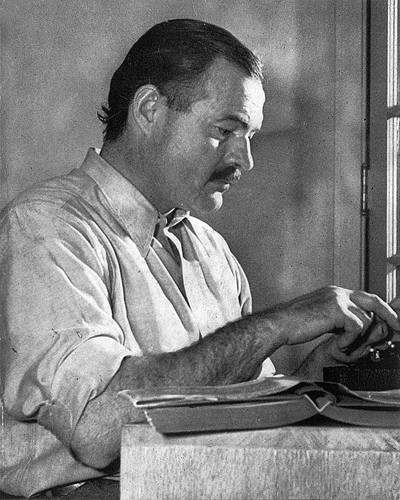
Work Alone: Ernest Hemingway’s 1954 Nobel Acceptance Speech

“Writing, at its best, is a lonely life.”

By Maria Popova

https://www.brainpickings.org/2013/03/21/ernest-hemingway-1954-nobel-speech/

“One can never be alone enough to write,” Susan Sontag observed. Solitude, in fact, seems central to many great writers’ daily routines — so much so, it appears, that part of the writer’s curse might be the ineffable struggle to submit to the spell of solitude and escape the grip of loneliness at the same time.

Ernest Hemingway

In October of 1954, Ernest Hemingway was awarded the Nobel Prize in Literature. But he didn’t exactly live every writer’s dream: First, he told the press that Carl Sandburg, Isak Dinesen and Bernard Berenson were far more worthy of the honor, but he could use the prize money; then, depressed and recovering from two consecutive plane crashes that had nearly killed him, he decided against traveling to Sweden altogether. Choosing not to attend the Nobel Banquet at the City Hall in Stockholm on December 10, 1954, Hemingway asked John C. Cabot, the United States Ambassador to Sweden at the time, to read his Nobel acceptance speech, found in the 1972 biography Hemingway: The Writer as Artist (public library). At a later date, Hemingway recorded the speech in his own voice. Hear an excerpt, then read the transcript of the complete speech below:

Having no facility for speech-making and no command of oratory nor any domination of rhetoric, I wish to thank the administrators of the generosity of Alfred Nobel for this Prize.

No writer who knows the great writers who did not receive the Prize can accept it other than with humility. There is no need to list these writers. Everyone here may make his own list according to his knowledge and his conscience.

It would be impossible for me to ask the Ambassador of my country to read a speech in which a writer said all of the things which are in his heart. Things may not be immediately discernible in what a man writes, and in this sometimes he is fortunate; but eventually they are quite clear and by these and the degree of alchemy that he possesses he will endure or be forgotten.

Writing, at its best, is a lonely life. Organizations for writers palliate the writer’s loneliness but I doubt if they improve his writing. He grows in public stature as he sheds his loneliness and often his work deteriorates. For he does his work alone and if he is a good enough writer he must face eternity, or the lack of it, each day.

For a true writer each book should be a new beginning where he tries again for something that is beyond attainment. He should always try for something that has never been done or that others have tried and failed. Then sometimes, with great luck, he will succeed.

How simple the writing of literature would be if it were only necessary to write in another way what has been well written. It is because we have had such great writers in the past that a writer is driven far out past where he can go, out to where no one can help him.

I have spoken too long for a writer. A writer should write what he has to say and not speak it. Again I thank you.

Leave a comment

Filed under 2019, writing tip, Writing Tip Wednesday

Writing tip Wednesday: “Too much head”

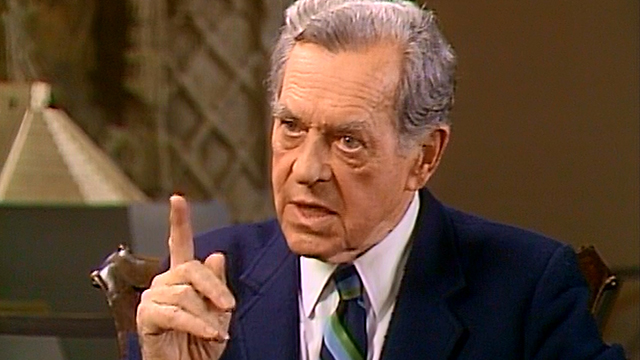
Writer’s block results from too much head. Cut off your head. Pegasus, poetry, was born of Medusa when her head was cut off. You have to be reckless when writing. Be as crazy as your conscience allows.
JOSEPH CAMPBELL

Joseph Campbell
Joseph Campbell, The Power of Myth

Leave a comment

Filed under 2019, writing tip, Writing Tip Wednesday

Writing tip Wednesday: “Success”

Leave a comment

Filed under 2019, writing tip, Writing Tip Wednesday

Writing tip Wednesday: “Work Alone: Ernest Hemingway’s 1954 Nobel Acceptance Speech”

“Writing, at its best, is a lonely life.”

By Maria Popova

https://www.brainpickings.org/2013/03/21/ernest-hemingway-1954-nobel-speech/

“One can never be alone enough to write,” Susan Sontag observed. Solitude, in fact, seems central to many great writers’ daily routines — so much so, it appears, that part of the writer’s curse might be the ineffable struggle to submit to the spell of solitude and escape the grip of loneliness at the same time.

Ernest Hemingway

In October of 1954, Ernest Hemingway was awarded the Nobel Prize in Literature. But he didn’t exactly live every writer’s dream: First, he told the press that Carl Sandburg, Isak Dinesen and Bernard Berenson were far more worthy of the honor, but he could use the prize money; then, depressed and recovering from two consecutive plane crashes that had nearly killed him, he decided against traveling to Sweden altogether. Choosing not to attend the Nobel Banquet at the City Hall in Stockholm on December 10, 1954, Hemingway asked John C. Cabot, the United States Ambassador to Sweden at the time, to read his Nobel acceptance speech, found in the 1972 biography Hemingway: The Writer as Artist (public library). At a later date, Hemingway recorded the speech in his own voice. Hear an excerpt, then read the transcript of the complete speech below:

Having no facility for speech-making and no command of oratory nor any domination of rhetoric, I wish to thank the administrators of the generosity of Alfred Nobel for this Prize.

No writer who knows the great writers who did not receive the Prize can accept it other than with humility. There is no need to list these writers. Everyone here may make his own list according to his knowledge and his conscience.

It would be impossible for me to ask the Ambassador of my country to read a speech in which a writer said all of the things which are in his heart. Things may not be immediately discernible in what a man writes, and in this sometimes he is fortunate; but eventually they are quite clear and by these and the degree of alchemy that he possesses he will endure or be forgotten.

Writing, at its best, is a lonely life. Organizations for writers palliate the writer’s loneliness but I doubt if they improve his writing. He grows in public stature as he sheds his loneliness and often his work deteriorates. For he does his work alone and if he is a good enough writer he must face eternity, or the lack of it, each day.

For a true writer each book should be a new beginning where he tries again for something that is beyond attainment. He should always try for something that has never been done or that others have tried and failed. Then sometimes, with great luck, he will succeed.

How simple the writing of literature would be if it were only necessary to write in another way what has been well written. It is because we have had such great writers in the past that a writer is driven far out past where he can go, out to where no one can help him.

I have spoken too long for a writer. A writer should write what he has to say and not speak it. Again I thank you.

Leave a comment

Filed under 2019, writing tip, Writing Tip Wednesday

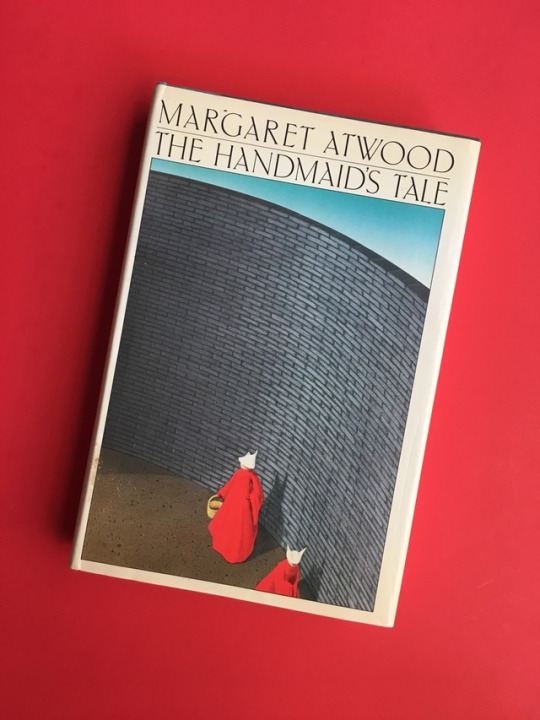
Writing tip Wednesday: “Margaret Atwood’s rules for writing fiction”

Don’t expect it to be easy and sometimes it won’t be fun, but it is largely up to you how far you go and how well you do, and most of the tools are easily obtainable. Don’t forget to stretch your back while stretching your mind.

  1. Take a pencil to write with on airplanes. Pens leak. But if the pencil breaks, you can’t sharpen it on the plane, because you can’t take knives with you. Therefore: Handmaid's Tale by Atwoodtake two pencils.
  2. If both pencils break, you can do a rough sharpening job with a nail file of the metal or glass type.
  3. Take something to write on. Paper is good. In a pinch, pieces of wood or your arm will do.
  4. If you’re using a computer, always safeguard new text with a ­memory stick.
  5. Do back exercises. Pain is distracting.
  6. Hold the reader’s attention. (This is likely to work better if you can hold your own.) But you don’t know who the reader is, so it’s like shooting fish with a slingshot in the dark. What ­fascinates A will bore the pants off B.
  7. You most likely need a thesaurus, a rudimentary grammar book, and a grip on reality. This latter means: there’s no free lunch. Writing is work. It’s also gambling. You don’t get a pension plan. Other people can help you a bit, but ­essentially you’re on your own. ­Nobody is making you do this: you chose it, so don’t whine.
  8. You can never read your own book with the innocent anticipation that comes with that first delicious page of a new book, because you wrote the thing. You’ve been backstage. You’ve seen how the rabbits were smuggled into the hat. Therefore ask a reading friend or two to look at it before you give it to anyone in the publishing business. This friend should not be someone with whom you have a ­romantic relationship, unless you want to break up.
  9. Don’t sit down in the middle of the woods. If you’re lost in the plot or blocked, retrace your steps to where you went wrong. Then take the other road. And/or change the person. Change the tense. Change the opening page.
  10. Prayer might work. Or reading ­something else. Or a constant visual­isation of the holy grail that is the finished, published version of your resplendent book.

Leave a comment

Filed under 2018, writing tip, Writing Tip Wednesday

Writing tip Wednesday: “Tinker Mountain Writers”

2018 Tinker logo 100dpi copy

2018 Tinker Mountain Writers 100dpi

Date: June 10 -15, 2018 at Hollins University in Roanoke, VA. Details at www.hollins.edu/tmww.

From novice to advanced. Since 2005, Tinker Mountain Writers has been nuturing and empowering writers though workshops in poetry, fiction, and nonfiction.

Leave a comment

Filed under 2018, writing tip, Writing Tip Wednesday