Category Archives: writing tip

How To Wake Up And Not Feel Like Going Right Back To Bed

Fitness gurus share their morning routines.

NYLON |

  • Molly Hurford

https://getpocket.com/explore/item/how-to-wake-up-and-not-feel-like-going-right-back-to-bed?utm_source=pocket-newtab

How do some people manage to look so darn perky as they sip coffee and smoothies in their Instagram stories in the morning? It all comes down to establishing a winning routine, one that’s easy for you to do every day and leaves you feeling awake, alert, and inspired. You don’t have to steal an entire routine from these fitness and wellness experts, but they have some pretty great suggestions of places to start.

Once you begin to develop a routine of your own, optimize it to your specific needs. Meditation for 20 minutes might not work for you, but maybe you can handle five minutes. Yoga might not be your jam, but what about a few basic stretches instead? And journaling can feel a little cliche, but what about a Google Doc where you list one thing daily that you’re grateful for? We don’t all need to be fitness and wellness junkies, but we can all get a little bit better at managing our mornings and crushing the rest of our day. 

Stay Offline

“I’d say my number one tip is to get ready for your day, whether that be breakfast, journaling, meditation, or working out before looking at your phone,” Sophie Gray of WayofGray.com says. “I recommend being off of your phone for at least 30 to 60 minutes in the morning! I like to do this because I can check in with myself first, before checking in with others.”  

Productivity gurus and the authors of Peak Performance, Brad Stulberg and Steve Magness, also back this one up. The more time you can stay off your phone and not be distracted, the better. Getting your primary workout for the day done before the flood of emails, Instagrams, and text is going to make the day feel a lot smoother. 

“This year has officially been the year of slowing down and learning to give myself what I need in order to thrive throughout the day with sustained energy and inspiration,” adds The Balance Blonde blogger Jordan Younger. “You could say I am a notorious overcommitter and a workaholic-slash-iPhone-aholic—who isn’t?—so I decided to get serious with my morning routine, to start to cultivate more peace and serenity in my daily life. I start each day with a digital detox where I do not look at my phone until I feel ready to be on and communicate with the world!”

Get Some Sun

“Working from home can sometimes mean there’s no need for you to leave the house, but, for me, getting outdoors every day for fresh air, a sense of vitality, and vitamin D is so important,” says Melissa Hemsley of the Hemsley Sisters. “Daylight helps to reset your internal body clock, also known as the circadian rhythm, leading to better sleep and allowing your body to tune into what it needs. I’ve got a staffy called Nelly who I take for runs around my local park, so it’s a non-negotiable for me!”

Studies bear this out: We need vitamin D to stay happy and energized. One such study even linked vitamin D deficiency in young women with depression. You don’t need to start supplementing to get it. Just getting sunlight should do the trick. And if, like Melissa, you work at home, a walk outside can give you the divide between “you time” and working hours.

Add a Yoga Flow

It’s no shock that Strala Yoga creator Tara Stiles starts every morning with a yoga flow, though as a new mom, her routine varies daily depending on what she needs and how she feels. And that’s a good thing! Even if you’re not nursing a newborn, switching up your yoga flow makes the morning a bit more exciting. Strala Yoga has a ton of quick and simple morning flows that Stiles created, and most of them run between seven and 12 minutes. Check out this one and this one if you prefer to have a video to flow with, or just do a few sun salutations and poses that make you feel particularly good. 

A regular yoga practice—10 minutes a day is over an hour a week!—can increase strength, balance, and flexibility, calm the mind, and reduce stress, according to the American College of Sports Medicine. It can even help battle things like lower back pain, according to a recent study

Scrape Your Tongue (or Whatever)

“Tongue scraping with a copper or stainless steel tongue scraper removes the toxins that brushing and flossing your teeth doesn’t,” says the other Hemsley sister, Jasmine. “Quite frankly, I’d rather forget to brush my teeth!” If tongue scraping isn’t for you, that’s fine, too, but having a morning beauty/cleansing routine can go a long way toward making you feel more awake and alert if you’re having a tough time crawling out of bed and perking up. 

Meditate

“I wake up, make a matcha tea or coffee in my kitchen, stretch on my yoga mat, and do a mindfulness meditation practice,” says Younger. “I have also gotten very into crystals, sage, essential oils, and palo santo. The morning is my ‘me time’ to play around with all of my yogi, kundalini grounding practices and also get some reading or journaling in. Then I head off to teach yoga down the street and feel like a new human! Also breathing. It sounds simple, but it’s been a game changer to really focus on my breath.” 

Meditation also makes you more creative, according to one study. And another championed morning meditation because that’s when we’re at our most spiritually aware.

It’s not just the yogis who are doing morning meditation, fitness junkies are into it, too. “Everyday is different for me, but no matter where I am, I make sure to spend a few moments alone setting my intention and purpose for the day through meditation,” says Karena Dawn of ToneItUp.com. It really helps me stay centered and focused.  After that, I head out for my workout. If I don’t workout in the morning, it usually won’t happen.” 

Get in a Quick Workout

Dawn also digs a morning workout to get the blood pumping. If you’re an early riser and can sneak in a quick run or strength workout, it’s a great way to kick off the day. And bonus, if you do a low-key workout before you eat breakfast; you’ll reap the benefits of fasted state training and gain extra strength and aerobic capacity in the process. Bonus: You can burn almost 20 percent more fat if you exercise pre-breakfast, according to one study. Plus, let’s be honest, breakfast will taste a whole lot better when you’ve really worked for it. 

Leave a comment

Filed under 2020, writing tip

‘Sleep Should Be Prescribed’: What Those Late Nights Out Could Be Costing You

A leading neuroscientist on why sleep deprivation is increasing our risk of cancer, heart attack, and Alzheimer’s – and what you can do about it.

Matthew Walker has learned to dread the question “What do you do?” At parties, it signals the end of his evening; thereafter, his new acquaintance will inevitably cling to him like ivy. On an aeroplane, it usually means that while everyone else watches movies or reads a thriller, he will find himself running an hours-long salon for the benefit of passengers and crew alike. “I’ve begun to lie,” he says. “Seriously. I just tell people I’m a dolphin trainer. It’s better for everyone.”

Walker is a sleep scientist. To be specific, he is the director of the Center for Human Sleep Science at the University of California, Berkeley, a research institute whose goal – possibly unachievable – is to understand everything about sleep’s impact on us, from birth to death, in sickness and health. No wonder, then, that people long for his counsel. As the line between work and leisure grows ever more blurred, rare is the person who doesn’t worry about their sleep. But even as we contemplate the shadows beneath our eyes, most of us don’t know the half of it – and perhaps this is the real reason he has stopped telling strangers how he makes his living. When Walker talks about sleep he can’t, in all conscience, limit himself to whispering comforting nothings about camomile tea and warm baths. It’s his conviction that we are in the midst of a “catastrophic sleep-loss epidemic”, the consequences of which are far graver than any of us could imagine. This situation, he believes, is only likely to change if government gets involved.

Walker has spent the last four and a half years writing Why We Sleep, a complex but urgent book that examines the effects of this epidemic close up, the idea being that once people know of the powerful links between sleep loss and, among other things, Alzheimer’s disease, cancer, diabetes, obesity and poor mental health, they will try harder to get the recommended eight hours a night (sleep deprivation, amazing as this may sound to Donald Trump types, constitutes anything less than seven hours). But, in the end, the individual can achieve only so much. Walker wants major institutions and law-makers to take up his ideas, too. “No aspect of our biology is left unscathed by sleep deprivation,” he says. “It sinks down into every possible nook and cranny. And yet no one is doing anything about it. Things have to change: in the workplace and our communities, our homes and families. But when did you ever see an NHS poster urging sleep on people? When did a doctor prescribe, not sleeping pills, but sleep itself? It needs to be prioritised, even incentivised. Sleep loss costs the UK economy over £30bn a year in lost revenue, or 2% of GDP. I could double the NHS budget if only they would institute policies to mandate or powerfully encourage sleep.”

Why, exactly, are we so sleep-deprived? What has happened over the course of the last 75 years? In 1942, less than 8% of the population was trying to survive on six hours or less sleep a night; in 2017, almost one in two people is. The reasons are seemingly obvious. “First, we electrified the night,” Walker says. “Light is a profound degrader of our sleep. Second, there is the issue of work: not only the porous borders between when you start and finish, but longer commuter times, too. No one wants to give up time with their family or entertainment, so they give up sleep instead. And anxiety plays a part. We’re a lonelier, more depressed society. Alcohol and caffeine are more widely available. All these are the enemies of sleep.”

But Walker believes, too, that in the developed world sleep is strongly associated with weakness, even shame. “We have stigmatised sleep with the label of laziness. We want to seem busy, and one way we express that is by proclaiming how little sleep we’re getting. It’s a badge of honour. When I give lectures, people will wait behind until there is no one around and then tell me quietly: ‘I seem to be one of those people who need eight or nine hours’ sleep.’ It’s embarrassing to say it in public. They would rather wait 45 minutes for the confessional. They’re convinced that they’re abnormal, and why wouldn’t they be? We chastise people for sleeping what are, after all, only sufficient amounts. We think of them as slothful. No one would look at an infant baby asleep, and say ‘What a lazy baby!’ We know sleeping is non-negotiable for a baby. But that notion is quickly abandoned [as we grow up]. Humans are the only species that deliberately deprive themselves of sleep for no apparent reason.” In case you’re wondering, the number of people who can survive on five hours of sleep or less without any impairment, expressed as a percent of the population and rounded to a whole number, is zero.

The world of sleep science is still relatively small. But it is growing exponentially, thanks both to demand (the multifarious and growing pressures caused by the epidemic) and to new technology (such as electrical and magnetic brain stimulators), which enables researchers to have what Walker describes as “VIP access” to the sleeping brain. Walker, who is 44 and was born in Liverpool, has been in the field for more than 20 years, having published his first research paper at the age of just 21. “I would love to tell you that I was fascinated by conscious states from childhood,” he says. “But in truth, it was accidental.” He started out studying for a medical degree in Nottingham. But having discovered that doctoring wasn’t for him – he was more enthralled by questions than by answers – he switched to neuroscience, and after graduation, began a PhD in neurophysiology supported by the Medical Research Council. It was while working on this that he stumbled into the realm of sleep.

“I was looking at the brainwave patterns of people with different forms of dementia, but I was failing miserably at finding any difference between them,” he recalls now. One night, however, he read a scientific paper that changed everything. It described which parts of the brain were being attacked by these different types of dementia: “Some were attacking parts of the brain that had to do with controlled sleep, while other types left those sleep centres unaffected. I realised my mistake. I had been measuring the brainwave activity of my patients while they were awake, when I should have been doing so while they were asleep.” Over the next six months, Walker taught himself how to set up a sleep laboratory and, sure enough, the recordings he made in it subsequently spoke loudly of a clear difference between patients. Sleep, it seemed, could be a new early diagnostic litmus test for different subtypes of dementia.

After this, sleep became his obsession. “Only then did I ask: what is this thing called sleep, and what does it do? I was always curious, annoyingly so, but when I started to read about sleep, I would look up and hours would have gone by. No one could answer the simple question: why do we sleep? That seemed to me to be the greatest scientific mystery. I was going to attack it, and I was going to do that in two years. But I was naive. I didn’t realise that some of the greatest scientific minds had been trying to do the same thing for their entire careers. That was two decades ago, and I’m still cracking away.” After gaining his doctorate, he moved to the US. Formerly a professor of psychiatry at Harvard Medical School, he is now professor of neuroscience and psychology at the University of California.

Does his obsession extend to the bedroom? Does he take his own advice when it comes to sleep? “Yes. I give myself a non-negotiable eight-hour sleep opportunity every night, and I keep very regular hours: if there is one thing I tell people, it’s to go to bed and to wake up at the same time every day, no matter what. I take my sleep incredibly seriously because I have seen the evidence. Once you know that after just one night of only four or five hours’ sleep, your natural killer cells – the ones that attack the cancer cells that appear in your body every day – drop by 70%, or that a lack of sleep is linked to cancer of the bowel, prostate and breast, or even just that the World Health Organisation has classed any form of night-time shift work as a probable carcinogen, how could you do anything else?”

There is, however, a sting in the tale. Should his eyelids fail to close, Walker admits that he can be a touch “Woody Allen-neurotic”. When, for instance, he came to London over the summer, he found himself jet-lagged and wide awake in his hotel room at two o’clock in the morning. His problem then, as always in these situations, was that he knew too much. His brain began to race. “I thought: my orexin isn’t being turned off, the sensory gate of my thalamus is wedged open, my dorsolateral prefrontal cortex won’t shut down, and my melatonin surge won’t happen for another seven hours.” What did he do? In the end, it seems, even world experts in sleep act just like the rest of us when struck by the curse of insomnia. He turned on a light and read for a while.

Will Why We Sleep have the impact its author hopes? I’m not sure: the science bits, it must be said, require some concentration. But what I can tell you is that it had a powerful effect on me. After reading it, I was absolutely determined to go to bed earlier – a regime to which I am sticking determinedly. In a way, I was prepared for this. I first encountered Walker some months ago, when he spoke at an event at Somerset House in London, and he struck me then as both passionate and convincing (our later interview takes place via Skype from the basement of his “sleep centre”, a spot which, with its bedrooms off a long corridor, apparently resembles the ward of a private hospital). But in another way, it was unexpected. I am mostly immune to health advice. Inside my head, there is always a voice that says “just enjoy life while it lasts”.

The evidence Walker presents, however, is enough to send anyone early to bed. It’s no kind of choice at all. Without sleep, there is low energy and disease. With sleep, there is vitality and health. More than 20 large scale epidemiological studies all report the same clear relationship: the shorter your sleep, the shorter your life. To take just one example, adults aged 45 years or older who sleep less than six hours a night are 200% more likely to have a heart attack or stroke in their lifetime, as compared with those sleeping seven or eight hours a night (part of the reason for this has to do with blood pressure: even just one night of modest sleep reduction will speed the rate of a person’s heart, hour upon hour, and significantly increase their blood pressure).

A lack of sleep also appears to hijack the body’s effective control of blood sugar, the cells of the sleep-deprived appearing, in experiments, to become less responsive to insulin, and thus to cause a prediabetic state of hyperglycaemia. When your sleep becomes short, moreover, you are susceptible to weight gain. Among the reasons for this are the fact that inadequate sleep decreases levels of the satiety-signalling hormone, leptin, and increases levels of the hunger-signalling hormone, ghrelin. “I’m not going to say that the obesity crisis is caused by the sleep-loss epidemic alone,” says Walker. “It’s not. However, processed food and sedentary lifestyles do not adequately explain its rise. Something is missing. It’s now clear that sleep is that third ingredient.” Tiredness, of course, also affects motivation.

Sleep has a powerful effect on the immune system, which is why, when we have flu, our first instinct is to go to bed: our body is trying to sleep itself well. Reduce sleep even for a single night, and your resilience is drastically reduced. If you are tired, you are more likely to catch a cold. The well-rested also respond better to the flu vaccine. As Walker has already said, more gravely, studies show that short sleep can affect our cancer-fighting immune cells. A number of epidemiological studies have reported that night-time shift work and the disruption to circadian sleep and rhythms that it causes increase the odds of developing cancers including breast, prostate, endometrium and colon.

Getting too little sleep across the adult lifespan will significantly raise your risk of developing Alzheimer’s disease. The reasons for this are difficult to summarise, but in essence it has to do with the amyloid deposits (a toxin protein) that accumulate in the brains of those suffering from the disease, killing the surrounding cells. During deep sleep, such deposits are effectively cleaned from the brain. What occurs in an Alzheimer’s patient is a kind of vicious circle. Without sufficient sleep, these plaques build up, especially in the brain’s deep-sleep-generating regions, attacking and degrading them. The loss of deep sleep caused by this assault therefore lessens our ability to remove them from the brain at night. More amyloid, less deep sleep; less deep sleep, more amyloid, and so on. (In his book, Walker notes “unscientifically” that he has always found it curious that Margaret Thatcher and Ronald Reagan, both of whom were vocal about how little sleep they needed, both went on to develop the disease; it is, moreover, a myth that older adults need less sleep.) Away from dementia, sleep aids our ability to make new memories, and restores our capacity for learning.

And then there is sleep’s effect on mental health. When your mother told you that everything would look better in the morning, she was wise. Walker’s book includes a long section on dreams (which, says Walker, contrary to Dr Freud, cannot be analysed). Here he details the various ways in which the dream state connects to creativity. He also suggests that dreaming is a soothing balm. If we sleep to remember (see above), then we also sleep to forget. Deep sleep – the part when we begin to dream – is a therapeutic state during which we cast off the emotional charge of our experiences, making them easier to bear. Sleep, or a lack of it, also affects our mood more generally. Brain scans carried out by Walker revealed a 60% amplification in the reactivity of the amygdala – a key spot for triggering anger and rage – in those who were sleep-deprived. In children, sleeplessness has been linked to aggression and bullying; in adolescents, to suicidal thoughts. Insufficient sleep is also associated with relapse in addiction disorders. A prevailing view in psychiatry is that mental disorders cause sleep disruption. But Walker believes it is, in fact, a two-way street. Regulated sleep can improve the health of, for instance, those with bipolar disorder.

I’ve mentioned deep sleep in this (too brief) summary several times. What is it, exactly? We sleep in 90-minute cycles, and it’s only towards the end of each one of these that we go into deep sleep. Each cycle comprises two kinds of sleep. First, there is NREM sleep (non-rapid eye movement sleep); this is then followed by REM (rapid eye movement) sleep. When Walker talks about these cycles, which still have their mysteries, his voice changes. He sounds bewitched, almost dazed.

“During NREM sleep, your brain goes into this incredible synchronised pattern of rhythmic chanting,” he says. “There’s a remarkable unity across the surface of the brain, like a deep, slow mantra. Researchers were once fooled that this state was similar to a coma. But nothing could be further from the truth. Vast amounts of memory processing is going on. To produce these brainwaves, hundreds of thousands of cells all sing together, and then go silent, and on and on. Meanwhile, your body settles into this lovely low state of energy, the best blood-pressure medicine you could ever hope for. REM sleep, on the other hand, is sometimes known as paradoxical sleep, because the brain patterns are identical to when you’re awake. It’s an incredibly active brain state. Your heart and nervous system go through spurts of activity: we’re still not exactly sure why.”

Does the 90-minute cycle mean that so-called power naps are worthless? “They can take the edge off basic sleepiness. But you need 90 minutes to get to deep sleep, and one cycle isn’t enough to do all the work. You need four or five cycles to get all the benefit.” Is it possible to have too much sleep? This is unclear. “There is no good evidence at the moment. But I do think 14 hours is too much. Too much water can kill you, and too much food, and I think ultimately the same will prove to be true for sleep.” How is it possible to tell if a person is sleep-deprived? Walker thinks we should trust our instincts. Those who would sleep on if their alarm clock was turned off are simply not getting enough. Ditto those who need caffeine in the afternoon to stay awake. “I see it all the time,” he says. “I get on a flight at 10am when people should be at peak alert, and I look around, and half of the plane has immediately fallen asleep.”

So what can the individual do? First, they should avoid pulling “all-nighters”, at their desks or on the dancefloor. After being awake for 19 hours, you’re as cognitively impaired as someone who is drunk. Second, they should start thinking about sleep as a kind of work, like going to the gym (with the key difference that it is both free and, if you’re me, enjoyable). “People use alarms to wake up,” Walker says. “So why don’t we have a bedtime alarm to tell us we’ve got half an hour, that we should start cycling down?” We should start thinking of midnight more in terms of its original meaning: as the middle of the night. Schools should consider later starts for students; such delays correlate with improved IQs. Companies should think about rewarding sleep. Productivity will rise, and motivation, creativity and even levels of honesty will be improved. Sleep can be measured using tracking devices, and some far-sighted companies in the US already give employees time off if they clock enough of it. Sleeping pills, by the way, are to be avoided. Among other things, they can have a deleterious effect on memory.

Those who are focused on so-called “clean” sleep are determined to outlaw mobiles and computers from the bedroom – and quite right, too, given the effect of LED-emitting devices on melatonin, the sleep-inducing hormone. Ultimately, though, Walker believes that technology will be sleep’s saviour. “There is going to be a revolution in the quantified self in industrial nations,” he says. “We will know everything about our bodies from one day to the next in high fidelity. That will be a seismic shift, and we will then start to develop methods by which we can amplify different components of human sleep, and do that from the bedside. Sleep will come to be seen as a preventive medicine.”

What questions does Walker still most want to answer? For a while, he is quiet. “It’s so difficult,” he says, with a sigh. “There are so many. I would still like to know where we go, psychologically and physiologically, when we dream. Dreaming is the second state of human consciousness, and we have only scratched the surface so far. But I would also like to find out when sleep emerged. I like to posit a ridiculous theory, which is: perhaps sleep did not evolve. Perhaps it was the thing from which wakefulness emerged.” He laughs. “If I could have some kind of medical Tardis and go back in time to look at that, well, I would sleep better at night.”

• Why We Sleep: The New Science of Sleep and Dreams by Matthew Walker is published by Allen Lane.

Sleep in numbers

■ Two-thirds of adults in developed nations fail to obtain the nightly eight hours of sleep recommended by the World Health Organisation.

■ An adult sleeping only 6.75 hours a night would be predicted to live only to their early 60s without medical intervention.

■ A 2013 study reported that men who slept too little had a sperm count 29% lower than those who regularly get a full and restful night’s sleep.

■ If you drive a car when you have had less than five hours’ sleep, you are 4.3 times more likely to be involved in a crash. If you drive having had four hours, you are 11.5 times more likely to be involved in an accident.

■ A hot bath aids sleep not because it makes you warm, but because your dilated blood vessels radiate inner heat, and your core body temperature drops. To successfully initiate sleep, your core temperature needs to drop about 1C.

■ The time taken to reach physical exhaustion by athletes who obtain anything less than eight hours of sleep, and especially less than six hours, drops by 10-30%.

■ There are now more than 100 diagnosed sleep disorders, of which insomnia is the most common.

■ Morning types, who prefer to awake at or around dawn, make up about 40% of the population. Evening types, who prefer to go to bed late and wake up late, account for about 30%. The remaining 30% lie somewhere in between.

The Guardian |

  • Rachel Cooke

https://getpocket.com/explore/item/sleep-should-be-prescribed-what-those-late-nights-out-could-be-costing-you?utm_source=pocket-newtab


Leave a comment

Filed under 2020, writing tip

The Single Reason Why People Can’t Write, According to a Harvard Psychologist

This common affliction is behind so much unclear and confusing writing in the world today.

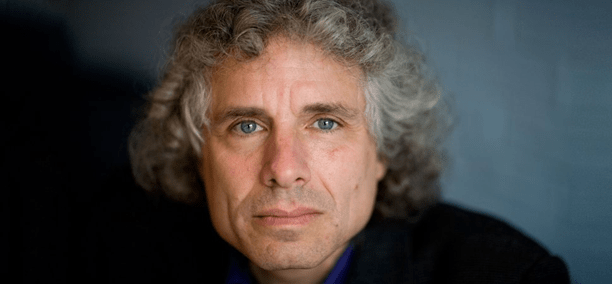
Steven Pinker

Author and psychologist Steven Pinker. Getty Images

https://getpocket.com/explore/item/the-single-reason-why-people-can-t-write-according-to-a-harvard-psychologist?utm_source=pocket-newtab

“Why is so much writing so hard to understand? Why must a typical reader struggle to follow an academic article, the fine print on a tax return, or the instructions for setting up a wireless home network?”

These are questions Harvard psychologist Steven Pinker asks in his book, The Sense of Style: The Thinking Person’s Guide to Writing in the 21st Century. They’re questions I’ve often encountered –and attempted to tackle– throughout my career as a business writer and editor. Whenever I see writing that is loaded with jargon, clichés, technical terms, and abbreviations, two questions come immediately to mind. First, what is the writer trying to say, exactly? And second, how can the writer convey her ideas more clearly, without having to lean on language that confuses the reader?

For Pinker, the root cause of so much bad writing is what he calls “the Curse of Knowledge”, which he defines as “a difficulty in imagining what it is like for someone else not to know something that you know. The curse of knowledge is the single best explanation I know of why good people write bad prose.”

“Every human pastime –music, cooking, sports, art, theoretical physics –develops an argot to spare its enthusiasts from having to say or type a long-winded description every time they refer to a familiar concept in each other’s company. The problem is that as we become proficient at our job or hobby we come to use these catchwords so often that they flow out of our fingers automatically, and we forget that our readers may not be members of the clubhouse in which we learned them.”

People in business seem particularly prone to this “affliction.” You could argue that business has developed its own entirely unique dialect of English. People are exposed to an alphabet soup of terms and acronyms at business school, which they then put into use in their day-to-day interactions once they enter the working world.

And what starts out as a means of facilitating verbal communication between people becomes the primary mode with which people communicate their ideas in writing, from email to chat apps to business proposals and presentations.

“How can we lift the curse of knowledge?” asks Pinker. “A considerate writer will…cultivate the habit of adding a few words of explanation to common technical terms, as in ‘Arabidopsis, a flowering mustard plant,’ rather than the bare ‘Arabidopsis.’ It’s not just an act of magnanimity: A writer who explains technical terms can multiply her readership a thousandfold at the cost of a handful of characters, the literary equivalent of picking up hundred-dollar bills on the sidewalk.”

“Readers will also thank a writer for the copious use of for example, as in, and such as, because an explanation without an example is little better than no explanation at all.”

Whenever I write a sentence that makes me pause and wonder about what it means, I assume that other readers might react in the same way. If a sentence is not clear to me, it might not be clear to others. It’s an approach that I recommend to anyone who is trying to improve his own writing.

Before hitting publish and sending your writing out to the world, it’s better to be honest with yourself about how much your reader is likely to understand a given passage or sentence. Before you commit your writing to print– or to the internet– take a few moments to make sure that what you write is clear and understandable by as many of your intended readers as possible.

As Richard Feynman, the Nobel prize-winning physicist, once wrote, “If you ever hear yourself saying, ‘I think I understand this,’ that means you don’t.”

Glenn Leibowitz

Leave a comment

Filed under 2020, writing tip, Writing Tip Wednesday

7 Morning Habits That Can Affect Your Entire Day

It can be easy to fall into a morning routine without considering how it impacts you later in the day.

Source: 7 Morning Habits That Can Affect Your Entire Day

While not directly related to writing, I thought I would pass along. I don’t endorse any of these suggestions, and some I don’t agree with, such as coffee. Some or all might work for you.

Your morning routine is like setting up a string of dominoes: You line everything up for success, but one false move can cause it all to come tumbling down. In order to set the right tone for the rest of your day, experts say you should adjust the following seven habits.

  1. Hitting the Snooze Button

It’s tempting to steal a few more minutes of sleep, but hitting snooze has a negative impact on your physical and emotional well-being, says Joanna Kleinman, owner of The Center for Extraordinary Relationships. “Physically, hitting the snooze button actually sets you up to be groggy and less productive because you are repeatedly waking yourself out of a deep sleep,” Kleinman says. “Emotionally, you set yourself up to be late, rushed, and stressed in the morning.”

The obvious solution, Kleinman says, is getting out of bed right away (even if it seems impossible). “If we listen to our minds telling us what we feel like doing, we will never be able to make the positive changes we need to,” Kleinman says.

  1. Checking Your Phone

Doing this first thing in the morning stimulates self-criticism and judgments in your mind, Kleinman says. “Your emails and texts are all about things to do, things to buy, things to add to your to-do list,” she says. “This amounts to either the stuff that other people want you to be paying attention to, or what your mind says you should be paying attention to.”

Even if you leave your inbox alone and stick to Instagram, you can do harm to your psyche because social media causes you to compare yourself to other people. Bottom line: Checking your phone first thing can awaken your inner critic. To stop yourself from opening Twitter immediately after turning off your alarm, charge your phone in another room. Begin your day instead with a self-affirming habit like journaling or meditation.

  1. Planning Your Day

If you wake up and have no idea what’s on your schedule, where you have to be, or what you’re going to wear, then your day is already off to a frantic start. Psychologist and Certified Master Coach Joel Ingersoll recommends organizing your day the night before. This way, you’ll feel refreshed and ready to go in the morning.

  1. Drinking Water…

You may be craving a cup of coffee as soon as your feet hit the floor, but what your body really needs is a glass of water, Ingersoll says. Since you haven’t had any liquids in your system for at least six (or hopefully eight) hours, your body is dehydrated. You can have the coffee (see below), but your body will function better—you’ll have fewer headaches, less fatigue, and smaller bags under your eyes—if you down a glass of water first, Ingersoll says.

  1. …and Coffee

Don’t feel guilty about reaching for the coffee pot after you’ve had your water—it is actually good for your body, too, says Ilyse Schapiro, a Registered Dietitian and Certified Dietitian/Nutritionist. “Coffee is a great source of antioxidants, and it can increase energy as well as help to stabilize our moods,” Schapiro says. “It can also help keep our brains healthier and our minds sharper.”

Too much coffee isn’t going to do you any favors, though. Stick with one or two cups a day, and be consistent with how much you drink, or else you’ll start getting headaches and withdrawal symptoms.

  1. Skipping Breakfast

Have you been told to eat a good breakfast before? That’s because it’s important, says Bruno LoGreco, life coach and author of Stop Sabotaging Your Life. “Eating a healthy breakfast consisting of nuts, fruits, and oats will satisfy your brain to get you through a tough day at the office,” LoGreco says. It’s best to skip the doughnuts and croissants, though, as these will give you a sugar high and set you up for a crash just as you reach your desk.

  1. Rising Early

A study published by the American Psychological Association found that early risers are happier and more successful than those who go to bed late. They tend to be more proactive, get better grades, and better anticipate and minimize problems.

Danielle Braff is a freelance writer in Chicago. Her work has appeared in the Chicago Tribune, Crain’s Chicago Business, Women’s Health, Self and Marie Claire, among others. She lives with her husband, their two daughters, two cats and a dog. Check out her other work at Daniellebraff.com.

Leave a comment

Filed under 2020, writing tip, Writing Tip Wednesday

21 Rhetorical Devices Explained

Photo by Mark Metcalfe/Getty Images

Source: 21 Rhetorical Devices Explained

Rhetoric is often defined as “the art of language.” That might sound like a bit of a cliché (which it is), but it’s actually quite a nice way of saying that rhetorical devices and figures of speech can transform an ordinary piece of writing or an everyday conversation into something much more memorable, evocative, and enjoyable. Hundreds of different rhetorical techniques and turns of phrase have been identified and described over the centuries—of which the 21 listed here are only a fraction—but they’re all just as effective and just as useful when employed successfully.

  1. Adynaton

You’ll no doubt have heard of hyperbole, in which an over-exaggeration is used for rhetorical effect, like, “he’s as old as the hills,” “we died laughing,” or “hyperbole is the best thing ever.” But adynaton is a particular form of hyperbole in which an exaggeration is taken to a ridiculous and literally impossible extreme, like “when pigs fly!” or “when Hell freezes over!”

  1. Anacoluthon

Often used in literature to create a stream-of-consciousness style in which a character’s thoughts flit from one idea to the next, anacoluthon describes a sudden and unexpected break in a sentence that leads to it being concluded in a different way than might have been expected. Although it can sometimes be due to nothing more than a speaker losing their train of thought, in practice anacoluthon can also be OH MY GOD I’VE LEFT THE GAS ON.

  1. Anadiplosis

Anadiplosis is an ingenious and memorable rhetorical device in which a repeated word or phrase is used both at the end of one sentence or clause and at the beginning of the next. As with practically all rhetorical devices, William Shakespeare liked using it (“She being none of your flesh and blood, your flesh and blood has not offended the king”), but you can thank George Lucas for what is now probably the best-known example: “Fear leads to anger. Anger leads to hate. Hate leads to suffering.”

  1. Anthypophora

You know when you pose a question for dramatic effect and then immediately answer it yourself? That’s anthypophora.

  1. Antimeria

If you’ve ever friended or texted someone, emailed or DMed something, tabled a meeting or motorwayed your way across country, then you’ll be familiar with antimeria, a rhetorical device in which an existing word is used as if it were a different part of speech. More often than not this involves using a noun as if it were a verb, a semantic process better known as “verbing” (which is actually a perfect example of itself). Slang (and modern English in general, for that matter) loves antimeria, but it is Shakespeare who remains the undisputed master of it. Cake, drug, kitchen, squabble, ghost, blanket, graze, elbow, and crank were all only ever used as nouns before he got hold of them.

  1. Antiprosopopoeia

Prosopopoeia is just a more formal name for personification, in which inanimate objects are either described in human terms or given human characteristics. The opposite of that is antiprosopopoeia, a figure of speech in which a person is compared to an inanimate object. That might sound odd, but it’s actually a very effective form of metaphor able to confer a great deal of detail or information in a clever and often witty way—think about what it means to call someone a doormat, a tank, a firecracker, a mattress, or a garbage disposal and you’ll see precisely how effective it can be.

  1. Antonomasia

The Bard. The Iron Lady. The King. Ol’ Blue Eyes. When you substitute a proper name for an epithet or a nickname, that’s antonomasia.

  1. Aposiopesis

In Act 2 of King Lear, the eponymous king rages against two of his daughters in a disjointed speech that ends with the famous lines, “I will have such revenges on you both that all the world shall—I will do such things—what they are yet, I know not, but they shall be the terrors of the earth!” The point at which Lear’s threat of revenge trails off, restarts, and trails off again is a perfect example of aposiopesis, a rhetorical ploy in which an idea is left unsaid or a sentence is left incomplete purely for emphatic effect. Why I oughta…

  1. Asterismos

Right. Okay. Here goes. Asterismos is the use of a seemingly unnecessary word or phrase to introduce what you’re about to say. Semantically it’s fairly pointless to say something like “listen!” before you start talking to someone, because they are (or at least should be) already listening. Rhetorically, however, asterismos is a seriously clever way of subconsciously drawing attention to what you’re about to say.

  1. Asyndeton

“We got there, the weather was bad, we didn’t stay long, we got back in the car, we came home, end of story.” When you deliberately miss out the conjunctions between successive clauses, you’re left with a choppy and abrupt series of phrases that energetically push things forward, an effect properly known as asyndeton. The opposite is called polysyndeton, when you add more conjunctions to a phrase or clause than are strictly necessary, often with the effect of intentionally dragging it out: “We ate and drank and talked and laughed and talked and laughed and ate some more.”

  1. Chiasmus

Apart from the fact that it’s part of a great speech, one of the reasons why John F. Kennedy’s famous “ask not what your country can do for you, ask what you can do for your country” line is so striking is that is a fine example of chiasmus, a clever rhetorical formation in which the order of a pair of words or phrases in one clause (your country, you) is inverted in the next (you, your country). This gives a rhythmic and instantly memorable criss-cross pattern, AB-BA, which appropriately enough takes its name from the X-shaped Greek letter chi.

  1. Congery

Congery is a form of tautology, the rhetorical use of repetition. It refers to a writer or speaker using a number of different and successive words or phrases that all effectively mean the same thing, purely to emphasise the point. That’s it. That’s all. Done. Finished. Finito.

  1. Dialogismus

In a dialogismus, a speaker either imagines what someone or something else might be thinking (“I bet that guy’s thinking, ‘what am I doing here?’”), or else paraphrases someone’s earlier words (“‘Don’t worry!’ she told me. ‘Everything will be fine!’”). In either case, the speaker ends up talking not as themselves just for rhetorical effect.

  1. Dysphemism

If a euphemism is a nicer turn of phrase used in place of a more offensive or embarrassing one (like “call of nature” or “bought the farm”), then a dysphemism is an offensive or detrimental phrase deliberately used in place of a nicer one. This applies to everything from using an insult instead of someone’s name, to phrases like frankenfood and junk food that try to influence what we should think of genetically modified crops and take-out restaurants with just a few choice words.

  1. Eutrepismus

First, we need to explain what this is. Second, we need to show how it works. And third, we need to explain what it achieves. Eutrepismus is the numbering or ordering of a series of phrases that are all under consideration, and it’s used to structure arguments and speeches more clearly, making them easier for an audience to take in and follow your train of thought.

  1. Expeditio

An expeditio is that instantly recognisable figure of speech in which you list a number of alternatives, and then proceed to eliminate all but one of them. “We can go for Italian, Mexican, or Chinese. But I had Chinese last night and you hate garlic, so it’s going to have to be Mexican.”

  1. Hypocatastasis

When you say that something is like something else (“as busy as a bee”), that’s a simile. When you say that something actually is something else (“a heart of stone”) that’s a metaphor. But when you just go all out and label something as something that it actually isn’t (“You chicken!”), that’s a hypocatastasis.

  1. Pleonasm

When you use more words than are in actual fact absolutely really strictly necessary in order to communicate and make your point effectively and efficiently, that’s a pleonasm. It needn’t be as clumsy and as long-winded as that, of course, and more often than not the term pleonasm is used to apply to what is otherwise called “semantic redundancy,” in which extra qualifying words are used to force a point home—like “empty space,” “boiling hot,” or “totally unique.”

  1. Synecdoche

A synecdoche is a figure of speech in which a part or component of something is used to represent that whole—like calling a car your “wheels,” the staff of a company the “hands,” or the film industry as a whole “Hollywood.”

  1. Tmesis

Tmesis is the proper name for that fan-bloody-tastic technique of splitting a word in half by inserting another word inside it. More often than not, the word being inserted in the other is a swearword (you can provide your own examples for that), but it needn’t always be—tmesis can be used any-old-how you like.

  1. Zeugma

There are several different forms and definitions of precisely what a zeugma is, but in basic terms it describes a figure of speech in which one word (usually, but not always, a verb) governs or is directly related to two or more other words in the same sentence. So you can run out of time, and out of the room. You can have a go, and a laugh. And, to paraphrase Charles Dickens, you can go home in floods of tears and a sedan-chair.

Paul Anthony Jones is a writer and musician from Newcastle upon Tyne. He is the author of word origins guide Haggard Hawks and Paltry Poltroons, and runs its tie-in Twitter account @HaggardHawks.

Leave a comment

Filed under 2020, writing tip, Writing Tip Wednesday

Wynton Marsalis Gives 12 Tips on How to Practice: For Musicians, Athletes, or Anyone Who Wants to Learn Something New | Open Culture

Practicing for countless hours before we can be good at something seems burdensome and boring. Maybe that’s why we’re drawn to stories of instant achievement.

Source: Wynton Marsalis Gives 12 Tips on How to Practice: For Musicians, Athletes, or Anyone Who Wants to Learn Something New | Open Culture

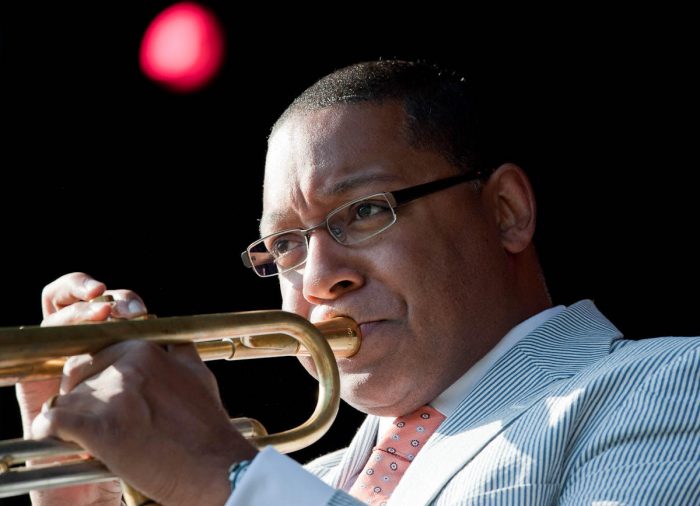
Practicing for countless hours before we can be good at something seems burdensome and boring. Maybe that’s why we’re drawn to stories of instant achievement. The monk realizes satori (and Neo learns kung fu); the superhero acquires great power out of the blue; Robert Johnson trades for genius at the crossroads. At the same time, we teach children they can’t master a skill without discipline and diligence. We repeat pop psych theories that specify the exact number hours required for excellence. The number may be arbitrary, but it comforts us to believe that practice might, eventually, make perfect. Because in truth we know there is no way around it. As Wynton Marsalis writes in “Wynton’s Twelve Ways to Practice: From Music to Schoolwork,” “practice is essential to learning music—and anything else, for that matter.”

For jazz musicians, the time spent learning theory and refining technique finds eloquent expression in the concept of woodshedding, a “humbling but necessary chore,” writes Paul Klemperer at Big Apple Jazz, “like chopping wood before you can start the fire.”

Yet retiring to the woodshed “means more than just practicing…. You have to dig deep into yourself, discipline yourself, become focused on the music and your instrument.” As beginners, we tend to look at practice only as a chore. The best jazz musicians know there’s also “something philosophical, almost religious” about it. John Coltrane, for example, practiced ceaselessly, consciously defining his music as a spiritual and contemplative discipline.

Marsalis also implies a religious aspect in his short article: “when you practice, it means you are willing to sacrifice to sound good… I like to say that the time spent practicing is the true sign of virtue in a musician.” Maybe this piety is intended to dispel the myth of quick and easy deals with infernal entities. But most of Marsalis’ “twelve ways to practice” are as pragmatic as they come, and “will work,” he promises “for almost every activity—from music to schoolwork to sports.” Find his abridged list below, and read his full commentary at “the trumpeter’s bible,” Arban’s Method.

  1. Seek out instruction: A good teacher will help you understand the purpose of practicing and can teach you ways to make practicing easier and more productive.
  2. Write out a schedule: A schedule helps you organize your time. Be sure to allow time to review the fundamentals because they are the foundation of all the complicated things that come later.
  3. Set goals: Like a schedule, goals help you organize your time and chart your progress…. If a certain task turns out to be really difficult, relax your goals: practice doesnʼt have to be painful to achieve results.
  4. Concentrate: You can do more in 10 minutes of focused practice than in an hour of sighing and moaning. This means no video games, no television, no radio, just sitting still and working…. Concentrated effort takes practice too, especially for young people.
  5. Relax and practice slowly: Take your time; donʼt rush through things. Whenever you set out to learn something new – practicing scales, multiplication tables, verb tenses in Spanish – you need to start slowly and build up speed.
  6. Practice hard things longer: Donʼt be afraid of confronting your inadequacies; spend more time practicing what you canʼt do…. Successful practice means coming face to face with your shortcomings. Donʼt be discouraged; youʼll get it eventually.
  7. Practice with expression: Every day you walk around making yourself into “you,” so do everything with the proper attitude…. Express your “style” through how you do what you do.
  8. Learn from your mistakes: None of us are perfect, but donʼt be too hard on yourself. If you drop a touchdown pass, or strike out to end the game, itʼs not the end of the world. Pick yourself up, analyze what went wrong and keep going….
  9. Donʼt show off: Itʼs hard to resist showing off when you can do something well…. But my father told me, “Son, those who play for applause, thatʼs all they get.” When you get caught up in doing the tricky stuff, youʼre just cheating yourself and your audience.
  10. Think for yourself: Your success or failure at anything ultimately depends on your ability to solve problems, so donʼt become a robot…. Thinking for yourself helps develop your powers of judgment.
  11. Be optimistic: Optimism helps you get over your mistakes and go on to do better. It also gives you endurance because having a positive attitude makes you feel that something great is always about to happen.
  12. Look for connections: If you develop the discipline it takes to become good at something, that discipline will help you in whatever else you do…. The more you discover the relationships between things that at first seem different, the larger your world becomes. In other words, the woodshed can open up a whole world of possibilities.

You’ll note in even a cursory scan of Marsalis’ prescriptions that they begin with the imminently practical—the “chores” we can find tedious—and move further into the intangibles: developing creativity, humility, optimism, and, eventually, maybe, a gradual kind of enlightenment. You’ll notice on a closer read that the consciousness-raising and the mundane daily tasks go hand-in-hand.

While this may be all well and good for jazz musicians, students, athletes, or chess players, we may have reason for skepticism about success through practice more generally. Researchers at Princeton have found, for example, that the effectiveness of practice is “domain dependent.” In games, music, and sports, practice accounts for a good deal of improvement. In certain other “less stable” fields driven by celebrity and networking, for example, success can seem more dependent on personality or privileged access.

But it’s probably safe to assume that if you’re reading this post, you’re interested in mastering a skill, not cultivating a brand. Whether you want to play Carnegie Hall or “learn a language, cook good meals or get along well with people,” practice is essential, Marsalis argues, and practicing well is just as important as practicing often. For a look at how practice changes our brains, creating what we colloquially call “muscle memory,” see the TED-Ed video just above.

Leave a comment

Filed under 2019, writing tip, Writing Tip Wednesday

These 13 Books Will Make You a Better Writer in 2019 | Inc.com

One of the best ways to improve your writing is to read about the craft.

Source: These 13 Books Will Make You a Better Writer in 2019 | Inc.com

  1. Ernest Hemingway on Writing, edited by Larry W. Phillips

Ernest Hemingway never codified his insights on writing into a book, but he did share his thinking on the topic in commissioned articles; letters to his agents, publishers, and friends; and through his novels. Ernest Hemingway on Writing is a collection of his insights on the craft of writing, and includes several practical and inspiring tips.

  1. Zen in the Art of Writing, by Ray Bradbury

The prolific science-fiction author Ray Bradbury collected the lessons he had learned about the craft during his long and successful career in Zen in the Art of Writing.

  1. Nobody Wants to Read Your Sh*t: Why That Is and What You Can Do About It, by Steven Pressfield

Steven Pressfield recently returned to writing about writing with a brand-new book, Nobody Wants to Read Your Sh*t. It’s a no-nonsense guide to writing stories that people will want to read. While the bulk of the book addresses how to write fiction, Pressfield shows how the same principles of writing good stories can apply to writing nonfiction.

  1. The Artist’s Way: A Spiritual Path to Higher Creativity, by Julia Cameron

The Artist’s Way: A Spiritual Path to Higher Creativity is the classic book by author and creativity coach Julia Cameron in which she introduces what she calls “morning pages.” Morning pages is a powerful stream of consciousness writing exercise that is not intended to yield publishable material, but which can help you get your pen moving and your thoughts flowing–even if you never intend to share them with the rest of the world.

  1. Turning Pro: Tap Your Inner Power and Create Your Life’s Work, by Steven Pressfield

Ever since reading his classic book, The War of Art, I’ve read every book about writing by Steven Pressfield (and I will continue to read every one he writes, including the one he’s publishing soon, which he’s generously serializing on his blog). In that book he gave a name to what every writer grapples with. He called it Resistance.

To fight the Resistance, writers (and other artists, for he was addressing artists broadly in that book) need to give up their amateur mindsets and habits and “turn pro.” In Turning Pro, his follow-up to The War of Art, Pressfield fleshes out what he means exactly when he tells writers to “turn pro.”

  1. On Writing Well: The Classic Guide to Writing Nonfiction, by William Zinsser

William Zinsser was a journalist, author, and writing instructor at Yale. His book On Writing Well is a classic among writers and has sold nearly 1.5 million copies in the 40 years since it was published. It’s one of the first books I recommend to anyone seeking to improve their writing.

  1. On Writing: A Memoir of the Craft, by Stephen King

Fifteen years ago, mega-best-selling author Stephen King wrote a book about the craft of writing that became an instant bestseller: On Writing: A Memoir of the Craft. After telling the story of how he became the writer he is today, King devotes the second half of the book to sharing his writing strategies, like his suggestion that you should write for your “Ideal Reader.”

  1. Process: The Writing Lives of Great Authors, by Sarah Stodola

This book looks at the techniques, inspirations, and daily routines of 18 iconic authors of the 20th century, including Franz Kafka, Ernest Hemingway, Virginia Woolf, David Foster Wallace, Toni Morrison, and Margaret Atwood.

After profiling so many successful authors, what did Stodola learn about their writing process? “Genius, I have concluded, is the presence of not one ability but several that work together in tandem. Genius is far more tedious, far less romantic, far more rote, far less effortless, than we imagine it.”

  1. The War of Art: Break Through the Blocks and Win Your Inner Creative Battles, by Steven Pressfield, edited by Shawn Coyne

All writers struggle with writer’s block in one form or another, but Steven Pressfield named the enemy and outlined a strategy for conquering it in The War of Art, the perennially best-selling guide for writers and other creative professionals. In the first part of the book he introduces what he calls Resistance – the force within us that conspires to prevent us from fulfilling our creative pursuits – and then spends the next two sections sharing his solutions for overcoming it.

  1. The Art of Nonfiction, by Ayn Rand

As the late novelist and philosopher Ayn Rand describes in The Art of Nonfiction, an edited collection of lectures she gave on the craft of writing, part of the reason why it took so long to finish her second novel is because she often suffered from severe bouts of writer’s block.

  1. Lifelong Writing Habit: The Secret to Writing Every Day, by Chris Fox.

In Lifelong Writing Habit: The Secret to Writing Every Day, Chris Fox describes the 12-step process he created that has allowed him to make the transition from part-time writer to full-time author of several best-selling thriller novels and nonfiction writing guides.

At the beginning of the book, Chris describes what a habit is, and explains how you can reprogram your brain just like a computer to install new habits. Habits live in a part of the brain called the basal ganglia, and they consist of three parts: The trigger, the routine, and the reward. The key to changing your habits is to identify which ones are good for you, which ones are bad, and then “flip” the bad ones to good ones.

  1. 8-Minute Writing Habit: Create a Consistent Writing Habit That Works With Your Busy Lifestyle, by Monica Leonelle

Monica Leonelle, a novelist and author of several books about writing, has written a book that speaks directly to those of us who struggle to get our writing done while balancing other commitments at work and home.

In the first part of The 8 Minute Writing Habit: Create a Consistent Writing Habit that Works With Your Busy Lifestyle, Leonelle describes several “blockers” that get in the way of our writing, thoughts like “writing might not pay off,” “I’m not good enough to be a writer,” and “I’m stuck in the planning/writing/editing phase.” For each blocker, she offers several practical tips for overcoming them. In the second part of the book, she shares nine strategies the pros use to write consistently.

  1. Several Short Sentences About Writing, by Verlyn Klinkenborg

Verlyn Klinkenborg is an author and creative writing instructor at Yale. In the preface to Several Short Sentences About Writing, he argues that “most of the received wisdom about how writing works is not only wrong but harmful,” and then devotes the rest of the book to smashing assumptions and correcting misconceptions about the craft.

Leave a comment

Filed under 2019, book list, writing, writing tip

The Absolute Best Books On Writing | BookBaby Blog

The list of favorite books on writing can be very different from one author to another. I’ve scoured 10 “top” lists to see which titles spanned the gamut.

Source: The Absolute Best Books On Writing | BookBaby Blog

By Dawn Field

What are your favorite books on writing? Do you have a large collection? How do you expand your corpus when you feel like reading another? Which would you recommend?

There are a huge number of books on writing and if you want to pick the absolute “best,” you have two choices. The first is to pick books that the most people have read and enjoyed. The second is to admit that the best books for each writer will be different. If you are a poet, nonfiction writer, or romance aspirant, you might want specialist advice and information.

Popularity contest

To find the books that are most popular, I looked at the intersection of lists of favorites — and I found an interesting pattern. If you combine the top books on Amazon and the picks found in a range of “top book” articles (Steven Spatz‘ 5 favorites, Shaunta Grimes‘ top 10, Jerry Jenkins’ “12 best,” Jeff Goin‘s “best books,” SmartBlogger‘s “9 Essentials,” The Write Life‘s “9 of the best,” Barnes & Noble‘s “6 best,” and Paste‘s “10 best”) we see some perennial favorites, but overall, surprisingly little overlap.

A few classics appear repeatedly, but most of the recommended books on writing only appear once. This is because excellent, but specialist, books fall down the ranks. The perfect book for you might never rank a “top 10” list of general writing books.

So, who are the winners? Two books stand head and shoulders above the rest in the tally of appearances. The winning category is “writers writing on writing” and the two top books are Stephen King’s On Writing: A Memoir of the Craft and Anne Lamott’s Bird by Bird: Some Instructions on Writing and Life.

Other books often in the top lists are Strunk and White’s The Elements of Style and two on creativity: Julia Cameron’s The Artist’s Way: A Spiritual Path to Higher Creativity and Steven Pressfield’s The War of Art: Break Through the Blocks and Win Your Inner Creative Battles.

Most at the rarefied top of the normative lists have some good years on them. Remember the classics now “too old” to rank on such modern lists. This includes Joseph Campbell’s The Hero With a Thousand Faces which describes the hero’s journey that inspired Star Wars, Aristotle’s Poetics (which comes in various translations and interpretations from modern authors), and John Gardner’s The Art of Fiction: Notes on Craft for Young Writers.

New books continuously appear. Harvard linguist Stephen Pinker’s The Sense of Style: The Thinking Person’s Guide to Writing in the 21st Century already ranks as a modern classic update to the Elements of Style and writer and teacher John McPhee’s Draft No. 4: On the Writing Process is just out for nonfiction.

If you want to hear the advice of an expert editor and you are interested in nonfiction, go for Sol Stein’s On Writing. Blake Synder’s Save the Cat: The Last Book on Screenwriting You’ll Ever Need is a textbook in screenwriting.

And the lists go on and on.

Just look at this list by Booker prize-winning author DBC Pierre in The Guardian to see how different and unique a personal choice list can be. It includes The Prince by Niccolò Machiavelli to “discover what villains are born knowing.”

The best books to add to your collection fill the biggest gaps in your knowledge or provide the most inspiration. This could mean getting a tip from a colleague or mentor or scrolling curated lists to seek out something that matches your interests. Book Riot has a list of “100 Must-read, Best Books On Writing And The Writer’s Life.”

The choices might seem overwhelming, but it helps that you can download opening chapters for free on Kindle to have a look at style and content.

How many have you read? Which should you read next? In the end, pick to match your tastes and needs. The absolute best are the ones that help you most.

Leave a comment

Filed under 2019, book list, writing tip, Writing Tip Wednesday

The 8 Best Books for Writers in 2019

Read reviews and buy the best books for writers from top authors including Randy Ingermanson, Susan Thurman, Zachary Petit and more.

Source: The 8 Best Books for Writers in 2019

Become a better author in no time

By Emily Delbridge

Updated November 21, 2019


https://www.thebalance.com/best-books-for-writers-1360649


We are committed to researching, testing, and recommending the best products. We may receive commissions from purchases made after visiting links within our content. Learn more about our review process.

Making money as a writer is not an easy task. Depending on your goals it can feel downright impossible. Being a successful writer has nothing to do with luck, and everything to do with hard work, dedication and perseverance. Overcoming challenges like writer’s block and finding a publisher can be excruciating. The best thing you can do is continue self-education. Most people know reading more can make you a better writer. Reading the proper book at the right time can make all the difference. If you are looking to make things easier on yourself and make the best of your writing, you are in the right place. Take a look at the best books for writers beginning with tools for becoming a better writer and ending with getting your writing out to the masses.

Best for Fiction Writers: How to Write a Novel Using the Snowflake Method

Buy on Amazon

There are many different ways to approach writing a fiction novel. The Snowflake Method is a popular method of writing and the author, Randy Ingermanson, lays it out in a unique book where the technique is explained in a story. He uses the fairy tale characters, Goldilocks and the Three Bears with a murder mystery theme, and walks you through the process of using the Snowflake method. It makes it fun and easy to understand. If you have never heard of the Snowflake Method, it begins with a simple idea then develops and adds more intricate details along the way. It is a little different than laying out a rigid outline or just making it up as you go along. It is most helpful for writers who prefer to write as they go but often get stuck somewhere in the middle. The Snowflake method can help even a seasoned writer complete a novel with excitement.

Best for Improving Your Writing Skills: The Only Grammar Book You’ll Ever Need

Buy on Amazon

One skill that can not be overlooked as a writer is grammar. Having a resource you can depend on and refer to as needed is an absolute must. The Only Grammar Book You Will Ever Need is the one stop shop for your grammar needs. It is less than 200 pages and has a quick reference guide. Proper grammar is not always intuitive. Common misspelled words can leave a reader running or clicking away from your content in a heartbeat. Get expert tips for writing clearly and directly. Learn the parts of speech and elements of a sentence. Figure out how to avoid the most common grammar and punctuation mistakes, and finally get the right punctuation in every sentence. This is an excellent book for helping writers create professional documents, writing A+ school papers or writing effective personal letters. It is very likely your writing will improve rapidly after reading this book. Even though there is a lot of software available to correct writing errors, it is great to learn the why behind grammar errors. You will write more efficiently and will have a more cohesive end product.

Best for Freelance Writers: The Essential Guide to Freelance Writing

Buy on Amazon

The life of a freelance writer has its perks, but it has its challenges, too! If you have been looking to earn extra income, or if you are ready to kick the 9- to-5 day job completely, freelance writing is ripe with opportunities. It is a great way to enter the writing world and hone your writing skills. Freelance writing can help you gain experience, so you are more skilled and confident to write more elaborate pieces such as a novel. The Essential Guide to Freelance Writing will help you reach your goals, whatever they may be, faster. Learn how to write and structure different styles of articles. Get tips on how to dream up the perfect article idea. Explore various aspects of being a freelance writer you may never have considered before. The author Zachary Petit has a lot of expertise in the writing, which includes being the longtime managing editor of Writer’s Digest magazine. He sprinkles in humorous antidotes and makes this an easy read. If you are serious about becoming a freelance writer, this is the book that can help you make it happen.

Best for Self Publishing: Write. Publish. Repeat.

Buy on Amazon

There is one common goal nearly every writer works towards in their writing career, to write content your readers will love and come back to again and again. The publishing world has changed dramatically in recent years. Publishing options have exploded. However, it can be overwhelming to learn about all the different options and how to be successful in reaching your ideal reader. Write. Publish. Repeat. is written by a collaboration of successful Indie authors and is written in a conversation style. They make it clear it takes hard work to be successful at self-publishing; however, they provide invaluable insight on how to make it work without relying on luck. Expect to learn a little bit about everything, including building a story, understanding your market, tips for creating book covers, titles, formatting, pricing, getting your content on multiple platforms and more. Aspiring writers will learn a lot from this book. You will be motivated to continue and know there is proven success.

Best for Getting Published: Get a Literary Agent

Buy on Amazon

Securing a deal with a traditional publisher might be the most laborious task of any new writer. Some publishers are willing to take on the work of a writer without an agent, so check Writer’s Market books that contain publishers of all kinds. It is in the Writer’s Market books that you will find the majority of prominent publishers that want you to have an agent. The book Get a Literary Agent will help you figure out how to research agents and target the best ones for your work. It will teach you the ins and outs of the submission process. It delivers fantastic pointers on writing the perfect query letter and pitch. It also provides pro tips on assembling a book proposal, and how to form a healthy relationship with your agent. If you are still not sure an agent is needed, this book also dives into what a literary agent does and how they can benefit you. Getting your book on the Best Seller’s list is not an easy task. You will be happy you learned what to expect when getting a literary agent before spending tons of time trying to figure it out on your own.

Best Children’s Book Writing Resource: Children’s Writer’s Word Book

Buy on Amazon

Writing for children is a little different than writing for adults. If you are used to freelance writing for adults readers, there are a few things you need to consider when you change gears. The Children’s Writer’s Word Book written by Alijandra Mogilner will help you recognize some of the differences and make writing more natural for this target reader. You will need to pay attention to the reading level of the words you use. This book provides a list of specific words ranked by grades kindergarten through sixth. It also includes a thesaurus of those words and guidelines for sentence length. It has a useful introduction to each grade level and provides an overview of what the age group traditionally studies. Every children’s book writer will find this to be an essential handbook.

Best Writing Strategies Book: The Element of Style

Buy on Amazon

Do you want to learn how to write well? The Element of Style written by William Strunk is considered being one of the most concise yet all-inclusive writer’s handbooks despite being nearly 100 years old. It has almost every grammatical concept you might need to know. It is easy to find what you are looking for and can be used as a quick reference. The best part is its size. It is small enough to fit in your back pocket or backpack. Most writing guides are enormous textbooks nobody wants to read. This one answers most style questions in around 100 pages.

Best for Writer’s Block: The Miracle Morning for Writers

Buy on Amazon

Writer’s block can happen to anyone. Words are not flowing, and you are not sure what to do next. Creating good habits in your morning routine might be what you need. The Miracle Morning for Writers written initially by Hal Elrod has been described as the most life-altering book ever written. It has sold over 750,000 copies and has several different variations available. This edition, co-written by Steve Scott, pinpoints the specific habits you need to work into your morning routine to become a better writer than you ever thought imaginable. Learn how to overcome limiting beliefs and how to enter the “flow state” ending writer’s block once and for all.

Leave a comment

Filed under 2019, writing tip

26 of the Best Books On Writing

What’s the number one thing you can do to improve your writing?

Read. A lot.

Read anything and everything you can find, and you’ll become a better writer.

Read your favorite genre, whether that’s historical fiction, creative non-fiction or personal essays. Read books that are similar to what you like to write. And when you’re in the mood to learn about craft, read books on writing.

The titles below will help you with all aspects of your writing, from learning to write better to finding inspiration to figuring out where to pitch your ideas. We’ve even included some books about how to make money writing.

Here are some of the best books on writing.

Books on becoming a better writer

1. On Writing by Stephen King

Part memoir, part guidebook, Stephen King’s classic will appeal even to those who avoid King’s renowned horror-packed tales. In this book, King discusses how he came to be the writer we know today.

2. Bird by Bird by Anne Lamott

Bird by Bird is an essential part of any writer’s toolbox. In this work, Lamott shares herself and her craft with readers, including anecdotes that tie the pieces together into all-around great writing.

3. Writer’s Market edited by Robert Lee Brewer

Writer’s Market helps aspiring writers become published. Its listings contain hundreds of pages of suggested markets for nonfiction writers, as well as those looking to sell short stories, including details for how to pitch your work.

4. On Writing Well by William Zinsser

This classic book targets nonfiction writers and includes writing tips, as well as the fundamentals of craft. Zinsser discusses many forms of writing, from interviewing and telling stories about people to writing about travel.

5. The Elements of Style by William Strunk, Jr. and E.B. White

For years, writing teachers have assigned The Elements of Style to their students. Brushing up on the basics from time to time is critical for continually developing your skills, and this book contains simple truths that every writer needs to know.

6. The Associated Press Stylebook by the Associated Press

AP Style is known by many as the “go-to” writing style for journalists and public relations pros. The Associated Press Stylebook contains more than 3,000 entries detailing rules on grammar, spelling, punctuation, capitalization, abbreviation and word and numeral usage to help you master news writing.

7. How to Write Bestselling Fiction by Dean Koontz

While many books on this list are aimed at nonfiction writers, this one is for those who dream up their own stories to tell. If anyone is qualified to tell people how to write bestselling fiction, it’s prolific author Dean Koontz, who’s sold more 450 million copies of his books. This book was written in 1981 and is out of print, but has valuable insight for writers who manage to snag a copy (check the library!). It’s one of the best books on writing fiction.

8. Writing Down the Bones by Natalie Goldberg

Goldberg’s book examines the craft of writing including how to start brainstorming, the importance of learning how to listen, the vital role verbs play in writing, and even how to find an inspiring place to write.

9. Plot & Structure by James Scott Bell

Aimed at fiction writers, this book tackles everything from models to help with story structure to a variety of techniques to help with crafting great stories from start to finish. You’ll even find tips on creating plotting diagrams. and tools to overcome various plot problems that can arise.

Books on overcoming the struggles of writing

10. The Writing Life by Annie Dillard

The author of Pilgrim at Tinker Creek shares words of wisdom in this handy book where she discusses the difficulties of writing. She writes about how hard it is to write and how sometimes it is necessary to destroy paragraphs, phrases and words to re-form them as something even better.

11. The Artist’s Way by Julia Cameron

From time to time, every writer suffers from burnout or writer’s block. Julia Cameron’s book focuses on the craft of writing and training yourself to be even more creative.

She offers valuable techniques like starting each morning with a free-writing exercise, and exploring one subject per week that you find fascinating. Her tips for reinvigorating the creative juices could be of help to any kind of writer.

12. Word Work: Surviving and Thriving as a Writer by Bruce Holland Rogers

Word Work is packed with practical advice for overcoming procrastination, finding happiness in writing and even conquering writer’s block via useful exercises. It also covers how to handle rejection and success.

13. A Writer’s Guide to Persistence by Jordan Rosenfeld

This book focuses on how to be a happy and successful writer throughout your career. It covers everything from finding joy as a writer to avoiding burnout and the all-important challenge of balancing writing with a busy life. It also discusses how to fine-tune your craft, get in touch with your creative flow, revise your work, find critiques, and learn how to be resilient.

14. War of Art: Break Through the Blocks and Win Your Inner Creative Battles by Steven Pressfield

Published in 2012, this book helps writers and creators of all kinds overcome the biggest obstacle of all: our inner naysayer. The Amazon description says this book is “tough love…for yourself.” If something inside of you is keeping you from your biggest accomplishments, this is the right book to pick up.

Books on writing as an art form

15. The Writing Life: Writers on How They Think and Work edited by Marie Arana

This book contains columns from a decade of The Washington Post’s “Writing Life” column, with contributors as diverse as Jimmy Carter, Joyce Carol Oates and Carl Sagan. Essays are paired along with biographical information about each author, helping readers learn more about these skilled contributors and their ideas on writing.

16. The Paris Review Interviews

The Paris Review offers in-depth interviews with some of the leading names in the literature world, from novelists to playwrights and poets. This series of books features a collection of interviews with past and present writing superstars including Ernest Hemingway, T.S. Eliot, Kurt Vonnegut, Toni Morrison, among many other famous names.

17. Art & Fear: Observations On The Perils (and Rewards) of Artmaking by David Bayles & Ted Orlando

This book reflects on the artistic side of being a writer. Making art is no easy feat, and Bayles and Orlando — both artists themselves — explore the challenges of making art and the arious obstacles that can discourage people along the way.

Originally published in 1994, Art & Fear is now an underground classic, dishing out relatable, valuable advice.

18. The Sense of Style: The Thinking Person’s Guide to Writing in the 21st Century by Steven Pinker

Steven Pinker offers a new take on some of the classic writing manuals. Inside The Sense of Style, he analyzes examples modern prose, pointing out fantastic writing and offering tips to spruce up lackluster work.

19. Zen in the Art of Writing by Ray Bradbury

Ray Bradbury, author of Fahrenheit 451, put together this book of essays portraying his passion for the craft.

20. The Lonely Voice: A Study of the Short Story by Frank O’Connor

World-renowned Irish author Frank O’Connor takes on the short story in this favorite book on writing. Short stories are challenging, but O’Connor shares tips and tactics for mastering the art of the short story that can help any writer begin to feel more confident about crafting their own works. This is one of the best books on writing short stories.

Books on making money writing

21. Self-Publisher’s Legal Handbook: The Step-by-Step Guide to the Legal Issues of Self-Publishing by Helen Sedwick

Attorney and self-published author Helen Sedwick uses her 30+ years of legal experience to help aspiring self-publishers navigate the business side of writing. This first-of-its-kind guidebook covers everything from business set up to spotting scams to help keep writers at their desks and out of court.

22. How to Make a Living With Your Writing by Joanna Penn

Joanna Penn’s How to Make a Living With Your Writing and her companion workbook can help any writer examine their current writing situation and make a plan for the future. Penn discusses her multiple income streams and shares the breakdown of her six-figure writing income, which includes book sales, affiliate marketing commissions, a series of courses she offers and speaking fees.

23. Writer for Hire: 101 Secrets to Freelance Success by Kelly James-Enger

Divided into five sections James-Enger discusses everything from when it makes sense to ignore per-word rates, how to ask for more money, how to set goals and even how to fire troublesome clients. This book is a valuable read when working towards a sustainable career as a full-time freelance writer.

24. Earn More Money as a Freelance Writer by Nicole Dieker

The Write Life’s own contributor Nicole Dieker has a book out about writing and money. The book focuses on setting goals for each phase of a writer’s career, including getting rid of lower paying jobs to make way for better work and higher-paying clients.

25. Scratch: Writers, Money, and the Art of Making a Living edited by Manjula Martin

In her new anthology, Martin includes a series of essays from well-known literary icons such as Cheryl Strayed, Jennifer Weiner, and Nick Hornby where they discuss the intersection of writing and money in essays and interviews.

26. Everybody Writes by Ann Handley

This content-creation book, Everybody Writes: Your Go-To Guide to Creating Ridiculously Good Content, drives home the point that anyone with a web site or social media channels is a writer.

It focuses on how to craft quality writing that boosts business and helps find and retain customers, including writing tips, content help, grammar rules, and more.

Leave a comment

Filed under 2019, writing tip, Writing Tip Wednesday