

Category Archives: Writing Tip Wednesday
Writing tip Wednesday: “Work Alone: Ernest Hemingway’s 1954 Nobel Acceptance Speech”
“Writing, at its best, is a lonely life.”
By Maria Popova
https://www.brainpickings.org/2013/03/21/ernest-hemingway-1954-nobel-speech/
“One can never be alone enough to write,” Susan Sontag observed. Solitude, in fact, seems central to many great writers’ daily routines — so much so, it appears, that part of the writer’s curse might be the ineffable struggle to submit to the spell of solitude and escape the grip of loneliness at the same time.
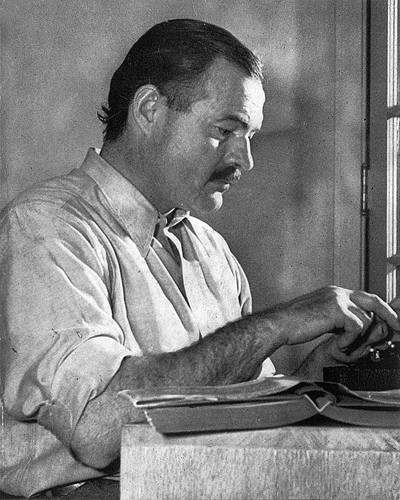
In October of 1954, Ernest Hemingway was awarded the Nobel Prize in Literature. But he didn’t exactly live every writer’s dream: First, he told the press that Carl Sandburg, Isak Dinesen and Bernard Berenson were far more worthy of the honor, but he could use the prize money; then, depressed and recovering from two consecutive plane crashes that had nearly killed him, he decided against traveling to Sweden altogether. Choosing not to attend the Nobel Banquet at the City Hall in Stockholm on December 10, 1954, Hemingway asked John C. Cabot, the United States Ambassador to Sweden at the time, to read his Nobel acceptance speech, found in the 1972 biography Hemingway: The Writer as Artist (public library). At a later date, Hemingway recorded the speech in his own voice. Hear an excerpt, then read the transcript of the complete speech below:
Having no facility for speech-making and no command of oratory nor any domination of rhetoric, I wish to thank the administrators of the generosity of Alfred Nobel for this Prize.
No writer who knows the great writers who did not receive the Prize can accept it other than with humility. There is no need to list these writers. Everyone here may make his own list according to his knowledge and his conscience.
It would be impossible for me to ask the Ambassador of my country to read a speech in which a writer said all of the things which are in his heart. Things may not be immediately discernible in what a man writes, and in this sometimes he is fortunate; but eventually they are quite clear and by these and the degree of alchemy that he possesses he will endure or be forgotten.
Writing, at its best, is a lonely life. Organizations for writers palliate the writer’s loneliness but I doubt if they improve his writing. He grows in public stature as he sheds his loneliness and often his work deteriorates. For he does his work alone and if he is a good enough writer he must face eternity, or the lack of it, each day.
For a true writer each book should be a new beginning where he tries again for something that is beyond attainment. He should always try for something that has never been done or that others have tried and failed. Then sometimes, with great luck, he will succeed.
How simple the writing of literature would be if it were only necessary to write in another way what has been well written. It is because we have had such great writers in the past that a writer is driven far out past where he can go, out to where no one can help him.
I have spoken too long for a writer. A writer should write what he has to say and not speak it. Again I thank you.
Filed under 2019, writing tip, Writing Tip Wednesday
Replace These Words in Your Writing
 Writing is hard, and weird, and in the scheme of human existence pretty new. We’ve been talking for maybe half a million years, writing for just about 5,000. So sometimes we write stuff that we’d never say aloud. We use a complicated or “smart-sounding” word when a simpler word would work better. New York Times editor Dan Saltzstein listed some great examples on Twitter. They pop up in news media, but also in “business speak.” If you’re trying to write effectively, watch out for these:
Source: Replace These Words in Your Writing
Twitter users suggested many more. (The > is a “greater than” sign, not an arrow. The words on the left are better.)
- Opens > bows (@taffyakner)
- Opens > debuts (@lhsaria)
- Die > perish (@danfalk)
- Killed > slain (@TheAliciaKraft)
- Let > enable (@VictoriaMia)
- Many > myriad (@brookehauser)
- Lessons > learnings (@mathowie)
- A question > an ask (@mathowie)
- Live > reside (@EmilyRNunn)
- Tweeted > took to Twitter (@KOD)
- Write > author (@CvlKulow)
- Write > pen (@SteveKandell)
- Sign > ink (@danloving)
- Story > narrative (@bedhatuser)
- Planned > preplanned (@bigdaddydoug56)
- Before > prior to (@LindaIHiggins)
- After > subsequent to (@LindaIHiggins)
- Now > at this point in time (@dopre)
- How > the ways in which (@zumhagenyekple)
- Scheduled > slated (@NeilMathur)
- Snow > the white stuff (@NBCLAamy)
- Use > leverage (@traceylindeman)
- Affect > impact (@roboso)
- Next > going forward (@robertdfield)
- Encourage > incentivize (@JVSylvester)
- Eat > tuck into (@amandafortini)
- Drink > quaff (@ianfreeman)
- Shot > gunned down (@RSDavis5)
- Fire > blaze (@AdamButler__)
- Large > sprawling (@ronlieber)
- Person > individual (@AmyZQuinn)
- Money > funds (@AmyZQuinn)
- Gives > gifts (@jby789)
- Drink > libation (@lilabattis)
- Cocktail > tipple (@dgritzer)
- Food > fare (@daniellemattoon)
- Put on > donned (@daniellemattoon)
- Custom > bespoke (@SusanOrr)
- Hair > tresses (@HuffinesJayna)
- Dress > frock (@vonverena)
- Pregnant > anything with “baby bump” (@dreegreene)
- Criticized > slammed (@CarolineHaubold)
- Directed > helmed (@johndeedesign)
- Impressive > epic (@clairenelson)
- Road > roadway (@SeanMoodyKSL)
- Has > boasts (@Andy_Murdock)
- Help > facilitate (@shellbomber)
- On > upon (@Tellythecairn)
We’d like to add:
- Name > dub
- Turn > render
- Big > massive
- Maybe > perhaps
These aren’t rules, of course; they’re just suggestions, language is fluid, yadda yadda. Almost all the “lesser” words above have good uses. Save them for those uses. To leverage something is specifically to “use it to its maximum advantage.” Something sprawling is “spreading out over a large area in an untidy or irregular way.” Suits are bespoke, and medieval knights get slain. Okay, you’ve been waiting to add your own—go for it.
There was a problem providing access to protected content.(Error Code: 232403)
How to Make Taco Bell Salt
1/25/19 1:00PM
About the author
Staff Writer, Lifehacker | Nick has written for Gawker, the Awl, the Toast, the Daily Dot, Urlesque, and the web series “Jaywalk Cop.” He currently runs the horror-comedy podcast “Roommate From Hell.”
Filed under 2019, Writing Tip Wednesday
Writing tip Wednesday: “Flush with success”
A simple writing tip to start the New Year. /
I will say it once, so gather round here. /
Whatever you may do about beginnings and ends /
When sitting on the throne do not hours spend. /
Your poem you will not complete before other deeds are done. /
And your legs and your feet will be the slumbering ones. /
Your audience, too, may have abandoned you. /
They may find what you have done not the best you can doo-doo.
Simple tip to start out the New Year. Do not write a completed poem while sitting on the commode. Before you’re finished, your legs — if not your audience — will be numb and asleep.
Filed under 2019, Writing Tip Wednesday, writing tips


Writing tip Wednesday: “Margaret Atwood’s rules for writing fiction”
Don’t expect it to be easy and sometimes it won’t be fun, but it is largely up to you how far you go and how well you do, and most of the tools are easily obtainable. Don’t forget to stretch your back while stretching your mind.
- Take a pencil to write with on airplanes. Pens leak. But if the pencil breaks, you can’t sharpen it on the plane, because you can’t take knives with you. Therefore:
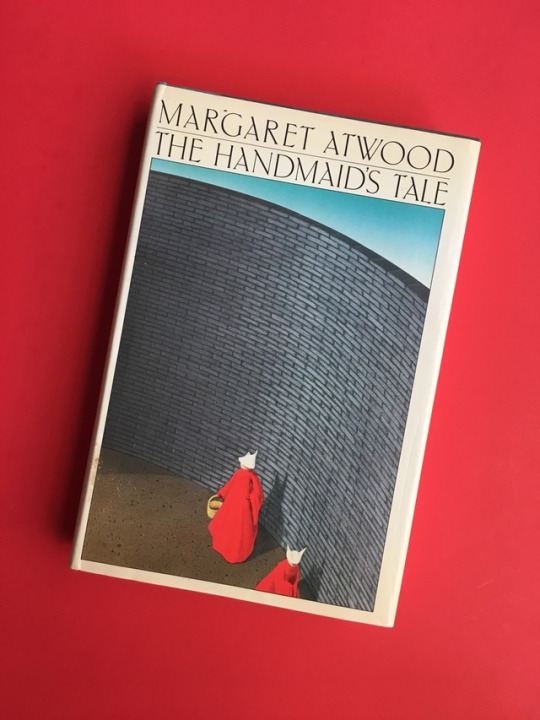 take two pencils.
 - If both pencils break, you can do a rough sharpening job with a nail file of the metal or glass type.
- Take something to write on. Paper is good. In a pinch, pieces of wood or your arm will do.
- If you’re using a computer, always safeguard new text with a memory stick.
- Do back exercises. Pain is distracting.
- Hold the reader’s attention. (This is likely to work better if you can hold your own.) But you don’t know who the reader is, so it’s like shooting fish with a slingshot in the dark. What fascinates A will bore the pants off B.
- You most likely need a thesaurus, a rudimentary grammar book, and a grip on reality. This latter means: there’s no free lunch. Writing is work. It’s also gambling. You don’t get a pension plan. Other people can help you a bit, but essentially you’re on your own. Nobody is making you do this: you chose it, so don’t whine.
- You can never read your own book with the innocent anticipation that comes with that first delicious page of a new book, because you wrote the thing. You’ve been backstage. You’ve seen how the rabbits were smuggled into the hat. Therefore ask a reading friend or two to look at it before you give it to anyone in the publishing business. This friend should not be someone with whom you have a romantic relationship, unless you want to break up.
- Don’t sit down in the middle of the woods. If you’re lost in the plot or blocked, retrace your steps to where you went wrong. Then take the other road. And/or change the person. Change the tense. Change the opening page.
- Prayer might work. Or reading something else. Or a constant visualisation of the holy grail that is the finished, published version of your resplendent book.
Filed under 2018, writing tip, Writing Tip Wednesday
Writing tip Wednesday: “Tinker Mountain Writers”


Date: June 10 -15, 2018 at Hollins University in Roanoke, VA. Details at www.hollins.edu/tmww.
From novice to advanced. Since 2005, Tinker Mountain Writers has been nuturing and empowering writers though workshops in poetry, fiction, and nonfiction.
Filed under 2018, writing tip, Writing Tip Wednesday
Winning Writers Submission Manager – Wergle Flomp Humor Poetry Contest (no fee)
Wergle Flomp Humor Poetry Contest (no fee)Ends on April 1, 2018Submit one humor poem, up to 250 lines. First prize of $1,000 and second prize of $250. Ten Honorable Mentions will receive $100 each. The top 12 entries will be published online. There is no fee to enter. Judge: Jendi Reiter, assisted by Lauren Singer. In addition to English, your poem may contain inspired gibberish. You may submit published or unpublished work. Please omit your name from your entries. We prefer 12-point type or larger. Please avoid fancy, hard-to-read fonts.Please submit only one poem to this contest.
Source: Winning Writers Submission Manager – Wergle Flomp Humor Poetry Contest (no fee)
Wergle Flomp Humor Poetry Contest (no fee)
Ends on April 1, 2018
Submit one humor poem, up to 250 lines. First prize of $1,000 and second prize of $250. Ten Honorable Mentions will receive $100 each. The top 12 entries will be published online. There is no fee to enter. Judge: Jendi Reiter, assisted by Lauren Singer.
In addition to English, your poem may contain inspired gibberish. You may submit published or unpublished work. Please omit your name from your entries. We prefer 12-point type or larger. Please avoid fancy, hard-to-read fonts.
Please submit only one poem to this contest.
Filed under 2018, Writing Tip Wednesday
Buy a cat, stay up late, don’t drink: top 10 writers’ tips on writing | Books | The Guardian
Made a New Year resolution to start writing that novel? Take some writing tips from Leo Tolstoy, Muriel Spark, John Steinbeck and other famous authors
Source: Buy a cat, stay up late, don’t drink: top 10 writers’ tips on writing | Books | The Guardian
Made a New Year resolution to start writing that novel? Take some writing tips from Leo Tolstoy, Muriel Spark, John Steinbeck and other famous authors
Source: Buy a cat, stay up late, don’t drink: top 10 writers’ tips on writing | Books | The Guardian
Over the past year, Helen Gordon and I have been putting together Being a Writer, a collection of musings, tips and essays from some of our favourite authors about the business of writing, ranging from the time of Samuel Johnson and Grub Street, to the age of Silicon Roundabout and Lorrie Moore.
Researching the book, it quickly became obvious that there isn’t a correct way to set about writing creatively, which is a liberating thought. For every novelist who needs to isolate themselves in a quiet office (Jonathan Franzen), there’s another who works best at the local coffee shop (Rivka Galchen) or who struggles to snatch an hour between chores and children (a young Alice Munro).
Conversely, it also became apparent that alongside all this variety of approach, there are certain ideas and pieces of advice that many writers hold in common. In an 1866 letter to Mrs Brookfield, Charles Dickens suggests that: “You constantly hurry your narrative … by telling it, in a sort of impetuous breathless way, in your own person, when the people [characters] should tell it and act it for themselves.” Basically: SHOW DON’T TELL. Three words that will be familiar to anyone who has sat in a 21st-century creative writing class.
Our book therefore contains a lot of writing advice, ranging from the sternly practical to the gloriously idiosyncratic. We have writers talking about what went wrong, as well as what went right. They discuss failing to finish a manuscript, failing to find a publisher, badly realised characters and tortuous, unwieldy plots. Here are a just few of our favourite tips, which we believe any aspiring writer should take to heart.
- Hilary Mantel – a little arrogance can be a great help
“The most helpful quality a writer can cultivate is self-confidence – arrogance, if you can manage it. You write to impose yourself on the world, and you have to believe in your own ability when the world shows no sign of agreeing with you.”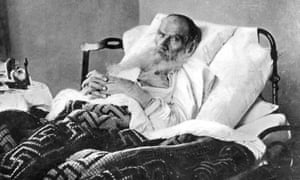
- Leo Tolstoy and HP Lovecraft – pick the hours that work best for you
Tolstoy believed in starting first thing: “I always write in the morning. I was pleased to hear lately that Rousseau, too, after he got up in the morning, went for a short walk and sat down to work. In the morning one’s head is particularly fresh. The best thoughts most often come in the morning after waking while still in bed or during the walk.”Or stay up late as HP Lovecraft did: “At night, when the objective world has slunk back into its cavern and left dreamers to their own, there come inspirations and capabilities impossible at any less magical and quiet hour. No one knows whether or not he is a writer unless he has tried writing at night.”
- William Faulkner – read to write
“Read, read, read everything – trash, classics, good and bad, and see how they do it. Just like a carpenter who works as an apprentice and studies the master. Read! You’ll absorb it. Then write. If it is good, you’ll find out. If it’s not, throw it out the window.” - Katherine Mansfield – writing anything is better than nothing
“Looking back I imagine I was always writing. Twaddle it was too. But better far write twaddle or anything, anything, than nothing at all.” - Ernest Hemingway – stop while the going is good
“Always stop while you are going good and don’t worry about it until you start to write the next day. That way your subconscious will work on it all the time. But if you think about it consciously or worry bout it you will kill it and your brain will be tired before you start.”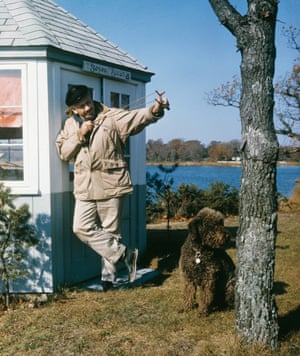
- John Steinbeck – take it a page at a time
“Abandon the idea that you are ever going to finish. Lose track of the 400 pages and write just one page for each day. It helps.” - Miranda July – don’t worry about the bad drafts
“I was a lot dumber when I was writing the novel. I felt like worse of a writer … would come home every day from my office and say, ‘Well, I still really like the story, I just wish it was better written.’ At that point, I didn’t realise I was writing a first draft. And the first draft was the hardest part. From there, it was comparatively easy. It was like I had some Play-Doh to work with and could just keep working with it – doing a million drafts and things changing radically and characters appearing and disappearing and solving mysteries: Why is this thing here? Should I just take that away? And then realising, no, that is there, in fact, because that is the key to this. I love that sort of detective work, keeping the faith alive until all the questions have been sleuthed out.” - F Scott Fitzgerald – don’t write and drink
“It has become increasingly plain to me that the very excellent organisation of a long book or the finest perceptions and judgment in time of revision do not go well with liquor. A short story can be written on the bottle, but for a novel you need the mental speed that enables you to keep the whole pattern inside your head and ruthlessly sacrifice the sideshows … I would give anything if I hadn’t written Part III of Tender Is the Night entirely on stimulant.” - Zadie Smith – get offline
“Work on a computer that is disconnected from the internet.” - Muriel Spark* – get a cat
“If you want to concentrate deeply on some problem, and especially on some piece of writing or paper-work, you should acquire a cat. Alone with the cat in the room where you work … the cat will invariably get up on your desk and settle under the desk lamp. The light from a lamp … gives the cat great satisfaction. The cat will settle down and be serene, with a serenity that passes all understanding. And the tranquillity of the cat will gradually come to affect you, sitting there at your desk, so that all the excitable qualities that impeded your concentration compose themselves and give your mind back the self-command it has lost. You need not watch the cat all the time. Its presence alone is enough. The effect of a cat on your concentration is remarkable, and very mysterious.’
*(or rather, the character of Mrs Hawkins in A Far Cry from Kensington.)
- Being a Writer by Travis Elborough and Helen Gordon is published by Frances Lincoln, priced £15. It is available from the Guardian bookshop for £12.75, including free UK p&p.
Filed under 2018, writing tip, Writing Tip Wednesday


 Booker's Blog