Category Archives: Writing Tip Wednesday

Writing Tip Wednesday: NO SUCH THING AS WRITER’S BLOCK?

by BRUCE HALE

http://clicks.aweber.com/y/ct/?l=O8uEK&m=JmGfH2oV7FLsQz&b=LL0Iif2G_NnGJtQ4.3UMsw

One of the most common questions I get is, “What do you do about writer’s block?” It’s hard to answer. Not because I don’t know,
but because I don’t really believe in writer’s block.

I mean, think about it. We’re the only profession that romanticizes avoiding our work. You don’t hear accountants talking about ‘accountant’s block,’ or dentists moaning, “I couldn’t remove that molar today, Bob; I had dentist’s block.”

But here we sit with our holy bugaboo, writer’s block. Now, don’t get me wrong — I do believe that we have days when it’s hard to write, but I label that as plain old, garden-variety fear and resistance. The same fear that keeps you from asking out someone you ave a crush on (fear of failure). The same resistance that keeps you from starting that new exercise regimen (resistance to change).

Fear and resistance are debilitating enough on their own without giving them a catchy name. So let’s just deal with them the way we do whenever and wherever they show up in our lives. (And no, I don’t mean by surrendering.)

PERFECTION IS THE ENEMY
I’ve noticed that when I feel fear around my writing, it’s usually the fear that it won’t be good enough. Perfection syndrome is insidious, and the only way to beat it is to address it head-on.

First, realize that nothing you write will EVER be perfect — even stories that get published. You can look back at a story you published nine years ago and see things you’d do differently today. Perfection is unattainable.

I think honestly, the best we can shoot for is “as good as I can make it right now.”

So once I’ve given myself permission to write an imperfect first draft, I just jump right into it and start. I write as quickly and sloppily as I can, never minding about proper form, just getting my ideas down on paper (or computer). I know I can always improve the story in the revision stage.

WRITING WARM-UPS
But say you have trouble even getting to the stage of writing a first, sloppy draft. What then? Just as you would with physical exercise, try doing some brief warm-ups before your writing session. You could do a personal journal, or write a journal from your character’s point of view. You could assign yourself a random topic or write about a memory.

One of my favorite ideas is to compile a Bradbury List. Just like Ray Bradbury did when he was a young writer, come up with a list of titles off the top of your head, drawing from childhood fears and fantasies. Then, as a warm-up, pick one title, set your egg timer for 10 minutes, and write a stream-of-consciousness entry about it. Don’t try to craft a story; just let the writing flow.

You may find that you pick up some good material for a future story. You may just get past that initial fear of the blank page and ease into your writing flow. And you may just discover there’s no such thing as writers block.

Here’s the signup link:
http://clicks.aweber.com/y/ct/?l=O8uEK&m=JmGfH2oV7FLsQz&b=LL0Iif2G_NnGJtQ4.3UMsw

2 Comments

Filed under Writer's Block, Writing Tip Wednesday

Writing tip Wednesday: breathe

“I write for the same reason I breathe — because if I didn’t, I would die.”
–Isaac Asimov

So, take a deep breath and plunge on into it. Even if you don’t know exactly what you’re doing, splash a few words around and see what happens. Think of the blank sheet of paper or the blank screen as a scene waiting to be discovered.

You might just have a masterpiece within you. Remember that Michelangelo took a block of marble rejected by his contemporaries and saw the statue ‘David’ within it. All he had to do, he said, was chip away the pieces not needed in order to create his masterpiece.

Many times a writer has to do the same thing. The block of marble is the first draft. The subsequent drafts are chipping away at that marble, removing the pieces you don’t need. Easy? No. But from a rejected pile of words can come your masterpiece. You have to be honest with yourself and hold true to your vision of the story and commit to it with confidence … and write as if you were breathing.

Tree down

Even out of ruined or rejected scenes can come your masterpiece.

Leave a comment

Filed under Photo by author, Writing Tip Wednesday

Writing tip Wednesday: 5 Essential Tips for Writing Picture Books

By Dianne de Las Casas

When I am at book signings or doing school visits, I often hear the question, “What advice do you have for someone writing their first
picture book?” People are eager to learn the “secret” to writing a runaway best-selling picture book.

There IS a definite art to writing a picture book. For me, a perfect picture book is a seamless integration of pictures and
words. They fit together like peanut butter and jelly. The words and the pictures might be good alone but they are GREAT together.

1. A Universal Theme
Contrary to popular belief, picture books do not have to have a message although they often do. If there is a message in a picture book, it should be subtle and left for the reader to decipher. What is important is a universal theme, a theme that readers can relate to: love, bedtime, friendship, teamwork, etc. Even humor can work as a theme. THE DOT by Peter Reynolds landed in USA Today‘s Top 100 Children’s Books because of the book’s universal theme of creativity.

2. The Page Turn
Never underestimate the power of the page turn. Every good story needs to take a breath or have a moment of suspense. The page turn can be that quiet pause or that dramatic reveal. New York Times Bestselling book PETE THE CAT by Eric Litwin has an extremely successful use of the page turn, building the readers’ anticipation for the next moment in the story.

3. Think Visually
If you are not the illustrator, think (don’t write) visually. The story can be rich and full but there must still be room for the illustrator to work, stretching the confines of the story. Often, the subtext of the story can be found in the illustrations. Tell your story adroitly with an economy of words. Leslie Helakoski and Henry Cole demonstrate this perfectly with their book, BIG CHICKENS GO TO TOWN.

4. The Read-Aloud
Picture books are meant to be read aloud… in classrooms, in library story times, and at bedtime. Read your story aloud. Have others read your story aloud. Does the rhythm work? Is the story too long? Too short? How do others react to the read-aloud? Remember that you are writing for children and their keepers (parents, teachers, and librarians).

Your book must sound good to everyone hearing it. Maurice Sendak’s WHERE THE WILD THINGS ARE is one of the greatest children’s books of all time. Read it out loud and you’ll know why.

5. Jacket Flap Copy
Finally, write your jacket flap copy, that brief synopsis inside the dust jacket of the book. Even picture books, as short as they are, need to be summarized. Can you sum up your book in 1-2 sentences? Every author needs to be able to tell people what their book is about.

Okay, here’s a bonus tip. Have fun! Play with your words and have a ball. Remember that once in print, your picture book is forever. You are leaving a legacy. If even one reader is touched by your message, you are making a difference.

Dianne de Las Casas is an award-winning author, storyteller, and the Founder of Picture Book Month, an international literacy initiative that celebrates the print picture book during the month of November.

Visit Dianne’s website at http://clicks.aweber.com/y/ct/?l=O8uEK&m=IjnT4bn0sFLsQz&b=blYlm3YP2bSes8q3ckH7gg and
Picture Book Month’s website at http://clicks.aweber.com/y/ct/?l=O8uEK&m=IjnT4bn0sFLsQz&b=RXU9K3zNzvjYbP.bFLhkmQ.
Follow Dianne on Twitter: @storyconnection and Facebook: fanofdianne

Leave a comment

Filed under 2012, Writing Tip Wednesday

Writing tip Wednesday: Some tools you may need

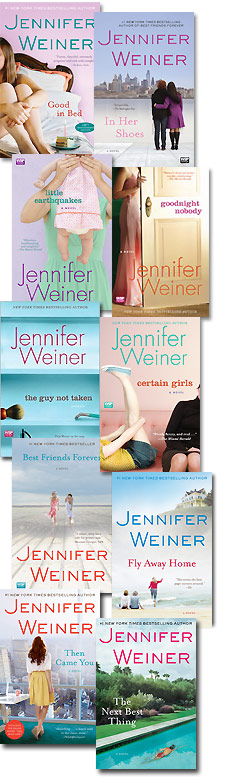
On her website (http://www.jenniferweiner.com), the author Jennifer Weiner has a list of advice if you want to be a novelist.

Weiner is the author of the novels The Next Best Thing, Then Came You, Fly Away Home, and others.

For books about writing to read, she writes “run, do not walk, to your local bookshop and buy Stephen King’s On Writing and Anne Lamott’s utterly indispensable Bird by Bird, and Eudora Welty’s One Writer’s Beginnings and Ursula LeGuin’s Steering the Craft.”

I would add a few more, but that can be for another time.

A synopsis of some of the other “tools” you need are:

Books by Jennifer Weiner

Books by Jennifer Weiner

1) The Unhappy Childhood: “Why do unhappy kids grow up to be writers? I think because being an outsider – a geek, a dweek, a weirdo … who just doesn’t fit in means that you’re naturally equipped for observing life carefully.”

2) The Miserable Love Life: “Again, a crucial ingredient for the formation of a novelist – romantic humiliation and heartbreak.”

3) Major in Liberal Arts (but not necessarily creative writing): “…a liberal arts education gives you a framework in which to place your own experiences, a context you can use to look at everything else ….”

4) Get a Job (not an MFA): She admits this one might be a bit controversial. But she says she thinks journalism “is just about the perfect career for aspiring young writers.” And if you can’t get a jog in journalism, camp counselor, cook, nanny or anything else that takes you out of your comfort zone is good.

5) Write to Please Yourself: “Tell the story that’s been growing in your heart.”

6) Get a Dog: Getting a dog can help teach you discipline and discipline is what you will need to be a writer.

7) Get Published: Submit, submit, submit. Expect to face rejection, but submit.

8) Find an Agent: This may take as much work, at least for a while, as being a writer.

9) Be a Smart Consumer: Advice on how to screen an agent that is interested in you. You don’t have to take the first one that says yes to your query letter, synopsis, finished novel.

10) Read: “Read everything. Read fiction and non-fiction, red hot best sellers and the classics you never got around to in college.”

For more details on these tools, go to http://www.jenniferweiner.com/forwriters.htm.

Leave a comment

Filed under Writing Tip Wednesday

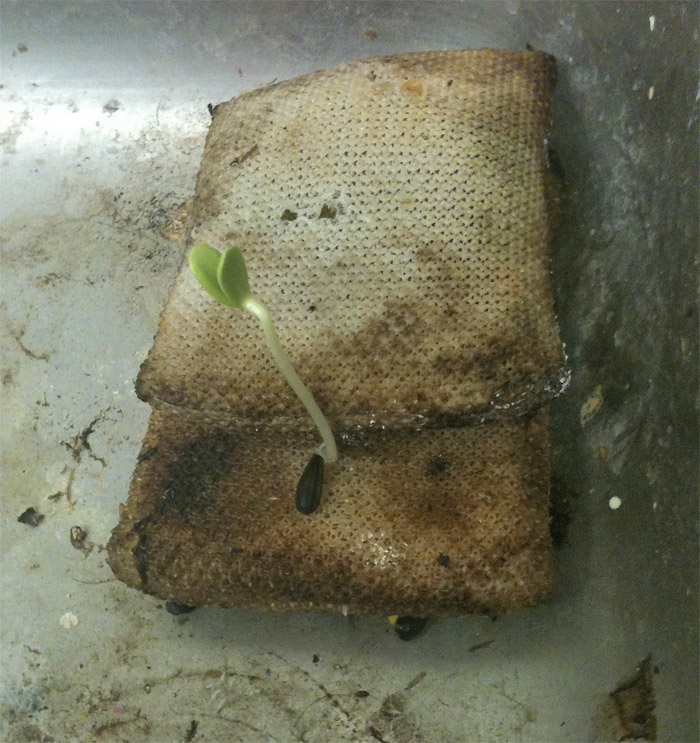
Writing tip Wednesday: Seed in the sponge

You have probably heard the story of the princess and the pea, of how she could feel the small pea under the mattress, despite the comfort of the rest of the bed, and how this little thing disturbed her and distinguished her from every other young lady who slept on the bed.

Ideas for stories, novels, essays, and poems often start the same way: some little something catches your attention and for one reason or another you can’t let go of it. It disturbs and distinguishes your imagination from the imaginations of everyone else, even other writers.

But unlike the pea in bed, often that little something will crop up at the oddest of times or in the oddest of places. That is why it is a good idea to keep pen and a notebook handy. It can be a small notebook, or even a piece of paper. Not everything you write down will turn into some crowing achievement, but it is certainly easier to discard a scribble later, once you’ve had a chance to consider it, than it is to try to remember that little, nagging seed of an idea later.

So, keep something handy to write with and write on. You never know when inspiration, like a little seed, will sprout something your way.

Sprout growing out of a sponge

The idea sprout for a novel, essay, poem, or short story might show itself at the oddest time in the oddest of places. Keep a pen and paper handy.

Leave a comment

Filed under Photo by author, Writing Tip Wednesday

Writing Tip Wednesday: Writing as a Transformational Tool

WRITING AS A TRANSFORMATIONAL TOOL

by BRUCE HALE

source: http://www.brucehalewritingtips.com/

When we tell stories, we hope we are touching the lives of our readers, making them laugh, cry, wonder, or ponder. But what if, by your writing, you could also touch your own life, help your own emotional or psychological growth?

To some extent, this happens organically. We’re drawn to subjects that have a certain resonance for us, after all. And if you write about topics that touch on your own traumas and past challenges, you’ll sometimes find that you feel better. But if you want to take it further, here are a couple of ways to go about this process more deliberately.

PROBING PAST PAIN
Ever had a sore tooth that you just couldn’t leave alone, even though it hurt when you touched it? Same principle here. Look back at your life, at those incidents that make you cringe even now — the time you embarrassed yourself in front of the classroom, the death of a friend, your first painful breakup. That’s your raw material for story.

Now spend some time writing about the memory that has the biggest charge on it. See if you can recall specific sensory details that make the experience come alive. After setting it aside for awhile, rewrite the incident from a fictional perspective, changing or inventing details to suit your story.

Voila — you’ve just created the seed for a powerful scene (or at least some potent backstory for your character). Now, this incident may not even directly appear in your story — you may use just the emotional tone — but you’ve managed to come to grips with something from your past while adding emotional depth to your tale.

Want an example? Growing up, I had a frequently challenging relationship with my stepdad; we rarely saw eye to eye. In my new book, SCHOOL FOR S.P.I.E.S.: Playing With Fire, I gave the hero, Max, a difficult relationship with his dad. Did I borrow actual incidents from my own life? No. But I used the feeling tone, that love-hate vibe, to deepen my story, and in some ways it has helped me feel more peaceful about my past relationship with my dad.

THE PENNEBAKER METHOD
If you want to get more directly therapeutic, you can also write in a directed way about what’s bugging you today.

For nearly 20 years, Dr. James Pennebaker has been asking people to write down their deepest feelings about an emotional upheaval in their lives for 15-20 minutes a day, four days running. In his book, WRITING TO HEAL, he states that many who have followed his instructions have had their immune systems strengthened, grades improved, or even lives changed.

The 4-day writing process, he says, helps us translate an experience into language, and in doing so, we essentially make that experience graspable. “Emotional upheavals touch every part of our lives,” Pennebaker explains. “These things affect all aspects of who we are, and writing helps us focus and organize the experience. When people are given the opportunity to write about emotional upheavals, they often experience improved health.”

Sound intriguing? Give it a try. You may find it improves your life as well. Or at least your stories.

Leave a comment

Filed under Bruce Hale, writing tip, Writing Tip Wednesday

Writing tip Wednesday: To name or not to name

“What’s in a name? that which we call a rose
By any other name would smell as sweet;
So Romeo would, were he not Romeo call’d,
Retain that dear perfection which he owes
Without that title. Romeo, doff thy name,
And for that name which is no part of thee
Take all myself.”
–Juliet from the play Romeo and Juliet by William Shakespeare

If Shakespeare received a nickel for every time he was quoted, he’d be able to rebuild The Globe Theatre many times over. He might even make Donald Trump envious. But that is a story for another time.

A few thoughts on naming your characters. I have known writers who called their protagonist “X” or “Mrs. Y” throughout the draft of a story or novel, because they weren’t sure what to call him or her.

Man in space suit

A character’s name can help ground her in your story’s world, no matter where that world is.

Who knows, if really stuck for a name or if your story is Kafkaesque, you might be able to use only a letter for the character’s name. But most of the time that won’t work.

Still, there are no etched-in-stone rules for naming characters, but here are a few suggestions. By no means are these all inclusive suggestions.

    1) The first name you come up with is not unalterable. Until a story or novel is accepted for publication, you can change the name. So, if you have trouble picking out names, maybe the first thing to do is relax. The mystery writer, Robert B. Parker had originally named his private detective David Spenser, but at the last minute decided to pull the first name, because he had two sons, one named David, and he didn’t want to possibly offend his other son by not have a character named after him. So, David Spenser became Spenser, with two “S’s,” like the poet.

    2) If you write in a particular genre, consider if the protagonist’s names have a certain “form” or “rhythm” to them. Turning to the detective fiction genre again, for many years the protagonists always had last names that implied the type of work they did. For example, in The Maltese Falcon, the private eye protagonist’s name was Sam Spade. Spade is a tool for digging. Private eye’s dig up information. Other examples include Mickey Spillane’s Mike Hammer and Ross MacDonald’s Lew Archer. By the way, Lew Archer was also Sam Spade’s partner in The Maltese Falcon. Archer was killed early on, so I guess Ross MacDonald decided to use the name since Dashiell Hammett wasn’t going to use it any more.

    3) Names can reflect part of a characters personality or indicate social strata. For example, a woman named Bunny could be somebody who comes from a well to do family. Or a family that doesn’t but wants to think it does. The other end of the scale would be naming a character Huckleberry as in Huckleberry Finn, the protagonist is the novel about the adventures of this character whose mother is dead and whose father is a drunken illiterate.

Another example might be Mrs. Kitty Warren in George Bernard Shaw’s play Mrs. Warren’s Profession. Warren as a word means a place where rabbits bread or live. It can also mean a building housing many renters in crowded rooms. Mrs. Kitty Warren is a woman who has made her way in the world by being a brothel owner. In this case, both the first name, “Kitty” and the last name “Warren” hint at least part of the nature of the character.

Remember, unlike most of us, who are “stuck” with the names our parents gave us, the names in novels, stories, plays, and other forms of writing can be changed and can be used to help round out your protagonists (and other characters) or hint at aspects of their natures.

Some sources to consider are dictionaries of first names and what those names mean. For example, Eugene means “well born.”There are even some books that talk about the meaning’s of last names. Or, as in the case of Warren above, even a good standard dictionary can help you.

So, while Juliet is correct when she says:
“Thou art thyself, though not a Montague.
What’s Montague? it is nor hand, nor foot,
Nor arm, nor face, nor any other part
Belonging to a man.”

A name – the name you select for your protagonist – can be just as important as a hand or foot, arm or face. It is, after all, a part of that character.

Leave a comment

Filed under character naming, writing tip, Writing Tip Wednesday

Writing tip Wednesday: Getting lost in a good story

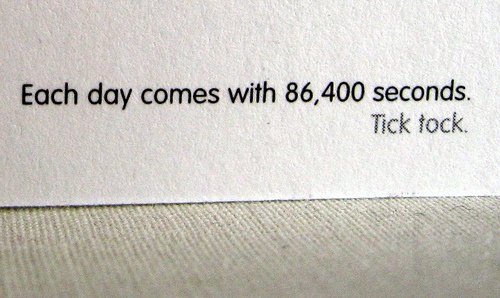
86,400 seconds in a day

What are you writing with your seconds of each day of your life?

Each second a moment you can get lost in a good story or poem, writing or reading it.

3 Comments

Filed under Writing Tip Wednesday

Writing tip Wednesday: writerly thinking

How a writer thinks—elementary my dear

by DON WILLIAMS

During a holiday sometime back, the Williams clan, including in-laws, outlaws and assorted friends, gathered to play Trivial Pursuit.

A competitive lot, we turn such games into raucous entertainment. Lots of praise, derision and laughter pertain, not necessarily in that order.

The games were close and the questions difficult, prompting snorts and catcalls, and three of the teams had flamed out by the time my friend the writer’s turn came to answer a question.

My sister Rebecca drew a card and read:

Sherlock Holmes turned into the gate at 221 Baker St, stepped inside the door and climbed ___ steps to his second story flat. How many steps did he climb?

There was a collective groan.

“Bury that one,” a brother-in-law said, even as Rebecca was discarding the question. “He’ll never get that.”

“Hold on!” My friend held up his right hand. “I’ve only read one Arthur Conan Doyle book, and it wasn’t Sherlock Holmes, but I’ll take a shot at that.”

“No way. How are you going to guess that one?”

“Elementary my dear Watson,” my friend replied. “In the time-honored Holmes-ian way. Deductive Reasoning.”

“That’ll be the day,” my brother Tim said.

“Listen up,” said my friend. “It has to be at least 10 steps to Sherlock’s apartment, even if the risers are relatively high, say, 10 inches, because they have to clear that first-floor apartment’s ceiling. And the answer likely won’t be more than, say, 20 steps, even if the risers are short, because that would put the esteemed detective’s pad more than ten or twelve feet above street level. See? Already I’ve reduced the universe of possible answers to 10.”

“Yeah, yeah,” my brother Rodney said.

“So,” my friend continued, “the answer lies somewhere between 10 and 20. Let’s take them one by one.”

“Better hurry,” said my sister Kathleen, eyeing the sandglass.

“OK. Ten is a lazy number that would make the author appear lazy too, so a writer like Doyle would never use it. Not here. Nor can it be 11, because that’s a lucky number, mildly distracting and therefore intrusive. More importantly, Sherlock’s a deductive thinker, so the author wouldn’t suggest, even subliminally, that his detective’s success owes anything to a lucky number. Number 12? Again, distracting. Sir Doyle wouldn’t want his readers to be thinking, even subconsciously, about Twelve Apostles or even 12 months. Unlucky thirteen? Similary distracting.”

“Time’s almost up,” said Kathleen.

Adventures of Sherlock Holmes

Step by step deduction led to the right conclusion.

I could see my friend faintly flush, but he continued in a calm if faster voice. “Fourteen? Now there’s a Plain Jane. No writer worth his salt would dull down a book with such tasteless seasoning, even if it is red.”

“Red?”

“See? That could be a subjective thing. And 15? Again, like 10, it’s too pat and pregnant. Makes the author appear lazy.”

“Sixteen?” a brother-in-law asked, eyeing the fleeting sands.

“Like 14, another Plain Jane, even if it is black,” my friend added.

“Seventeen?”

My friend smiled. You could almost hear bells going off. “Seventeen seems random,” he said, savoring the moment, “but it’s actually quite sexy. That unobtrusive 7, peeking from behind the place-holding 1, is subtly mystical, alluring even, hardly rising even to the level of the subliminal, yet there it is.”

Rebecca rolled her eyes. “So, is that your final answer?” she asked in a bored voice, as she glanced at the card, but we knew her attitude was all bluff.

“Yesssss,” my friend whispered aloud, calmly assured. “Seventeen it is. By far the most interesting number between 10 and 20.”

Her eyes widened. “You’re right. How did you do that?” she asked as she flashed the card, answer-side up, on the table.

“Elementary, my dear. I’m a writer.”

8888
Don Williams is a prize-winning columnist, short story writer, sometime TV commentator and the founding editor and publisher of New Millennium Writings, an annual anthology of stories, essays and poems. His awards include a National Endowment for the Humanities Journalism Fellowship at the University of Michigan, a Golden Presscard Award, the Malcolm Law Journalism Prize and many others. He was recently inducted into the East Tennessee Writers Hall of Fame. He is at work on a novel and a book of journalism..

Need a speaker, panelist, tv commentator or teacher for your group or to lead a writing workshop in your town? E-mail donwilliams7@charter.net, or visit www.NewMillenniumWritings.com. New Millennium Writings is holding a writing contest for fiction, non-fiction, and poetry that you can still enter. Deadline is July 31, 2012.

Leave a comment

Filed under Thinking like a writer, writing tip, Writing Tip Wednesday

Writing Tip Wednesday: Analyze Your Book Idea

HOW TO ANALYZE YOUR BOOK IDEA

By BRUCE HALE

Source: http://www.brucehalewritingtips.com/

Say you’ve got a great idea for a book (and judging from my barber, the guy at the YMCA, and my cousin’s neighbor, nearly everyone does). How do you judge whether it’s worth spending the time and effort to take your notion from idea to finished story?

Well, yes, I suppose you could pass it by your agent. But if you happen to be one of the many writers who don’t have an agent on speed-dial (and even if you do), you might also try running your idea through this quick test before you launch into writing…

CONFLICT-O-METER
First, does your cool idea contain plenty of potential for conflict, the engine that drives all story? Does your character face loads of opposition, whether internal, external, or both? Some ideas have conflict naturally built into them — a tale about fighting to the death on live TV in the Hunger Games, for example, is bound to have a wee bit of struggle involved. Does yours?

CHARACTER COUNTS
Next, how much of a grip do you have on your hero? If your idea is all concept and no character, spend some time mulling over your main character before you take things further. Do you know what makes her tick, what drives him? Is this hero someone that you’d want to spend a lot of time with? Guaranteed, if YOU aren’t keen on spending months with your character, readers won’t want to spend hours with her.

UNIQUE OR NOT?
If your idea involves another brooding vampire lover, or another kickass dystopian heroine, you might want to think it through again. Not that you can’t execute those themes in a fresh way, just that the market is so glutted with supernatural and dystopian tales, it’s harder to put your own stamp on the topic.

I’m not saying don’t be true to your story instincts or don’t fall in love with your idea. But before you invest time writing, it’s worth surveying the market. If there’s already been a Teenage Mutant Ninja Turtles book, pursuing your Teenage Mutant Ninja Squirrels idea might not be the best use of your time. Remember that you have to SELL the story after writing it. And if you’re going to accomplish this task, it helps to have at least a general idea of whether your type of story has been done before, and how well.

JUICINESS FACTOR
When you get right down to it, does your idea feel like fun? Is there plenty of juice in it, enough to sustain your enthusiasm through the inevitable challenging bits? Are you excited to tell the story or is it just one of those “this might make a cute book” ideas that you’re not emotionally drawn to? If it’s the latter, shelve it and spend your energy on an idea that’s really got some juice to it.

The more excited you are to write your story, the more readers will enjoy it. Or, to adapt a phrase from computer science: juiciness in, juiciness out.

Want to know more? This subject was covered in much greater depth in the teleseminar “Turning Your Idea Into a Story That Sells,” and you’ll find the recording here:

http://clicks.aweber.com/y/ct/?l=O8uEK&m=JvxVObrEjFLsQz&b=WF_CK_xaXIG.p4elEtaXjg

Leave a comment

Filed under Analyze Your Book Idea, Writing Tip Wednesday