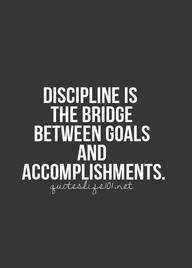
Writing regularly; reading often; re-writing diligently. These three things will help you improve more than any others. And like exercise or playing a musical instrument, doing it on a schedule, even if for only for a brief time every day will do you more good than picking a spot here or there, now and then, or sometime soon. Here and now is the place and time to begin, and a little discipline will make all the there’s here and all the then’s now, and do so sooner than you realize.
Category Archives: Writing Tip Wednesday
Writing tip Wednesday: “Big Bang”
START YOUR STORY WITH A BANG!
By Alan Sitomer
If your novel doesn’t pass the bang test, chances are high it will fail. Are you familiar with the, “Start with a BANG!” theory of authorship in modern times? If not, stop and pay heed.
Why “Start with a BANG!”? Because these days very few readers will give a book 30 pages to “let things develop.” Scores of publishing industry professionals are so, so busy (and so, so swamped, more than even the rest of us) that even if you can get them to consider your work – and it’s no easy task to get an agent or editor to read anything these days – the unspoken truth is that if they are not feeling the love by page 25 of your work, there are too many other things they need to/want to read.
Objective number one has to be to prevent the following sentiment from floating through the mind of the reader at all costs: “Sorry Charlie… I gave ya a shot but my time with you is done and I’m gone-zo! Good luck in the future.”
TRUMPED BY TMZ.COM?
Let’s be honest for a sec, do you give new books more than 25 pages to prove themselves any longer? If your “I am thinking about ditching this book” antennae are up by page 10, and you are still skeptical by page 15, we all know the writer will be lucky for any of us to make it to page 20.
In truth, by this point of any book, something better have “wowed” us cause life’s too short and who doesn’t have things like Twitter, FB, email, the Huffington Post, and TMZ.com to go check?
Ugly truth for all of us: celebrity gossip that took five minutes to invent will trump literary prose that took hours and hours to craft, 9 ¾ out of 10 times.
THAT READING FEELING
On the other hand, there’s good news! Is there a “reading feeling” anyone likes better than hitting page 20 of a book and thinking to
yourself, “Holy Shy-skee, this thing is so good!” You don’t want readers merely turning to page 21 of your novel; you want readers
hungering for page 21.
This is why you want to make sure your books start with a bang. Set the bar high and then ascend. You can backfill backstory later on. (Most writers do.) But make no mistake, everything we are talking about is conceptualized as a page 1 experience.
Consider your own reading experience. By the time you are on page 2, ya better have felt, you ought to have felt, you need to have felt, (and you deserve to have felt) something. If it’s a comedy, you better have laughed. If it’s a thriller, you better have had your pulse quicken.
Maybe it’s a punch in the mouth, maybe it’s total immersion in a dynamic new world which bubbles with life, energy and action, but if you pick up a book, that author better have conscientiously worked towards making sure that the reader is getting something wonderful from the text immediately. It can be exciting, threatening, tantalizing, humorous, or whatever but it better happen right out of the gate.
My advice: Launch your book with a BANG! If it ain’t there by page 5, no one might ever see page 6. (And yes, that’s regardless of how awesome page 184 truly is.)
_____
Alan Sitomer is a California Teacher of the Year award winner who’s authored 16 published books for biggies like Disney, Scholastic, Penguin and so on. In addition to being the founder of The Writer’s Success Academy (http://writersuccess.com/) he’s also a nationally acclaimed keynote speaker specializing in the field of middle/high school literacy. Hit him up on TW@alansitomer.Filed under Writing Tip Wednesday
Writing tip Wednesday: “Lumps”
ARE EXPOSITORY LUMPS CLOGGING YOUR STORY?
By Kirby Larson
Did you know that until about 1910, before bridges and train tubes, the only way to get to the Big Apple from most of the continental United States was via ferry? I didn’t either until I was digging around in history for my latest work-in-progress. Duh, Kirby: Manhattan ISLAND! (Never pick me for your team if geography is involved).
Captivated by this notion, I mulled over old photos of the ferries, and the dashingly suited men and glorious hatted women riding them.
My imagination had a field day. Just think of chugging across the North River (now Hudson River), all the while watching the Hoboken Terminal loom larger and larger into view.
I was so taken with this notion that, the next thing I knew, I wrote a ferry scene in my WIP (work in progress). I even tapped into all the five senses! Gosh, it was fun.
Until Story tapped me on the shoulder, rubbing its head. “Excuse me,” it said. “I was traipsing along my arc at a pretty good clip and suddenly I crashed into this.” Story pointed at an inky block of text. The ferry section. “Do you know where in the heck it came from?”
I blushed, shrugged. “I might have an idea how it got there,” I said.
“You put there?” Story asked, rubbing a goose egg on its forehead. “Right in my way?”
“But it’s fascinating,” I said. “Think about it: People couldn’t reach one of the biggest cities in the world without crossing a river!”
“And?” Story pressed.
“Well, think of the color. The smell of the river. The chug of the ferry engine. The grime of the coal powered steam engines.” I tried not to sound too defensive. “It’s part of history. Facts are good.”
“Okay. Sure. I’ll grant you that.” Story nodded. “Maybe I should’ve seen it coming. It’s not like this is the first time something like this has happened when you’re writing. But, to be perfectly honest, I’m having a hard time figuring out how this whole ferry scenario fits in.”
I stared at the keyboard, pondering my reply. I glanced back up at the monitor and re-read the ferry scene. Story was right. Simply because this fact about ferry travel to New York City was fascinating, it wasn’t fair of me to shoehorn it in. To put it right in Story’s way. “Can I leave it, just for a while longer?” I asked. I cringed at how whiny my voice sounded. “Maybe I can find a way to work it in so you won’t even know it’s there. This is only a first draft. Let me see what I can do.”
Long-suffering Story sighed. “I guess I don’t have any choice,” Story said. “Could you do me one favor though?”
“Anything.”
“I could really use an aspirin.” Story rubbed its head again. “And maybe a helmet. I know how you are with those fascinating facts.”
____
This true story is brought to you by Kirby Larson, author of Hattie Big Sky, Hattie Ever After, The Fences Between Us, The Friendship Doll and Duke. Kirby is a founding member of the Just Say No to Expository Lumps Society. She may have once written an entire chapter about baking bread in a wood stove. (Thank goodness for critique groups and editors.) http://www.kirbylarson.com/Filed under Writing Tip Wednesday
Writing tip Wednesday: “Giving the Bad Guys Their Due”
6 Ways to Write Better Bad Guys
by Laura Disilverio
Luckily, transforming your antagonist from a one-dimensional paper doll into a force to be reckoned with—and remembered—is completely possible if you implement a few simple but powerful methods for creating antagonists and expanding their roles. You can build a worthy adversary during the outlining process or beef one up when you revise your already completed draft. It’s never too late.
The antagonist is, quite simply, the person who acts to keep your protagonist from achieving his goals. Note the key words person and acts. I’m using person here as a catchall for a sentient being or creation of any kind that is capable of emotion and has the intellectual ability to plot against your protagonist. Thus, a personified car (as in Stephen King’s Christine) could be an effective antagonist, but an abstraction such as “society” or “Big Pharma” cannot. (More on this later.)The antagonist must act to prevent your heroine from achieving her goals, whether that action is whispering reminders that she’s totally useless, plunging a knife into her back or anything in between. The type of action your antagonist takes will depend on his nature and the kind of story you’re writing. But your story must have an antagonist. (In some stories—Dr. Jekyll and Mr. Hyde comes to mind—the protagonist is actually his own antagonist.) Without an active antagonist, your hero could take a leisurely Sunday stroll toward his goal. Lacking the obstacles a worthy antagonist would provide, he would also lack the opportunity for growth or the necessity to change, and his character arc would flatline (as would your sales).
With the following tips in mind, reread your manuscript with an eye toward making your antagonist as compelling as your protagonist. Some effort on your part could even put your villain in the heady company of Professor Moriarty, the White Witch, Simon Legree and Nurse Ratched.
1. Remember that Antagonists are people, too.
I stop reading novels in which the antagonist is obviously nothing more than a device to move the plot in a certain direction. If I can’t empathize with the antagonist, believe in her motives or understand why she’s dishing out evil, I put the book aside. Flesh out your antagonist. Give us an origin story (how she became the way she is) or show that she regrets something and might change if given a chance.
If working with a nonhuman antagonist, personify him at least a little bit. Think of Frankenstein’s loneliness, HAL’s (the computer in 2001: A Space Odyssey) jealousy or Shere Khan’s hatred of the “man cub” (The Jungle Book). Show the antagonist doing something nice. Even villains love their mothers or cockapoos, volunteer at soup kitchens or help snow-stuck motorists push their cars out of intersections. Do this early on. Give him believable, even laudable, motives.
Inspector Javert from Victor Hugo’s Les Misérables is a strong antagonist because his obsession with finding Valjean stems from his belief that stealing is wrong. How many readers would disagree with that? Javert’s insistence that theft is always, without exception, wrong, however, turns his crusade into persecution. His inability to believe that good and evil can coexist in a single man leads him to suicide. His death is one of the story’s tragedies because he has been so thoroughly developed as a character and because we have, from the beginning, understood his motives and his flaws.
Other was include:
2. Eschew the totally evil antagonist (except, possibly, in some horror or monster stories).
3. If you’re tempted to say your antagonist is a corporation, disease or war—don’t.
4. Make your antagonist at least as smart, strong and capable as the protagonist.
5. Keep the tension strong when the antagonist is a friend, ally or loved one.
6. If your antagonist remains hidden for much of the story (as in a mystery), give him proxies or let him work behind the scenes.
For more on these other steps, go to http://www.writersdigest.com/online-editor/6-ways-to-write-better-bad-guys?et_mid=636328&rid=239626420
Filed under Photo by author, Writing Tip Wednesday
Writing tip Wednesday: “As you like it?”
PenPal asks: Should you use “like” or “as”?
Many writers use “like” incorrectly as a preposition in certain instances when they should instead use “as” (or “as if” or “as though”). The rule is really quite simple, and following it will make your writing more professional.
Like is correct when used as a preposition, a part of speech followed by an object (noun or pronoun). Example:
(Correct) She writes like Dickinson. (like is the preposition; Dickinson is the object)
Like is also acceptable when it introduces a clause from which the verb has been omitted.
Example:
(Correct) My mother takes to flower gardening like a bird to air. (bird is the object)
Like used as a preposition does not correctly introduce a verb phrase.
Example:
(Incorrect) Donovan smiled like he was happy about my bad luck. (“He was” is not an object of a preposition; it is a verb phrase.)
But the writer could phrase it this way:
(Correct) Donovan smiled like a lunatic when he found out about my bad luck. (The object here is “lunatic.”)
Or this way:
(Correct) Donovan smiled as though he was happy about my bad luck.
Here are some sample questions to try out this word usage skill. Mark each sentence as correct (C) or incorrect (I). Identify the object when “like” has been used correctly.
___1. Lillian walked like a duck because her new shoes fit poorly.
___2. When you stormed into my house, you acted like you owned it.
___3. Jeremy looked like he’d been hit by a truck when Meredith turned him down.
___4. Mary and Alvin are twins; she looks a lot like him.
___5. My dog eats like a pig when we give her canned food.
Answers:
1. C (Object is “duck”)
2. I (No object)
3. I (No object)
4. C (Object is “him”)
5. C (Object is “pig”)
________
About PenPal…Cathy Kodra works as an independent editor in Knoxville, TN. Her poetry and short stories have appeared in numerous journals and anthologies including Roanoke Review, New Millennium Writings, Common Ground Review, Now & Then, Cavalier Literary Couture, Slow Trains, Still Crazy, The Medulla Review, Prime Mincer, Yemassee, and others. She is a contributing editor for New Millennium Writings and past guest poetry editor for The Medulla Review. She was first runner up in Prime Mincer’s 2011 Poetry Contest, judged by Rodney Jones, and took first place in the 2012 Old Gray Cemetery Poetry Contest. Cathy’s first poetry chapbook, Thin Ice, was published in 2011 by Medulla Publishing.
Cathy is a member of the Knoxville Writers’ Guild and of two local writing groups. An avid reader and writer, she is currently working on two poetry collections and a collection of short stories. Her hobbies include gardening and vegan cooking, and she lives happily with her husband Ron, two dogs, and a cat. She can be reached at www.cathykodra.com.
Filed under Writing Tip Wednesday
Writing tip Wednesday: “Marco revision”
ASKING THE RIGHT QUESTIONS IN MACRO-REVISION
By R.L. La Fevers
Revision, or Macro Revision, as I think of it, is all about the story. Does the manuscript contain all the vital elements needed to create a gripping story? Does it realize its potential? News flash: Most people’s manuscripts don’t at the first draft stage. Seriously. Or if they revise as they go, you can bet their first pass at a scene isn’t perfect.
So here then, are the things to look at when sitting down to revise a story.
MACRO REVISION QUESTIONS
(Note: This isn’t really a checklist, it’s more of a list of questions to ask yourself as you try to analyze your manuscript. If you use it as a checklist of things you must have, you will go mad. So don’t.)
VOICE
Have you chosen the right person to tell this story?
90% of the time you will have, but sometimes there are times when the story is better told through someone else, someone more removed from the action. Think Dr. Watson in Sherlock Holmes. He doesn’t have access to Holmes’s thoughts, which creates greater suspense for the reader.
Have your selected the right POV?
Is your first person narrative flat? If you can easily substitute third person pronouns and have the whole thing make sense and flow, chances are you haven’t taken full advantage of the first person form. Conversely, have you at least tried first person? What happens when you get totally inside your character’s head? Does he come even more alive?
If you are working with a familiar scenario (dreaded move, new school,losing a best friend) what fresh, new, unique twist do you bring to it?
SETTING
Have you selected the best setting for this story? Is there a different setting that would add more inherent conflict? Create more tension? Echo your thematic elements?
PROTAGONIST/PLOT
Does your character want something? Or not want something? Is that desire driving the story or at least some of his actions?
Is your character an active participant in the story? If not, is he taking baby steps toward becoming one?
Is there something that keeps getting between the main character and his goal? Would the story be stronger if there was?
Is there a source of tension?
Is your story building toward something? If not, what provides the dramatic push or narrative drive toward the
end?
Do the obstacles the protagonist faces increase in difficulty?
Does he ever fail? (Remember, we learn more from our mistakes than our successes!)
Are there times when he makes things worse by his own actions?
Is there cause and effect in your story, or is it more of a string of unconnected events? (This happened and then this happened and then this happened, but nothing caused any of the other things to happen.)
Is your character a different person at the end of the book than they were at the beginning?
Could he have solved this problem or puzzle or dealt with the core issues at the beginning of the book? If so, have you given him a big enough growth arc?
Will people be emotionally invested in his journey? Will they care if he fails? What is at risk if he fails?
Are there measurable baby steps he makes on his journey? Or does he just wake up one day, able to tackle the problem? Do we see his growth on the page?
Are the ideas and issues fully developed? Is there a true beginning, middle, and end? Or do you go straight from the beginning to the end without fully developing the issues in the middle?
Do the actions and events in the book impact different parts of the protagonist’s life? School, home, other relationships?
Do your secondary characters have arcs, too? They will be smaller and more subtle, but they should be there.
THEME
Why are you writing this story? What piece of YOU is in there? Why are you the most perfect person to tell this story?
Are the themes universal? Is there room for Everyman in your story?
Do the actions and events of your story support the theme you’re working with?
Now that you know your theme, is there a way you can make it even more powerful?
____
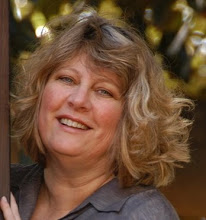
R. L. La Fevers (Robin Lorraine when she’s in really big trouble) is the author of ten books for young readers, including her most recent, DARK TRIUMPH. More writing advice can be found at her blog:http://clicks.aweber.com/y/ct/?l=O8uEK&m=J4mgNuYU._LsQz&b=Te0PZ47.mD0Le.ndTndTfg
Filed under Writing Tip Wednesday
Writing tip Wednesday: “Thoughts on writing”
A series of thoughts on writing by Joe R. Lansdale
Source: http://www.joerlansdale.com/writing.shtml
Below are some excerpts from this web page. To see them in fuller detail, as well as other thoughts, go to the link listed above.
1. When I write I seldom know where it is going. I discover this every day.
2. I try and do a reasonable amount each day so I’m a hero every day.
3. I write each day until I feel myself starting to fizzle.
4. I don’t prepare for the next day’s work when I finish.
5. Another thing that works well for me is to read a little before I write.
And there are four more, which can be found at http://www.joerlansdale.com/writing.shtml
He does admonish those reading his guidelines that they are not etched in stone rules, immutable, unalterable, unchanging. He writes that anyone who takes them as hard and fast rules should be “tarred and feathered. Well, made to stand in the corner.”
He also says that writing is a passion and not an obsession for him. Passion is “good and fun.” Obsession “feels a little like you’re stalking yourself.”
______
A little about Joe R. Lansdale, from his web site:
For some more information on Joe R. Lansdale and his work, go to http://www.joerlansdale.com/
Filed under Writing Tip Wednesday
Writing tip Wednesday: “Write before you know”
The Case for Writing a Story Before Knowing How It Ends
By JOE FASSLER
Andre Dubus III, author of Dirty Love and The House of Sand and Fog, explains why the best work happens when you “back the fuck off.”
By Heart is a series in which authors share and discuss their all-time favorite passages in literature.
Full article at: http://www.theatlantic.com/entertainment/archive/2013/10/the-case-for-writing-a-story-before-knowing-how-it-ends/280387/
Novelists tend to fall into two camps. Some authors love their outlines—they plot and plan and schematize and think their way through problems. John Irving is one example; he spends months outlining his novels in advance, and when he puts pen to paper, he knows exactly what will happen. Other authors, meanwhile, feel their way through. When they sit down at the desk, anything can happen: They lose themselves in the dark on purpose, and follow the light of strangeness and surprise. Flannery O’ Connor, whose stories revealed their structure over the course of many drafts, worked this way.
The latter approach can sound odd, even shamanistic. What do novelists mean when they say things like my character showed me the way? But my conversation with Andre Dubus III, whose new book Dirty Love is out this week, addressed the challenges and joys of writing without pre-determination. We discussed what it means to write into the unknown, how to do it, and why writers should.
Dirty Love contains four linked novellas about love and betrayal in a coastal town. In the first story, a cuckolded man stalks his wife with a video camera; in the last, a young woman’s world is shattered when a sexually explicit image of her surfaces online. Dubus is the author of books including The House of Sand and Fog (a finalist for the National Book Award), The Garden of Last Days, and Townie. He talked to me by phone from his house north of Boston.
Andre Dubus III: Years ago, I read a book called Letters to a Fiction Writer, which asked about 20 established writers to send their best advice out into the world. There were a lot of heavy hitters in there offering truly wise and helpful advice. But the one that’s stayed with me over the years, from Richard Bausch, has become a sort of mantra for me:
Do not think, dream.
We’re all born with an imagination. Everybody gets one. And I really believe—this is just from years of daily writing—that good fiction comes from the same place as our dreams. I think the desire to step into someone else’s dream world, is a universal impulse that’s shared by us all. That’s what fiction is. As a writing teacher, if I say nothing else to my students, it’s this.
Full article at: http://www.theatlantic.com/entertainment/archive/2013/10/the-case-for-writing-a-story-before-knowing-how-it-ends/280387/
Filed under Writing Tip Wednesday
Writing tip Wednesday: “All the while”
Stop awhile
PenPal says:
A while or awhile? How do you know which to use?
I find that many writers often use these words incorrectly. There is an easy way to tell which you should use:
1. Awhile (one word) is an adverb; therefore, it modifies a verb.
Examples (corresponding verbs have been underlined):
-
a. I might stay here awhile and watch the sunset with you.
b. Let’s visit awhile with your grandchildren before we drive home.
2. A while (two words) contains both the article “a” and the noun “while.” The two-word version is a noun phrase, and it will be preceded by a preposition (for, after, in).
Examples (corresponding prepositions have been underlined):
-
a. If you would like to travel for a while, consider signing up for the cruise.
b. I will meet Steven at the theater in a while.
Check your understanding:
A. Mary rode the bus for (awhile / a while).
B. The birds hung around my feeder (awhile / a while) before flying away.
C. Please be aware that the office manager will speak to us in (awhile / a while).
D. Mark searched his memory, and after (awhile / a while) he recalled the correct solution to the math problem.
Simple as that! More PenPal tips will be coming your way in a while.
[Answers: A. a while / B. awhile / C. a while / D. a while]
________
About PenPal…Cathy Kodra works as an independent editor in Knoxville, TN. Her poetry and short stories have appeared in numerous journals and anthologies including Roanoke Review, New Millennium Writings, Common Ground Review, Now & Then, Cavalier Literary Couture, Slow Trains, Still Crazy, The Medulla Review, Prime Mincer, Yemassee, and others. She is a contributing editor for New Millennium Writings and past guest poetry editor for The Medulla Review. She was first runner up in Prime Mincer’s 2011 Poetry Contest, judged by Rodney Jones, and took first place in the 2012 Old Gray Cemetery Poetry Contest. Cathy’s first poetry chapbook, Thin Ice, was published in 2011 by Medulla Publishing.
Cathy is a member of the Knoxville Writers’ Guild and of two local writing groups. An avid reader and writer, she is currently working on two poetry collections and a collection of short stories. Her hobbies include gardening and vegan cooking, and she lives happily with her husband Ron, two dogs, and a cat. She can be reached at www.cathykodra.com.
Filed under Writing Tip Wednesday
Writing tip Wednesday: “Bits of Wisdom”
Here’s a collection of wisdoms from the star-studded panels and sessions at ThrillerFest by way of Writer’s Digest.
“Protect your voice and your vision. If going on the Internet and reading Internet reviews is bad for you, don’t do it. … Do what gets you to write and not what blocks you. … Don’t take any guff off anybody.”
–Anne Rice
“I encourage every writer to write the book that only you can write.” It’s one thing to be respectful of trends but it’s another to express your unique viewpoint in your book. “Don’t be a copycat. … The last thing I want is to see something and feel, Didn’t I just read this someplace else?”
–Michaela Hamilton, editor-in-chief of Citadel/executive editor of Kensington
“The book has to deliver. … It isn’t a particular element that I’m looking for, but I want to be transported.”
–Lisa Gallagher, literary agent
“You may not think that you have an interesting story to tell and you may not think there’s something fascinating in your story, but there is.”
–Heather Drucker, publicist (HarperCollins), on how everyone has a unique personal publicity hook they can use to promote their book
“You can be as complex as you want as long as you’re clear about it.”
–David Morrell, bestselling author of First Blood
For more, go to http://www.writersdigest.com/online-editor/9-inspirational-thrillerfest?et_mid=628280&rid=3087253
Filed under Writing Tip Wednesday