

May we all have a chance to help someone.
May we all have a chance to help someone.
Filed under 2022, writing tip, Writing Tip Wednesday

Filed under 2022, writing humor, writing tip, Writing Tip Wednesday
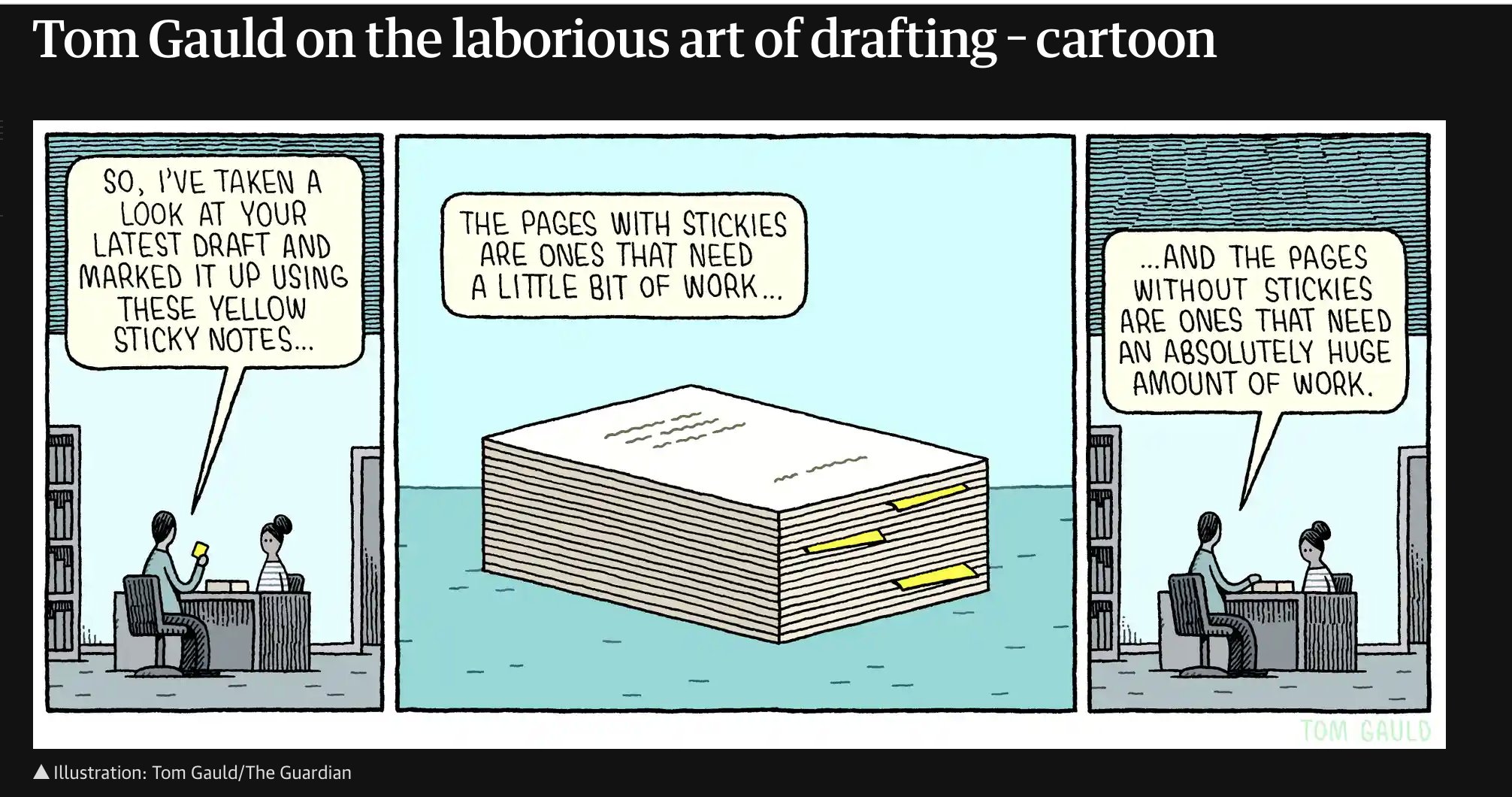
Filed under 2021, writing tip, Writing Tip Wednesday
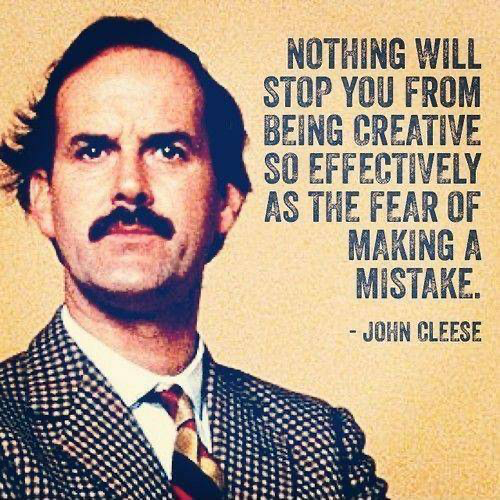
Filed under 2020, writing tip, Writing Tip Wednesday
Eliminating distractions is as important as heightening your focus. And no, they’re not the same thing.
Here’s the Gist:
Having a hard time focusing lately? You’re not alone. Research shows interruptions occur about every twelve minutes in the workplace, and every three minutes in university settings. In an age of constant digital interruptions, it is no wonder you’re having trouble ignoring distractions.
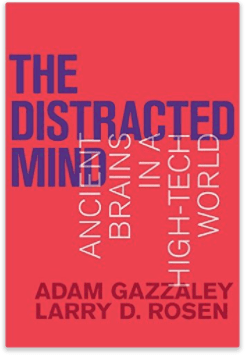
In their book, The Distracted Mind: Ancient Brains in a High-Tech World, Dr. Adam Gazzaley, a neuroscientist, and Dr. Larry Rosen, a psychologist, explain how our ability to pay attention works and what we can do to stay focused.
It turns out, attention isn’t as simple as it seems. In fact, paying attention involves two separate functions: “enhancement” (our ability to focus on things that matter) and “suppression” (our ability to ignore the things that don’t). Interestingly, enhancement and suppression are not opposites, they are distinct processes in the brain.
From The Distracted Mind: Ancient Brains in a High-Tech World:
“Although it may seem counterintuitive, we now appreciate that focusing and ignoring are not two sides of the same coin […] it is not necessarily true that when you focus more on something, you automatically ignore everything else better. We have shown in our lab that different [brain] networks are engaged when we focus compared to when we ignore the same thing.”
These processes are so separate, in fact, there are different networks of brain structures that carry out their respective functions, each of which is critical for attention.
If either of these brain processes is impaired, we lose focus. For example: we struggle with attention when we are tired, drunk, and, most notably, as we age.
Older adults are biologically more distractible than young adults. Personal anecdotes and scientific evidence demonstrate that our attentional capacity peaks near age twenty and diminishes over time. Gazzaley discovered that age-related declines are caused by a deficit in the suppression (ignoring) process.
From The Distracted Mind: Ancient Brains in a High-Tech World:
“Our main finding in this study was that, interestingly, older adults [focus on] relevant information as well as twenty-year-olds. Where older adults suffered a deficit was in suppressing the irrelevant information … We discovered that their main attentional issue was that they are more distractible than younger adults.”
The attentional decline we experience as we age has more to do with our inability to filter out distractions, not our lack of concentration. If you think it’s hard to pay attention now, just wait until you age a few more years.
To improve our ability to pay attention, we need to both remove distraction (especially as we age) as well as boost our capability to focus on one task at a time. Here’s how…
How to Eliminate Distraction
Have you ever noticed someone squinting their eyes in an attempt to recall something? Turns out closing your eyes to remember may actually work. Why this quirky technique is effective tells us something important about how the brain filters information. When your eyes are closed, your brain isn’t working as hard to filter out visual information. Instead of struggling to ignore everything in your field of view, your brain can devote more attention towards scanning your memory. Gazzaley conducted an experiment to see what type of visual information is the most distracting. He and his team asked volunteers to remember details while looking at one of three visual scenes: a plain grey screen, a busy picture, or with their eyes closed. From The Distracted Mind: Ancient Brains in a High-Tech World:
“The results of this experiment revealed that their ability to remember details [ …] was significantly diminished when their eyes were open and there was a picture in front of them, compared to either their eyes being shut, or their eyes being open while they faced a grey screen”
This experiment, along with others, provides evidence that cluttered and disorganized environments are more distracting than organized ones. Spaces filled with visual distractions force our brains to work harder to filter out superfluous information. When facing a pending deadline that you desperately need to focus on, clearing your desk and workspace to make it like the grey screen can increase your focus. Try clearing your virtual desktop of clutter as well. Limit yourself to one monitor, one browser tab or window and one computer program or app at a time. For more on “How to Clear Your Computer of Focus-Draining Distraction” click here. Removing distraction is important to maintain our focus as we age, but we also need to boost our capability to concentrate on one task at a time. Here’s how..
How to Boost Focus
Gazzaley and Rosen say some activities may boost cognition and attention by stimulating the brain’s ability to strengthen and reorganize existing neural connections, a process called neuroplasticity.
Activities that may boost cognition include physical exercise, meditation and spending time in nature. Recent research also finds that some cognitive exercises may also help. Although there are many brain training programs, some of which have over-promised and under-delivered, some scientists believe a new crop of clinically validated programs may soon come online.
From The Distracted Mind: Ancient Brains in a High-Tech World:
“Cognitive exercises are an attempt to improve brain function by harnessing our brain’s inherent plasticity, rather than by explicitly teaching a strategy or a skill. Most training programs attempt to accomplish this goal not just through repetitive task engagement, but also through adaptivity.”
For Gazzaley and Rosen, adaptivity is key. Just as athletes must adjust their exercise routines as they grow stronger; cognitive exercise programs must also adjust to how well, or how poorly, the participant is doing in the task. Personalized adjustments make the training more successful.
New research shows the of cognitive exercise programs in older adults and healthy populations. Gazzaley and Rosen caution that while the research is encouraging, more clinical trials are needed to prove medical benefits. However, many in the industry are hopeful doctors will one day prescribe game-like cognitive exercises as part of a healthy brain training regimen.
In the meantime, certain currently available video game titles may actually be good for brain health and improve cognition.
From The Distracted Mind: Ancient Brains in a High-Tech World:
“They are designed with a primary goal of engendering high levels of immersion, engagement, and enjoyment for the players, […] They do not tend to focus on one specific cognitive skill, as exercises usually do, but rather expose players to multiple demands that challenge a broad range of abilities. ”
A 2003 study of video-game play linked better cognition and higher scores on attention and memory tests in gamers vs non-gamers. But not all video games are created equal.
Non-gamers who played the first person shooter game, Medal of Honor, one hour per day for 10 days showed improvements in cognition, while the ones who played Tetris did not.
From The Distracted Mind: Ancient Brains in a High-Tech World:
“[The researchers’] conclusion was that the nature of action video game play was critical in ‘forcing players to simultaneously juggle a number of varied tasks (detect new enemies, track existing enemies and avoid getting hurt, among others)…”
Video games may give you a boost, but not every off-the-shelf game will do the trick. The difference between the games that work and the ones that don’t gives us information into how the brain changes in response to its environment.
Video games good for building focus create environments that are fast-paced, interactive, adaptive and have complex reward and gaming structures. Like a brain playground.
In 2013, Gazzaley verified that a custom-designed cognitive video game, NeuroRacer, improves cognition in older adults. Dr. Gazzaley’s research led to a proprietary technology platform to measure and improve certain executive functions.
In the future, cognitive video games will be like “Neuro Cross Fit Training” as Gazzaley calls it. They will combine elements of physical activity, meditation, and cognitive exercise, rolled into one game.
In the meantime, we can do our part to keep our attentional focus sharp by first reducing distractions to improve our suppression capabilities, and then beefing-up the brain’s enhancement functions through activities like exercise, meditation, outdoor time, and immersive video games. We can boost our ability to concentrate by doing just one thing well at a time.
Filed under 2020, writing tip, Writing Tip Wednesday

The multimillion dollar brain training industry is under attack. In October 2014, a group of over 100 eminent neuroscientists and psychologists wrote an open letter warning that “claims promoting brain games are frequently exaggerated and at times misleading.” In 2016, industry giant Lumosity was fined $2m, and ordered to refund thousands of customers who were duped by false claims that the company’s products improve general mental abilities and slow the progression of age-related decline in mental abilities. And a recent review examining studies purporting to show the benefits of such products found “little evidence … that training improves improves everyday cognitive performance.”
While brain training games and apps may not live up to their hype, it is well established that certain other activities and lifestyle choices can have neurological benefits that promote overall brain health and may help to keep the mind sharp as we get older. One of these is musical training. Research shows that learning to play a musical instrument is beneficial for children and adults alike, and may even be helpful to patients recovering from brain injuries.
“Music probably does something unique,” explains neuropsychologist Catherine Loveday of the University of Westminster. “It stimulates the brain in a very powerful way, because of our emotional connection with it.”
Playing a musical instrument is a rich and complex experience that involves integrating information from the senses of vision, hearing, and touch, as well as fine movements, and learning to do so can induce long-lasting changes in the brain. Professional musicians are highly skilled performers who spend years training, and they provide a natural laboratory in which neuroscientists can study how such changes – referred to as experience-dependent plasticity – occur across their lifespan.
Changes in brain structure
Early brain scanning studies revealed significant differences in brain structure between musicians and non-musicians of the same age. For example, the corpus callosum, a massive bundle of nerve fibres connecting the two sides of the brain, is significantly larger in musicians. The brain areas involved in movement, hearing, and visuo-spatial abilities also appear to be larger in professional keyboard players. And, the area devoted to processing touch sensations from the left hand is increased in violinists.
These studies compared data from different groups of people at one point in time. As such, they could not determine whether the observed differences were actually caused by musical training, or if existing anatomical differences predispose some to become musicians. But later, longitudinal studies that track people over time have shown that young children who do 14 months of musical training exhibit significant structural (pdf) and functional brain changes (pdf) compared to those who do not.
Together, these studies show that learning to play a musical instrument not only increases grey matter volume in various brain regions, but can also strengthen the long-range connections between them. Other research shows that musical training also enhances verbal memory, spatial reasoning, and literacy skills, such that professional musicians usually outperform non-musicians on these abilities.
Long-lasting benefits for musicians
Importantly, the brain scanning studies show that the extent of anatomical change in musicians’ brains is closely related to the age at which musical training began, and the intensity of training. Those who started training at the youngest age showed the largest changes when compared to non-musicians.
Even short periods of musical training in early childhood can have long-lasting benefits. In one 2013 study, for example, researchers recruited 44 older adults and divided them into three groups based on the level of formal musical training they had received as children. Participants in one group had received no training at all; those in the second had done a little training, defined as between one and three years of lessons; and those in the third had received moderate levels of training (four to 14 years).
The researchers played recordings of complex speech sounds to the participants, and used scalp electrodes to measure the timing of neural responses in a part of the auditory brainstem. As we age, the precision of this timing deteriorates, making it difficult to understand speech, especially in environments with a lot of background noise. Participants who had received moderate amounts of musical training exhibited the fastest neural responses, suggesting that even limited training in childhood can preserve sharp processing of speech sounds and increase resilience to age-related decline in hearing.
More recently, it has become clear that musical training facilitates the rehabilitation of patients recovering from stroke and other forms of brain damage, and some researchers now argue that it might also boost speech processing and learning in children with dyslexia and other language impairments. What’s more, the benefits of musical training seem to persist for many years, or even decades, and the picture that emerges from this all evidence is that learning to play a musical instrument in childhood protects the brain against the development of cognitive impairment and dementia.
Unlike commercial brain training products, which only improve performance on the skills involved, musical training has what psychologists refer to as transfer effects – in other words, learning to play a musical instrument seems to have a far broader effect on the brain and mental function, and improves other abilities that are seemingly unrelated.
“Music reaches parts of the brain that other things can’t,” says Loveday. “It’s a strong cognitive stimulus that grows the brain in a way that nothing else does, and the evidence that musical training enhances things like working memory and language is very robust.”
Learning to play a musical instrument, then, seems to be one of the most effective forms of brain training there is. Musical training can induce various structural and functional changes in the brain, depending on which instrument is being learned, and the intensity of the training regime. It’s an example of how dramatically life-long experience can alter the brain so that it becomes adapted to the idiosyncrasies of its owner’s lifestyle.
Filed under 2020, writing tip, Writing Tip Wednesday
This common affliction is behind so much unclear and confusing writing in the world today.

“Why is so much writing so hard to understand? Why must a typical reader struggle to follow an academic article, the fine print on a tax return, or the instructions for setting up a wireless home network?”
These are questions Harvard psychologist Steven Pinker asks in his book, The Sense of Style: The Thinking Person’s Guide to Writing in the 21st Century. They’re questions I’ve often encountered –and attempted to tackle– throughout my career as a business writer and editor. Whenever I see writing that is loaded with jargon, clichés, technical terms, and abbreviations, two questions come immediately to mind. First, what is the writer trying to say, exactly? And second, how can the writer convey her ideas more clearly, without having to lean on language that confuses the reader?
For Pinker, the root cause of so much bad writing is what he calls “the Curse of Knowledge”, which he defines as “a difficulty in imagining what it is like for someone else not to know something that you know. The curse of knowledge is the single best explanation I know of why good people write bad prose.”
“Every human pastime –music, cooking, sports, art, theoretical physics –develops an argot to spare its enthusiasts from having to say or type a long-winded description every time they refer to a familiar concept in each other’s company. The problem is that as we become proficient at our job or hobby we come to use these catchwords so often that they flow out of our fingers automatically, and we forget that our readers may not be members of the clubhouse in which we learned them.”
People in business seem particularly prone to this “affliction.” You could argue that business has developed its own entirely unique dialect of English. People are exposed to an alphabet soup of terms and acronyms at business school, which they then put into use in their day-to-day interactions once they enter the working world.
And what starts out as a means of facilitating verbal communication between people becomes the primary mode with which people communicate their ideas in writing, from email to chat apps to business proposals and presentations.
“How can we lift the curse of knowledge?” asks Pinker. “A considerate writer will…cultivate the habit of adding a few words of explanation to common technical terms, as in ‘Arabidopsis, a flowering mustard plant,’ rather than the bare ‘Arabidopsis.’ It’s not just an act of magnanimity: A writer who explains technical terms can multiply her readership a thousandfold at the cost of a handful of characters, the literary equivalent of picking up hundred-dollar bills on the sidewalk.”
“Readers will also thank a writer for the copious use of for example, as in, and such as, because an explanation without an example is little better than no explanation at all.”
Whenever I write a sentence that makes me pause and wonder about what it means, I assume that other readers might react in the same way. If a sentence is not clear to me, it might not be clear to others. It’s an approach that I recommend to anyone who is trying to improve his own writing.
Before hitting publish and sending your writing out to the world, it’s better to be honest with yourself about how much your reader is likely to understand a given passage or sentence. Before you commit your writing to print– or to the internet– take a few moments to make sure that what you write is clear and understandable by as many of your intended readers as possible.
As Richard Feynman, the Nobel prize-winning physicist, once wrote, “If you ever hear yourself saying, ‘I think I understand this,’ that means you don’t.”
—Glenn Leibowitz
Filed under 2020, writing tip, Writing Tip Wednesday
 It can be easy to fall into a morning routine without considering how it impacts you later in the day.
Source: 7 Morning Habits That Can Affect Your Entire Day
While not directly related to writing, I thought I would pass along. I don’t endorse any of these suggestions, and some I don’t agree with, such as coffee. Some or all might work for you.
Your morning routine is like setting up a string of dominoes: You line everything up for success, but one false move can cause it all to come tumbling down. In order to set the right tone for the rest of your day, experts say you should adjust the following seven habits.
It’s tempting to steal a few more minutes of sleep, but hitting snooze has a negative impact on your physical and emotional well-being, says Joanna Kleinman, owner of The Center for Extraordinary Relationships. “Physically, hitting the snooze button actually sets you up to be groggy and less productive because you are repeatedly waking yourself out of a deep sleep,” Kleinman says. “Emotionally, you set yourself up to be late, rushed, and stressed in the morning.”
The obvious solution, Kleinman says, is getting out of bed right away (even if it seems impossible). “If we listen to our minds telling us what we feel like doing, we will never be able to make the positive changes we need to,” Kleinman says.
Doing this first thing in the morning stimulates self-criticism and judgments in your mind, Kleinman says. “Your emails and texts are all about things to do, things to buy, things to add to your to-do list,” she says. “This amounts to either the stuff that other people want you to be paying attention to, or what your mind says you should be paying attention to.”
Even if you leave your inbox alone and stick to Instagram, you can do harm to your psyche because social media causes you to compare yourself to other people. Bottom line: Checking your phone first thing can awaken your inner critic. To stop yourself from opening Twitter immediately after turning off your alarm, charge your phone in another room. Begin your day instead with a self-affirming habit like journaling or meditation.
If you wake up and have no idea what’s on your schedule, where you have to be, or what you’re going to wear, then your day is already off to a frantic start. Psychologist and Certified Master Coach Joel Ingersoll recommends organizing your day the night before. This way, you’ll feel refreshed and ready to go in the morning.
You may be craving a cup of coffee as soon as your feet hit the floor, but what your body really needs is a glass of water, Ingersoll says. Since you haven’t had any liquids in your system for at least six (or hopefully eight) hours, your body is dehydrated. You can have the coffee (see below), but your body will function better—you’ll have fewer headaches, less fatigue, and smaller bags under your eyes—if you down a glass of water first, Ingersoll says.
Don’t feel guilty about reaching for the coffee pot after you’ve had your water—it is actually good for your body, too, says Ilyse Schapiro, a Registered Dietitian and Certified Dietitian/Nutritionist. “Coffee is a great source of antioxidants, and it can increase energy as well as help to stabilize our moods,” Schapiro says. “It can also help keep our brains healthier and our minds sharper.”
Too much coffee isn’t going to do you any favors, though. Stick with one or two cups a day, and be consistent with how much you drink, or else you’ll start getting headaches and withdrawal symptoms.
Have you been told to eat a good breakfast before? That’s because it’s important, says Bruno LoGreco, life coach and author of Stop Sabotaging Your Life. “Eating a healthy breakfast consisting of nuts, fruits, and oats will satisfy your brain to get you through a tough day at the office,” LoGreco says. It’s best to skip the doughnuts and croissants, though, as these will give you a sugar high and set you up for a crash just as you reach your desk.
A study published by the American Psychological Association found that early risers are happier and more successful than those who go to bed late. They tend to be more proactive, get better grades, and better anticipate and minimize problems.
Danielle Braff is a freelance writer in Chicago. Her work has appeared in the Chicago Tribune, Crain’s Chicago Business, Women’s Health, Self and Marie Claire, among others. She lives with her husband, their two daughters, two cats and a dog. Check out her other work at Daniellebraff.com.
Filed under 2020, writing tip, Writing Tip Wednesday




 Booker's Blog