

May we all have a chance to help someone.
May we all have a chance to help someone.
Filed under 2022, writing tip, Writing Tip Wednesday

Filed under 2022, writing humor, writing tip, Writing Tip Wednesday

Filed under 2021, writing tip, Writing Tip Wednesday
Start your morning off right with these simple but effective routines.
Of all the different things you can try to improve your productivity, a morning routine is one of the most effective.
There are a few reasons why morning routines are so useful. The first is obvious to anyone who has ever procrastinated, just getting started is often the hardest part. If you can start out with the right momentum towards your goals, you’ll avoid wrestling with yourself in the morning to get started.
The second is that the morning, particularly before the workday officially begins, is a quiet time with fewer social obligations. For many of us, the rest of the day can present a chaotic, ever-changing blast of responsibilities, urgent errands and unexpected interruptions. The morning, in contrast, is often the most consistent part of your day.
Morning routines also set the tone for your upcoming day. Do you want your workday to begin quiet and contemplative? With vigorous exercise? Silent meditation? Creative and productive? Your morning habit can push you along a current which will carry throughout the morning and allow you to maximize whatever aspect of your personality you want to be most important.
In this article, I’d like to explore a few different morning routines you can try. But first, let’s talk about what comes before the morning ritual: sleep.
When Should You Wake Up? How Much Sleep Should You Get?

When you talk about productivity, there seems to be two camps. Some argue in favor of waking up extremely early to maximize those early-morning hours. Others say getting enough sleep needs to be the priority. If you can’t go to bed by 8pm, you should wake up only after you’ve gotten 7-8 hours of sleep.
I believe the scientific case is fairly clear: when it comes to productivity, getting enough sleep is essential.
A lack of sleep causes enormous cognitive declines, it impacts your ability to form memories, and may even increase the risk of certain diseases (including cancer). Research indicates that 7-8 hours per day is a nearly universal requirement, so those who claim to get by on four or six hours per night might be kidding themselves.
Worse, the cognitive impairment of a lack of sleep can accumulate, even if you think it has leveled off. Any morning routine you develop needs to accommodate your sleeping rhythms.
Key Lesson: Your morning routine should allow you enough sleep. Pick a time you can wake up consistently and also get 7-8 hours of sleep on a normal night.
Creating the Perfect Morning Routine
I’ve experimented with a ton of different morning routines. Waking up super early, waking up without an alarm, exercise, learning, work and many others.
In all these different experiments, I’ve found that there isn’t one perfect routine that will make you rich, ripped and happy overnight. Instead, there’s different routines for different purposes, and so I tend to think about my routines as trying to match my most important goals of that moment.
If I’m really focusing on health and fitness, starting with exercise or putting in the time to eat a healthy breakfast might go first. If I’m working like crazy, getting straight to work on my most important tasks may be better than cluttering up my morning with different tasks. Different goals, different routines.
Therefore, instead of suggesting one routine, I want to suggest six. These different routines have all served me during different parts of my life, and so you can see which feels like the best fit for you.
The Six Key Morning Routines
1. Exercise and Energy

This routine is simple: right when you wake up you go and exercise. Before eating breakfast, checking your phone and emails or watching some television—go out and move.
I’ve done this before with running, swimming and even just push-ups.
The first benefit of this is that it puts fitness in that all-important first slot of the day. If you’ve struggled with staying on a regular exercise schedule in the past, this can be a good way to make sure it is a priority.
Second, this habit can wake you up. Exercise can keep you alert and mentally functioning at your prime, when a coffee may only be able to slightly prolong your later-day crash.
Recommended for: If you struggle with grogginess, you’ve had a hard time fitting exercise into your schedule and if you want to make fitness your top priority.
2. Meditation and Stillness

Contrary to the first one, this starts with daily meditation. I’ve done this before with 30-minute meditation periods.
It’s important to do seated meditation and not do so lying down in your bed, or you’ll be likely to fall back asleep. I sit on the floor, not a chair, which is not terribly uncomfortable, but also a position that requires enough muscle tension that I’m unlikely to fall asleep.
I’ve found this helpful because it tends to leave me calm and focused. Useful if you expect to have stressful days ahead to start yourself off with a quiet mind.
I also find that one of the challenges of grogginess is keeping your eyes open. Meditation allows your mind to wake up without strain so by the time you hear the final gong you’re fully awake.
Recommended for: If you want to be calm and less anxious in your day, if you’ve wanted to make meditation a priority but haven’t had time, as an alternative if you don’t like exercise first thing in the morning.
3. Get to Work!

The key to productivity is just doing the work. This routine underscores this by making getting some work done your first priority, so that your first break is the chance to eat breakfast, shower, shave and do the normal routine you’d do in the morning.
I did this during the MIT Challenge. I even have old schedules I wrote on paper which had “6:55 – Wake Up,” “7:00 – Start studying,” written on them. I’d wake up, and in five minutes I’d be doing practice questions, listening to the next lecture or working on a programming assignment. Only after I did 30-60 minutes of this would I take a break to “get ready” to start my day.
This works because it not only maximizes your time, it shifts your productivity much earlier. You finish much earlier in the day and can enjoy a less cluttered evening without guilt that you’re slacking.
The second benefit is that you get to take a break when you need it. Too many people take their break before starting, so that when they have to work they can’t take a pause for fear of not having enough time to finish.
Recommended for: If you have important goals and projects that take a lot of time. If you expect to be working a lot and you’re worried you won’t have time to do everything.
4. Learning First
When I was planning my year-long trip to learn four different languages, the early morning was the only time my roommate (who went with me on the trip) and I had to do some pre-travel practice. Therefore, we woke up at 6am each day and did a half-hour of Pimsleur lessons before he got ready to go to work and I got up to start my day.
In other times I’ve done learning goals where I’ve read books, watched lectures, practiced skills or studied first thing. This is often useful for the same reason it’s useful for meditation and exercise: it puts something you struggle to schedule first thing in your day, so you won’t forget it.
Recommended for: When you want to work on an important learning goal but never find time.
5. Plan Your Day

Mental rehearsal is a key strategy elite athletes use to ensure performance. By imagining each movement vividly, they can perform better under pressure when the big event comes.
You can exploit a similar impact by planning out your day in the morning. Don’t just jot down some to-do items, but actually imagine working on them. What will be the complications? Where will you have gaps in your schedule that need filling? What will you need to focus on?
Doing this planning first thing in the morning can be a good way to prime your day for success.
Recommended for: If you have a hectic, busy schedule. If you want to focus your mind on work and productivity, but can’t start working right away.
6. Make Your Bed
Making your bed, brushing your teeth, showering, shaving, doing makeup, pressing your clothes and more are all little tasks that can put you in good form for the rest of your day. Such morning routines were pretty much expected a generation or two ago, but nowadays many people skip out on some of these steps as the culture has become looser.
An advantage of this more traditional routine is that in putting your house and appearance in order, you put your mind in order as well. As one admiral William H. McRaven put it, “if by chance you have a miserable day, you will come home to a bed that is made — that you made — and a made bed gives you encouragement that tomorrow will be better.”
This approach can be taken on its own, or it can be synced up with one of the other two—say fifteen minutes for some key preparation activities followed by exercise, work or study.
Recommended for: Creating a sense of order and dignity in your day. Giving you a foundation of meticulousness and conscientiousness to approach your later tasks.
Add an Evening Routine
Morning routines are great for managing the first part of your day, but they also depend crucially on an evening routine to complement them. If you do decide to aim for an early rising schedule, you need an early-to-sleep routine to match it. Similarly, if you plan to work or learn first thing in the morning, you should plan out your day the night before so you know what to work on.
A good evening routine should minimize blue light (a good rule is to have no screens after 9pm), so that the melatonin circuit that controls your circadian rhythm can start to adjust for better sleep.
I often like to plan out my day ahead of time and either read a book or listen to an audiobook with the lights out for 20-30 minutes before sleeping to make it easier to doze off.
Matched to your goals a good routine is the foundation for success. It can help you become more productive, healthier and happier by tweaking at one of the most consistent and important points in the day.
Filed under 2020, writing, writing blog, writing tip
Filed under 2020, writing tip, Writing Tip Wednesday

You already know how much better you feel after a good night’s sleep, but sleeping well helps your brain in less apparent ways than just not being groggy the next day. In fact, getting seven to nine hours of sleep each night can help secure your cognitive well-being.
In the short term, it gives your brain time to flush out refuse matter that builds up–like protein plaques and beta amyloid tangles–through a kind of waste chute called the glymphatic system. And over the long term, that can help stave off diseases like Alzheimer’s. So it pays to know a few tricks and habits to help yourself along to the land of nod. For starters, here’s what to avoid:
It’s all too easy to slip into a routine of having a glass or two of wine each evening, and you wouldn’t be alone in thinking this helps you unwind and sleep better. But what you might not realize is how significantly impaired the quality of your sleep is when you drink.
Alcohol is a depressant and neurotoxin, which means it slows down the central nervous system’s processes by reducing electrical conductivity in the brain. This means that neurons, which send and receive the electrical signals that cause the release of neurotransmitters, operate more slowly. In fact, if you spent the evening drinking and then went to sleep wearing a heart-rate variability monitor, it would show significantly increased levels of stress for your body while you slept.
That’s thanks to the body’s physiological response when it’s trying to break down a toxin, the liver works harder when it should be resting, leading to a stressed state from which you’ll wake up feeling exhausted. Throughout the night, as the liver uses a higher proportion of the body’s energy than usual, the brain is starved of its usual resources and struggles to recuperate effectively for the next day.
Many people like watching TV to relax after a long workday, and while that might help distract you from your daily worries, it doesn’t prepare your brain for a good night’s rest. Melatonin, the hormone that helps regulate sleep, is released into the bloodstream by the pineal gland. But darkness triggers the gland to start working, and it gets confused by the blue light that most screens emit.
Many people have heard of this issue when it comes to their smartphones, but it may not be enough to set aside just that device and not others. Even reading an e-book on a tablet or certain kinds of e-reader, or just watching ordinary television, can be potentially problematic. Try reading paper books and make sure you stop looking at all your devices’ screens for at least an hour before you hit the hay.
(Not sure what to do instead? For what it’s worth, sexual intimacy leads to the release of the bonding hormone oxytocin, which makes you feel comfortable and lowers your guard–helping to ease you into a good night’s sleep.)
Eating a large, heavy meal is also a bad idea, especially acidic, spicy, or fatty foods, which can actively stimulate the brain. Certain foods like bacon and preserved meats, soy sauce, some cheeses, nuts, tomatoes, and red wine contain a chemical called tyramine, which causes the release of norepinephrine, a brain stimulant that boosts brain activity. Even some milky drinks, which many believe to be sleep-inducing, contain high quantities of sugar that can also keep you up. So make sure you check the label and choose your dinner carefully.
Now that you’ve cut these habits from your evening routine, what should you add to it instead? Here are a few good options for improving both the quality of your sleep and reducing the time it takes your brain to power down for the night.
Lavender is a powerful neuromodulator, which means that it lowers your blood pressure, heart rate, and skin temperature, making you more relaxed and likelier to fall asleep. Smell has a powerful and immediate impact on emotion and mood because of the proximity of the olfactory nerve (which contains the sensory nerve fibers relating to smell) to the brain.
There’s also an associative quality to regularly smelling lavender before you sleep. If you make this a habit, it will signal to your brain that it’s time to wind down (once you’ve established this association, you can tap into it on the road, too; just throw some lavender in your travel bag). If you don’t like lavender, jasmine is a good alternative and can produce similar effects.
Rather than buying a powdered milky drink that’s high in sugar, you can make your own relaxing bedtime drink using a nut milk, like almond, which is full of magnesium. Magnesium helps reduce levels of the stress hormone cortisol and calms the nervous system.
As a secret ingredient, add turmeric, whose powerful anti-inflammatory properties can prevent nighttime stomach problems that might interrupt your sleep (and which have even been implicated in preventing dementia). If you want to sweeten your drink, use Manuka honey rather than sugar to help boost your immunity.
Circadian rhythms are our bodies’ series of physical, mental, and behavioral changes. They follow a roughly 24-hour cycle and depend primarily on how bright our environment is. Because of these rhythms, our body temperature automatically dips a couple of degrees at night, causing us to feel sleepy.
So when you take a hot bath–ideally 60–90 minutes before bedtime–your body temperature rises, but the rapid, steeper cool-down period immediately afterward relaxes you. And since the best way to increase your magnesium levels is actually through your skin, you can try adding magnesium salts to your bath to decrease cortisol levels. You should also make sure your bedroom isn’t too hot and stuffy once you get out of the bath. A cooler room can help reduce your body heat by the couple of degrees needed to drift off.
While falling asleep might seem like a passive process, there’s a whole cocktail of neurotransmitters involved in it, including histamine, dopamine, norepinephrine, serotonin, glutamate, and acetylcholine. But that means there are many physiological “levers” you can pull on your way to a better night’s sleep. Get your evening routine right, and you’ll be able to enjoy the spoils that come with it–better concentration, memory, and moods, enhanced creativity, and reduced inflammation and stress.
Dr. Tara Swart is a neuroscientist, leadership coach, author, and medical doctor. Follow her on Twitter at @TaraSwart.
Filed under 2020, writing tip
Eliminating distractions is as important as heightening your focus. And no, they’re not the same thing.

Here’s the Gist:
Having a hard time focusing lately? You’re not alone. Research shows interruptions occur about every twelve minutes in the workplace, and every three minutes in university settings. In an age of constant digital interruptions, it is no wonder you’re having trouble ignoring distractions.
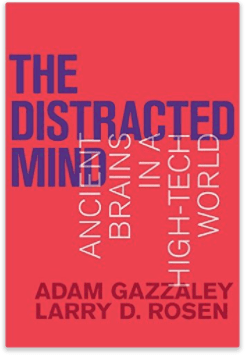
In their book, The Distracted Mind: Ancient Brains in a High-Tech World, Dr. Adam Gazzaley, a neuroscientist, and Dr. Larry Rosen, a psychologist, explain how our ability to pay attention works and what we can do to stay focused.
It turns out, attention isn’t as simple as it seems. In fact, paying attention involves two separate functions: “enhancement” (our ability to focus on things that matter) and “suppression” (our ability to ignore the things that don’t). Interestingly, enhancement and suppression are not opposites, they are distinct processes in the brain.
From The Distracted Mind: Ancient Brains in a High-Tech World:
“Although it may seem counterintuitive, we now appreciate that focusing and ignoring are not two sides of the same coin […] it is not necessarily true that when you focus more on something, you automatically ignore everything else better. We have shown in our lab that different [brain] networks are engaged when we focus compared to when we ignore the same thing.”
These processes are so separate, in fact, there are different networks of brain structures that carry out their respective functions, each of which is critical for attention.
If either of these brain processes is impaired, we lose focus. For example: we struggle with attention when we are tired, drunk, and, most notably, as we age.
Older adults are biologically more distractible than young adults. Personal anecdotes and scientific evidence demonstrate that our attentional capacity peaks near age twenty and diminishes over time. Gazzaley discovered that age-related declines are caused by a deficit in the suppression (ignoring) process.
From The Distracted Mind: Ancient Brains in a High-Tech World:
“Our main finding in this study was that, interestingly, older adults [focus on] relevant information as well as twenty-year-olds. Where older adults suffered a deficit was in suppressing the irrelevant information … We discovered that their main attentional issue was that they are more distractible than younger adults.”
The attentional decline we experience as we age has more to do with our inability to filter out distractions, not our lack of concentration. If you think it’s hard to pay attention now, just wait until you age a few more years.
To improve our ability to pay attention, we need to both remove distraction (especially as we age) as well as boost our capability to focus on one task at a time. Here’s how…
How to Eliminate Distraction
Have you ever noticed someone squinting their eyes in an attempt to recall something? Turns out closing your eyes to remember may actually work. Why this quirky technique is effective tells us something important about how the brain filters information. When your eyes are closed, your brain isn’t working as hard to filter out visual information. Instead of struggling to ignore everything in your field of view, your brain can devote more attention towards scanning your memory. Gazzaley conducted an experiment to see what type of visual information is the most distracting. He and his team asked volunteers to remember details while looking at one of three visual scenes: a plain grey screen, a busy picture, or with their eyes closed. From The Distracted Mind: Ancient Brains in a High-Tech World:
“The results of this experiment revealed that their ability to remember details [ …] was significantly diminished when their eyes were open and there was a picture in front of them, compared to either their eyes being shut, or their eyes being open while they faced a grey screen”
This experiment, along with others, provides evidence that cluttered and disorganized environments are more distracting than organized ones. Spaces filled with visual distractions force our brains to work harder to filter out superfluous information. When facing a pending deadline that you desperately need to focus on, clearing your desk and workspace to make it like the grey screen can increase your focus. Try clearing your virtual desktop of clutter as well. Limit yourself to one monitor, one browser tab or window and one computer program or app at a time. For more on “How to Clear Your Computer of Focus-Draining Distraction” click here. Removing distraction is important to maintain our focus as we age, but we also need to boost our capability to concentrate on one task at a time. Here’s how..
How to Boost Focus
Gazzaley and Rosen say some activities may boost cognition and attention by stimulating the brain’s ability to strengthen and reorganize existing neural connections, a process called neuroplasticity.
Activities that may boost cognition include physical exercise, meditation and spending time in nature. Recent research also finds that some cognitive exercises may also help. Although there are many brain training programs, some of which have over-promised and under-delivered, some scientists believe a new crop of clinically validated programs may soon come online.
From The Distracted Mind: Ancient Brains in a High-Tech World:
“Cognitive exercises are an attempt to improve brain function by harnessing our brain’s inherent plasticity, rather than by explicitly teaching a strategy or a skill. Most training programs attempt to accomplish this goal not just through repetitive task engagement, but also through adaptivity.”
For Gazzaley and Rosen, adaptivity is key. Just as athletes must adjust their exercise routines as they grow stronger; cognitive exercise programs must also adjust to how well, or how poorly, the participant is doing in the task. Personalized adjustments make the training more successful.
New research shows the of cognitive exercise programs in older adults and healthy populations. Gazzaley and Rosen caution that while the research is encouraging, more clinical trials are needed to prove medical benefits. However, many in the industry are hopeful doctors will one day prescribe game-like cognitive exercises as part of a healthy brain training regimen.
In the meantime, certain currently available video game titles may actually be good for brain health and improve cognition.
From The Distracted Mind: Ancient Brains in a High-Tech World:
“They are designed with a primary goal of engendering high levels of immersion, engagement, and enjoyment for the players, […] They do not tend to focus on one specific cognitive skill, as exercises usually do, but rather expose players to multiple demands that challenge a broad range of abilities. ”
A 2003 study of video-game play linked better cognition and higher scores on attention and memory tests in gamers vs non-gamers. But not all video games are created equal.
Non-gamers who played the first person shooter game, Medal of Honor, one hour per day for 10 days showed improvements in cognition, while the ones who played Tetris did not.
From The Distracted Mind: Ancient Brains in a High-Tech World:
“[The researchers’] conclusion was that the nature of action video game play was critical in ‘forcing players to simultaneously juggle a number of varied tasks (detect new enemies, track existing enemies and avoid getting hurt, among others)…”
Video games may give you a boost, but not every off-the-shelf game will do the trick. The difference between the games that work and the ones that don’t gives us information into how the brain changes in response to its environment.
Video games good for building focus create environments that are fast-paced, interactive, adaptive and have complex reward and gaming structures. Like a brain playground.
In 2013, Gazzaley verified that a custom-designed cognitive video game, NeuroRacer, improves cognition in older adults. Dr. Gazzaley’s research led to a proprietary technology platform to measure and improve certain executive functions.
In the future, cognitive video games will be like “Neuro Cross Fit Training” as Gazzaley calls it. They will combine elements of physical activity, meditation, and cognitive exercise, rolled into one game.
In the meantime, we can do our part to keep our attentional focus sharp by first reducing distractions to improve our suppression capabilities, and then beefing-up the brain’s enhancement functions through activities like exercise, meditation, outdoor time, and immersive video games. We can boost our ability to concentrate by doing just one thing well at a time.
Filed under 2020, writing tip, Writing Tip Wednesday
A quick check-in will get you back on track. In time, you won’t even need one.
Quartz |

Despite its intense title, Hyperfocus: How to Be More Productive in a World of Distraction (Viking) is not a book written exclusively for hard-charging, elite-level time managers.
Chris Bailey, its author, calls for kindness when you catch your attention slouching on the job. Why be hard on yourself? We’re all swimming in a sea of distractions and it’s not our fault if we get carried off by a current several times in a day.
“Your mind will always wander, so consider how that might present an opportunity to assess how you’re feeling and then to set a path for what to do next,” he writes in the just-published book.
One way he has trained his mind to keep its finite amount of attention on whatever task he has designated for it is through an “awareness chime.” Using any number of apps, you can set up your computer or laptop to chime hourly. That gentle, pleasing sound will nudge you to take a second and ask yourself, “Am I doing the thing I’m supposed to be doing right now?”
Bailey actually suggests posing many other questions, including one about the quality of your attentional flow, distractions you might be able to remove from your environment, and whether you’re ignoring something that is more important than what you’re doing, even if you’re technically on schedule.
“If you’re anything like me, your hourly awareness chime may at first reveal that you’re usually not working on something important or consequential. That’s okay—and even to be expected,” he writes. In time, however, like Bailey, you probably won’t need the chimes to stay on track.
The hourly chime hack is not new. But usually it’s recommended as a mindfulness tool that can help you remember to breathe or sit quietly for a few minutes, or as a reminder to stand and walk around the office, or just stretch.
Several years ago, Daniel Pink, who writes on the science of motivation and time management, featured a chimes tip on his blog as a productivity hack. He quoted Peter Bregman, an advisor to CEOs and the author of 18 Minutes, who described how beeps can help a person snap to attention every hour. At first it seemed counterintuitive, Bregman wrote: “Aren’t interruptions precisely what we’re trying to avoid?”
But the beeps are productive if they take you off of autopilot, Bregman said. “This isn’t all about staying on plan. Sometimes the beep will ring and I’ll realize that, while I’ve strayed from my calendar, whatever it is I’m working on is what I most need to be doing.”
Then he shuffles priorities on his calendar, if necessary, and makes decisions about what is going to be left undone.
As the chime-marked hours pass, you’ll naturally recognize patterns in what you’re caught doing when the bells sound. (And we definitely prefer bells to startling beeps.) It’s one of the benefits to any time-awareness exercise: the heightened attention it brings to what’s stealing your time.
Filed under 2020, writing tip

The multimillion dollar brain training industry is under attack. In October 2014, a group of over 100 eminent neuroscientists and psychologists wrote an open letter warning that “claims promoting brain games are frequently exaggerated and at times misleading.” In 2016, industry giant Lumosity was fined $2m, and ordered to refund thousands of customers who were duped by false claims that the company’s products improve general mental abilities and slow the progression of age-related decline in mental abilities. And a recent review examining studies purporting to show the benefits of such products found “little evidence … that training improves improves everyday cognitive performance.”
While brain training games and apps may not live up to their hype, it is well established that certain other activities and lifestyle choices can have neurological benefits that promote overall brain health and may help to keep the mind sharp as we get older. One of these is musical training. Research shows that learning to play a musical instrument is beneficial for children and adults alike, and may even be helpful to patients recovering from brain injuries.
“Music probably does something unique,” explains neuropsychologist Catherine Loveday of the University of Westminster. “It stimulates the brain in a very powerful way, because of our emotional connection with it.”
Playing a musical instrument is a rich and complex experience that involves integrating information from the senses of vision, hearing, and touch, as well as fine movements, and learning to do so can induce long-lasting changes in the brain. Professional musicians are highly skilled performers who spend years training, and they provide a natural laboratory in which neuroscientists can study how such changes – referred to as experience-dependent plasticity – occur across their lifespan.
Changes in brain structure
Early brain scanning studies revealed significant differences in brain structure between musicians and non-musicians of the same age. For example, the corpus callosum, a massive bundle of nerve fibres connecting the two sides of the brain, is significantly larger in musicians. The brain areas involved in movement, hearing, and visuo-spatial abilities also appear to be larger in professional keyboard players. And, the area devoted to processing touch sensations from the left hand is increased in violinists.
These studies compared data from different groups of people at one point in time. As such, they could not determine whether the observed differences were actually caused by musical training, or if existing anatomical differences predispose some to become musicians. But later, longitudinal studies that track people over time have shown that young children who do 14 months of musical training exhibit significant structural (pdf) and functional brain changes (pdf) compared to those who do not.
Together, these studies show that learning to play a musical instrument not only increases grey matter volume in various brain regions, but can also strengthen the long-range connections between them. Other research shows that musical training also enhances verbal memory, spatial reasoning, and literacy skills, such that professional musicians usually outperform non-musicians on these abilities.
Long-lasting benefits for musicians
Importantly, the brain scanning studies show that the extent of anatomical change in musicians’ brains is closely related to the age at which musical training began, and the intensity of training. Those who started training at the youngest age showed the largest changes when compared to non-musicians.
Even short periods of musical training in early childhood can have long-lasting benefits. In one 2013 study, for example, researchers recruited 44 older adults and divided them into three groups based on the level of formal musical training they had received as children. Participants in one group had received no training at all; those in the second had done a little training, defined as between one and three years of lessons; and those in the third had received moderate levels of training (four to 14 years).
The researchers played recordings of complex speech sounds to the participants, and used scalp electrodes to measure the timing of neural responses in a part of the auditory brainstem. As we age, the precision of this timing deteriorates, making it difficult to understand speech, especially in environments with a lot of background noise. Participants who had received moderate amounts of musical training exhibited the fastest neural responses, suggesting that even limited training in childhood can preserve sharp processing of speech sounds and increase resilience to age-related decline in hearing.
More recently, it has become clear that musical training facilitates the rehabilitation of patients recovering from stroke and other forms of brain damage, and some researchers now argue that it might also boost speech processing and learning in children with dyslexia and other language impairments. What’s more, the benefits of musical training seem to persist for many years, or even decades, and the picture that emerges from this all evidence is that learning to play a musical instrument in childhood protects the brain against the development of cognitive impairment and dementia.
Unlike commercial brain training products, which only improve performance on the skills involved, musical training has what psychologists refer to as transfer effects – in other words, learning to play a musical instrument seems to have a far broader effect on the brain and mental function, and improves other abilities that are seemingly unrelated.
“Music reaches parts of the brain that other things can’t,” says Loveday. “It’s a strong cognitive stimulus that grows the brain in a way that nothing else does, and the evidence that musical training enhances things like working memory and language is very robust.”
Learning to play a musical instrument, then, seems to be one of the most effective forms of brain training there is. Musical training can induce various structural and functional changes in the brain, depending on which instrument is being learned, and the intensity of the training regime. It’s an example of how dramatically life-long experience can alter the brain so that it becomes adapted to the idiosyncrasies of its owner’s lifestyle.
Filed under 2020, writing tip, Writing Tip Wednesday



 Booker's Blog