
The Daily Routines of Famous Writers | Brain Pickings.
Happy 2014!
Filed under Writers on writing, Writing Tip Wednesday
MAKE PLOTTING EASIER WITH THE PLOTCLOCK – PART 2
By JOYCE SWENEY
FROM LOW POINT TO DENOUEMENT
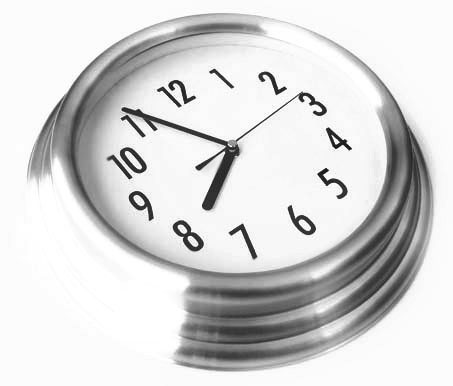
Plotting takes time.
Act 2 is usually a series of failures, losses and attempts to navigate the new world using the old skills. Events will punish the main character for refusing to change until they are at a breaking point and all seems lost. Fun to observe that at this point in stories, main character is often actually shown making a physical descent of some kind, like a symbolic falling to their knees. The story “breaks” them here and opens them to:
THE CHANGE
Right after The Low Point in the beginning of Act 3, the main character makes a major tactical change, the one the reader has been hoping for: the shy person starts to speak up, for instance. In Act 3, the main character is rewarded for the change by gaining strength and power. But at the same time, the forces against her react and also become stronger.
Stakes and hopes for the reader begin to climb in Act 3, but reader is encouraged to think no one can stop our Main Character now until:
THE TURNING POINT
More like a curveball, this is a surprise that comes from left field and changes the game, raising the stakes and making the eventual climax look much more difficult for the main character than we ever could have guessed. This is the most often overlooked plot point and probably the one that separates a good plotter form a great plotter. The classic example would be Luke Skywalker doing very well in his battle with Darth Vadar until….”Luke, I am your father.”
THE CLIMAX
Another moveable plot point, this is the mother-of-all battles in the novel, when the main character gets his final exam, as it were… when all the marbles are at stake and tension is at the highest. The climax will change everything one way or another. In action/adventure, it’s literally a battle, but there should be a high stakes climax even in the quietest, most literary work.
A main character who stands up to a bully might just do it with words, but it should still be big and powerful as a moment. In a very commercial story, the climax comes almost at the end (because who cares about denouement when the monster is dead?) In a literary story you can take almost a quarter of the book to clean up the emotional havoc wreaked at the climax.
THE DENOUNEMENT
Whatever you need to clean up the mess and let the reader know what they need to know about how things turned out after the battle was won. No more, no less.
The joy of The Plot Clock is this: that it guides you when you’re lost, helps you realize which plot points you might be missing, clears up the terror on where to begin, and just in general, is a good friend to hold your hand as you plot your novel. If you’re a plotter, you probably will consult it before you even start to write. If you like to plunge and discover as you go, it’s a great revision tool.
—-
Joyce Sweeney is the author of 14 novels for young adults and one book of poetry. A writing teacher and mentor to aspiring authors, she runs writer’s workshops, critiques manuscripts, and conducts classes and seminars throughout the state of Florida. This article is just one of the ten lessons included in her Fiction Writing Essentials which starts in July and is taking registrations now at: www.sweeneywritingcoach.com.
[Editor’s note: This entry comes courtesy of Bruce Hale. Bruce has written and illustrated over 25 books for kids. His Underwhere series includes Prince of Underwhere and Pirates of Underwhere. His Chet Gecko Mysteries series includes: The Chameleon Wore Chartreuse, The Big Nap, The Malted Falcon, Hiss Me Deadly, and others. More at http://www.brucehale.com/]
Filed under Writers on writing, Writing Tip Wednesday
“The true artist plays mad with his soul, labors at the very lip of the volcano, but remembers and clings to his purpose, which is as strong as the dream. He is not someone possessed, like Cassandra, but a passionate, easily tempted explorer who fully intends to get home again, like Odysseus.”
–John Gardner
Filed under Writers on writing
“The scariest moment is always just before you start.”
–Stephen King
Filed under Stephen King, Writers on writing
“[The writer] has to be the kind of man who turns the world upside down and says, lookit, it looks different, doesn’t it?”
—Morris West
Filed under Writers on writing
Thoughts about ideas….
“I have never felt like I was creating anything. For me, writing is like walking through a desert and all at once, poking up through the hardpan, I see the top of a chimney. I know there’s a house under there, and I’m pretty sure that I can dig it up if I want. That’s how I feel. It’s like the stories are already there. What they pay me for is the leap of faith that says: ‘If I sit down and do this, everything will come out OK.’”
—Stephen King
Filed under ideas, Stephen King, Writers on writing
The radical of one century is the conservative of the next. The radical invents the views. When he has worn them out the conservative adopts them.
–Mark Twain, Notebook, 1898
So, go and create a new view with your writing. Show the world something it has not sen before.
–Editor
Filed under Mark Twain, Writers on writing
You can’t try to do things; you simply must do them.
–Ray Bradbury
Filed under Ray Bradbury, Writers on writing
Writing is a struggle against silence.
–Carlos Fuentes
Filed under Carlos Fuentes, Writers on writing
“Good writing is remembering detail. Most people want to forget. Don’t forget things that were painful or embarrassing or silly. Turn them into a story that tells the truth.”
—Paula Danziger
[Editor’s note: This echoes this past Wednesday’s blog entry: “Writing as Transformational Tool.” You may want to check it out.]
Filed under Pauola Danziger, Writers on writing


 Booker's Blog