
https://www.cbsnews.com/news/john-lithgow-on-the-love-that-was-basis-for-stories-by-heart/
Category Archives: Uncategorized
Monday morning writing joke: “Bounds”
Q.: Why did the physics writer break up with the biology writer?
A.: Because there was no chemistry between them.
Filed under 2017, Monday morning writing joke, Uncategorized

Haiku to you Thursday: “Free fall”
Free falling in love /
I find the stars within reach /
and my heart far away.
Filed under 2017, Haiku to You Thursday, poetry by author, Uncategorized
Hub City Press Announces $10, 000 Short… | Hub City Writers Project
 Hub City Press announces the establishment of the $10, 000 C. Michael Curtis Short Story Book Prize.
Source: Hub City Press Announces $10, 000 Short… | Hub City Writers Project
Hub City Press announces the establishment of the $10,000 C. Michael Curtis Short Story Book Prize. The contest includes book publication and will be judged in its first year by Lee K. Abbott, author of seven collections of short stories. Submissions open on August 1, 2017 and will close January 1, 2018.
The new prize is open to emerging writers in thirteen Southern states. Submitters must currently reside in Alabama, Arkansas, Florida, Georgia, Kentucky, Louisiana, Mississippi, North Carolina, South Carolina, Tennessee, Texas, Virginia or West Virginia, and must have no previously published books.
A $25 submission fee will accompany each submission. Submission information can be found at http://www.hubcity.org/cmcprize . Manuscripts will be taken through online submission only. All manuscripts will be read anonymously by paid screeners. This contest is guided by the CLMP Code of Ethics.
Hub City Press Founder and Publisher Betsy Teter says of the new prize, “We are thrilled to announce one of the most substantial short story prizes in North America and to honor C. Michael Curtis, who has been a great friend to Hub City Press over the years.”
The first winning book will be published in Spring 2019.
This prize is made possible by an anonymous contribution from a South Carolina donor.
Lee K. Abbott’s short stories and reviews have appeared in Harper’s, The Atlantic, the Georgia Review, the New York Times Book Review, the Southern Review, and Epoch. His fiction has been often reprinted in The Best American Short Stories and The Prize Stories: The O’Henry Awards. His latest collection of stories, All Things, All at Once: New & Selected Stories, was published by Norton in June 2006. He is professor emeritus of English at Ohio State University.
The prize is named in honor of C. Michael Curtis, who has served as an editor of The Atlantic since 1963 and as fiction editor since 1982. Curtis has discovered or edited some of the finest short story writers of the modern era, including Tobias Wolff, Joyce Carol Oates, John Updike, and Anne Beattie. He has edited several acclaimed anthologies, including Contemporary New England Stories, God: Stories, and Faith: Stories. Curtis moved to Spartanburg, S.C. in 2006 and has taught as a professor at both Wofford and Converse Colleges, in addition to serving on the editorial board of Hub City Press.
Filed under Uncategorized
Haiku to you Thursday: “Defined”
Love is not defined /
except by the open heart /
and pain at parting.
Filed under 2017, poetry by author, Uncategorized

Bad Sex In Fiction Awards: The Connoisseur’s Compendium
Describing the union of bodies can sometimes have unintended consequences … and awards.

Spasming muscles, groans, whispers, licked ears, sweat, bucking, otherwise central zones: if you hear those terms, you know you can be only be reading about one thing: the Bad Sex in Fiction Award, a prize established 23 years ago by the Literary Review.
Each year since 1993, the Bad Sex in Fiction Award has honoured an author who has produced an outstandingly bad scene of sexual description in an otherwise good novel. The purpose of the prize is to draw attention to poorly written, perfunctory or redundant passages of sexual description in modern fiction, and to discourage them. The prize is not intended to cover pornographic or expressly erotic literature.
The Award was established by Rhoda Koenig, a literary critic, and Auberon Waugh, at that time editor of Literary Review.
Because we wouldn’t want you having to sift through the archives, we’ve brought you this: a compendium of…
View original post 3,064 more words
Filed under Uncategorized
SyFy’s July 4th Twilight Zone Marathon Schedule
Enter the Holiday Twilight Zone…

When it comes to Twilight Zone marathons, nothing tops New Year’s Eve. The last one was particularly impressive, with Syfy airing an expanded slate: all 156 episodes, in high-definition, in broadcast order.

But close behind the NYE marathon in popularity is the July 4th one. So here, in case you’re planning some fireworks, a cookout, or some other summer fun, is the schedule for this year’s marathon:
July 3, 2016
11:30pm – A Kind of Stopwatch
July 4, 2016
12:00am – Night Call
12:30am – The Changing of the Guard
1:00am – The 7th is Made Up of Phantoms
1:30am – Probe 7 – Over and Out
2:00am – The Last Flight
2:30am – The Little People
View original post 428 more words
Filed under Uncategorized
Stephen King on writing
Stephen King Used These 8 Writing Strategies to Sell 350 Million Books
The best-selling novelist shares his secrets to selling so many books.
by Glenn Leibowitz
Stephen King is one of the most prolific and commercially successful authors of the past half century, with more than 70 books of horror, science fiction, and fantasy to his name. Estimates put the total sales of his books at between 300 and 350 million copies.
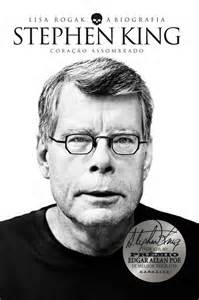
Author offers advice.
16 years ago, King shared everything he knows about writing in a book that instantly became a bestseller: On Writing: A Memoir of the Craft. Part memoir, part codification of his best writing strategies, the book has become a classic among writers.
I discovered – and devoured – it a dozen years ago, when I was trying to take my writing to the next level. I recommend it to all of my writer friends.
You don’t have to be a fan of King’s writing to appreciate the wisdom within the pages of this book. Nor do you have to be a novelist: The book has highly practical strategies that writers of nonfiction can immediately apply to their writing.
Here are eight writing strategies King shares that have helped him sell 350 million books:
1. Tell the truth.
“Now comes the big question: What are you going to write about? And the equally big answer: Anything you damn well want. Anything at all… as long as you tell the truth… Write what you like, then imbue it with life and make it unique by blending in your own personal knowledge of life, friendship, relationships, sex, and work… What you know makes you unique in some other way. Be brave.”
2. Don’t use big words when small ones work.
“One of the really bad things you can do to your writing is to dress up the vocabulary, looking for long words because you’re maybe a little bit ashamed of your short ones. This is like dressing up your household pet in evening clothes.”
3. Use single-sentence paragraphs.
“The object of fiction isn’t grammatical correctness but to make the reader welcome and then tell a story… to make him/her forget, whenever possible, that he/she is reading a story at all.
The single-sentence paragraph more closely resembles talk than writing, and that’s good. Writing is seduction. Good talk is part of seduction. If not so, why do so many couples who start the evening at dinner wind up in bed?”
4. Write for your Ideal Reader.
“Someone – I can’t remember who, for the life of me – once wrote that all novels are really letters aimed at one person. As it happens, I believe this.
I think that every novelist has a single ideal reader; that at various points during the composition of a story, the writer is thinking, ‘I wonder what he/she will think when he/she reads this part?’ For me that first reader is my wife, Tabitha… Call that one person you write for Ideal Reader.”
5. Read a lot.
“Reading is the creative center of a writer’s life. I take a book with me everywhere I go, and find there are all sorts of opportunities to dip in. The trick is to teach yourself to read in small sips as well as in long swallows. Waiting rooms were made for books – of course! But so are theater lobbies before the show, long and boring checkout lines, and everyone’s favorite, the john.”
6. Write one word at a time.
“In an early interview (this was to promote Carrie, I think), a radio talk-show host asked me how I wrote. My reply – ’One word at a time’– seemingly left him without a reply. I think he was trying to decide whether or not I was joking. I wasn’t. In the end, it’s always that simple.”
7. Write every day.
“The truth is that when I’m writing, I write every day, workaholic dweeb or not. That includes Christmas, the Fourth, and my birthday (at my age you try to ignore your goddam birthday anyway)… When I’m writing, it’s all the playground, and the worst three hours I ever spent there were still pretty damned good.”
8. Write for the joy of it.
“Yes, I’ve made a great deal of dough from my fiction, but I never set a single word down on paper with the thought of being paid for it… Maybe it paid off the mortgage on the house and got the kids through college, but those things were on the side – I did it for the buzz. I did it for the pure joy of the thing. And if you can do it for joy, you can do it forever.”
Filed under 2016, Uncategorized, writing tip, Writing Tip Wednesday


 Booker's Blog