Category Archives: story

The pitches

Killer Nashville badge

Killer Nashville badge

Below are two of my pitches. I used the The Painted Beast pitch on all the agents and editors I talked with at Killer Nashville. I was able to use The Small Resurrection pitch once or twice.

Two pieces of advice, one I have said before: Practice the pitch and make it as natural as you can. Two: Think of a pitch as a spoken version of the back-cover blurb you read on many paperback books.

The Painted Beast

Ex-cop Stephen York was once a hero. Decorated and lionized from uncovering corruption in the police department and bringing down a criminal enterprise, he now works two or three menial jobs in order to hold body and soul together, not only for himself but also his thirteen-year-old step-daughter and eight-year-old daughter. One night his ex-wife, who has escaped from prison, returns home and terrorizes him. He escapes from her and she from him, but shortly thereafter she kidnaps their daughters. In order to save them, Stephen has to kill her, which puts him under suspicion for murder and under the thumb of a police detective who has personal as well as professional reasons for wanting to grind Stephen down further. In addition, his step-daughter’s biological father steps forward to kidnap her with the intention of leading her into a life of child pornography and prostitution in order to get money to help re-establish the criminal empire that Stephen had helped take down. This time, in order to save his step-daughter, Stephen, who has not been a particularly good father, has to offer his life in order to save his step-daughter’s. In so doing, he learns another definition of hero. At its core this novel’s theme asks and answers the question: Can a fallen hero be a hero again?

Limerick version:
There once was an ex-cop who did poorly
At being a father and what’s more he
Killed his ex-wife,
Then offered up his life
To save his daughter from a life in pornography.

***

A Small Resurrection

Is believing in what you see the same thing as seeing what you believe in?

Knoxville, Tennessee, is the last place T. Xavier Gabriel wants to be. But the director of the 8th highest grossing film in Hollywood has come to town to ask his ex-wife for forbearance in paying the large alimony and possibly also for a loan to help restart his fallen career. She, however, has other plans. She wants him to
Pitching your novel

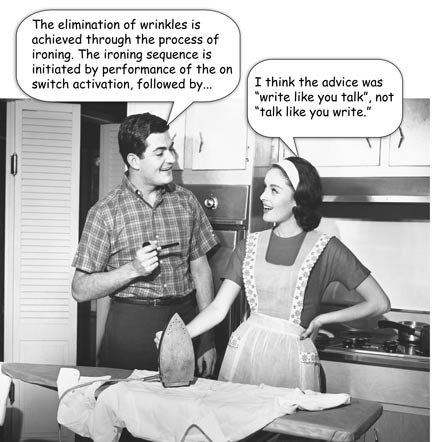
Use conversational voice when talking about your novel

rescue their 22-year-old daughter from the undue influences of a 24-year-old evangelical preacher. Gabriel wants nothing to do with that, having already admitted to be a failure once as a father, he doesn’t want a second bite of the apple. But when he finds his daughter keeping company with a resurrected Rod Serling, he sees a chance to use this Serling look-alike to resurrect his own career. But getting Serling away from his daughter puts her in jeopardy, and Gabriel must decide if he is going to save her or save his career. To save her, he must enlist the aid of Serling, who is not quite sure who he is or why he has been resurrected, and in saving her he puts an end ever resurrecting his career.

Limerick version:
There once was a director named Gabriel
Whose life was a broken down fable
Then along came Rod Serling
And an offer so sterling
That it could save Gabe if he was able.

Two final notes:
1) The limerick versions were not something I pitched, though I thought about it. It was my way of have a pitch that could be done in 15 seconds or less.

2) Some pitch advice says you need to have antecedents as part of your pitch. Antecedents are novels that are like yours. Something similar to your novel. This is supposed to show that you know about your novel’s market and where it might fit. While I had that prepared for The Painted Beast, it did not seem to be something those I pitched to at Killer Nashville were interested in. That could have been a mistake on my part. But I had the feeling that these agents wanted to be the ones to decide where it belongs.

Leave a comment

Filed under advice, agents, characters, Killer Nashville, limerick, Perils of writing, pitches, publishers, story, the perils of writing, words, writing, writing conference, writing tip

What makes for a good pitch? The thou shalts.

Killer Nashville badge

Killer Nashville badge


By now you may (or maybe not) be wondering what makes for a good pitch to agents or editors when you approach them at conferences such as Killer Nashville.

1) Sincerity. Even with your nervousness, if you don’t believe in what you’ve written, don’t expect the agent or editor to. I once had a published author answer the question of how do you know when you’ve finished writing and editing a novel by saying, when you’re tired of looking at it. You may have reached that stage with the mechanics of your novel, but if you’ve also edited out the sincerity, then you’ve probably gone too far and it will show in your pitch.

man on books

Believe in what you've written

2) Passion. In his book, Selling Your Story in 60 Seconds: The Guaranteed Way to Get Your Screenplay or Novel Read by Michael Hauge, one of the things mentioned is passion, i.e. belief in your novel. If you don’t believe in it, nobody else will. Now, maybe you are like me, and when you are nervous, you can slip into talking in a flat, almost monotonous tone. At such times, an old-fashioned metronome has more passion in its back and forth swing than my voice does. It also happens when I am trying to remember to get everything in my pitch that I believe should be there and keep out the things I’ve decided shouldn’t be.

How do you overcome that? A friend of mine who was also pitching at Killer Nashville said he was going to add passion to his pitches by being sure to move his arms. Physical gestures can be effective in loosening you up to allow some of the passion to come through. After all, many passionate people are often moving their arms for emphasis. Another thing you can do is remember to breath and realize that while you don’t have a lot of time, you do have enough time if you’re prepared, if you’ve practiced your pitch. You may also want to practice varying the delivery pace of your sentences. Pause a little longer between some sentences than others. Think of what you’re doing more as a conversation.

3) Be prepared. That means having written out or in some other way constructed your pitch and have practiced it. A few of us who were going to Killer Nashville practiced our pitches. I facilitate a writing group. We meet once a month to review each others’ works. During part of a couple of those sessions, a few of us practiced pitches for the novels we had written, and we let the other members of the group offer their comments. Even after that, I practiced a few more times, often going through my pitch as I was driving to work. (I’m sure people the cars around me wondered what crazy song I was singing to or what medication I had failed to take that morning.)

I even practiced once with my wife, and once with the friend I rode over with to Killer Nashville. He did his pitch and I listened and offered comments. And I did mine. (Actually, I did two, because I had one for a second novel I have written.) Both my wife and my friend said I needed to convey a little more passion in my pitch. That’s when I asked my friend, “How are you going to convey passion in yours?”

“I’m going to wave my arms,” he said.

I did do some hand gestures with my pitches (all three of them), and I hoped it helped. Since there is no copyright on arm waving or hand gestures, I don’t think I owe him more than a thank you. As I said in an earlier post, I also admitted to my nervousness up front with the first agent. Sometimes it helps to make things a little easier to do that. And somehow our conversation lead to my getting to do a partial version of the pitch for my other novel as well as the one I had sat down to pitch.

4) Be prepared to be interrupted. The person on the other side of the table will probably have questions for you, particularly if she or he is interested. So be prepared for that. The questions may come at the end. If so, then you’ll have little or no interruptions. Or the questions may come during your pitch. I experienced both. If interrupted, you’ll have to do your best to remember where you were in your pitch and get back to it as naturally as possible.

5) The best pitches are not the longest ones. I had the times for my second and third pitches eaten into because the persons before me when a longer than the ten minutes allotted. If your pitch session is scheduled for 10 minutes, don’t have a pitch over five minutes in length. And if you can have one even shorter, probably better. Remember point number 4, be prepared to be interrupted. That interruption might even occur before you get to sit down.

The agents and editors are hearing these pitches back to back to back. Filling your presentation with wall to wall sound won’t necessarily make your book more memorable. If you’re done before your ten minutes is up, great. Even if the editor or agent doesn’t bite and want to see all or part of your manuscript, you could still leave a favorable impression by being polite and precise in your presentation. The editor or agent might not be interested in this novel, but who knows about the next one. Besides, if he or she didn’t want to read a sample of the novel, there is no need to waste your time or the agent’s or the editor’s. There could be a multitude of reasons why the editor or agent isn’t interested. For example, one agent my friend pitched to told him she wasn’t interest because her agency was already representing a book with a similar structure to it. Literary agencies and publishers generally don’t want to handle books that they believe are similar to ones they already have in hand. Unfortunately, there is not much you can do about that, other than move on.

I have written enough for now. Next time, a few “Thou Shalt Nots” in terms of pitches.

1 Comment

Filed under agents, conference, editor, humor, Killer Nashville, Perils of writing, publishers, Random Access Thoughts, story, writing, writing tip

The Perils of Writing: Tension

Writing tip: Building a better story: tension

Bookends to death

Tension, what is it, how to get it.

In the last installment, I said there was a difference between conflict and tension. Conflict, as Bob McKey pointed out, is the gap between expectation and result. The gap can be small, such as being overcharged a dime or great, such as losing a loved one when you thought he would survive.

The best way to explain tension is to refer to a small book on writing by the writer and editor Algis Budrys, Lithuanian for “Gordon John Sentry, more or less.” His book, Writing to The Point: A complete guide to selling fiction is only 64 pages long, and may be hard to get. But this Strunk and White-sized guide to writing is worth your time (and it even covers manuscript formatting).

For Gordon John Sentry, more or less, a story consists of seven parts: 1) a character 2) in a context with a 3) problem, who 4) makes an intelligent attempt to solve the problem and 5) fails, tries a second time and fails, tries a third time and finally 6) succeeds or completely fails, and whose actions are then 7) validated by another character in the story.

Sounds simple, doesn’t it? That is the allure of telling a good story. But the execution is often more difficult, for writer as well as story character. Step 4 – 6 above is where in a story you find tension. The key is that the character makes an intelligent attempt and fails. With increased knowledge, he or she tries again, and fails. The increased knowledge increases the stakes in the attempt and thus increases the tension. After all, it should succeed, right? Then there is a third and final attempt. This is, in essence, all or nothing, so the tension should be at its highest here.

Tension, then, is something that builds over the life of the story, fueled by and feeding into the conflict. A well known love story may provide the clearest example. Romeo and Juliet loved each other. Their families, however, were adversaries. Romeo and Juliet attempted to find a way to manifest their love in the midst of this conflict, each time failing until each makes one last effort that leads to both their deaths. In this example, the tension builds in opposition to the conflict, which is fairly clever if you think about, and because of that opposition, the conflict works to heighten the tension.

Leave a comment

Filed under humor, story, the perils of writing, words, writing, writing tip

The Supercilious Door

Didn’t you know, there’s a secret marketing department office called SuDoo? Their job is to make things super-silly-to-us, or supercilious when said fast enough. They once had a sign that hung on their door that said “Supercilious Department.” Others called it “the SD door” for short. The sign was so heavy that it kept falling off. At first, people walking by would pick it up, knock on the door, and give the sign to whomever answered. Eventually, people got tired of this, especially since the people inside never said thank you. Finally, the sign fell down and nobody picked it up or knocked on the door to tell the SD their sign was down. The work day ended and as the first SD member stepped through the door, he stepped on the sign. It shattered under his weight and shot out in different directions, one piece wedging under the door to the Supercilious Department, preventing them from closing it. Because he had shattered the sign and the door couldn’t be fixed for several weeks, the sign breaker was stationed at the door to keep people out. He became known as the Supercilious Department Door Keeper, which was too long for people in the office to say, so it became shorted to the Supercilious Door Keeper, and eventually SDK. But the head of the Supercilious Department didn’t like that and insisted that the first time people greeted the door keeper, they had to refer to him as the Supercilious Department Door Keeper. Subsequent references during the day could be shorted to Supercilious Door Keeper. One day, a new employee from another department had a package that needed to go immediately to the Supercilious Department Head, but when he got to the door, he found the Supercilious Department Door Keeper would not let him in. The Door Keeper told him he could send a note inside the department, and the person for whom the package was addressed, could come forward and get it. The new employee pulled and pen and a scrap piece of paper out of his pocket and began his note. Unfortunately, the pen ran out of ink, and so the employee couldn’t finish his note, and since this employee was late for another meeting, he left the package outside the door. The Door Keeper forgot about the package, and eventually it was time to leave work. As the head of the department left, he saw the package, picked it up, recognized its importance, and looked around. When he spotted the Door Keeper making his way to the elevator, he yelled out, “Hey, you, Supercilious Door K—.” It was then that the package exploded. The Department head lost his, and as it turned out, the package was not what he thought it was, but in loving tribute to the Department head who lost his, the rest of the department and eventually those throughout the building referred to the Supercilious Door Keeper as the Supercilious Dork. Over time, the Supercilious Dork rose to be head of the department and because he was so stigmatized and traumatized by what happened that day, he has forever more made it his mission to shorten the names of things. And he never picks up strange packages, especially ones addressed to Supercilious Dork.

Leave a comment

Filed under story, words, writing

The Painted Beast

There once was an ex-cop who did poorly
At being a father and what’s more he
Killed his ex-wife
But then offered up his life
To save his daughter from a life in pornography.

[Editor’s note: this is a distillation of my novel The Painted Beast into a short limerick form. It does not capture all the twists and turns of the novel, but if I had to describe at least one main feature of it in 50 words or less, this would probably do.]

1 Comment

Filed under limerick, poem, poetry, story, words, writing

For something he didn’t know

She searched the island high and low,
Finding it with an old man moving slow.
She said it was an heirloom,
That a thief tried to make room
In his life for something he didn’t know.

Leave a comment

Filed under hero, humor, limerick, poem, poetry, portmanteau, Random Access Thoughts, story, story poem, word play, words, writing

What happened after the suitcase event

There once was a Lady from Kent
Down to Haiti she went.
About her portmanteau
She did not know
What happened after the suitcase event.

Leave a comment

Filed under hero, humor, limerick, poem, poetry, portmanteau, Random Access Thoughts, story, story poem, words, writing

The sleeve to which she was bound

Sleaze stood still, but kept losing ground
As a precipice formed around.
The coat might save him,
If only the girl gave him,
The sleeve to which she was bound.

Leave a comment

Filed under humor, limerick, poem, poetry, Random Access Thoughts, story, story poem, word play, words, writing

Meant to be written and not spoke

The Sleaze pried open the Portmanteau
Hoping to find out what he didn’t know.
Inside was a brown cloak,
And a note that was a joke
Meant to be written and not spoke.

2 Comments

Filed under humor, limerick, poem, poetry, portmanteau, Random Access Thoughts, story, story poem, words, writing