Category Archives: publishing

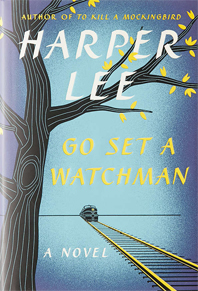
The Harper Lee “Go Set a Watchman” Fraud

by Joe Nocera

Source: http://www.nytimes.com/2015/07/25/opinion/joe-nocera-the-watchman-fraud.html?smid=fb-share&_r=0

Called away on family business, I was afraid I’d missed the sweet spot for commentary on the Harper Lee/“To Kill a Mockingbird”/“Go Set a Watchman” controversy — that moment right after “Watchman’s” release on July 14 when it was all anybody in literary circles could talk about.

Go Set a Watchman

Go Set a Watchman

Then again, the Rupert Murdoch-owned publishing house HarperCollins announced just this week that it had sold more than 1.1 million copies in a week’s time, making it the “fastest-selling book in company history.” “Watchman” has rocketed to the top of the New York Times best-seller list, where it will surely stay for a while. And the Rupert Murdoch-owned Wall Street Journal not only excerpted the first chapter on the Friday before publication, but it also gave its readers a chance to win a signed first edition of the book. Talk about synergy!

So perhaps it’s not too late after all to point out that the publication of “Go Set a Watchman” constitutes one of the epic money grabs in the modern history of American publishing.

The Ur-fact about Harper Lee is that after publishing her beloved novel, “To Kill a Mockingbird,” in 1960, she not only never published another book; for most of that time she insisted she never would. Until now, that is, when she’s 89, a frail, hearing- and sight-impaired stroke victim living in a nursing home. Perhaps just as important, her sister Alice, Lee’s longtime protector, passed away last November. Her new protector, Tonja Carter, who had worked in Alice Lee’s law office, is the one who brought the “new novel” to HarperCollins’s attention, claiming, conveniently, to have found it shortly before Alice died.

If you have been following The Times’s cleareyed coverage, you know that Carter participated in a meeting in 2011 with a Sotheby’s specialist and Lee’s former agent, in which they came across the manuscript that turned out to be “Go Set a Watchman.” In The Wall Street Journal — where else? — Carter put forth the preposterous claim that she walked out of that meeting early on and never returned, thus sticking with her story that she only discovered the manuscript in 2014.

But the others in the meeting insisted to The Times that she was there the whole time — and saw what they saw: the original manuscript that Lee turned in to Tay Hohoff, her editor. Hohoff, who appears to have been a very fine editor indeed, encouraged her to take a different tack. After much rewriting, Lee emerged with her classic novel of race relations in a small Southern town. Thus, The Times’s account suggests an alternate scenario: that Carter had been sitting on the discovery of the manuscript since 2011, waiting for the moment when she, not Alice, would be in charge of Harper Lee’s affairs.

That’s issue No. 1. Issue No. 2 is the question of whether “Go Set a Watchman” is, in fact, a “newly discovered” novel, worthy of the hoopla it has received, or whether it something less than that: a historical artifact or, more bluntly, a not-very-good first draft that eventually became, with a lot of hard work and smart editing, an American classic.

Rest of the article: Source: http://www.nytimes.com/2015/07/25/opinion/joe-nocera-the-watchman-fraud.html?smid=fb-share&_r=0

Leave a comment

Filed under 2015, publishing

Twenty-four things about publishing…

24 Things No One Tells You About Book Publishing

Ten years ago, my first novel Prep came out. Three novels later, here’s what I’ve learned about the publishing industry and writing since then.

by Curtis Sittenfeld

Writing is only part of the mystery.

Writing is only part of the mystery.

Source: http://www.buzzfeed.com/curtissittenfeld/things-no-one-ever-tells-you-about-the-publishing-industry?bffbbooks

  1. When it comes to fellow writers, don’t buy into the narcissism of small differences. In all their neurotic, competitive, smart, funny glory, other writers are your friends.
  2. Unless you’re Stephen King, or you’re standing inside your own publishing house, assume that nobody you meet has ever heard of you or your books. If they have, you can be pleasantly surprised.
  3. At a reading, 25 audience members and 20 chairs is better than 200 audience members and 600 chairs.
  4. There are very different ways people can ask a published writer for the same favor. Polite, succinct, and preemptively letting you off the hook is most effective.
  5. Blurbs achieve almost nothing, everyone in publishing knows it, and everyone in publishing hates them.
  6. But a really good blurb from the right person can, occasionally, make a book take off.
  7. When your book is on best-seller lists, people find you more amusing and respond to your emails faster.
  8. When your book isn’t on best-seller lists, your life is calmer and you have more time to write.
  9. The older you are when your first book is published, the less gratuitous resentment will be directed at you.
  10. The goal is not to be a media darling; the goal is to have a career.
  11. The farther you live from New York, the less preoccupied you’ll be with literary gossip. Like cayenne pepper, literary gossip is tastiest in small doses.
  12. Contrary to stereotype, most book publicists aren’t fast-talking, vapid manipulators; they’re usually warm, organized youngish women (yes, they are almost all women) who love to read.
  13. Female writers are asked more frequently about all of the following topics than male writers: whether their work is autobiographical; whether their characters are likable; whether their unlikable characters are unlikable on purpose or the writer didn’t realize what she was doing; how they manage to write after having children.

For the other eleven, go to: http://www.buzzfeed.com/curtissittenfeld/things-no-one-ever-tells-you-about-the-publishing-industry?bffbbooks

Leave a comment

Filed under publishing, publishing news

Brother, can you spare a change?

Anthony Horowitz to copy editor: “I’M NOT CHANGING THIS.”

The full article at: http://www.mhpbooks.com/anthony-horowitz-to-copyeditor-im-not-changing-this/

by Kirsten Reach

Nobody wants his conversation with a copy editor made public, but there’s a galley floating around from Harper at the moment that contains some accidental gems. Anthony Horowitz, author of a new Sherlock Holmes novel and the next James Bond novel, had a conversation in the margins of Moriarty that mistakenly made it into the advanced reader’s copies.

Sarah Lyall‘s report in The New York Times gives you a sense of her own reading experience as well as the dialogue between author and copy editor. What’s so brilliant about her telling is the way she manages to rationalize the notes at first, as some sort of meta-commentary:

“Moriarty’s” narrator, an American detective named Frederick Chase, is laying out the background to the story – how Holmes and Moriarty came to be at Reichenbach Falls and what is believed to have happened next. All of a sudden he switches to capitals. “NO NEED TO COMPLICATE THINGS HERE, I THINK,” the text announces. “WHAT I’VE WRITTEN IS BROADLY TRUE.”

Can the narrator be offering some meta-commentary on his own text? At first it seems so. But then it happens again. In a spot where Chase and a Scotland Yard inspector have found an important clue that seems to be an excerpt from a previous Holmes story written by Dr. Watson, things suddenly veer off-piste again. “IT MAKES NO SENSE FOR FREDERICK CHASE TO HAVE READ THE SIGN OF FOUR,” the text declares.

Of the six annotations, the highlight is one firm line from Horowitz: “I’M NOT CHANGING THIS.”

So what happened?

The rest of the story at: http://www.mhpbooks.com/anthony-horowitz-to-copyeditor-im-not-changing-this/

[Editor’s note: Thank you Ashlie for the link to this article.]

1 Comment

Filed under publishing, publishing news

Big Publishing is the Problem | Hugh Howey

Big Publishing is the Problem | Hugh Howey.

A few weeks ago, I speculated that Hachette might be fighting Amazon for the power to price e-books where they saw fit, or what is known as Agency pricing. That speculation was confirmed this week in a slide from Hachette’s presentation to investors:

So, no more need to speculate over what this kerfuffle is about. Hachette is strong-arming Amazon and harming its authors because they want to dictate price to a retailer, something not done practically anywhere else in the goods market. It’s something US publishers don’t even do to brick and mortar booksellers. It’s just something they want to be able to do to Amazon.

The biggest problem with Hachette’s strategy is that Hachette knows absolutely nothing about retail pricing. That’s not their job. It’s not their area of expertise. They don’t sell enough product direct to consumers to understand what price will maximize their earnings. Amazon, B&N, Kobo, and Apple have that data, not Hachette.

Beyond their ignorance of pricing strategy, Hachette also has a strong bias toward print books. Their existing relationships with major brick and mortar retailers gets in the way of their e-book pricing. This has been confirmed by my own publishers, who have admitted privately that they would like to experiment with digital pricing but don’t want to upset print book retailers. This puts their pricing strategy at odds with their investors’ needs, their authors’ needs, even their own profitability. In sum, they are making irrational decisions with their pricing philosophy. Hachette is making the same mistake that many publishers make, which is to think that harming Amazon somehow helps themselves.

The same presentation by Hachette to investors stressed the importance of DRM and

The rest of the article at: http://www.hughhowey.com/big-publishing-is-the-problem/

1 Comment

Filed under publishers, publishing, publishing news

SJ ROZAN: Russo’s Open Letter

SJ ROZAN.

2014-07-13 11:48 AM
Open letter from Richard Russo on Amazon vs. Hachette

Richard Russo is President of the Author’s Guild. This is long but, if you’re wondering what’s going on, worth reading. I’d like to say he took the words right out of my mouth, but he uses better words.

“The primary mission of the Authors Guild has always been the defense of the writing life. While it may be true that there are new opportunities and platforms for writers in the digital age, only the willfully blind refuse to acknowledge that authorship is imperiled on many fronts. True, not all writers are equally impacted. Some authors still make fortunes through traditional publishing, and genre writers (both traditionally published and independently published) appear to be doing better than writers of nonfiction and “literary” mid-list fiction. (The Guild has members in all of these categories.) But there’s evidence, both statistical and anecdotal, that as a species we are significantly endangered. In the UK, for instance, the Authors’ Licensing and Collecting Society reports that authors’ incomes have fallen 29 percent since 2005, a decline they deem “shocking.” If a similar study were done in the U.S., the results would be, we believe, all too similar.

“On Tuesday, Amazon made an offer to Hachette Book Group that would “take authors out of the middle” of their ongoing dispute by offering Hachette authors windfall royalties on e-books until the dispute between the companies is resolved. While Amazon claims to be concerned about the fate of mid-list and debut authors, we believe their offer – the majority of which Hachette would essentially fund – is highly disingenuous. For one thing, it’s impossible to remove authors from the middle of the dispute. We write the books they’re fighting over. And because it is the writing life itself we seek to defend, we’re not interested in a short-term windfall to some of the writers we represent. What we care about is a healthy ecosystem where all writers, both traditionally and independently published, can thrive. We believe that ecosystem should be as diverse as possible, containing traditional big publishers, smaller publishers, Amazon, Apple, Barnes & Noble and independent bookstores, as well as both e-books and print books. We believe that such an ecosystem cannot exist while entities within it are committed to the eradication of other entities.

To read the rest, go to: http://journalscape.com/sjrozan/2014-07-13-11:48/

Leave a comment

Filed under Amazon, publishing

Publishing Vs. Amazon: A Play in Five Acts – Insatiable Booksluts

Another view of the Amazon vs. Publishers battle

Publishing Vs. Amazon: A Play in Five Acts – Insatiable Booksluts.

Act I:

Amazon: Hey Publishing, we just invented a new thing that we think you’ll like. You know how after you make a book you have to pay a buttload of money to get it all printed and shipped and stuff? We figured out a way that you could not have to pay all that money and still sell lots of books.

Publishing: OMG NO WHAT IS THIS WHY ARE YOU TRYING TO DESTROY PUBLISHING

Customers: Hey! These ebooks are pretty cool! I can carry a bunch with me all the time and it sucks less when I have to move!

Publishing: NO THEY ARE NOT COOL, PAPER BOOKS FOREVER, WE KNOW YOU JUST WANT TO STEAL OUR CONTENT OFF OF THE INTERNETS. CAN WE TRIPLE THE DRMs PLEASE

Customers: ……

Act II:

Amazon: Hey Publishing, we want to buy a buttload of books from you and we aren’t even going to return a bunch of unsold books like other bookstores do, and in return do you think you could give us a good deal since you’re going to make a lot of money? And also because like, every other industry that we work with works with us at a wholesale discount since we spend so much money with them and all.

Publishing: OMG NO WE DO NOT WANT TO SELL YOU A BUTTLOAD OF BOOKS WE HATE YOU. WHY ARE YOU TRYING TO DESTROY PUBLISHING

Amazon: Hey just FYI we are also going to publish some books by people because we think it looks like a neat business to get into. Competition is awesome right? I mean, it’s mostly celebrities and authors that are doing all the work themselves anyway.

Publishing: YOU ARE MURDERING US TO DEATH STAHP. NOBODY SHOULD BUY BOOKS PUBLISHED BY AMAZON BECAUSE ONLY WE ARE ALLOWED TO PUBLISH.

Bookstores: We hate Amazon too because nobody else should be allowed to sell books, especially if customers like going to them better. We will not sell Amazon’s books even if customers want to read them.

Publishing: YEAH WE HATE YOU AMAZON

Bookstores: Do you still love us, Publishing? We promise that we will only sell paper books and not any from Amazon.

Publishing: YEAH YOU ARE MY BOO.

Act III:

Amazon: Hey Publishing, since it only costs you like a fraction of a percent actually to

For the rest of the play go to: http://insatiablebooksluts.com/2014/06/27/publishing-vs-amazon-play/

Leave a comment

Filed under Amazon, publishing

Amazon Is NOT the Vladimir Putin of the Publishing World – The Daily Beast

Amazon Is NOT the Vladimir Putin of the Publishing World – The Daily Beast.

by Nick Gillespie

In its battle with Hachette, Amazon is being compared to Putin and the Mafia—by critics who want you to pay more for books.

Can you believe those…those…those…sons of bitches at Amazon? After launching almost 20 years ago and making virtually every book—new, used, dead-tree, electronic, audio, and I’m guessing any day now, olfactory—available to everyone in America at good-to-great prices, the company’s true character now stands revealed. It’s not pretty, folks. Despite a huge market share, Amazon apparently still wants books, especially the e-books that everyone agrees are the future of the medium, to be cheaper than what publishers and big-name authors want you to pay for them.

Just who the hell does Amazon think it is? Maybe a bare-chested tyrant who used to work for the KGB? Amazon is “like Vladimir Putin mobilizing his troops along the Ukrainian border,” a proprietor of an “e-book discovery site” tells The New York Times. “A bully,” offers Richard Russo, the novelist and president of the Authors Guild (which knows exactly how to bully mere “writers”). Amazon, says author James Patterson, who published 13 detective books last year, is waging “war” and doing unspeakable things for which “the quality of American literature will suffer.” No, wait. That’s all wrong. Amazon isn’t like a Russian despot waging a war, says Dennis Loy, proprietor of the small publisher Melville House. It’s more like “the Mafia.”


More at: http://www.thedailybeast.com/articles/2014/06/05/amazon-is-not-the-vladimir-putin-of-the-publishing-world.html

1 Comment

Filed under Amazon, book publishing, publishing

Stephen Colbert Gives Jeff Bezos the Finger — Twice

Stephen Colbert Gives Jeff Bezos the Finger — Twice.

Amazon is messing with the wrong guy.

A few days after best-selling author Malcolm Gladwell came out against the online retailer for raising prices and delaying shipments of his books because of a dispute with publisher Hachette, Colbert has done the same. Colbert’s plaint, however, is funnier.

During a segment on Wednesday night’s Colbert Report, Colbert announced he was “mad prime” at Amazon for its latest actions. In particular, Colbert mocked Amazon’s suggestion that consumers in the market for his books should buy a used copy.

[Editor’s note: I think writer Sherman Alexie is correct. This is a battle between two big companies and the person(s) to support are the authors, who are getting smashed by both sides in this battle.]

Source: http://mashable.com/2014/06/05/stephen-colbert-amazon/#:eyJzIjoiZiIsImkiOiJfbDN3ZHQ3eDIza3NsOXdmZCJ9

Leave a comment

Filed under Amazon, book publishing, publishing

E-book publishing and price fixing

Source: http://www.nytimes.com/2012/04/18/business/economy/competition-needs-protection.html?_r=1&smid=fb-share&pagewanted=all

April 17, 2012

Competition Needs Protection

New York Times

By EDUARDO PORTER

To believe publishers and authors, the government just handed Amazon a monopoly over the book market: The price-fixing suit against Apple and the nation’s top publishers filed by the Justice Department last week will free Amazon to offer ruinous discounts in the booming new market of electronic books, drive brick-and-mortar bookstores out of existence and kill off publishers’ lucrative business of ink on paper.

Yet there is a different reading to this story. Publishing companies — like bookstores — fear they are on the losing end of a technological whirlwind of digital distribution that will make much of what they do obsolete. They would like to stop it. But though publishers may be happy to subvert competition to protect their business, this can entail a heavy cost for the rest of society.

The media industry’s efforts to limit competition date at least as far back as the 1920s and 1930s, when the emergence of radio threatened newspapers’ stranglehold of local markets.

At a meeting at the Biltmore Hotel in New York in December 1933, newspaper executives offered what was essentially a plan to divvy up the audience between radio entertainment and newspaper news. The newspapers would stop their campaign against radio and reinstate radio listings if the major radio networks would limit their news offerings to a couple of short bulletins a day from the newspapers’ wire services.

The Biltmore Agreement, as their pact was known, soon fell apart, as independent stations not part of the deal started buying information from new radio news services and offering real news. Despite that cartel’s failure, the anticompetitive impulse survives to this day.

The Internet is walloping media perhaps like no other technology before. And the media establishment again looks upon competition as a hindrance to its survival.

Flailing under the loss of readers and advertisers to online competition, newspaper executives approached regulators three years ago floating the idea of an antitrust waiver. They wanted to coordinate on a strategy to charge readers for their online news and take steps against the aggregator Web sites that were republishing much of their content. Though they gained the sympathy of crucial members of Congress, the government rightly shot down the idea.

The top record labels, meanwhile, are facing a class action antitrust suit that accuses them of colluding to keep the price of online music artificially high to protect their lucrative CD business.

The suit filed last week against Apple and five of the nation’s six main publishers has a similar plot. Amazon had been buying e-books wholesale and selling many best sellers at a heavily discounted $9.99, taking the loss to encourage sales of its Kindle e-reader. Fearful that this discounting could destroy the $25-a-book hardcover business, publishers took advantage of Apple’s entry into the market to change the terms. According to the lawsuit, they colluded with the computer colossus to establish an “agency model” under which publishers would set e-book prices in a range of $12.99 to $14.99, and give the distributor — be it Apple or Amazon — a 30 percent cut.

It’s natural to feel some sympathy for old media firms as technology juggernauts bear down on them. To many of us, book publishers and newspapers are more than just businesses. They are the keepers of the culture, the guarantors of our democracy. And they are small compared with Amazon, which controls 60 percent of the growing e-book market, as well as a big share of the market for books on paper. Absent any collusion, Apple’s entry into the e-book market would be the kind of competitive challenge we should welcome in the digital world.

But the charges aren’t trivial. The kind of collusion alleged by the Justice Department is called price-fixing. It has been illegal for a very long time, even if one is fighting a very large rival. According to the Consumer Federation of America, it would cost readers about $200 million this year alone. More important perhaps, this behavior could arrest the development of innovative platforms to sell digital goods on the Web.

Competition in the digital domain doesn’t look like carmakers’ slugging it out for market share. In digital markets, dominant firms are almost inevitable. There is no other social media firm with anywhere near Facebook’s 850 million members. Almost two-thirds of all Internet searches in the United States happen on Google.

The concentration is driven by the economics of the Web. The cost to Amazon of selling one more e-book is pretty near zero. This increasing return to scale makes big digital companies much more profitable than small ones. It is compounded by what economists call “network effects”: If many programmers design apps for iPads, they will become more popular, which will encourage more programmers to write apps for them.

Competition is nonetheless crucial to keeping innovation alive. Think of Google’s successful move into the smartphone business with Android, or its less successful stab at social media with Google Plus. A lot of innovation is also built on top of the dominant platforms. That is perhaps where competition most needs protection.

European and American regulators are looking into Google’s behavior not to check how it treats Microsoft’s Bing, but to determine whether it abuses its dominant search engine to increase secondary businesses — like, say, its shopping guide — while pushing innovative rivals down the rankings. The Justice Department is interested in how Apple sets terms for media companies because it wants to make sure they have a shot to innovate on the iPad and Apple’s other platforms.

Just as important as ensuring that platforms cannot abuse their dominance is to ensure that the companies that make the products that flow on these platforms — book publishers, say — do not use anticompetitive tactics to benefit one platform at the expense of others. This is the kind of competition that the Justice Department’s civil suit against Apple and the book publishers is meant to protect.

Admittedly, the Justice Department’s case may be bad news for the established book industry. Amazon and other online competitors have squeezed Borders out of business. It is only a matter of time before cheap e-books put an end to hardcover tomes selling for $25. And with Amazon pushing into publishing itself, some publishers could become victims as well.

But what really matters to society is what the case means for the production and consumption of books. That might not be so dreadful.

For sure, if brick-and-mortar bookstores disappear, browsing will die with them. But writers and publishers will have plenty of other ways — think Amazon, Facebook or Google — of letting readers know about their books. E-books, moreover, can be profitable. Mark Cooper of the Consumer Federation of America estimated that producing, distributing and selling an e-book costs about 25 percent of the cost of a physical tome; a $10 e-book still gives publishers about $4 to cover overhead and profit. And in an e-book world, publishers’ costs are sure to fall.

While Amazon remains dominant, its share of the e-book market has fallen to about 60 percent from 90 percent. Barnes and Noble, which has about a quarter of the market, would suffer if Amazon discounts sharply. But it could shed costs by getting rid of bookstores. And publishers can recover pricing power. Apple and two of the five publishers decided to fight the charges in court. But three settled. Though they must allow Amazon to resume discounting, they must do so for only two years.

And even if every existing publisher were driven out of business, reading would probably survive. Without the middlemen, publishers might even pay higher royalties to creators.

Music offers perhaps the best parallel of what could happen to the written word online. Record labels that originally welcomed Apple’s iTunes soon realized it was a killer in disguise, allowing consumers to unbundle $13 CDs and buy only their preferred singles for 99 cents.

But it wasn’t generally terrible for musicians. ITunes offered a shot to garage bands that could never have signed with a label. And fans didn’t fare too badly. Last year, consumers bought 1.3 billion singles — saving about $5 billion by not having to buy entire albums. This is hardly chump change. Would we be willing to give this up to save endangered record labels? While we ponder this, why not consider reviving Blockbuster, Circuit City and Tower Records?

1 Comment

Filed under e-book, opinion, publishers, publishing

E-book battles: writers pawns and prize

[Editor’s note: while not directly related to the e-book lawsuit, it is related as it pertains to Amazon, probably the biggest seller of books and e-books. As before, to find out more about the e-book lawsuit, click on e-book in the “Filed under” section at the bottom of this blog post. Thanks for stopping by.]

Source: http://www.nytimes.com/2012/04/16/business/media/amazons-e-book-pricing-a-constant-thorn-for-publishers.html?src=recg

April 15, 2012

Daring to Cut Off Amazon

New York Times

By DAVID STREITFELD

TULSA, Okla. — Plenty of people are upset at Amazon these days, but it took a small publishing company whose best-known volume is a toilet-training tome to give the mighty Internet store the boot.

The Educational Development Corporation, saying it was fed up with Amazon’s scorched-earth tactics, announced at the end of February that it would remove all its titles from the retailer’s virtual shelves. That eliminated at a stroke $1.5 million in annual sales, a move that could be a significant hit to the 46-year-old EDC’s bottom line.

“Amazon is squeezing everyone out of business,” said Randall White, EDC’s chief executive. “I don’t like that. They’re a predator. We’re better off without them.”

It is an unequal contest. EDC has 77 employees, no-frill offices on an industrial strip here and a stock-market valuation of $18 million — hardly a threat to Amazon, a Wall Street darling worth $86 billion. But Mr. White’s bold move to take his 1,800 children’s books away from the greatest retailing success of the Internet era is more evidence of the extraordinary tumult within the book world over one simple question: who gets to decide how much a book costs?

The Justice Department last week sued five major publishers and Apple on price-fixing charges, simultaneously settling with three of the houses. The publishers say they were not illegally colluding but simply taking advantage of a new device platform — Apple’s iPad — to sell their e-books in a different way, where they controlled the prices.

The publishers wanted to stop Amazon from using what one of them called “the wretched $9.99 price point,” according to court papers. Selling e-books so cheaply, they feared, would solidify Amazon’s robust grip on the business while simultaneously building a low-price mind-set among consumers that could prove ruinous to other bookstores and the publishers themselves.

EDC does not produce e-books, but saw exactly this happening with its physical inventory. Amazon was buying EDC’s books from a distributor and discounting them to the bone, just as it does with everything it sells. This might have been a boon for readers, but it was creating trouble with other retailers who carry the company’s titles, as well as with EDC’s network of independent sales agents, who market its books from their homes.

“They were becoming showrooms for Amazon,” Mr. White said. “We were shooting ourselves in the foot.”

Amazon is generally reluctant to explain its business practices and declined to comment for this article. But its executives say it is shaking up an antiquated business model by eliminating middlemen and passing the savings on to consumers. Publishers that try to cling to the past, they have said, will die.

The retailer’s growing list of critics, however, argue that Amazon has $48 billion in revenue but hardly any profit, proof that its approach is opportunistic and unsustainable. When traditional publishers, booksellers and wholesalers are destroyed, these opponents say, Amazon will be left with a monopoly that will be detrimental to the larger health of the culture.

In recent months, the dispute over Amazon’s strategy of selling books below cost has boiled over from several directions.

During the holiday season, Amazon encouraged customers to use physical stores as showrooms before ordering more cheaply online, a move that infuriated bookstores in particular. Publishers and distributors say that Amazon, never exactly shy in negotiating terms, has been more assertive in its quest for ever-better deals.

In February, Amazon demanded better margins from the Independent Publishers Group, a Chicago distributor of dozens of small imprints. IPG balked, so Amazon removed nearly 5,000 of the company’s e-books from its site.

“Amazon wants the price of books to be very, very low — lower than the publishing community can support,” said Curt Matthews, IPG’s chief executive. “Making a book is still a craft industry. Books need to be edited, to be publicized. Someone needs to say this is good and this is not. If there is not enough money to support that whole chain, the system will break down.”

Publishers have often been ambivalent about Amazon. On the one hand, it offers an extraordinarily efficient method of distributing their wares. Readers anywhere can easily order the most obscure volume and have it delivered the next day. With e-books, access is even easier, but publishers’ vulnerability is compounded; Amazon controls not just the method of distribution but the actual device the text is consumed on.

“Last year was the best in our 37 years, mainly due to the way Amazon was pushing the books,” said Bryce Milligan of Wings Press in San Antonio, an IPG client. “Then Amazon cut us off because they couldn’t get a better deal. Now our e-books sales are down 50 percent.”

If publishers and wholesalers feel threatened, writers are caught in the middle — both pawns and prize.

Ted McClelland, a writer in Chicago, had two IPG e-books dropped by Amazon. He just got a royalty statement on one of them, “Horseplayers: Life at the Track.” Half of his modest income on the book came from Kindle sales on Amazon.

“I don’t know whether Amazon is being greedy or IPG is being cheap, but I’m caught in the middle,” Mr. McClelland said. “What matters to me is getting my books back on Kindle.”

Here in Tulsa, EDC operates out of offices on the eastern outskirts in a less-than-glamorous district of warehouses and auto supply shops. Like IPG, it is primarily a distributor, selling picture books developed in England by Usborne Books to toy stores and bookshops in the United States. Its publishing line, Kane Miller, produces the popular “Everyone Poops” book and its sequels.

EDC’s so-called consultants — a direct sales force of about 7,000 women — sell to friends and acquaintances as well as their local schools. For a while the party plan was successful. Sales more than doubled from 2000 to 2004.

In recent years, though, the consultants have found it rough going. They would pass around a picture book like “The Noisy Body Book” or “Guess How Much I Miss You,” talking it up, and then the customer would order it online. Sales fell about 20 percent. Frustrated consultants began quitting.

What happened in February to Christy Reed, a sales consultant in Pleasanton, Tex., was becoming all too routine. Her school district decided to order 16 copies of a science encyclopedia and a science dictionary but then completed the deal on Amazon.

“I worked so hard to sell those books,” Mrs. Reed said. “I had to talk to so many different people. Then I lost the sale to a couple of clicks on the computer.”

She acknowledged that the district saved a few dollars but added: “I’m here, in the neighborhood. I went to school here. My kids went to school here. Yes, they got the books for less. But my earnings go back into our community. Amazon’s do not.”

After Mr. White, EDC’s chief, heard about that episode, his exasperation with Amazon peaked. Several times in the past, he had grappled with the retailer. He tried to get it to lower its discount on his books three years ago, but a tentative deal did not stick, he said. He was outraged that the company did not collect sales tax, which had the effect of making its books even cheaper.

Two months ago, he asked his biggest wholesaler, Baker & Taylor, to stop selling all EDC books to Amazon. When Baker & Taylor refused, Mr. White canceled its account. Baker & Taylor declined repeated requests to comment about EDC.

Of EDC’s $26 million in annual revenue, Baker & Taylor was responsible for about 6 percent, most of which was because of Amazon. Mr. White, a trim 70, said that when he made the decision to bail out, his blood pressure soared. But he’s also reveling in the excitement, just a little. He commissioned a drawing of EDC in the role of David taking on the giant Amazon. “I’m Type A,” he said. “I don’t mind a fight.”

Somewhat to Mr. White’s surprise, EDC is doing better without Amazon, at least for the moment. (Some of its books are still available on Amazon from third-party sellers.) Sales in March rose, in part because of new accounts like a toy store in Round Rock, Tex., that placed an initial order for 61 books. And colleagues in the business have been congratulating the publisher, or at least expressing their admiration for Mr. White’s guts.

“I tell them, ‘You never had the chance to make 7,000 women happy in one day,’ ” he said.

Leave a comment

Filed under books, e-book, publishers, publishing