

Red
Color climbs to the sky. /
Fall red brushing the heavens. /
Soon to paint the earth.
.
.
#red #sky #color #heavens #paint #earth #brush #poem #poetry #haiku #fall #photo #oldnorthknoxville #davidebooker #october #friday #102023 #2023 # haiga
Red
Color climbs to the sky. /
Fall red brushing the heavens. /
Soon to paint the earth.
.
.
#red #sky #color #heavens #paint #earth #brush #poem #poetry #haiku #fall #photo #oldnorthknoxville #davidebooker #october #friday #102023 #2023 # haiga

Our rain
Our rain is coming. /
We fill it with sighs or fear, /
but we must greet it.
.
.
#haiku #poem #poetry #haiga #photo #senryu #our #rain #sighs #fear #greet #oldnorthknoxville #davidebooker #march #monday #031625 #2025 #031823t
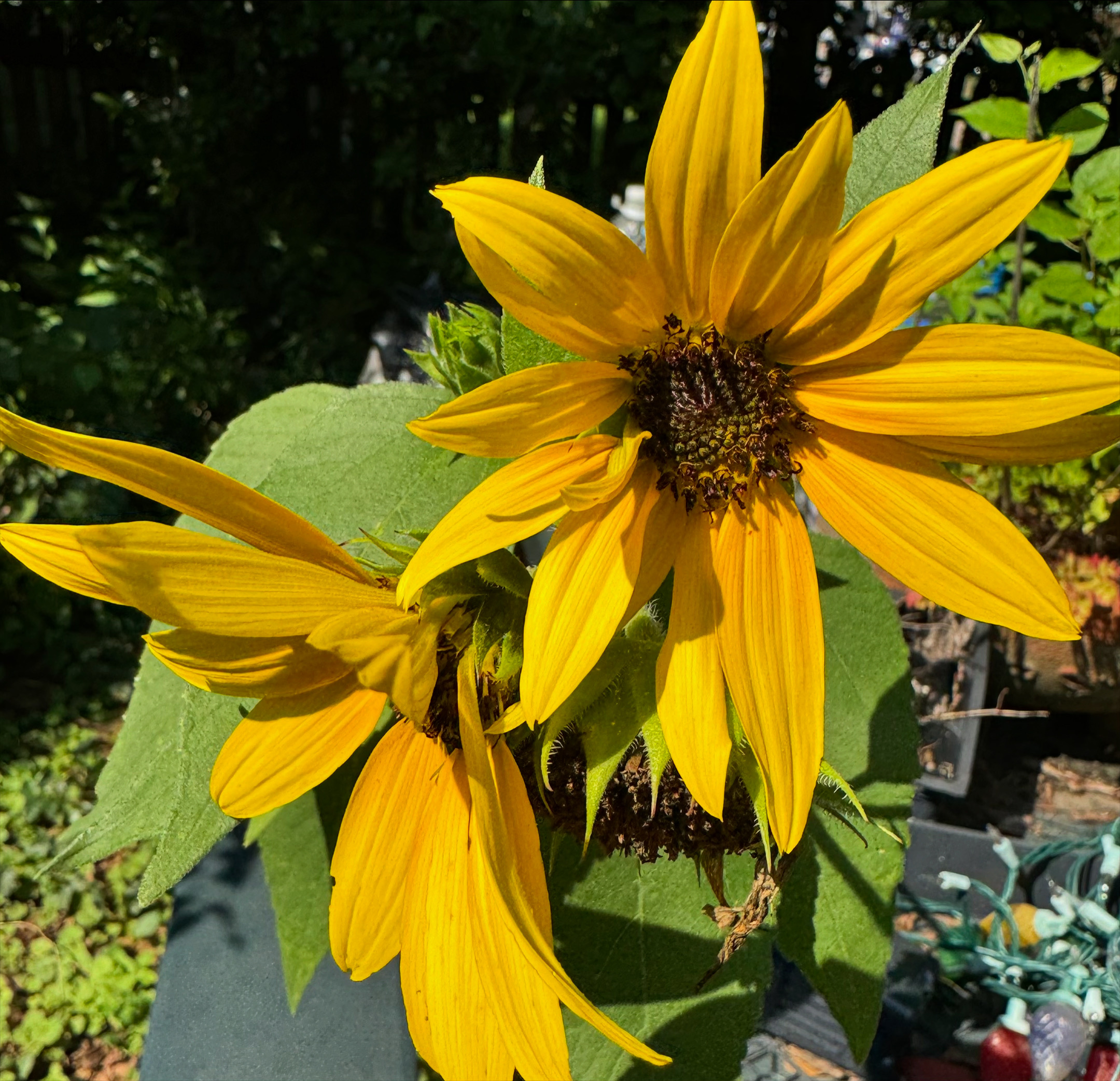
Interdependence
Twin blooms share one stem, /
mixing soil, sun, and water: /
interdependence.
.
.
#interdependence #blooms #twin #stem #soil #sun #water #haiku #poem #poetry #haiga #photo #oldnorthknoxville #davidebooker #august #tuesday #080624 #2024
[Editor’s note: the essay below is taken from an e-mail newsletter sent out by the writer Bruce Hale. you can find his web site at: http://www.brucehalewritingtips.com/. You can also sign up for his e-newsletter at that site. Each electronic newsletter comes with other information, including a writing joke.]
By BRUCE HALE
When I wrote my first mystery, I hadn’t a clue. I tried writing it straight through, plotting as I went, and ended up falling flat on my face. Why? I hadn’t yet learned that backwards is best.
You see, contrary to the way most fiction is mapped out, mysteries are backwards creatures. They’re easiest to write when plotted backwards from the ending, rather than forward from the beginning. Mysteries, by their nature, are a complex tangle, and if you’re not careful, you’ll get stuck in it.
As I learned the hard way, if you write from the beginning, you’ll be left flatfooted with your detective, trying to figure out how to solve the mystery.
Better to go the easy way: work from the solution. Start from the ultimate revelation of whodunit and work your way backwards to mystery writing success. Here’s how:
– DECIDE WHODUNIT, WHY, AND HOW
First, pick the crime to be solved and the culprit. Suss out why they committed the crime – and the less obvious the reason, the better. Your villain (or clues from him) should be part of the story from fairly early on, but his motives and actions must remain hidden until the twist reveals them. Hide your villain in plain
sight – heck, you could even go so far as to make them a seeming ally of your hero.
– PLAN YOUR TWIST
This is the dramatic reveal, the “It’s not Snape, it’s Quirrell!” moment. (Sorry if I spoiled Harry Potter I for you.) The twist should occur at the least convenient moment, preferably when the hero is most vulnerable. Usually the twist occurs at or just before the climax.
To make the twist work, you need to come up with at least one or two plausible culprits, then show why they didn’t commit the crime.
– LAY OUT YOUR RED HERRINGS
These are the likely culprits, the leads your detective follows that turn out to be dead ends. Be sure the herrings are motivated as well, and if you can disguise their motivations or make them ambiguous, so much the better. Anything to make them *more* plausible, and your true villain *less* plausible.
– SCATTER YOUR CLUES
What tips your hero off to the fact that the villain is guilty? A latticework of little clues (usually connected much too late). You must always play fair with the reader, so be sure the clues are there, even if the detective and her trusty assistant initially dismiss them.
The key with clues is to use misdirection — have them seem insignificant, or be misinterpreted. You can’t make it too easy for the detective, or the reader!
– START WITH A BANG
And last, but not least, come up with a grabber of an opening that plunges us right into the heart of the mystery. Ideally, it should contain some small clue that points us toward the true culprit.
With all that in place, now you’re ready to write your first words. Happy mystery writing, and may the spirit of Chandler and Hammett be with you!
Filed under Bruce Hale, plot, writer, writing, writing blog, writing tip


 Booker's Blog