
Category Archives: pitches
So, you want to be a writer? Watch and learn
Filed under agents, editor, humor, novel, Perils of writing, pitches, publishers, Random Access Thoughts, words, writing, writing tip
The pitches

Killer Nashville badge
Two pieces of advice, one I have said before: Practice the pitch and make it as natural as you can. Two: Think of a pitch as a spoken version of the back-cover blurb you read on many paperback books.
The Painted Beast
Ex-cop Stephen York was once a hero. Decorated and lionized from uncovering corruption in the police department and bringing down a criminal enterprise, he now works two or three menial jobs in order to hold body and soul together, not only for himself but also his thirteen-year-old step-daughter and eight-year-old daughter. One night his ex-wife, who has escaped from prison, returns home and terrorizes him. He escapes from her and she from him, but shortly thereafter she kidnaps their daughters. In order to save them, Stephen has to kill her, which puts him under suspicion for murder and under the thumb of a police detective who has personal as well as professional reasons for wanting to grind Stephen down further. In addition, his step-daughter’s biological father steps forward to kidnap her with the intention of leading her into a life of child pornography and prostitution in order to get money to help re-establish the criminal empire that Stephen had helped take down. This time, in order to save his step-daughter, Stephen, who has not been a particularly good father, has to offer his life in order to save his step-daughter’s. In so doing, he learns another definition of hero. At its core this novel’s theme asks and answers the question: Can a fallen hero be a hero again?
Limerick version:
There once was an ex-cop who did poorly
At being a father and what’s more he
Killed his ex-wife,
Then offered up his life
To save his daughter from a life in pornography.
***
A Small Resurrection
Is believing in what you see the same thing as seeing what you believe in?
Knoxville, Tennessee, is the last place T. Xavier Gabriel wants to be. But the director of the 8th highest grossing film in Hollywood has come to town to ask his ex-wife for forbearance in paying the large alimony and possibly also for a loan to help restart his fallen career. She, however, has other plans. She wants him to
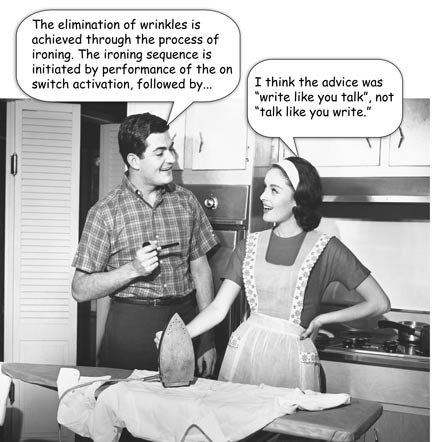
Use conversational voice when talking about your novel
Limerick version:
There once was a director named Gabriel
Whose life was a broken down fable
Then along came Rod Serling
And an offer so sterling
That it could save Gabe if he was able.
Two final notes:
1) The limerick versions were not something I pitched, though I thought about it. It was my way of have a pitch that could be done in 15 seconds or less.
2) Some pitch advice says you need to have antecedents as part of your pitch. Antecedents are novels that are like yours. Something similar to your novel. This is supposed to show that you know about your novel’s market and where it might fit. While I had that prepared for The Painted Beast, it did not seem to be something those I pitched to at Killer Nashville were interested in. That could have been a mistake on my part. But I had the feeling that these agents wanted to be the ones to decide where it belongs.
Pitch aside: dealing with contradictory information
This information comes from agent Nathan Bransford, and while he is aiming the information at query letters, I think the same advice can apply for pitches, with a little modification:
1. Take a Deep Breath: As long as you’re getting the big stuff right, you’re going to be fine. You don’t need to have every single little teeny tiny thing perfect. You can get my name or gender wrong and I still might request your pages (just did this last week in fact). I’m not going to reject you because you sent me the first five pages of Chapter 1 instead of your Prologue if I like the idea and your writing. Don’t sweat the small stuff. Because really: if an agent is going to reject your query over some small niggling detail, are they someone you’d want to work with anyway?
2. Remember That Agent Blogs Are Just Trying to Help: I know how tempting it is to throw up your hands and just think that literary agents are so many Goldilocks with completely different ideas of how hot the porridge should be. Please just remember that we offer so much advice because people ask. We get e-mails and comments all the time asking about everything from paper size to fonts to anglicized spelling to serial commas. So we try to help, and we’re not always going to agree on everything. Personally, when I’m wearing my author hat I’d rather have too much information than too little, so I tend to err on the side of dispensing too much agent advice. It’s up to you to decide which advice you agree with and which you don’t. Just remember that we’re trying to help, not trying to make your life miserable.
3. Not All Publishing Advice is Created Equal: I went back and looked at some of my early blog posts, and holy cow after just four years they’re already wildly out of date. Consider the source, consider the freshness of the advice, and beware of anyone who tries to tell you that there’s one way and only one way to find successful publication. Occasionally an author out there somewhere will have a sense that the way they found success is The Way That Should Work For Everyone, whereas people who have worked across the publishing spectrum have seen the proverbial cat skinned in an impossibly vast number of ways.
4. Try As Best You Can to Meet an Agent’s Specifications, But Don’t Go Crazy Trying to Do It: If you happen to remember that Rachelle wants you to query with your pen name and I want to hear from the real you: great! Query accordingly. But don’t go creating a massive spreadsheet with every agent’s particular individual preferences. No agent expects you to do that.
5. If You Think the Contradictory Query Advice is Mind Boggling, Just Wait Until You Reach the Publication Stage: In case you haven’t noticed, this business is an art, not so much a science. There’s no one way to do things, and you’re going to face conflicting advice and opinions about your manuscript, cover art, marketing plan, you name it. There are even more opinions out there than people (sometimes people can’t even decide what they think and have multiple opinions). At the end of the day, all you can do is just take all the advice into account, and choose the route that works best for you.
What makes a good pitch? The thou shalt nots
Killer Nashville badge
1) Thou shalt not consider me an expert. I believe it was the author W. Somerset Maugham who said, “There are three rules for writing a good novel. Unfortunately, nobody knows what they are.” While I took most of my ideas for a good pitch from Michael Hauge’s book, even he admits there are other ways of constructing a pitch. You can certainly find suggestions by simply searching on the Internet, and some of them are very good. But all of them, in the end, revolve around the principle of “Be brief, be sincere, and be seated.” Or get out of your seat to make way for the next person who is going to pitch.
I know, I know. It is a pain, a real pain to take this 70,000-, 80,000-, 90,000-, or 100,000-word-or-more creation and squeeze the essence out of it. After all, if you could have said it less than 500 words, you would have. Right?
I empathize. I do. After all, I have a novel or two or three, and I went kicking and screaming into this idea of pitching. That’s part of the reason I say don’t consider me an expert. I’m not. And certainly, if you have a better way of doing it, stick with it. Maybe even let me know. In the meantime, I have to go kicking and screaming into this reality, much as I would rather spend time creating another one filled with people much more interesting than I am.
I will say in defense of pitches, I did get to meet some interesting agents, such as Cari Foulk, Jill Marr, and Amy Burckhart. And meeting them was a way to begin to get to know somebody who might wind up being my agent. After all (and this is a side note), I heard several times that having the wrong agent is worse than having no agent at all, and who might be the right agent for you might not be the right agent for me. But that is another subject.
2) Thou shalt not mention more than one character name in your pitch. Tablet with writingsAnd that should probably be your protagonist. You might be able to work in two names. But absolutely no more than that. 
I know, I know, you probably agonized and researched, tried and retried names for your characters until you found the ones that were the best and no others would do. I am not disputing that the naming of characters is not important, and again, another subject for another time. But remember, you only have 5 minutes, and you are not the only person the agent or editor is going to be listening to. The agent or editor is not likely to remember more than one name anyway, and in all honesty, you probably want her or him to remember yours.
If the editor or agent wants to see some or all of your novel, that’s when he or she will get a chance to remember the character’s names, and that is when your skill in naming them can shine. In short, it’s okay to say “Jim Summer’s enemy…” or even say “his antagonist….”
3) Thou shalt not recount every plot and sub-plot, nor every plot point in your pitch. You may be the next Jeffrey Deaver, with the ability to handle a major plot and several strong sub-plots, and have them all have reversals or other surprise twists. But like having too many names, having too many plots and sub-plots in your pitch will only lead you into a thicket of inability. Stick to one plot, the main one, and stick to the two or three main features of that plot. If the agent or editor wants to know more, she or he will ask, and by her or his asking, you know they are at least mildly interested. Maybe more than mildly.
4) Thou shalt not say you are the next Jeffery Deaver or that your book is better than Jeffery Deaver’s latest. Even if either one or both of those statements is true, you gain nothing by it. Belittling somebody else to make yourself look more important was childish when you did it at ten and it hasn’t gotten any better since then. I will admit, I have read several accounts of accomplished writers who started writing after they read something so bad they threw the magazines or books across the rooms and proclaimed they could do better. Then they proceeded to do so, though most will admit they weren’t immediately or instantly better. It’s okay if something like that was your catalyst toward becoming a writer. But if you are truly better than X author, let your editor or agent find that out on his or her own. After all, there is no greater professional joy for an editor or agent than finding somebody he or she believes is the next Jeffery Deaver (or pick an author).
5) Thou shalt not say your novel is a sure best seller. It may be. I certainly hope so, but there are too many variables that go into making a best seller.
Being confident your novel and in yourself are good things. Often, late at night or early in morning, when you are struggling with the blank page, than confidence In your book or yourself may be the thing that pushes you through the retaining wall of doubt into a world that only you can imagine. But good writing is collaboration between you, the author, and the reader, where what you do ignites a passion in those who read your words and want to share in your world, and that includes agents and editors. Leave them a little room to discover your magnificence.
Next up: my pitches.
Filed under agents, editor, Killer Nashville, novel, Perils of writing, pitches, publishers, words, writing, writing conference, writing tip
Pitch aside: some resources

Some pitch reference sites to consider
This blog entry from agent Nathan Bransford is one of many of Nathan Bransford’s blog entries. He is interesting and you can certainly sign up to receive his blog entries yourself: One sentence pitch.
Another blog entry about pitching, this time called the One-Sentence Hook.
Some information from another agent, Rachelle Gardner. This blog entry focuses on longer pitches. Notices that she says she wants a little information about the author up front, which is something that Michael Hauge says should be at the last, if at all. He even says it is not necessary to start with the title.
Here is additional information on the Guide to Literary Agents blog. Note the information about such things as practicing and attire.
I’m sure there are other blog entries and web sites with information as well as books and articles in magazines. After all, writers write, and sometimes writers write about writing.
Pen up.
Filed under agents, conference, editor, humor, Killer Nashville, Perils of writing, pitches, publishers, words, writing, writing tip
Agents (and editors) are like “a box of chocolates” …
Killer Nashville badge
… ‘cause you “never know what you’re going to get.” And I’m sure the agents and editor’s who came to Killer Nashville to hear pitches probably felt the same way when authors sat down across from them to make their pitches.
Pitches, for those who may not be aware of them, are where the author becomes salesman (or saleswoman). It’s an oral query letter, delivered in person, by you — and on the other side of the small table with the too-long table cloth is the agent or editor.
This person, whom you may have researched and read about, taken notes and taken the time to find out if he or she is on Facebook or LinkedIn is rarely going to match up with what you’ve gleaned, at least for the five to ten minutes you have to pitch to them. The World Wide Web makes products of us all and the flesh and blood, breathing and gleaning version now across the table from you, waiting on you to try to entice her or him is not going to match up. Similarly, you will feel that your pitch is not going to match up with your novel, your pride and joy that you’ve written and rewritten and rewritten again, cursed at and crumpled up papers over for months, if not years. From the moment you sit down, you are in a Twilight Zone where the pieces of reality don’t quite fit.
I guess you could pay somebody to pitch for you, or beg your best friend or a family member to do, but this ringer is probably not going to know the book as well as you, and you have to know it, to be prepared to answer questions beyond your oral presentation. And if an agent or editor is interested, there will probably be questions. For example, I was asked, “How many words is you novel?” “Have you had it critiqued by a critique group?” “Have you written anything else?” “Have you approached any other agents or editors with this novel?”Having written more than the novel you are pitching shows you are serious about writing. Having a critique group look at it is a sign that you are willing to take criticism and possibly willing to make changes in response to it.
First hard fact to deal with: a pitch is where your novel – your magical, wondrous world created out of imagination and toil, and conjured up with mysterious black marks on a white page – becomes a “product.”
And in case you’re wondering, I recoil at writing the above sentence. But the fact is, publishing is a business, and even more so today than ever before. As the community services manager for Barnes and Noble said during one of the panels at Killer Nashville, “Over 200,000 titles are published each year, and we only have space in our store for about 100,000 titles.” And not all that space is available for new books. There are some standards and classics they carry. The owner and manager of Mysteries and More, an independent bookstore of 1,000 sq. ft. in Nashville has even less space for books, recently published or not.
Second hard fact to deal with: You have 10 minutes or less to sell (pitch) your “product” to an agent or editor, and what you are hoping for is that the agent or editor will want to see the manuscript or some part of it.
Sometimes you have less than 10 minutes. For example, if the guy before you gobbled up more than his allotted time and the monitor had to go pry him out of the chair across the table from the agent you’re scheduled to pitch to. There are several key elements that make up a good pitch, which I may go into in another entry, but for now, I will recommend this book: Selling Your Story in 60 Seconds: The Guaranteed Way to Get Your Screenplay or Novel Read by Michael Hauge.
The idea of the pitch comes from Hollywood where pitches are used to sell screenplays to producers and directors. There are even pitch festivals, where you can pay to go inside and pitch you screenplay to one or many people who can make the screenplay a screen presentation. Pitches are writing conferences are usually free, assuming you have paid to enter the conference.
I signed up to pitch to three agents. My times were back to back to back, as were most other people’s who had multiple pitches. So, dry mouth, parched lips (It’s amazing how quickly my lips can dry out.), and clumsy-footed, I gracelessly stepped into the room. There were six small tables, three on each side of the room. Each table was the same small round table with the too, too long ivory table cloth draped over it. And, of course, the first agent I was assigned to pitch to was in the back of the room. Plenty of opportunity to pratfall before reaching my destination.
Third hard fact to deal with: Asking to see some part or all of your wondrous world created with mysterious black marks on white paper is not a promise to represent it or publish it. It is not even a promise to like it.
Now, that doesn’t mean the agent or editor does not want to like your novel. They have come to conferences like Killer Nashville in search of the next novel or novels they can fall in love with and want to represent or publish. They want to be taken away to wondrous worlds by way of the mysterious black marks on white paper. I’ll even include in that the one agent who said on a panel that when he receives a query letter (a written pitch), he looks for a reason to say no, but that is simply because he says he receives so many of them. Still, he was at this conference and he was taking pitches, so even he was looking for the magic that only a novel good novel can bring.


 Booker's Blog