Category Archives: Devil’s Dictionary

The Devil’s Dictionary: “Insurance”

In our continuing quest to revisit a classic, or even a curiosity from the past and see how relevant it is, we continue with The Devil’s Dictionary by Ambrose Bierce. Originally published in newspaper installments from 1881 until 1906. You might be surprised how current many of the entries are.

A young Ambrose Bierce

For example, here is a definition for the word Insurance. The Old definitions are Bierce’s. The New definition is mine. From time to time, just as it was originally published, we will come back to The Devil’s Dictionary, for a look at it then and how it applies today. Click on Devil’s Dictionary in the tags below to bring up the other entries.

OLD DEFINITION
Insurance, n. An ingenious modern game of chance in which the player is permitted to enjoy the comfortable conviction that he is beating the man who keeps the table.


INSURANCE AGENT: My dear sir, that is a fine house – pray let me insure it.

HOUSE OWNER: With pleasure. Please make the annual premium so low that by the time when, according to the tables of your actuary, it will probably be destroyed by fire I will have paid you considerably less than the face of the policy.

INSURANCE AGENT: O dear, no – we could not afford to do that. We must fix the premium so that you will have paid more.

HOUSE OWNER: How, then, can _I_ afford _that_?

INSURANCE AGENT: Why, your house may burn down at any time. There was Smith’s house, for example, which —

HOUSE OWNER: Spare me – there were Brown’s house, on the contrary, and Jones’s house, and Robinson’s house, which—

INSURANCE AGENT: Spare _me_!

HOUSE OWNER: Let us understand each other. You want me to pay you money on the supposition that something will occur previously to the time set by yourself for its occurrence. In other words, you expect me to bet that my house will not last so long as you say that it will probably last.

INSURANCE AGENT: But if your house burns without insurance it will be a total loss.

HOUSE OWNER: Beg your pardon – by your own actuary’s tables I shall probably have saved, when it burns, all the premiums I would otherwise have paid to you – amounting to more than the face of the policy they would have bought. But suppose it to burn, uninsured, before the time upon which your figures are based. If I could not afford that, how could you if it were insured?

INSURANCE AGENT: O, we should make ourselves whole from our loss.

HOUSE OWNER: And virtually, then, don’t I help to pay their losses? Are not their houses as likely as mine to burn before they have paid you as much as you must pay them? The case stands this way: you expect to take more money from your clients than you pay to them, do you not?

INSURANCE AGENT: Certainly; if we did not—

HOUSE OWNER: I would not trust you with my money. Very well then. If it is _certain_, with reference to the whole body of your clients, that they lose money on you it is _probable_, with reference to any one of them, that _he_ will. It is these individual probabilities that make the aggregate certainty.

INSURANCE AGENT: I will not deny it – but look at the figures in this pamph—

HOUSE OWNER: Heaven forbid!

INSURANCE AGENT: You spoke of saving the premiums which you would otherwise pay to me. Will you not be more likely to squander them? We offer you an incentive to thrift.

HOUSE OWNER: The willingness of A to take care of B’s money is not peculiar to insurance, but as a charitable institution you command esteem. Deign to accept its expression from a Deserving Object.


NEW DEFINITION
Insurance, n. A broad term covering several versions of an ingenious and something disingenuous modern game of chance in which the player is permitted to enjoy the comfortable conviction person that he is getting what he paid his premiums for. This is especially true in health insurance and policies such as long term disability.

ACCOUNT MANAGER (now they call them account managers): Sir, I only received the files from the short term disability people. It will take us a week to input them into our system.

POLICY OWNER (though he or she actually owns nothing): I will call you back in a week, then.


A week later.

ACCOUNT MANAGER: Yes, the files are input, but we need something from your employer stating that you are eligible for long term disability. I have sent them an e-mail, but have heard nothing back. I can’t send your files on to the medical staff for review until I get that information.

POLICY OWNER: How long will the medical review take?

ACCOUNT MANAGER: At least a week.

POLICY OWNER: Then I will have long term disability?

ACCOUNT MANAGER: If they have enough information and if they agree, you will then qualify.


POLICY OWNER: (Dials his employer’s benefits number.) After pressing several buttons to get through the gauntlet of the automated menu, finally, after one or two transfers, reaches the “right” person and explains the situation.

LTD BENEFITS PERSON: Yes, I received the e-mail, but it was only on Friday and today is Tuesday. Besides, I need a current job description before I can send a response. (Pauses as if something is wrong, or she may have discovered something.) I will need to check into this.


On Friday of the same week.

ACCOUNT MANAGER: I received a response, but they did not include information when the policy was effective. Even if it was years ago that it first became active, we need to know that date.

POLICY OWNER: The date of the policy?

ACCOUNT MANAGER: Yes.

POLICY OWNER: I took out the policy when it was first offered to me over seven years ago. So, it’s over seven years.

ACCOUNT MANAGER: Yes.

POLICY OWNER: Yes?

ACCOUNT MANAGER: Yes, but they need to send me the date.

POLICY OWNER: Since your company is carrying the policy, don’t you have that date?

ACCOUNT MANAGER: Your employer needs to send me the date.

POLICY OWNER: Once you get the date, you can submit the files to the medical people?

ACCOUNT MANAGER: Yes, but once they take a look at, if they approve, it then goes to my supervisor, who send it up to the directors’ level.

POLICY OWNER: Why?

ACCOUNT MANAGER: Because this was a previously closed case, and to fully reopen it, the directors will have to approve.

POLICY OWNER: How long will that take?

ACCOUNT MANAGER: That can take up to two months.

POLICY HOLDER: Two months?

ACCOUNT MANAGER: Yes.

The sound of yes begins to sound very much like “No.” It is only used in response to delays and additional obstacles.

POLICY OWNER: (Dials his employer. Gets shoved into a voice mail que, where he leaves his name, who he wants to speak with, and what it is about. This is roughly at 10 AM. At 3 PM he calls back and after punching his way through several automated menus, he reaches the same voice mail que, but this time he is told it is full and the system hangs up on him.)

2 Comments

Filed under 2017, Ambrose Bierce, Devil's Dictionary

The Devil’s Dictionary: “Egotist”

A young Ambrose Bierce

In our continuing quest to revisit a classic, or even a curiosity from the past and see how relevant it is, we continue with The Devil’s Dictionary by Ambrose Bierce. Originally published in newspaper installments from 1881 until 1906. You might be surprised how current many of the entries are.

For example, here is a definition for the word Egotist. The Old definitions are Bierce’s. The New definition is mine. From time to time, just as it was originally published, we will come back to The Devil’s Dictionary, for a look at it then and how it applies today. Click on Devil’s Dictionary in the tags below to bring up the other entries.

OLD DEFINITION
Egotist, n. A person of low taste, more interested in himself than in me.

Megaceph, chosen to serve the State
In the halls of legislative debate,
One day with all his credentials came
To the capitol’s door and announced his name.
The doorkeeper looked, with a comical twist
Of the face, at the eminent egotist,
And said: “Go away, for we settle here
All manner of questions, knotty and queer,
And we cannot have, when the speaker demands
To be told how every member stands,
A man who to all things under the sky
Assents by eternally voting ‘I’.”


NEW DEFINITION
Egotist, n. A person of low taste, more interested in himself than in me. See, Donald J. Trump

Donald, chose to run for president
Saying only he could truly represent
The interest of those who had been ignored
Or in some other way had been deplored.
He marched into office, saying hugely
It was and always about yours truly.
What some still fail to understand
Is that “yours truly” is about the man
And not a form of salutation
Meant for the greater good of the nation.
It has always been about him:
The hymn of him, of him the hymn.

2 Comments

Filed under 2017, Ambrose Bierce, Devil's Dictionary

The Devil’s Dictionary: Populist and Pray

A young Ambrose Bierce

A young Ambrose Bierce

In our continuing quest to revisit a classic, or even a curiosity from the past and see how relevant it is, we continue with The Devil’s Dictionary by Ambrose Bierce. Originally published in newspaper installments from 1881 until 1906. You might be surprised how current many of the entries are.

For example, here is a definition for the words Populist and Pray. The Old definition is Bierce’s. The New definition is, in many cases, an update. Sometimes little change is needed. Sometimes more. From time to time, just as it was originally published, we will come back to The Devil’s Dictionary, for a look at it then and how it applies today. Click on Devil’s Dictionary in the tags below to bring up the other entries.

OLD DEFINITION
POPULIST, n. A fossil patriot of the early agricultural period, found in the old red soapstone underlying Kansas; characterized by an uncommon spread of ear, which some naturalists contend gave him the power of flight, though Professors Morse and
Whitney, pursuing independent lines of thought, have ingeniously pointed out that had he possessed it he would have gone elsewhere. In the picturesque speech of his period, some fragments of which have come down to us, he was known as “The Matter with Kansas.”

PRAY, n. To ask that the laws of the universe be annulled in behalf of a single petitioner confessedly unworthy.

NEW DEFINITION
POPULIST, n. A fossil patriot of the post-industrial period, found in the faulty towers, broken university, and failed airline (to name a few endeavors) of ignorance plus arrogance added to money; characterized by an uncommon spread of hair, which some naturalists contend could be a species in its own right, if only they had time to closely exam it. In the picturesque speech of his period, some fragments of which have come down to us, he was known as “The Huuge Mouth from Manhattan.”

PRAY, n. 1) What the other candidates claimed they did after God told them to run for the highest office in the land, which they all failed at famously. 2) To ask that the laws of the universe be annulled in behalf of a certain party petitioning, though confessedly unworthy, that their Populist decides to either drop dead or drop out. 3) What you do when here the populist of this party speak. 4) What politicians do in lieu of doing any real work to solve a problem, such as after a mass shooting when politicians say, “Our prayers and our hearts go out to the victims of this tragedy,” begging the question: is it the tragedy of the event or the tragedy of your inaction for which you are praying?

Leave a comment

Filed under 2016, Devil's Dictionary

The Devil’s Dictionary: Presidency and President

A young Ambrose Bierce

A young Ambrose Bierce

In our continuing quest to revisit a classic, or even a curiosity from the past and see how relevant it is, we continue with The Devil’s Dictionary by Ambrose Bierce. Originally published in newspaper installments from 1881 until 1906. You might be surprised how current many of the entries are.

For example, here is a definition for the words Presidency and President. The Old definition is Bierce’s. The New definition is, in many cases, an update. Sometimes little change is needed. Sometimes more. From time to time, just as it was originally published, we will come back to The Devil’s Dictionary, for a look at it then and how it applies today. Click on Devil’s Dictionary in the tags below to bring up the other entries.

OLD DEFINITION
PRESIDENCY, n. The greased pig in the field game of American politics.

PRESIDENT, n. The leading figure in a small group of men of whom — and of whom only — it is positively known that immense numbers of their countrymen did not want any of them for President.

If that’s an honor surely ’tis a greater
To have been a simple and undamned spectator.
Behold in me a man of mark and note
Whom no elector e’er denied a vote! —
An undiscredited, unhooted gent
Who might, for all we know, be President
By acclimation. Cheer, ye varlets, cheer —
I’m passing with a wide and open ear!

—Jonathan Fomry

NEW DEFINITION
PRESIDENCY, n. The greased pig in the field game of American politics, captured all too often at the expense of money equal to the GDP (Gross Domestic Product, emphasis on Gross) of a small to medium-sized country.

PRESIDENT, n. The leading figure in a small group of men or women of whom — and of whom only — it is positively known that immense numbers of their countrymen did not want any of them for President.

As you now know, I will not go —
To leave would be insane.
I’ve run the race; this is my place
From Alaska down over to Maine.
For those who wish for less of this
I hear your sad, sad refrain.
But let me be clear, or perfectly clear:
I won, you lost, lame brain.
You’re stuck with me, from sea to sea
For four years or more sustained.
So get over it; crawl out of your pit,
Let your hopes seep down the drain.

—President Orpheus C. Kerr

Leave a comment

Filed under 2016, Devil's Dictionary

The Devil’s Dictionary: “Werewolf”

In our continuing quest to revisit a classic, or even a curiosity from the past and see how relevant it is, we continue with The Devil’s Dictionary by Ambrose Bierce. Originally published in newspaper installments from 1881 until 1906. You might be surprised how current many of the entries are.

A young Ambrose Bierce

A young Ambrose Bierce

For example, here is a definition for the word Werewolf. The Old definition is Bierce’s. The New definitions is, in many cases, an update. Sometimes little change is needed. Sometimes more. From time to time, just as it was originally published, we will come back to The Devil’s Dictionary, for a look at it then and how it applies today. Click on Devil’s Dictionary in the tags below to bring up the other entries.

OLD DEFINITION
Werewolf, n. A wolf that was once, or is sometimes, a man. All werewolves are of evil disposition, having assumed a bestial form to gratify a bestial appetite, but some, transformed by sorcery, are as humane and is consistent with an acquired taste for human flesh. Some Bavarian peasants having caught a wolf one evening, tied it to a post by the tail and went to bed. The next morning nothing was there! Greatly perplexed, they consulted the local priest, who told them that their captive was undoubtedly a werewolf and had resumed its human for during the night. “The next time that you take a wolf,” the good man said, “see that you chain it by the leg, and in the morning you will find a Lutheran.”.

NEW DEFINITION
Werewolf, n. A politician that was once, or is sometimes, a man (or woman). All werewolves are of evil disposition, having assumed a bestial form to gratify a bestial appetite, but some, transformed by sorcery, are as humane (or high-functioning sociopath) and is consistent with an acquired taste for human flesh. Some neighbors having caught a wolf one evening, tied it to a post by the tail and went to bed. The next morning nothing was there! Greatly perplexed, they consulted the local priest, who told them that their captive was undoubtedly a werewolf and had resumed its human for during the night. “The next time that you take a wolf,” the good man said, “see that you chain it by the leg, and in the morning you will find a ‘Christian’ politician.”

1 Comment

Filed under 2015, definitions, Devil's Dictionary

The Devil’s Dictionary: “Un-American and Understanding”

In our continuing quest to revisit a classic, or even a curiosity from the past and see how relevant it is, we continue with The Devil’s Dictionary by Ambrose Bierce. Originally published in newspaper installments from 1881 until 1906. You might be surprised how current many of the entries are.

A young Ambrose Bierce

A young Ambrose Bierce

For example, here is a definition for the words Un-American and Understanding. The Old definitions are Bierce’s. The New definitions are, in many cases, updates. Sometimes little change is needed. Sometimes more. From time to time, just as it was originally published, we will come back to The Devil’s Dictionary, for a look at it then and how it applies today. Click on Devil’s Dictionary in the tags below to bring up the other entries.

OLD DEFINITION
Un-American, adj. Wicked, intolerable, heathenish.

Understanding, n. A cerebral secretion that enables one having it to know a house from a horse by the roof on the house. Its nature and laws have been exhaustively expounded by Locke, who rode a house, and Kant, who lived in a horse.

His understanding was so keen
That all things which he’d felt, heard, seen,
He could interpret without fail
If he was in or out of jail.
He wrote at Inspiration’s call
Deep disquisitions on them all,
Then, pent at last in an asylum,
Performed the service to compile ’em.
So great a writer, all men swore,
They never had not read before.
—Jorrock Wormley

NEW DEFINITION
Un-American, adj. Wicked, intolerable, heathenish.

Example, the rest of the world and the Democratic Party as defined by Faux News.

Example, anything the other politician stands for, even if it’s very much like what the accuser stands for.

Example, anything that requires understanding, or as one politician recently said, “big syllable words.”

Understanding, n. See Un-American.

Leave a comment

Filed under 2015, Devil's Dictionary

The Devil’s Dictionary: “Abscond”

In our continuing quest to revisit a classic, or even a curiosity from the past and see how relevant it is, we continue with The Devil’s Dictionary by Ambrose Bierce. Originally published in newspaper installments from 1881 until 1906. You might be surprised how current many of the entries are.

A young Ambrose Bierce

A young Ambrose Bierce

For example, here is a definition for the words Corporation and Congress. The Old definitions are Bierce’s. The New definition is mine. From time to time, just as it was originally published, we will come back to The Devil’s Dictionary, for a look at it then and how it applies today. Click on Devil’s Dictionary in the tags below to bring up the other entries.

OLD DEFINITION

Abscond, v.i. To “move in a mysterious way,” commonly with the property of another.

Spring beckons! All things to the call respond;
The trees are leaving and cashiers abscond.

–Phela Orm

NEW DEFINITION

Abscond, v.i. To “move in a mysterious way,” commonly with the property of another, usually a lobbyist in order to the bidding of “the people” as conveyed by the lobbyist to the politician. The people in this case being the person, persons, or corporation that hired the lobbyist(s).

Elections beckon! All candidates to the lobbyists respond;
The people are leaving and the politicians abscond.
–d.e.b.

Leave a comment

Filed under Devil's Dictionary

New words to live by: “Biercism”

A young Ambrose Bierce

A young Ambrose Bierce

“Cynic. A blackguard whose faulty vision sees things as they are, not as they ought to be.”
–Ambrose Bierce

Biercism, n. dry wit on par with that of Ambrose Bierce.

Old biercism (original): Love, n. A temporary insanity curable by marriage or by removal of the patient from the influences under which he incurred the disorder. This disease, like caries and many other ailments, is prevalent only among civilized races living under artificial conditions; barbarous nations breathing pure air and eating simple food enjoy immunity from its ravages. It is sometimes fatal, but more frequently to the physician than to the patient.

Modern biercism: Love, n. a meeting of the mind and the loins, one hopes somewhere around the heart. A volatile mixture often given to displays of insanity, vitriol, and occasionally violence. The world seems turned upside down by love – and often is. You fall in love and fall out of love, but the violence appears to be less to the shins, knees, hands, arms, or back, and more to the internal organs.

[Editor’s note: one might consider this both a new word to live byand a Devil’s Dictionary entry all mashed up (or rolled up) into one. In our continuing quest to revisit a classic, or even a curiosity from the past and see how relevant it is, we continue with The Devil’s Dictionary by Ambrose Bierce. Originally published in newspaper installments from 1881 until 1906. You might be surprised how current many of the entries are.

Click on Devil’s Dictionary in the tags below to bring up the other entries. Click on new word or new words below to see some other new words, such as congressed or obsurd or fogget or awfulizer. Words that should be in the modern lexicon, but aren’t … yet.]

Leave a comment

Filed under Ambrose Bierce, Devil's Dictionary, new word, New words to live by

The Devil’s Dictionary: “Academe, Academy, University”

A young Ambrose Bierce

A young Ambrose Bierce

In our continuing quest to revisit a classic, or even a curiosity from the past and see how relevant it is, we continue with The Devil’s Dictionary by Ambrose Bierce. Originally published in newspaper installments from 1881 until 1906. You might be surprised how current many of the entries are.

For example, here are definitions for Academe and Academy. The Old definitions are Bierce’s. The New definitions are mine or somebody else contemporary. The new definitions can also be simply examples of The Devil’s Dictionary definitions. From time to time, just as it was originally published, we will come back to The Devil’s Dictionary, for a look at it then and how it applies today. Click on Devil’s Dictionary in the tags below to bring up the other entries.

OLD DEFINITIONS:

ACADEME, n. An ancient school where morality and philosophy were taught.

ACADEMY, n. (from academe). A modern school where football is taught.

NEW DEFINITIONS:

ACADEME, n. An ancient school where morality and philosophy were taught. (No such place exists in America today.)

ACADEMY, n. (from academe). A modern school where football is taught.

UNIVERSITY, n. A very modern school where only football is taught. It is also often the moral and philosophical code of many of the students, alumni, and politicians of such institutions. Such universities belong to aggregations that go by acronyms such as SEC, Big Ten, ACC, etc. Such Universities also serve the One True Higher Authority: the ABS — the Almighty Buck Speaks. Like any true higher authority, often times what is enunciated by the ABS and what is heard by the Students, Alumni, and Politicians (SAPs) are a Babel of pontifications.

[Editor’s note: Bierce did not have a definition for University, such has football grown since his time. Also note, there are some Universities where basketball is substituted for football. ]

2 Comments

Filed under Ambrose Bierce, Devil's Dictionary

The Devil’s Dictionary: “Corporation, Congress, Lobbyist, Tea Party”

A young Ambrose Bierce

A young Ambrose Bierce

In our continuing quest to revisit a classic, or even a curiosity from the past and see how relevant it is, we continue with The Devil’s Dictionary by Ambrose Bierce. Originally published in newspaper installments from 1881 until 1906. You might be surprised how current many of the entries are.

For example, here is a definition for the words Corporation and Congress. The Old definitions are Bierce’s. The New definition is mine. From time to time, just as it was originally published, we will come back to The Devil’s Dictionary, for a look at it then and how it applies today. Click on Devil’s Dictionary in the tags below to bring up the other entries.

OLD DEFINITION
Corporation, n. An ingenious device for obtaining individual profit without individual responsibility.

Congress, n. A body of men who meet to repeal laws.

NEW DEFINITION
Corporation, n.The only think I could add to corporation is: An ingenious device for obtaining individual profit without individual responsibility. Peopled with overcompensated executives whose sole purpose is to privatize the profit and socialize the debt. In the vernacular: heads, I win (I get to keep the profit); tails you lose (You have to cover the bad debts).

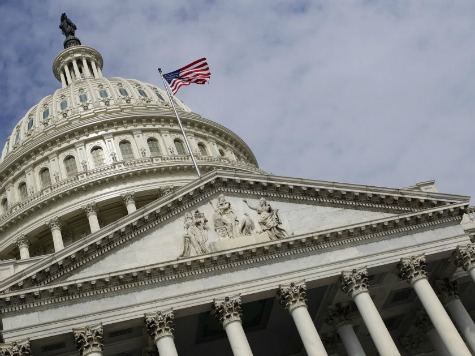
A fine example of a place where congressing takes place. A place where good governing goes to die.

A fine example of a place where congressing takes place. A place where good governing goes to die.

Congress, n. A body of men and women who meet to repeal laws, generally at the behest of a corporation. This is now true of both the federal Congress and the state Congresses throughout the U.S.

Lobbyist, n. Paid influence peddler, bag man for the corporation, general thief in the night whose sole purpose on behalf of corporations is to see that Congress understands which laws are to be repealed or weakened, and how this should be done, particularly since too many lobbyists are former elected officials. Lobbyists can promote on behalf of other entities and not only corporations, but the goal is generally the same.

Tea Party, n. Cult subset of the GOP, and thus a subset of Congress. Money fueled by extreme right wing corporations and billionaires. Known for lack of ability to get what it wants, so it succeeds at punishing everybody, especially the GOP, of which it is supposedly part. Claims to be for personal responsibility, except when taking responsibility for its actions. Then it blames the media and the Washington establishment.
[Editor’s note: lobbyist and Tea Party were not terms in use when The Devil’s Dictionary was created. This entry was originally listed in 2012, but is updated to include the Tea Party. ]

Final word:
“It could probably be shown by facts and figures that there is no distinctly native American criminal class except Congress.” –MARK TWAIN

Leave a comment

Filed under Devil's Dictionary