“Why don’t we have pet names for each other?” Zoey asked.
The blathering idiot’s on again, off again girl friend appeared very concerned with the answer to this question. Unfortunately, he did not have one: answer or pet name. He did know that Valentine’s Day was coming, and being short of cash, he proposed this idea: “What if we give each other pet names for Valentine’s Day?”
Zoey nodded, then added, “But I think we should make it a little more sporting. We each come up with a pet name for the other person and whoever comes up with the best one, gets to pick his or her own pet name, which the other one has to use in public.”
“No matter what?” he asked.
“No matter what.”
The blathering idiot felt acid pour into his stomach and forgot to ask who would be the judge.
It was 48 hours to Valentine’s Day and the blathering idiot had no idea how to begin. Where did people get “pet names” anyway? Didn’t they just make them up?
The blathering idiot tried making up a pet name. He filled up pages and pages of names he scratched down and then scratched out. But the ones he liked best: indigo eyes and violet lips would have forced him to get a new girl friend and he didn’t think that’s what Valentine’s Day was about.
Terms of endearment
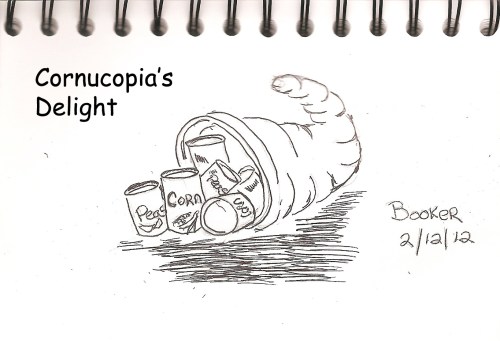
He pulled a dictionary off the library reference shelf, and frantically rifled through it, scanning and flipping pages as fast as he could. It was less than a day to V-Day and he felt the acid in his stomach was about to eat through his brain. Somehow, cornucopia’s delight, while different, was a little hard to say regularly.
Xenia, Zoey’s daughter, was at the library, and seeing the blathering idiot in such a lather, she took pity on him. She walked up to him and told she would give him the same list she had given her mother, a list she had printed off the Internet.
The list was in three columns, the first column with the names; the second column saying if was a female “term of endearment,” a male one, or both; the third column was for comment and usually had the word “caution” or words “explicitly suggestive” beside the terms that could be a problem. There were seven pages of these terms. The blathering idiot had no idea there were so many pet names (terms of endearment).
He immediately eliminated the terms cuddly wuddly, cutesy chick, cutesy pie, cutie pie (Did there really have to be two such ugly terms so closely related?), and cutie patootie. Anything that sounded like it might even remotely be referring to a body part would get him trouble.
He also eliminated sugar plum, sugar pie (What is it with pie?) sugar lips, sugar britches, sugar bun, and sugar booger because they all mentioned sugar, and Zoey had been complaining lately of being fat. Plus, to the blathering idiot, there was no way to make booger sound good.
Anything with baby in the phrase was also eliminated because she sometimes referred to Xenia as “her little baby,” which irritated Xenia no end. Of course, those terms with baby in them were the first ones Xenia suggested.
The blathering idiot also eliminated terms with flowers in them, especially buttercup, since it had both butter and was a flower. Zoey already had Xenia, and that was the only flower name she wanted in her life, unless they came in a bouquet.
The night before he was to meet with Zoey to decide who had the better “pet name,” the blathering idiot couldn’t sleep. He walked around his house saying all sorts of names out loud.
“Cherub?”
No. He wasn’t sure what that was, which probably meant he’d be in for it even before he got in to it.
“Bunny?”
No.
“Honey bunny?”
Definitely not.
“Love muffin?”
While he would love a muffin right about now, it being one of his favorite foods, it was still a food, and she knew muffins were one of his favorite foods, so he knew she’d be wondering if he was seeing her or a pumpkin chocolate chip muffin every time he said it. And truth be told, it was sometimes easier to picture himself with a muffin than with her.
Several hours later, in the wee hours of the morning, his voice hoarse and his thoughts a watercolor blur, he collapsed into a chair, the terms of endearment on the desk table beside him.
The next evening, dressed in a shirt, tie, and dress pants, he met Zoey at the appointed time in the appointed restaurant.
He wasn’t quite sure who should speak first, and he guessed neither did she.
Finally, she said, “Who should go first?”
The blathering idiot quickly took a sip of water, but then decided to get it over with. He first started off explaining everything he had gone through to get to his conclusion, but long before he was near his conclusion, Zoey was drumming her fingers on the table.
Finally, she said, “What did you decide?”
The blathering idiot quickly took another sip of water.
Unable to think of anything – he’d even left the list at home – he blurted out the first thing that came to mind: “Cornucopia’s delight.”
Except it didn’t come out quite that way. Instead it came out “Corn and peas deli.”
Stunned for a moment, Zoey then laughed and laughed and laughed, but in short order told him that if he didn’t take their relationship any more seriously than that, she never wanted to see him again.
Just then a tray of muffins came by the table, and the blathering idiot decided he’d think about those for a while.




 Booker's Blog
Wealthy, motivated by greed, are more likely to cheat, study finds
People of higher status are more prone to cheating, taking candy from children and failing to wait their turn at four-way stops, a UC Berkeley experiment finds.
http://www.latimes.com/news/science/la-sci-0228-greed-20120228,0,5965885.story?track=icymi
By Eryn Brown, Los Angeles Times
7:07 PM PST, February 27, 2012
The rich really are different from the rest of us, scientists have found — they are more apt to commit unethical acts because they are more motivated by greed.
People driving expensive cars were more likely than other motorists to cut off drivers and pedestrians at a four-way-stop intersection in the San Francisco Bay Area, UC Berkeley researchers observed. Those findings led to a series of experiments that revealed that people of higher socioeconomic status were also more likely to cheat to win a prize, take candy from children and say they would pocket extra change handed to them in error rather than give it back.
Because rich people have more financial resources, they’re less dependent on social bonds for survival, the Berkeley researchers reported Monday in Proceedings of the National Academy of Sciences. As a result, their self-interest reigns and they have fewer qualms about breaking the rules.
“If you occupy a more insular world, you’re less likely to be sensitive to the needs of others,” said study lead author Paul Piff, who is studying for a doctorate in psychology.
But before those in the so-called 99% start feeling ethically superior, consider this: Piff and his colleagues also discovered that anyone’s ethical standards could be prone to slip if they suddenly won the lottery and joined the top 1%.
“There is a strong notion that when people don’t have much, they’re really looking out for themselves and they might act unethically,” said Scott Wiltermuth, who researches social status at USC’s Marshall School of Business and wasn’t involved in the study. “But actually, it’s the upper-class people that are less likely to see that people around them need help — and therefore act unethically.”
In earlier studies, Piff documented that wealthy people were less likely to act generously than relatively impoverished people. With this research, he hoped to find out whether wealthy people would also prioritize self-interest if it meant breaking the rules.
The driving experiments offered a way to test the hypothesis “naturalistically,” he said. Trained observers hid near a downtown Berkeley intersection and noted the makes, model years and conditions of bypassing cars. Then they recorded whether drivers waited their turn.
It turned out that people behind the wheels of the priciest cars were four times as likely as drivers of the least expensive cars to enter the intersection when they didn’t have the right of way. The discrepancy was even greater when it came to a pedestrian trying to exercise a right of way.
There is a significant correlation between the price of a car and the social class of its driver, Piff said. Still, how fancy a car looks isn’t a perfect indicator of wealth.
So back in the laboratory, Piff and his colleagues conducted five more tests to measure unethical behavior — and to connect that behavior to underlying attitudes toward greed.
For instance, the team used a standard questionnaire to get college students to assess their own socioeconomic status and asked how likely subjects were to behave unethically in eight different scenarios.
In one of the quandaries, students were asked to imagine that they bought coffee and a muffin with a $10 bill but were handed change for a $20. Would they keep the money?
In another hypothetical scenario, students realized their professor made a mistake in grading an exam and gave them an A instead of the B they deserved. Would they ask for a grade change?
The patterns from the road held true in the lab — those most willing to engage in unethical behavior were the ones with the highest social status.
One possible explanation was that wealthy people are simply more willing to acknowledge their selfish side. But that wasn’t the issue here. When test subjects of any status were asked to imagine themselves at a high social rank, they helped themselves to more candies from a jar they were told was meant for children in another lab.
Another experiment recruited people from Craigslist to play a “game of chance” that the researchers had rigged. People who reported higher social class were more likely to have favorable attitudes toward greed — and were more likely to cheat at the game.
“The patterns were just so consistent,” Piff said. “It was very, very compelling.”
Piff, who is writing a paper about attitudes toward the Occupy movement, said that his team had been accused of waging class warfare from time to time.
“Berkeley has a certain reputation, so yeah, we get that,” he said.
But rather than vilify the wealthy, Piff said, he hopes his work leads to policies that help bridge the gap between the haves and have-nots.
Acts as simple as watching a movie about childhood poverty seem to encourage people of all classes to help others in need, he said.
eryn.brown@latimes.com
Copyright © 2012, Los Angeles Times
==========================================
Conclusions:
And these are my own.
1) I particularly like the comment about the wealthy being more likely to take candy meant for a kid. The cartoons and comedies I saw as a kid showing just this sort of act weren’t that far off target.
2) With enough wealth, as the article states, we could be just like most of the wealthy in the study: more unethical than we are.
3) Seems to me the beginnings of a good case for some sort of — dare I say it — wealth redistribution. Seems it might just be good for a democratic republic like ours. Do it until we at least get the candy back, and maybe a little while longer.
4) Maybe the Occupy Wall Street people are on to something.
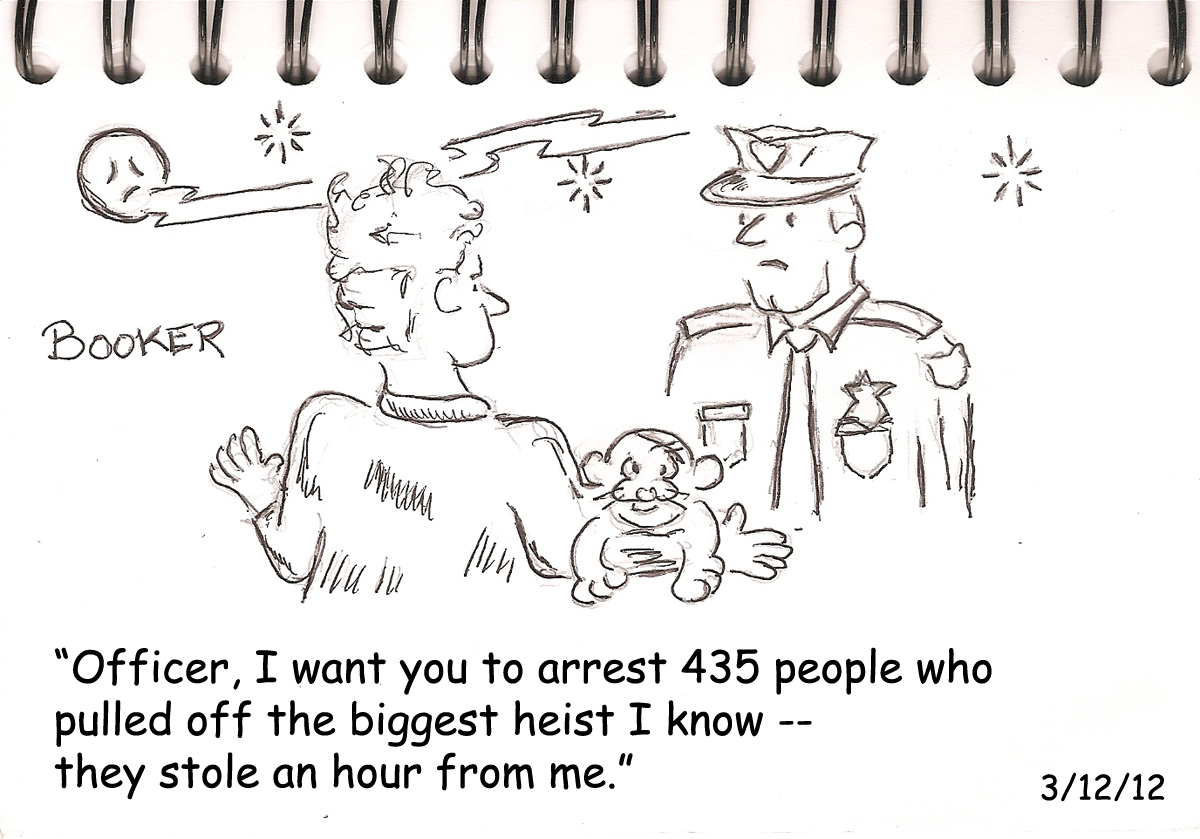
5) Cartoon commentary:
The emptiness you feel may be real.
Share this:
2 Comments
Filed under Cartoon, Commentary, L.A. Times, Random thought, redistribution, wealth
Tagged as cartoon, cheating, commentary, L.A. Times, marshall school, Occupy Wall Street, redistribution, social bonds, uc berkeley researchers, unethical acts, wealth