Category Archives: books

“Will I be burnt next?” – Into the River author Ted Dawe on book banning

Award-winning book banned in New Zealand. First time in 22 years.

by Simon Collins

Source: http://www.nzherald.co.nz/entertainment/news/article.cfm?c_id=1501119&objectid=11509128

The author of the first book to be banned in New Zealand for at least 22 years is asking: “Will I be burnt next?”

Ted Dawe, 64, the head of studies at Taylors College for international students in Auckland, is the unlikely subject of the first interim restriction order on a book under the Films, Videos and Publications Classification Act 1993.

His award-winning book for teenagers, Into The River, has been banned from sale or supply under the order issued by the president of the Film and Literature Board of Review, Dr Don Mathieson, QC.

The order took effect when it was issued on September 3 and applies until the full board meets to decide on a permanent classification for the book. Dr Mathieson said that would be as soon as possible and “may very well be at the end of this month”.

In the meantime, media law expert Professor Ursula Cheer has said it was illegal to supply the book even to a friend.

“Having it for your own personal use is okay. Passing it around to your friends is not,” she said.

Mr Dawe said he was “blindsided” by the ban, which was sought by lobby group Family First after deputy chief censor Nic McCully removed a previous R14 restriction on the book on August 14, making it totally unrestricted.

“It’s extraordinary,” Mr Dawe said. “I’ve had quite a few emails from people who share that sense of outrage. Do we live in a country where books get banned? I’ll get burnt next.”

He said Family First director Bob McCoskrie and Dr Mathieson, who wrote a dissenting view advocating an R18 restriction when the majority of the board rated the book R14 in 2013, were overstepping the rules of a democratic society.

“Those two individuals are united in their determination to establish this as a line that will not be crossed. I feel they have wildly overstepped the whole mechanism of looking at art and making judgments on it,” he said.

“New Zealand has taken a giant step towards that sort of regulatory moralising that I think most people felt we had left far in our past.”

He said it was not easy to write a book that teenagers would want to read, or to get it published.

“People involved with teaching boys, especially English teachers, know how important books like this are because they speak to boys about the things that other boys’ books don’t have the firepower or the vitality to do effectively,” he said.

“The book was never about sex and drugs, it was always about bullying people and how that damages people for the rest of their lives. That is really the underlying theme, everything else is just the trappings that go along with that.”

Ms McCully’s decision last month quoted another writer for teenagers Bernard Beckett as saying that sex, violence and bad language were common in books that were taught in schools such as his own 2014 novel Home Boys, which “includes a boy showing his friend how he masturbates, and ends with an explicit sex scene”.

“Thinking back to the classic school texts, Catcher in the Rye started it all,” he said. “A Clockwork Orange is as brutal as they come, and is frequently taught in senior school.”

Libraries Association director Joanna Matthew said Auckland Libraries submitted a British graphic novel Lost Girls to the censor this year because it included images of sexual activity by children. The censor rated it R18.

But she said libraries generally supported freedom of speech and saw the ban on Into The River as “a tragedy”.

“If we censor literature that talks frankly about some of these issues, then I think we run the risk of burying them,” she said.

“We would be much more effective as a society if we worked to counter the problems that the book articulates rather than trying to restrict the book.”

The NZ Booksellers Association has placed a notice on its website warning bookshops that they face fines of up to $3000 for an individual or $10,000 for a business if they supply the book.

However the book is still on sale on Amazon at US$24.99 in paperback or US$9.99 on Kindle.

Source: http://www.nzherald.co.nz/entertainment/news/article.cfm?c_id=1501119&objectid=11509128

Leave a comment

Filed under 2015, book banning, books

Rising to the Challenge: How The Book Internet Delivered Books to Teens

by Kelly Jensen

Source: http://bookriot.com/2015/09/04/rising-challenge-book-internet-delivered-books-teens/

Earlier this summer, we talked about a book challenge that took place at West Ashley High School in Charleston, South Carolina. Though it wasn’t the first nor will it be the last book challenge we talk about here, this one hit me in a way that others I’ve read about or experienced hadn’t: Some Girls Are by Courtney Summers is a book about bullying, about girl-on-girl violence, and about sexual violence. It’s the kind of book that teens — especially teen girls — would benefit from picking up, reading, and more, talking about during their first classes in their first year in high school. The book was not an assigned title, but rather, it was one of the choices the teens could pick to read. No one forced them to read it. Leila’s post above, as well as this piece from the National Coalition Against Censorship, break down the pieces of how one upset parent forced the hand of the school to ignore their own challenge policy and remove the title from the list.

I’m a former teen librarian, and over the course of my career, I had two parents bring issues to me with materials available in the library. In one instance, a parent was upset that her 12-year-old was listening to a book where the main character’s father was a playboy father and called it completely and utterly inappropriate for her child. In response, I wrote that parent a letter and agreed with her: perhaps it was inappropriate for her child. But my responsibility as a teen librarian is to serve the diverse array of readers using the public collection, not to parent her child. I would be doing nothing about the book.

In the second instance, an award-winning and well-revered graphic novel was returned with a letter from a parent to my library director. This parent felt that the book’s manner of referencing a character’s erection was completely inappropriate for a fourth grader. Because this letter left me speechless, I kept a copy of it. Here it is:

I recently was alerted to a book by my 10-year-old daughter that is extremely inappropriate for the target age it was published for.

The first 1/4 or so of the book makes continual reference to the young superhero’s public humiliation via an erection that showed through his tights, as a result of his attraction to a girl.

It’s not just a mention — it’s a glorification of it over and over.

I can’t imagine that this has a place in the children’s section, or that young adults would be interested as the cover seems juvenile.

Please consider discarding this book permanently — I’m all for honesty and kids have info about sexuality — but in a responsible manner. This is not it! Thanks so much for your attention.

Copies of the banned book.

Copies of the banned book.

The juvenile cover of the book was because it’s a juvenile book. The publisher’s recommended age range for the book is 8 and older, thus it was shelved in the juvenile section. Please note the language of the letter: the parent requested the book be discarded permanently because her 10 year old was introduced to what happens when someone’s body does something it naturally does in an age appropriate manner.

My boss, rather than having my back on this, suggested I listen to the letter and pull the book from shelves all together. I told her she was wrong, and I put the book back into the juvenile section.

It is not, nor will it ever be, one parent’s duty to parent for the entirety of a group of children. Their job is to watch their child and their child alone. In the instance of Some Girls Are, one parent managed to get a book pulled as an option from a list because she felt it was “smut.” Where it would make sense to tell her child to instead read a different book, she could find no peace in that. She wanted this book removed as an option for all readers.

I’ve been out of libraries now for over a year, but I remain as dedicated as ever to teenagers and their rights. They are already subject to so much contempt culturally, and in all of my experiences, the bulk of teenagers are amazing human beings. They’re wild, awkward, funny, and even when it doesn’t seem to be the case, they really are interested in earning your adult approval. Teens face enough barriers every day, and to have a book that so carefully explores these barriers and so thoughtfully says I see you and I recognize how hard it is to be you, pulled from their hands — I fumbled mentally for what I could do to make some kind of difference for these kids. I’m privileged to have a platform here on Book Riot, as well as on my personal blog and Twitter, and because I’ve been outspoken and passionate about teens, libraries, and intellectual freedom, I had an idea. I could send down a box of 15 or 20 copies of the book for some of the kids who wanted to get the book to pick up a copy for free to keep.

As my gears began turning, I thought about the public library and wondered if I knew someone down there. Andria Amaral’s name stood out in my head after what she and her library said and did following the tragic loss of their coworker Cynthia Graham Hurd in the Charleston shooting.

I picked up the phone, called her, and asked if she’d be up for trying something out. Without hesitation, Andria was in.

On July 30, I put out a call to my readers at STACKED, asking if they’d be willing to donate a copy or two of the book. The book was available for $1 at Book Outlet, and I said I’d be happy to send any amount of books down there on my own dollar. Andria would receive them all, then she’d distribute to the teens.

The response was phenomenal:

Books began rolling into my house by the box. I took daily trips to the post office, where they tossed my mail into a laundry-style cart and rolled it out to the loading deck for me to pop into my car.

Over 830 copies of Some Girls Are (which is also part of a bind-up called What Goes Around, thus explaining the two different titles here) piled up in my guest bedroom. I suddenly realized that my ability to pay shipping for the books may be out of reach.

So I put out another call, asking if anyone would be interested in helping with shipping costs. I could box them, tape them up, address them, and cover a chunk of mailing costs.

Over $600 poured into my Paypal account from those who donated anything they could to help the cause.

The rest of the article: http://bookriot.com/2015/09/04/rising-challenge-book-internet-delivered-books-teens/

1 Comment

Filed under 2015, books

12 underrated Canadian novels you need to read

With so many amazing books being published every year, some don’t get the attention they deserve. Here are 12 great Canadian novels we think deserve another look.

Source: http://www.cbc.ca/books/2015/08/12-underrated-canadian-novels-you-need-to-read.html

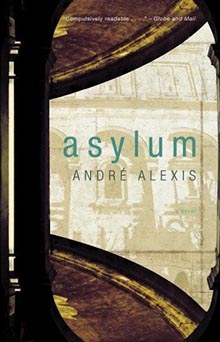
Asylum

Asylum

From the publisher: Set in Ottawa during the Mulroney years, Asylum is André Alexis’s sweeping, edged-in-satire, yet deeply serious tale of intertwined lives and fortunes, of politics and vain ambition, of the building of a magnificent prison, of human fallibility, of the search for refuge, of the impossibility of love, and of finding home.

From the book: Little had changed and yet everything had changed. On this, the anniversary of his attempted suicide, Walter Barnes sat in one of the two chairs he now owned, reading one of his two books. Of the two, a Bible and the Arden King Lear, he had chosen the Bible, not for any consciously spiritual reason but rather because he found it beautiful and amusing, in particular the Pentateuch, of which he was reading Leviticus.He was not aware that a year had passed since he’d first tried to kill himself. If he had been, he would not have known whether to rejoice or mourn; though, in any case, he might well have chosen to mark the event in this way: reading, at home.

From Asylum by André Alexis ©2009. Published by Emblem Editions.

***

Crackpot

Crackpot

From the publisher: Hoda, the protagonist of Crackpot, is one of the most captivating characters in Canadian fiction. Graduating from a tumultuous childhood to a life of prostitution, she becomes a legend in her neighbourhood, a canny and ingenious woman, generous, intuitive, and exuding a wholesome lust for life. Resonant with myth and superstition, this radiant novel is a joyous celebration of life and the mystery that is at the heart of all experience.

From the book: In the daytime her frail and ever-so-slightly humpbacked mother, or so they described her to blind Danile before they rushed them off to be married, used to take Hoda along with her to the houses where she cleaned. And partly to keep her quiet, and partly because of an ever-present fear, for she felt that she would never have another child, Rahel carried always with her, in a large, cotton kerchief, tied into a peasant-style sack, a magically endless supply of food. All day long, at the least sign of disquiet, she fed the child, for Hoda even then was big-voiced and forward, and sometimes said naughty things to people. Rather than risk having an employer forbid her the privilege of bringing the little girl to work, Rahel forestalled trouble. Things can’t go in and out of the same little mouth simultaneously.

From Crackpot by Adele Wiseman ©1974. Published by New Canadian Library.

For the other ten: http://www.cbc.ca/books/2015/08/12-underrated-canadian-novels-you-need-to-read.html

[Editor’s note: Thank you, Ashlie, for sending the link.]

Leave a comment

Filed under 2015, books

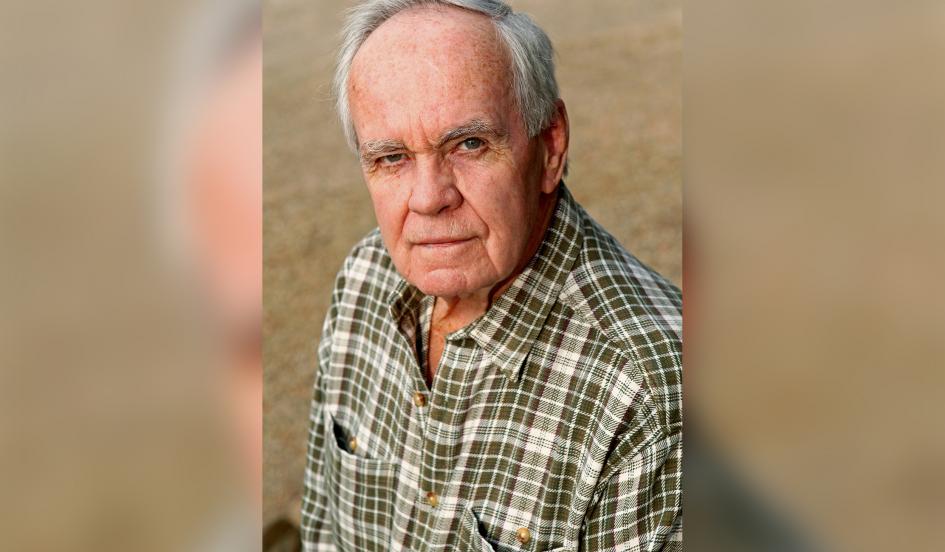
New Cormac McCarthy Book, “The Passenger,” Unveiled

Thirty years in the making. Scheduled for release in 2016.

by Jack Martinez

Source: http://www.newsweek.com/cormac-mccarthy-new-book-363027#.Vc-Q6I8RjpQ.twitter

Cormac McCarthy

Cormac McCarthy

After incubating for some 30 years, Cormac McCarthy’s next novel just made a dramatic first entrance onto the public stage. Passages from the much-anticipated book, called The Passenger, were read as part of a multimedia event staged by the Lannan Foundation in Santa Fe, New Mexico. The reading is the first public confirmation of the novel and its title, long the subject of rumors in the literary world.

The occasion marks nearly 50 years since the publication of McCarthy’s The Orchard Keeper, which won the PEN/Faulkner prize for best debut novel in 1966.

While academics and critics have long praised his work, the legendary author keeps a low profile, spending most of his time at a science and mathematics think tank in New Mexico, the Santa Fe Institute (SFI), where he is a trustee. Organizers at SFI confirmed to Newsweek that the novel will be released in 2016, though McCarthy’s agent and publishers declined to comment on the status of the book.

Prior to the Lannan Foundation event on August 5, details about the book’s eventual publication were hard to come by. Now, The Passenger appears to be approaching.

That alone is enough to excite McCarthy’s substantial following. Steven Frye, president of the Cormac McCarthy Society, is more than a little biased when it comes to ranking authors. But there are plenty who share his opinion when he says: “I would rate him No. 1” among contemporary authors. “It’s bold to say that we’ll be reading him in 500 years, the way we read Shakespeare…. But if we’re still reading novels, then I think it will be the case.”

Given the author’s history when it comes to public appearances, it was a surprise to members of the Society (which has no affiliation with the author) when the event was announced on the Santa Fe Institute’s web site.

Read more at: http://www.newsweek.com/cormac-mccarthy-new-book-363027#.Vc-Q6I8RjpQ.twitter

Leave a comment

Filed under 2015, authors, books

The best recent science fiction – review roundup

Eric Brown on Chris Beckett’s Mother of Eden; Becky Chambers’s The Long Way to a Small, Angry Planet; Stephen Palmer’s Beautiful Intelligence; Ian Sales’s All That Outer Space Allows; SL Grey’s Under Ground; Alex Lamb’s Roboteer

by Eric Brown

Source: http://www.theguardian.com/books/2015/jul/31/science-fiction-roundup?CMP=twt_books*gdnbooks

Chris Beckett won the 2013 Arthur C Clarke award for his novel Dark Eden, about the survival and adaptation of human colonists on a world without light. The sequel, Mother of Eden (Corvus, £17.99), begins generations later, charting the growth and political divisions between the colonists. It follows the rise of Starlight Brooking, a humble fishergirl, and her quest to bring equality and revolution to Edenheart, a settlement ruled by a conservative patriarchy. Beckett doesn’t do traditional heroes and villains: Starlight Brooking is contradictory and flawed, at once brave and vulnerable, and likewise his villains are portrayed with sympathy and understanding. He also eschews easy answers and formulaic plotting; where a hundred other writers would have Starlight triumph over her enemies, her victories are on a more profound and personal level, and not without tragedy. Mother of Eden is a masterpiece.

When the captain of the Wayfarer starship is offered a job travelling to a faraway planet that could make him and his crew financially secure, he agrees despite the dangers involved.Such a precis might suggest that Becky Chambers’s first novel, The Long Way to a Small, Angry Planet (Hodder & Stoughton, £18.99), originally self‑published and shortlisted for the Kitschies awards, is an action-adventure space opera. But this is a slow, discursive novel of character as the motivations of the diverse and likable crew, comprising humans and aliens, are laid bare for the reader’s delight. It is a quietly profound, humane tour de force that tackles politics and gender issues with refreshing optimism.

Stephen Palmer’s marvellous ninth novel, Beautiful Intelligence (Infinity Plus, £8.99), posits a beleaguered 22nd century in which oil has run out, water is scarce, and in a neat inversion of the contemporary world order, Europe is an economic ruin and Africa the promised land. Two techno wizards abscond from a Japanese laboratory, each attempting to develop artificial intelligence according to their own philosophies – one based on the social intelligence theory of consciousness, the other on a linguistic approach – but billionaire tech-mogul Aritomo Ichikawa will stop at nothing to get them back. What follows is a thrilling chase across a ravaged Europe, a burgeoning North Africa and balkanised US, interleaving excellent action set-pieces with fascinating philosophising on the nature of consciousness. A gripping read to the poignant last line.

More at: http://www.theguardian.com/books/2015/jul/31/science-fiction-roundup?CMP=twt_books*gdnbooks

Leave a comment

Filed under 2015, book review, books

What Not to Say to Bookstore Employees

Source: http://bookriot.com/2015/07/03/what-not-to-say-to-bookstore-employees-2/

Avoid bookstore faux pas like the following while speaking to the overworked bookstore employees with their smocks and helpful head nods:

  1. How much does this cost on Amazon?
  2. How can you work here when Amazon Prime exists? Are you on Amazon Prime?
  3. I’m a writer and I don’t want to waste my time, so which of these should I actually read?
  4. I only read signed copies. Where is the signed section?
  5. I don’t need help. I just come by the bookstore to hit on the smart people buying Ulysses for light, fun reading.
  6. I don’t need help. I just want to write down all of Giada’s recipes.
  7. I don’t need help. I’m just figuring out where my book will be shelved once I finish it, get an agent, sell it, and get it stocked here, in this location.
  8. I don’t need help. I’m just writing notes on page fifteen of every book. I’m creating a treasure hunt for the bookish.
  9. Which of these is going to be a movie? I want to judge the future movie by the past cover.
  10. How many teens die in this one? I only respond to mass numbers of teen deaths.
  11. If I just spilled my coffee on the hardcover book of swimming dogs, should I tell you about it?

Rest of the list at: http://bookriot.com/2015/07/03/what-not-to-say-to-bookstore-employees-2/

Leave a comment

Filed under 2015, books, bookstore

The Millions: A Year in Reading: Tom Nissley

The Millions : A Year in Reading: Tom Nissley.

I did something in 2014 that would throw a wrench into anyone’s reading: I bought a bookstore. Selling books, as I wasn’t surprised to find, doesn’t leave much time for reading them. Also, it meant I became — not for the first time, but never so publicly, on such a daily basis — a professional reader, as many of us are lucky to end up being in one way or another, as teachers or editors or researchers or some other line of work that corrals your attention from the luxury of polymorphous curiosity into something more traditionally productive, in my case trying to keep up with some of the new releases I might be able to share with my customers.

So, early in the year, my reading shifted back from personal to pro, but there were good books on both sides of the divide. And aside from a few favorites (see below), what I find myself remembering as vivid reading experiences are not consistently excellent books like Marilynne Robinson’s Lila, Ben Lerner’s 10:04, David Markson’s Reader’s Block, Vera Brittain’s Testament of Youth, Lawrence Wright’s Thirteen Days in September, Tove Jansson’s The Summer Book, Jeff VanderMeer’s Annihilation, Edward Hirsch’s Gabriel, Brendan Koerner’s The Skies Belong to Us, and William Gibson’s The Peripheral — all very good books I’d happily put in your hands if you walked into my store — but the more jagged-edged books I might hand you with a caveat.

I remember, with delight, the first half of Anthony Trollope’s The Eustace Diamonds — “Finally reading Trollope,” I told everyone, or, rather, tweeted. “What took me so long to sample this deliciousness?” — before his stamina started to outlast mine. I was delighted too with the first half of Joseph O’Neill’s The Dog and the voice he captured, as companionable as Netherland’s but more chilling (like P.G. Wodehouse telling a J.G. Ballard story), even if for me that voice never grew into a full book. I admired and enjoyed Farther and Wilder, Blake Bailey’s biography of Charles Jackson, but I wondered if his subject was worth his talents until the final third — usually the least interesting in any biography — when Jackson’s accumulated troubles, and his belated reckoning with them, made his life profoundly moving. And though Joel Selvin’s Here Comes the Night had for me a hole at its center == the interior life of its ostensible subject, unsung record man Bert Berns, remained a cipher — I loved Selvin’s hepcat riffs on Berns and his fellow “centurions of pop.”

The rest of the article at: http://www.themillions.com/2014/12/a-year-in-reading-tom-nissley.html

1 Comment

Filed under books

#giveabook

#giveabook

#giveabook

The New York City book publisher is preparing for a holiday social media campaign that aims at encouraging people to offer books to friends as holiday gifts while also helping children’s rights organization Save the Children. – See more at: http://www.wow-dude.net/article/242/Penguin-Random-House-to-donate-a-book-every-time-some-uses-the-GiveaBook-hashtag.html#sthash.rZmlm8qL.dpuf

The campaign kicks off on November 29 and every time someone uses the #giveabook hashtag on Facebook or Twitter, Penguin Random House donates a book to Save the Children. The campaign runs through December 24 and the book publisher will donate up to 25,000 books.

But that’s not all, because the #giveabook campaign also has a video challenge part, where people name a book they’re giving to a friend and reasons to why they’re doing it. Similar to the extremely successful #icebucketchallenge campaign, people are encouraged to “challenge” three of their friends and then post the video online using the #giveabook hashtag. Successful authors such as National Book Award winners Phil Klay and Jacqueline Woodson or Nick Offermanand Mike Tyson have already created videos where they offer books and nominate other people. The videos plus more information is available on the campaign’s official Twitter account and Facebook page.

Another cool fact is that the day when the #giveabook campaign starts, November 29, is also Small Business Saturday, the shopping holiday that promotes and supports American small and local businesses. On this occasion, Penguin Random House encourages people to support independent bookstores by shopping from then and not from the big retailers or online shops. – See more at: http://www.wow-dude.net/article/242/Penguin-Random-House-to-donate-a-book-every-time-some-uses-the-GiveaBook-hashtag.html#sthash.rZmlm8qL.dpuf

[Editor’s note: I have already given three books to two people, though I did it before I knew about his. If you read this, you know who you are. I won’t spoil the surprise by saying what the books are. But go ahead, Mark and John, give books to somebody else.]

1 Comment

Filed under books

Are you a book hoarder? There’s a word for that. – LA Times

Are you a book hoarder? There's a word for that. – LA Times.

How many books is too many books? What makes you a book hoarder? What do you do when you have too many?

In Japanese, there’s a word for it: tsundoku. It’s a noun that describes a person who buys books and doesn’t read them, and then lets them pile up on the floor, on shelves, and assorted pieces of furniture.

Read the rest of the article at: http://www.latimes.com/books/jacketcopy/la-et-jc-book-hoarding-tsundoku-20140724-story.html

1 Comment

Filed under books

E-book battles: writers pawns and prize

[Editor’s note: while not directly related to the e-book lawsuit, it is related as it pertains to Amazon, probably the biggest seller of books and e-books. As before, to find out more about the e-book lawsuit, click on e-book in the “Filed under” section at the bottom of this blog post. Thanks for stopping by.]

Source: http://www.nytimes.com/2012/04/16/business/media/amazons-e-book-pricing-a-constant-thorn-for-publishers.html?src=recg

April 15, 2012

Daring to Cut Off Amazon

New York Times

By DAVID STREITFELD

TULSA, Okla. — Plenty of people are upset at Amazon these days, but it took a small publishing company whose best-known volume is a toilet-training tome to give the mighty Internet store the boot.

The Educational Development Corporation, saying it was fed up with Amazon’s scorched-earth tactics, announced at the end of February that it would remove all its titles from the retailer’s virtual shelves. That eliminated at a stroke $1.5 million in annual sales, a move that could be a significant hit to the 46-year-old EDC’s bottom line.

“Amazon is squeezing everyone out of business,” said Randall White, EDC’s chief executive. “I don’t like that. They’re a predator. We’re better off without them.”

It is an unequal contest. EDC has 77 employees, no-frill offices on an industrial strip here and a stock-market valuation of $18 million — hardly a threat to Amazon, a Wall Street darling worth $86 billion. But Mr. White’s bold move to take his 1,800 children’s books away from the greatest retailing success of the Internet era is more evidence of the extraordinary tumult within the book world over one simple question: who gets to decide how much a book costs?

The Justice Department last week sued five major publishers and Apple on price-fixing charges, simultaneously settling with three of the houses. The publishers say they were not illegally colluding but simply taking advantage of a new device platform — Apple’s iPad — to sell their e-books in a different way, where they controlled the prices.

The publishers wanted to stop Amazon from using what one of them called “the wretched $9.99 price point,” according to court papers. Selling e-books so cheaply, they feared, would solidify Amazon’s robust grip on the business while simultaneously building a low-price mind-set among consumers that could prove ruinous to other bookstores and the publishers themselves.

EDC does not produce e-books, but saw exactly this happening with its physical inventory. Amazon was buying EDC’s books from a distributor and discounting them to the bone, just as it does with everything it sells. This might have been a boon for readers, but it was creating trouble with other retailers who carry the company’s titles, as well as with EDC’s network of independent sales agents, who market its books from their homes.

“They were becoming showrooms for Amazon,” Mr. White said. “We were shooting ourselves in the foot.”

Amazon is generally reluctant to explain its business practices and declined to comment for this article. But its executives say it is shaking up an antiquated business model by eliminating middlemen and passing the savings on to consumers. Publishers that try to cling to the past, they have said, will die.

The retailer’s growing list of critics, however, argue that Amazon has $48 billion in revenue but hardly any profit, proof that its approach is opportunistic and unsustainable. When traditional publishers, booksellers and wholesalers are destroyed, these opponents say, Amazon will be left with a monopoly that will be detrimental to the larger health of the culture.

In recent months, the dispute over Amazon’s strategy of selling books below cost has boiled over from several directions.

During the holiday season, Amazon encouraged customers to use physical stores as showrooms before ordering more cheaply online, a move that infuriated bookstores in particular. Publishers and distributors say that Amazon, never exactly shy in negotiating terms, has been more assertive in its quest for ever-better deals.

In February, Amazon demanded better margins from the Independent Publishers Group, a Chicago distributor of dozens of small imprints. IPG balked, so Amazon removed nearly 5,000 of the company’s e-books from its site.

“Amazon wants the price of books to be very, very low — lower than the publishing community can support,” said Curt Matthews, IPG’s chief executive. “Making a book is still a craft industry. Books need to be edited, to be publicized. Someone needs to say this is good and this is not. If there is not enough money to support that whole chain, the system will break down.”

Publishers have often been ambivalent about Amazon. On the one hand, it offers an extraordinarily efficient method of distributing their wares. Readers anywhere can easily order the most obscure volume and have it delivered the next day. With e-books, access is even easier, but publishers’ vulnerability is compounded; Amazon controls not just the method of distribution but the actual device the text is consumed on.

“Last year was the best in our 37 years, mainly due to the way Amazon was pushing the books,” said Bryce Milligan of Wings Press in San Antonio, an IPG client. “Then Amazon cut us off because they couldn’t get a better deal. Now our e-books sales are down 50 percent.”

If publishers and wholesalers feel threatened, writers are caught in the middle — both pawns and prize.

Ted McClelland, a writer in Chicago, had two IPG e-books dropped by Amazon. He just got a royalty statement on one of them, “Horseplayers: Life at the Track.” Half of his modest income on the book came from Kindle sales on Amazon.

“I don’t know whether Amazon is being greedy or IPG is being cheap, but I’m caught in the middle,” Mr. McClelland said. “What matters to me is getting my books back on Kindle.”

Here in Tulsa, EDC operates out of offices on the eastern outskirts in a less-than-glamorous district of warehouses and auto supply shops. Like IPG, it is primarily a distributor, selling picture books developed in England by Usborne Books to toy stores and bookshops in the United States. Its publishing line, Kane Miller, produces the popular “Everyone Poops” book and its sequels.

EDC’s so-called consultants — a direct sales force of about 7,000 women — sell to friends and acquaintances as well as their local schools. For a while the party plan was successful. Sales more than doubled from 2000 to 2004.

In recent years, though, the consultants have found it rough going. They would pass around a picture book like “The Noisy Body Book” or “Guess How Much I Miss You,” talking it up, and then the customer would order it online. Sales fell about 20 percent. Frustrated consultants began quitting.

What happened in February to Christy Reed, a sales consultant in Pleasanton, Tex., was becoming all too routine. Her school district decided to order 16 copies of a science encyclopedia and a science dictionary but then completed the deal on Amazon.

“I worked so hard to sell those books,” Mrs. Reed said. “I had to talk to so many different people. Then I lost the sale to a couple of clicks on the computer.”

She acknowledged that the district saved a few dollars but added: “I’m here, in the neighborhood. I went to school here. My kids went to school here. Yes, they got the books for less. But my earnings go back into our community. Amazon’s do not.”

After Mr. White, EDC’s chief, heard about that episode, his exasperation with Amazon peaked. Several times in the past, he had grappled with the retailer. He tried to get it to lower its discount on his books three years ago, but a tentative deal did not stick, he said. He was outraged that the company did not collect sales tax, which had the effect of making its books even cheaper.

Two months ago, he asked his biggest wholesaler, Baker & Taylor, to stop selling all EDC books to Amazon. When Baker & Taylor refused, Mr. White canceled its account. Baker & Taylor declined repeated requests to comment about EDC.

Of EDC’s $26 million in annual revenue, Baker & Taylor was responsible for about 6 percent, most of which was because of Amazon. Mr. White, a trim 70, said that when he made the decision to bail out, his blood pressure soared. But he’s also reveling in the excitement, just a little. He commissioned a drawing of EDC in the role of David taking on the giant Amazon. “I’m Type A,” he said. “I don’t mind a fight.”

Somewhat to Mr. White’s surprise, EDC is doing better without Amazon, at least for the moment. (Some of its books are still available on Amazon from third-party sellers.) Sales in March rose, in part because of new accounts like a toy store in Round Rock, Tex., that placed an initial order for 61 books. And colleagues in the business have been congratulating the publisher, or at least expressing their admiration for Mr. White’s guts.

“I tell them, ‘You never had the chance to make 7,000 women happy in one day,’ ” he said.

Leave a comment

Filed under books, e-book, publishers, publishing