Category Archives: books

Best crime and thrillers of 2019 | Books | The Guardian

Middle-aged women took charge, Jackson Brodie returned and new novels from John le Carré, Tana French and Don Winslow: Laura Wilson picks the best of a bumper year

Source: Best crime and thrillers of 2019 | Books | The Guardian

In 2019 we bid farewell to one of crime fiction’s iconic investigators, Bernie Gunther. His final outing, completed shortly before author Philip Kerr’s untimely death last year, is just as gripping and immersive as its predecessors. Metropolis (Quercus) is set in Berlin in 1928, where the young Gunther finds himself on the trail of a killer of sex workers and a serial murderer who targets disabled war veterans.

This year’s most impressive debuts include the brilliant literary thriller Kill [redacted] by Anthony Good (Atlantic), an inventive exploration of the morality of revenge after a terrorist attack, and Holly Watt’s To the Lions (Raven), the first in a new series featuring investigative reporter Casey Benedict. Others worth seeking out are Kia Abdullah’s thought-provoking legal thriller, Take It Back (HQ); Laura Shepherd-Robinson’s vivid evocation of the slave trade in Georgian England, Blood & Sugar (Mantle); and Scrublands (Wildfire), an accomplished slice of outback noir by Australian journalist Chris Hammer. American Spy (Dialogue) by Lauren Wilkinson is the story of black agent Marie Mitchell, recruited in the 1980s by the CIA as the bait in a honeytrap for the president of Burkina Faso, whose fledgling government the Americans are keen to destabilise.


Established practitioners who go from strength to strength include Mick Herron, whose Slough House series of spy thrillers – the sixth and most recent title is Joe Country (John Murray) – is being televised, with Gary Oldman slated to play the spectacularly repulsive Jackson Lamb. The final thriller in Don Winslow’s Cartel trilogy, The Border (HarperCollins), is social fiction at its finest, showing how Mexican gangsters, enriched by decades of America’s wrong-headed “war on drugs”, are now taking advantage of the opioid crisis. There’s more astute state-of-the-nation commentary, this time on Brexit Britain, from John le Carré in Agent Running in the Field (Viking), and on US race relations in Heaven, My Home (Serpent’s Tail) by Attica Locke. Also on the police procedural front, but in the UK, Jane Casey published her eighth DS Maeve Kerrigan book, Cruel Acts (HarperCollins), and Sarah Hilary’s DI Marnie Rome made her sixth appearance in Never Be Broken (Headline) – two intelligent series whose protagonists have real emotional depth.


Tana French took a break from her superb Dublin Murder Squad series for The Wych Elm (Viking), a compelling examination of the unreliability of memory, the effects of trauma and the relationship between privilege and what we perceive as luck. Other changes of direction include The Chain (Orion), a standalone thriller from Adrian McKinty, author of the Sean Duffy series, which invests a pyramid kidnapping scheme with compellingly appalling plausibility; and The Whisper Man (Michael Joseph), a police procedural with supernatural overtones by Steve Mosby, writing as Alex North. After almost a decade, Kate Atkinson was reunited with her series character Jackson Brodie. In Big Sky (Doubleday) the gruff PI returns to his native Yorkshire and becomes involved in a case of human trafficking and a historic paedophile ring.

Catastrophically dysfunctional friendships are the key ingredient in an increasingly popular domestic noir sub-genre, of which The Hunting Party by Lucy Foley (HarperCollins) is an outstanding example. When a group of thirtysomething chums go on a mini-break to an exclusive hunting lodge in the Scottish Highlands, things soon begin to unravel: everyone, it turns out, has something to hide. Another exceptional read in this vein is Mel McGrath’s The Guilty Party (HQ), in which a group of friends all have reasons for not reporting the rape of a stranger who is later found dead.


Something this reviewer is delighted to see on the rise is what might be described as “hot-flush noir” – put-upon middle-aged women against the world – a hitherto neglected sub-genre that, given the crime-reading demographic, publishers really ought to be encouraging. Two stand-out examples are Helen Fitzgerald’s sublime Worst Case Scenario (Orenda), a foul-mouthed, satirical revenge thriller in which Glasgow probation officer Mary Shields battles career burnout and the menopause, and The Godmother (Old Street) by Hannelore Cayre, translated from French by Stephanie Smee. Winner of both the Grand Prix de Littérature Policière and the European Crime Fiction prize, this witty, acerbic gem is the story of a fiftysomething widowed mother of two who, facing a precarious future, decides to become a drug dealer.

This year saw the 50th anniversary of the Manson murders and books exploring cults included Lisa Jewell’s The Family Upstairs (Century) and Fog Island (HQ) by Scientology survivor Mariette Lindstein, translated from Swedish by Rachel Willson-Broyles.

Lastly, there have been a number of welcome reissues, including Susanna Moore’s erotic classic In the Cut (W&N), a terrifying tale of death and sex first published in 1995, and, from several decades earlier, The Listening Walls and A Stranger in My Grave (both Pushkin Vertigo), by the queen of north American domestic noir, Margaret Millar (1915-1994). It all adds up to a bumper year.
Leave a comment

Filed under 2019, book list, books

Countries that publish the most books

1. China

2. US

3. UK

4. France

5. Germany

6. Brazil

7. Japan

8. Spain

9. Italy

10. South Korea

11. Argentina

12. Netherlands

13. Saudi Arabia

14. Denmark

15. Switzerland

16. Thailand

17. Philippines

18. Sweden

19. Norway

20. Belgium

(IPA)

Leave a comment

Filed under 2019, books

The Ten Best History Books of 2019 | History | Smithsonian

Our favorite titles of the year resurrect forgotten histories and help explain how we got to where we are today

Source: The Ten Best History Books of 2019 | History | Smithsonian

The history books we loved most in 2019 span centuries, nations and wars. From womanhood to nationhood, they challenge the construction of identity and mythology. They tell the stories of celebrity weddings, bootlegging trials, and people, places and things we thought we knew but prove, upon closer inspection, to be far more complex.

The Season: A Social History of the Debutante

When Consuelo Vanderbilt of the wealthy American Vanderbilt family married the Duke of Marlborough in 1895, she was one of the most famous debutantes in the world, at a time when interest in the doings of the rich had never been more scrutinized. Consuelo had spent her whole life training to marry a royal, and the event itself was covered in major newspapers across the globe. In The Season: A Social History of the Debutante, author Kristen Richardson contextualizes Consuelo and her wedding—and those of other famous debutantes, or young women making their societal debut, from the 1600s to today. The book is a centuries-spanning look at how debutantes and their rituals, from the antebellum South to modern-day Russia, have shaped marriage and womanhood in America and abroad.


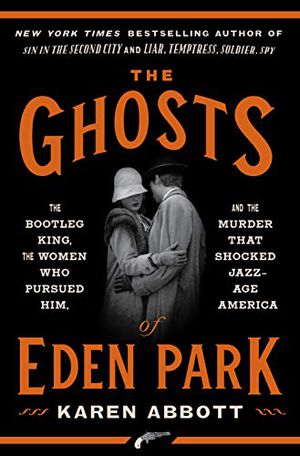
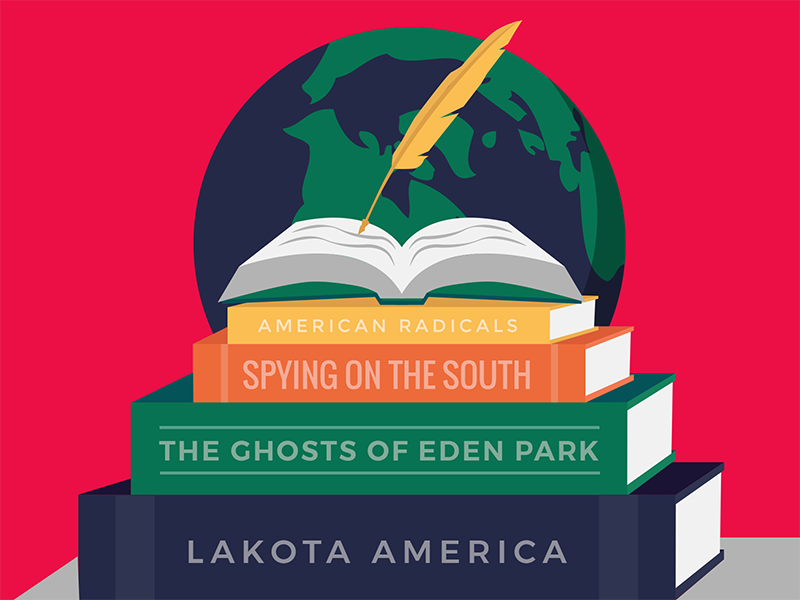
The Ghosts of Eden Park: The Bootleg King, the Women Who Pursued Him, and the Murder That Shocked Jazz-Age America

For a time, George Remus had it all. The most successful bootlegger in America, Cincinnati’s Remus controlled nearly 30 percent of illegal liquor in the United States in the early 1920s. Historian and bestselling author Karen Abbott traces the rise of Remus—he was a pharmacist and a defense attorney—and the inevitable fall as he found himself on trial not just for bootlegging, but for the murder of his own wife. In an interview with Smithsonian, Abbott talked about the connection between Remus and F. Scott Fitzgerald’s Jay Gatsby: “I think Gatsby and Remus both had these longings of belonging to a world that didn’t wholly accept them or fully understand them. Even if Fitzgerald never met Remus, everybody knew who George Remus was by the time Fitzgerald started to draft The Great Gatsby.”


Lakota America: A New History of Indigenous Power

Many Americans know the names of Red Cloud, Sitting Bull and Crazy Horse, key figures in North American Indigenous history. In his new book, Oxford history professor Pekka Hämäläinen (his previous book, The Comanche Empire, won the prestigious Bancroft Prize in 2009) looks at the history of the Lakota Nation as other historians have looked at ancient Rome—a massive (and massively adaptive) empire that shaped the literal landscape of the Western United States as well as the fates of Indigenous groups for centuries.


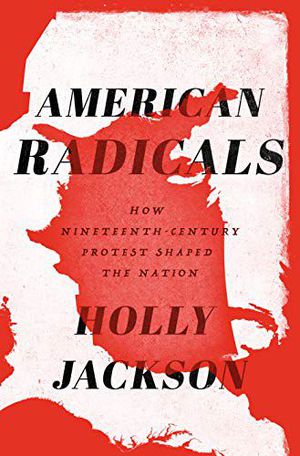
American Radicals: How Nineteenth-Century Protest Shaped the Nation

Civil Rights, free love and anti-war protests have become synonymous with the 1960s, but in American Radicals, Holly Jackson, an associate professor of English at the University of Massachusetts, Boston, traces these movements back a century in a reconsideration of radical protest and social upheaval in the mid-19th century. While some of the names that appear in Jackson’s story, like famed abolitionist William Lloyd Garrison, will be familiar to American history buffs, she also revives forgotten figures like Frances Wright, an heiress whose protests against the institution of marriage inspired Walt Whitman to call her “one of the best [characters] in history, though also one of the least understood.”


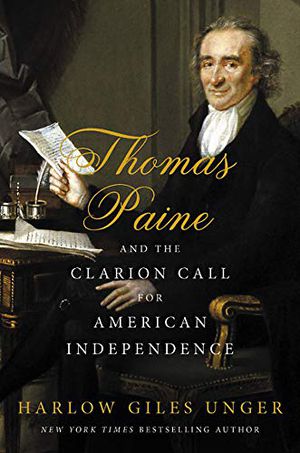
Thomas Paine and the Clarion Call for American Independence

Only six people attended Thomas Paine’s funeral. Once the most famous writer in the American colonies (and, later, the United States of America), the corsetmaker-turned-pamphleteer had been virtually expelled from public life for his radical beliefs and writings, like the ones that suggested a tax on landowners could be used to fund basic income for everyone else. Harlow Giles Unger, a renowned biographer of the Founding Fathers, looks at the Paine we know and the one we don’t, in his telling of the story of a man who pursued Enlightenment ideals even when those ideals ran afoul of what was socially acceptable.


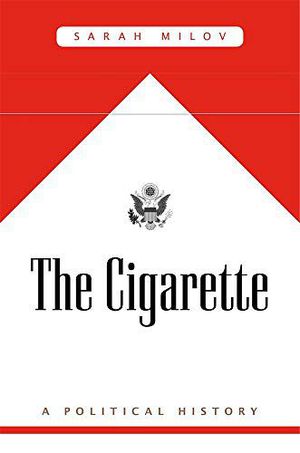
The Cigarette: A Political History

As every day a new story about the dangers of vaping—or the fervent support of vape fans—appears, historian Sarah Milov’s The Cigarette looks at the history of smoking in the United States and reminds us that once upon a time, the government was more concerned with the rights of tobacco companies than the rights of non-smokers. The book deftly connects the rise in organized opponents to smoking to food safety, car safety and other consumer rights movements of the 20th century. Kirkus says Milov “mixes big-picture academic theory with fascinating, specific details to illuminate the rise and fall of tobacco production.”


Policing the Open Road: How Cars Transformed American Freedom

In Policing the Open Road, legal historian Sarah A. Seo argues that while cars (and highways, for that matter) have long been associated with freedom in the eyes of American drivers, their advent and rapid domination of travel is the basis for a radical increase in policing and criminalization. From traffic stops to parking tickets, Seo traces the history of cars alongside the history of crime and discovers that the two are inextricably linked. “At times,” says Hua Hsu in The New Yorker, Seo’s work “feels like an underground history―of closeted gay men testing the limits of privacy; of African-Americans, like Jack Johnson or Martin Luther King, Jr., simply trying to get from one place to another.”


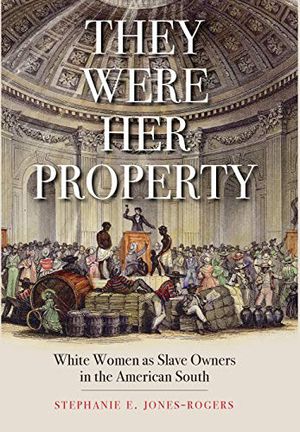
They Were Her Property: White Women as Slave Owners in the American South

Using the oral histories of formerly enslaved people, financial records and property history, Stephanie E. Jones-Rogers, associate professor of history at the University of California, Berkeley, makes a clear case that in the American South, many white women weren’t just complicit in the system of chattel slavery—they actively encouraged and benefited from it. Jones-Rogers’s work dismantles the notion that white women in slaveholding families were silent actors—instead, she argues, they used the institution of slavery to build a specific concept of womanhood that shaped the history of the nation before and after the Civil War.


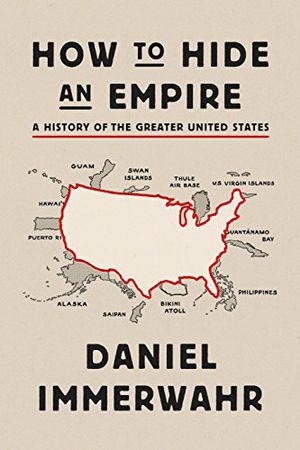
How to Hide an Empire: A History of the Greater United States

In 1856, the United States passed a law that entitled citizens to take possession of any unclaimed island containing guano deposits—guano, of course, being the excrement of bats. Guano is an excellent fertilizer, and over the course of the 20th century, the U.S. claimed dozens of small islands in remote parts of the world, turning them into territories with few rights of their own. The story of guano is one of many that touch upon the empire forged by the U.S. from Puerto Rico to the Philippines. Daniel Immerwahr, an associate professor of history at Northwestern University, tells the often brutal, often tragic stories of these territories in an attempt to make the ‘Greater United States’ truly part of U.S. history.


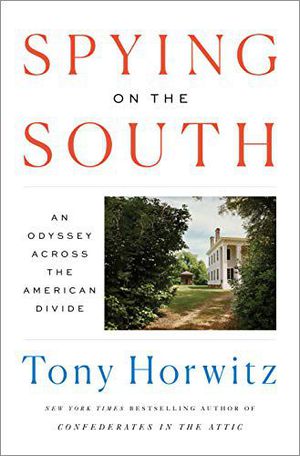
Spying on the South: An Odyssey Across the American Divide

In 1998, Tony Horwitz’s Confederates in the Attic changed the way we talk about the Civil War and the American South by making the point that for many, even 150 years after the war’s end, the conflict continued. In Spying on the South, published after Horwitz’s death this year, the author returned to the Southern states, this time following the trail of the young Frederick Law Olmsted, the landscape architect whose work defined northern cities like New York and Boston. Jill Lepore, writing in the New Yorker, called Horwitz “the rare historian—the only historian I can think of—equally at home in the archive and in an interview, a dedicated scholar, a devoted journalist.”

Leave a comment

Filed under 2019, book list, books

Book Review: “Drama: An Actor’s Education”

Drama: An Actor's Education

Drama: An Actor’s Education by John Lithgow

My rating: 4 of 5 stars


I listened to the author perform this book, and it was a good choice. John Lithgow is fine actor who can, by turns, be serious and funny. And by turns, so is this memoir and hearing a practiced performer read his own interesting and entertaining book as an extra dimension.

This is a book as much about Lithgow’s father as about himself. His father was an actor and theater entrepreneur, though like most entrepreneurs, Lithgow’s father had many downs or wrong turns. Lithgow learned many things from moving from place to place with his peripatetic family: how to be an “actor” to try to fit into his new schools, what it was like to be lonely, the need for approval to the point that you give up maybe too much of yourself, but also discovering his passion for performing, following in his father’s footsteps, and succeeding in many ways that his father did not.

As with most memoirs, it skips over parts of his life, parts, such as his relationship with his older brother, that I wanted to know a little more about. And also, the memoir doesn’t include any experiences involving what many folks may know him best for: the character of Dr. Solomon on Third Rock From the Sun. But even with these omissions, I highly recommend this memoir, and it really deserves 4.5 stars, but I’m not allowed to do half stars. Thank you, Mr. Lithgow for writing this book and for providing the dramatic reading for the audio version.


View all my reviews

Leave a comment

Filed under 2019, book review, books

Why You Should Surround Yourself With More Books Than You’ll Ever Have Time to Read | Inc.com

An overstuffed bookcase (or e-reader) says good things about your mind.

Source: Why You Should Surround Yourself With More Books Than You’ll Ever Have Time to Read | Inc.com

Lifelong learning will help you be happier, earn more, and even stay healthier, experts say. Plus, plenty of the smartest names in business, from Bill Gates to Elon Musk, insist that the best way to get smarter is to read. So what do you do? You go out and buy books, lots of them.

But life is busy, and intentions are one thing, actions another. Soon you find your shelves (or e-reader) overflowing with titles you intend to read one day, or books you flipped through once but then abandoned. Is this a disaster for your project to become a smarter, wiser person?

If you never actually get around to reading any books, then yes. You might want to read up on tricks to squeeze more reading into your hectic life and why it pays to commit a few hours every week to learning. But if it’s simply that your book reading in no way keeps pace with your book buying, I have good news for you (and for me; I definitely fall into this category): Your overstuffed library isn’t a sign of failure or ignorance, it’s a badge of honor.

Why you need an “antilibrary”

That’s the argument author and statistician Nassim Nicholas Taleb makes in his bestseller The Black Swan. Perpetually fascinating blog Brain Pickings dug up and highlighted the section in a particularly lovely post. Taleb kicks off his musings with an anecdote about the legendary library of Italian writer Umberto Eco, which contained a jaw-dropping 30,000 volumes.

Did Eco actually read all those books? Of course not, but that wasn’t the point of surrounding himself with so much potential but as-yet-unrealized knowledge. By providing a constant reminder of all the things he didn’t know, Eco’s library kept him intellectually hungry and perpetually curious. An ever-growing collection of books you haven’t yet read can do the same for you, Taleb writes:

A private library is not an ego-boosting appendage but a research tool. Read books are far less valuable than unread ones. The library should contain as much of what you do not know as your financial means, mortgage rates, and the currently tight real-estate market allows you to put there. You will accumulate more knowledge and more books as you grow older, and the growing number of unread books on the shelves will look at you menacingly. Indeed, the more you know, the larger the rows of unread books. Let us call this collection of unread books an antilibrary.

An antilibrary is a powerful reminder of your limitations — the vast quantity of things you don’t know, half-know, or will one day realize you’re wrong about. By living with that reminder daily you can nudge yourself toward the kind of intellectual humility that improves decision-making and drives learning.

“People don’t walk around with anti-résumés telling you what they have not studied or experienced (it’s the job of their competitors to do that), but it would be nice if they did,” Taleb claims.

Why? Perhaps because it is a well-known psychological fact that it’s the most incompetent who are the most confident of their abilities and the most intelligent who are full of doubt. (Really. It’s called the Dunning-Kruger effect.) It’s equally well established that the more readily you admit you don’t know things, the faster you learn.

So stop beating yourself up for buying too many books or for having a to-read list that you could never get through in three lifetimes. All those books you haven’t read are indeed a sign of your ignorance. But if you know how ignorant you are, you’re way ahead of the vast majority of other people.

Leave a comment

Filed under 2018, books

Garbage Collector Rescues Books From The Trash For Low-Income Kids | The Huffington Post

Source: Garbage Collector Rescues Books From The Trash For Low-Income Kids | The Huffington Post

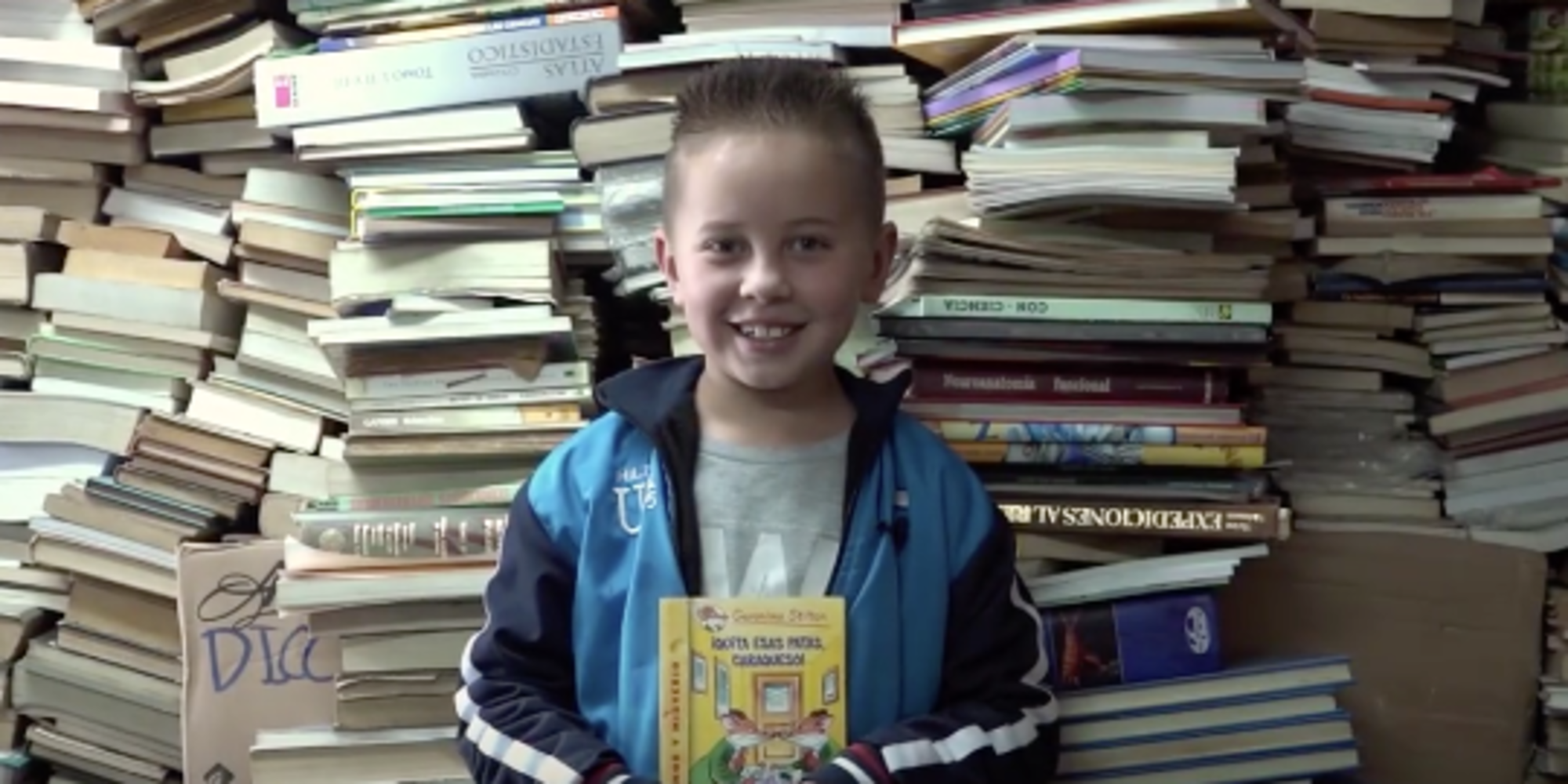
José Alberto Gutiérrez is known as the “Lord of the Books” to the thousands of book-loving children he’s helped in Bogotá, Colombia.

The garbage collector, takes discarded books from wealthy neighborhoods and adds them to a makeshift library in his home. The collection of over 20,000 books is open to the kids in the low-income neighborhood where he lives on the weekends.

“This should be in all neighborhoods, on each corner of every neighborhood, in all the towns, in all departments, and all the rural areas,” Gutiérrez told The Associated Press in 2015. “Books are our salvation and that is what Colombia needs.”

Gutiérrez started salvaging discarded books 20 years ago, according to the AP. He credits his work to his mother, who read to him every night despite not being able to afford keeping him in school.

“The first book I found was Anna Karenina by Leo Tolstoy, and that little book ignited the flame and [set in motion this] ball that has never stopped rolling,” Gutiérrez says in the AJ+ video.

Save

Leave a comment

Filed under 2017, books

The most famous book set in every state – Business Insider

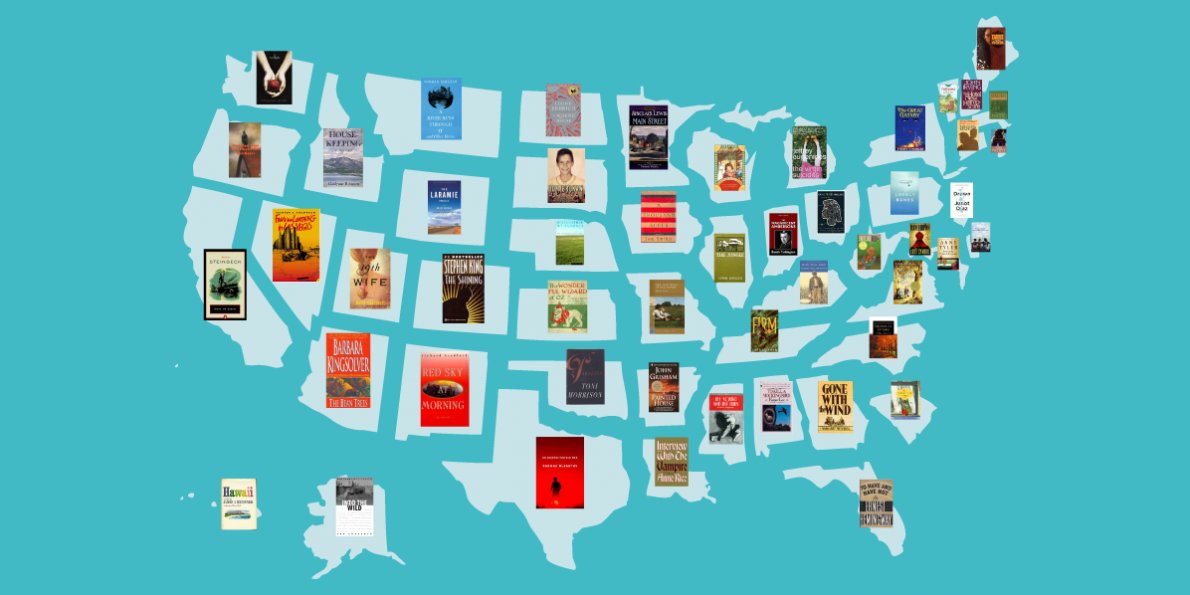
Whether you come from the California coastline or the snowy forests of Maine, reading a book set in your home state can make you feel a warm nostalgia for that beloved place.

After scouring the internet and surveying our colleagues on their picks, we rounded up the most famous book set in every state in America.

For example:

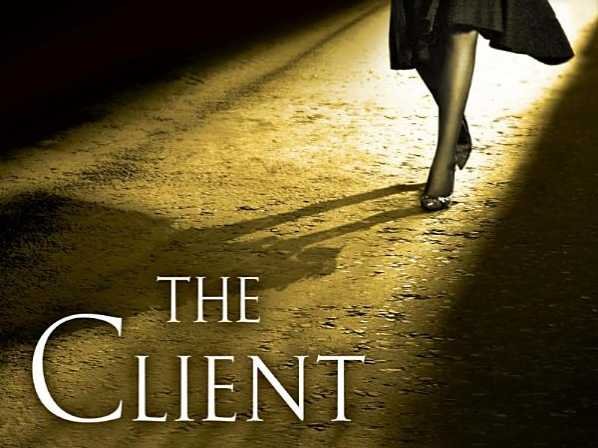
TENNESSEE: “The Client” by John Grisham  In a vacant lot outside Memphis, 11-year-old Mark encounters Romey, a suicidal lawyer who, before killing himself, leaves the boy with the secret of where his client’s murder victim is buried.Now Mark is running for his life, aided only by a friendly young attorney named Reggie Love, as the two try to keep Mark safe from Romey’s mobster client, and simultaneously bring a killer to justice.

For the other 49 states and District of Columbia:  The most famous book set in every state – Business Insider

Leave a comment

Filed under 2017, books

Protect Your Library the Medieval Way, With Horrifying Book Curses | Atlas Obscura

Medieval scribes protected their work by threatening death, or worse.

Source: Protect Your Library the Medieval Way, With Horrifying Book Curses | Atlas Obscura

by Sarah Laskow

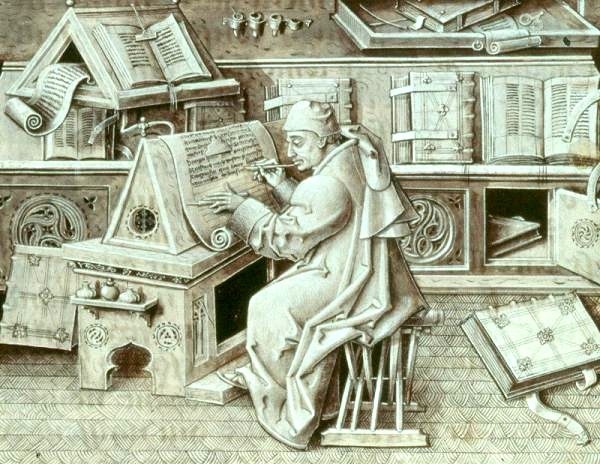
In the Middle Ages, creating a book could take years. A scribe would bend over his copy table, illuminated only by natural light—candles were too big a risk to the books—and spend hours each day forming letters, by hand, careful never to make an error. To be a copyist, wrote one scribe, was painful: “It extinguishes the light from the eyes, it bends the back, it crushes the viscera and the ribs, it brings forth pain to the kidneys, and weariness to the whole body.”

Given the extreme effort that went into creating books, scribes and book owners had a real incentive to protect their work. They used the only power they had: words. At the beginning or the end of books, scribes and book owners would write dramatic curses threatening thieves with pain and suffering if they were to steal or damage these treasures.

They did not hesitate to use the worst punishments they knew—excommunication from the church and horrible, painful death. Steal a book, and you might be cleft by a demon sword, forced to sacrifice your hands, have your eyes gouged out, or end in the “fires of hell and brimstone.”

“These curses were the only things that protected the books,” says Marc Drogin, author of Anathema! Medieval Scribes and the History of Book Curses. “Luckily, it was in a time where people believed in them. If you ripped out a page, you were going to die in agony. You didn’t want to take the chance.”

Drogin’s book, published in 1983, is the most thorough compendium of book curses ever compiled. A cartoonist and business card designer, Drogin had taken an adult-education class in Gothic letters and became entranced with medieval calligraphy. While researching his first book, he came across a short book curse; as he found more and more, hidden in footnotes of history books written in the 19th century, his collection grew to include curses from ancient Greece and the library of Babylon, up to the Renaissance.

To those historians, the curses were curiosities, but to Drogin they were evidence of just how valuable books were to medieval scribes and scholars, at a time when even the most elite institutions might have libraries of only a few dozen books.

The curse of excommunication—anathema—could be simple. Drogin found many examples of short curses that made quick work of this ultimate threat. For example:

May the sword of anathema slay
If anyone steals this book away.

Si quis furetur,
Anathematis ense necetur.

If a scribe really wanted to get serious, he might threaten “anathema-maranatha”—maranatha indicating “Our Lord has Come” and serving as an intensifier to the basic threat of excommunication. But the curses could also be much, much more elaborate. “The best threat is one that really lets you know, in specific detail, what physical anguish is all about. The more creative the scribe, the more delicate the detail,” Drogin wrote. A scribe might imagine a terrible death for the thief:

“If anyone take away this book, let him die the death; let him be fried in a pan; let the falling sickness and fever size him; let him be broken on the wheel, and hanged. Amen.”

Or even more detailed:

“For him that stealeth, or borroweth and returneth not, this book from its owner, let it change into a serpent in his hand & rend him. Let him be struck with palsy & all his members blasted. Let him languish in pain crying aloud for mercy, & let there be no surcease to his agony till he sing in dissolution. Let bookworms gnaw his entrails in token of the Worm that dieth not, & when at last he goeth to his final punishment, let the flames of Hell consume him for ever.”

Drogin’s book had dozens of such curses in it, and he had collected at least a dozen more to include in the second edition, which was never published. Inside his copy of the book, he still has a baggie of antique file cards, full of book curses.

As Drogin collected curses, he started to find repeats. Not all scribes were creative enough to write their own curses. If you’re looking for a good, solid book curse, one that will serve in all sorts of situations, try this popular one out. It covers lots of bases, and while it’s not quite as threatening as bookworms gnawing at entrails, it’ll get the job done:

“May whoever steals or alienates this book, or mutilates it, be cut off from the body of the church and held as a thing accursed.”

Leave a comment

Filed under 2017, books, library

80 Best Books of All Time – The Greatest Books Ever Written

An unranked, incomplete, utterly biased list of the greatest works of literature ever published. How many have you read?

Source: 80 Best Books of All Time – The Greatest Books Ever Written

Some of the books on the list:

What We Talk About When We Talk About Love, by Raymond Carver

Collected Stories of John Cheever

Deliverance, by James Dickey

The Grapes of Wrath, by John Steinbeck

Blood Meridian, by Cormac McCarthy

The Brothers Karamazov, by Fyodor Dostoevsky

The Known World, by Edward P. Jones

The Good War, by Studs Terkel

American Pastoral, by Philip Roth
One of the few not about Roth. It’s about that guy you idolized in high school. And gloves. And you.

A Good Man Is Hard to Find and Other Stories, by Flannery O’Connor
“She would of been a good woman… if it had been somebody there to shoot her every minute of her life.” Wouldn’t we all.

The Things They Carried, by Tim O’Brien.
No one else has written so beautifully about human remains hanging from tree branches.

A Sport and a Pastime, by James Salter
Remember your college buddy’s girlfriend, the one you were in love with? Because of her.

The Call of the Wild, by Jack London
A book about dogs is equally a book about men.

Time’s Arrow, by Martin Amis
You’ve never seen the Holocaust from this angle and with this much ferocity. Backwards.

A Sense of Where You Are, by John McPhee
It’s about how two men can be made better just by sharing each other’s company.

Hell’s Angels, by Hunter S. Thompson
Because it’s his first book, and because he got his ass kicked for it, and because in the book and the beating were the seeds of all that came after, including the bullet in the head.

Invisible Man, by Ralph Ellison
Born in an epic fist-fight or forgotten in the sewers, no character is as clearly heard as the man who is never really seen by the world around him.

Dubliners, by James Joyce
Plain and simple: “The Dead”

Rabbit, Run, by John Updike
Because it’s one of the few not about Updike. It’s about that guy you idolized in high school. And kitchen gadgets. And you.

The Postman Always Rings Twice, by James M. Cain
Teaches men about women. Also, there’s not a single postman in the book.

Dog Soldiers, by Robert Stone
Begins in Saigon, ends in Death Valley. Somewhere in between you realize that profit is second only to survival.

Winter’s Bone, by Daniel Woodrell
The best book by a modern-day Twain, high on meth, drousy with whiskey.

Legends of the Fall, by Jim Harrison
Because of revenge. Because Harrison is as masculine and raw and unrelenting as they come.

Under the Volcano, by Malcolm Lowry
A terrifying riderless horse, mescaline, and this line: “Somebody threw a dead dog after him down the ravine.”

The Naked and the Dead, by Norman Mailer
His first book turned out to be his best book. The skulls of young men at war.

The Professional, by W.C. Heinz
It’s about fighting, but it’s also about watching and listening, and it’s about patience, and honing, and craft, and sparseness, and beauty, and crushing, awful defeat.

For Whom the Bell Tolls, by Ernest Hemingway
A lesson in manhood: Even when you’re damned, you press on.

Dispatches, by Michael Herr
“Vietnam Vietnam Vietnam, we’ve all been there.” You’ll never forget that line. You won’t forget what precedes it, either.

Tropic of Cancer, by Henry Miller.
Dirty, grotesque. Beautiful.

Revolutionary Road, by Richard Yates
The thousands of little compromises we make every day that eventually add up to the loss of ourselves.

As I Lay Dying, by William Faulkner
Because the man’s cold brilliance enabled him to make the line “My mother is a fish,” into a chapter in itself.

The Killer Angels, by Michael Shaara
Because the Battle of Gettysburg took place in that blue-gray area between black and white.

Slaughterhouse-Five, by Kurt Vonnegut
A mad hatter of an antiwar novel that understands how a smile, shaped like a sickle, can cut deeply. So it goes.

All the King’s Men, by Robert Penn Warren
Crooked judges, concealed paternity, deception, betrayal, and lots of whiskey.

One Flew Over the Cuckoo’s Nest, by Ken Kesey
Because sometimes you have to go crazy to stay sane.

Leave a comment

Filed under 2017, book list, books

Sad chart: Book reading

reading-facts

Leave a comment

January 13, 2017 · 11:29 pm