Category Archives: book list

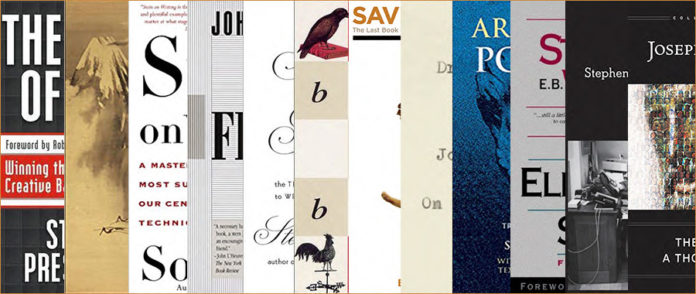
These 13 Books Will Make You a Better Writer in 2019 | Inc.com

One of the best ways to improve your writing is to read about the craft.

Source: These 13 Books Will Make You a Better Writer in 2019 | Inc.com

  1. Ernest Hemingway on Writing, edited by Larry W. Phillips

Ernest Hemingway never codified his insights on writing into a book, but he did share his thinking on the topic in commissioned articles; letters to his agents, publishers, and friends; and through his novels. Ernest Hemingway on Writing is a collection of his insights on the craft of writing, and includes several practical and inspiring tips.

  1. Zen in the Art of Writing, by Ray Bradbury

The prolific science-fiction author Ray Bradbury collected the lessons he had learned about the craft during his long and successful career in Zen in the Art of Writing.

  1. Nobody Wants to Read Your Sh*t: Why That Is and What You Can Do About It, by Steven Pressfield

Steven Pressfield recently returned to writing about writing with a brand-new book, Nobody Wants to Read Your Sh*t. It’s a no-nonsense guide to writing stories that people will want to read. While the bulk of the book addresses how to write fiction, Pressfield shows how the same principles of writing good stories can apply to writing nonfiction.

  1. The Artist’s Way: A Spiritual Path to Higher Creativity, by Julia Cameron

The Artist’s Way: A Spiritual Path to Higher Creativity is the classic book by author and creativity coach Julia Cameron in which she introduces what she calls “morning pages.” Morning pages is a powerful stream of consciousness writing exercise that is not intended to yield publishable material, but which can help you get your pen moving and your thoughts flowing–even if you never intend to share them with the rest of the world.

  1. Turning Pro: Tap Your Inner Power and Create Your Life’s Work, by Steven Pressfield

Ever since reading his classic book, The War of Art, I’ve read every book about writing by Steven Pressfield (and I will continue to read every one he writes, including the one he’s publishing soon, which he’s generously serializing on his blog). In that book he gave a name to what every writer grapples with. He called it Resistance.

To fight the Resistance, writers (and other artists, for he was addressing artists broadly in that book) need to give up their amateur mindsets and habits and “turn pro.” In Turning Pro, his follow-up to The War of Art, Pressfield fleshes out what he means exactly when he tells writers to “turn pro.”

  1. On Writing Well: The Classic Guide to Writing Nonfiction, by William Zinsser

William Zinsser was a journalist, author, and writing instructor at Yale. His book On Writing Well is a classic among writers and has sold nearly 1.5 million copies in the 40 years since it was published. It’s one of the first books I recommend to anyone seeking to improve their writing.

  1. On Writing: A Memoir of the Craft, by Stephen King

Fifteen years ago, mega-best-selling author Stephen King wrote a book about the craft of writing that became an instant bestseller: On Writing: A Memoir of the Craft. After telling the story of how he became the writer he is today, King devotes the second half of the book to sharing his writing strategies, like his suggestion that you should write for your “Ideal Reader.”

  1. Process: The Writing Lives of Great Authors, by Sarah Stodola

This book looks at the techniques, inspirations, and daily routines of 18 iconic authors of the 20th century, including Franz Kafka, Ernest Hemingway, Virginia Woolf, David Foster Wallace, Toni Morrison, and Margaret Atwood.

After profiling so many successful authors, what did Stodola learn about their writing process? “Genius, I have concluded, is the presence of not one ability but several that work together in tandem. Genius is far more tedious, far less romantic, far more rote, far less effortless, than we imagine it.”

  1. The War of Art: Break Through the Blocks and Win Your Inner Creative Battles, by Steven Pressfield, edited by Shawn Coyne

All writers struggle with writer’s block in one form or another, but Steven Pressfield named the enemy and outlined a strategy for conquering it in The War of Art, the perennially best-selling guide for writers and other creative professionals. In the first part of the book he introduces what he calls Resistance – the force within us that conspires to prevent us from fulfilling our creative pursuits – and then spends the next two sections sharing his solutions for overcoming it.

  1. The Art of Nonfiction, by Ayn Rand

As the late novelist and philosopher Ayn Rand describes in The Art of Nonfiction, an edited collection of lectures she gave on the craft of writing, part of the reason why it took so long to finish her second novel is because she often suffered from severe bouts of writer’s block.

  1. Lifelong Writing Habit: The Secret to Writing Every Day, by Chris Fox.

In Lifelong Writing Habit: The Secret to Writing Every Day, Chris Fox describes the 12-step process he created that has allowed him to make the transition from part-time writer to full-time author of several best-selling thriller novels and nonfiction writing guides.

At the beginning of the book, Chris describes what a habit is, and explains how you can reprogram your brain just like a computer to install new habits. Habits live in a part of the brain called the basal ganglia, and they consist of three parts: The trigger, the routine, and the reward. The key to changing your habits is to identify which ones are good for you, which ones are bad, and then “flip” the bad ones to good ones.

  1. 8-Minute Writing Habit: Create a Consistent Writing Habit That Works With Your Busy Lifestyle, by Monica Leonelle

Monica Leonelle, a novelist and author of several books about writing, has written a book that speaks directly to those of us who struggle to get our writing done while balancing other commitments at work and home.

In the first part of The 8 Minute Writing Habit: Create a Consistent Writing Habit that Works With Your Busy Lifestyle, Leonelle describes several “blockers” that get in the way of our writing, thoughts like “writing might not pay off,” “I’m not good enough to be a writer,” and “I’m stuck in the planning/writing/editing phase.” For each blocker, she offers several practical tips for overcoming them. In the second part of the book, she shares nine strategies the pros use to write consistently.

  1. Several Short Sentences About Writing, by Verlyn Klinkenborg

Verlyn Klinkenborg is an author and creative writing instructor at Yale. In the preface to Several Short Sentences About Writing, he argues that “most of the received wisdom about how writing works is not only wrong but harmful,” and then devotes the rest of the book to smashing assumptions and correcting misconceptions about the craft.
Leave a comment

Filed under 2019, book list, writing, writing tip

The Absolute Best Books On Writing | BookBaby Blog

The list of favorite books on writing can be very different from one author to another. I’ve scoured 10 “top” lists to see which titles spanned the gamut.

Source: The Absolute Best Books On Writing | BookBaby Blog

By Dawn Field

What are your favorite books on writing? Do you have a large collection? How do you expand your corpus when you feel like reading another? Which would you recommend?

There are a huge number of books on writing and if you want to pick the absolute “best,” you have two choices. The first is to pick books that the most people have read and enjoyed. The second is to admit that the best books for each writer will be different. If you are a poet, nonfiction writer, or romance aspirant, you might want specialist advice and information.

Popularity contest

To find the books that are most popular, I looked at the intersection of lists of favorites — and I found an interesting pattern. If you combine the top books on Amazon and the picks found in a range of “top book” articles (Steven Spatz‘ 5 favorites, Shaunta Grimes‘ top 10, Jerry Jenkins’ “12 best,” Jeff Goin‘s “best books,” SmartBlogger‘s “9 Essentials,” The Write Life‘s “9 of the best,” Barnes & Noble‘s “6 best,” and Paste‘s “10 best”) we see some perennial favorites, but overall, surprisingly little overlap.

A few classics appear repeatedly, but most of the recommended books on writing only appear once. This is because excellent, but specialist, books fall down the ranks. The perfect book for you might never rank a “top 10” list of general writing books.

So, who are the winners? Two books stand head and shoulders above the rest in the tally of appearances. The winning category is “writers writing on writing” and the two top books are Stephen King’s On Writing: A Memoir of the Craft and Anne Lamott’s Bird by Bird: Some Instructions on Writing and Life.

Other books often in the top lists are Strunk and White’s The Elements of Style and two on creativity: Julia Cameron’s The Artist’s Way: A Spiritual Path to Higher Creativity and Steven Pressfield’s The War of Art: Break Through the Blocks and Win Your Inner Creative Battles.

Most at the rarefied top of the normative lists have some good years on them. Remember the classics now “too old” to rank on such modern lists. This includes Joseph Campbell’s The Hero With a Thousand Faces which describes the hero’s journey that inspired Star Wars, Aristotle’s Poetics (which comes in various translations and interpretations from modern authors), and John Gardner’s The Art of Fiction: Notes on Craft for Young Writers.

New books continuously appear. Harvard linguist Stephen Pinker’s The Sense of Style: The Thinking Person’s Guide to Writing in the 21st Century already ranks as a modern classic update to the Elements of Style and writer and teacher John McPhee’s Draft No. 4: On the Writing Process is just out for nonfiction.

If you want to hear the advice of an expert editor and you are interested in nonfiction, go for Sol Stein’s On Writing. Blake Synder’s Save the Cat: The Last Book on Screenwriting You’ll Ever Need is a textbook in screenwriting.

And the lists go on and on.

Just look at this list by Booker prize-winning author DBC Pierre in The Guardian to see how different and unique a personal choice list can be. It includes The Prince by Niccolò Machiavelli to “discover what villains are born knowing.”

The best books to add to your collection fill the biggest gaps in your knowledge or provide the most inspiration. This could mean getting a tip from a colleague or mentor or scrolling curated lists to seek out something that matches your interests. Book Riot has a list of “100 Must-read, Best Books On Writing And The Writer’s Life.”

The choices might seem overwhelming, but it helps that you can download opening chapters for free on Kindle to have a look at style and content.

How many have you read? Which should you read next? In the end, pick to match your tastes and needs. The absolute best are the ones that help you most.

Leave a comment

Filed under 2019, book list, writing tip, Writing Tip Wednesday

Best fiction of 2019 | Books | The Guardian

Exceptional US novels, extraordinary translations and even two Booker winners … Guardian fiction editor Justine Jordan on the celebrated and overlooked books of the year

Source: Best fiction of 2019 | Books | The Guardian

It has been a year of doubles: two Nobel laureates, two Booker winners, even two Ian McEwan novels (his Kafka-lite satire The Cockroach was yet more fallout from Brexit). Having promised to look beyond Europe after skipping the award in 2018, the Nobel committee honoured two Europeans: the Polish writer Olga Tokarczuk and, more controversially, Austrian Milošević-supporter Peter Handke. Closer to home, the UK’s general air of indecision infected the Booker prize, which split the award in two, thus missing the chance to crown Bernardine Evaristo outright as the first ever black female winner for her innovative and life-affirming Girl, Woman, Other (Hamish Hamilton), interlinked stories of black British women which brim with heart and humour.

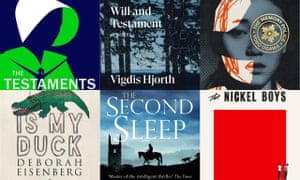
Evaristo shared the prize with the year’s biggest book by far: Margaret Atwood’s Handmaid’s Tale sequel The Testaments (Chatto), which combines Aunt Lydia’s sly perspective on the theocratic regime – its brutal birth and her ambiguous role at the heart of it – with more action-adventure strands about the two young women seeking to bring it down. Fan-pleaser, literary curio, a fascinating example of the interplay between written fiction and TV: the book is all three, with Atwood’s musings on power and the patterns of history as incisive as ever.

If history felt like a hall of mirrors in 2019, and current affairs a car crash, then Deborah Levy’s The Man Who Saw Everything (Hamish Hamilton) – the riddling story of one man, two time zones and two car accidents – was the novel to read. In the late 80s, Saul goes to East Berlin to study; in the recent past, he faces up to the rest of his life. Skewering different forms of totalitarianism – from the state, to the family, to the strictures of the male gaze – Levy explodes conventional narrative to explore the individual’s place and culpability within history. It’s one of the most unusual and rewarding novels of this or any year.

The timelines of history are similarly unstable in Sandra Newman’s high-concept The Heavens (Granta), in which a woman leads a double existence, waking up sometimes as Shakespeare’s Dark Lady in Renaissance England and sometimes in a 21st-century New York that is getting progressively worse. Can her actions really be influencing world events hundreds of years later? How far do we make our own reality? This is a dazzling exploration of creativity and madness in the poignant, panic-tinged end times.

The power of myth-making drives Mark Haddon’s best novel yet. The Porpoise (Chatto) begins as a propulsive thriller about abuse among the super-rich and segues into a classical-world adventure that reinvents the story of Pericles in prose of a hallucinatory vividness. Fantasy also mingles with reality in Max Porter’s light-footed second novel Lanny (Faber), as contemporary communal chatter and a spirit voice from deep time rise and fall together to tell the story of an extraordinary boy in an ordinary English village.

James Meek wound the clock back to 14th-century England for a feat of scholarship and storytelling combined. Written in gleeful approximations of priestly, courtly and peasant medieval English, To Calais, in Ordinary Time (Canongate) follows a motley group of travellers in the shadow of the Black Death. Its portrait of individual dramas unfolding against the prospect of apocalypse speaks to current fears of climate crisis and Brexit alike.

Robert Harris also conjured a quasi-medieval world for a page-turning, thought-provoking speculation on the fragility of civilisation, The Second Sleep (Hutchinson). It’s 1468, and a young priest is investigating ancient artefacts: Harris reveals his setup to be ingeniously, chillingly topical. Ali Smith reached book three of her quickfire Seasonal Quartet, which interprets news headlines through the filters of art and story. Like Haddon, Smith was inspired by Pericles, an apt fable for an era of globalised migration. She uses it in Spring (Hamish Hamilton) as a bedrock for a typically agile story about narrowing horizons and widening inequality, which is also a furious indictment of the UK’s detention of refugees.

The distribution and morality of wealth is an ever more urgent subject. The TV sensation Succession tackled money’s corrupting effect within a family; Sadie Jones did a similarly brilliant job in The Snakes (Chatto), a psychodrama about avarice, abuse and entitlement which is both a cautionary tale and a pitch-black race-to-the-end thriller.

It was an exceptional year for US fiction, with Tayari Jones winning the Women’s prize for An American Marriage (Oneworld), about black middle-class lives undone by structural racism, and Anglo-American Lucy Ellmann taking the Goldsmiths for her 1,000-page denunciation of Trump’s America and the world’s devaluing of motherhood, Ducks, Newburyport (Galley Beggar). Rising star Ben Lerner came into his own with the stunningly multilayered The Topeka School (Granta), exploring voice, power and masculinity in the 90s and now. Téa Obrecht’s long-awaited second novel Inland (W&N) is an ingenious reinvention of the western, while Colson Whitehead’s follow-up to The Underground Railroad, The Nickel Boys (Fleet), lifts the lid on the racist brutality of reform schools in the Jim Crow-era south.

Ann Patchett’s The Dutch House (Bloomsbury) is a gloriously immersive family saga about lost inheritance, while in Olive, Again (Viking) Elizabeth Strout continues to find moments of transcendence in the trials of daily life as her obstreperous, much-loved character Olive Kitteridge moves into her 80s. Chinese-American writer Yiyun Li’s Where Reasons End (Hamish Hamilton), a dialogue between a mother and the teenage son she has lost to suicide, is spare, profound and devastating.

Vietnamese-American poet Ocean Vuong’s autobiographical first novel On Earth We’re Briefly Gorgeous (Jonathan Cape) is a tender exploration of violence, migration and language, while Mexican author Valeria Luiselli’s Lost Children Archive (4th Estate), her first novel to be written in English, is an extraordinary achievement. It puts the desperate children crossing the border into the US at the heart of a beautifully composed, complex investigation into family, motherhood and the fragile connections between people.

Debuts to celebrate included Candice Carty-Williams’s witty Queenie (Trapeze), the adventures of a young black woman negotiating dating, family and identity in a gentrifying London, and Sara Collins’s The Confessions of Frannie Langton, a fantastically assured piece of historical gothic about an enslaved girl brought from a Jamaican plantation into the backbiting milieu of London society. Taffy Brodesser-Akner’s Fleishman Is in Trouble (Wildfire), a dissection of sexual politics in contemporary New York, was a deliciously biting summer hit.

Debuts stood out in the world of short stories, too, notably Wendy Erskine’s clear-eyed tales of Belfast life in Sweet Home and Julia Armfield’s haunting Salt Slow (both Picador). All eyes were on Kristen “Cat Person” Roupenian, whose first collection You Know You Want This (Cape) skewed towards urban gothic rather than dating malaise. Queen of dark short fiction Sarah Hall brought us more expertly turned tales of sex, death and danger in Sudden Traveller (Faber), while Zadie Smith’s first collection, Grand Union (Hamish Hamilton), is a restlessly wide-ranging anthology covering two decades. In Deborah Eisenberg’s wryly subversive Your Duck Is My Duck (Europa), we had the first collection in 12 years from a US master of the form.

One of the year’s gems in translation was Will and Testament by Vigdis Hjorth (Verso), translated by Charlotte Barslund. A story of abuse, inheritance and the battle for the truth among a privileged Norwegian family, it grips like a vice while interrogating national as well as individual self-conception. Other standouts included Khaled Khalifa’s Death Is Hard Work (Faber), translated by Leri Price, a road trip set against the backdrop of the Syrian civil war, and Pajtim Statovci’s Crossing (Pushkin), translated by David Hackston, which explores migration, gender and self-invention through the shifting character of a young Albanian. For the first time, the Man Booker International prize went to a writer in Arabic. Jokha Alharthi’s Celestial Bodies (Sandstone), translated by Marilyn Booth, is a generation-spanning family saga exposing the legacy of slavery in Oman.

Tove Ditlevsen’s Copenhagen Trilogy (Penguin Modern Classics), translated by Tiina Nunnally and Michael Favala Goldman, was a welcome rediscovery: the fearless reconstruction of a difficult creative and romantic life as a woman in 20th-century Denmark. Vasily Grossman’s Stalingrad (Harvill Secker), his prequel to Life and Fate translated by Robert and Elizabeth Chandler, was an extraordinary feat of scholarship. We have had to wait a quarter of a century for Yōko Ogawa’s The Memory Police (Harvill Secker), translated by Stephen Snyder, the story of an island where both objects and memories are “disappeared” by shadowy totalitarian forces and islanders must submit to enforced ignorance and diminished horizons. In an era beset by fears over news manipulation and Anthropocene extinction, this timeless fable of control and loss feels more timely than ever.

  • Save up to 30% on the books of the year at guardianbookshop.com

America faces an epic choice…

… in the coming year, and the results will define the country for a generation. Democracy is under attack, as is civility, truth and normal forms of political behaviour. The White House harbours white nationalists, incites fear and prejudice, undermines intelligence agencies, courts foreign influence in US elections and undermines the judiciary. The need for a robust, independent press has never been greater and with your help we can continue to provide fact-based reporting that offers public scrutiny and oversight.

These are perilous times. The administration’s willingness to deploy untruths, violent speech and hateful attacks on the media are now commonplace. This is why we are asking for your help so that we can continue to put truth and civility at the heart of the public discourse. You have read 6 articles in the last two months, so we hope you can appreciate the Guardian’s choice to keep our journalism open for all.

“Next year America faces an epic choice – and the result could define the country for a generation. It is at a tipping point, finely balanced between truth and lies, hope and hate, civility and nastiness. Many vital aspects of American public life are in play – the Supreme Court, abortion rights, climate policy, wealth inequality, Big Tech and much more. The stakes could hardly be higher. As that choice nears, the Guardian, as it has done for 200 years, and with your continued support, will continue to argue for the values we hold dear – facts, science, diversity, equality and fairness.” – US editor, John Mulholland

On the occasion of its 100th birthday in 1921 the editor of the Guardian said, “Perhaps the chief virtue of a newspaper is its independence. It should have a soul of its own.” That is more true than ever. Freed from the influence of an owner or shareholders, the Guardian’s robust independence is our unique driving force and guiding principle.

We also want to say a huge thank you to everyone who has supported the Guardian in 2019. You provide us with the motivation and financial support to keep doing what we do. We hope to surpass our goal by early January. Every contribution, big or small, will help us reach it.

Make a year-end gift from as little as $1. Thank you.

Leave a comment

Filed under 2019, book list, books

Best children’s books of 2019: from picture books to young adult | Books | The Guardian

Imogen Russell Williams picks beautiful illustrations, fun books to read aloud and new YA from Malorie Blackman and Philip Pullman

Source: Best children’s books of 2019: from picture books to young adult | Books | The Guardian

Picture books

Jackie Morris’s The Secret of the Tattered Shoes (Tiny Owl) is an atmospheric retelling of the story of “The Twelve Dancing Princesses”, in which the hero ultimately refuses to marry one of the callous princesses, choosing instead to search for the mysterious forest woman who helped him. Ehsan Abdollahi’s marionette-like collaged illustrations transport the reader deep into the heart of the tale, where gilded tree branches glisten and opalescent fruit begs to be plucked.

Also in fairytale vein is Oliver Jeffers, whose story The Fate of Fausto (HarperCollins) warns quietly against hubris. Arrogant Fausto believes he owns the world; everywhere he goes, his “subjects” bow to him, from trees to mountains – until he attempts to demand homage from the sea. Spacious, luminous lithographic illustrations combine with stark hand-set text in this powerful, beautiful fable.

Bouncy and mischievous, Sally Nicholls’s The Button Book (Andersen) is illustrated with giddy, infectious energy by Bethan Woollvin. What happens when the book’s different “buttons” are pressed? Some prompt tickles, some hugs – and one a very rude noise indeed – but all contribute to a rising tide of giggles, ebbing calmly away to a wind-down bedtime message; the best sort of interactive, read-aloud fun.

Five to eight years

Slightly older fairytale fans, especially those who enjoy Rebel Girls-style empowerment, will relish the interconnected stories in Eight Princesses and a Magic Mirror (Zephyr) by Natasha Farrant, enriched by Lydia Corry’s delicious full-colour pictures. When an enchantress flings her magic mirror into our world, the girls it reflects are bold, courageous and determined – from the desert princess who protects her people from war to the tower-block princess who saves a community garden.

From award-winning writer David Long, and brought deftly to life by Sarah McMenemy’s intricate images, The Story of the London Underground (Bloomsbury) plots the development of the tube from the fume-filled, steam-powered London Metropolitan Railway to the present-day network with its millions of passengers, via fascinating facts about ghost stations, bizarre lost property and carriages divided by class. Meticulous and fascinating, it will appeal to readers with a taste for the secret quirks of history.

For wildlife aficionados, Ben Rothery’s oversized Hidden Planet (Ladybird) is filled with stunning illustrations: a komodo dragon on whose skin every scale is visible, two pages of milling, dazzling zebras, a meditative octopus and a poised satanic leaf-tailed gecko. The engaging text is full of intriguing detail, such as orderly queues of hermit crabs waiting for the right-sized shell to be vacated, or the barn owl’s heart-shaped face, which acts like a radar dish to guide sounds into its ears.

Eight to 12 years

Handsomely slip-cased in psychedelic colours, James Rhodes’s Playlist (Wren & Rook) is the classical pianist’s introduction to seven notable composers, complete with irreverent biographical detail (Beethoven peeing into a chamber pot under the piano), accessible and intriguing analysis, helpful definitions of terms such as étude, and a Spotify playlist of introductory teasers from pieces such as Mozart’s Requiem and Chopin’s “Nocturne No 2”. Subtitled “The Rebels and Revolutionaries of Sound”, at its heart is Rhodes’ passionate determination to demonstrate classical music’s iconoclastic and emotional power.

When her beloved grandfather is swindled out of his home, the indomitable Vita, undaunted by a polio-weakened foot, gathers a motley crew of circus kids and pickpockets and plans a heist to redress the balance in Katherine Rundell’s The Good Thieves (Bloomsbury). This fast-paced, thrilling story has it all – a charismatic 1920s New York setting, a sensationally sinister villain, a determined, likable heroine and feats of daring couched in engaging prose.

Nicola Skinner’s debut Bloom (HarperCollins) is illustrated with vine-wreathed charm by Flavia Sorrentino. Good girl Sorrel, best-behaved child in the sad town of Little Sterilis, is horrified when Surprising Seeds sprout on the top of her head, making her crave sunlight and hear voices – how can she possibly win the most obedient pupil prize now? A riotous, original and timely reminder that sometimes rules are made to be broken.

More sophisticated is the subaqueous Deeplight (Macmillan) by Costa-winner Frances Hardinge. In the Myriad archipelago, terrifying gods with razor-grille teeth and glass tentacles once drowned islands and swamped ships – until, one day, they tore each other apart. Now Hark and Jelt scrape a living scavenging the powerful detritus of dead gods – but Jelt is about to plunge Hark into trouble. Hardinge’s surreal powers of world-building combine with her astute understanding of human relationships to create a weird, wonderful, beguiling novel.

YA

Malorie Blackman returns to the world of Noughts & Crosses (where the black Crosses dominate society, and white Noughts are seen as inferior) in Crossfire (Penguin), and the political stakes are high. Though a Nought prime minister is in office for the first time, he is about to be accused of murder, and must turn to his oldest friend, dual-heritage Callie-Rose, for help. When two teenagers are kidnapped, tensions run higher still in this compelling, all-too-relevant story.

In The Secret Commonwealth (David Fickling/Penguin), the second volume of Philip Pullman’s Book of Dust trilogy, Lyra is now a student in her early 20s. Estranged from her daemon, Pantalaimon, she is plunged into danger after he witnesses the murder of a botanist, and Lyra herself comes into possession of some perilous secrets. Featuring painful ruptures, shocking violence, the ominous rise of the Magisterium and the appearance of a grown-up Malcolm Polstead, this huge, challenging novel asks the reader more questions than it answers.

Finally, Chinglish (Andersen) is Sue Cheung’s highly illustrated, lightly fictionalised account of her turbulent adolescence living over her parents’ Chinese takeaway in 1980s Coventry. Dealing with casual racism, her father’s abusive rages, annoyingly perfect cousins and the grisly fate of the family goat, Jo wonders whether she will ever fit in, look right, get a boyfriend – or be able to leave home. Funny and moving, with poignant, traumatic elements and comic cartoons, it will resonate with any teenage reader who feels alien or left out.

2020 will be…

… a defining year. These are perilous times. And we’re asking for your help as we prepare for 2020. Over the last three years, much of what the Guardian holds dear has been threatened – democracy, civility, truth. This US administration is establishing new norms of behaviour. Anger and cruelty disfigure public discourse and lying is commonplace. Truth is being chased away. But with your help we can continue to put it center stage.

Rampant disinformation, partisan news sources and social media’s tsunami of fake news is no basis on which to inform the American public in 2020. The need for a robust, independent press has never been greater, and with your help we can continue to provide fact-based reporting that offers public scrutiny and oversight. We are also committed to keeping our journalism open and accessible to everyone and with your help we can keep it that way.

“Next year America faces an epic choice – and the result could define the country for a generation. It is at a tipping point, finely balanced between truth and lies, hope and hate, civility and nastiness. Many vital aspects of American public life are in play – the Supreme Court, abortion rights, climate policy, wealth inequality, Big Tech and much more. The stakes could hardly be higher. As that choice nears, the Guardian, as it has done for 200 years, and with your continued support, will continue to argue for the values we hold dear – facts, science, diversity, equality and fairness.” – US editor, John Mulholland


Leave a comment

Filed under 2019, book list, books

Best crime and thrillers of 2019 | Books | The Guardian

Middle-aged women took charge, Jackson Brodie returned and new novels from John le Carré, Tana French and Don Winslow: Laura Wilson picks the best of a bumper year

Source: Best crime and thrillers of 2019 | Books | The Guardian

In 2019 we bid farewell to one of crime fiction’s iconic investigators, Bernie Gunther. His final outing, completed shortly before author Philip Kerr’s untimely death last year, is just as gripping and immersive as its predecessors. Metropolis (Quercus) is set in Berlin in 1928, where the young Gunther finds himself on the trail of a killer of sex workers and a serial murderer who targets disabled war veterans.

This year’s most impressive debuts include the brilliant literary thriller Kill [redacted] by Anthony Good (Atlantic), an inventive exploration of the morality of revenge after a terrorist attack, and Holly Watt’s To the Lions (Raven), the first in a new series featuring investigative reporter Casey Benedict. Others worth seeking out are Kia Abdullah’s thought-provoking legal thriller, Take It Back (HQ); Laura Shepherd-Robinson’s vivid evocation of the slave trade in Georgian England, Blood & Sugar (Mantle); and Scrublands (Wildfire), an accomplished slice of outback noir by Australian journalist Chris Hammer. American Spy (Dialogue) by Lauren Wilkinson is the story of black agent Marie Mitchell, recruited in the 1980s by the CIA as the bait in a honeytrap for the president of Burkina Faso, whose fledgling government the Americans are keen to destabilise.


Established practitioners who go from strength to strength include Mick Herron, whose Slough House series of spy thrillers – the sixth and most recent title is Joe Country (John Murray) – is being televised, with Gary Oldman slated to play the spectacularly repulsive Jackson Lamb. The final thriller in Don Winslow’s Cartel trilogy, The Border (HarperCollins), is social fiction at its finest, showing how Mexican gangsters, enriched by decades of America’s wrong-headed “war on drugs”, are now taking advantage of the opioid crisis. There’s more astute state-of-the-nation commentary, this time on Brexit Britain, from John le Carré in Agent Running in the Field (Viking), and on US race relations in Heaven, My Home (Serpent’s Tail) by Attica Locke. Also on the police procedural front, but in the UK, Jane Casey published her eighth DS Maeve Kerrigan book, Cruel Acts (HarperCollins), and Sarah Hilary’s DI Marnie Rome made her sixth appearance in Never Be Broken (Headline) – two intelligent series whose protagonists have real emotional depth.


Tana French took a break from her superb Dublin Murder Squad series for The Wych Elm (Viking), a compelling examination of the unreliability of memory, the effects of trauma and the relationship between privilege and what we perceive as luck. Other changes of direction include The Chain (Orion), a standalone thriller from Adrian McKinty, author of the Sean Duffy series, which invests a pyramid kidnapping scheme with compellingly appalling plausibility; and The Whisper Man (Michael Joseph), a police procedural with supernatural overtones by Steve Mosby, writing as Alex North. After almost a decade, Kate Atkinson was reunited with her series character Jackson Brodie. In Big Sky (Doubleday) the gruff PI returns to his native Yorkshire and becomes involved in a case of human trafficking and a historic paedophile ring.

Catastrophically dysfunctional friendships are the key ingredient in an increasingly popular domestic noir sub-genre, of which The Hunting Party by Lucy Foley (HarperCollins) is an outstanding example. When a group of thirtysomething chums go on a mini-break to an exclusive hunting lodge in the Scottish Highlands, things soon begin to unravel: everyone, it turns out, has something to hide. Another exceptional read in this vein is Mel McGrath’s The Guilty Party (HQ), in which a group of friends all have reasons for not reporting the rape of a stranger who is later found dead.


Something this reviewer is delighted to see on the rise is what might be described as “hot-flush noir” – put-upon middle-aged women against the world – a hitherto neglected sub-genre that, given the crime-reading demographic, publishers really ought to be encouraging. Two stand-out examples are Helen Fitzgerald’s sublime Worst Case Scenario (Orenda), a foul-mouthed, satirical revenge thriller in which Glasgow probation officer Mary Shields battles career burnout and the menopause, and The Godmother (Old Street) by Hannelore Cayre, translated from French by Stephanie Smee. Winner of both the Grand Prix de Littérature Policière and the European Crime Fiction prize, this witty, acerbic gem is the story of a fiftysomething widowed mother of two who, facing a precarious future, decides to become a drug dealer.

This year saw the 50th anniversary of the Manson murders and books exploring cults included Lisa Jewell’s The Family Upstairs (Century) and Fog Island (HQ) by Scientology survivor Mariette Lindstein, translated from Swedish by Rachel Willson-Broyles.

Lastly, there have been a number of welcome reissues, including Susanna Moore’s erotic classic In the Cut (W&N), a terrifying tale of death and sex first published in 1995, and, from several decades earlier, The Listening Walls and A Stranger in My Grave (both Pushkin Vertigo), by the queen of north American domestic noir, Margaret Millar (1915-1994). It all adds up to a bumper year.

Leave a comment

Filed under 2019, book list, books

The Ten Best History Books of 2019 | History | Smithsonian

Our favorite titles of the year resurrect forgotten histories and help explain how we got to where we are today

Source: The Ten Best History Books of 2019 | History | Smithsonian

The history books we loved most in 2019 span centuries, nations and wars. From womanhood to nationhood, they challenge the construction of identity and mythology. They tell the stories of celebrity weddings, bootlegging trials, and people, places and things we thought we knew but prove, upon closer inspection, to be far more complex.

The Season: A Social History of the Debutante

When Consuelo Vanderbilt of the wealthy American Vanderbilt family married the Duke of Marlborough in 1895, she was one of the most famous debutantes in the world, at a time when interest in the doings of the rich had never been more scrutinized. Consuelo had spent her whole life training to marry a royal, and the event itself was covered in major newspapers across the globe. In The Season: A Social History of the Debutante, author Kristen Richardson contextualizes Consuelo and her wedding—and those of other famous debutantes, or young women making their societal debut, from the 1600s to today. The book is a centuries-spanning look at how debutantes and their rituals, from the antebellum South to modern-day Russia, have shaped marriage and womanhood in America and abroad.


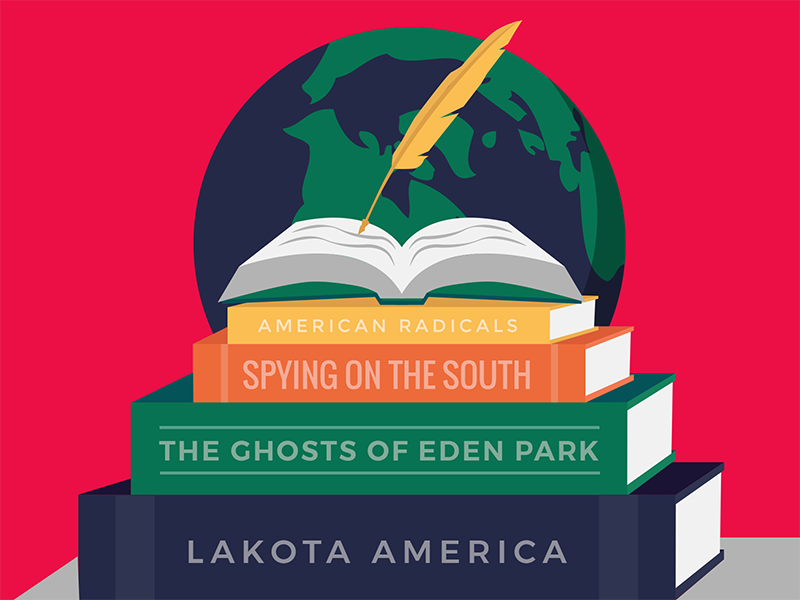
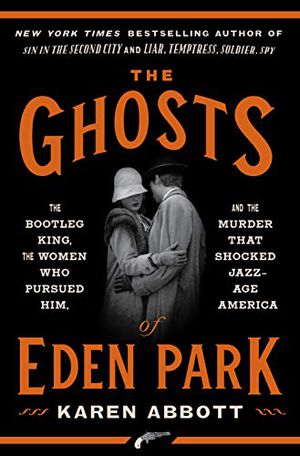
The Ghosts of Eden Park: The Bootleg King, the Women Who Pursued Him, and the Murder That Shocked Jazz-Age America

For a time, George Remus had it all. The most successful bootlegger in America, Cincinnati’s Remus controlled nearly 30 percent of illegal liquor in the United States in the early 1920s. Historian and bestselling author Karen Abbott traces the rise of Remus—he was a pharmacist and a defense attorney—and the inevitable fall as he found himself on trial not just for bootlegging, but for the murder of his own wife. In an interview with Smithsonian, Abbott talked about the connection between Remus and F. Scott Fitzgerald’s Jay Gatsby: “I think Gatsby and Remus both had these longings of belonging to a world that didn’t wholly accept them or fully understand them. Even if Fitzgerald never met Remus, everybody knew who George Remus was by the time Fitzgerald started to draft The Great Gatsby.”


Lakota America: A New History of Indigenous Power

Many Americans know the names of Red Cloud, Sitting Bull and Crazy Horse, key figures in North American Indigenous history. In his new book, Oxford history professor Pekka Hämäläinen (his previous book, The Comanche Empire, won the prestigious Bancroft Prize in 2009) looks at the history of the Lakota Nation as other historians have looked at ancient Rome—a massive (and massively adaptive) empire that shaped the literal landscape of the Western United States as well as the fates of Indigenous groups for centuries.


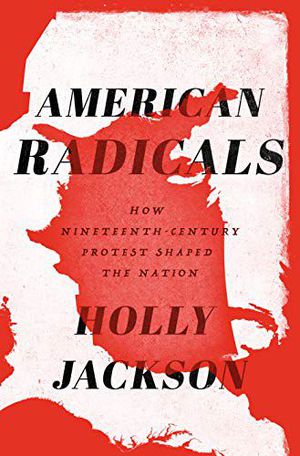
American Radicals: How Nineteenth-Century Protest Shaped the Nation

Civil Rights, free love and anti-war protests have become synonymous with the 1960s, but in American Radicals, Holly Jackson, an associate professor of English at the University of Massachusetts, Boston, traces these movements back a century in a reconsideration of radical protest and social upheaval in the mid-19th century. While some of the names that appear in Jackson’s story, like famed abolitionist William Lloyd Garrison, will be familiar to American history buffs, she also revives forgotten figures like Frances Wright, an heiress whose protests against the institution of marriage inspired Walt Whitman to call her “one of the best [characters] in history, though also one of the least understood.”


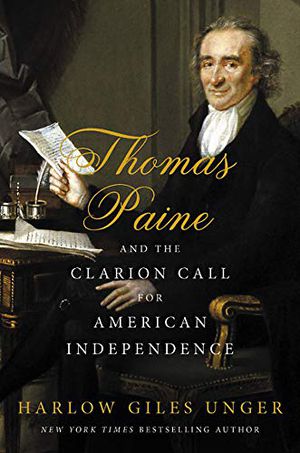
Thomas Paine and the Clarion Call for American Independence

Only six people attended Thomas Paine’s funeral. Once the most famous writer in the American colonies (and, later, the United States of America), the corsetmaker-turned-pamphleteer had been virtually expelled from public life for his radical beliefs and writings, like the ones that suggested a tax on landowners could be used to fund basic income for everyone else. Harlow Giles Unger, a renowned biographer of the Founding Fathers, looks at the Paine we know and the one we don’t, in his telling of the story of a man who pursued Enlightenment ideals even when those ideals ran afoul of what was socially acceptable.


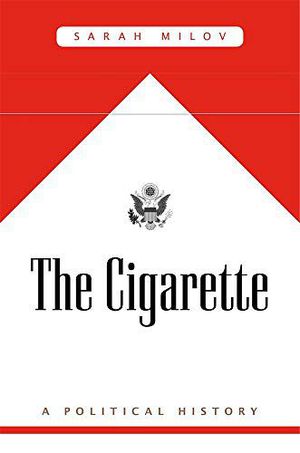
The Cigarette: A Political History

As every day a new story about the dangers of vaping—or the fervent support of vape fans—appears, historian Sarah Milov’s The Cigarette looks at the history of smoking in the United States and reminds us that once upon a time, the government was more concerned with the rights of tobacco companies than the rights of non-smokers. The book deftly connects the rise in organized opponents to smoking to food safety, car safety and other consumer rights movements of the 20th century. Kirkus says Milov “mixes big-picture academic theory with fascinating, specific details to illuminate the rise and fall of tobacco production.”


Policing the Open Road: How Cars Transformed American Freedom

In Policing the Open Road, legal historian Sarah A. Seo argues that while cars (and highways, for that matter) have long been associated with freedom in the eyes of American drivers, their advent and rapid domination of travel is the basis for a radical increase in policing and criminalization. From traffic stops to parking tickets, Seo traces the history of cars alongside the history of crime and discovers that the two are inextricably linked. “At times,” says Hua Hsu in The New Yorker, Seo’s work “feels like an underground history―of closeted gay men testing the limits of privacy; of African-Americans, like Jack Johnson or Martin Luther King, Jr., simply trying to get from one place to another.”


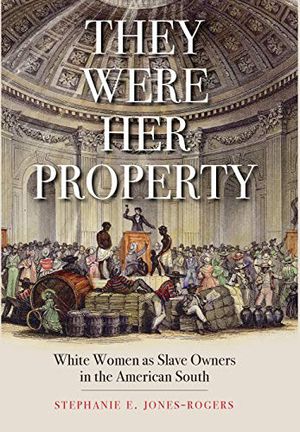
They Were Her Property: White Women as Slave Owners in the American South

Using the oral histories of formerly enslaved people, financial records and property history, Stephanie E. Jones-Rogers, associate professor of history at the University of California, Berkeley, makes a clear case that in the American South, many white women weren’t just complicit in the system of chattel slavery—they actively encouraged and benefited from it. Jones-Rogers’s work dismantles the notion that white women in slaveholding families were silent actors—instead, she argues, they used the institution of slavery to build a specific concept of womanhood that shaped the history of the nation before and after the Civil War.


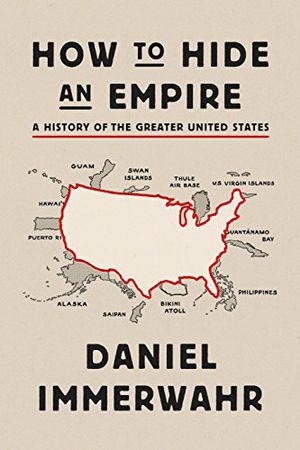
How to Hide an Empire: A History of the Greater United States

In 1856, the United States passed a law that entitled citizens to take possession of any unclaimed island containing guano deposits—guano, of course, being the excrement of bats. Guano is an excellent fertilizer, and over the course of the 20th century, the U.S. claimed dozens of small islands in remote parts of the world, turning them into territories with few rights of their own. The story of guano is one of many that touch upon the empire forged by the U.S. from Puerto Rico to the Philippines. Daniel Immerwahr, an associate professor of history at Northwestern University, tells the often brutal, often tragic stories of these territories in an attempt to make the ‘Greater United States’ truly part of U.S. history.


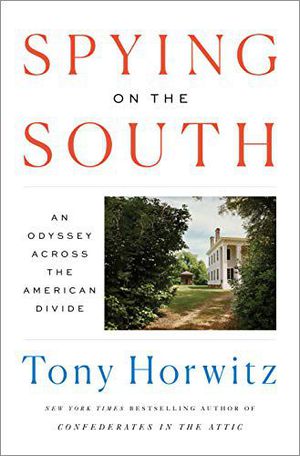
Spying on the South: An Odyssey Across the American Divide

In 1998, Tony Horwitz’s Confederates in the Attic changed the way we talk about the Civil War and the American South by making the point that for many, even 150 years after the war’s end, the conflict continued. In Spying on the South, published after Horwitz’s death this year, the author returned to the Southern states, this time following the trail of the young Frederick Law Olmsted, the landscape architect whose work defined northern cities like New York and Boston. Jill Lepore, writing in the New Yorker, called Horwitz “the rare historian—the only historian I can think of—equally at home in the archive and in an interview, a dedicated scholar, a devoted journalist.”

Leave a comment

Filed under 2019, book list, books

10 Contemporary Novels By and About Muslims You Should Read | Literary Hub

What should you read when your president-elect is an unrepentant xenophobe who wants to ban Muslims from America? Well, lots of things, of course, but here’s a more pointed suggestion: read m…

Source: 10 Contemporary Novels By and About Muslims You Should Read | Literary Hub

What should you read when your president-elect (now president) is an unrepentant xenophobe who wants to ban Muslims from America? Well, lots of things, of course, but here’s a more pointed suggestion: read more books by and about Muslims, particularly books written in the last ten years. It’s a small way to understand and empathize with a group of your fellow Americans who desperately need the understanding and empathy of their countrymen and women. (Consider giving them as holiday gifts to relatives who voted for Trump.) It is also important, whenever we can, to amplify the voices of the oppressed. (Consider buying them and donating them to schools.) Oh, and another thing? These books are just good. They are good books, and you will enjoy them, all politics aside.

Leave a comment

Filed under 2017, book list

80 Best Books of All Time – The Greatest Books Ever Written

An unranked, incomplete, utterly biased list of the greatest works of literature ever published. How many have you read?

Source: 80 Best Books of All Time – The Greatest Books Ever Written

Some of the books on the list:

What We Talk About When We Talk About Love, by Raymond Carver

Collected Stories of John Cheever

Deliverance, by James Dickey

The Grapes of Wrath, by John Steinbeck

Blood Meridian, by Cormac McCarthy

The Brothers Karamazov, by Fyodor Dostoevsky

The Known World, by Edward P. Jones

The Good War, by Studs Terkel

American Pastoral, by Philip Roth
One of the few not about Roth. It’s about that guy you idolized in high school. And gloves. And you.

A Good Man Is Hard to Find and Other Stories, by Flannery O’Connor
“She would of been a good woman… if it had been somebody there to shoot her every minute of her life.” Wouldn’t we all.

The Things They Carried, by Tim O’Brien.
No one else has written so beautifully about human remains hanging from tree branches.

A Sport and a Pastime, by James Salter
Remember your college buddy’s girlfriend, the one you were in love with? Because of her.

The Call of the Wild, by Jack London
A book about dogs is equally a book about men.

Time’s Arrow, by Martin Amis
You’ve never seen the Holocaust from this angle and with this much ferocity. Backwards.

A Sense of Where You Are, by John McPhee
It’s about how two men can be made better just by sharing each other’s company.

Hell’s Angels, by Hunter S. Thompson
Because it’s his first book, and because he got his ass kicked for it, and because in the book and the beating were the seeds of all that came after, including the bullet in the head.

Invisible Man, by Ralph Ellison
Born in an epic fist-fight or forgotten in the sewers, no character is as clearly heard as the man who is never really seen by the world around him.

Dubliners, by James Joyce
Plain and simple: “The Dead”

Rabbit, Run, by John Updike
Because it’s one of the few not about Updike. It’s about that guy you idolized in high school. And kitchen gadgets. And you.

The Postman Always Rings Twice, by James M. Cain
Teaches men about women. Also, there’s not a single postman in the book.

Dog Soldiers, by Robert Stone
Begins in Saigon, ends in Death Valley. Somewhere in between you realize that profit is second only to survival.

Winter’s Bone, by Daniel Woodrell
The best book by a modern-day Twain, high on meth, drousy with whiskey.

Legends of the Fall, by Jim Harrison
Because of revenge. Because Harrison is as masculine and raw and unrelenting as they come.

Under the Volcano, by Malcolm Lowry
A terrifying riderless horse, mescaline, and this line: “Somebody threw a dead dog after him down the ravine.”

The Naked and the Dead, by Norman Mailer
His first book turned out to be his best book. The skulls of young men at war.

The Professional, by W.C. Heinz
It’s about fighting, but it’s also about watching and listening, and it’s about patience, and honing, and craft, and sparseness, and beauty, and crushing, awful defeat.

For Whom the Bell Tolls, by Ernest Hemingway
A lesson in manhood: Even when you’re damned, you press on.

Dispatches, by Michael Herr
“Vietnam Vietnam Vietnam, we’ve all been there.” You’ll never forget that line. You won’t forget what precedes it, either.

Tropic of Cancer, by Henry Miller.
Dirty, grotesque. Beautiful.

Revolutionary Road, by Richard Yates
The thousands of little compromises we make every day that eventually add up to the loss of ourselves.

As I Lay Dying, by William Faulkner
Because the man’s cold brilliance enabled him to make the line “My mother is a fish,” into a chapter in itself.

The Killer Angels, by Michael Shaara
Because the Battle of Gettysburg took place in that blue-gray area between black and white.

Slaughterhouse-Five, by Kurt Vonnegut
A mad hatter of an antiwar novel that understands how a smile, shaped like a sickle, can cut deeply. So it goes.

All the King’s Men, by Robert Penn Warren
Crooked judges, concealed paternity, deception, betrayal, and lots of whiskey.

One Flew Over the Cuckoo’s Nest, by Ken Kesey
Because sometimes you have to go crazy to stay sane.

Leave a comment

Filed under 2017, book list, books

17 Science Fiction Books That Forever Changed The Genre | Lifehacker Australia

Source: 17 Science Fiction Books That Forever Changed The Genre | Lifehacker Australia

Speculative fiction is the literature of change and discovery. But every now and then, a book comes along that changes the rules of science fiction for everybody. Certain great books inspire scores of authors to create something new. Here are 21 of the most influential science fiction and fantasy books.

These are books which clearly inspired a generation of authors, and made a huge splash either in publishing success or critical acclaim. Or both. And these are in no particular order.

#1 The Hitchhiker’s Guide to the Galaxy by Douglas Adams (1979)

The first (maybe only) science-fiction-comedy-multimedia phenomenon, Hitchhiker’s was a radio drama before it was a book, and the book sold 250,000 copies in its first three months.The Guardian named it one of the 1000 novels everyone must read, and a BBC poll ranked it fourth, out of 200, in their Big Read poll.

Ted Gioia comments on Adams’ hilarious book about the trials and tribulations of Arthur Dent, the survivor of a destroyed Earth, across the universe:

“No book better epitomizes the post-heroic tone of sci-fi than Douglas Adams’ The Hitchhiker’s Guide to the Galaxy. As the name indicates, a certain louche bohemianism permeates its pages. This is star-hopping on the cheap, pursued by those aiming not to conquer the universe, but merely sample its richeson fewer than thirty Altairian dollars per day. You can trace the lineage of many later science fictions books, with their hip and irreverent tone, back to this influential and much beloved predecessor.”

#2 20,000 Leagues Under the Sea by Jules Verne (1870)

Verne’s whole career is full of works that have inspired generations of authors — but this tale of the underwater adventure of Captain Nemo and the Nautilus has also had a profound effect on science, and inspired real scientific advancement.

In the introduction to William Butcher’s book Verne’s Journey to the Centre of the Self Ray Bradbury wrote that, “We are all, in one way, children of Jules Verne. His name never stops. At aerospace or NASA gatherings, Verne is the verb that moves us to space.”

Verne translator and scholar F.P. Walter added:

“For many, then, this book has been a source of fascination, surely one of the most influential novels ever written, an inspiration for such scientists and discoverers as engineer Simon Lake, oceanographer William Beebe, polar traveller Sir Ernest Shackleton. Likewise Dr. Robert D. Ballard, finder of the sunken Titanic, confesses that this was his favourite book as a teenager, and Cousteau himself, most renowned of marine explorers, called it his shipboard bible.”

#3 Dhalgren by Samuel R. Delaney (1975)

Sam Anderson prefaced his interview with Samuel R. Delany with this praise for Dhalgren’s impact:

“In the 35 years since its publication, Dhalgren has been adored and reviled with roughly equal vigour. It has been cited as the downfall of science fiction (Philip K. Dick once called it “the worst trash I’ve ever read”), turned into a rock opera, dropped by its publisher, and reissued by others. These days, it seems to have settled into the groove of a cult classic. In a foreword in the current edition, William Gibson describes the book as “a literary singularity” and Jonathan Lethem called it “the secret masterpiece, the city-book-labyrinth that has swallowed astonished readers alive.”

Dhalgren has remained popular through the years, being reprinted 7 times since 1975. It was also dropped by Bantam, the original publisher, because of its willingness to tackle LGBT themes despite the fact that the Bantam version sold over a million copies and went through 19 printings.

#4 War of the Worlds by H.G. Wells (1898)

In his book about The War of the Worlds, a seminal look at an invasion of Earth by Martians, author Brian Holmsten states:

“Since 1898 the War of the Worlds has been translated into countless languages, adapted by comic books, radio, film, stage, and even computer games, and has inspired a wide range of alien invasion tales in every medium. Few ideas have captured the imagination of so many people all over the world in the last century so well.

“It is a tribute to H.G. Wells that his story of alien conquest was not only the first of its kind, but remains one of the best.”

The 1927 American reprint, it can be argued, was one of the touching-off points for the Golden Age of science fiction. It inspired John W. Campbell to write and commission invasion stories — which also prompted authors like Arthur C. Clarke, Clifford Simak, Robert A. Heinlein and John Wyndham to do the same.

#5 Foundation by Isaac Asimov (1951)

Foundation is a sweeping tale of pyschohistory and the battle for the intellectual soul of a civilisation. and According to the BBC:

“The Foundation series helped to launch the careers of three notable science fiction authors of the succeeding generation. Janet Asimov sanctioned these novels, which were published in the late 1990s: Foundation’s Fear by Gregory Benford, Foundation and Chaos by Greg Bear, and Foundation’s Triumph by David Brin.” And without a doubt it launched the imaginations of countless other writers.”

It is also worth mentioning that the Foundation series won the 1966 Hugo for best all-time series. An award that has not been given out since.

And this book’s influence goes beyond science fiction: Artificial intelligence pioneer Marvin Minsky classified Asimov “among the finest of modern philosophers,” and Nobel-prize-winning economist Paul Krugman describesFoundation as his version of Atlas Shrugged, “I didn’t grow up wanting to be a square-jawed individualist or join a heroic quest; I grew up wanting to be Hari Seldon, using my understanding of the mathematics of human behaviour to save civilisation.”

#6 Stranger in a Strange Land by Robert Heinlein (1961)

The first science-fiction work to enter the New York Times Book Review’s bestseller list, Stranger sold 100,000 copies in hardcover and over five million in paperback. This book’s influence can’t be overstated. Arthur D. Hlavaty refers to Heinlein as a prototypical science-fiction author, saying:

“One of the ways human beings organise the world is by prototypes. We define a set as a typical example and a bunch of other things that are like it. For instance, when I was growing up, the prototype Writer was Shakespeare, the Artist was Rembrandt, and the Composer was Beethoven. In that way, Robert A. Heinlein has often been taken as the prototype Science Fiction Writer, and as changes and new paradigms shake the field, he still sometimes represents the science fiction of the past.”

Writer Ted Gioia looks at Stranger in a Strange Land’s main character as a prototype for other similar characters in SF, saying: “Smith is more than a character. He is prototype of an alternative personality structure. The question of whether we can remake the human personality from the ground up.”

#7 Dangerous Visions, edited by Harlan Ellison (1967)

This series helped launch the careers of almost every major author of the New Wave. The first volume included Samuel R. Delany, Philip K. Dick, and J.G. Ballard. In his introduction to the 2002 reissue of Ellison’s anthology, contributor Michael Moorcock wrote of Ellison’s collections:

“He changed our world forever. And ironically, it is usually the mark of a world so fundamentally altered — be it by Stokely Carmichael or Martin Luther King Jr. or Lyndon Johnson, or Kate Millet — that nobody remembers what it was like before things got better. That’s the real measure of Ellison’s success.”

“Gonna Roll the Bones” by Fritz Leiber won a Hugo Award and a Nebula Award for Best novelette. “Riders of the Purple Wage” a novella by Philip José Farmer tied for the Hugo Award. Samuel R. Delany got the Nebula for Best Short Story for “Aye, and Gomorrah…” Ellison was given a commendation at the 26th World SF Convention for editing “the most significant and controversial SF book” published in 1967.

#8 Childhood’s End by Arthur C. Clarke (1953)

Arthur C. Clarke himself had reservations about this novel, yet it sold out its first printing, 200,000 copies, in just two months after publication. Author Jo Walton writes about the first book to feature benevolent aliens who try to help the human race evolve:

“Science fiction is a very broad genre, with lots of room for lots of kinds of stories, stories that go all over the place and do all kinds of things. One of the reasons for that is that early on there got to be a lot of wiggle room.

“Childhood’s End was one of those things that expanded the genre early and helped make it more open-ended and open to possibility.

“Clarke was an engineer and he was a solidly scientific writer, but he wasn’t a Campbellian writer. He brought his different experiences to his work, and the field is better for it.”

Childhood’s End was nominated for a retro Hugo award in 2004.

#9 Ringworld by Larry Niven (1970)

Sam Jordison of the Guardian had this to say about Ringworld, the masterpiece that is centered around around a theoretical ring-shaped space-habitat:

“Larry Niven’s 1970 Hugo award winner, Ringworld, is arguably one of the most influential science fiction novels of the past 50 years. As well as having had a huge impact on nearly all subsequent space operas (Iain M Banks’ Culture series and Alastair Reynolds’ House of Suns are just two), the book has helped generate a multi-billion-dollar industry.”

To add to this Jonathan Cowie, who wrote Essetial SF: A Concise Guide, called Ringworld “a landmark novel of planetary engineering (for want of a better term) that ranks alongside the late Bob Shaw’s Orbitsville.”

Niven later added four sequels and four prequels which tie into numerous other books set in Known Space; the fictional setting of about a dozen science fiction novels and several collections of short stories.

The other books are listed and discussed at: http://www.lifehacker.com.au/2016/09/17-science-fiction-books-that-forever-changed-the-genre/

Leave a comment

Filed under 2016, book list

Amazon best-selling books of 2013: what they tell us about America.

Amazon best-selling books of 2013: what they tell us about America..

Sad or maybe not so sad thing is, except for The Great Gatsby, I don’t have nor have I read any of these other books, and not sure I want to.

Leave a comment

Filed under book list