

“Delicacy–a sad, sad false delicacy–robs literature of the two best things among its belongings: Family-circle narratives & obscene stories.” – Letter to W. D. Howells, 9/19/1877
“Delicacy–a sad, sad false delicacy–robs literature of the two best things among its belongings: Family-circle narratives & obscene stories.” – Letter to W. D. Howells, 9/19/1877
Filed under 2025, author, author commentary

“As long as they talk about you, you’re not really dead, as long as they speak your name, you continue. A legend doesn’t die, just because the man dies.”
AS I KNEW HIM: My Dad Rod Serling
Filed under author, author commentary, Uncategorized
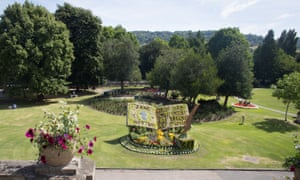
A deliciously original study of the cheap editions of Pride and Prejudice and other novels – ignored by literary scholars – casts new light on Austen’s readership
Jane Austen aficionados think that they know the story of their favourite author’s posthumous dis-appearance and then re-emergence. For half a century after she died in 1817, her books were little known or read. A few discriminating admirers such as George Henry Lewes and Lord Macaulay kept the flame of her reputation burning, but most novelists and novel readers were oblivious to her. Then, in 1869, her nephew James Edward Austen-Leigh published a memoir about her and the public got interested. Her novels started being republished and widely read. She has never looked back.
Janine Barchas’s The Lost Books of Jane Austen puts us right. Her book about books is a beautifully illustrated exploration, indeed compendium, of the popular editions of Austen’s novels that have appeared over the last two centuries. This includes those decades when Austen was supposedly lost from sight. The first chapter is a “vignette” on a copy of Sense and Sensibility, published in 1851 for George Routledge’s Railway Library (books suitable for reading on the train). It cost one shilling and was bought for the 13-year-old Gertrude Wallace, the youngest daughter of a Plymouth naval officer. It is the first of many examples of cheap and popular editions of Austen’s work that kept it alive for ordinary readers and that literary scholars have largely ignored.
After Austen’s death, the copyrights to her novels were bought by the publisher Richard Bentley, who issued them in his Standard Novels series in 1833, in single volumes at six shillings each – much cheaper than the triple decker editions selling for a guinea and a half, but still out of reach of all but the affluent. He cut his prices in the 1840s, but already there were alternatives. By the late 1840s, there were what we would call paperback editions of her novels cheaply available and aimed at train travellers. Pioneering publishers such as Simms & M’Intyre produced Austen novels for a shilling a shot, and then for sixpence each in their Books for the People series. (They paid no attention to the fact that Bentley officially still owned the copyright to some of these.)
“Cheap books make authors canonical,” proclaims Barchas’s first sentence. Thousands of mid-century readers consumed “yellowback” versions of Austen’s novels, so-called because of the yellow paper stuck to the back of them on which advertisements were printed. The sheer proliferation of cheaply produced editions of Austen’s fiction has been invisible because very few of these books have survived. Paradoxically, the expensive first editions of Austen’s novels are now easier to find than the mass-market editions of the Victorian age. Barchas has clearly relished her detective work (and apparently amassed quite a collection herself). She not only describes them, she shows us what they looked like.
Photographs are essential to this book. There in front of you is the 1851 Parlour Library reprint of Mansfield Park, with its red design and lettering on a startling acid green cover, in waxed paper boards. It retailed at WH Smith at British railway stations for two shillings. The willingness of publishers to spice up Austen’s novels is caught in the 1870 Chapman & Hall edition of Pride and Prejudice, whose cover depicts Lydia Bennet flirting with officers at their camp in Brighton, or the 1887 sixpenny Sense and Sensibility, featuring Colonel Brandon and Willoughby pointing their duelling pistols at each other (neither scene was actually included in either novel).
Tracking down these endlessly repackaged reprints, Barchas is in terra incognita. Scholarly bibliographers have minutely recorded the various respectable editions of Austen’s fiction, but most of these cheap popular products, never having made it on to the library shelf, remained unknown to bibliographers. These are volumes that scarcely feature in the catalogues of the great research libraries of Britain and North America. The existing record is, as Barchas characteristically says, “gobsmackingly incomplete”. Her style is sometimes informal, but her attention to print history is painstaking.
She explains the importance of stereotyping processes, whereby printers could mould and then cast in metal the expensively assembled type of a new edition. The resultant stereotyple plates could be used over and over again. Routledge would go on to use his same stereotype plates to produce seven more editions of Sense and Sensibility over the next three decades. (Barchas gives us a photograph of all of them in their very various liveries.) Austen stereotype plates would be sold on from one publisher to another, the resultant type becoming more and more faded as one printing succeeded another.
There clearly was a new enthusiasm for the novels after 1870. Barchas shows us the flurry of colourfully jacketed Austen volumes that began appearing, some evidently intended for the juvenile reader. In America, where publishers treated Austen’s texts with greater literary respect, the market for her work was much quieter in the mid-19th century, but appears to have taken off in the 1870s. Her novels became available for a dime or 15 cents each. In Britain, the sixpenny novel became standard. Soon Austen was being serialised.
In the 1890s, radical publishers produced a library of “famous books” for working-class readers at a penny per volume, which included Sense and Sensibility. At the same time Pride and Prejudice was being boiled down by two thirds for William Stead’s Penny Prose Classic series for young readers. In the 1890s the soap manufacturers Lever Brothers published their own editions of the two novels as prizes for teenage consumers who sent in the largest number of soap wrappers. Barchas dedicates a whole chapter to her researches into the Sunlight Library, calculating that the company gave away some 1.5m books over the course of seven years (though perhaps more by Sir Walter Scott than Jane Austen).
Another chapter chronicles the surprising religious and morally improving uses of her fiction. In the 1840s her novels were included in a multi-volume library of nonconformist tomes aimed at right-minded female readers. Often, they were given as prizes in Sunday schools (despite the creepy vicars she depicts). In the 1890s, editions of Austen were commissioned by a Christian temperance society for distribution to labourers in the West Midlands: Mansfield Park was presented as an alternative to another visit to the pub.
Barchas follows popular editions of Austen well into the 20th century, looking at how publishers began to take images from Hollywood films such as the 1940 MGM Pride and Prejudice to lend excitement to new editions.
A final chapter charts “The Turn to ‘Chick Lit’”, with Barchas arguing that it was only really in the 1960s that “gendered marketing strategies” created the false sense that Austen was a women’s novelist. Among the dizzying variety of 1960s paperback covers that she displays – from austerely antiquarian to lividly psychedelic – are examples of “pinked” editions, deploying the colour wherever possible as a “consumer signal to women”. Sales seem to have risen even further.
Barchas enjoys quoting such writers as Mark Twain and Henry James, as they huff and puff about Austen’s mere popularity. The lesson of this delicious book is that she was even more popular for even longer with an even greater variety of readers than we ever thought. When you look at all the uses to which she was put, you think of Frank Kermode’s definition of a literary classic as a work that “sub-sists in change, by being patient of interpretation”. Austen’s novels have long been very patient.
• John Mullan’s What Matters in Jane Austen? is published by Bloomsbury.
Filed under 2019, author commentary, books
Rowling’s brushes with political controversy are nothing new. She’s just more open about her views now.

If there’s any doubt left that we live in divisive political times, know this: Some fans of Harry Potter are burning their copies of the books to protest author J.K. Rowling’s views of the U.S. president. And she’s fighting back on Twitter, insulting those very fans.
That’s right, one of the most beloved series of books in modern history has now become a political prop. Is nothing safe?
Rowling has been vocal about her feelings concerning President Trump for some time. She has mostly used Trump’s favorite platform, Twitter, to share her criticisms.
These tweets have generated a Facebook page’s worth of headlines. But Rowling’s brushes with political controversy are nothing new.
Rowling is a dedicated progressive. She’s a strong believer in welfare, which she relied on during a particularly rough period in her life. As she said during a 2008 Harvard commencement speech, “An exceptionally short-lived marriage had imploded, and I was jobless, a lone parent, and as poor as it is possible to be in modern Britain, without being homeless … By every usual standard, I was the biggest failure I knew.”
More recently, Rowling found herself in the midst of a Twitter battle surrounding Britain’s decision to leave the European Union, referred to as Brexit, which she staunchly opposed.
Much of this now seemingly endless debate was absent during the height of the Harry Potter craze because the author didn’t publicly discuss her views until the publication of the final book in the series. In 2008, a year after “Harry Potter and the Deathly Hallows” hit bookshelves, Rowling gave 1 million pounds to Britain’s Labour Party.
That same year, speaking to El Pais, she said of the U.S. presidential campaign in which Hillary Clinton and Barack Obama were battling for the Democratic nomination: “I want a Democrat in the White House. It seems a pity that Clinton and Obama have to be rivals, because both are extraordinary.”
Anyone who gave the Harry Potter books a close reading likely wouldn’t have been surprised by Rowling’s politics.
Most of the subplots involve the triumph of marginalized peoples, be it the mixed-heritage Hermione, a “mudbl–d,” the poverty-stricken Weasleys, the stigmatized Hagrid (essentially an ex-offender reintroduced to society who can no longer practice magic as a result) or the “lower class” house elf named Dobby (the most obvious analogue to American slavery).
Harry himself, after all, was an orphan and survivor of attempted infanticide.
In his book “Harry Potter and the Millennials,” Anthony Gierzynski wrote that, “the evidence indicates that Harry Potter fans are more open to diversity and are more politically tolerant than nonfans; fans are also less authoritarian, less likely to support the use of deadly force or torture, more politically active, and more likely to have had a negative view of the Bush administration.”
Rowling invites anyone to challenge her.
Once Rowling opened up about her beliefs, it has been a steady stream ever since. And while attacking her own fans might seem like a poor marketing choice, it’s important to note one of the values that Rowling holds most dear: freedom of speech.
“Intolerance of alternative viewpoints is spreading to places that make me, a moderate and a liberal, most uncomfortable. Only last year, we saw an online petition to ban Donald Trump from entry to the U.K. It garnered half a million signatures,” she said during the 2016 PEN America Literary Gala at the American Museum of Natural History in New York City. “I find almost everything that Mr. Trump says objectionable. I consider him offensive and bigoted. But he has my full support to come to my country and be offensive and bigoted there. His freedom to speak protects my freedom to call him a bigot. His freedom guarantees mine.”
Rowling had already faced some conflict before she publicly expressed her political views. Her Harry Potter books were maligned by some Christian groups, making it one of the most challenged books in 2000, as tracked by the American Library Association’s Office for Intellectual Freedom, according to the New York Times.
“The challenges seem to be objecting to occult or supernatural content in the books and are being made largely by traditional Christians who believe the Bible is a literal document,” Virginia Walter, president of the ALA’s Association for Library Service to Children, told the newspaper. “Any exposure to witches or wizards shown in a positive light is anathema to them. Many of these people feel that the books are door-openers to topics that desensitize children to very real evils in the world.”
The outcry didn’t come only from fringe, radical sects of Christianity, either. As noted in the Christian Post, when Pope Benedict XVI was still Cardinal Joseph Ratzinger he condemned the books for their “subtle seductions, which act unnoticed … deeply distort Christianity in the soul before it can grow properly.”
There’s a certain irony to this, considering Rowling has said that Christianity was a great inspiration for the books.
“To me [the religious parallels have] always been obvious,” she said at a 2007 news conference. “But I never wanted to talk too openly about it because I thought it might show people who just wanted the story where we were going.”
There were Christian references throughout the series. When Harry visits his parents’ graves in one book, the headstone reads, “The last enemy that shall be destroyed is death” — an abridged version of 1 Corinthians 15:26.
The graveyard is also the final resting place of headmaster Albus Dumbledore’s mother and sister, whose tombstone bears the inscription, “Where your treasure is, there your heart be also” — a direct quote from Matthew 6:19.
“I think those two particular quotations he finds on the tombstones at Godric’s Hollow, they sum up — they almost epitomize the whole series,” Rowling said at the news conference.
Filed under 2017, author commentary
Huckleberry Finn, Alive at 100
By NORMAN MAILER
Published: December 9, 1984
Source: http://www.nytimes.com/1984/12/09/books/mailer-huck.html?smid=fb-share&pagewanted=all
[Editor’s note: This essay of rediscovering a classic in adulthood was written over 30 years ago, but is still true today.]
Is there a sweeter tonic for the doldrums than old reviews of great novels? In 19th-century Russia, ”Anna Karenina” was received with the following: ”Vronsky’s passion for his horse runs parallel to his passion for Anna” . . . ”Sentimental rubbish” . . . ”Show me one page,” says The Odessa Courier, ”that contains an idea.” ”Moby-Dick” was incinerated: ”Graphic descriptions of a dreariness such as we do not remember to have met with before in marine literature” . . . ”Sheer moonstruck lunacy” . . . ”Sad stuff. Mr. Melville’s Quakers are wretched dolts and drivellers and his mad captain is a monstrous bore.”
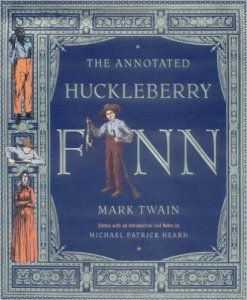
Annotated edition of “The Adventures of Huckleberry Finn”
All the same, the novel was not too unpleasantly regarded. There were no large critical hurrahs but the reviews were, on the whole, friendly. A good tale, went the consensus. There was no sense that a great American novel had landed on the literary world of 1885. The critical climate could hardly anticipate T. S. Eliot and Ernest Hemingway’s encomiums 50 years later. In the preface to an English edition, Eliot would speak of ”a master piece. . . . Twain’s genius is completely realized,” and Ernest went further. In ”Green Hills of Africa,” after disposing of Emerson, Hawthorne and Thoreau, and paying off Henry James and Stephen Crane with a friendly nod, he proceeded to declare, ”All modern American literture comes from one book by Mark Twain called ‘Huckleberry Finn.’ . . . It’s the best book we’ve had. All American writing comes from that. There was nothing before. There has been nothing as good since.”
Hemingway, with his nonpareil gift for nosing out the perfect vin du pays for an ineluctable afternoon, was nonetheless more like other novelists in one dire respect: he was never at a loss to advance himself with his literary judgments. Assessing the writing of others, he used the working author’s rule of thumb: if I give this book a good mark, does it help appreciation of my work? Obviously, ”Huckleberry Finn” has passed the test.
A SUSPICION immediately arises. Mark Twain is doing the kind of writing only Hemingway can do better. Evidently, we must take a look. May I say it helps to have read ”Huckleberry Finn” so long ago that it feels brand-new on picking it up again. Perhaps I was 11 when I saw it last, maybe 13, but now I only remember that I came to it after ”Tom Sawyer” and was disappointed. I couldn’t really follow ”The Adventures of Huckleberry Finn.” The character of Tom Sawyer whom I had liked so much in the first book was altered, and did not seem nice any more. Huckleberry Finn was altogether beyond me. Later, I recollect being surprised by the high regard nearly everyone who taught American Lit. lavished upon the text, but that didn’t bring me back to it. Obviously, I was waiting for an assignment from The New York Times.
Let me offer assurances. It may have been worth the wait. I suppose I am the 10-millionth reader to say that ”Huckleberry Finn” is an extraordinary work. Indeed, for all I know, it is a great novel. Flawed, quirky, uneven, not above taking cheap shots and cashing far too many checks (it is rarely above milking its humor) – all the same, what a book we have here! I had the most curious sense of excitement. After a while, I understood my peculiar frame of attention. The book was so up-to- date! I was not reading a classic author so much as looking at a new work sent to me in galleys by a publisher. It was as if it had arrived with one of those rare letters which says, ”We won’t make this claim often but do think we have an extraordinary first novel to send out.” So it was like reading ”From Here to Eternity” in galleys, back in 1950, or ”Lie Down in Darkness,” ”Catch-22,” or ”The World According to Garp” (which reads like a fabulous first novel). You kept being alternately delighted, surprised, annoyed, competitive, critical and finally excited. A new writer had moved onto the block. He could be a potential friend or enemy but he most certainly was talented.
That was how it felt to read ”Huckleberry Finn” a second time. I kept resisting the context until I finally surrendered. One always does surrender sooner or later to a book with a strong magnetic field. I felt as if I held the work of a young writer about 30 or 35, a prodigiously talented fellow from the Midwest, from Missouri probably, who had had the audacity to write a historical novel about the Mississippi as it might have been a century and a half ago, and this young writer had managed to give us a circus of fictional virtuosities. In nearly every chapter new and remarkable characters bounded out from the printed page as if it were a tarmac on which they could perform their leaps. The author’s confidence seemed so complete that he could deal with every kind of man or woman God ever gave to the middle of America. Jail-house drunks like Huck Finn’s father take their bow, full of the raunchy violence that even gets into the smell of clothing. Gentlemen and river rats, young, attractive girls full of grit and ”sand,” and strong old ladies with aphorisms clicking like knitting needles, fools and confidence men – what a cornucopia of rabble and gentry inhabit the author’s river banks.
It would be superb stuff if only the writer did not keep giving away the fact that he was a modern young American working in 1984. His anachronisms were not so much in the historical facts – those seemed accurate enough – but the point of view was too contemporary. The scenes might succeed – say it again, this young writer was talented! – but he kept betraying his literary influences. The author of ”The Adventures of Huckleberry Finn” had obviously been taught a lot by such major writers as Sinclair Lewis, John Dos Passos and John Steinbeck; he had certainly lifted from Faulkner and the mad tone Faulkner could achieve when writing about maniacal men feuding in deep swamps; he had also absorbed much of what Vonnegut and Heller could teach about the resilience of irony. If he had a surer feel for the picaresque than Saul Bellow in ”Augie March,” still he felt derivative of that work. In places one could swear he had memorized ”The Catcher in the Rye,” and he probably dipped into ”Deliverance” and ”Why Are We in Vietnam?” He might even have studied the mannerisms of movie stars. You could feel traces of John Wayne, Victor McLaglen and Burt Reynolds in his pages. The author had doubtless digested many a Hollywood comedy on small-town life. His instinct for life in hamlets on the Mississippi before the Civil War was as sharp as it was farcical, and couldn’t be more commercial.
No matter. With talent as large as this, one could forgive the obvious eye for success. Many a large talent has to go through large borrowings in order to find his own style, and a lust for popular success while dangerous to serious writing is not necessarily fatal. Yes, one could accept the pilferings from other writers, given the scope of this work, the brilliance of the concept – to catch rural America by a trip on a raft down a great river! One could even marvel uneasily at the depth of the instinct for fiction in the author. With the boy Huckleberry Finn, this new novelist had managed to give us a character of no comfortable, measurable dimension. It is easy for characters in modern novels to seem more vivid than figures in the classics but, even so, Huckleberry Finn appeared to be more alive than Don Quixote and Julian Sorel, as naturally near to his own mind as we are to ours. But how often does a hero who is so absolutely natural on the page also succeed in acquiring convincing moral stature as his adventures develop?
It is to be repeated. In the attractive grip of this talent, one is ready to forgive the author of ”Huckleberry Finn” for every influence he has so promiscuously absorbed. He has made such fertile use of his borrowings. One could even cheer his appearance on our jaded literary scene if not for the single transgression that goes too far. These are passages that do more than borrow an author’s style – they copy it! Influence is mental, but theft is physical. Who can declare to a certainty that a large part of the prose in ”Huckleberry Finn” is not lifted directly from Hemingway? We know that we are not reading Ernest only because the author, obviously fearful that his tone is getting too near, is careful to sprinkle his text with ”a-clutterings” and ”warn’ts” and ”anywheres” and ”t’others.” But we have read Hemingway – and so we see through it – we know we are reading pure Hemingway disguised:
”We cut young cottonwoods and willows, and hid the raft with them. Then we set out the lines. Next we slid into the river and had a swim . . . then we set down on the sandy bottom where the water was about knee-deep and watched the daylight come. Not a sound anywheres . . . the first thing to see, looking away over the water, was a kind of dull line – that was the woods on t’other side; you couldn’t make nothing else out; then a pale place in the sky; then more paleness spreading around; then the river softened up away off, and warn’t black anymore . . . by and by you could see a streak on the water which you know by the look of the streak that there’s a snag there in a swift current which breaks on it and makes that streak look that way; and you see the mist curl up off of the water and the east reddens up and the river.”
Up to now I have conveyed, I expect, the pleasure of reading this book today. It is the finest compliment I can offer. We use an unspoken standard of relative judgment on picking up a classic. Secretly, we expect less reward from it than from a good contemporary novel. The average intelligent modern reader would probably, under torture, admit that ”Heartburn” was more fun to read, minute for minute, than ”Madame Bovary,” and maybe one even learned more. That is not to say that the first will be superior to the second a hundred years from now but that a classic novel is like a fine horse carrying an exorbitant impost. Classics suffer by their distance from our day-to-day gossip. The mark of how good ”Huckleberry Finn” has to be is that one can compare it to a number of our best modern American novels and it stands up page for page, awkward here, sensational there – absolutely the equal of one of those rare incredible first novels that come along once or twice in a decade. So I have spoken of it as kin to a first novel because it is so young and so fresh and so all-out silly in some of the chances it takes and even wins. A wiser older novelist would never play that far out when the work was already well along and so neatly in hand. But Twain does.
For the sake of literary propriety, let me not, however, lose sight of the actual context. ”The Adventures of Huckleberry Finn” is a novel of the 19th century and its grand claims to literary magnitude are also to be remarked upon. So I will say that the first measure of a great novel may be that it presents – like a human of palpable charisma – an all-but-visible aura. Few works of literature can be so luminous without the presence of some majestic symbol. In ”Huckleberry Finn” we are presented (given the possible exception of Anna Livia Plurabelle) with the best river ever to flow through a novel, our own Mississippi, and in the voyage down those waters of Huck Finn and a runaway slave on their raft, we are held in the thrall of the river. Larger than a character, the river is a manifest presence, a demiurge to support the man and the boy, a deity to betray them, feed them, all but drown them, fling them apart, float them back together. The river winds like a fugue through the marrow of the true narrative which is nothing less than the ongoing relation between Huck and the runaway slave, this Nigger Jim whose name embodies the very stuff of the slave system itself – his name is not Jim but Nigger Jim. The growth of love and knowledge between the runaway white and the runaway black is a relation equal to the relation of the men to the river for it is also full of betrayal and nourishment, separation and return. So it manages to touch that last fine nerve of the heart where compassion and irony speak to one another and thereby give a good turn to our most protected emotions.
READING ”Huckleberry Finn” one comes to realize all over again that the near- burned-out, throttled, hate-filled dying affair between whites and blacks is still our great national love affair, and woe to us if it ends in detestation and mutual misery. Riding the current of this novel, we are back in that happy time when the love affair was new and all seemed possible. How rich is the recollection of that emotion! What else is greatness but the indestructible wealth it leaves in the mind’s recollection after hope has soured and passions are spent? It is always the hope of democracy that our wealth will be there to spend again, and the ongoing treasure of ”Huckleberry Finn” is that it frees us to think of democracy and its sublime, terrifying premise: let the passions and cupidities and dreams and kinks and ideals and greed and hopes and foul corruptions of all men and women have their day and the world will still be better off, for there is more good than bad in the sum of us and our workings. Mark Twain, whole embodiment of that democratic human, understood the premise in every turn of his pen, and how he tested it, how he twisted and tantalized and tested it until we are weak all over again with our love for the idea.
Norman Mailer’s latest novel is ”Tough Guys Don’t Dance.”
Source: http://www.nytimes.com/1984/12/09/books/mailer-huck.html?smid=fb-share&pagewanted=all
Filed under 2016, author commentary, authors
“Brokeback Mountain” author Annie Proulx says she regrets writing the story
by Daisy Wyatt
Annie Proulx has said she regrets writing “Brokeback Mountain” due to the number of men who have written to her complaining about the story’s ending.
The US author said she wishes she had not written the short story after the “hassle and problems and irritation” she received after the film came out in 2005.
“So many people have completely misunderstood the story. I think it’s important to leave spaces in a story for readers to fill in from their own experience, but unfortunately the audience that ‘Brokeback’ reached most strongly have powerful fantasy lives,” Proulx said in an interview with the Paris Review.
“And one of the reasons we keep the gates locked here is that a lot of men have decided that the story should have had a happy ending. They can’t bear the way it ends – they just can’t stand it.
“So they rewrite the story, including all kinds of boyfriends and new lovers and so forth after Jack is killed. And it just drives me wild.”
The author said the majority of letters she received complaining about the film’s ending began “I’m not gay, but…” and added that she was frustrated the men did not seem to understand that the story was not about the lead characters Jack and Ennis.
“It’s about homophobia; it’s about a social situation; it’s about a place and a particular mindset and morality. They just don’t get it,” she said.
Rest of the article at: http://www.independent.co.uk/arts-entertainment/books/news/brokeback-mountain-author-annie-proulx-says-she-regrets-writing-the-story-9949636.html
Filed under author commentary, author interview


 Booker's Blog
Sing the truth
Share this:
Leave a comment
Filed under 2025, author, author commentary
Tagged as novel, poem, salman rushdie, truth, writing