Category Archives: advice

Some writing advice to consider

Here are three writing places you can go to get some advice. I sure there are others, but these three stops could be helpful:

http://janeyolen.com/the-alphabetics-of-story/
From A to Z, literally in alphabetical order prolific author Jane Yolen discusses almost every aspect of story writing, from architecture to endings. None of the entries are long, so it is not as if you have to spend hours with your eyeballs glued to the screen. But hey, if you write, you’re probably already doing that anyway.

http://blogs.plos.org/neurotribes/2011/06/02/practical-tips-on-writing-a-book-from-22-brilliant-authors/
If you are more into writing non-fiction, then this list of practical tips from twenty-two authors could be of help for you. But there are nuggets of information for any writer, such as being willing to delete entire chapters and favorite passages. Not all the recommendations are so painful, but it takes more than fast fingers and a fluid imagination to make your writing work.

http://blog.nathanbransford.com/
A former agent turned author, Nathan Bransford covers a wide variety of topics dealing with writing, including poles where he asks his readers to offer their opinions. He has entries for subjects such as How to find an agent and How to write a synopsis or query letter, all under a heading called Publishing Essentials.

1 Comment

Filed under advice, blog, fiction, Jane Yolen, Nathan Brandsford, non-fiction, publishing, Steve Silberman, words, writer, writing, writing blog, writing tip

Guest Blogger Mark Twain on Words to be Wary of

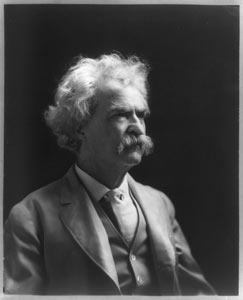
Mark Twain photo

photo of Mark Twain

“Substitute ‘damn’ every time you’re inclined to write ‘very;’ your editor will delete it and the writing will be just as it should be.” —Mark Twain

Unfortunately, there are fewer editors around these days, the victims of corporate downsizing many of them, so you will probably have to do this yourself, but it might just work. Every time you want to write “very,” write “damn” instead, then read the story out loud. Just don’t do it at an open mike night.

To learn more about Mark Twain: Mark Twain.

2 Comments

Filed under advice, editor, humor, Mark Twain, words, words to be wary of, writer, writing, writing tip

Writing Tip: Drama is conflict

My writing is distinctly middle brow. Just ask anybody who has suffered through it. Still, I like to think that even in my middling way, I can offer some helpful advice when I stumble across it. Therefore, from time to time, I will post some writing advice, but not from me. The advice will come from established sources. I will endeavor not to make it overlong or overreaching, and sometimes it will simply be reminders of what we all probably already know, but it will be some tips I have picked up from reading, from attending writing conferences, or it may even come from you.

Writing with paperclips in ears and nose

Darma is conflict, sometimes even self-inflicted

The first bit of advice comes from a writing course the Knoxville Writers’ Guild sponsored way back in 1993. The teacher was Joseph Gunnels and the cost was $75. It was two-day event, May 15 and 16, and we spent part of a pleasant afternoon sitting on the grass outside the Candy Factory, on The 1982 World’s Fair site. I took over 30 pages of notes, but rather than bore you with details, here is the essence of what I took away from the seminar:

Drama is conflict;
Without conflict no action;
Without action no character;
Without character no story;
Without story, who cares?

In a future entry, I’ll give you a short, crisp definition for conflict that I learned at a more recent one-day writing seminar. It comes from a very highly regarded script doctor in Hollywood, but applies just as well to other forms of fiction writing. Stay turned.

Leave a comment

Filed under advice, building a better story, character, conflict, drama, story, tension, words, writing, writing conference, writing tip

Mark Twain quote on writing

Mark Twain photo

photo of Mark Twain

“The time to begin writing an article is when you have finished it to your satisfaction. By that time you begin to clearly and logically perceive what it is you really want to say.” —Mark Twain

And somehow, if you don’t know who Mark Twain is, here’s where you can get a clue: Mark Twain.

Leave a comment

Filed under advice, humor, Mark Twain, quote, Quote of the day, words, writer, writing, writing tip

I am what I am, and that’s all that I am

# I live in my own little world but it’s OK, everyone knows me here.

# I don’t do drugs ’cause I find I get the same effect just by standing up really fast.

# Money can’t buy happiness but it sure makes misery easier to live with.

# If flying is so safe, why do they call the airport the “terminal”?

# I don’t approve of political jokes. I’ve seen too many of them get elected.

# The most precious thing we have is life, yet it has absolutely no trade-in value.

# I am a nobody; nobody is perfect, and therefore I am perfect.

# No one ever says, “It’s only a game!” when their team is winning.

# How long a minute is depends on what side of the bathroom door you’re on.

Leave a comment

Filed under absurdity, advice, humor, word play, words

Writing Quote for the Day

“Don’t get it right, just get it written.” —James Thurber

And if you don’t know who James Thurber is, I suggest starting here: The Thurber House.

Leave a comment

Filed under advice, humor, James Thurber, words, writer, writing, writing tip

The pitches

Killer Nashville badge

Killer Nashville badge

Below are two of my pitches. I used the The Painted Beast pitch on all the agents and editors I talked with at Killer Nashville. I was able to use The Small Resurrection pitch once or twice.

Two pieces of advice, one I have said before: Practice the pitch and make it as natural as you can. Two: Think of a pitch as a spoken version of the back-cover blurb you read on many paperback books.

The Painted Beast

Ex-cop Stephen York was once a hero. Decorated and lionized from uncovering corruption in the police department and bringing down a criminal enterprise, he now works two or three menial jobs in order to hold body and soul together, not only for himself but also his thirteen-year-old step-daughter and eight-year-old daughter. One night his ex-wife, who has escaped from prison, returns home and terrorizes him. He escapes from her and she from him, but shortly thereafter she kidnaps their daughters. In order to save them, Stephen has to kill her, which puts him under suspicion for murder and under the thumb of a police detective who has personal as well as professional reasons for wanting to grind Stephen down further. In addition, his step-daughter’s biological father steps forward to kidnap her with the intention of leading her into a life of child pornography and prostitution in order to get money to help re-establish the criminal empire that Stephen had helped take down. This time, in order to save his step-daughter, Stephen, who has not been a particularly good father, has to offer his life in order to save his step-daughter’s. In so doing, he learns another definition of hero. At its core this novel’s theme asks and answers the question: Can a fallen hero be a hero again?

Limerick version:
There once was an ex-cop who did poorly
At being a father and what’s more he
Killed his ex-wife,
Then offered up his life
To save his daughter from a life in pornography.

***

A Small Resurrection

Is believing in what you see the same thing as seeing what you believe in?

Knoxville, Tennessee, is the last place T. Xavier Gabriel wants to be. But the director of the 8th highest grossing film in Hollywood has come to town to ask his ex-wife for forbearance in paying the large alimony and possibly also for a loan to help restart his fallen career. She, however, has other plans. She wants him to

Pitching your novel

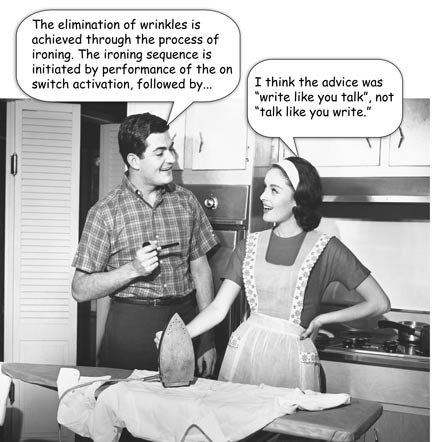
Use conversational voice when talking about your novel

rescue their 22-year-old daughter from the undue influences of a 24-year-old evangelical preacher. Gabriel wants nothing to do with that, having already admitted to be a failure once as a father, he doesn’t want a second bite of the apple. But when he finds his daughter keeping company with a resurrected Rod Serling, he sees a chance to use this Serling look-alike to resurrect his own career. But getting Serling away from his daughter puts her in jeopardy, and Gabriel must decide if he is going to save her or save his career. To save her, he must enlist the aid of Serling, who is not quite sure who he is or why he has been resurrected, and in saving her he puts an end ever resurrecting his career.

Limerick version:
There once was a director named Gabriel
Whose life was a broken down fable
Then along came Rod Serling
And an offer so sterling
That it could save Gabe if he was able.

Two final notes:
1) The limerick versions were not something I pitched, though I thought about it. It was my way of have a pitch that could be done in 15 seconds or less.

2) Some pitch advice says you need to have antecedents as part of your pitch. Antecedents are novels that are like yours. Something similar to your novel. This is supposed to show that you know about your novel’s market and where it might fit. While I had that prepared for The Painted Beast, it did not seem to be something those I pitched to at Killer Nashville were interested in. That could have been a mistake on my part. But I had the feeling that these agents wanted to be the ones to decide where it belongs.

Leave a comment

Filed under advice, agents, characters, Killer Nashville, limerick, Perils of writing, pitches, publishers, story, the perils of writing, words, writing, writing conference, writing tip

Pitch aside: dealing with contradictory information

This information comes from agent Nathan Bransford, and while he is aiming the information at query letters, I think the same advice can apply for pitches, with a little modification:

1. Take a Deep Breath: As long as you’re getting the big stuff right, you’re going to be fine. You don’t need to have every single little teeny tiny thing perfect. You can get my name or gender wrong and I still might request your pages (just did this last week in fact). I’m not going to reject you because you sent me the first five pages of Chapter 1 instead of your Prologue if I like the idea and your writing. Don’t sweat the small stuff. Because really: if an agent is going to reject your query over some small niggling detail, are they someone you’d want to work with anyway?

2. Remember That Agent Blogs Are Just Trying to Help: I know how tempting it is to throw up your hands and just think that literary agents are so many Goldilocks with completely different ideas of how hot the porridge should be. Please just remember that we offer so much advice because people ask. We get e-mails and comments all the time asking about everything from paper size to fonts to anglicized spelling to serial commas. So we try to help, and we’re not always going to agree on everything. Personally, when I’m wearing my author hat I’d rather have too much information than too little, so I tend to err on the side of dispensing too much agent advice. It’s up to you to decide which advice you agree with and which you don’t. Just remember that we’re trying to help, not trying to make your life miserable.

3. Not All Publishing Advice is Created Equal: I went back and looked at some of my early blog posts, and holy cow after just four years they’re already wildly out of date. Consider the source, consider the freshness of the advice, and beware of anyone who tries to tell you that there’s one way and only one way to find successful publication. Occasionally an author out there somewhere will have a sense that the way they found success is The Way That Should Work For Everyone, whereas people who have worked across the publishing spectrum have seen the proverbial cat skinned in an impossibly vast number of ways.

4. Try As Best You Can to Meet an Agent’s Specifications, But Don’t Go Crazy Trying to Do It: If you happen to remember that Rachelle wants you to query with your pen name and I want to hear from the real you: great! Query accordingly. But don’t go creating a massive spreadsheet with every agent’s particular individual preferences. No agent expects you to do that.

5. If You Think the Contradictory Query Advice is Mind Boggling, Just Wait Until You Reach the Publication Stage: In case you haven’t noticed, this business is an art, not so much a science. There’s no one way to do things, and you’re going to face conflicting advice and opinions about your manuscript, cover art, marketing plan, you name it. There are even more opinions out there than people (sometimes people can’t even decide what they think and have multiple opinions). At the end of the day, all you can do is just take all the advice into account, and choose the route that works best for you.

Leave a comment

Filed under advice, agents, editor, Killer Nashville, novel, Perils of writing, pitches, publishers, Random Access Thoughts, the perils of writing, words, writing, writing conference, writing tip