
Once a science fiction writer moved to Saskatchewan. /
He heard that’s where all the aliens had gone. /
They’d landed there /
For the Canadian healthcare /
And belief that they could belong.
Once a science fiction writer moved to Saskatchewan. /
He heard that’s where all the aliens had gone. /
They’d landed there /
For the Canadian healthcare /
And belief that they could belong.
‘Like most other American systems and professions, delusions around meritocracy continue to pervade the writing world. ‘ Illustration: Julien Posture/The Guardian

There is nothing more sustaining to long-term creative work than time and space – and these things cost money
Let’s start with me: I’m not sure how or if I’d still be a writer without the help of other people’s money. I have zero undergrad debt. Of my three years of grad school, two of them were funded through a teaching fellowship; my parents helped pay for the first. The last two years my stipend barely covered the childcare I needed to travel uptown three days a week to teach and go to class and my husband’s job is what kept us afloat.
I got connections from that program. I got my agent through the recommendation of a professor. Nearly every year since I graduated from that program, I have been employed by them. The thing I’m most sure I had though, that was a direct result of my extraordinary privilege, is the blindness with which I bounded toward this profession, the not knowing, because I had never felt, until I was a grownup, the very real and bone-deep fear of not knowing how you’ll live from month to month. Other versions of this story that I know from other people: a down payment from a grandpa on a brownstone; monthly parental stipends; a partner who works at a startup; a partner who’s a corporate lawyer; a wealthy former boss who got attached and agreed to pay their grad school off.
Once, before a debut novelist panel geared specifically to aspiring writers, one of the novelists with whom I was set to speak mentioned to me that they’d hired a private publicist to promote their book. They told me it cost nearly their whole advance but was worth it, they said, because this private publicist got them on a widely watched talkshow. During this panel, this writer mentioned to the crowd at one point that they “wrote and taught exclusively”, and I kept my eyes on my hands folded in my lap. I knew this writer did much of the same teaching I did, gig work, often for between $1,500-$3,000 for a six to eight-week course; nowhere near enough to sustain one’s self in New York. I knew their whole advance was gone, and that, if the publicist did pay off, it would be months before they might accrue returns.
I did not know what this writer, who I thought was single, paid in rent, or all the other ways that they might have been able to cut corners, that I, a mother of two, could not cut, but even then, it felt impossible to me that this writer was sustaining themselves in any legitimate way without some outside help. I thought, maybe, when they said “write” they might be including copywriting or tech, as some others that I know support themselves.
I knew all these aspiring writers, though, heard this person say this and assumed that there was a way to make a living as a writer, that they thought this person was “making it” in ways they hoped one day to be. I don’t know this writer and don’t know how, actually, they lived. What I do know is, when the panel was over, I wanted to take the microphone back and say loudly to the students that what this writer said was, at least in part, a lie.
On Instagram and Twitter there are writers who “write full time” also. They post pictures of their desk or their pens and talk about “process”. Maybe, two years ago, they sold a quiet literary novel to an independent press. For my students, for all the people I see out there, trying to break in or through and watching, envious, I want to attach to these statements and these Instagram posts, a caveat that says the writing isn’t what is keeping this person safe and clothed and fed.
According to a 2018 Author’s Guild Study the median income of all published authors for all writing related activity was $6,080 in 2017, down from $10,500 in 2009; while the median income for all published authors based solely on book-related activities went from $3,900 to $3,100, down 21%. Roughly 25% of authors earned $0 in income in 2017.
I would argue that there is nothing more sustaining to long-term creative work than time and space – these things cost money – and the fact that some people have access to it for reasons that are often outside of their control continues to create an ecosystem in which the tenor of the voices that we hear from most often remains similar. It is no wonder, I say often to students, that so much of the canon is about rich white people. Who else, after all, has the time and space to finish a book. Who else, after all, as the book is coming out, has the time and space and money to promote and publicize that book?The median income of all published authors for all writing related activity was $6,080 in 2017
There are ramifications, I think, of no one mentioning the source of this freedom when they have it. There is the perpetuation of an illusion that makes an unsustainable life choice appear sustainable, that makes the specific achievements of particular individuals seem more remunerative than they actually are. There is the feeling that the choices that we’ve made outside of writing: who we married, whether or not we had children, the families we were born to, will forever hinder our ability to make good work.
When students ask me for advice with regard to how to “make it as a writer”, I tell them to get a job that also gives them time and space somehow to write; I tell them find a job that, if they still have it 10 years from now, it wouldn’t make them sad. I worry often that they think this means I don’t think their work is worthy; that I don’t believe they’ll make it in the way that they imagine making it, but this advice is me trying help them sustain themselves enough to make the work I know they can.
Like most other American systems and professions, delusions around meritocracy continue to pervade the writing world. Those of us who are not bolstered by outside sources, those of us who are but still struggle, and say it out loud, often run the risk of seeming whiny or ungrateful; maybe we worry we will just be thought not good enough. To be a writer is a choice, after all, and I continue to make it. But perpetuating the delusion that the choice is not impossibly risky, precarity-inducing, only hurts the participants’ ability to reconsider the various shapes their lives might take in service of sustaining it and them.
It allows a system that cannot sustain most of the producers of its products to continue to pretend it can.
Filed under 2020
Fitness gurus share their morning routines.
NYLON |
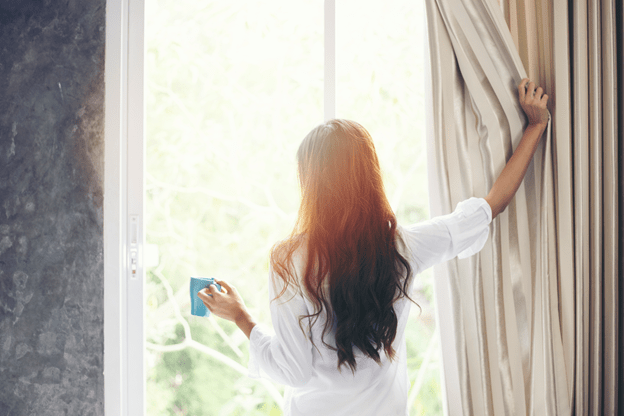
How do some people manage to look so darn perky as they sip coffee and smoothies in their Instagram stories in the morning? It all comes down to establishing a winning routine, one that’s easy for you to do every day and leaves you feeling awake, alert, and inspired. You don’t have to steal an entire routine from these fitness and wellness experts, but they have some pretty great suggestions of places to start.
Once you begin to develop a routine of your own, optimize it to your specific needs. Meditation for 20 minutes might not work for you, but maybe you can handle five minutes. Yoga might not be your jam, but what about a few basic stretches instead? And journaling can feel a little cliche, but what about a Google Doc where you list one thing daily that you’re grateful for? We don’t all need to be fitness and wellness junkies, but we can all get a little bit better at managing our mornings and crushing the rest of our day.
“I’d say my number one tip is to get ready for your day, whether that be breakfast, journaling, meditation, or working out before looking at your phone,” Sophie Gray of WayofGray.com says. “I recommend being off of your phone for at least 30 to 60 minutes in the morning! I like to do this because I can check in with myself first, before checking in with others.”
Productivity gurus and the authors of Peak Performance, Brad Stulberg and Steve Magness, also back this one up. The more time you can stay off your phone and not be distracted, the better. Getting your primary workout for the day done before the flood of emails, Instagrams, and text is going to make the day feel a lot smoother.
“This year has officially been the year of slowing down and learning to give myself what I need in order to thrive throughout the day with sustained energy and inspiration,” adds The Balance Blonde blogger Jordan Younger. “You could say I am a notorious overcommitter and a workaholic-slash-iPhone-aholic—who isn’t?—so I decided to get serious with my morning routine, to start to cultivate more peace and serenity in my daily life. I start each day with a digital detox where I do not look at my phone until I feel ready to be on and communicate with the world!”
“Working from home can sometimes mean there’s no need for you to leave the house, but, for me, getting outdoors every day for fresh air, a sense of vitality, and vitamin D is so important,” says Melissa Hemsley of the Hemsley Sisters. “Daylight helps to reset your internal body clock, also known as the circadian rhythm, leading to better sleep and allowing your body to tune into what it needs. I’ve got a staffy called Nelly who I take for runs around my local park, so it’s a non-negotiable for me!”
Studies bear this out: We need vitamin D to stay happy and energized. One such study even linked vitamin D deficiency in young women with depression. You don’t need to start supplementing to get it. Just getting sunlight should do the trick. And if, like Melissa, you work at home, a walk outside can give you the divide between “you time” and working hours.
It’s no shock that Strala Yoga creator Tara Stiles starts every morning with a yoga flow, though as a new mom, her routine varies daily depending on what she needs and how she feels. And that’s a good thing! Even if you’re not nursing a newborn, switching up your yoga flow makes the morning a bit more exciting. Strala Yoga has a ton of quick and simple morning flows that Stiles created, and most of them run between seven and 12 minutes. Check out this one and this one if you prefer to have a video to flow with, or just do a few sun salutations and poses that make you feel particularly good.
A regular yoga practice—10 minutes a day is over an hour a week!—can increase strength, balance, and flexibility, calm the mind, and reduce stress, according to the American College of Sports Medicine. It can even help battle things like lower back pain, according to a recent study.
“Tongue scraping with a copper or stainless steel tongue scraper removes the toxins that brushing and flossing your teeth doesn’t,” says the other Hemsley sister, Jasmine. “Quite frankly, I’d rather forget to brush my teeth!” If tongue scraping isn’t for you, that’s fine, too, but having a morning beauty/cleansing routine can go a long way toward making you feel more awake and alert if you’re having a tough time crawling out of bed and perking up.
“I wake up, make a matcha tea or coffee in my kitchen, stretch on my yoga mat, and do a mindfulness meditation practice,” says Younger. “I have also gotten very into crystals, sage, essential oils, and palo santo. The morning is my ‘me time’ to play around with all of my yogi, kundalini grounding practices and also get some reading or journaling in. Then I head off to teach yoga down the street and feel like a new human! Also breathing. It sounds simple, but it’s been a game changer to really focus on my breath.”
Meditation also makes you more creative, according to one study. And another championed morning meditation because that’s when we’re at our most spiritually aware.
It’s not just the yogis who are doing morning meditation, fitness junkies are into it, too. “Everyday is different for me, but no matter where I am, I make sure to spend a few moments alone setting my intention and purpose for the day through meditation,” says Karena Dawn of ToneItUp.com. It really helps me stay centered and focused. After that, I head out for my workout. If I don’t workout in the morning, it usually won’t happen.”
Dawn also digs a morning workout to get the blood pumping. If you’re an early riser and can sneak in a quick run or strength workout, it’s a great way to kick off the day. And bonus, if you do a low-key workout before you eat breakfast; you’ll reap the benefits of fasted state training and gain extra strength and aerobic capacity in the process. Bonus: You can burn almost 20 percent more fat if you exercise pre-breakfast, according to one study. Plus, let’s be honest, breakfast will taste a whole lot better when you’ve really worked for it.
Filed under 2020, writing tip
A leading neuroscientist on why sleep deprivation is increasing our risk of cancer, heart attack, and Alzheimer’s – and what you can do about it.
Matthew Walker has learned to dread the question “What do you do?” At parties, it signals the end of his evening; thereafter, his new acquaintance will inevitably cling to him like ivy. On an aeroplane, it usually means that while everyone else watches movies or reads a thriller, he will find himself running an hours-long salon for the benefit of passengers and crew alike. “I’ve begun to lie,” he says. “Seriously. I just tell people I’m a dolphin trainer. It’s better for everyone.”
Walker is a sleep scientist. To be specific, he is the director of the Center for Human Sleep Science at the University of California, Berkeley, a research institute whose goal – possibly unachievable – is to understand everything about sleep’s impact on us, from birth to death, in sickness and health. No wonder, then, that people long for his counsel. As the line between work and leisure grows ever more blurred, rare is the person who doesn’t worry about their sleep. But even as we contemplate the shadows beneath our eyes, most of us don’t know the half of it – and perhaps this is the real reason he has stopped telling strangers how he makes his living. When Walker talks about sleep he can’t, in all conscience, limit himself to whispering comforting nothings about camomile tea and warm baths. It’s his conviction that we are in the midst of a “catastrophic sleep-loss epidemic”, the consequences of which are far graver than any of us could imagine. This situation, he believes, is only likely to change if government gets involved.
Walker has spent the last four and a half years writing Why We Sleep, a complex but urgent book that examines the effects of this epidemic close up, the idea being that once people know of the powerful links between sleep loss and, among other things, Alzheimer’s disease, cancer, diabetes, obesity and poor mental health, they will try harder to get the recommended eight hours a night (sleep deprivation, amazing as this may sound to Donald Trump types, constitutes anything less than seven hours). But, in the end, the individual can achieve only so much. Walker wants major institutions and law-makers to take up his ideas, too. “No aspect of our biology is left unscathed by sleep deprivation,” he says. “It sinks down into every possible nook and cranny. And yet no one is doing anything about it. Things have to change: in the workplace and our communities, our homes and families. But when did you ever see an NHS poster urging sleep on people? When did a doctor prescribe, not sleeping pills, but sleep itself? It needs to be prioritised, even incentivised. Sleep loss costs the UK economy over £30bn a year in lost revenue, or 2% of GDP. I could double the NHS budget if only they would institute policies to mandate or powerfully encourage sleep.”
Why, exactly, are we so sleep-deprived? What has happened over the course of the last 75 years? In 1942, less than 8% of the population was trying to survive on six hours or less sleep a night; in 2017, almost one in two people is. The reasons are seemingly obvious. “First, we electrified the night,” Walker says. “Light is a profound degrader of our sleep. Second, there is the issue of work: not only the porous borders between when you start and finish, but longer commuter times, too. No one wants to give up time with their family or entertainment, so they give up sleep instead. And anxiety plays a part. We’re a lonelier, more depressed society. Alcohol and caffeine are more widely available. All these are the enemies of sleep.”
But Walker believes, too, that in the developed world sleep is strongly associated with weakness, even shame. “We have stigmatised sleep with the label of laziness. We want to seem busy, and one way we express that is by proclaiming how little sleep we’re getting. It’s a badge of honour. When I give lectures, people will wait behind until there is no one around and then tell me quietly: ‘I seem to be one of those people who need eight or nine hours’ sleep.’ It’s embarrassing to say it in public. They would rather wait 45 minutes for the confessional. They’re convinced that they’re abnormal, and why wouldn’t they be? We chastise people for sleeping what are, after all, only sufficient amounts. We think of them as slothful. No one would look at an infant baby asleep, and say ‘What a lazy baby!’ We know sleeping is non-negotiable for a baby. But that notion is quickly abandoned [as we grow up]. Humans are the only species that deliberately deprive themselves of sleep for no apparent reason.” In case you’re wondering, the number of people who can survive on five hours of sleep or less without any impairment, expressed as a percent of the population and rounded to a whole number, is zero.
The world of sleep science is still relatively small. But it is growing exponentially, thanks both to demand (the multifarious and growing pressures caused by the epidemic) and to new technology (such as electrical and magnetic brain stimulators), which enables researchers to have what Walker describes as “VIP access” to the sleeping brain. Walker, who is 44 and was born in Liverpool, has been in the field for more than 20 years, having published his first research paper at the age of just 21. “I would love to tell you that I was fascinated by conscious states from childhood,” he says. “But in truth, it was accidental.” He started out studying for a medical degree in Nottingham. But having discovered that doctoring wasn’t for him – he was more enthralled by questions than by answers – he switched to neuroscience, and after graduation, began a PhD in neurophysiology supported by the Medical Research Council. It was while working on this that he stumbled into the realm of sleep.
“I was looking at the brainwave patterns of people with different forms of dementia, but I was failing miserably at finding any difference between them,” he recalls now. One night, however, he read a scientific paper that changed everything. It described which parts of the brain were being attacked by these different types of dementia: “Some were attacking parts of the brain that had to do with controlled sleep, while other types left those sleep centres unaffected. I realised my mistake. I had been measuring the brainwave activity of my patients while they were awake, when I should have been doing so while they were asleep.” Over the next six months, Walker taught himself how to set up a sleep laboratory and, sure enough, the recordings he made in it subsequently spoke loudly of a clear difference between patients. Sleep, it seemed, could be a new early diagnostic litmus test for different subtypes of dementia.
After this, sleep became his obsession. “Only then did I ask: what is this thing called sleep, and what does it do? I was always curious, annoyingly so, but when I started to read about sleep, I would look up and hours would have gone by. No one could answer the simple question: why do we sleep? That seemed to me to be the greatest scientific mystery. I was going to attack it, and I was going to do that in two years. But I was naive. I didn’t realise that some of the greatest scientific minds had been trying to do the same thing for their entire careers. That was two decades ago, and I’m still cracking away.” After gaining his doctorate, he moved to the US. Formerly a professor of psychiatry at Harvard Medical School, he is now professor of neuroscience and psychology at the University of California.
Does his obsession extend to the bedroom? Does he take his own advice when it comes to sleep? “Yes. I give myself a non-negotiable eight-hour sleep opportunity every night, and I keep very regular hours: if there is one thing I tell people, it’s to go to bed and to wake up at the same time every day, no matter what. I take my sleep incredibly seriously because I have seen the evidence. Once you know that after just one night of only four or five hours’ sleep, your natural killer cells – the ones that attack the cancer cells that appear in your body every day – drop by 70%, or that a lack of sleep is linked to cancer of the bowel, prostate and breast, or even just that the World Health Organisation has classed any form of night-time shift work as a probable carcinogen, how could you do anything else?”
There is, however, a sting in the tale. Should his eyelids fail to close, Walker admits that he can be a touch “Woody Allen-neurotic”. When, for instance, he came to London over the summer, he found himself jet-lagged and wide awake in his hotel room at two o’clock in the morning. His problem then, as always in these situations, was that he knew too much. His brain began to race. “I thought: my orexin isn’t being turned off, the sensory gate of my thalamus is wedged open, my dorsolateral prefrontal cortex won’t shut down, and my melatonin surge won’t happen for another seven hours.” What did he do? In the end, it seems, even world experts in sleep act just like the rest of us when struck by the curse of insomnia. He turned on a light and read for a while.
Will Why We Sleep have the impact its author hopes? I’m not sure: the science bits, it must be said, require some concentration. But what I can tell you is that it had a powerful effect on me. After reading it, I was absolutely determined to go to bed earlier – a regime to which I am sticking determinedly. In a way, I was prepared for this. I first encountered Walker some months ago, when he spoke at an event at Somerset House in London, and he struck me then as both passionate and convincing (our later interview takes place via Skype from the basement of his “sleep centre”, a spot which, with its bedrooms off a long corridor, apparently resembles the ward of a private hospital). But in another way, it was unexpected. I am mostly immune to health advice. Inside my head, there is always a voice that says “just enjoy life while it lasts”.
The evidence Walker presents, however, is enough to send anyone early to bed. It’s no kind of choice at all. Without sleep, there is low energy and disease. With sleep, there is vitality and health. More than 20 large scale epidemiological studies all report the same clear relationship: the shorter your sleep, the shorter your life. To take just one example, adults aged 45 years or older who sleep less than six hours a night are 200% more likely to have a heart attack or stroke in their lifetime, as compared with those sleeping seven or eight hours a night (part of the reason for this has to do with blood pressure: even just one night of modest sleep reduction will speed the rate of a person’s heart, hour upon hour, and significantly increase their blood pressure).
A lack of sleep also appears to hijack the body’s effective control of blood sugar, the cells of the sleep-deprived appearing, in experiments, to become less responsive to insulin, and thus to cause a prediabetic state of hyperglycaemia. When your sleep becomes short, moreover, you are susceptible to weight gain. Among the reasons for this are the fact that inadequate sleep decreases levels of the satiety-signalling hormone, leptin, and increases levels of the hunger-signalling hormone, ghrelin. “I’m not going to say that the obesity crisis is caused by the sleep-loss epidemic alone,” says Walker. “It’s not. However, processed food and sedentary lifestyles do not adequately explain its rise. Something is missing. It’s now clear that sleep is that third ingredient.” Tiredness, of course, also affects motivation.
Sleep has a powerful effect on the immune system, which is why, when we have flu, our first instinct is to go to bed: our body is trying to sleep itself well. Reduce sleep even for a single night, and your resilience is drastically reduced. If you are tired, you are more likely to catch a cold. The well-rested also respond better to the flu vaccine. As Walker has already said, more gravely, studies show that short sleep can affect our cancer-fighting immune cells. A number of epidemiological studies have reported that night-time shift work and the disruption to circadian sleep and rhythms that it causes increase the odds of developing cancers including breast, prostate, endometrium and colon.
Getting too little sleep across the adult lifespan will significantly raise your risk of developing Alzheimer’s disease. The reasons for this are difficult to summarise, but in essence it has to do with the amyloid deposits (a toxin protein) that accumulate in the brains of those suffering from the disease, killing the surrounding cells. During deep sleep, such deposits are effectively cleaned from the brain. What occurs in an Alzheimer’s patient is a kind of vicious circle. Without sufficient sleep, these plaques build up, especially in the brain’s deep-sleep-generating regions, attacking and degrading them. The loss of deep sleep caused by this assault therefore lessens our ability to remove them from the brain at night. More amyloid, less deep sleep; less deep sleep, more amyloid, and so on. (In his book, Walker notes “unscientifically” that he has always found it curious that Margaret Thatcher and Ronald Reagan, both of whom were vocal about how little sleep they needed, both went on to develop the disease; it is, moreover, a myth that older adults need less sleep.) Away from dementia, sleep aids our ability to make new memories, and restores our capacity for learning.
And then there is sleep’s effect on mental health. When your mother told you that everything would look better in the morning, she was wise. Walker’s book includes a long section on dreams (which, says Walker, contrary to Dr Freud, cannot be analysed). Here he details the various ways in which the dream state connects to creativity. He also suggests that dreaming is a soothing balm. If we sleep to remember (see above), then we also sleep to forget. Deep sleep – the part when we begin to dream – is a therapeutic state during which we cast off the emotional charge of our experiences, making them easier to bear. Sleep, or a lack of it, also affects our mood more generally. Brain scans carried out by Walker revealed a 60% amplification in the reactivity of the amygdala – a key spot for triggering anger and rage – in those who were sleep-deprived. In children, sleeplessness has been linked to aggression and bullying; in adolescents, to suicidal thoughts. Insufficient sleep is also associated with relapse in addiction disorders. A prevailing view in psychiatry is that mental disorders cause sleep disruption. But Walker believes it is, in fact, a two-way street. Regulated sleep can improve the health of, for instance, those with bipolar disorder.
I’ve mentioned deep sleep in this (too brief) summary several times. What is it, exactly? We sleep in 90-minute cycles, and it’s only towards the end of each one of these that we go into deep sleep. Each cycle comprises two kinds of sleep. First, there is NREM sleep (non-rapid eye movement sleep); this is then followed by REM (rapid eye movement) sleep. When Walker talks about these cycles, which still have their mysteries, his voice changes. He sounds bewitched, almost dazed.
“During NREM sleep, your brain goes into this incredible synchronised pattern of rhythmic chanting,” he says. “There’s a remarkable unity across the surface of the brain, like a deep, slow mantra. Researchers were once fooled that this state was similar to a coma. But nothing could be further from the truth. Vast amounts of memory processing is going on. To produce these brainwaves, hundreds of thousands of cells all sing together, and then go silent, and on and on. Meanwhile, your body settles into this lovely low state of energy, the best blood-pressure medicine you could ever hope for. REM sleep, on the other hand, is sometimes known as paradoxical sleep, because the brain patterns are identical to when you’re awake. It’s an incredibly active brain state. Your heart and nervous system go through spurts of activity: we’re still not exactly sure why.”
Does the 90-minute cycle mean that so-called power naps are worthless? “They can take the edge off basic sleepiness. But you need 90 minutes to get to deep sleep, and one cycle isn’t enough to do all the work. You need four or five cycles to get all the benefit.” Is it possible to have too much sleep? This is unclear. “There is no good evidence at the moment. But I do think 14 hours is too much. Too much water can kill you, and too much food, and I think ultimately the same will prove to be true for sleep.” How is it possible to tell if a person is sleep-deprived? Walker thinks we should trust our instincts. Those who would sleep on if their alarm clock was turned off are simply not getting enough. Ditto those who need caffeine in the afternoon to stay awake. “I see it all the time,” he says. “I get on a flight at 10am when people should be at peak alert, and I look around, and half of the plane has immediately fallen asleep.”
So what can the individual do? First, they should avoid pulling “all-nighters”, at their desks or on the dancefloor. After being awake for 19 hours, you’re as cognitively impaired as someone who is drunk. Second, they should start thinking about sleep as a kind of work, like going to the gym (with the key difference that it is both free and, if you’re me, enjoyable). “People use alarms to wake up,” Walker says. “So why don’t we have a bedtime alarm to tell us we’ve got half an hour, that we should start cycling down?” We should start thinking of midnight more in terms of its original meaning: as the middle of the night. Schools should consider later starts for students; such delays correlate with improved IQs. Companies should think about rewarding sleep. Productivity will rise, and motivation, creativity and even levels of honesty will be improved. Sleep can be measured using tracking devices, and some far-sighted companies in the US already give employees time off if they clock enough of it. Sleeping pills, by the way, are to be avoided. Among other things, they can have a deleterious effect on memory.
Those who are focused on so-called “clean” sleep are determined to outlaw mobiles and computers from the bedroom – and quite right, too, given the effect of LED-emitting devices on melatonin, the sleep-inducing hormone. Ultimately, though, Walker believes that technology will be sleep’s saviour. “There is going to be a revolution in the quantified self in industrial nations,” he says. “We will know everything about our bodies from one day to the next in high fidelity. That will be a seismic shift, and we will then start to develop methods by which we can amplify different components of human sleep, and do that from the bedside. Sleep will come to be seen as a preventive medicine.”
What questions does Walker still most want to answer? For a while, he is quiet. “It’s so difficult,” he says, with a sigh. “There are so many. I would still like to know where we go, psychologically and physiologically, when we dream. Dreaming is the second state of human consciousness, and we have only scratched the surface so far. But I would also like to find out when sleep emerged. I like to posit a ridiculous theory, which is: perhaps sleep did not evolve. Perhaps it was the thing from which wakefulness emerged.” He laughs. “If I could have some kind of medical Tardis and go back in time to look at that, well, I would sleep better at night.”
• Why We Sleep: The New Science of Sleep and Dreams by Matthew Walker is published by Allen Lane.
Sleep in numbers
■ Two-thirds of adults in developed nations fail to obtain the nightly eight hours of sleep recommended by the World Health Organisation.
■ An adult sleeping only 6.75 hours a night would be predicted to live only to their early 60s without medical intervention.
■ A 2013 study reported that men who slept too little had a sperm count 29% lower than those who regularly get a full and restful night’s sleep.
■ If you drive a car when you have had less than five hours’ sleep, you are 4.3 times more likely to be involved in a crash. If you drive having had four hours, you are 11.5 times more likely to be involved in an accident.
■ A hot bath aids sleep not because it makes you warm, but because your dilated blood vessels radiate inner heat, and your core body temperature drops. To successfully initiate sleep, your core temperature needs to drop about 1C.
■ The time taken to reach physical exhaustion by athletes who obtain anything less than eight hours of sleep, and especially less than six hours, drops by 10-30%.
■ There are now more than 100 diagnosed sleep disorders, of which insomnia is the most common.
■ Morning types, who prefer to awake at or around dawn, make up about 40% of the population. Evening types, who prefer to go to bed late and wake up late, account for about 30%. The remaining 30% lie somewhere in between.
Filed under 2020, writing tip

Light bends, shadows fall
World is canvas for us all
Painting winter’s world.
Frosting in the fridge. /
Cake unfinished on counter. /
Resting birthday.
Filed under 2020, Haiku to You Thursday, Poetry by David E. Booker
This common affliction is behind so much unclear and confusing writing in the world today.
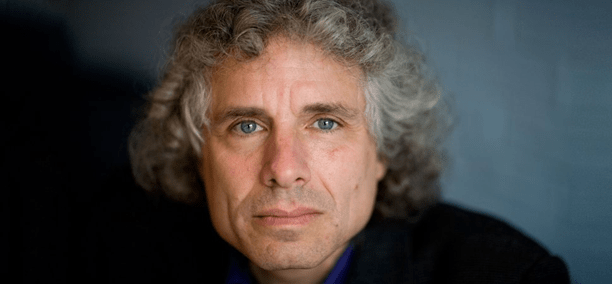
“Why is so much writing so hard to understand? Why must a typical reader struggle to follow an academic article, the fine print on a tax return, or the instructions for setting up a wireless home network?”
These are questions Harvard psychologist Steven Pinker asks in his book, The Sense of Style: The Thinking Person’s Guide to Writing in the 21st Century. They’re questions I’ve often encountered –and attempted to tackle– throughout my career as a business writer and editor. Whenever I see writing that is loaded with jargon, clichés, technical terms, and abbreviations, two questions come immediately to mind. First, what is the writer trying to say, exactly? And second, how can the writer convey her ideas more clearly, without having to lean on language that confuses the reader?
For Pinker, the root cause of so much bad writing is what he calls “the Curse of Knowledge”, which he defines as “a difficulty in imagining what it is like for someone else not to know something that you know. The curse of knowledge is the single best explanation I know of why good people write bad prose.”
“Every human pastime –music, cooking, sports, art, theoretical physics –develops an argot to spare its enthusiasts from having to say or type a long-winded description every time they refer to a familiar concept in each other’s company. The problem is that as we become proficient at our job or hobby we come to use these catchwords so often that they flow out of our fingers automatically, and we forget that our readers may not be members of the clubhouse in which we learned them.”
People in business seem particularly prone to this “affliction.” You could argue that business has developed its own entirely unique dialect of English. People are exposed to an alphabet soup of terms and acronyms at business school, which they then put into use in their day-to-day interactions once they enter the working world.
And what starts out as a means of facilitating verbal communication between people becomes the primary mode with which people communicate their ideas in writing, from email to chat apps to business proposals and presentations.
“How can we lift the curse of knowledge?” asks Pinker. “A considerate writer will…cultivate the habit of adding a few words of explanation to common technical terms, as in ‘Arabidopsis, a flowering mustard plant,’ rather than the bare ‘Arabidopsis.’ It’s not just an act of magnanimity: A writer who explains technical terms can multiply her readership a thousandfold at the cost of a handful of characters, the literary equivalent of picking up hundred-dollar bills on the sidewalk.”
“Readers will also thank a writer for the copious use of for example, as in, and such as, because an explanation without an example is little better than no explanation at all.”
Whenever I write a sentence that makes me pause and wonder about what it means, I assume that other readers might react in the same way. If a sentence is not clear to me, it might not be clear to others. It’s an approach that I recommend to anyone who is trying to improve his own writing.
Before hitting publish and sending your writing out to the world, it’s better to be honest with yourself about how much your reader is likely to understand a given passage or sentence. Before you commit your writing to print– or to the internet– take a few moments to make sure that what you write is clear and understandable by as many of your intended readers as possible.
As Richard Feynman, the Nobel prize-winning physicist, once wrote, “If you ever hear yourself saying, ‘I think I understand this,’ that means you don’t.”
—Glenn Leibowitz
Filed under 2020, writing tip, Writing Tip Wednesday
Two writers went to the same doctor’s office on the same day. She told each one he didn’t have long to live.
“It’s awful,” said the first writer. “I’m right in the middle of a novel and she’s only given me six months to live. I’ll never get it finished. What about you?”
“It’s awful for me, too,” said the second writer. “She gave me three years to live.”
“Three years!” the first writer said. “Three years! What’s so awful about that?”
“I write short stories,” the second writer said. “And I’m fresh out of ideas.”
Filed under 2020, joke by author, Monday morning writing joke
It’s not easy, but you can do it.
https://getpocket.com/explore/item/how-to-actually-concentrate?utm_source=pocket-newtab
NYLON |
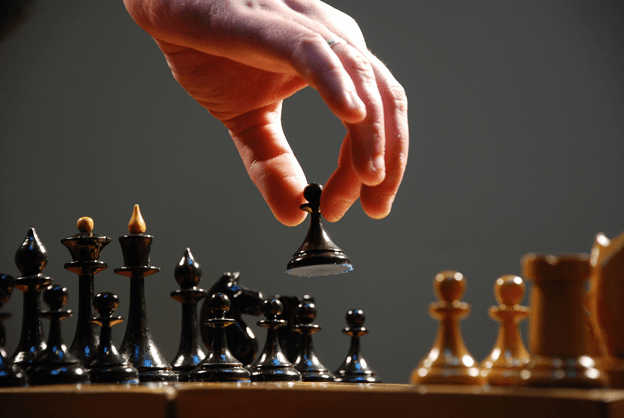
Ever have those trains of thought that just… wait, what were we talking about, again? Staying focused can be hard, especially in an age when there are tons of distractions around you. So, whether it’s something you don’t really want to have to pay attention to—like work; or something you do—like talking to a friend in a crowded bar—sometimes it’s just plain hard to concentrate on what’s happening right in front of you.
Jumping to other stimuli—like someone looking at you, or your phone buzzing—can give you a dopamine push, which is one reason it can be so appealing. But another is that, when multitasking is the norm, it’s hard to stop doing it. “We have trained ourselves to be constantly distracted and multitasking, so even though we may have a project in front of us, or we may be talking to someone, our minds have been trained to look to other things,” says Natalie Bell, a mindfulness coach based in Los Angeles.
Distractibility can run deeper than habit. “You might be distracted because you have sensory problems or visual processing problems or slow processing or memory problems, and you can also have biochemical problems,” says Kelly Dorfman, a clinical nutritionist. “If your chemistry is out of balance, then your brain doesn’t work.” What you’re eating and when can impact that chemistry. Skipping meals, eating irritants, and not eating nutrient-rich foods can make it harder to concentrate.
What’s going on around you and where you are right now as a person also matter. You might be more distracted in some environments, and less distracted in others. Or while working on certain tasks. Or while talking to different people. “It might have to do with something as simple as how much sleep you got, or what else is going on in your life. There are a lot of different factors. But being tuned into what your tendency is and what your current state of being is can go a long way to helping you make the adjustments you need to be able to focus on the things that are important,” says Natalie Houston, a productivity coach in the Boston area.
But it is possible to change your attention span. To get better at concentrating, start small.”Choose one point of focus or one task. Just choose one, putting all others to the side or shutting them down,” says Bell. If you’re working on one project, clear away materials that don’t have anything to do with it, like closing tabs, moving papers off of your desk, and putting down your phone. “A sense of more calm in the immediate visual environment helps you focus better,” says Houston.
Look at the rest of your environment, too: Does silence help you more? Or do you work better with ambient noise? Or maybe white noise? Or even music? How comfortable is your chair? Are you better at doing certain tasks in certain places?
You can also train yourself to be more mindful by focusing on your breath in your body. Set a timer for three minutes and keep your attention on your breath as it goes in and out, and bring your mind back to your breath when it inevitably wanders. “Learning to refocus attention by using that kind of mindfulness technique can really help you to train your attention back to focus on one thing,” says Bell.
If focusing on your breath doesn’t work, try turning your awareness to the soles of your feet where they touch the floor. Or to the sensations of where you’re sitting. Or to your hands, as they rest against each other. “Try to use a sensory experience to help focus attention while you’re in the middle of something,” says Bell. “Any sensation can help you ground yourself.”
Being compassionate with yourself helps, too. If you’re distracted because of something going on internally or something bigger happening in your life, be kind to yourself and remind yourself that’s what’s going on. “There’s a saying in mindfulness, name it to tame it. If you can name a difficult experience, your brain can begin to regulate that feeling in your body,” says Bell. Share with someone around you if that’s an option, but if it’s not, talk to yourself like you’re your own supportive friend. Or put a hand over your heart or give yourself a hug. “Be there for yourself. Physical soothing touch releases oxytocin and other opiates in your bloodstream to counteract stress. So this is really powerful neuroscience,” says Bell.
If you’re distracted because you’re just really busy right now, keep a notepad nearby to jot down thoughts, so your brain doesn’t have to worry about remembering them. That way, “your brain can just relax, instead of tapping you on the shoulder every 10 minutes saying, ‘Don’t forget,’” says Houston.
And don’t be afraid of getting distracted—because you’re going to get distracted. When that happens, notice it and gently bring your attention back. Remember, once you get used to mindfulness, it becomes way easier to practice it anywhere. “The more you do these practices, the more you train yourself to have that response. You need to remember that you can do these things,” says Bell.
But total mindfulness and balance are lies we tell ourselves in order to live. “It’s really important as an idea, and it’s also in some ways a fiction,” says Houston. Instead, “allowing for seasonal shifts helps us relax about the idea of feeling insufficient if we’re not living up to some kind of fictitious ideal of work-life balance that very few people really enact.”
After all, distraction is a capitalist construct. “We live in a world where the financial interests of large corporations put a lot of effort into keeping us distracted. When we’re distracted, we spend more time online, we spend more time in front of advertisements, we spend more time in various states of trance, meaning eating, drinking, shopping, consuming our ways into distracting ourselves from the harder questions in our lives,” says Houston.
Break out of that by finding joy in smaller moments of focus, and then building. “We need to recondition ourselves to find a certain pleasure in focused attention. Which actually there is,” says Bell. “What we get from focusing our attention is a sense of calm in our mind and body.”
This article was originally published on August 16, 2017, by NYLON.
Filed under 2020, concentration


 Booker's Blog