Category Archives: 2018

cARtOONSdAY: “bOOK hAWK”

Can you borrow my book diagram

The day rate can be a killer.

Leave a comment

Filed under 2018, CarToonsday

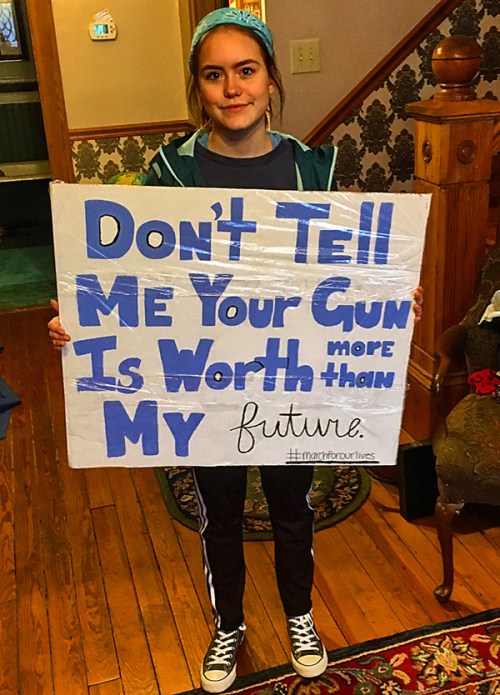
Haiku and Photos: “Signs and Voices”

Hurray for those who /
lift their voices and their signs. /
Behold a new Day.

Signs and voices 100dpi_7x7_4c_5193 copy


Rain will not dampen /
nor NRA lies decide /
the truth, nor the youth.

Sign of protest 100dpi_6x8_4c_5187 copy

Leave a comment

Filed under 2018, Photo by Beth Booker, photo by David E. Booker, poetry by author

Why Reading Books Should be Your Priority, According to Science | Inc.com

You’re not doing yourself any favors if you’re in the 26 percent of American adults who haven’t read even part of a book within the past year.

Source: Why Reading Books Should be Your Priority, According to Science | Inc.com

More than a quarter–26 percent–of American adults admit to not having read even part of a book within the past year. That’s according to statistics coming out of the Pew Research Center. If you’re part of this group, know that science supports the idea that reading is good for you on several levels.

Reading fiction can help you be more open-minded and creative

According to research conducted at the University of Toronto, study participants who read short-story fiction experienced far less need for “cognitive closure” compared with counterparts who read nonfiction essays. Essentially, they tested as more open-minded, compared with the readers of essays. “Although nonfiction reading allows students to learn the subject matter, it may not always help them in thinking about it,” the authors write. “A physician may have an encyclopedic knowledge of his or her subject, but this may not prevent the physician from seizing and freezing on a diagnosis, when additional symptoms point to a different malady.”

People who read books live longer

That’s according to Yale researchers who studied 3,635 people older than 50 and found that those who read books for 30 minutes daily lived an average of 23 months longer than nonreaders or magazine readers. Apparently, the practice of reading books creates cognitive engagement that improves lots of things, including vocabulary, thinking skills, and concentration. It also can affect empathy, social perception, and emotional intelligence, the sum of which helps people stay on the planet longer.

Reading 50 books a year is something you can actually accomplish

While about a book a week might sound daunting, it’s probably doable by even the busiest of people. Writer Stephanie Huston says her thinking that she didn’t have enough time turned out to be a lame excuse. Now that she has made a goal to read 50 books in a year, she says that she has traded wasted time on her phone for flipping pages in bed, on trains, during meal breaks, and while waiting in line. Two months into her challenge, she reports having more peace and satisfaction and improved sleep, while learning more than she thought possible.

Successful people are readers

It’s because high achievers are keen on self-improvement. Hundreds of successful executives have shared with me the books that have helped them get where they are today. Need ideas on where to start? Titles that have repeatedly made their lists include: The Hard Thing About Hard Things by Ben Horowitz; Shoe Dog by Phil Knight; Good to Great by Jim Collins; and Losing My Virginity by Richard Branson.

Leave a comment

Filed under 2018

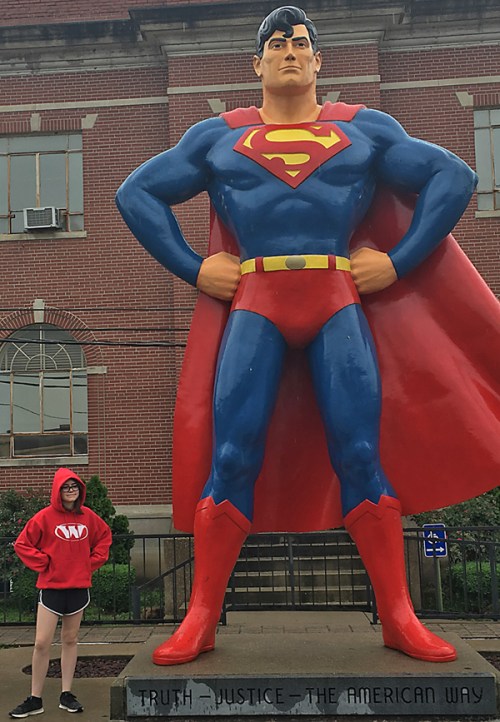
Photo finish Friday (and haiku): “Heroes”

Have our heroes left? /
Skipped a generation? /
Children move mountains.

Superman and girl 100dpi_6x9_4c_6167 copy

Leave a comment

Filed under 2018, photo by David E. Booker, Photo Finish Friday, poetry by author

Haiku to you Thursday (and photo): “Invasion”

Aliens arrived, /
bringing their wall with them. /
“KEEP OUT” their plaques charged.

Keep Out 100dp_7x6_4c_6214 copy

Leave a comment

Filed under 2018, Haiku to You Thursday, photo by David E. Booker, poetry by author

Winning Writers Submission Manager – Wergle Flomp Humor Poetry Contest (no fee)

Wergle Flomp Humor Poetry Contest (no fee)Ends on April 1, 2018Submit one humor poem, up to 250 lines. First prize of $1,000 and second prize of $250. Ten Honorable Mentions will receive $100 each. The top 12 entries will be published online. There is no fee to enter. Judge: Jendi Reiter, assisted by Lauren Singer. In addition to English, your poem may contain inspired gibberish. You may submit published or unpublished work. Please omit your name from your entries. We prefer 12-point type or larger. Please avoid fancy, hard-to-read fonts.Please submit only one poem to this contest.

Source: Winning Writers Submission Manager – Wergle Flomp Humor Poetry Contest (no fee)

Ends on April 1, 2018

Submit one humor poem, up to 250 lines. First prize of $1,000 and second prize of $250. Ten Honorable Mentions will receive $100 each. The top 12 entries will be published online. There is no fee to enter. Judge: Jendi Reiter, assisted by Lauren Singer.

In addition to English, your poem may contain inspired gibberish. You may submit published or unpublished work. Please omit your name from your entries. We prefer 12-point type or larger. Please avoid fancy, hard-to-read fonts.

Please submit only one poem to this contest.

Leave a comment

Filed under 2018, Writing Tip Wednesday

Haiku and Photo: “Stigmata”

The weeping picture: /
Nostalgia for the forgotten. /
Captured by brush stroke.

IMG_5108

Leave a comment

Filed under 2018, photo by David E. Booker, poetry by author

Monday (morning) writing joke: “Cut to the quick”

Paddy says to Mick, “I’m getting circumcised tomorrow.”

Mick says, “I had that done when I was a few days old.”

Paddy asks, “Does it hurt?”

Mick says, “Well I couldn’t walk for about a year.”

Leave a comment

Filed under 2018, Monday morning writing joke

Unholy modernity and the shamanic powers of the detective | Aeon Essays

Shamanic powers of insight and the power to bring order out of chaos. Is the detective a priestly figure for our times?

There are many criteria by which to judge a society. Dostoyevsky recommended examining its prisons. Gandhi said to look at how it treats its weakest members. If you want to discover a society’s attitude towards authority, or to gauge the power of its official belief system, I suggest that you could do worse than look at its relationship with detective fiction.

Crime stories are one of the oldest literary genres, dating back at least as far as Cain and Abel. But the genre that concerns me here is the crime story’s modern descendant, in which a felony is committed in mysterious circumstances and then an individual follows clues and makes deductions to discover what happened. This is a relative innovation: the first modern detective novel is usually attributed either to William Godwin’s Caleb Williams (1794), or to Edgar Allan Poe’s The Murders in the Rue Morgue (1841). There is no doubt, however, that the 1860s saw the arrival of detective fiction as a whole. This was the decade that saw the publication of Wilkie Collins’s The Moonstone (1868), ‘the first, the longest and the best modern English detective novel’, in the opinion of T S Eliot. In France, Émile Gaboriau published his first roman judiciaire in 1866; L’affaire Lerouge was a big success and spawned a series of novels starring the detective Monsieur Lecoq. Methodical and smooth — certainly in his later cases — Lecoq was an inspiration for Sir Arthur Conan Doyle (although in A Study in Scarlet Sherlock Holmes dismisses him as a ‘bungler’).

Why should detective fiction have emerged at this time? There are some conspicuous material factors. Industrialisation and the growth of literacy meant that more people than ever before were able to read. To satisfy this new market, new machinery was developed that could produce cheap books in vast numbers. Booksellers in Britain set up stalls in stations. Their best-sellers were sensationalist, the kind of stories sneered at by literary types: ‘the tawdry novels which flare in the bookshelves of our railway stations,’ the poet and critic Matthew Arnold complained in 1880, ‘and which seem designed, as so much else that is produced for the use of our middle class, for people with a low standard of life’. Unabashed, ordinary readers were hungry for this kind of stuff; when the first detective novels came along, they lapped them up.

Source and the rest of the essay: Unholy modernity and the shamanic powers of the detective | Aeon Essays

Leave a comment

Filed under 2018, detective fiction

New words to live by: “Blundermouth”

Time, once again, for New words to live by. This is a word or phrase not currently in use in the U.S. English lexicon, but might need to be considered. Other words, such as obsurd, crumpify, subsus, flib, congressed, and others, can be found by clicking on the tags below. Today’s New Word is created by taking two nouns and creating a new word. Without further waiting and just in time for spring, blundermouth.

OLD WORDS
Blunder, n. Gross, stupid, careless, thoughtless mistake.

Mouth, n. The opening through which a human speaks, or utters words and sounds.

NEW WORD
Blundermouth, n. the act of uttering or speaking gross, stupid, careless, or thoughtless speech. Often do to a lack of concern for the information or the person being spoken to. Blundermouth can also be a verb.

Used in a sentence: Once again the U.S. President was a blundermouth, speaking openly of classified information about Russia while the press, the Russian diplomat, and other senior Russian officials where in the room. When asked about it, the White House Press Secretary replied, “The President blundermouths all the time. He considers his duty to do so to the fake media.”

Most recent new word: furture.

Leave a comment

Filed under 2018, New words to live by