Category Archives: 2017

5 Reasons Why Your Kids Should Meet One of Their Favorite Authors | Brightly

Source: 5 Reasons Why Your Kids Should Meet One of Their Favorite Authors | Brightly

by Tom Burns

That’s an easy thing to say, isn’t it?

“Your kid should meet their favorite author!”

But it’s not always the easiest thing to do.

In fact, sometimes, it’s literally impossible to do — particularly if your child’s favorite author is E.B. White or A.A. Milne. And, if the author is still alive, sometimes geography and/or fame just makes the chances of a meet-and-greet impossible. (I recognize that the likelihood of my daughter getting to see J.K. Rowling in person is fairly low.)

That being said, there ARE so many opportunities for children to interact with authors they love. Book fairs, library events, bookstore readings — authors head out on the road to market their works more often than you might think. And, if you’re the parent of a book-loving kid, it becomes your job to become aware of those events, so your kid doesn’t find out that “OMG, my favorite author ever was at the library yesterday and we didn’t even know!”
Can it be a lot of work to find these author events? Yes. Is the experience of attending worth all that effort? YES. YES, YES, YES.

If you’re not sure that you want to brave the lines at your local bookstore to have your kid meet the creator of that new book or series they love, here are five reasons why meeting an author has the potential to be one of the coolest experiences your kid will ever have:

1. It humanizes their heroes.
Kids develop a really intimate relationship with authors they love. They see the name Rick Riordan or Amy Krouse Rosenthal, Brad Meltzer or Matt de la Peña on a book cover and, from that name alone, they know, “That book is for ME. That’s MY kind of book.” That’s a powerful connection that only gets deeper once your child has the opportunity to see the author in person.
Last summer, I was lucky enough to get to take my daughter to an event to meet Kate DiCamillo, an author she’d been calling her “favorite writer EVER” since she was six years old. I can’t describe to you what happened to my daughter’s face when Kate walked into the room. There was a flash of recognition, then disbelief, then one of the biggest smiles I’ve ever seen.
It was like watching someone meet an old pen-pal or long-distance acquaintance for the first time. It was magical.

2. There’s nothing like hearing an author read their own work.
Often, when you’re at an author event, you get the privilege of hearing an author read their work aloud. Maybe it’s a chapter from a new book, maybe it’s a short passage from an old favorite. Regardless, there is something wonderful about hearing a writer read their own writing to a large group of children.

It really is fantastic to hear the person who created a fictional world bring it to life with their own voice. They know how to hit all the jokes just right. They bring emotion and depth to pauses you never anticipated on your own. For a kid, it’s like watching an act of creation right in front of them. It’s unbelievable.

3. It lets your kids know “I could do that TOO!”
When your kid gets to see their favorite author in the flesh for the first time, it’s a strange moment. It’s almost like seeing a fictional character brought to life.

But that’s why this is a great experience for kids — because it lets them know that authors AREN’T fictional. They’re real. They’re just like you or me and, most importantly, just like THEM. When a child realizes that an author they adore is just a normal person, it reminds them that they’re capable of creating the exact same kinds of things. They can be a writer too, just like that oddly normal person signing books at the front of the line.

4. Autographs mean something.
They do.

Your child met the person who created that book they loved, and they have PROOF. The author might’ve even written your kid’s name in the inscription as well. It might just be a signature, but it means so much to the person who gets to carry that signed copy of the book around with them for the rest of their lives.

(And, if you meet an author who is also an illustrator, sometimes they draw sketches too! My daughter still can’t get over that Lane Smith actually sketched a picture of the title character of one of her favorite books, Grandpa Green, on the title page of her copy. She will keep that book FOREVER.)

5. It gives them a more personal connection to their favorite books.
As I mentioned, these chances to meet authors aren’t always possible. Sometimes, they only happen in big cities or, sometimes, your child’s favorite writers are already dead.

But, when the opportunity arises, if your child has the chance to meet the author of a book they love, that experience burns that book into your kid’s brain for the rest of their life. The book is elevated. It’s not just a better-than-average read. It becomes a book they now have history with. It’s a book that allowed them behind the scenes. A book that let them meet its author, ask a question, maybe get an autograph.

I’m not saying that meeting an author will always be a phantasmagorical experience. Maybe your kid will be shy. Or the author will be grumpy. Or the lines will just be way too long.

But, if you’re lucky, if your kid gets to meet a person who wrote a book they loved, that book will become a part of your child’s personal history in a way that most creative works never will.

So, if you have the opportunity to take your kid to an author signing, believe me, it’s worth it.

Leave a comment

Filed under 2017, author

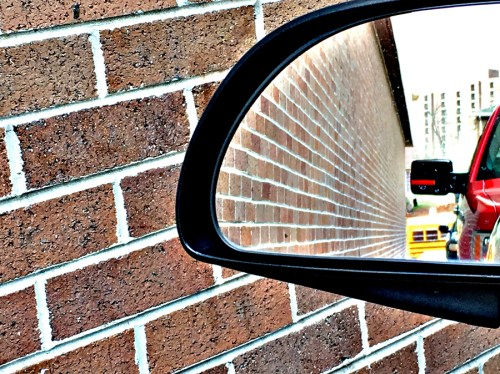
Photo finish Friday: “Trick of the light”

A painting or a photograph?

Leave a comment

Filed under 2017, photo by David E. Booker, Photo Finish Friday

Haiku to you Thursday: “Walls”

The walls

The sky collapses. /

The enemies march outside. /

The walls fall in.

Leave a comment

Filed under 2017, Haiku to You Thursday, poetry by author

cARtOONSdAY: “wOULD yOU?”

Would not have it any other way.

Leave a comment

Filed under 2017, CarToonsday

Monday morning writing joke: “Sheepish”

Two sheep gather in a meadow.

Sheep one: “Did you meet the comic writer who moved in to the old house in the valley?”

Sheep two: “I have and I’m not am-ewe-used.”

Leave a comment

Filed under 2017, joke by author, Monday morning writing joke

The Past, Present And Future Of Sci Fi With N.K. Jemisin | WBEZ

Hugo Award-winning author N.K. Jemisin tells us how she builds fantastical worlds and why science fiction is evolving for the better.

Source: The Past, Present And Future Of Sci Fi With N.K. Jemisin | WBEZ

N.K. Jemisin is the author of a number of books, including The Broken Earth trilogy, the first of which won the Hugo Award for best novel in 2016. She spoke with Nerdette’s Greta Johnsen about being the first black person to win a Hugo, how she comes up with her book ideas, and why diversity is essential to the future of science fiction. Here are some highlights from their conversation.

Greta Johnsen: You say you write speculative fiction, not science fiction. For people who don’t know the difference, can you explain what that means?

N.K. Jemisin: Well, there’s a lot of different definitions of speculative fiction. I used it as a catchall for science fiction, fantasy, horror, interstitial and the occasional comic book. A lot of people use “speculative fiction” to specifically delineate that branch of the literary field that’s willing to toss in some unreal or secondary worldish elements in order to test characters in interesting ways. It’s not science fiction; it’s literative stuff that goes “what if?” It speculates.

Johnsen: So what you’re saying is, it’s not necessarily aliens, but things that could potentially, theoretically happen in a world like ours.

Jemisin: In my case, it simply means that I’m not just a fantasy writer. With other people, it can mean different things, too. It’s a term that everyone adapts in their own particular way.

Johnsen: Recently, friends have asked me for recommendations of things to read or watch. They’re like, “I’ll check out anything, except sci fi.” And that drives me crazy. Because to me, that’s like saying, “Oh, I like anything except imagination.” Can you help me make the sell to the haters? Because that’s ridiculous.

Jemisin: It is ridiculous. It’s because science fiction is terrible at marketing, I think. Science fiction has, for years, allowed a fairly vocal subset of its readership to declare that the only true science fiction is stuff that was written 50 or 60 years ago, that the pulps of the ’40s is what the genre is all about. The plain fact of the matter is that it’s an art form like any other. It has evolved. It has grown. It has expanded in ways that I think it hasn’t done the best job of revealing to the mainstream.

So I would test anybody who says they don’t read science fiction or fantasy. I’d say, “OK, what was the last science fiction or fantasy that you read? Where is this coming from? Did you just watch an episode of old school Star Trek and call it a day, or are you doing this with some real information here?”

And then, there’s multiple places that I would direct them. I would take them to the Nebula list and have them look at a few years’ worth of Nebula nominees and novels. I would show them some current science fiction on television, quite a bit of which is getting critical acclaim. I’m very excited that Stranger Things season two is coming. I just watched the first season of Westworld. I had some questions and thoughts, but it’s an example of something that you can shoot to people to say, “Hey, we’ve moved on a little from Star Trek.”

And even in something like Stranger Things, which is recursively looking at the science fiction of the ’80s, you will see some fascinating ways in which it’s playing with the idea of what science fiction has evolved from and is becoming. In the ’80s, you didn’t usually see a girl as the focus of a story about boys. If you did, she was a prize to be won. She wasn’t the protagonist and the person doing the most awesome things in it.

Johnsen: What makes sci fi so remarkable — and what I love about your books as well — is there’s the actual consumption of the thing, which is satisfying in and of itself, but then the conversation that arises around that, and the interaction with people who are also engaging with the same material, is just … it’s just so much more rewarding than, “Wasn’t that book fun?”

Jemisin: I mean, I’m not doing anything that science fiction and fantasy haven’t done in their own ways for decades. It’s simply that because I’m coming from a different perspective and different things interest me, I’m engaging with politics that are not easily camouflaged by the mainstream.

When you’ve got a slew of stories that are set in a version of medieval England that’s curiously devoid of people of color, and poor people, and queer people, and women, you’ve got this strange secondary world where it’s a bunch of white guys running around poking things at each other and having empowerment fantasies, that’s political. That’s communicating a political message. That’s just communicating a political message that’s fairly commonly seen in our society, and which we don’t necessarily think is weird.

There’s nothing wrong with it — the catch is that some of the rest of us like to get out there and have our empowerment fantasies too. We want to poke stuff with sticks. This is really the thing. When you change something as simple as who it is who pokes a stick at things, people get their backs up. I don’t know why, but they do.

Johnsen: I love that that in and of itself is subversive.

Jemisin: It shouldn’t be. And should our society ever become a place where everybody gets to poke a stick at stuff, then it’ll stop being so subversive. If enough people, and enough of a breadth of people, get to explore the speculative what-ifs, then the stuff that I do will stop being novel. At least in the sense of identity.

I sure hope the stories stand the test of time, but I guess we’ll see.

Leave a comment

Filed under 2017, author interview

Changes In ‘New York Times’ Books Coverage, Explained

At a luncheon in Manhattan yesterday, ‘New York Times Book Review’ editor Pamela Paul, who oversees all books coverage at the ‘New York Times,’ laid out the newspaper’s vision for the future of its newly-unified books desk.

Source: Changes In ‘New York Times’ Books Coverage, Explained

by John Maher

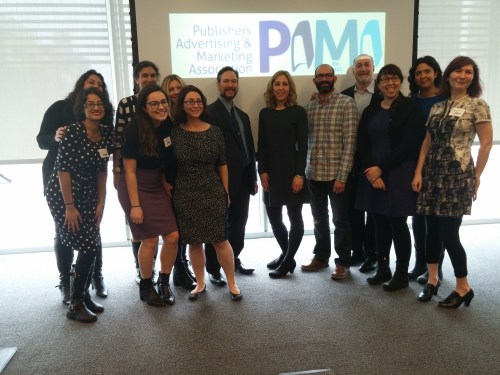
At a luncheon hosted by the Publishers Advertising and Marketing Association (PAMA) at the New York Times headquarters on Wednesday, New York Times Book Review editor Pamela Paul explained the paper’s vision for the future of its books coverage.

Paul has overseen all books coverage at the New York Times since the paper’s executive editor, Dean Baquet, announced changes to the newspaper’s books coverage last summer. She has also previously spoken about some of the changes, including the unification of the paper’s separate books teams under one desk, and the deprioritization of reviews in favor of more custom-tailored and wide-ranging forms of coverage.

But after the Times eliminated a number of its bestsellers lists in January, many in publishing have found themselves asking questions about the paper’s coverage of books and worrying what the shift means.

“When I hear that [a media outlet is consolidating], as an outsider…my very jaundiced, skeptical take is, ‘Oh, they’re cutting back,'” Paul said. “That is actually not the case in this instance. It is the opposite.”

Paul stressed that the Times is actually expanding its books coverage, with the intent of becoming more “strategic” in how it covers particular books. Previously, the paper had three separate desks that covered books entirely independent of one another—the Business Day, which is where publishing reporter Alexandra Alter was assigned; the Daily Critics, comprised of Michiko Kakutani, Dwight Garner, and Jennifer Senior; and the Sunday Book Review—with very little communication between teams and some duplication in what was covered. That will now change, with all books coverage falling under a single Books Desk umbrella.

In simple terms, the Times is moving from a review-oriented strategy to a strategy that aptly covers categories that are of interest to their readers but are “review-proof,” or wouldn’t necessarily benefit from a 1,200-word review in the New York Times Book Review. (Examples include, with exceptions, mysteries, parenting books, business books, or health books.)

Previously, Paul said, the Times’ books coverage consisted “85% of reviews” with the rest being “a mix of profiles, industry news, features, and bestseller lists.” This approach, she said, resulted in “a lot of duplication.” In other words, at a Times that has rapidly expanded its digital strategy, the question will no longer be, she said, “Does this book merit a review,” but rather, “Does this book merit coverage?”

To this end, Paul noted that the Times has been, and will continue, hiring new writers and editors to write about books in different ways. Those editors and writers will be focused “across all genres,” Paul said, and covering—but not reviewing—books she feels the paper did not effectively cover in the past.

While Laura Marmor was brought to the Books Desk from the NYT Styles Desk as deputy editor of news and features, the biggest recent hire at the Books Desk was of new editorial director Radhika Jones, who came from Time magazine, where she edited features including the Time 100 Most Influential People. (Before Time, Jones was at the Paris Review.) Jones will be spearheading an upcoming redesign of the New York Times Book Review, which remains “central” to the newspaper’s books-related mission. The redesign will affect both digital and print and, Paul said, in an email to PW, be unveiled sometime this summer. David Kelly remains the deputy editor of the New York Times Book Review.

Paul also addressed concerns over the slashing of bestseller lists including mass market and comics. Regarding how the bestseller lists team compiles the lists, “their methodology has not changed,” Paul said, “and I can say that with a mix of total confidence and total ignorance.” She continued: “I will say, there does still exist that line between editors and the bestseller lists in that we don’t know their special sauce. We don’t want to know it, nor should we know it. We oversee them and they are part of our group, but we don’t interfere with that process.”

As for the reasoning behind which lists were cut, Paul said that cuts were made “strategically in a way that every book still has a chance to be on a bestseller list.” She then added: “There’s no book that doesn’t have a chance to get on there. It’s just that the competition is tougher.”

Leave a comment

Filed under 2017, book review

Photo finish Friday: “Footprints”

Footprints in the rain.

Footprints in the rain.

Leave a comment

Filed under 2017, photo by David E. Booker, Photo Finish Friday

Haiku to you Thursday: “Geometry of love”

The struggle.

The struggle.

We struggle to love. /

Within its geometry /

Blooms the flower of us.

Leave a comment

Filed under 2017, Haiku to You Thursday, photo by David E. Booker, poetry by author

5 Ways to Combat Author Anxiety | WritersDigest.com

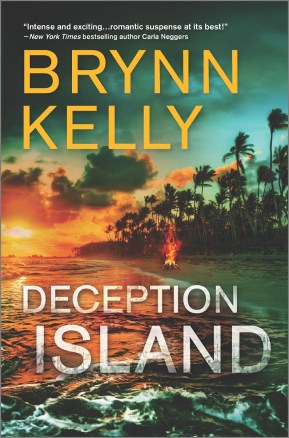
Brynn Kelly, author of DECEPTION ISLAND (June 2016, HQN Books), shares 5 tips for moving past Author Anxiety and to keep writing.

Source: 5 Ways to Combat Author Anxiety | WritersDigest.com

It turns out Author Anxiety is a Thing. It’s not just me.

I discovered this on the eve of publication of my debut novel, DECEPTION ISLAND, when I was silly enough to Google my shiny new title. Up popped a Netgalley reviewer live-tweeting as she read it. Only she was hating it—pulling it apart chapter by chapter.

I’d had loads of great reviews—in Publishers Weekly, Booklist, Library Journal, RT Book Reviews, on dozens of blogs—but this one hobby reviewer withered my fragile confidence. It was the intimacy of it. I could see what she looked like, I could see what page she was reading, I could certainly see exactly what she thought of the story. And I couldn’t stop refreshing. Because I’m an idiot.

I’ve been a journalist for two decades and I’ve published a bunch of nonfiction books, so public criticism is nothing new. Why, then, did this rattle me?

I did what any 21st century dweller does when faced with a 21st century dilemma. I Googled. And I discovered I wasn’t alone. Not only is Author Anxiety a Thing, but it’s such a Thing that, yes, it deserves initial caps. I set out to find a remedy before this vile feeling paralyzed me from writing another fictional word. In the interests of author solidarity, I’m sharing five of my best cures.

1. Find perspective
Many years ago, to finance my journalism degree, I worked as a TV publicist. A fun job but intensely shallow. (Ask me anything about “Beverly Hills 90210” and “Melrose Place.”) Even so, like all jobs, sometimes it got stressful. The most important lesson I learned from that two years was from a boss who was fond of saying, “It’s entertainment. It’s not f***ing brain surgery.” Same goes for my novel. It’s a romantic thriller. It’s not important. My bad day at work is when a reader isn’t entertained or moved and I lose that reader. I’m not a doctor who has lost a patient or an air-traffic controller who’s lost a plane. The worst-case scenario? This novel tanks, everyone forgets about it, and I write another one.

2. Embrace imperfection
Don’t tell my publisher this, but DECEPTION ISLAND isn’t perfect. There, I’ve said it. What a relief. I could have spent three decades rewriting it and it still wouldn’t be perfect. There’s no such thing as perfection in creative endeavor. At some point—usually when a deadline hits—you must step away from your manuscript and say, “There, it’s done. It’s the best I can do right now.” That book has become your past, not your future. It’s not even your present, anymore. The only thing that remains wholly in your control is your next book.

3. Get productive
If I read a bad review, suddenly I don’t feel like writing. But you know what? A good writing day blows away my doubt and fear. And studies into motivation have found that the muse kicks in after you begin a task, not before. Don’t feel like writing because someone just told the (virtual) world that you suck? Open your WIP and start somewhere, anywhere. Tinker with a paragraph you wrote a year ago, write a random exchange of dialogue, change the font. Just. Start. Your brain will light up, the motivation will come and the angst will evaporate.

4. Log out
Only one thing will make you a successful novelist: writing novels. Let the virtual world live without you—especially if it drags you down. Forget the rules that you must regularly post on social media and engage online. If bad reviews on Goodreads or Amazon discourage you, don’t read them. If you can’t help flicking onto them—because validation is addictive— but you hate yourself for it, get a productivity app and block those sites, and any others that routinely make your heart soar and sink. (If a review falls in a forest…) Ray Bradbury once said: “You have to know how to accept rejection and reject acceptance.” And if you just want the boost without the pain? Ask a friend to email you only the great reviews, in a monthly digest. It’s not a cop-out. It’s sensible.

5. Escape
If that sniping little head of yours is not a pleasant place to hang out, get out of it. Do something immersive: play a card game with your kid, see a movie, whack a tennis ball around a court. When you return, you should find your mind is a more agreeable—and productive—environment. Keep it that way by throwing a little love into the world to offset the negativity. Tweet an author about how much you enjoyed her book—because she may be feeling Author Anxiety today, too.

Leave a comment

Filed under 2017, writing tip, Writing Tip Wednesday