Category Archives: 2016

17 Science Fiction Books That Forever Changed The Genre | Lifehacker Australia

Source: 17 Science Fiction Books That Forever Changed The Genre | Lifehacker Australia

Speculative fiction is the literature of change and discovery. But every now and then, a book comes along that changes the rules of science fiction for everybody. Certain great books inspire scores of authors to create something new. Here are 21 of the most influential science fiction and fantasy books.

These are books which clearly inspired a generation of authors, and made a huge splash either in publishing success or critical acclaim. Or both. And these are in no particular order.

#1 The Hitchhiker’s Guide to the Galaxy by Douglas Adams (1979)

The first (maybe only) science-fiction-comedy-multimedia phenomenon, Hitchhiker’s was a radio drama before it was a book, and the book sold 250,000 copies in its first three months.The Guardian named it one of the 1000 novels everyone must read, and a BBC poll ranked it fourth, out of 200, in their Big Read poll.

Ted Gioia comments on Adams’ hilarious book about the trials and tribulations of Arthur Dent, the survivor of a destroyed Earth, across the universe:

“No book better epitomizes the post-heroic tone of sci-fi than Douglas Adams’ The Hitchhiker’s Guide to the Galaxy. As the name indicates, a certain louche bohemianism permeates its pages. This is star-hopping on the cheap, pursued by those aiming not to conquer the universe, but merely sample its richeson fewer than thirty Altairian dollars per day. You can trace the lineage of many later science fictions books, with their hip and irreverent tone, back to this influential and much beloved predecessor.”

#2 20,000 Leagues Under the Sea by Jules Verne (1870)

Verne’s whole career is full of works that have inspired generations of authors — but this tale of the underwater adventure of Captain Nemo and the Nautilus has also had a profound effect on science, and inspired real scientific advancement.

In the introduction to William Butcher’s book Verne’s Journey to the Centre of the Self Ray Bradbury wrote that, “We are all, in one way, children of Jules Verne. His name never stops. At aerospace or NASA gatherings, Verne is the verb that moves us to space.”

Verne translator and scholar F.P. Walter added:

“For many, then, this book has been a source of fascination, surely one of the most influential novels ever written, an inspiration for such scientists and discoverers as engineer Simon Lake, oceanographer William Beebe, polar traveller Sir Ernest Shackleton. Likewise Dr. Robert D. Ballard, finder of the sunken Titanic, confesses that this was his favourite book as a teenager, and Cousteau himself, most renowned of marine explorers, called it his shipboard bible.”

#3 Dhalgren by Samuel R. Delaney (1975)

Sam Anderson prefaced his interview with Samuel R. Delany with this praise for Dhalgren’s impact:

“In the 35 years since its publication, Dhalgren has been adored and reviled with roughly equal vigour. It has been cited as the downfall of science fiction (Philip K. Dick once called it “the worst trash I’ve ever read”), turned into a rock opera, dropped by its publisher, and reissued by others. These days, it seems to have settled into the groove of a cult classic. In a foreword in the current edition, William Gibson describes the book as “a literary singularity” and Jonathan Lethem called it “the secret masterpiece, the city-book-labyrinth that has swallowed astonished readers alive.”

Dhalgren has remained popular through the years, being reprinted 7 times since 1975. It was also dropped by Bantam, the original publisher, because of its willingness to tackle LGBT themes despite the fact that the Bantam version sold over a million copies and went through 19 printings.

#4 War of the Worlds by H.G. Wells (1898)

In his book about The War of the Worlds, a seminal look at an invasion of Earth by Martians, author Brian Holmsten states:

“Since 1898 the War of the Worlds has been translated into countless languages, adapted by comic books, radio, film, stage, and even computer games, and has inspired a wide range of alien invasion tales in every medium. Few ideas have captured the imagination of so many people all over the world in the last century so well.

“It is a tribute to H.G. Wells that his story of alien conquest was not only the first of its kind, but remains one of the best.”

The 1927 American reprint, it can be argued, was one of the touching-off points for the Golden Age of science fiction. It inspired John W. Campbell to write and commission invasion stories — which also prompted authors like Arthur C. Clarke, Clifford Simak, Robert A. Heinlein and John Wyndham to do the same.

#5 Foundation by Isaac Asimov (1951)

Foundation is a sweeping tale of pyschohistory and the battle for the intellectual soul of a civilisation. and According to the BBC:

“The Foundation series helped to launch the careers of three notable science fiction authors of the succeeding generation. Janet Asimov sanctioned these novels, which were published in the late 1990s: Foundation’s Fear by Gregory Benford, Foundation and Chaos by Greg Bear, and Foundation’s Triumph by David Brin.” And without a doubt it launched the imaginations of countless other writers.”

It is also worth mentioning that the Foundation series won the 1966 Hugo for best all-time series. An award that has not been given out since.

And this book’s influence goes beyond science fiction: Artificial intelligence pioneer Marvin Minsky classified Asimov “among the finest of modern philosophers,” and Nobel-prize-winning economist Paul Krugman describesFoundation as his version of Atlas Shrugged, “I didn’t grow up wanting to be a square-jawed individualist or join a heroic quest; I grew up wanting to be Hari Seldon, using my understanding of the mathematics of human behaviour to save civilisation.”

#6 Stranger in a Strange Land by Robert Heinlein (1961)

The first science-fiction work to enter the New York Times Book Review’s bestseller list, Stranger sold 100,000 copies in hardcover and over five million in paperback. This book’s influence can’t be overstated. Arthur D. Hlavaty refers to Heinlein as a prototypical science-fiction author, saying:

“One of the ways human beings organise the world is by prototypes. We define a set as a typical example and a bunch of other things that are like it. For instance, when I was growing up, the prototype Writer was Shakespeare, the Artist was Rembrandt, and the Composer was Beethoven. In that way, Robert A. Heinlein has often been taken as the prototype Science Fiction Writer, and as changes and new paradigms shake the field, he still sometimes represents the science fiction of the past.”

Writer Ted Gioia looks at Stranger in a Strange Land’s main character as a prototype for other similar characters in SF, saying: “Smith is more than a character. He is prototype of an alternative personality structure. The question of whether we can remake the human personality from the ground up.”

#7 Dangerous Visions, edited by Harlan Ellison (1967)

This series helped launch the careers of almost every major author of the New Wave. The first volume included Samuel R. Delany, Philip K. Dick, and J.G. Ballard. In his introduction to the 2002 reissue of Ellison’s anthology, contributor Michael Moorcock wrote of Ellison’s collections:

“He changed our world forever. And ironically, it is usually the mark of a world so fundamentally altered — be it by Stokely Carmichael or Martin Luther King Jr. or Lyndon Johnson, or Kate Millet — that nobody remembers what it was like before things got better. That’s the real measure of Ellison’s success.”

“Gonna Roll the Bones” by Fritz Leiber won a Hugo Award and a Nebula Award for Best novelette. “Riders of the Purple Wage” a novella by Philip José Farmer tied for the Hugo Award. Samuel R. Delany got the Nebula for Best Short Story for “Aye, and Gomorrah…” Ellison was given a commendation at the 26th World SF Convention for editing “the most significant and controversial SF book” published in 1967.

#8 Childhood’s End by Arthur C. Clarke (1953)

Arthur C. Clarke himself had reservations about this novel, yet it sold out its first printing, 200,000 copies, in just two months after publication. Author Jo Walton writes about the first book to feature benevolent aliens who try to help the human race evolve:

“Science fiction is a very broad genre, with lots of room for lots of kinds of stories, stories that go all over the place and do all kinds of things. One of the reasons for that is that early on there got to be a lot of wiggle room.

“Childhood’s End was one of those things that expanded the genre early and helped make it more open-ended and open to possibility.

“Clarke was an engineer and he was a solidly scientific writer, but he wasn’t a Campbellian writer. He brought his different experiences to his work, and the field is better for it.”

Childhood’s End was nominated for a retro Hugo award in 2004.

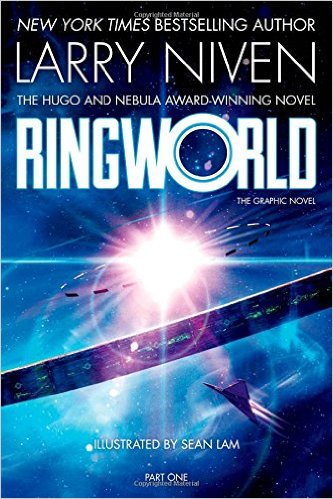
#9 Ringworld by Larry Niven (1970)

Sam Jordison of the Guardian had this to say about Ringworld, the masterpiece that is centered around around a theoretical ring-shaped space-habitat:

“Larry Niven’s 1970 Hugo award winner, Ringworld, is arguably one of the most influential science fiction novels of the past 50 years. As well as having had a huge impact on nearly all subsequent space operas (Iain M Banks’ Culture series and Alastair Reynolds’ House of Suns are just two), the book has helped generate a multi-billion-dollar industry.”

To add to this Jonathan Cowie, who wrote Essetial SF: A Concise Guide, called Ringworld “a landmark novel of planetary engineering (for want of a better term) that ranks alongside the late Bob Shaw’s Orbitsville.”

Niven later added four sequels and four prequels which tie into numerous other books set in Known Space; the fictional setting of about a dozen science fiction novels and several collections of short stories.

The other books are listed and discussed at: http://www.lifehacker.com.au/2016/09/17-science-fiction-books-that-forever-changed-the-genre/
Leave a comment

Filed under 2016, book list

Haiku to you Thursday: “Pain”

Pain is a song /

whose melody is as true /

as its words are inadequate.

[Editor’s note: a modified haiku structure, varying a little from the 5 syllable, 7 syllable, 5 syllable structure. Still, I believe it carries the spirit of a haiku.]

Leave a comment

Filed under 2016, Haiku to You Thursday, poetry by author

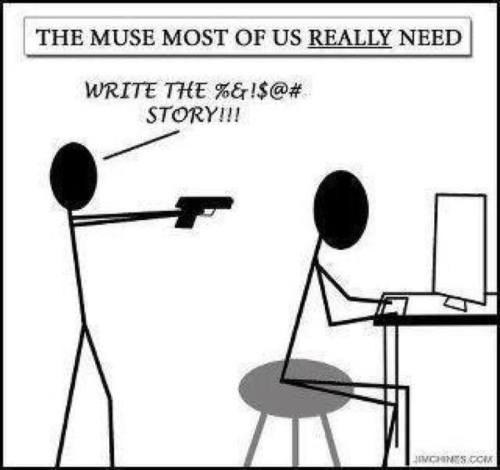
cARtOONSdAY: “a-mUSING”

Getting to the point.

Getting to the point.

Leave a comment

Filed under 2016, CarToonsday

Haiku to you Thursday: “Things”

My things talk to me. /

My fellow humans do not. /

“Beep,” I say to you.

Leave a comment

Filed under 2016, Haiku to You Thursday, poetry by author

Monday morning writing joke: “Dueling puns, part 5”

Two writers who didn’t like each other met in a bar, as such writers often do. Each claimed it was his favorite bar and each claimed he had found it first. After several months of glowering at each other and bad mouthing each other, they agree to settle the matter with a duel of puns.

Since neither writer won the fourth round, a coin was tossed and the short writer was allowed to go first for round five. A set of cards was placed on the table between them, face down. On each card was a subject. The short writer flipped the card over and the subject was philosophy.

Props were allowed, and for each turn, each writer could make one phone call.
For round five, the rules were amended. Each writer had to say his pun and the audience would get to pick which one they preferred. The bartender, a waiter, and a waitress would be the judges as to who got the loudest groan.

After thinking a moment, the short writer asked, “I tried to think of philosophical pun, but I Kant.”

There was a slight groan from the patrons in the bar.

The tall writer waited until things were quiet, then he said, “A man walks into a crowded bar at a Philosophy convention. A woman at the bar looks him over, bats her eyes, and smiles. He buys her drink, then another, and another. Finally the guy between them leaves and he scoots over. She immediately gets up and starts to leave. ‘Hey,” he says, ‘what about the drinks I bought you?’ She turns back to him and says, ‘How you Spinoza time and money is not my concern.’ ‘Oh,’ he shouts, ‘You’re Socratease.’”
The crowd groaned, twice.

Round five went to the tall writer. The tall writer now had 2 wins, 1 loss, and 2 ties.” The short writer had 1 win, 2 losses, and 2 ties.

Leave a comment

Filed under 2016, joke by author, Monday morning writing joke

Paul Beatty wins Man Booker prize 2016 | Books | The Guardian

Author wins for The Sellout, a satire of US racial politics, making him the first American writer to win award

Source: Paul Beatty wins Man Booker prize 2016 | Books | The Guardian

By Mark Brown

Paul Beatty has become the first American writer to win the Man Booker prize, for a caustic satire on US racial politics that judges said put him up there with Mark Twain and Jonathan Swift.

The 54-year-old Los Angeles-born writer won for The Sellout, a laugh-out-loud novel whose main character wants to assert his African American identity by, outrageously and transgressively, bringing back slavery and segregation.

Beatty has admitted readers might find it a difficult book to digest but the historian Amanda Foreman, who chaired this year’s judging panel, said that was no bad thing.

“Fiction should not be comfortable,” Foreman said. “The truth is rarely pretty and this is a book that nails the reader to the cross with cheerful abandon … that is why the novel works.

“While you’re being nailed, you’re being tickled. It is highwire act which he pulls off with tremendous verve and energy and confidence. He never once lets up or pulls his punches. This is somebody writing at the top of their game.”

Foreman called it a “novel for our times”, particularly in the context of the Black Lives Matter movement.

“The Sellout is one of those very rare books: which is able to take satire, which is a very difficult subject and not always done well, and plunges it into the heart of contemporary American society with a savage wit of the kind I haven’t seen since Swift or Twain.

“It manages to eviscerate every social taboo and politically correct nuance, every sacred cow. While making us laugh, it also makes us wince. It is both funny and painful at the same time.”

The £50,000 win, announced at a black tie dinner at London’s Guildhall, represented a particular success for Beatty’s publisher Oneworld, a small independent that also represented last year’s winner Marlon James and his novel A Brief History of Seven Killings.

Beatty was overcome by emotion as he accepted the award. He told the audience: “I don’t want to get all dramatic, like writing saved my life … but writing has given me a life.”

At a short press conference afterwards he said winning meant a lot, that he was as “happy as hell”. He did not call his book a satire, he said, but was happy for it be described that way.

The book may be set for success across the world, but Beatty, who said he was told by one of his college professors that he would never be a success as a writer, said it was not something he enjoyed. “I don’t like writing. It’s hard. You’ve got to sit down … I’m a perfectionist, I guess, and I get easily disgruntled and discouraged with what I’m doing. I am really hard with myself and I tend to sabotage myself, but when I’m writing I try not to do that, I try to be in the moment, to be confident.”
Anyone offended by early Richard Pryor might think twice about reading The Sellout. There is lots of swearing and frequent use of the n-word.
But Beatty says in the book that being offended is not an emotion.

“That’s his answer to the readers and I would say the same,” said Foreman.
Judges took almost four hours to reach what Foreman said was a unanimous decision. While it was something of a bookmakers’ outside bet – Ladbrokes offered odds of 6/1 – it had been tipped by many pundits and was adored by most critics with the Guardian’s critic calling it “daring and abrasive” and “a joy to read.”

The Wall Street Journal called it a “Swiftian satire of the highest order. Like someone shouting fire in a crowded theatre, Mr Beatty has whispered ‘Racism’ in a postracial world”.

The books losing out on the prize were Eileen by Ottessa Moshfegh (US), Do Not Say We Have Nothing by Madeleine Thien (Canada), All That Man Is by David Szalay (Canada-UK), His Bloody Project by Graeme Macrae Burnet (UK) and Hot Milk by Deborah Levy (UK).

Levy was arguably the best known writer on a list strikingly short of big literary names. She had also been shortlisted in 2012 for Swimming Home.

Beatty, who lives in New York, is the first American to win in the prize’s 48-year history and it comes three years after eligibility rules were changed to allow writers of any nationality writing in the English language and being published in the UK.

Sales for all six books have already increased significantly, particularly for His Bloody Project, published by the tiny Scottish crime imprint Contraband.

Frances Gertler, web editor at Foyles bookshops, said The Sellout was brave and funny. “It takes a bit of getting into but once there, you don’t want to leave. A smart satire with a memorable narrator.”

Foreman’s fellow judges this year, who have waded through 155 books over 10 months, were the critic and lecturer Jon Day, novelist and academic Abdulrazak Gurnah, poet and academic David Harsent and the actor Olivia Williams.

Foreman said the criteria used by judges in deciding the winner were: aesthetic, quality and depth of ideas, the craftsmanship of the writing and whether it transported the reader.

Beatty, the author of three previous novels and two books of poetry, was presented with his trophy by the Duchess of Cornwall.

Leave a comment

Filed under 2016, awards, novel

Should Novels Aim for the Heart or the Head? – The New York Times

Is it a good thing for a novel to stimulate our emotions? Montaigne, Brecht and others thought not.

Source: Should Novels Aim for the Heart or the Head? – The New York Times

The devil is in the detail. Talking about moments when excruciating gallstone pains made him believe he was soon to die, Montaigne remarks: “When I looked upon death as the end of my life, universally, then I looked upon it with indifference. Wholesale, I could master it: Retail, it savaged me; the tears of a manservant, the distributing of my wardrobe, the known touch of a hand, a routine word of comfort discomforted me and made me weep.”

It is the details that attach us to life and arouse our emotions. “A hound, a horse, a book, a wineglass and whatnot,” Montaigne observes, all “had their role in my loss.” Reasoning and accumulated wisdom, he goes on, may give us some insight into human grief, but it is the small things, picked up by ears and eyes — “organs which can be stirred by inessentials only” — that will really have an impact. So we might be aware of, but not greatly moved by, the plight of Syrian refugees until the photograph of a dead child face down in the sand triggers our emotions and has us bursting into tears.

Having made these observations, Montaigne embarks on what might best be described as a creative writing lesson in reverse. Literature, he points out, is adept at exploiting this aspect of our psychology; it focuses on evocative inessentials to stimulate our emotional response. Generally unmoved by the human condition, we nevertheless “disturb our souls with fictional laments.” It hardly even matters that they are invented: “The plaints of Dido and Ariadne in Virgil and Catullus arouse the feelings of the very people who do not believe in them.”

And he asks a question that no one asks these days: “Is it right for the arts to serve our natural weakness and to let them profit from our inborn animal-stupidity?” Aside from its astute selection of moving detail, art is constantly in the business of manipulating our emotions, as if this were an end in itself. This, after all, was Plato’s objection to the arts and every kind of artistic effect — that it was manipulative and potentially mendacious. Or simply a waste: “How often,” Montaigne asks, “do we encumber our spirits with yellow bile or sadness by means of such shadows?”

If we apply these ideas to narrative fiction as it is today, what do we find? First, the idea that a book, or film for that matter, stimulates extreme emotions is constantly deployed as a promotional tool. Terrifying, hair-raising, profoundly upsetting, painfully tender, heartbreaking, devastating, shocking, are all standard fare in dust-jacket blurbs and newspaper reviews; it is as if the reader were an ectoplasm in need of powerful injections of adrenaline. Anything that disturbs us, arouses us, unsettles us, is unconditionally positive. “You will be on the edge of your seat.” “Your heart will be thumping.” “Your pulse will be racing.” Aristotle’s response to Plato, that arousing emotion could be positive so long as the emotion was clarified, cathartically contained and understood, is rarely invoked. At best there is the implication that arousing emotions fosters sympathy, perhaps even empathy, with fictional characters and that such sympathy then breaks down our prejudices and hence is socially useful. So readers will frequently be invited to contemplate the sufferings of threatened minorities or discriminated-against ethnic groups, or the predicament of those who are young, helpless and preferably attractive. But this is an alibi and we all know it; what matters is stimulating emotion to sell books.

Similarly, creative writing courses, as far as I am able to judge, are obsessed with technique — how to arrive at that powerful detail, how to give it prominence, how to grab the reader, not why we want to grab the reader or to what end. Traditional literature courses used to reflect on the way detail was used inside a novel’s overall vision. The present zeitgeist invites us only to contemplate how the trigger can be pulled, not where the bullet is going, because the purpose of creative writing courses — especially when the fees are high — is to teach the would-be writer how to produce a publishable narrative, not a “good,” let alone a “responsible” narrative.

Montaigne is hardly alone in criticizing an overeasy excitement of the sentiments. In recent times, Bertolt Brecht objected to the stimulation of emotional identification with fictional characters, and Muriel Spark argued strongly against arousing compassion in novels; it allowed readers, she complained, to “feel that their moral responsibilities are sufficiently fulfilled by the emotions they have been induced to feel.” She advocated satire and ridicule instead as more effective tools of social criticism.

Samuel Beckett entirely rejected the idea of narrative as a vehicle for arousing emotion. Again and again he blocks any sympathy for his characters, drawing attention to their fictional status, making their suffering grotesque and comic rather than endearing. Yet even he understands how naturally narrative moves in this direction, admitting that in the final analysis even the struggle to avoid arousing emotions will confer a kind of pathos on the author.

But does it actually matter? Why not let novels stimulate emotions all they will and readers buy into them as intensely as they wish? The hell with it. What on earth could be wrong with that?

Montaigne’s comments on the evocative power of detail are not isolated. He lived in an age of division and dogmatism; the religious wars between Catholics and Huguenots lasted almost 40 years and caused countless deaths. In 1572 the St. Bartholomew’s Day Massacre alone saw thousands of Huguenots killed by their Catholic enemies. Montaigne’s position was always that we must be extremely careful about our emotions, in particular our tendency to get emotional about ideas. He didn’t advise neutrality, but simply that “we should not nail ourselves so strongly to our humors and complexions.” To foster emotions deliberately and habitually was dangerous, because once a strong emotion had kicked in it was very difficult to find a way back. Certainly, had he been alive today, he would have seen a continuity not just between violent fiction and real violence, war films and war, but also more generally between a culture that has turned the stimulation of emotion into a major industry and a society torn apart by heated conflicts of all kinds.

No civilization has ever produced as much narrative as our own, and with so little collective control. Thousands upon thousands of stories and novels are published worldwide every month. Not to mention TV series and films. There is intense competition: competition to get published, competition to win prizes, competition to reach a national audience, competition to reach an international audience. Of course there are various cards to play in that competition: wit, creativity, ideology, comedy, savviness; but the factor most frequently stressed, the one no one can do without, is emotional impact. When was the last time you heard a novel praised because it invited the reader to a higher level of intellectual engagement with complex issues? Or because it retreated from spicy detail to offer a balanced view of life overall? Or because its characters managed to handle potentially dangerous conflicts without arriving at a destructive showdown? Often as we read it seems that all the energy and creativity of the writer has been channeled into conjuring up those piquant, lurid or simply shocking details that will unleash the reader’s emotions.

How can we suppose that this state of affairs, this constant rush for the most disturbing, the most poignant, the most emphatic, the most terrifying, has no effect on the way we respond to the dramas of our lives? As I write this morning, three months after Brexit, two months after the Republican Convention nominated Donald Trump, following a summer that has seen scores of deaths from terrorism and with Aleppo still under relentless bombing, all I hear around me is violent, overheated, highly emotional rhetoric, ferocious discrediting of all adversaries, poignant details of the lives of unlucky victims, horror for the future and, beneath it all, a complacent excitement about our own capacity for feeling life intensely.

***
Tim Parks’s most recent book is “The Novel: A Survival Skill.”

Leave a comment

Filed under 2016, novel

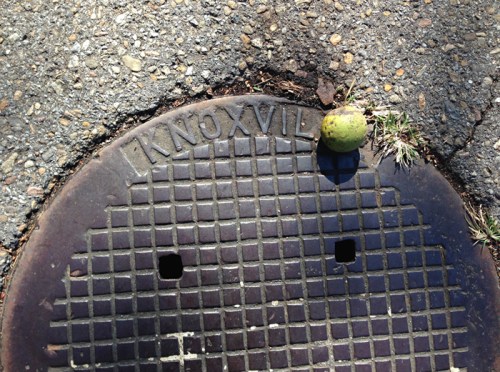
Photo finish Friday: “Black Walnut”

Black walnut dropped from a tree onto the street.

Black walnut dropped from a tree onto the street.

Leave a comment

Filed under 2016, photo by David E. Booker, Photo Finish Friday

Haiku to you Thursday: “Rope”

Before the morning sun, /

we hurl our love into space: /

a rope to pull us along.

Leave a comment

Filed under 2016, Haiku to You Thursday, poetry by author

National Novel Writing Month 2016: 10 Tips For NaNoWriMo Writers

So you’re thinking about writing a novel for National Novel Writing Month. Here are some tips to help you get started and to stay the course.

Source: National Novel Writing Month 2016: 10 Tips For NaNoWriMo Writers

As the Ernest Hemmingway quote goes, “There is nothing to writing. All you do is sit down at a typewriter and bleed.” The quote illuminates a truth for writers everywhere: Writing a novel is much easier said than done.

That fact is one of the reasons why the founder of National Novel Writing Month, which begins Tuesday, launched the NaNoWriMo community in 1999. That led to the month of November being known as NaNoWriMo, which encourages writers to bear down and get serious about writing their next novel.

From Tuesday through 11:59 p.m. Nov. 30, participating writers are tasked with penning a 50,000-word novel. If they finish early they are encouraged to keep writing. One of the main points of NaNoWriMo is to set writing goals and reach them, as opposed to shooting for a Pulitzer-winning novel (although aiming to write the book of a generation is an admirable endeavor).

Below are 10 tips for getting started writing a novel and staying on-task. Grab your typewriter (fine, computer) and a box of Band-Aids for your fingers, sit down and write with these tips.

  1. First, sign up for NaNoWriMo and create your profile. You will be able to receive help from esteemed authors and connect with fellow writers. Committing to the program will hold you accountable for your writing.
  2. Decide how you want to plan your novel. Yes, there’s even a step before the big steps. The NaNoWriMo website’s places writers into two categories: a “planner” and a “pantser.” The first believes in solid preparation and will likely have their stories fleshed out before Nov. 1. That means if you’re your reading up on these tips, you’re probably in the latter group of those who let their spontaneity take the reins. The latter also prefers to dive right in and see what unfolds along the way.
  3. Prep your novel! If you don’t have somewhat of a story idea already, it’s time to get going. The NaNo website has published videos and tips on how to properly plan for your story for the month ahead.
  4. Check out the literature the site also publishes on tips for character building, fiction writing, story building and more. Plan ahead, but don’t let the planning process keep you from this next step…
  5. WRITE. There’s no avoiding it. The best thing to do is just write.
  6. Once you’ve started, plan your pace for the month and commit to completing a certain amount of words every day. The goal is to write 50,000 words, so the word count is a tangible goal that needs to be met.
  7. Try to write at the same time every day. This doesn’t necessarily work for everyone, but by committing to the same time, you’ll be less likely to push aside the time for socializing or doing chores. Some people prefer writing first thing in the morning, while others prefer the late-night grind. Find your “time” and stick to it.
  8. Reach out to others. The community through NaNoWriMo is meant to help you get the resources and support you need to complete your story. Contrary to popular belief, writing does not just have to be a solitary experience that you share with you and yourself in a cold, damp garret – your writing is meant to be shared. So seek out friends, family members, fellow writers or mentors who might offer you feedback on your writing or even just moral support.
  9. Don’t give up! This might not be the most original tip, but it’s impossible to keep going if you don’t believe in yourself or your story. Keep at it, and keep at it some more. Some days the words will fly, while other days will feel tedious and awful (remember the part about the proverbial “bleeding” – grab those Band-Aids and get back to work).
  10. Have fun. You’re writing a novel, not fighting a war. Have fun and enjoy the process. Nothing beats the beauty of when the human mind and imagination coming together to create something completely original and unique.

Leave a comment

Filed under 2016, writing tip, Writing Tip Wednesday