

She glared at me as if I were a dumbbell.
She glared at me as if I were a dumbbell.
Filed under 2016, cartoon by author, CarToonsday

A young Ambrose Bierce
For example, here is a definition for the words Presidency and President. The Old definition is Bierce’s. The New definition is, in many cases, an update. Sometimes little change is needed. Sometimes more. From time to time, just as it was originally published, we will come back to The Devil’s Dictionary, for a look at it then and how it applies today. Click on Devil’s Dictionary in the tags below to bring up the other entries.
OLD DEFINITION
PRESIDENCY, n. The greased pig in the field game of American politics.
PRESIDENT, n. The leading figure in a small group of men of whom — and of whom only — it is positively known that immense numbers of their countrymen did not want any of them for President.
If that’s an honor surely ’tis a greater
To have been a simple and undamned spectator.
Behold in me a man of mark and note
Whom no elector e’er denied a vote! —
An undiscredited, unhooted gent
Who might, for all we know, be President
By acclimation. Cheer, ye varlets, cheer —
I’m passing with a wide and open ear!
—Jonathan Fomry
NEW DEFINITION
PRESIDENCY, n. The greased pig in the field game of American politics, captured all too often at the expense of money equal to the GDP (Gross Domestic Product, emphasis on Gross) of a small to medium-sized country.
PRESIDENT, n. The leading figure in a small group of men or women of whom — and of whom only — it is positively known that immense numbers of their countrymen did not want any of them for President.
As you now know, I will not go —
To leave would be insane.
I’ve run the race; this is my place
From Alaska down over to Maine.
For those who wish for less of this
I hear your sad, sad refrain.
But let me be clear, or perfectly clear:
I won, you lost, lame brain.
You’re stuck with me, from sea to sea
For four years or more sustained.
So get over it; crawl out of your pit,
Let your hopes seep down the drain.
—President Orpheus C. Kerr
Filed under 2016, Devil's Dictionary

Prince or frog?
Lass from Killarney
There once was a lass from Killarney /
who found a frog prince full of blarney. /
“Kiss me, here,” he did say, /
“and we’ll be joined this fine day.” /
She did and she found him quite horny.
.
Filed under 2016, Photo Finish Friday, poetry by author
Spring winds woo new grass. /
Some still brown and holding to /
Winter’s dark love.
Filed under 2016, Haiku to You Thursday, poetry by author
Why Your Story is Getting Rejected: Language
by Chelsea Henshey

Getting to the heart of the matter.
Now, as an editor, writer, and reader, I’m constantly on the lookout for crafted prose that’s evident from paragraph one. Crafted prose means the writer isn’t simply moving characters from point A to point B, but arranging images and syntax to create rhythm and evoke emotion.
While all levels of a story must be effective for publication, stilted language can stop an editor in her tracks before your plot even begins. To refine your own language, remember the following tips:
Choose Your Style
When I use the term style, I’m referring to minimalist, maximalist, or somewhere in between. Notice the difference between the passages from Raymond Carver’s “Cathedral” and Cormac McCarthy’s Child of God.
This blind man, an old friend of my wife’s, he was on his way to spend the night. His wife had died. So he was visiting the dead wife’s relatives in Connecticut. He called my wife from his in-law’s. Arrangements were made. He would come by train, a five-hour trip, and my wife would meet him at the station. She hadn’t seen him since she worked for him one summer in Seattle ten years ago.
They came like a caravan of carnival folk up through the swales of broomstraw and across the hill in the morning sun, the truck rocking and pitching the ruts and the musicians on the chairs in the truckbed teetering and tuning their instruments, the fat man with guitar grinning and gesturing to others in a car behind and bending to give a note to the fiddler who turned a fiddlepeg and listened with a wrinkled face.
Much of your style has to do with instinct. Do you cringe at the thought of sprawling descriptions, or could you describe a scene for pages? Whatever you choose, stay consistent. Don’t be minimalist on page one and switch to a maximalist style on page three.
Avoid Abstraction
Many writers rely on abstractions in their descriptions. The issue with abstractions is they do not ground your reader. When you say something is beautiful, hideous, terrible, amazing, etc. it doesn’t provide a concrete image the reader can see. Instead, abstractions remain different for everyone, with one person’s view of beauty drastically different from the author’s. If you don’t explain what beautiful looks like, your reader is lost, and your description has no effect.
Avoid Abstraction
Many writers rely on abstractions in their descriptions. The issue with abstractions is they do not ground your reader. When you say something is beautiful, hideous, terrible, amazing, etc. it doesn’t provide a concrete image the reader can see. Instead, abstractions remain different for everyone, with one person’s view of beauty drastically different from the author’s. If you don’t explain what beautiful looks like, your reader is lost, and your description has no effect.
Be Creative
When you meet a new person, how do you describe him to someone else? Do you say he’s 6-feet tall with blue eyes, brown hair, and a beard, or are you more likely to explain unique things about him? The same goes for setting. Are the mountains tall? Is the sky blue? Does the dining room have a table? As you write, move beyond the obvious and into the memorable.
But Watch for Runaway Similes and Metaphors
Runaway similes and metaphors are tricky. I can see the writer has good intentions, but the image has backfired. These comparisons are so unrelated, they depart from what they’re describing. For example, if you compare your character stretching his legs out to unrolling a sleeping bag, notice what happens: You’re going to jump to the sleeping bag and leave the character behind. I’ve written many metaphors like this in the past, and it usually takes a trusted reader to point them out. If you’re feeling particularly proud of an out-of-the-box image, use caution, and test it on a reader.
Other things to consider:
Listen to your writing
Eliminate Repetition
Proofread
Rest of the article: http://www.writersdigest.com/uncategorized/why-your-story-is-getting-rejected-language?platform=hootsuite
Filed under 2016, writing tip, Writing Tip Wednesday
A man sitting on a stool in the corner bar looks over at the bartender. “I’ve tried everything for my joints. Pain medications, homeopathic remedies, strange herbs. I’ve swallowed Glucosamine tablets, Turmeric powder, and honey and cinnamon for my aching joints, but nothing relieves my pain.”
Bartender: “When is it at its worst?”
Man: “When I’m asked to pay my bar tab.”
The bartender immediately felt a bit of joint pain himself.
Filed under 2016, Monday morning writing joke
It is time, once again, for New words to live by. This is a word or phrase not currently in use in the U.S. English lexicon, but might need to be considered. Other words, such as obsurd, crumpify, subsus, flib, congressed, and others, can be found by clicking on the tags below. Today’s New Word is a compounding of two nouns into a new word. Without further waiting, emotification is the new word for this month.
OLD WORDS
Emote, v. to show or pretend emotion.
fiction, n. something invented, imagined, or feigned as in a made-up story .
NEW WORD
Emotification, n. 1. Showing pretend emotion over a made-up story. 2. Show emotion over a lie as if the strength of the emotion can vanquish to falsehood of the lie.
Example:
Senator John Snowball decried the fall of U.S. greatness, taking to the Sunday talk shows and speech circuit to excoriate those he saw as the cause of the fall: the lame-street media, foreigners taking Americans’ jobs, liberal, secular humanist and their worship of the devil, and modern ice cream makers, whom he was sure, were not putting enough fat in his low-fat ice cream. He vows to bring them all to heal by dragging them before his Senate select sub-committee on the collapse of fat and the fall of the I.Q. of the American public.
Filed under 2016, new word, New words to live by
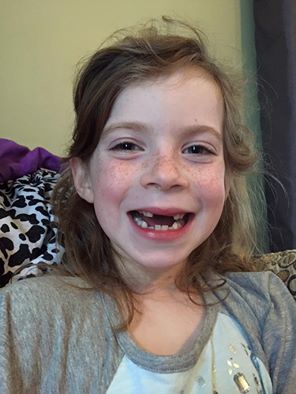
Filling in the gaps.
Gloriously tasty teeth
Oh, those teeth, those gloriously tasty teeth
I chew and swallow because my tummy’s hollow
and I feel a sense of release.
Oh, those gloriously tasty teeth.
My Mom says they’re only Smarties
a candy sweet and yummy hardy.
But my front teeth are swallowed and gone
going where my food and Smarties belong.
They taste sweet from my head to my feet.
Oh, the taste of my teeth can’t be beat.
Oh, those teeth, those gloriously tasty teeth
I chew and swallow because my tummy’s hollow
and I feel a sense of release.
Oh, those gloriously tasty teeth.
–by David E. Booker
Filed under 2016, Photo Finish Friday, poetry by author


 Booker's Blog