Category Archives: 2015

Science fiction and Pluto

Sci-fi becomes reality: 10 books about our future with Pluto

Pluto photographed during New Horizons flyby.

Pluto photographed during New Horizons flyby.

“If you can imagine it, you can achieve it. If you can dream it, you can become it.”

–William Arthur Ward

by Andrea Sefler

Source: http://www.popmythology.com/10-sci-fi-books-about-pluto/

Stargazers are having a momentous week with the Pluto flyby of New Horizons. With this success we have now made close inspection of most of the largest objects throughout much of our solar system, from the sun and all the planets, even the tiny one 4.67 billion miles out. And I refuse to engage in any “size matters” arguments here; I grew up learning nine planets, and nine planets there be.

While scientists will spend many years analyzing data from the mission making new discoveries, there is already a great deal of impressive accomplishments from the mission. Let’s just take the spacecraft itself. Are you one of those people impressed with and lusting after a high-tech Tesla? Well the New Horizons probe engineers managed to pack everything needed for the 9.5 year journey and the data collection upon arrival at Pluto into a craft smaller and lighter than many automobiles. Not to mention the fact that this baby was ripping along at more than 50,000 mph. Okay, maybe we can’t get the benefits of a gravitational assist from Jupiter on our highways, but this still makes a battery life of ~265 miles on an electric car seem weak.

Many will disparage this mission’s $720 million price tag and the space program in general as a waste of taxpayer money for esoteric and useless knowledge about places far too distance to be of concern. But the data collected at the destination is almost hardly more than icing on the cake. The real value lies in the journey and what needed to happen in order to make it a possibility. Most of our public companies, even those considered to be our most innovative, such as Apple, are concerned with small, incremental product changes, e.g. a few more pixels in the camera, a little bit larger screen. With NASA and the space program, the absolute necessity for small, robust, energy efficient components compel designers to push things to the limits. And then we all get to benefit from the successes as the designs find their way into our everyday devices.

Whether this gets done through solely at government agencies or through public/private consortiums, the point is to have these big, shared dreams and goals. My earliest datable memory is of the Apollo 11 moon launch. I am still staggered ever time I visit the Kennedy Space Center by the Saturn V rocket and all the incredible infrastructure developed to build, transport, and launch this behemoth, including the Vehicle Assembly Building, which is so large it sometimes rains inside.

The dream of sending a person to the moon united people to a common mission and, as such, everyone had a part in the success. Even better are the missions involving international collaborations, such as Apollo-Soyuz where we can begin to imagine ourselves as citizens of planet Earth and not Greeks or Germans or Americans or Russians.

But these missions all begin with dreams: dreams that came straight out of the pages of science fiction novels, leapt into the minds of curious, adventurous men and women, and wound up at the far end of our solar system. Many a great scientific discovery throughout history has been preceded by a fictitious imagining of it. Jules Verne published From the Earth to the Moon in 1865, and then in 1969 we did go from the earth to the moon via Apollo 11. H.G. Wells imagined tanks in The Land Ironclads (1903), and tanks were invented in 1915. There are many more examples, and whether these works of sci-fi were merely prophetic visions or actually served as inspiration in some direct or indirect way, the point is that the ability to imagine something comes before the actual doing. And in this respect sci-fi often has stronger ties to the real world than some people give it credit for.
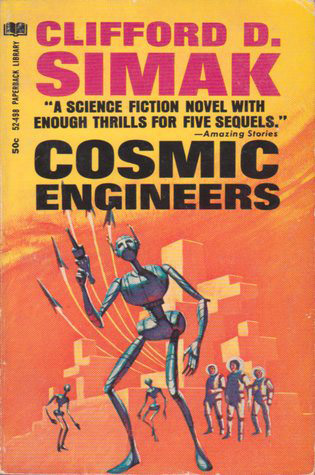
One of several novels about Pluto

One of several novels about Pluto

Today’s far fetched concepts may be tomorrow’s reality. And today’s flyby may be tomorrow’s manned expedition to Pluto. In celebration and acknowledgement of this idea, here are some sci-fi works over the years that have involved Pluto in some way. Some of these are forgotten works, but may they be rediscovered and inspire future generations to imagine new discoveries.

Details about the books at: http://www.popmythology.com/10-sci-fi-books-about-pluto/

Leave a comment

August 8, 2015 · 11:04 pm

Photo finish Friday: “Abandoned Table”

Awaiting the picnic.

Awaiting the picnic.

Leave a comment

Filed under 2015, photo by David E. Booker, Photo Finish Friday

Haiku to you Thursday: “Thursday”

It feels like Thursday. /

Beauty stepped into my life, /

Parted the humdrum.

Leave a comment

Filed under 2015, Haiku to You Thursday, poetry by author

Writing tip Wednesday: “Two new agents to consider”

Amanda O’Connor of Trident Media

Source: http://www.writersdigest.com/editor-blogs/guide-to-literary-agents/new-literary-agent-alert-amanda-oconnor-of-trident-media?et_mid=768246&rid=239626420

Amanda O'Connor

Amanda O’Connor

Amanda O’Connor joined Trident Media Group from Penguin Random House where she worked as an editor. Previously, she had been a bookseller, ghostwriter, assistant, and volunteer, happily taking on many roles within the publishing industry. Her breadth of experience has proven invaluable to her work as an agent, supporting authors through every step from proposal to publication and beyond. She holds a B.F.A. Writing, Literature, & Publishing with a concentration in poetry from Emerson College. Visit her agent profile here: http://www.tridentmediagroup.com/agents/amanda-oconnor

Amanda is continuously building her client list in general-interest and upmarket nonfiction, spirituality and wellness, and literary fiction. She looks for the “wisdom factor” across genres and disciplines, especially authors who have an expertise they are eager to share with the world. Her favored subjects include (but are not limited to) history, religion, popular science, sociology, culinary arts, and creativity. In spirituality, Amanda’s approach is truly ecumenical, seeking leaders of all faith communities from Catholic nuns to Sikh entrepreneurs, from practical self-help to inspirational memoir. Literary fiction is a pursuit of passion. She gravitates towards works that address timeless concerns of the soul through the lens of modern life. Above all else, Amanda loves a well-crafted sentence.

Please submit through Trident’s online form here: http://www.tridentmediagroup.com/contact-us, directing its attention to Amanda O’Connor. Unsolicited queries should include a paragraph about yourself, a concise and thoughtful summary of the proposal, and your contact information. Please do not send a manuscript or proposal until you have been requested to do so.

+++

Mallory C. Brown of TriadaUS

Source: http://www.writersdigest.com/editor-blogs/guide-to-literary-agents/new-literary-agent-alert-mallory-c-brown-of-triadaus?et_mid=768246&rid=239626420

Mallory C. Brown

Mallory C. Brown

Literary agent Mallory C. Brown is with TriadaUS. Some of Mallory’s favorite books at the moment are: A Series of Unfortunate Events, Gone Girl, Outlander, and To All the Boys I’ve Loved Before.

She is seeking: young adult, new adult, women’s fiction, and nonfiction. She is especially drawn to pieces with strong character-driven plots and witty humor. She loves contemporary fiction, low fantasy, and romance. Mallory also appreciates a well-placed comma and hopes you do, too.

How to submit: E-query mallory [at] triadaus.com. When querying, please include the first ten ms pages in the body of the e-mail after your query.

Leave a comment

Filed under 2015, writing tip, Writing Tip Wednesday

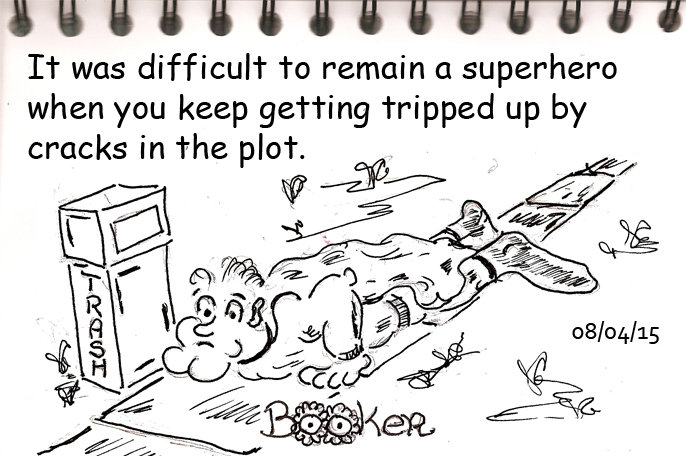
cARtOONSdAY: “pLOT pOINT”

Sometimes those cracks on the sidewalk weren't much help, either.

Sometimes those cracks on the sidewalk weren’t much help, either.

Leave a comment

Filed under 2015, cartoon by author, CarToonsday

Monday morning writing joke: “Flowering talent”

There once was a writer from Nashville, /

Who wrote enough songs to fill up a landfill. /

He’d write lyrics all day /

As if he had something to say /

Then sing them for an audience of daffodils.

***

Three creationists accidentally walked into a tar pit last night. In 6,000 years nobody will care.

Leave a comment

Filed under 2015, Monday morning writing joke, poetry by author

The best recent science fiction – review roundup

Eric Brown on Chris Beckett’s Mother of Eden; Becky Chambers’s The Long Way to a Small, Angry Planet; Stephen Palmer’s Beautiful Intelligence; Ian Sales’s All That Outer Space Allows; SL Grey’s Under Ground; Alex Lamb’s Roboteer

by Eric Brown

Source: http://www.theguardian.com/books/2015/jul/31/science-fiction-roundup?CMP=twt_books*gdnbooks

Chris Beckett won the 2013 Arthur C Clarke award for his novel Dark Eden, about the survival and adaptation of human colonists on a world without light. The sequel, Mother of Eden (Corvus, £17.99), begins generations later, charting the growth and political divisions between the colonists. It follows the rise of Starlight Brooking, a humble fishergirl, and her quest to bring equality and revolution to Edenheart, a settlement ruled by a conservative patriarchy. Beckett doesn’t do traditional heroes and villains: Starlight Brooking is contradictory and flawed, at once brave and vulnerable, and likewise his villains are portrayed with sympathy and understanding. He also eschews easy answers and formulaic plotting; where a hundred other writers would have Starlight triumph over her enemies, her victories are on a more profound and personal level, and not without tragedy. Mother of Eden is a masterpiece.

When the captain of the Wayfarer starship is offered a job travelling to a faraway planet that could make him and his crew financially secure, he agrees despite the dangers involved.Such a precis might suggest that Becky Chambers’s first novel, The Long Way to a Small, Angry Planet (Hodder & Stoughton, £18.99), originally self‑published and shortlisted for the Kitschies awards, is an action-adventure space opera. But this is a slow, discursive novel of character as the motivations of the diverse and likable crew, comprising humans and aliens, are laid bare for the reader’s delight. It is a quietly profound, humane tour de force that tackles politics and gender issues with refreshing optimism.

Stephen Palmer’s marvellous ninth novel, Beautiful Intelligence (Infinity Plus, £8.99), posits a beleaguered 22nd century in which oil has run out, water is scarce, and in a neat inversion of the contemporary world order, Europe is an economic ruin and Africa the promised land. Two techno wizards abscond from a Japanese laboratory, each attempting to develop artificial intelligence according to their own philosophies – one based on the social intelligence theory of consciousness, the other on a linguistic approach – but billionaire tech-mogul Aritomo Ichikawa will stop at nothing to get them back. What follows is a thrilling chase across a ravaged Europe, a burgeoning North Africa and balkanised US, interleaving excellent action set-pieces with fascinating philosophising on the nature of consciousness. A gripping read to the poignant last line.

More at: http://www.theguardian.com/books/2015/jul/31/science-fiction-roundup?CMP=twt_books*gdnbooks

Leave a comment

Filed under 2015, book review, books

Stephen Baxter interview: why science fiction is like therapy

The bestselling SF writer talks about the rush to finish the Long Earth series, being the order to Terry Pratchett’s chaos and how maths helps him write

by Alison Flood

Source: http://www.theguardian.com/books/2015/jul/25/stephen-baxter-interview-why-science-fiction-is-like-therapy

In the summer of 2013, Stephen Baxter and Terry Pratchett published The Long War, the second volume of their Long Earth science-fiction series, about parallel worlds that can be “stepped” into. By the end of that year, the two authors – both prolific by any standards – had completed drafts of the remaining three novels in the series. It was an astonishing rate of work, but there was a deadline that needed to be met: Pratchett had announced his diagnosis with a rare form of early onset Alzheimer’s in 2007. By the summer of 2014, he would pull out of a Discworld convention, citing “The Embuggerance”, which was “finally catching up with me”. He died in March this year.

Stephen Baxter

Stephen Baxter

“I think Terry was aware he was running out of time, and he wanted to do other things as well,” Baxter says. “So we rushed through it a little bit. Terry’s basic vision was the first step, but he also wanted to have a huge cosmic climax at the end, which would be book five … We had no idea how to get there but we knew where we were going.”

The Long Utopia, the fourth in the series, sees settlers on an Earth more than “a million steps” west of ours stumble across a disturbing, insectile form of alien life. Like its predecessors, the novel is compelling not only for its central storyline of exploration and danger and humans doing foolishly human things – and in this case a particularly cataclysmic finale – but also for its slow, unhurried laying out of the minute differences between these empty-of-humanity Earths.

The concept of a chain of parallel worlds, each a little different from its neighbour, was one Pratchett originally had, and set aside, in the 1980s. He told Baxter, a long-time friend and one of the UK’s most respected science-fiction authors, about it over dinner one night, and they decided to collaborate.

“It was a great idea but Terry’s strength did not lie in landscapes and things,” Baxter says. “He’d get a story by having a basic idea, get two people in a room talking and see where it went from there.”

This is not how Baxter works. His fiction, whether about the colonising mission sent to a planet orbiting a nearby red dwarf star, in Proxima, or the exploration of different evolutions of humanity in the Destiny’s Children series, is meticulously planned and pinned down, rooted in the scientific background from which he comes. He has a degree in maths from Cambridge and a PhD in aeronautical engineering; he is a fellow of the British Interplanetary Society and applied for a guest spot on the Mir space station in 1989, making it through a number of stages on his quest to be a cosmonaut but eventually missing out because of his lack of foreign languages.

Whether Baxter decides to submerge the world (Flood), or make humanity live in the centre of a neutron star (Flux), or keep the sea off Doggerland in an alternative prehistory (Stone Spring), there’s always a hook into something real. “I try to get it right. If you can get the maths right, I figure you’re most of the way there,” he says.

Baxter is fiercely intelligent, in a generous way, sharing his enthusiasms and knowledge on everything from recently discovered exoplanets to the Mars project (he’s not hopeful, because he doesn’t think enough has been done on long-term life support systems). At the British Interplanetary Society, he’s been part of study projects on everything from designing star ships to extraterrestrial liberty, an issue explored in Ark, his follow-up to Flood, in which the scraps of humanity flee their devastated planet in “generation ships” for an uncertain future outside the solar system.

“It’s all very well to plan a five-generation mission to Alpha Centauri, but if you’re one of the middle generations, you live out your life with very little room for manoeuvre,” he says. “So what right do you have to submit your children and grandchildren to a life of slavery like that? You get some interesting ethical issues – do you have rights over people who don’t yet exist, do they have rights?”

Rest of the article: http://www.theguardian.com/books/2015/jul/25/stephen-baxter-interview-why-science-fiction-is-like-therapy

Leave a comment

Filed under 2015, author interview

Photo finish Friday: “License”

Inquiring minds want to know where the hunting dogs keep their permit so that it is easily available? Plus, how many dogs can hunt on one permit?

Inquiring minds want to know where the hunting dogs keep their permit so that it is easily available? Plus, how many dogs can hunt on one permit?

Leave a comment

Filed under 2015, photo by David E. Booker, Photo Finish Friday

Haiku to you Thursday: “Imagining”

Thoughts like ragged leaves /

Blown by a wind, bright and wild. /

Beloved imagining.

Leave a comment

Filed under 2015, Haiku to You Thursday, poetry by author