
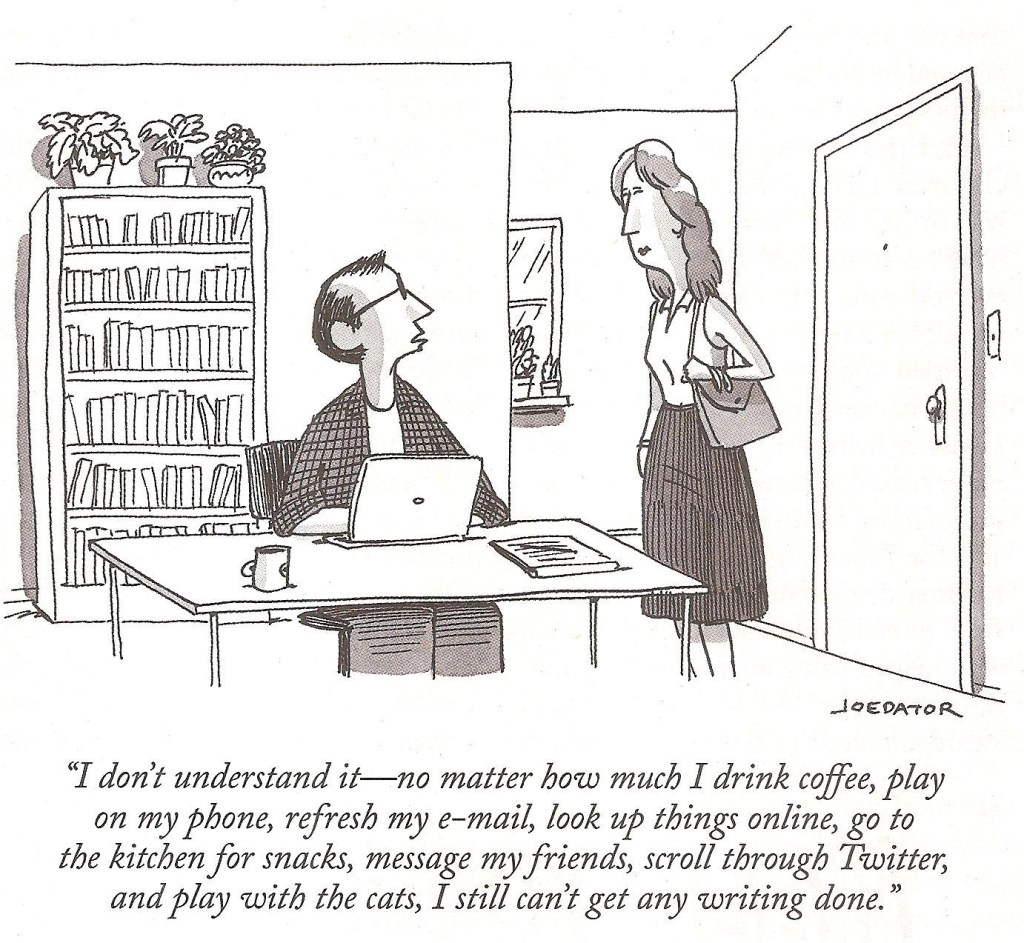
The pro in procrastination does not make you a professional writer.
The pro in procrastination does not make you a professional writer.
There once was a writer from St. Paul
Who could only write well in the fall.
With the leaves off the trees
She saw her neighbors with ease.
And then she could record it all.

You already know how much better you feel after a good night’s sleep, but sleeping well helps your brain in less apparent ways than just not being groggy the next day. In fact, getting seven to nine hours of sleep each night can help secure your cognitive well-being.
In the short term, it gives your brain time to flush out refuse matter that builds up–like protein plaques and beta amyloid tangles–through a kind of waste chute called the glymphatic system. And over the long term, that can help stave off diseases like Alzheimer’s. So it pays to know a few tricks and habits to help yourself along to the land of nod. For starters, here’s what to avoid:
It’s all too easy to slip into a routine of having a glass or two of wine each evening, and you wouldn’t be alone in thinking this helps you unwind and sleep better. But what you might not realize is how significantly impaired the quality of your sleep is when you drink.
Alcohol is a depressant and neurotoxin, which means it slows down the central nervous system’s processes by reducing electrical conductivity in the brain. This means that neurons, which send and receive the electrical signals that cause the release of neurotransmitters, operate more slowly. In fact, if you spent the evening drinking and then went to sleep wearing a heart-rate variability monitor, it would show significantly increased levels of stress for your body while you slept.
That’s thanks to the body’s physiological response when it’s trying to break down a toxin, the liver works harder when it should be resting, leading to a stressed state from which you’ll wake up feeling exhausted. Throughout the night, as the liver uses a higher proportion of the body’s energy than usual, the brain is starved of its usual resources and struggles to recuperate effectively for the next day.
Many people like watching TV to relax after a long workday, and while that might help distract you from your daily worries, it doesn’t prepare your brain for a good night’s rest. Melatonin, the hormone that helps regulate sleep, is released into the bloodstream by the pineal gland. But darkness triggers the gland to start working, and it gets confused by the blue light that most screens emit.
Many people have heard of this issue when it comes to their smartphones, but it may not be enough to set aside just that device and not others. Even reading an e-book on a tablet or certain kinds of e-reader, or just watching ordinary television, can be potentially problematic. Try reading paper books and make sure you stop looking at all your devices’ screens for at least an hour before you hit the hay.
(Not sure what to do instead? For what it’s worth, sexual intimacy leads to the release of the bonding hormone oxytocin, which makes you feel comfortable and lowers your guard–helping to ease you into a good night’s sleep.)
Eating a large, heavy meal is also a bad idea, especially acidic, spicy, or fatty foods, which can actively stimulate the brain. Certain foods like bacon and preserved meats, soy sauce, some cheeses, nuts, tomatoes, and red wine contain a chemical called tyramine, which causes the release of norepinephrine, a brain stimulant that boosts brain activity. Even some milky drinks, which many believe to be sleep-inducing, contain high quantities of sugar that can also keep you up. So make sure you check the label and choose your dinner carefully.
Now that you’ve cut these habits from your evening routine, what should you add to it instead? Here are a few good options for improving both the quality of your sleep and reducing the time it takes your brain to power down for the night.
Lavender is a powerful neuromodulator, which means that it lowers your blood pressure, heart rate, and skin temperature, making you more relaxed and likelier to fall asleep. Smell has a powerful and immediate impact on emotion and mood because of the proximity of the olfactory nerve (which contains the sensory nerve fibers relating to smell) to the brain.
There’s also an associative quality to regularly smelling lavender before you sleep. If you make this a habit, it will signal to your brain that it’s time to wind down (once you’ve established this association, you can tap into it on the road, too; just throw some lavender in your travel bag). If you don’t like lavender, jasmine is a good alternative and can produce similar effects.
Rather than buying a powdered milky drink that’s high in sugar, you can make your own relaxing bedtime drink using a nut milk, like almond, which is full of magnesium. Magnesium helps reduce levels of the stress hormone cortisol and calms the nervous system.
As a secret ingredient, add turmeric, whose powerful anti-inflammatory properties can prevent nighttime stomach problems that might interrupt your sleep (and which have even been implicated in preventing dementia). If you want to sweeten your drink, use Manuka honey rather than sugar to help boost your immunity.
Circadian rhythms are our bodies’ series of physical, mental, and behavioral changes. They follow a roughly 24-hour cycle and depend primarily on how bright our environment is. Because of these rhythms, our body temperature automatically dips a couple of degrees at night, causing us to feel sleepy.
So when you take a hot bath–ideally 60–90 minutes before bedtime–your body temperature rises, but the rapid, steeper cool-down period immediately afterward relaxes you. And since the best way to increase your magnesium levels is actually through your skin, you can try adding magnesium salts to your bath to decrease cortisol levels. You should also make sure your bedroom isn’t too hot and stuffy once you get out of the bath. A cooler room can help reduce your body heat by the couple of degrees needed to drift off.
While falling asleep might seem like a passive process, there’s a whole cocktail of neurotransmitters involved in it, including histamine, dopamine, norepinephrine, serotonin, glutamate, and acetylcholine. But that means there are many physiological “levers” you can pull on your way to a better night’s sleep. Get your evening routine right, and you’ll be able to enjoy the spoils that come with it–better concentration, memory, and moods, enhanced creativity, and reduced inflammation and stress.
Dr. Tara Swart is a neuroscientist, leadership coach, author, and medical doctor. Follow her on Twitter at @TaraSwart.
Filed under 2020, writing tip

My beauty is now /
In this moment, at this place. /
See me; see yourself.
.
.
#haiku #poem #poetry #see #beauty #me #yourself #lily #oldnorthknoxville #knoxville #tennessee #flower
You can have it all. /
Except not at the same time. /
The truth never ends.
Filed under 2020, Haiku to You Thursday, Poetry by David E. Booker
Eliminating distractions is as important as heightening your focus. And no, they’re not the same thing.
Here’s the Gist:
Having a hard time focusing lately? You’re not alone. Research shows interruptions occur about every twelve minutes in the workplace, and every three minutes in university settings. In an age of constant digital interruptions, it is no wonder you’re having trouble ignoring distractions.
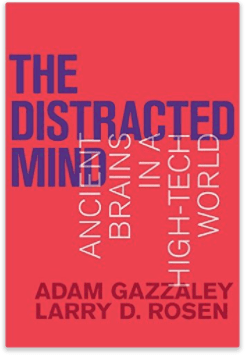
In their book, The Distracted Mind: Ancient Brains in a High-Tech World, Dr. Adam Gazzaley, a neuroscientist, and Dr. Larry Rosen, a psychologist, explain how our ability to pay attention works and what we can do to stay focused.
It turns out, attention isn’t as simple as it seems. In fact, paying attention involves two separate functions: “enhancement” (our ability to focus on things that matter) and “suppression” (our ability to ignore the things that don’t). Interestingly, enhancement and suppression are not opposites, they are distinct processes in the brain.
From The Distracted Mind: Ancient Brains in a High-Tech World:
“Although it may seem counterintuitive, we now appreciate that focusing and ignoring are not two sides of the same coin […] it is not necessarily true that when you focus more on something, you automatically ignore everything else better. We have shown in our lab that different [brain] networks are engaged when we focus compared to when we ignore the same thing.”
These processes are so separate, in fact, there are different networks of brain structures that carry out their respective functions, each of which is critical for attention.
If either of these brain processes is impaired, we lose focus. For example: we struggle with attention when we are tired, drunk, and, most notably, as we age.
Older adults are biologically more distractible than young adults. Personal anecdotes and scientific evidence demonstrate that our attentional capacity peaks near age twenty and diminishes over time. Gazzaley discovered that age-related declines are caused by a deficit in the suppression (ignoring) process.
From The Distracted Mind: Ancient Brains in a High-Tech World:
“Our main finding in this study was that, interestingly, older adults [focus on] relevant information as well as twenty-year-olds. Where older adults suffered a deficit was in suppressing the irrelevant information … We discovered that their main attentional issue was that they are more distractible than younger adults.”
The attentional decline we experience as we age has more to do with our inability to filter out distractions, not our lack of concentration. If you think it’s hard to pay attention now, just wait until you age a few more years.
To improve our ability to pay attention, we need to both remove distraction (especially as we age) as well as boost our capability to focus on one task at a time. Here’s how…
How to Eliminate Distraction
Have you ever noticed someone squinting their eyes in an attempt to recall something? Turns out closing your eyes to remember may actually work. Why this quirky technique is effective tells us something important about how the brain filters information. When your eyes are closed, your brain isn’t working as hard to filter out visual information. Instead of struggling to ignore everything in your field of view, your brain can devote more attention towards scanning your memory. Gazzaley conducted an experiment to see what type of visual information is the most distracting. He and his team asked volunteers to remember details while looking at one of three visual scenes: a plain grey screen, a busy picture, or with their eyes closed. From The Distracted Mind: Ancient Brains in a High-Tech World:
“The results of this experiment revealed that their ability to remember details [ …] was significantly diminished when their eyes were open and there was a picture in front of them, compared to either their eyes being shut, or their eyes being open while they faced a grey screen”
This experiment, along with others, provides evidence that cluttered and disorganized environments are more distracting than organized ones. Spaces filled with visual distractions force our brains to work harder to filter out superfluous information. When facing a pending deadline that you desperately need to focus on, clearing your desk and workspace to make it like the grey screen can increase your focus. Try clearing your virtual desktop of clutter as well. Limit yourself to one monitor, one browser tab or window and one computer program or app at a time. For more on “How to Clear Your Computer of Focus-Draining Distraction” click here. Removing distraction is important to maintain our focus as we age, but we also need to boost our capability to concentrate on one task at a time. Here’s how..
How to Boost Focus
Gazzaley and Rosen say some activities may boost cognition and attention by stimulating the brain’s ability to strengthen and reorganize existing neural connections, a process called neuroplasticity.
Activities that may boost cognition include physical exercise, meditation and spending time in nature. Recent research also finds that some cognitive exercises may also help. Although there are many brain training programs, some of which have over-promised and under-delivered, some scientists believe a new crop of clinically validated programs may soon come online.
From The Distracted Mind: Ancient Brains in a High-Tech World:
“Cognitive exercises are an attempt to improve brain function by harnessing our brain’s inherent plasticity, rather than by explicitly teaching a strategy or a skill. Most training programs attempt to accomplish this goal not just through repetitive task engagement, but also through adaptivity.”
For Gazzaley and Rosen, adaptivity is key. Just as athletes must adjust their exercise routines as they grow stronger; cognitive exercise programs must also adjust to how well, or how poorly, the participant is doing in the task. Personalized adjustments make the training more successful.
New research shows the of cognitive exercise programs in older adults and healthy populations. Gazzaley and Rosen caution that while the research is encouraging, more clinical trials are needed to prove medical benefits. However, many in the industry are hopeful doctors will one day prescribe game-like cognitive exercises as part of a healthy brain training regimen.
In the meantime, certain currently available video game titles may actually be good for brain health and improve cognition.
From The Distracted Mind: Ancient Brains in a High-Tech World:
“They are designed with a primary goal of engendering high levels of immersion, engagement, and enjoyment for the players, […] They do not tend to focus on one specific cognitive skill, as exercises usually do, but rather expose players to multiple demands that challenge a broad range of abilities. ”
A 2003 study of video-game play linked better cognition and higher scores on attention and memory tests in gamers vs non-gamers. But not all video games are created equal.
Non-gamers who played the first person shooter game, Medal of Honor, one hour per day for 10 days showed improvements in cognition, while the ones who played Tetris did not.
From The Distracted Mind: Ancient Brains in a High-Tech World:
“[The researchers’] conclusion was that the nature of action video game play was critical in ‘forcing players to simultaneously juggle a number of varied tasks (detect new enemies, track existing enemies and avoid getting hurt, among others)…”
Video games may give you a boost, but not every off-the-shelf game will do the trick. The difference between the games that work and the ones that don’t gives us information into how the brain changes in response to its environment.
Video games good for building focus create environments that are fast-paced, interactive, adaptive and have complex reward and gaming structures. Like a brain playground.
In 2013, Gazzaley verified that a custom-designed cognitive video game, NeuroRacer, improves cognition in older adults. Dr. Gazzaley’s research led to a proprietary technology platform to measure and improve certain executive functions.
In the future, cognitive video games will be like “Neuro Cross Fit Training” as Gazzaley calls it. They will combine elements of physical activity, meditation, and cognitive exercise, rolled into one game.
In the meantime, we can do our part to keep our attentional focus sharp by first reducing distractions to improve our suppression capabilities, and then beefing-up the brain’s enhancement functions through activities like exercise, meditation, outdoor time, and immersive video games. We can boost our ability to concentrate by doing just one thing well at a time.
Filed under 2020, writing tip, Writing Tip Wednesday
There once was a writer from Maine
Whom everybody thought was insane.
He wrote big books on evil
and owned pet boll weevil.
No one could cotton to him or complain.


 Booker's Blog