Monthly Archives: December 2019

The Absolute Best Books On Writing | BookBaby Blog

The list of favorite books on writing can be very different from one author to another. I’ve scoured 10 “top” lists to see which titles spanned the gamut.

Source: The Absolute Best Books On Writing | BookBaby Blog

By Dawn Field

What are your favorite books on writing? Do you have a large collection? How do you expand your corpus when you feel like reading another? Which would you recommend?

There are a huge number of books on writing and if you want to pick the absolute “best,” you have two choices. The first is to pick books that the most people have read and enjoyed. The second is to admit that the best books for each writer will be different. If you are a poet, nonfiction writer, or romance aspirant, you might want specialist advice and information.

Popularity contest

To find the books that are most popular, I looked at the intersection of lists of favorites — and I found an interesting pattern. If you combine the top books on Amazon and the picks found in a range of “top book” articles (Steven Spatz‘ 5 favorites, Shaunta Grimes‘ top 10, Jerry Jenkins’ “12 best,” Jeff Goin‘s “best books,” SmartBlogger‘s “9 Essentials,” The Write Life‘s “9 of the best,” Barnes & Noble‘s “6 best,” and Paste‘s “10 best”) we see some perennial favorites, but overall, surprisingly little overlap.

A few classics appear repeatedly, but most of the recommended books on writing only appear once. This is because excellent, but specialist, books fall down the ranks. The perfect book for you might never rank a “top 10” list of general writing books.

So, who are the winners? Two books stand head and shoulders above the rest in the tally of appearances. The winning category is “writers writing on writing” and the two top books are Stephen King’s On Writing: A Memoir of the Craft and Anne Lamott’s Bird by Bird: Some Instructions on Writing and Life.

Other books often in the top lists are Strunk and White’s The Elements of Style and two on creativity: Julia Cameron’s The Artist’s Way: A Spiritual Path to Higher Creativity and Steven Pressfield’s The War of Art: Break Through the Blocks and Win Your Inner Creative Battles.

Most at the rarefied top of the normative lists have some good years on them. Remember the classics now “too old” to rank on such modern lists. This includes Joseph Campbell’s The Hero With a Thousand Faces which describes the hero’s journey that inspired Star Wars, Aristotle’s Poetics (which comes in various translations and interpretations from modern authors), and John Gardner’s The Art of Fiction: Notes on Craft for Young Writers.

New books continuously appear. Harvard linguist Stephen Pinker’s The Sense of Style: The Thinking Person’s Guide to Writing in the 21st Century already ranks as a modern classic update to the Elements of Style and writer and teacher John McPhee’s Draft No. 4: On the Writing Process is just out for nonfiction.

If you want to hear the advice of an expert editor and you are interested in nonfiction, go for Sol Stein’s On Writing. Blake Synder’s Save the Cat: The Last Book on Screenwriting You’ll Ever Need is a textbook in screenwriting.

And the lists go on and on.

Just look at this list by Booker prize-winning author DBC Pierre in The Guardian to see how different and unique a personal choice list can be. It includes The Prince by Niccolò Machiavelli to “discover what villains are born knowing.”

The best books to add to your collection fill the biggest gaps in your knowledge or provide the most inspiration. This could mean getting a tip from a colleague or mentor or scrolling curated lists to seek out something that matches your interests. Book Riot has a list of “100 Must-read, Best Books On Writing And The Writer’s Life.”

The choices might seem overwhelming, but it helps that you can download opening chapters for free on Kindle to have a look at style and content.

How many have you read? Which should you read next? In the end, pick to match your tastes and needs. The absolute best are the ones that help you most.

Leave a comment

Filed under 2019, book list, writing tip, Writing Tip Wednesday

The 8 Best Books for Writers in 2019

Read reviews and buy the best books for writers from top authors including Randy Ingermanson, Susan Thurman, Zachary Petit and more.

Source: The 8 Best Books for Writers in 2019

Become a better author in no time

By Emily Delbridge

Updated November 21, 2019


https://www.thebalance.com/best-books-for-writers-1360649


We are committed to researching, testing, and recommending the best products. We may receive commissions from purchases made after visiting links within our content. Learn more about our review process.

Making money as a writer is not an easy task. Depending on your goals it can feel downright impossible. Being a successful writer has nothing to do with luck, and everything to do with hard work, dedication and perseverance. Overcoming challenges like writer’s block and finding a publisher can be excruciating. The best thing you can do is continue self-education. Most people know reading more can make you a better writer. Reading the proper book at the right time can make all the difference. If you are looking to make things easier on yourself and make the best of your writing, you are in the right place. Take a look at the best books for writers beginning with tools for becoming a better writer and ending with getting your writing out to the masses.

Best for Fiction Writers: How to Write a Novel Using the Snowflake Method

Buy on Amazon

There are many different ways to approach writing a fiction novel. The Snowflake Method is a popular method of writing and the author, Randy Ingermanson, lays it out in a unique book where the technique is explained in a story. He uses the fairy tale characters, Goldilocks and the Three Bears with a murder mystery theme, and walks you through the process of using the Snowflake method. It makes it fun and easy to understand. If you have never heard of the Snowflake Method, it begins with a simple idea then develops and adds more intricate details along the way. It is a little different than laying out a rigid outline or just making it up as you go along. It is most helpful for writers who prefer to write as they go but often get stuck somewhere in the middle. The Snowflake method can help even a seasoned writer complete a novel with excitement.

Best for Improving Your Writing Skills: The Only Grammar Book You’ll Ever Need

Buy on Amazon

One skill that can not be overlooked as a writer is grammar. Having a resource you can depend on and refer to as needed is an absolute must. The Only Grammar Book You Will Ever Need is the one stop shop for your grammar needs. It is less than 200 pages and has a quick reference guide. Proper grammar is not always intuitive. Common misspelled words can leave a reader running or clicking away from your content in a heartbeat. Get expert tips for writing clearly and directly. Learn the parts of speech and elements of a sentence. Figure out how to avoid the most common grammar and punctuation mistakes, and finally get the right punctuation in every sentence. This is an excellent book for helping writers create professional documents, writing A+ school papers or writing effective personal letters. It is very likely your writing will improve rapidly after reading this book. Even though there is a lot of software available to correct writing errors, it is great to learn the why behind grammar errors. You will write more efficiently and will have a more cohesive end product.

Best for Freelance Writers: The Essential Guide to Freelance Writing

Buy on Amazon

The life of a freelance writer has its perks, but it has its challenges, too! If you have been looking to earn extra income, or if you are ready to kick the 9- to-5 day job completely, freelance writing is ripe with opportunities. It is a great way to enter the writing world and hone your writing skills. Freelance writing can help you gain experience, so you are more skilled and confident to write more elaborate pieces such as a novel. The Essential Guide to Freelance Writing will help you reach your goals, whatever they may be, faster. Learn how to write and structure different styles of articles. Get tips on how to dream up the perfect article idea. Explore various aspects of being a freelance writer you may never have considered before. The author Zachary Petit has a lot of expertise in the writing, which includes being the longtime managing editor of Writer’s Digest magazine. He sprinkles in humorous antidotes and makes this an easy read. If you are serious about becoming a freelance writer, this is the book that can help you make it happen.

Best for Self Publishing: Write. Publish. Repeat.

Buy on Amazon

There is one common goal nearly every writer works towards in their writing career, to write content your readers will love and come back to again and again. The publishing world has changed dramatically in recent years. Publishing options have exploded. However, it can be overwhelming to learn about all the different options and how to be successful in reaching your ideal reader. Write. Publish. Repeat. is written by a collaboration of successful Indie authors and is written in a conversation style. They make it clear it takes hard work to be successful at self-publishing; however, they provide invaluable insight on how to make it work without relying on luck. Expect to learn a little bit about everything, including building a story, understanding your market, tips for creating book covers, titles, formatting, pricing, getting your content on multiple platforms and more. Aspiring writers will learn a lot from this book. You will be motivated to continue and know there is proven success.

Best for Getting Published: Get a Literary Agent

Buy on Amazon

Securing a deal with a traditional publisher might be the most laborious task of any new writer. Some publishers are willing to take on the work of a writer without an agent, so check Writer’s Market books that contain publishers of all kinds. It is in the Writer’s Market books that you will find the majority of prominent publishers that want you to have an agent. The book Get a Literary Agent will help you figure out how to research agents and target the best ones for your work. It will teach you the ins and outs of the submission process. It delivers fantastic pointers on writing the perfect query letter and pitch. It also provides pro tips on assembling a book proposal, and how to form a healthy relationship with your agent. If you are still not sure an agent is needed, this book also dives into what a literary agent does and how they can benefit you. Getting your book on the Best Seller’s list is not an easy task. You will be happy you learned what to expect when getting a literary agent before spending tons of time trying to figure it out on your own.

Best Children’s Book Writing Resource: Children’s Writer’s Word Book

Buy on Amazon

Writing for children is a little different than writing for adults. If you are used to freelance writing for adults readers, there are a few things you need to consider when you change gears. The Children’s Writer’s Word Book written by Alijandra Mogilner will help you recognize some of the differences and make writing more natural for this target reader. You will need to pay attention to the reading level of the words you use. This book provides a list of specific words ranked by grades kindergarten through sixth. It also includes a thesaurus of those words and guidelines for sentence length. It has a useful introduction to each grade level and provides an overview of what the age group traditionally studies. Every children’s book writer will find this to be an essential handbook.

Best Writing Strategies Book: The Element of Style

Buy on Amazon

Do you want to learn how to write well? The Element of Style written by William Strunk is considered being one of the most concise yet all-inclusive writer’s handbooks despite being nearly 100 years old. It has almost every grammatical concept you might need to know. It is easy to find what you are looking for and can be used as a quick reference. The best part is its size. It is small enough to fit in your back pocket or backpack. Most writing guides are enormous textbooks nobody wants to read. This one answers most style questions in around 100 pages.

Best for Writer’s Block: The Miracle Morning for Writers

Buy on Amazon

Writer’s block can happen to anyone. Words are not flowing, and you are not sure what to do next. Creating good habits in your morning routine might be what you need. The Miracle Morning for Writers written initially by Hal Elrod has been described as the most life-altering book ever written. It has sold over 750,000 copies and has several different variations available. This edition, co-written by Steve Scott, pinpoints the specific habits you need to work into your morning routine to become a better writer than you ever thought imaginable. Learn how to overcome limiting beliefs and how to enter the “flow state” ending writer’s block once and for all.

Leave a comment

Filed under 2019, writing tip

The Commas That Cost Companies Millions

For most people, a stray comma isn’t the end of the world. But in some cases, the exact placement of a punctuation mark can cost huge sums of money.

Source: The Commas That Cost Companies Millions

How much can a misplaced comma cost you?

If you’re texting a loved one or dashing off an email to a colleague, the cost of misplacing a piece of punctuation will be – at worst – a red face and a minor mix-up.

But for some, contentious commas can be a path to the poor house.

In 2018, a dairy company in the US city of Portland, Maine settled a court case for $5m because of a missing comma.

Three lorry drivers for Oakhurst Dairy claimed that they were owed years of unpaid overtime wages, all because of the way commas were used in legislation governing overtime payments.

The state’s laws declared that overtime wasn’t due for workers involved in “the canning, processing, preserving, freezing, drying, marketing, storing, packing for shipment or distribution of: 1) agricultural produce; 2) meat and fish products; and 3) perishable foods”.

The drivers managed to successfully argue that because there was no comma after “shipment” and before “or distribution”, they were owed overtime pay. If a comma had been there, the law would have explicitly ruled out those who distribute perishable foods.

Workers load milk onto trucks at the Oakhurst dairy plant in 2013. Credit: Getty Images.

Because there was confusion, the US Court of Appeals ruled in their favour, benefiting around 120 of the firm’s drivers. David Webbert, the lawyer who helped bring the case against the company, told reporters at the time that the inclusion of a comma in the clause “would have sunk our ship”. (He didn’t respond to interview requests from the BBC.)

The slip-up shows that the slightest misstep in punctuating a clause in a contract can have massive unintended consequences.

“Punctuation matters,” says Ken Adams, author of A Manual of Style for Contract Drafting. But not all punctuation is made equal: contractual minefields are not seeded with semicolons or em-dashes (here’s one: – ) waiting to explode when tripped over.

“It boils down to commas,” says Adams. “They matter, and exactly how depends on the context.”

Delivering Definition

Commas in contracts link separate clauses in a non-definitive way, leaving their reading open to interpretation. While a full stop is literally that – a full and complete stop to one thought or sentence, and the signal of the start of another – commas occupy a linguistic middle ground, and one that’s often muddled. “Commas are a proxy for confusion as to what part of a sentence relates to what,” Adams explains.

The English language is fluid, evolving and highly subjective. Arguments have been fought over the value of so-called Oxford commas (an optional comma before the word “and” or “or” at the end of a list). There might be good arguments on either side of the debate, but this doesn’t work for the law because there needs to be a definitive answer: yes or no. In high-stakes legal agreements, how commas are deployed is crucial to their meaning. And in the case of Oakhurst Dairy against its delivery drivers, the Oxford comma is judged to have favoured the latter’s meaning.

But just because you mean to say something, it doesn’t mean that a court will agree with you, says Jeff Nobles, a Texas-based appellate lawyer who was involved in an insurance case that hinged, in part, on the punctuation of a contract.

According to Nobles, most US courts will say it doesn’t really matter what the parties subjectively intended; it’s the objective intent in the written terms of their contract. “Punctuation sometimes will change the meaning of a sentence,” he says.

Nobles represented an insurance company in a Texas Supreme Court case concerning insurance coverage for a worker who died on the job.

Nobles argued successfully that punctuation mattered for a contractual indemnity provision, when the company tried to trigger coverage under its umbrella insurance policy after a subcontracted employee died on the job. It set a precedent in the state’s legal system, he believes.

He says US courts have become increasingly textual – “they’ve looked more and more at the words on the paper rather than the testimony of the people who used those words on the paper.”

Yet arguments over commas have been raging for more than a century.

‘An Expensive Comma’

In 1872, an American tariff law including an unwanted comma cost taxpayers nearly $2m (the equivalent of $40m today). The United States Tariff Act, as originally drafted in 1870, allowed “fruit plants, tropical and semi-tropical for the purpose of propagation or cultivation” to be exempt from import tariffs.

For an unknown reason, when revised two years later, a stray comma sneaked in between “fruit” and “plants”. Suddenly all tropical and semi-tropical fruits could be imported without any charge.

An 1872 tiff over tariffs and tropical fruit cost taxpayers $40m – all caused by a comma. Credit: Getty Images.

Members of the US Congress debated the issue and the problem was fixed – but not before the New York Times bemoaned the use of “An Expensive Comma.” It wouldn’t be the last such error.

“Contract language is limited and stylised,” says Adams. He compares it to software code: do it right and everything works smoothly. But make a typo and the whole thing falls apart.

When errors are introduced into legal documents, they’re likely to be noticed far more than in any other form of writing, he says. “People are more prone to fighting over instances of syntactic ambiguity than in other kinds of writing.”

Muddying the Waters

Of course, in some circumstances, those drafting contracts may want to introduce ambiguities. Getting different countries to sign up to the same principles can be challenging, particularly for climate change agreements.

Early climate change conventions included this line:

The Parties have a right to, and should, promote sustainable development.”

The sentence ensures those signing the agreement have the ability to promote sustainable development – and should do so.

But in its original draft, the second comma was placed after “promote”, not before it:

The Parties have a right to, and should promote, sustainable development.”

Some countries weren’t happy with the original wording because they didn’t necessarily want to be locked into promoting sustainable development. Moving the comma kept the naysayers happy while placating those who wanted stronger action.

“By being slightly creative with punctuation, countries can feel like their interests have been addressed,” explains Stephen Cornelius, chief advisor on climate change with the WWF, who has represented the UK and EU at UN climate change negotiations. “You’re trying to get an agreement that people can substantially agree with.”

Most people try to make contract language as clear as possible – but sometimes leaving a bit of ambiguity can help both sides negotiate better. Credit: Getty Images.

Tricks of the Trade

Such linguistic flexibility happens more often than you’d think.

“In diplomacy, even though you try to have a single agreement, it’s very common to change the meaning for different parties,” says climate change negotiator Laura Hanning Scarborough. “You can use terms like ‘inter alia’, or ‘this includes, amongst other things’ to blur the lines to include anything. You can use commas as part of that, too. There are so many language tricks you use to appease people.”

For most people, however, making sure that contracts are unambiguous is important. For that reason, it’s crucial to test contract language to breaking point by giving it to someone who will test its limits – someone who will read it in the most awkward, unhelpful way, says Tiffany Kemp, a commercial contracting trainer for the International Association for Contract and Commercial Management.

One of the biggest cases battled over a comma was a dispute between two Canadian telecommunications companies. Rogers Communications and Bell Aliant fought a legal battle worth CAD$1m ($760,000) over a contract to replace utility poles across the country.

The argument stemmed from a single sentence:

“This agreement shall be effective from the date it is made and shall continue in force for a period of five (5) years from the date it is made, and thereafter for successive five (5) year terms, unless and until terminated by one year prior notice in writing by either party.”

The two sides argued that the comma after “five (5) year terms” meant something different: Bell Aliant said that the single year’s notice of termination applied at any time, Rogers that it only applied after the first five-year term ended.

This was important as Rogers had struck a great deal under their reading of the contract: when they signed a contract to lease the poles from Bell Aliant in 2002, they were paying just CAD$9.60 per pole. By 2004, the cost had nearly doubled. Bell Aliant, understandably, wanted to terminate the contract and renegotiate at the new, higher price. Rogers didn’t.

Successive courts were equally uncertain about the agreement: Canada’s Radio-Television and Telecommunications Commission first declared in favour of Bell Aliant in 2006; a year later, it changed its mind after consulting the French language version of the contract, which didn’t include the same ambiguity.

This dispute wasn’t brought about by wilful ignorance, reckons Kemp. “Sometimes there are genuinely different understandings,” she explains. “That little comma was put in a place that you would put in a place for a breath if you’re reading it out loud.”

Deadly Punctuation

How do these misplaced or misused commas make their way into complicated contracts that have been drafted by professionals? Part of the problem, says Adams, is technology. “Drafting contracts has long been a function of copying and pasting from precedent contracts, and that results in a kind of heedlessness, a detachment from the nitty gritty of how you’ve expressed what you want to express in a contract,” he says. “It’s easy to miss this sort of problem.”

In one extreme example, a misplaced comma was at the heart of a death-penalty trial.

Roger Casement, an Irish nationalist, was hanged in 1916 under the 1351 Treason Act. He had incited Irish prisoners of war being held in Germany to band together to fight against the British. The debate over whether Casement was guilty hinged on the wording of the 14th Century Treason Act and the use of a comma: with it, Casement’s actions in Germany were illegal; without it, he would get away with it.

Roger Casement, an Irish nationalist, was hanged in 1916. Credit: Getty Images.

Despite Casement’s lead counsel’s assertion that “crimes should not depend on the significance of breaks or of commas”, and “if a crime depended on a comma, the matter should be determined in favour of the accused, and not of the Crown”, the court ruled that the comma mattered. Casement was found guilty and executed.

Though today life and death doesn’t hinge on the use of commas – but big money, insurance policies and environmental agreements certainly do.

For that reason, it’s important to carefully check any contracts we sign, the experts say – and that means not just dotting the Is and crossing the Ts but also making sure every comma is in the correct place.

People sign contracts not because they’ve negotiated their meanings, but based on their own understanding of what they’re agreeing to, explains Nobles. Contracts written by lawyers on behalf of a business might have a different meaning than what the lay person understands.

So it pays to pay attention. If a piece of punctuation seems out of place or introduces ambiguity, speak up.

“The purpose of a contract is to help people get the outcomes they both expected, and to know what they’re supposed to do and get from the other side,” says Kemp.

“If there’s a misunderstanding, you owe it to both of you to get it sorted out. Have the argument today, rather than tomorrow.”

It could prevent a lot of pain in the future.

Leave a comment

Filed under 2019, punctuation

Haiku to you Thursday: “The Stargazer”

The stargazer grieves /

for the love he left behind /

fading into daylight.

Leave a comment

Filed under 2019, Haiku to You Thursday, poetry by author, Poetry by David E. Booker

26 of the Best Books On Writing

What’s the number one thing you can do to improve your writing?

Read. A lot.

Read anything and everything you can find, and you’ll become a better writer.

Read your favorite genre, whether that’s historical fiction, creative non-fiction or personal essays. Read books that are similar to what you like to write. And when you’re in the mood to learn about craft, read books on writing.

The titles below will help you with all aspects of your writing, from learning to write better to finding inspiration to figuring out where to pitch your ideas. We’ve even included some books about how to make money writing.

Here are some of the best books on writing.

Books on becoming a better writer

1. On Writing by Stephen King

Part memoir, part guidebook, Stephen King’s classic will appeal even to those who avoid King’s renowned horror-packed tales. In this book, King discusses how he came to be the writer we know today.

2. Bird by Bird by Anne Lamott

Bird by Bird is an essential part of any writer’s toolbox. In this work, Lamott shares herself and her craft with readers, including anecdotes that tie the pieces together into all-around great writing.

3. Writer’s Market edited by Robert Lee Brewer

Writer’s Market helps aspiring writers become published. Its listings contain hundreds of pages of suggested markets for nonfiction writers, as well as those looking to sell short stories, including details for how to pitch your work.

4. On Writing Well by William Zinsser

This classic book targets nonfiction writers and includes writing tips, as well as the fundamentals of craft. Zinsser discusses many forms of writing, from interviewing and telling stories about people to writing about travel.

5. The Elements of Style by William Strunk, Jr. and E.B. White

For years, writing teachers have assigned The Elements of Style to their students. Brushing up on the basics from time to time is critical for continually developing your skills, and this book contains simple truths that every writer needs to know.

6. The Associated Press Stylebook by the Associated Press

AP Style is known by many as the “go-to” writing style for journalists and public relations pros. The Associated Press Stylebook contains more than 3,000 entries detailing rules on grammar, spelling, punctuation, capitalization, abbreviation and word and numeral usage to help you master news writing.

7. How to Write Bestselling Fiction by Dean Koontz

While many books on this list are aimed at nonfiction writers, this one is for those who dream up their own stories to tell. If anyone is qualified to tell people how to write bestselling fiction, it’s prolific author Dean Koontz, who’s sold more 450 million copies of his books. This book was written in 1981 and is out of print, but has valuable insight for writers who manage to snag a copy (check the library!). It’s one of the best books on writing fiction.

8. Writing Down the Bones by Natalie Goldberg

Goldberg’s book examines the craft of writing including how to start brainstorming, the importance of learning how to listen, the vital role verbs play in writing, and even how to find an inspiring place to write.

9. Plot & Structure by James Scott Bell

Aimed at fiction writers, this book tackles everything from models to help with story structure to a variety of techniques to help with crafting great stories from start to finish. You’ll even find tips on creating plotting diagrams. and tools to overcome various plot problems that can arise.

Books on overcoming the struggles of writing

10. The Writing Life by Annie Dillard

The author of Pilgrim at Tinker Creek shares words of wisdom in this handy book where she discusses the difficulties of writing. She writes about how hard it is to write and how sometimes it is necessary to destroy paragraphs, phrases and words to re-form them as something even better.

11. The Artist’s Way by Julia Cameron

From time to time, every writer suffers from burnout or writer’s block. Julia Cameron’s book focuses on the craft of writing and training yourself to be even more creative.

She offers valuable techniques like starting each morning with a free-writing exercise, and exploring one subject per week that you find fascinating. Her tips for reinvigorating the creative juices could be of help to any kind of writer.

12. Word Work: Surviving and Thriving as a Writer by Bruce Holland Rogers

Word Work is packed with practical advice for overcoming procrastination, finding happiness in writing and even conquering writer’s block via useful exercises. It also covers how to handle rejection and success.

13. A Writer’s Guide to Persistence by Jordan Rosenfeld

This book focuses on how to be a happy and successful writer throughout your career. It covers everything from finding joy as a writer to avoiding burnout and the all-important challenge of balancing writing with a busy life. It also discusses how to fine-tune your craft, get in touch with your creative flow, revise your work, find critiques, and learn how to be resilient.

14. War of Art: Break Through the Blocks and Win Your Inner Creative Battles by Steven Pressfield

Published in 2012, this book helps writers and creators of all kinds overcome the biggest obstacle of all: our inner naysayer. The Amazon description says this book is “tough love…for yourself.” If something inside of you is keeping you from your biggest accomplishments, this is the right book to pick up.

Books on writing as an art form

15. The Writing Life: Writers on How They Think and Work edited by Marie Arana

This book contains columns from a decade of The Washington Post’s “Writing Life” column, with contributors as diverse as Jimmy Carter, Joyce Carol Oates and Carl Sagan. Essays are paired along with biographical information about each author, helping readers learn more about these skilled contributors and their ideas on writing.

16. The Paris Review Interviews

The Paris Review offers in-depth interviews with some of the leading names in the literature world, from novelists to playwrights and poets. This series of books features a collection of interviews with past and present writing superstars including Ernest Hemingway, T.S. Eliot, Kurt Vonnegut, Toni Morrison, among many other famous names.

17. Art & Fear: Observations On The Perils (and Rewards) of Artmaking by David Bayles & Ted Orlando

This book reflects on the artistic side of being a writer. Making art is no easy feat, and Bayles and Orlando — both artists themselves — explore the challenges of making art and the arious obstacles that can discourage people along the way.

Originally published in 1994, Art & Fear is now an underground classic, dishing out relatable, valuable advice.

18. The Sense of Style: The Thinking Person’s Guide to Writing in the 21st Century by Steven Pinker

Steven Pinker offers a new take on some of the classic writing manuals. Inside The Sense of Style, he analyzes examples modern prose, pointing out fantastic writing and offering tips to spruce up lackluster work.

19. Zen in the Art of Writing by Ray Bradbury

Ray Bradbury, author of Fahrenheit 451, put together this book of essays portraying his passion for the craft.

20. The Lonely Voice: A Study of the Short Story by Frank O’Connor

World-renowned Irish author Frank O’Connor takes on the short story in this favorite book on writing. Short stories are challenging, but O’Connor shares tips and tactics for mastering the art of the short story that can help any writer begin to feel more confident about crafting their own works. This is one of the best books on writing short stories.

Books on making money writing

21. Self-Publisher’s Legal Handbook: The Step-by-Step Guide to the Legal Issues of Self-Publishing by Helen Sedwick

Attorney and self-published author Helen Sedwick uses her 30+ years of legal experience to help aspiring self-publishers navigate the business side of writing. This first-of-its-kind guidebook covers everything from business set up to spotting scams to help keep writers at their desks and out of court.

22. How to Make a Living With Your Writing by Joanna Penn

Joanna Penn’s How to Make a Living With Your Writing and her companion workbook can help any writer examine their current writing situation and make a plan for the future. Penn discusses her multiple income streams and shares the breakdown of her six-figure writing income, which includes book sales, affiliate marketing commissions, a series of courses she offers and speaking fees.

23. Writer for Hire: 101 Secrets to Freelance Success by Kelly James-Enger

Divided into five sections James-Enger discusses everything from when it makes sense to ignore per-word rates, how to ask for more money, how to set goals and even how to fire troublesome clients. This book is a valuable read when working towards a sustainable career as a full-time freelance writer.

24. Earn More Money as a Freelance Writer by Nicole Dieker

The Write Life’s own contributor Nicole Dieker has a book out about writing and money. The book focuses on setting goals for each phase of a writer’s career, including getting rid of lower paying jobs to make way for better work and higher-paying clients.

25. Scratch: Writers, Money, and the Art of Making a Living edited by Manjula Martin

In her new anthology, Martin includes a series of essays from well-known literary icons such as Cheryl Strayed, Jennifer Weiner, and Nick Hornby where they discuss the intersection of writing and money in essays and interviews.

26. Everybody Writes by Ann Handley

This content-creation book, Everybody Writes: Your Go-To Guide to Creating Ridiculously Good Content, drives home the point that anyone with a web site or social media channels is a writer.

It focuses on how to craft quality writing that boosts business and helps find and retain customers, including writing tips, content help, grammar rules, and more.

Leave a comment

Filed under 2019, writing tip, Writing Tip Wednesday

Monday morning writing joke: “Love at first pants”

There once was a writer of Romance /

Who had a stance on love at first glance. /

It was hard for him to believe /

Or even try to conceive /

That it could be done while still wearing your pants.

Leave a comment

Filed under 2019, Monday morning writing joke, poetry by author

Best fiction of 2019 | Books | The Guardian

Exceptional US novels, extraordinary translations and even two Booker winners … Guardian fiction editor Justine Jordan on the celebrated and overlooked books of the year

Source: Best fiction of 2019 | Books | The Guardian

It has been a year of doubles: two Nobel laureates, two Booker winners, even two Ian McEwan novels (his Kafka-lite satire The Cockroach was yet more fallout from Brexit). Having promised to look beyond Europe after skipping the award in 2018, the Nobel committee honoured two Europeans: the Polish writer Olga Tokarczuk and, more controversially, Austrian Milošević-supporter Peter Handke. Closer to home, the UK’s general air of indecision infected the Booker prize, which split the award in two, thus missing the chance to crown Bernardine Evaristo outright as the first ever black female winner for her innovative and life-affirming Girl, Woman, Other (Hamish Hamilton), interlinked stories of black British women which brim with heart and humour.

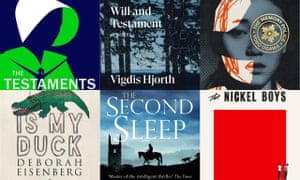
Evaristo shared the prize with the year’s biggest book by far: Margaret Atwood’s Handmaid’s Tale sequel The Testaments (Chatto), which combines Aunt Lydia’s sly perspective on the theocratic regime – its brutal birth and her ambiguous role at the heart of it – with more action-adventure strands about the two young women seeking to bring it down. Fan-pleaser, literary curio, a fascinating example of the interplay between written fiction and TV: the book is all three, with Atwood’s musings on power and the patterns of history as incisive as ever.

If history felt like a hall of mirrors in 2019, and current affairs a car crash, then Deborah Levy’s The Man Who Saw Everything (Hamish Hamilton) – the riddling story of one man, two time zones and two car accidents – was the novel to read. In the late 80s, Saul goes to East Berlin to study; in the recent past, he faces up to the rest of his life. Skewering different forms of totalitarianism – from the state, to the family, to the strictures of the male gaze – Levy explodes conventional narrative to explore the individual’s place and culpability within history. It’s one of the most unusual and rewarding novels of this or any year.

The timelines of history are similarly unstable in Sandra Newman’s high-concept The Heavens (Granta), in which a woman leads a double existence, waking up sometimes as Shakespeare’s Dark Lady in Renaissance England and sometimes in a 21st-century New York that is getting progressively worse. Can her actions really be influencing world events hundreds of years later? How far do we make our own reality? This is a dazzling exploration of creativity and madness in the poignant, panic-tinged end times.

The power of myth-making drives Mark Haddon’s best novel yet. The Porpoise (Chatto) begins as a propulsive thriller about abuse among the super-rich and segues into a classical-world adventure that reinvents the story of Pericles in prose of a hallucinatory vividness. Fantasy also mingles with reality in Max Porter’s light-footed second novel Lanny (Faber), as contemporary communal chatter and a spirit voice from deep time rise and fall together to tell the story of an extraordinary boy in an ordinary English village.

James Meek wound the clock back to 14th-century England for a feat of scholarship and storytelling combined. Written in gleeful approximations of priestly, courtly and peasant medieval English, To Calais, in Ordinary Time (Canongate) follows a motley group of travellers in the shadow of the Black Death. Its portrait of individual dramas unfolding against the prospect of apocalypse speaks to current fears of climate crisis and Brexit alike.

Robert Harris also conjured a quasi-medieval world for a page-turning, thought-provoking speculation on the fragility of civilisation, The Second Sleep (Hutchinson). It’s 1468, and a young priest is investigating ancient artefacts: Harris reveals his setup to be ingeniously, chillingly topical. Ali Smith reached book three of her quickfire Seasonal Quartet, which interprets news headlines through the filters of art and story. Like Haddon, Smith was inspired by Pericles, an apt fable for an era of globalised migration. She uses it in Spring (Hamish Hamilton) as a bedrock for a typically agile story about narrowing horizons and widening inequality, which is also a furious indictment of the UK’s detention of refugees.

The distribution and morality of wealth is an ever more urgent subject. The TV sensation Succession tackled money’s corrupting effect within a family; Sadie Jones did a similarly brilliant job in The Snakes (Chatto), a psychodrama about avarice, abuse and entitlement which is both a cautionary tale and a pitch-black race-to-the-end thriller.

It was an exceptional year for US fiction, with Tayari Jones winning the Women’s prize for An American Marriage (Oneworld), about black middle-class lives undone by structural racism, and Anglo-American Lucy Ellmann taking the Goldsmiths for her 1,000-page denunciation of Trump’s America and the world’s devaluing of motherhood, Ducks, Newburyport (Galley Beggar). Rising star Ben Lerner came into his own with the stunningly multilayered The Topeka School (Granta), exploring voice, power and masculinity in the 90s and now. Téa Obrecht’s long-awaited second novel Inland (W&N) is an ingenious reinvention of the western, while Colson Whitehead’s follow-up to The Underground Railroad, The Nickel Boys (Fleet), lifts the lid on the racist brutality of reform schools in the Jim Crow-era south.

Ann Patchett’s The Dutch House (Bloomsbury) is a gloriously immersive family saga about lost inheritance, while in Olive, Again (Viking) Elizabeth Strout continues to find moments of transcendence in the trials of daily life as her obstreperous, much-loved character Olive Kitteridge moves into her 80s. Chinese-American writer Yiyun Li’s Where Reasons End (Hamish Hamilton), a dialogue between a mother and the teenage son she has lost to suicide, is spare, profound and devastating.

Vietnamese-American poet Ocean Vuong’s autobiographical first novel On Earth We’re Briefly Gorgeous (Jonathan Cape) is a tender exploration of violence, migration and language, while Mexican author Valeria Luiselli’s Lost Children Archive (4th Estate), her first novel to be written in English, is an extraordinary achievement. It puts the desperate children crossing the border into the US at the heart of a beautifully composed, complex investigation into family, motherhood and the fragile connections between people.

Debuts to celebrate included Candice Carty-Williams’s witty Queenie (Trapeze), the adventures of a young black woman negotiating dating, family and identity in a gentrifying London, and Sara Collins’s The Confessions of Frannie Langton, a fantastically assured piece of historical gothic about an enslaved girl brought from a Jamaican plantation into the backbiting milieu of London society. Taffy Brodesser-Akner’s Fleishman Is in Trouble (Wildfire), a dissection of sexual politics in contemporary New York, was a deliciously biting summer hit.

Debuts stood out in the world of short stories, too, notably Wendy Erskine’s clear-eyed tales of Belfast life in Sweet Home and Julia Armfield’s haunting Salt Slow (both Picador). All eyes were on Kristen “Cat Person” Roupenian, whose first collection You Know You Want This (Cape) skewed towards urban gothic rather than dating malaise. Queen of dark short fiction Sarah Hall brought us more expertly turned tales of sex, death and danger in Sudden Traveller (Faber), while Zadie Smith’s first collection, Grand Union (Hamish Hamilton), is a restlessly wide-ranging anthology covering two decades. In Deborah Eisenberg’s wryly subversive Your Duck Is My Duck (Europa), we had the first collection in 12 years from a US master of the form.

One of the year’s gems in translation was Will and Testament by Vigdis Hjorth (Verso), translated by Charlotte Barslund. A story of abuse, inheritance and the battle for the truth among a privileged Norwegian family, it grips like a vice while interrogating national as well as individual self-conception. Other standouts included Khaled Khalifa’s Death Is Hard Work (Faber), translated by Leri Price, a road trip set against the backdrop of the Syrian civil war, and Pajtim Statovci’s Crossing (Pushkin), translated by David Hackston, which explores migration, gender and self-invention through the shifting character of a young Albanian. For the first time, the Man Booker International prize went to a writer in Arabic. Jokha Alharthi’s Celestial Bodies (Sandstone), translated by Marilyn Booth, is a generation-spanning family saga exposing the legacy of slavery in Oman.

Tove Ditlevsen’s Copenhagen Trilogy (Penguin Modern Classics), translated by Tiina Nunnally and Michael Favala Goldman, was a welcome rediscovery: the fearless reconstruction of a difficult creative and romantic life as a woman in 20th-century Denmark. Vasily Grossman’s Stalingrad (Harvill Secker), his prequel to Life and Fate translated by Robert and Elizabeth Chandler, was an extraordinary feat of scholarship. We have had to wait a quarter of a century for Yōko Ogawa’s The Memory Police (Harvill Secker), translated by Stephen Snyder, the story of an island where both objects and memories are “disappeared” by shadowy totalitarian forces and islanders must submit to enforced ignorance and diminished horizons. In an era beset by fears over news manipulation and Anthropocene extinction, this timeless fable of control and loss feels more timely than ever.

  • Save up to 30% on the books of the year at guardianbookshop.com

America faces an epic choice…

… in the coming year, and the results will define the country for a generation. Democracy is under attack, as is civility, truth and normal forms of political behaviour. The White House harbours white nationalists, incites fear and prejudice, undermines intelligence agencies, courts foreign influence in US elections and undermines the judiciary. The need for a robust, independent press has never been greater and with your help we can continue to provide fact-based reporting that offers public scrutiny and oversight.

These are perilous times. The administration’s willingness to deploy untruths, violent speech and hateful attacks on the media are now commonplace. This is why we are asking for your help so that we can continue to put truth and civility at the heart of the public discourse. You have read 6 articles in the last two months, so we hope you can appreciate the Guardian’s choice to keep our journalism open for all.

“Next year America faces an epic choice – and the result could define the country for a generation. It is at a tipping point, finely balanced between truth and lies, hope and hate, civility and nastiness. Many vital aspects of American public life are in play – the Supreme Court, abortion rights, climate policy, wealth inequality, Big Tech and much more. The stakes could hardly be higher. As that choice nears, the Guardian, as it has done for 200 years, and with your continued support, will continue to argue for the values we hold dear – facts, science, diversity, equality and fairness.” – US editor, John Mulholland

On the occasion of its 100th birthday in 1921 the editor of the Guardian said, “Perhaps the chief virtue of a newspaper is its independence. It should have a soul of its own.” That is more true than ever. Freed from the influence of an owner or shareholders, the Guardian’s robust independence is our unique driving force and guiding principle.

We also want to say a huge thank you to everyone who has supported the Guardian in 2019. You provide us with the motivation and financial support to keep doing what we do. We hope to surpass our goal by early January. Every contribution, big or small, will help us reach it.

Make a year-end gift from as little as $1. Thank you.

Leave a comment

Filed under 2019, book list, books

Best children’s books of 2019: from picture books to young adult | Books | The Guardian

Imogen Russell Williams picks beautiful illustrations, fun books to read aloud and new YA from Malorie Blackman and Philip Pullman

Source: Best children’s books of 2019: from picture books to young adult | Books | The Guardian

Picture books

Jackie Morris’s The Secret of the Tattered Shoes (Tiny Owl) is an atmospheric retelling of the story of “The Twelve Dancing Princesses”, in which the hero ultimately refuses to marry one of the callous princesses, choosing instead to search for the mysterious forest woman who helped him. Ehsan Abdollahi’s marionette-like collaged illustrations transport the reader deep into the heart of the tale, where gilded tree branches glisten and opalescent fruit begs to be plucked.

Also in fairytale vein is Oliver Jeffers, whose story The Fate of Fausto (HarperCollins) warns quietly against hubris. Arrogant Fausto believes he owns the world; everywhere he goes, his “subjects” bow to him, from trees to mountains – until he attempts to demand homage from the sea. Spacious, luminous lithographic illustrations combine with stark hand-set text in this powerful, beautiful fable.

Bouncy and mischievous, Sally Nicholls’s The Button Book (Andersen) is illustrated with giddy, infectious energy by Bethan Woollvin. What happens when the book’s different “buttons” are pressed? Some prompt tickles, some hugs – and one a very rude noise indeed – but all contribute to a rising tide of giggles, ebbing calmly away to a wind-down bedtime message; the best sort of interactive, read-aloud fun.

Five to eight years

Slightly older fairytale fans, especially those who enjoy Rebel Girls-style empowerment, will relish the interconnected stories in Eight Princesses and a Magic Mirror (Zephyr) by Natasha Farrant, enriched by Lydia Corry’s delicious full-colour pictures. When an enchantress flings her magic mirror into our world, the girls it reflects are bold, courageous and determined – from the desert princess who protects her people from war to the tower-block princess who saves a community garden.

From award-winning writer David Long, and brought deftly to life by Sarah McMenemy’s intricate images, The Story of the London Underground (Bloomsbury) plots the development of the tube from the fume-filled, steam-powered London Metropolitan Railway to the present-day network with its millions of passengers, via fascinating facts about ghost stations, bizarre lost property and carriages divided by class. Meticulous and fascinating, it will appeal to readers with a taste for the secret quirks of history.

For wildlife aficionados, Ben Rothery’s oversized Hidden Planet (Ladybird) is filled with stunning illustrations: a komodo dragon on whose skin every scale is visible, two pages of milling, dazzling zebras, a meditative octopus and a poised satanic leaf-tailed gecko. The engaging text is full of intriguing detail, such as orderly queues of hermit crabs waiting for the right-sized shell to be vacated, or the barn owl’s heart-shaped face, which acts like a radar dish to guide sounds into its ears.

Eight to 12 years

Handsomely slip-cased in psychedelic colours, James Rhodes’s Playlist (Wren & Rook) is the classical pianist’s introduction to seven notable composers, complete with irreverent biographical detail (Beethoven peeing into a chamber pot under the piano), accessible and intriguing analysis, helpful definitions of terms such as étude, and a Spotify playlist of introductory teasers from pieces such as Mozart’s Requiem and Chopin’s “Nocturne No 2”. Subtitled “The Rebels and Revolutionaries of Sound”, at its heart is Rhodes’ passionate determination to demonstrate classical music’s iconoclastic and emotional power.

When her beloved grandfather is swindled out of his home, the indomitable Vita, undaunted by a polio-weakened foot, gathers a motley crew of circus kids and pickpockets and plans a heist to redress the balance in Katherine Rundell’s The Good Thieves (Bloomsbury). This fast-paced, thrilling story has it all – a charismatic 1920s New York setting, a sensationally sinister villain, a determined, likable heroine and feats of daring couched in engaging prose.

Nicola Skinner’s debut Bloom (HarperCollins) is illustrated with vine-wreathed charm by Flavia Sorrentino. Good girl Sorrel, best-behaved child in the sad town of Little Sterilis, is horrified when Surprising Seeds sprout on the top of her head, making her crave sunlight and hear voices – how can she possibly win the most obedient pupil prize now? A riotous, original and timely reminder that sometimes rules are made to be broken.

More sophisticated is the subaqueous Deeplight (Macmillan) by Costa-winner Frances Hardinge. In the Myriad archipelago, terrifying gods with razor-grille teeth and glass tentacles once drowned islands and swamped ships – until, one day, they tore each other apart. Now Hark and Jelt scrape a living scavenging the powerful detritus of dead gods – but Jelt is about to plunge Hark into trouble. Hardinge’s surreal powers of world-building combine with her astute understanding of human relationships to create a weird, wonderful, beguiling novel.

YA

Malorie Blackman returns to the world of Noughts & Crosses (where the black Crosses dominate society, and white Noughts are seen as inferior) in Crossfire (Penguin), and the political stakes are high. Though a Nought prime minister is in office for the first time, he is about to be accused of murder, and must turn to his oldest friend, dual-heritage Callie-Rose, for help. When two teenagers are kidnapped, tensions run higher still in this compelling, all-too-relevant story.

In The Secret Commonwealth (David Fickling/Penguin), the second volume of Philip Pullman’s Book of Dust trilogy, Lyra is now a student in her early 20s. Estranged from her daemon, Pantalaimon, she is plunged into danger after he witnesses the murder of a botanist, and Lyra herself comes into possession of some perilous secrets. Featuring painful ruptures, shocking violence, the ominous rise of the Magisterium and the appearance of a grown-up Malcolm Polstead, this huge, challenging novel asks the reader more questions than it answers.

Finally, Chinglish (Andersen) is Sue Cheung’s highly illustrated, lightly fictionalised account of her turbulent adolescence living over her parents’ Chinese takeaway in 1980s Coventry. Dealing with casual racism, her father’s abusive rages, annoyingly perfect cousins and the grisly fate of the family goat, Jo wonders whether she will ever fit in, look right, get a boyfriend – or be able to leave home. Funny and moving, with poignant, traumatic elements and comic cartoons, it will resonate with any teenage reader who feels alien or left out.

2020 will be…

… a defining year. These are perilous times. And we’re asking for your help as we prepare for 2020. Over the last three years, much of what the Guardian holds dear has been threatened – democracy, civility, truth. This US administration is establishing new norms of behaviour. Anger and cruelty disfigure public discourse and lying is commonplace. Truth is being chased away. But with your help we can continue to put it center stage.

Rampant disinformation, partisan news sources and social media’s tsunami of fake news is no basis on which to inform the American public in 2020. The need for a robust, independent press has never been greater, and with your help we can continue to provide fact-based reporting that offers public scrutiny and oversight. We are also committed to keeping our journalism open and accessible to everyone and with your help we can keep it that way.

“Next year America faces an epic choice – and the result could define the country for a generation. It is at a tipping point, finely balanced between truth and lies, hope and hate, civility and nastiness. Many vital aspects of American public life are in play – the Supreme Court, abortion rights, climate policy, wealth inequality, Big Tech and much more. The stakes could hardly be higher. As that choice nears, the Guardian, as it has done for 200 years, and with your continued support, will continue to argue for the values we hold dear – facts, science, diversity, equality and fairness.” – US editor, John Mulholland


Leave a comment

Filed under 2019, book list, books

Haiku to you Thursday: “Empty”

Empty as a pocket /

We compared mythologies /

Midnight to devastation.

Leave a comment

Filed under 2019, Haiku to You Thursday, poetry by author

Writing tip Wednesday: “The tale of the two frogs”

Confined in the dark, narrow cage of our own making that we take for the whole universe, very few of us imagine another dimension of mind. There once was an old frog who lived all his life in a dank well. One day, a frog from the sea fell into his world.

“Where did you come from?” asked the frog in the well.

“From the great ocean,” the visiting frog said.

“How large is your ocean?”

“It’s gigantic.”

“A quarter of the size of my well here?” the old frog asked.

“Larger.”

“Larger? You mean half as large?”

“Even larger.”

“As large as my world?”

“There’s no comparison,” the visiting frog said.

“That’s impossible! I’ve got to see this for myself.”

The two frogs set off together. When the old frog from the well saw the ocean, it was such a shock that his head just exploded into pieces.

Moral: be willing to drop into your reader’s life and in some way “blow” your reader’s mind, to enlarge his or her world in some way. You might even enlarge yours along the way.

Leave a comment

Filed under 2019, writing tip, Writing Tip Wednesday