

Monthly Archives: December 2019
Monday morning writing joke: “Writer in the Kremlin”
There once was a writer in the Kremlin
Whose words were always dissembling.
No matter what he’d say
The writer would explain it away –
Even when Trump was Putin dwelling.
Want a Happier, More Fulfilling Life? 75-Year Harvard Study Says Focus on This 1 Thing
 We’ve already uncovered the key to long-term happiness and fulfillment.
Source: Want a Happier, More Fulfilling Life? 75-Year Harvard Study Says Focus on This 1 Thing
[Editor’s note: While not directly related to writing, this information can be used to build and understand characters in your writing. Or to be thankful for those who help you write.]
Positive Alacrity is the art of creating micro-experiences that have an emotionally uplifting impact on others. But I’m getting ahead of myself …
A quick Google search for “secret to happiness” brings up over 7,500,000 results.
That’s a lot of people writing about and searching for something that, according to a groundbreaking Harvard study, has already been found.
That’s right: Thanks to Harvard’s Grant and Glueck studies — which tracked 724 participants from varying walks of life over the course of 75 years — we’ve already uncovered the key to long-term happiness and fulfillment.
The answer? Our relationships.
Here’s Robert Waldinger, director of the Harvard Study of Adult Development:
“The clearest message that we get from this 75-year study is this: Good relationships keep us happier and healthier. Period.”
In other words: The quality of our life — emotionally, physically, and mentally — is directly proportional to the quality of our relationships.
But there’s a catch. If there’s one thing most of us have learned, it’s this: Just knowing a lot of people isn’t enough.
True fulfillment in relationships is about genuine connection, and one of the most efficient ways to form that connection is by practicing what we at Mindmaven call Positive Alacrity; a skill we define as creating micro-experiences that cause an emotional uplifting in others.
The Uncomfortable Truth About Relationships
Did we really need a 75-year study to tell us relationships are important?
Probably not; I bet many of you already knew that. So why do we so often struggle to treat many of the most important relationships in our lives with the reverence and priority we know they deserve?
For example, do any of these situations sound familiar?
- When under stress, you may have a tendency to be ruder to your spouse than you’d ever dream of being to a complete stranger.
- When building a business, you’re willing to work 60-hour weeks but somehow never “have time” to check in with lifelong friends.
- Speaking of business: You may fail to consistently and proactively invest in deepening the professional relationships that might provide the breakthrough opportunities you need.
So why do we do this? Because …
Although many things in life are deadline and urgency driven, relationships almost never are.
As a result, they’re often one of the first parts of our lives that we neglect until we “find the time.”
The good news is, building those deep, meaningful relationships isn’t as daunting or time-consuming as it may sound. In fact, by focusing on one habit, anyone can build more fulfilling relationships every day.
The Secret Factor Controlling the Quality of Your Relationships
But what determines the level of fulfillment we find in our relationships? It isn’t simply “knowing” the other person.
What makes you feel happy or fulfilled isn’t the relationship itself, but the interactions that make that relationship up.
Here’s what it comes down to: The only path to achieving the goal of a fulfilling life is to have fulfilling relationships, and those relationships can only be created by consistently connecting through meaningful interactions.
Let me illustrate with a few examples.
#1: “I just want you to know how much I appreciate you.”
John’s wife Sarah welled up with tears as she read the unexpected thank you note her husband had written her before he left on a 6:00am flight for a business trip.
John — the CEO of an aggressively growing startup — thanked his wife for all the support and grace she’d given him over the last three years as he worked long hours to reach his — and his company’s — fullest potential.
The short note left Sarah feeling appreciated, loved, and truly known by her husband.
#2: “Thank you for sacrificing your time for our vision.”
Hannah, a recent intern-turned-engineer at a public company, felt pleasantly surprised and greatly affirmed after Erin, the CEO, walked over to her cubicle specifically to say thank you.
Without prompting, Hannah had recently pulled an all-nighter in order to ensure a backend patch was completed on time to restore server stability. And even though Erin’s visit was shorter than 30 seconds, the fact that the interaction was focused solely on thanking Hannah left her feeling appreciated for stepping up and excited to work for the company.
#3: “So you never have to lose something again.”
Cole — a die-hard Atlanta Falcons fan — laughed in amusement as he wrote back “Thanks, but I hate you lol ;)” to Rob, a friend who had sent him a Tile following the Falcon’s 2017 Super Bowl loss so he’d, “never have to lose something important again.”
The practical joke made Cole smile and deepened the sense of connection and friendly rivalry the two of them shared.
The Science-Backed Power of Positivity
Here’s the key takeaways from those examples: Each time, someone performed a small, lightweight gesture. For example:
- John’s handwritten note to his wife,
- Erin’s 30-second interaction, or
- Rob’s quick email and gift.
And despite the ease of each interaction, they all delivered an uplifting sense of connection to the other person.
But perhaps the best proof of the power of interactions comes from Dr. Martin Seligman’s famous Gratitude Visits. For those unfamiliar, Dr. Seligman — founder of the positive psychology movement — introduced the concept of Gratitude Visits in a University of Pennsylvania study.
Here’s how it worked: Participants were asked to write a 300+ word letter of gratitude to someone in their life, and to then visit the recipient and read the letter aloud to them.
Simple though that may be, the effects were profound: Although Gratitude Visits were one of many positivity practices recorded in the study, they were the only practice that had participants reporting increased happiness and decreased depression for a full month after completing the action.
And while I fully support the practice of Gratitude Visits, they come with a challenge: Most of us don’t have time to sit down and write a 300-word letter every time we feel positive or grateful.
So I figured if Gratitude Visits are truly one of the most fulfilling things we can do, there must be a way we can simplify it into a habit that can be practiced daily.
Building Happy, Fulfilling Relationships with Ease
The solution? Positive Alacrity.
At the end of the day, this concept’s all about consistently delivering small, simple experiences that leave people feeling genuinely uplifted. So how do we do this? It all comes down to a single habit:
When you think something positive and you genuinely believe it, voice it.
As simple as that habit may be, we believe the impact of Positive Alacrity is as profound as Gratitude Visits, with one distinct advantage: That same simplicity allows you to practice it anytime, anywhere, with practically anyone.
Why? Because most of us already think positive thoughts on a daily basis. For example, I wouldn’t be surprised if you often thought things like …
- “That’s a really insightful way to look at the situation,”
- “I really appreciate the way she listens to me,” or
- “Wow, he handled that ordeal really well.”
Pause a moment and test it for yourself: When was the last time you thought something positive? I’d venture to bet it was within the last 24 hours.
The problem is, we often let these thoughts come and go without ever practicing Positive Alacrity. But when we forgo voicing these thoughts to others, we cheat ourselves out of a valuable opportunity to enrich our relationships in three key ways:
- When you voice positive thoughts, you make the recipient feel emotionally uplifted.
- This feeling elevates their appreciation of you and the relationship you share.
- Because you were the source of that interaction, their emotional response creates an incredibly fulfilling sense of happiness and satisfaction in you.
That last part’s key: By uplifting others, we inadvertently uplift ourselves. Why? Because …
The effects of Positive Alacrity go both ways.
For instance, remember the example above with Hannah the CEO and Erin the engineer?
As a seasoned leader, Erin closely observed Hannah as she thanked her for working so diligently on that patch; so she noticed as Hannah’s expression slowly shifted from shocked confusion to recognition and, finally, to realization.
Seeing Hannah’s cheeks flush, smile spread, and eyes gleam made Erin realize she’d just delivered something truly meaningful, and Hannah’s reaction created a tremendous sense of satisfaction and fulfillment in Erin as the one who delivered that interaction.
If you’ve ever been in a similar situation to Erin’s, you probably understand exactly how she’s feeling, and know just how uplifting those feelings can be.
When you practice Positive Alacrity, you’re not only uplifting others. Above all, you’re uplifting yourself.
Positive Alacrity in Action: Mastering the Habit of Intentional Positivity
The action itself is simple: Think something positive? Voice it.
But until we turn that conscious action into an unconscious habit, we won’t be able to fully leverage it to impact our relationships and enrich our lives. And that all starts with a shift in awareness.
By default, positive thoughts often slip through the cracks before they ever reach conscious acknowledgement, let alone vocal affirmation. So how do you become more aware? By becoming intentional.
Once you’ve become aware of a positive thought, consciously label it “Positive,” then ask yourself: Do I genuinely believe this?
If you believe it, voice it. Positivity works so long as it’s perceived as genuine, and as long as you truly believe what you’re saying you can usually count on a positive outcome.
Habitualizing and Compounding the Secret to Happiness
Keep in mind: As with any new habit, practicing Positive Alacrity is probably going to feel a little clumsy or unnatural at first. But as long as you genuinely believe what you say, it doesn’t matter how awkward it comes out because it’s real.
The most important thing is that you’re voicing it. And if you’re able to push through that initial awkwardness, I can practically guarantee the process will become second nature in no time.
So how do you start? Thankfully, the practice is as simple as the theory. Try following this three-step process to utilize Positive Alacrity today.
- Recognition: Think of something positive that happened within the last 24 hours, then ask yourself: “Who was the cause of (or involved in) this experience that I could thank or compliment?”
- Specificity: Ask yourself: “What specifically did I like or appreciate about this experience/situation?”
- Action: Now, voice it. Pay this person a face-to-face visit. If that doesn’t work, call them. If you can’t call them, then text or email them; immediately, before you finish reading this.
Keep in mind: The steps above are an example of how to leverage Positive Alacrity retroactively, but it’s even easier to perform as you move forward in your day-to-day life.
The only thing you have to do is increase your ability to recognize these thoughts as they occur, then voice them as you become aware of them (rather than once a year when the holidays roll around).
John, Erin, and Rob are prime examples of these principles in action:
- While getting ready to leave on his business trip, John looked over at his sleeping wife and realized just how appreciative he was for her continued understanding about his hectic travel schedule. So instead of just grabbing his jacket and heading out the door, John went over to the study, picked up some stationery, and wrote Sarah a short note expressing those feelings.
- After learning of Hannah’s all-nighter, all Erin had to do was have a 30-second conversation genuinely thanking her. The only risk she took? Potentially being a few seconds late to her next meeting.
- And as the Falcon’s loss made Rob realize how long it’d been since he and Cole talked, the only actions he had to take were writing his friend a tongue-in-cheek note and asking his assistant to mail it off along with a package of Tiles.
John, Erin, and Rob all spent less than a minute acting on their positive thoughts, but the uplifting emotions from those simple interactions have the potential to last for months.
And what about Sarah, Hannah, and Cole, the recipients of those interactions? They’re probably going to walk through the rest of the day feeling uplifted and empowered. In fact, I wouldn’t be surprised if, later that same day, they provided a similar experience for someone else.
That’s the Pay-it-Forward principle in practice:
A single positive interaction can have a multiplicative effect, building and spreading further than you’d ever imagine.
Ultimately, those simple interactions are the heart of Positive Alacrity and the foundation for meaningful relationships. And, as that 75-year Harvard study taught us, those very same relationships are the secret to lifelong happiness and fulfillment.
Want to master the art of Positive Alacrity to revolutionize your relationships and enhance your life? If this was intriguing and valuable to you, and you’d like to learn more …
Click here to learn how to incorporate Positive Alacrity into your day-to-day life!
About the Author:
Patrick Ewers is the founder and CEO of Mindmaven, an executive coaching firm and educational platform focused on helping startup CEOs, executives and their team members achieve their fullest potential by delivering exceptional experiences to the most valuable relationships in their network.
Check out his blog, then follow him on Twitter and LinkedIn for more content like this.
Filed under 2019, character, character study
Why Do We Gesture When We Talk?
 We all know people who talk with their hands. Turns out there’s quite a bit of research around the relationship between language and gestures.
Source: Why Do We Gesture When We Talk?
In the early 1970s, David McNeill, a psychology professor at the University of Chicago, was giving a talk in a Paris lecture hall when something odd caught his eye. There was a woman in the back of the room moving her arms in a way that seemed to convey exactly what he was saying. It took him a moment to realize that she was speaking, too, and another to realize that she was an interpreter, translating his words into French. For McNeill, that moment of confusion sparked an insight that would lead to a lifetime of research: Gesture and speech are not as separate as they seem.
Gesture researchers have spent the past 40+ years uncovering how movements (like a cupped hand rotating in space or a finger tracing a path through the air) are intimately tied to speech. Regardless of their spoken language or culture, humans gesture when they talk. They gesture even if they have never seen gestures before—people who have been blind since birth do it—and they gesture even if they’re talking to someone on the phone and know no one can see them. When speech is disrupted—by stuttering, for example—so is gesture.
In fact, gesture is so tightly bound to language that differences between languages show up as subtle differences in gesture. Whether a language puts information on the verb (“He flies out” in English), or on a particle outside the verb (“He exits flying,” in Spanish) will affect where the gesture for “flying” appears. In English, it will last only for the duration of the spoken verb: flies. But in Spanish, it will spread over the whole sentence, or even multiple sentences. In other words, the way you package your thoughts into speech is also how you package them into movement.
Researchers are especially interested in the times when gestures don’t match speech. The mismatch can be a valuable window to what’s going on in the mind. Susan Goldin-Meadow, another University of Chicago psychologist, has led a decades-long investigation of so-called speech-gesture mismatches. For example, until about 7 years of age, children don’t understand that if you pour a tall glass of water into a shorter, wider glass, the amount of water stays the same. They think the shorter glass contains less water. When asked to explain their reasoning, some children will say, “This one is shorter,” while gesturing that the glass is wider. That discrepancy shows they subconsciously grasp that both dimensions are important. Teachers who can spot these mismatches can tell when a student is ready to understand the relationship between height, width, and volume.
When we speak, we put our thoughts into words, and when we gesture, we put our thoughts into our hands. But gestures don’t just show what we’re thinking—they actually help us think. Toddlers who are encouraged to gesture tend to start producing more words. Adults involved in various problem-solving tasks do better when they are encouraged to gesture. There is something about putting ideas into motions that brings us closer to grasping what we need to grasp. In a way, what really caught McNeill’s attention in that Paris auditorium was a sideways glimpse, filtered through another language and another mind, of his very own thoughts.
Arika Okrent is a linguist, and author of In the Land of Invented Languages. She is living in Chicago, doing her part to fight off the cot-caught merger and keep “gym shoes” alive.
Wynton Marsalis Gives 12 Tips on How to Practice: For Musicians, Athletes, or Anyone Who Wants to Learn Something New | Open Culture
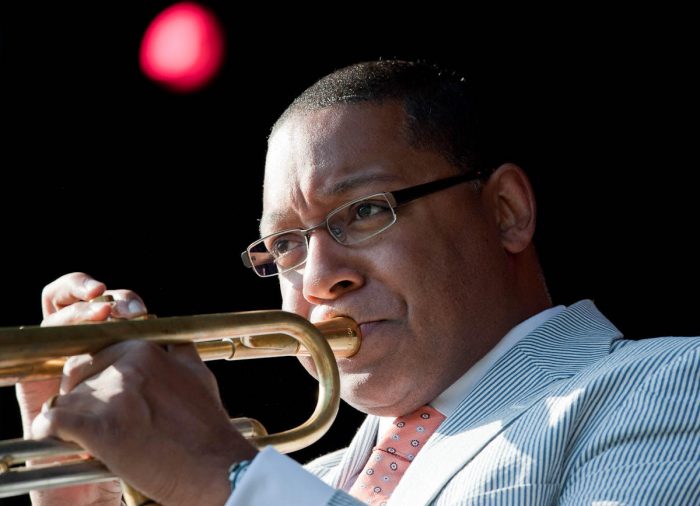 Practicing for countless hours before we can be good at something seems burdensome and boring. Maybe that’s why we’re drawn to stories of instant achievement.
Practicing for countless hours before we can be good at something seems burdensome and boring. Maybe that’s why we’re drawn to stories of instant achievement. The monk realizes satori (and Neo learns kung fu); the superhero acquires great power out of the blue; Robert Johnson trades for genius at the crossroads. At the same time, we teach children they can’t master a skill without discipline and diligence. We repeat pop psych theories that specify the exact number hours required for excellence. The number may be arbitrary, but it comforts us to believe that practice might, eventually, make perfect. Because in truth we know there is no way around it. As Wynton Marsalis writes in “Wynton’s Twelve Ways to Practice: From Music to Schoolwork,” “practice is essential to learning music—and anything else, for that matter.”
For jazz musicians, the time spent learning theory and refining technique finds eloquent expression in the concept of woodshedding, a “humbling but necessary chore,” writes Paul Klemperer at Big Apple Jazz, “like chopping wood before you can start the fire.”
Yet retiring to the woodshed “means more than just practicing…. You have to dig deep into yourself, discipline yourself, become focused on the music and your instrument.” As beginners, we tend to look at practice only as a chore. The best jazz musicians know there’s also “something philosophical, almost religious” about it. John Coltrane, for example, practiced ceaselessly, consciously defining his music as a spiritual and contemplative discipline.
Marsalis also implies a religious aspect in his short article: “when you practice, it means you are willing to sacrifice to sound good… I like to say that the time spent practicing is the true sign of virtue in a musician.” Maybe this piety is intended to dispel the myth of quick and easy deals with infernal entities. But most of Marsalis’ “twelve ways to practice” are as pragmatic as they come, and “will work,” he promises “for almost every activity—from music to schoolwork to sports.” Find his abridged list below, and read his full commentary at “the trumpeter’s bible,” Arban’s Method.
- Seek out instruction: A good teacher will help you understand the purpose of practicing and can teach you ways to make practicing easier and more productive.
- Write out a schedule: A schedule helps you organize your time. Be sure to allow time to review the fundamentals because they are the foundation of all the complicated things that come later.
- Set goals: Like a schedule, goals help you organize your time and chart your progress…. If a certain task turns out to be really difficult, relax your goals: practice doesnʼt have to be painful to achieve results.
- Concentrate: You can do more in 10 minutes of focused practice than in an hour of sighing and moaning. This means no video games, no television, no radio, just sitting still and working…. Concentrated effort takes practice too, especially for young people.
- Relax and practice slowly: Take your time; donʼt rush through things. Whenever you set out to learn something new – practicing scales, multiplication tables, verb tenses in Spanish – you need to start slowly and build up speed.
- Practice hard things longer: Donʼt be afraid of confronting your inadequacies; spend more time practicing what you canʼt do…. Successful practice means coming face to face with your shortcomings. Donʼt be discouraged; youʼll get it eventually.
- Practice with expression: Every day you walk around making yourself into “you,” so do everything with the proper attitude…. Express your “style” through how you do what you do.
- Learn from your mistakes: None of us are perfect, but donʼt be too hard on yourself. If you drop a touchdown pass, or strike out to end the game, itʼs not the end of the world. Pick yourself up, analyze what went wrong and keep going….
- Donʼt show off: Itʼs hard to resist showing off when you can do something well…. But my father told me, “Son, those who play for applause, thatʼs all they get.” When you get caught up in doing the tricky stuff, youʼre just cheating yourself and your audience.
- Think for yourself: Your success or failure at anything ultimately depends on your ability to solve problems, so donʼt become a robot…. Thinking for yourself helps develop your powers of judgment.
- Be optimistic: Optimism helps you get over your mistakes and go on to do better. It also gives you endurance because having a positive attitude makes you feel that something great is always about to happen.
- Look for connections: If you develop the discipline it takes to become good at something, that discipline will help you in whatever else you do…. The more you discover the relationships between things that at first seem different, the larger your world becomes. In other words, the woodshed can open up a whole world of possibilities.
You’ll note in even a cursory scan of Marsalis’ prescriptions that they begin with the imminently practical—the “chores” we can find tedious—and move further into the intangibles: developing creativity, humility, optimism, and, eventually, maybe, a gradual kind of enlightenment. You’ll notice on a closer read that the consciousness-raising and the mundane daily tasks go hand-in-hand.
While this may be all well and good for jazz musicians, students, athletes, or chess players, we may have reason for skepticism about success through practice more generally. Researchers at Princeton have found, for example, that the effectiveness of practice is “domain dependent.” In games, music, and sports, practice accounts for a good deal of improvement. In certain other “less stable” fields driven by celebrity and networking, for example, success can seem more dependent on personality or privileged access.
But it’s probably safe to assume that if you’re reading this post, you’re interested in mastering a skill, not cultivating a brand. Whether you want to play Carnegie Hall or “learn a language, cook good meals or get along well with people,” practice is essential, Marsalis argues, and practicing well is just as important as practicing often. For a look at how practice changes our brains, creating what we colloquially call “muscle memory,” see the TED-Ed video just above.
Filed under 2019, writing tip, Writing Tip Wednesday
cARtOONdAY: “vARIATIONS ON A tHEME”

Filed under 2019, CarToonsday
These 13 Books Will Make You a Better Writer in 2019 | Inc.com

One of the best ways to improve your writing is to read about the craft.
Source: These 13 Books Will Make You a Better Writer in 2019 | Inc.com
- Ernest Hemingway on Writing, edited by Larry W. Phillips
Ernest Hemingway never codified his insights on writing into a book, but he did share his thinking on the topic in commissioned articles; letters to his agents, publishers, and friends; and through his novels. Ernest Hemingway on Writing is a collection of his insights on the craft of writing, and includes several practical and inspiring tips.
- Zen in the Art of Writing, by Ray Bradbury
The prolific science-fiction author Ray Bradbury collected the lessons he had learned about the craft during his long and successful career in Zen in the Art of Writing.
- Nobody Wants to Read Your Sh*t: Why That Is and What You Can Do About It, by Steven Pressfield
Steven Pressfield recently returned to writing about writing with a brand-new book, Nobody Wants to Read Your Sh*t. It’s a no-nonsense guide to writing stories that people will want to read. While the bulk of the book addresses how to write fiction, Pressfield shows how the same principles of writing good stories can apply to writing nonfiction.
- The Artist’s Way: A Spiritual Path to Higher Creativity, by Julia Cameron
The Artist’s Way: A Spiritual Path to Higher Creativity is the classic book by author and creativity coach Julia Cameron in which she introduces what she calls “morning pages.” Morning pages is a powerful stream of consciousness writing exercise that is not intended to yield publishable material, but which can help you get your pen moving and your thoughts flowing–even if you never intend to share them with the rest of the world.
- Turning Pro: Tap Your Inner Power and Create Your Life’s Work, by Steven Pressfield
Ever since reading his classic book, The War of Art, I’ve read every book about writing by Steven Pressfield (and I will continue to read every one he writes, including the one he’s publishing soon, which he’s generously serializing on his blog). In that book he gave a name to what every writer grapples with. He called it Resistance.
To fight the Resistance, writers (and other artists, for he was addressing artists broadly in that book) need to give up their amateur mindsets and habits and “turn pro.” In Turning Pro, his follow-up to The War of Art, Pressfield fleshes out what he means exactly when he tells writers to “turn pro.”
- On Writing Well: The Classic Guide to Writing Nonfiction, by William Zinsser
William Zinsser was a journalist, author, and writing instructor at Yale. His book On Writing Well is a classic among writers and has sold nearly 1.5 million copies in the 40 years since it was published. It’s one of the first books I recommend to anyone seeking to improve their writing.
- On Writing: A Memoir of the Craft, by Stephen King
Fifteen years ago, mega-best-selling author Stephen King wrote a book about the craft of writing that became an instant bestseller: On Writing: A Memoir of the Craft. After telling the story of how he became the writer he is today, King devotes the second half of the book to sharing his writing strategies, like his suggestion that you should write for your “Ideal Reader.”
- Process: The Writing Lives of Great Authors, by Sarah Stodola
This book looks at the techniques, inspirations, and daily routines of 18 iconic authors of the 20th century, including Franz Kafka, Ernest Hemingway, Virginia Woolf, David Foster Wallace, Toni Morrison, and Margaret Atwood.
After profiling so many successful authors, what did Stodola learn about their writing process? “Genius, I have concluded, is the presence of not one ability but several that work together in tandem. Genius is far more tedious, far less romantic, far more rote, far less effortless, than we imagine it.”
- The War of Art: Break Through the Blocks and Win Your Inner Creative Battles, by Steven Pressfield, edited by Shawn Coyne
All writers struggle with writer’s block in one form or another, but Steven Pressfield named the enemy and outlined a strategy for conquering it in The War of Art, the perennially best-selling guide for writers and other creative professionals. In the first part of the book he introduces what he calls Resistance – the force within us that conspires to prevent us from fulfilling our creative pursuits – and then spends the next two sections sharing his solutions for overcoming it.
- The Art of Nonfiction, by Ayn Rand
As the late novelist and philosopher Ayn Rand describes in The Art of Nonfiction, an edited collection of lectures she gave on the craft of writing, part of the reason why it took so long to finish her second novel is because she often suffered from severe bouts of writer’s block.
- Lifelong Writing Habit: The Secret to Writing Every Day, by Chris Fox.
In Lifelong Writing Habit: The Secret to Writing Every Day, Chris Fox describes the 12-step process he created that has allowed him to make the transition from part-time writer to full-time author of several best-selling thriller novels and nonfiction writing guides.
At the beginning of the book, Chris describes what a habit is, and explains how you can reprogram your brain just like a computer to install new habits. Habits live in a part of the brain called the basal ganglia, and they consist of three parts: The trigger, the routine, and the reward. The key to changing your habits is to identify which ones are good for you, which ones are bad, and then “flip” the bad ones to good ones.
- 8-Minute Writing Habit: Create a Consistent Writing Habit That Works With Your Busy Lifestyle, by Monica Leonelle
Monica Leonelle, a novelist and author of several books about writing, has written a book that speaks directly to those of us who struggle to get our writing done while balancing other commitments at work and home.
In the first part of The 8 Minute Writing Habit: Create a Consistent Writing Habit that Works With Your Busy Lifestyle, Leonelle describes several “blockers” that get in the way of our writing, thoughts like “writing might not pay off,” “I’m not good enough to be a writer,” and “I’m stuck in the planning/writing/editing phase.” For each blocker, she offers several practical tips for overcoming them. In the second part of the book, she shares nine strategies the pros use to write consistently.
- Several Short Sentences About Writing, by Verlyn Klinkenborg
Verlyn Klinkenborg is an author and creative writing instructor at Yale. In the preface to Several Short Sentences About Writing, he argues that “most of the received wisdom about how writing works is not only wrong but harmful,” and then devotes the rest of the book to smashing assumptions and correcting misconceptions about the craft.
Filed under 2019, book list, writing, writing tip
Photo finish Friday: “Night ride”

Ride into the night. /
Blur of color pedals by. /
Tour of lights and life.
Haiku to you Thursday: “Thunder”
Thunder bangs the glass, /
a beggar at the window /
demanding tribute.


 Booker's Blog
The Lost Books of Jane Austen by Janine Barchas review – how Austen’s reputation has been warped | Books | The Guardian
A deliciously original study of the cheap editions of Pride and Prejudice and other novels – ignored by literary scholars – casts new light on Austen’s readership
Source: The Lost Books of Jane Austen by Janine Barchas review – how Austen’s reputation has been warped | Books | The Guardian
Jane Austen aficionados think that they know the story of their favourite author’s posthumous dis-appearance and then re-emergence. For half a century after she died in 1817, her books were little known or read. A few discriminating admirers such as George Henry Lewes and Lord Macaulay kept the flame of her reputation burning, but most novelists and novel readers were oblivious to her. Then, in 1869, her nephew James Edward Austen-Leigh published a memoir about her and the public got interested. Her novels started being republished and widely read. She has never looked back.
Janine Barchas’s The Lost Books of Jane Austen puts us right. Her book about books is a beautifully illustrated exploration, indeed compendium, of the popular editions of Austen’s novels that have appeared over the last two centuries. This includes those decades when Austen was supposedly lost from sight. The first chapter is a “vignette” on a copy of Sense and Sensibility, published in 1851 for George Routledge’s Railway Library (books suitable for reading on the train). It cost one shilling and was bought for the 13-year-old Gertrude Wallace, the youngest daughter of a Plymouth naval officer. It is the first of many examples of cheap and popular editions of Austen’s work that kept it alive for ordinary readers and that literary scholars have largely ignored.
After Austen’s death, the copyrights to her novels were bought by the publisher Richard Bentley, who issued them in his Standard Novels series in 1833, in single volumes at six shillings each – much cheaper than the triple decker editions selling for a guinea and a half, but still out of reach of all but the affluent. He cut his prices in the 1840s, but already there were alternatives. By the late 1840s, there were what we would call paperback editions of her novels cheaply available and aimed at train travellers. Pioneering publishers such as Simms & M’Intyre produced Austen novels for a shilling a shot, and then for sixpence each in their Books for the People series. (They paid no attention to the fact that Bentley officially still owned the copyright to some of these.)
“Cheap books make authors canonical,” proclaims Barchas’s first sentence. Thousands of mid-century readers consumed “yellowback” versions of Austen’s novels, so-called because of the yellow paper stuck to the back of them on which advertisements were printed. The sheer proliferation of cheaply produced editions of Austen’s fiction has been invisible because very few of these books have survived. Paradoxically, the expensive first editions of Austen’s novels are now easier to find than the mass-market editions of the Victorian age. Barchas has clearly relished her detective work (and apparently amassed quite a collection herself). She not only describes them, she shows us what they looked like.
Photographs are essential to this book. There in front of you is the 1851 Parlour Library reprint of Mansfield Park, with its red design and lettering on a startling acid green cover, in waxed paper boards. It retailed at WH Smith at British railway stations for two shillings. The willingness of publishers to spice up Austen’s novels is caught in the 1870 Chapman & Hall edition of Pride and Prejudice, whose cover depicts Lydia Bennet flirting with officers at their camp in Brighton, or the 1887 sixpenny Sense and Sensibility, featuring Colonel Brandon and Willoughby pointing their duelling pistols at each other (neither scene was actually included in either novel).
Tracking down these endlessly repackaged reprints, Barchas is in terra incognita. Scholarly bibliographers have minutely recorded the various respectable editions of Austen’s fiction, but most of these cheap popular products, never having made it on to the library shelf, remained unknown to bibliographers. These are volumes that scarcely feature in the catalogues of the great research libraries of Britain and North America. The existing record is, as Barchas characteristically says, “gobsmackingly incomplete”. Her style is sometimes informal, but her attention to print history is painstaking.
She explains the importance of stereotyping processes, whereby printers could mould and then cast in metal the expensively assembled type of a new edition. The resultant stereotyple plates could be used over and over again. Routledge would go on to use his same stereotype plates to produce seven more editions of Sense and Sensibility over the next three decades. (Barchas gives us a photograph of all of them in their very various liveries.) Austen stereotype plates would be sold on from one publisher to another, the resultant type becoming more and more faded as one printing succeeded another.
There clearly was a new enthusiasm for the novels after 1870. Barchas shows us the flurry of colourfully jacketed Austen volumes that began appearing, some evidently intended for the juvenile reader. In America, where publishers treated Austen’s texts with greater literary respect, the market for her work was much quieter in the mid-19th century, but appears to have taken off in the 1870s. Her novels became available for a dime or 15 cents each. In Britain, the sixpenny novel became standard. Soon Austen was being serialised.
In the 1890s, radical publishers produced a library of “famous books” for working-class readers at a penny per volume, which included Sense and Sensibility. At the same time Pride and Prejudice was being boiled down by two thirds for William Stead’s Penny Prose Classic series for young readers. In the 1890s the soap manufacturers Lever Brothers published their own editions of the two novels as prizes for teenage consumers who sent in the largest number of soap wrappers. Barchas dedicates a whole chapter to her researches into the Sunlight Library, calculating that the company gave away some 1.5m books over the course of seven years (though perhaps more by Sir Walter Scott than Jane Austen).
Another chapter chronicles the surprising religious and morally improving uses of her fiction. In the 1840s her novels were included in a multi-volume library of nonconformist tomes aimed at right-minded female readers. Often, they were given as prizes in Sunday schools (despite the creepy vicars she depicts). In the 1890s, editions of Austen were commissioned by a Christian temperance society for distribution to labourers in the West Midlands: Mansfield Park was presented as an alternative to another visit to the pub.
Barchas follows popular editions of Austen well into the 20th century, looking at how publishers began to take images from Hollywood films such as the 1940 MGM Pride and Prejudice to lend excitement to new editions.
A final chapter charts “The Turn to ‘Chick Lit’”, with Barchas arguing that it was only really in the 1960s that “gendered marketing strategies” created the false sense that Austen was a women’s novelist. Among the dizzying variety of 1960s paperback covers that she displays – from austerely antiquarian to lividly psychedelic – are examples of “pinked” editions, deploying the colour wherever possible as a “consumer signal to women”. Sales seem to have risen even further.
Barchas enjoys quoting such writers as Mark Twain and Henry James, as they huff and puff about Austen’s mere popularity. The lesson of this delicious book is that she was even more popular for even longer with an even greater variety of readers than we ever thought. When you look at all the uses to which she was put, you think of Frank Kermode’s definition of a literary classic as a work that “sub-sists in change, by being patient of interpretation”. Austen’s novels have long been very patient.
• John Mullan’s What Matters in Jane Austen? is published by Bloomsbury.
Share this:
Leave a comment
Filed under 2019, author commentary, books
Tagged as Jane Austen, Janine Barchas, reputation, Saturday, The Guardian