Monthly Archives: November 2019

Positive psychology is a booming industry. But is it science, religion, or something else? – Vox

Just over 20 years old, this field has captivated the world with its hopeful promises — and drawn critics for its moralizing, mysticism, and serious commercialization.

Source: Positive psychology is a booming industry. But is it science, religion, or something else? – Vox

Positive psychology has grown at an explosive rate since Seligman ushered it into the public conscious, surprising even Seligman himself. The field has attracted hundreds of millions of dollars in research grants. Its 2019 World Congress was attended by 1,600 delegates from 70 countries. It inspires tens of thousands of research papers, endless reams of popular books, and supports armies of therapists, coaches, and mentors.

Its institutional uptake has been no less impressive. More than a million US soldiers have been trained in positive psychology’s techniques of resilience just two years after the “Battlemind” program was launched in 2007. Scores of K-12 schools have adopted its principles. In 2018, Yale University announced that an astonishing one-quarter of its undergraduates had enrolled in its course on happiness.

Since that inaugural presidential address in 1998, Seligman has distanced positive psychology from its original focus. At its inception, the field sought to map the paths that end in authentic fulfillment. But with Flourish, Seligman changed course. Happiness, he declared, is not the only goal of human existence, as he’d previously thought.

The purpose of life, he said, is well-being, or flourishing, which includes objective, external components such as relationships and achievements. The road to flourishing, moreover, is through moral action: It is achieved by practicing six virtues that Seligman’s research says are enshrined in all the world’s great intellectual traditions.

This shift toward moral action hasn’t helped the critical response towards positive psychology’s lofty aims and pragmatic methods. Philosophers such as Chapman University’s Mike W. Martin say it has left the field of science and entered the realm of ethics — that it is no longer a purely factual enterprise, but is now concerned with promoting particular values.

But that’s not the only critique. Others decry positive psychology’s commodification and commercial cheapening by the thousands of coaches, consultants, and therapists who have jumped on the bandwagon with wild claims for their lucrative products.

In several high-profile cases, serious flaws have been found in positive psychology’s science, not just at the hysterical fringe, but in the work of big stars including Seligman himself. There are worries about its replicability, its dependence on unreliable self-reports, and the sense that it can be used to prescribe one thing and also its opposite — for example, that well-being consists in living in the moment, but also in being future-oriented.

And for a science, positive psychology can often sound a lot like religion. Consider its trappings: It has a charismatic leader and legions of rapturous followers. It has a year zero and a creation myth that begins with an epiphany.

“I have no less mystical way to put it,” Seligman wrote in Flourish. “Positive psychology called to me just as the burning bush called to Moses.

Seligman’s inclusion of material achievement in the components of happiness has also raised eyebrows. He has theorized that people who have not achieved some degree of mastery and success in the world can’t be said to be flourishing. He once described a “thirty-two-year-old Harvard University summa in mathematics who is fluent in Russian and Japanese and runs her own hedge fund” as a “poster child for positive psychology.” But this can make well-being seem exclusive and out of reach, since accomplishment of this kind is not possible to all, or even most.

Professors Edgar Cabanas and Eva Illouz, authors of the 2019 book Manufacturing Happy Citizens, have accused positive psychology of advancing a Western, ethnocentric creed of individualism. At its core is the idea that we can achieve well-being by our own efforts, by showing determination and grit. But what about social and systemic factors that, for example, keep people in poverty? What about physical illness and underserved tragedy — are people who are miserable in these circumstances just not trying hard enough?

“Positive psychology gives the impression you can be well and happy just by thinking the right thoughts. It encourages a culture of blaming the victim,” said professor Jim Coyne, a former colleague and fierce critic of Seligman.

Then there are positive psychology’s financial ties to religion. The Templeton Foundation, originally established to promote evangelical Christianity and still pursuing goals related to religious understanding, is Seligman’s biggest private sponsor and has granted him tens of millions of dollars. It partly funded his research into universal values, helped establish the Positive Psychology Center at Seligman’s University of Pennsylvania, and endows psychology’s richest prize, the $100,000 Templeton Prize for Positive Psychology. The foundation has, cultural critic Ruth Whippman wrote in her book America the Anxious, “played a huge role in shaping the philosophical role positive psychology has taken.”

We should find this scandalous, Coyne says. “It’s outrageous that a religious organization — or any vested interest — can determine the course of scientific ‘progress,’ that it can dictate what science gets done.”

Despite the criticism, positive psychology remains incredibly popular. Books with “happiness” in the title fly off the shelves, and people sign up for seminars and courses and lectures in droves. We all seem to want what positive psychology is selling. What is it that makes this movement so compelling?

Sonja Lyubomirsky, professor of psychology at the University of California Riverside and an early star of the movement, told me that positive psychology was born at a time of peace and plenty. Many today “have the luxury to reflect and work on their own well-being,” she says. “When people are struggling to get their basic needs met they don’t have the time or resources or energy or motivation to consider whether they are happy.”

The 2008 financial crisis, though, seems to challenge this hypothesis. Suddenly, the luxury to reflect evaporated for vast numbers of people. But analysis by social scientists shows that the number of academic papers published on positive psychology and happiness continued to rise.

That’s led skeptics such as Coyne, Cabanas, and Illouz to suggest that positive psychology’s popularity today is less a question of demand than supply. There’s so much money in the movement now that it is propelled by the energy and entrepreneurial vim of the coaches, consultants, writers, and academics who make livings from it.

It’s also possible, however, that positive psychology’s entanglement with religion may contribute to its popularity. As Vox recently reported, secularism is on the rise in the US. But the propensity to believe in the divine runs very deep in the human psyche. We are, psychologists such as Bruce Hood say, hard-wired for religion. Positive psychology’s spiritual orientation makes it the perfect receptacle for our displaced religious impulses. Critics such as Coyne claim this is by design. The missionary tone, being called like Moses — these are all part of Seligman’s vision for positive psychology.

“Seligman frequently makes claims of mystical intervention that many of us dismiss as marketing,” Coyne told me.

Leave a comment

Filed under 2019

Haiku to you Thursday: “Know, watch”

Know is not knowing /

Then how can you consider /

This watch, but not time?

Leave a comment

Filed under 2019, Haiku to You Thursday

cARtOONSdAY: “aLONG fOR tHE rIDE”

THE STORY COASTER

Leave a comment

November 26, 2019 · 3:39 am

How to Choose a Writing Instrument and What It Says About You

By Dana Schwartz

Illustration by Jason Adam Katzenstein

Man at a typewriter; a writing instrument.

If you use a red pen, you are either grading undergraduate papers or you are a sociopath.

Source: How to Choose a Writing Instrument and What It Says About You | The New Yorker

Cormac McCarthy purchased a powder blue Olivetti Lettera 32 mechanical typewriter in a Tennessee pawnshop, in 1963, for fifty dollars, and used it for the next five decades, producing an estimated five million words tickling its ivories. An author’s instrument is more than a tool; it is an extension of his very soul. With that in mind, choose your weapon carefully. (I use the Olivetti Lettera 22—an earlier model—myself.)

Ballpoint pen: Let me guess—you probably have a great idea for a book that you’ve been meaning to write but haven’t actually got around to starting?

Fountain pen: You don’t use contractions because you think that they degrade the language, and your epigraphs are all in Latin. You include epigraphs in everything you write.

Electric typewriter: All of your protagonists are thinly veiled versions of yourself. You order rye at bars and secretly think that you should have been alive in the sixties.

Manual typewriter: You spent six hundred dollars on a typewriter that you’ve used twice.

No. 2 pencil: You keep one behind your ear because you think it looks writerly, but exclusively use it to jot down to-do lists.

Pencil you can only sharpen with a pocket knife: You have gone camping two or three times in your life and bring it up at least once per conversation.

Mechanical pencil: You’re taking notes in an Algebra 2 class.

MacBook: You like the idea of hiking more than you actually like hiking and are impressed with yourself for liking the Beatles.

Desktop computer: You are either a Serious Writer who needs to be cut off from distraction in order to focus completely on your art, or you are sixty-five years old.

Red pen: You are either grading undergraduate papers or you are a sociopath.

Micron: Your notebook is the type with the grid dots because you think that lines constrain your creativity but you still need to write straight.

Quill: You have gone to a Renaissance Faire unironically. Please, for all of our sakes, stop calling women “m’lady.”

Tablet: You type with a single finger.

From “The White Man’s Guide to White Male Writers of the Western Canon,” by Dana Schwartz, illustrated by Jason Adam Katzenstein, to be published by Harper Collins.

Leave a comment

Filed under 2019, Monday morning writing joke

Countries that publish the most books

1. China

2. US

3. UK

4. France

5. Germany

6. Brazil

7. Japan

8. Spain

9. Italy

10. South Korea

11. Argentina

12. Netherlands

13. Saudi Arabia

14. Denmark

15. Switzerland

16. Thailand

17. Philippines

18. Sweden

19. Norway

20. Belgium

(IPA)

Leave a comment

Filed under 2019, books

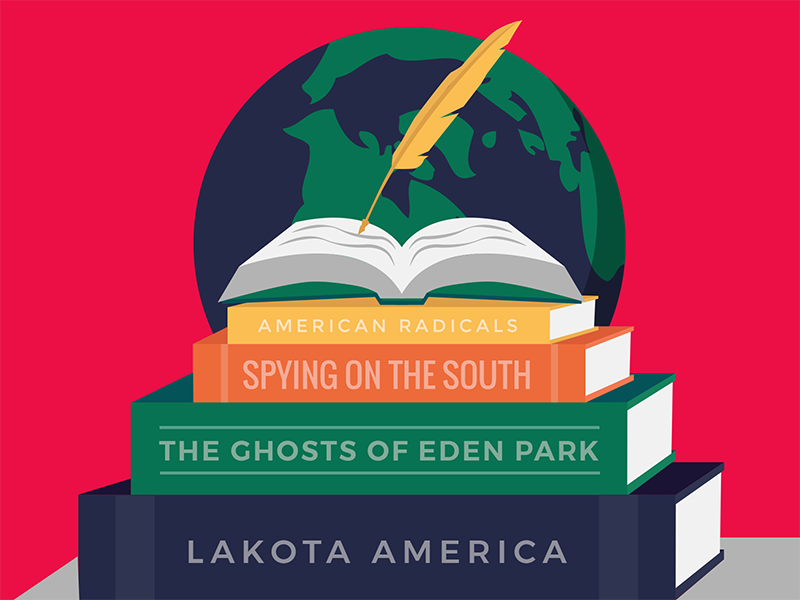
The Ten Best History Books of 2019 | History | Smithsonian

Our favorite titles of the year resurrect forgotten histories and help explain how we got to where we are today

Source: The Ten Best History Books of 2019 | History | Smithsonian

The history books we loved most in 2019 span centuries, nations and wars. From womanhood to nationhood, they challenge the construction of identity and mythology. They tell the stories of celebrity weddings, bootlegging trials, and people, places and things we thought we knew but prove, upon closer inspection, to be far more complex.

The Season: A Social History of the Debutante

When Consuelo Vanderbilt of the wealthy American Vanderbilt family married the Duke of Marlborough in 1895, she was one of the most famous debutantes in the world, at a time when interest in the doings of the rich had never been more scrutinized. Consuelo had spent her whole life training to marry a royal, and the event itself was covered in major newspapers across the globe. In The Season: A Social History of the Debutante, author Kristen Richardson contextualizes Consuelo and her wedding—and those of other famous debutantes, or young women making their societal debut, from the 1600s to today. The book is a centuries-spanning look at how debutantes and their rituals, from the antebellum South to modern-day Russia, have shaped marriage and womanhood in America and abroad.


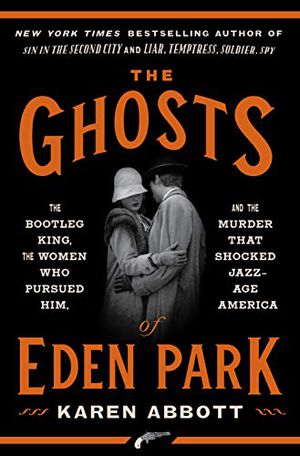
The Ghosts of Eden Park: The Bootleg King, the Women Who Pursued Him, and the Murder That Shocked Jazz-Age America

For a time, George Remus had it all. The most successful bootlegger in America, Cincinnati’s Remus controlled nearly 30 percent of illegal liquor in the United States in the early 1920s. Historian and bestselling author Karen Abbott traces the rise of Remus—he was a pharmacist and a defense attorney—and the inevitable fall as he found himself on trial not just for bootlegging, but for the murder of his own wife. In an interview with Smithsonian, Abbott talked about the connection between Remus and F. Scott Fitzgerald’s Jay Gatsby: “I think Gatsby and Remus both had these longings of belonging to a world that didn’t wholly accept them or fully understand them. Even if Fitzgerald never met Remus, everybody knew who George Remus was by the time Fitzgerald started to draft The Great Gatsby.”


Lakota America: A New History of Indigenous Power

Many Americans know the names of Red Cloud, Sitting Bull and Crazy Horse, key figures in North American Indigenous history. In his new book, Oxford history professor Pekka Hämäläinen (his previous book, The Comanche Empire, won the prestigious Bancroft Prize in 2009) looks at the history of the Lakota Nation as other historians have looked at ancient Rome—a massive (and massively adaptive) empire that shaped the literal landscape of the Western United States as well as the fates of Indigenous groups for centuries.


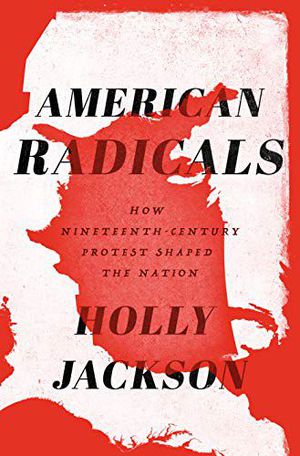
American Radicals: How Nineteenth-Century Protest Shaped the Nation

Civil Rights, free love and anti-war protests have become synonymous with the 1960s, but in American Radicals, Holly Jackson, an associate professor of English at the University of Massachusetts, Boston, traces these movements back a century in a reconsideration of radical protest and social upheaval in the mid-19th century. While some of the names that appear in Jackson’s story, like famed abolitionist William Lloyd Garrison, will be familiar to American history buffs, she also revives forgotten figures like Frances Wright, an heiress whose protests against the institution of marriage inspired Walt Whitman to call her “one of the best [characters] in history, though also one of the least understood.”


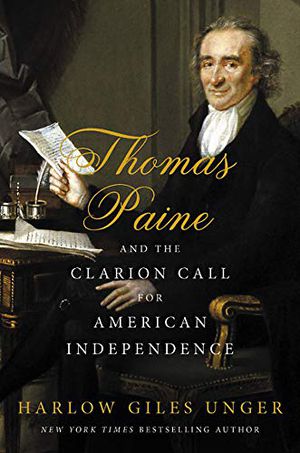
Thomas Paine and the Clarion Call for American Independence

Only six people attended Thomas Paine’s funeral. Once the most famous writer in the American colonies (and, later, the United States of America), the corsetmaker-turned-pamphleteer had been virtually expelled from public life for his radical beliefs and writings, like the ones that suggested a tax on landowners could be used to fund basic income for everyone else. Harlow Giles Unger, a renowned biographer of the Founding Fathers, looks at the Paine we know and the one we don’t, in his telling of the story of a man who pursued Enlightenment ideals even when those ideals ran afoul of what was socially acceptable.


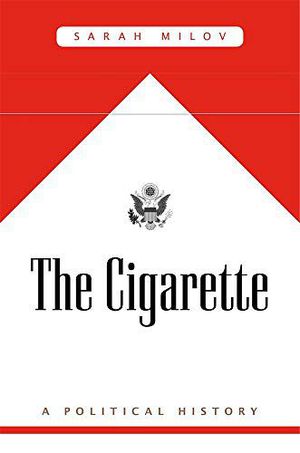
The Cigarette: A Political History

As every day a new story about the dangers of vaping—or the fervent support of vape fans—appears, historian Sarah Milov’s The Cigarette looks at the history of smoking in the United States and reminds us that once upon a time, the government was more concerned with the rights of tobacco companies than the rights of non-smokers. The book deftly connects the rise in organized opponents to smoking to food safety, car safety and other consumer rights movements of the 20th century. Kirkus says Milov “mixes big-picture academic theory with fascinating, specific details to illuminate the rise and fall of tobacco production.”


Policing the Open Road: How Cars Transformed American Freedom

In Policing the Open Road, legal historian Sarah A. Seo argues that while cars (and highways, for that matter) have long been associated with freedom in the eyes of American drivers, their advent and rapid domination of travel is the basis for a radical increase in policing and criminalization. From traffic stops to parking tickets, Seo traces the history of cars alongside the history of crime and discovers that the two are inextricably linked. “At times,” says Hua Hsu in The New Yorker, Seo’s work “feels like an underground history―of closeted gay men testing the limits of privacy; of African-Americans, like Jack Johnson or Martin Luther King, Jr., simply trying to get from one place to another.”


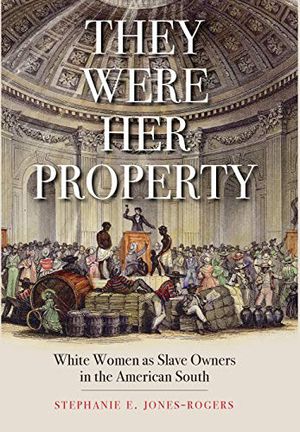
They Were Her Property: White Women as Slave Owners in the American South

Using the oral histories of formerly enslaved people, financial records and property history, Stephanie E. Jones-Rogers, associate professor of history at the University of California, Berkeley, makes a clear case that in the American South, many white women weren’t just complicit in the system of chattel slavery—they actively encouraged and benefited from it. Jones-Rogers’s work dismantles the notion that white women in slaveholding families were silent actors—instead, she argues, they used the institution of slavery to build a specific concept of womanhood that shaped the history of the nation before and after the Civil War.


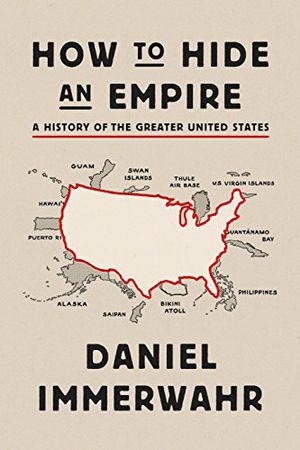
How to Hide an Empire: A History of the Greater United States

In 1856, the United States passed a law that entitled citizens to take possession of any unclaimed island containing guano deposits—guano, of course, being the excrement of bats. Guano is an excellent fertilizer, and over the course of the 20th century, the U.S. claimed dozens of small islands in remote parts of the world, turning them into territories with few rights of their own. The story of guano is one of many that touch upon the empire forged by the U.S. from Puerto Rico to the Philippines. Daniel Immerwahr, an associate professor of history at Northwestern University, tells the often brutal, often tragic stories of these territories in an attempt to make the ‘Greater United States’ truly part of U.S. history.


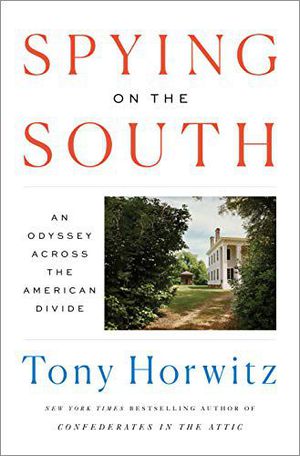
Spying on the South: An Odyssey Across the American Divide

In 1998, Tony Horwitz’s Confederates in the Attic changed the way we talk about the Civil War and the American South by making the point that for many, even 150 years after the war’s end, the conflict continued. In Spying on the South, published after Horwitz’s death this year, the author returned to the Southern states, this time following the trail of the young Frederick Law Olmsted, the landscape architect whose work defined northern cities like New York and Boston. Jill Lepore, writing in the New Yorker, called Horwitz “the rare historian—the only historian I can think of—equally at home in the archive and in an interview, a dedicated scholar, a devoted journalist.”

Leave a comment

Filed under 2019, book list, books