
There once was a writer doggerel
Whose writing sounded as if you should gargle.
Rhymes and diphthongs
The words never got along
Sounding like the speech of a mongrel.
There once was a writer doggerel
Whose writing sounded as if you should gargle.
Rhymes and diphthongs
The words never got along
Sounding like the speech of a mongrel.
Filed under 2019, Monday morning writing joke, poetry by author
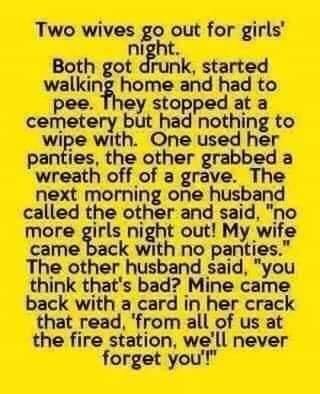
There once was a chef from Kent
who knew not how her evening was spent.
With her panties aside
had she hitched up for a ride?
Or was that dampness some other condiment?
Filed under 2019, Monday morning writing joke, poetry by author
Time, once again (though it has been a while), for New words to live by. This is a word or phrase not currently in use in the U.S. English lexicon, but might need to be considered. Other words, such as obsurd, crumpify, subsus, flib, congressed, tantrumony, and others, can be found by clicking on the tags below. Today’s New Word is created by taking two nouns and creating a new word. In this instance, the new word does not borrow from the names of the old words, but from their definitions. Without further waiting here is the new word: slug monkey.
OLD WORDS
Slug, n. Any one of various snaillike gastropods
having no shell or only a rudimentary one. It feeds off plants and is often a
pest to garden crops, often leaving a viscus trail.
v. Chiefly journalism. To furnish copy, article, story, with a slug.
Monkey, n. Any mammal of the order Primates, including guenons, langurs, capuchins, and macaques, but excluding humans and the anthropoid apes.
v. Informal. To play or trifle; sometimes to fool or screw up as in monkey with.
NEW WORD
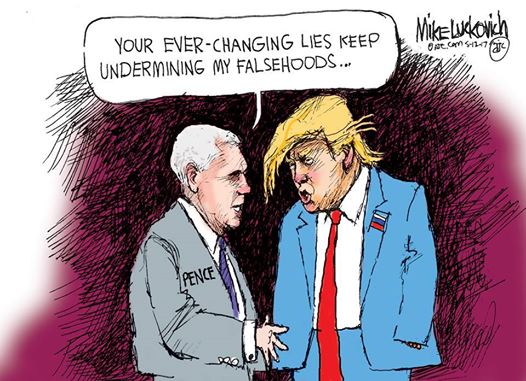
Slug monkey, n. A sycophant, spokesperson, or
follower repeating or defending the illogical ramblings, stupid pomposity, or
uttered and written lies of a leader.
v. The act of uttering or repeating the illogical ramblings, stupid pomposity, or uttered and written lies.
Used in a sentence: Noun. The US Senator is nothing more than a slug monkey for the President.
Verb. The press conference was a chance for the President to slug monkey his position.
Most recent new word: clustrophobia.
Filed under 2019, new word, new words, New words to live by
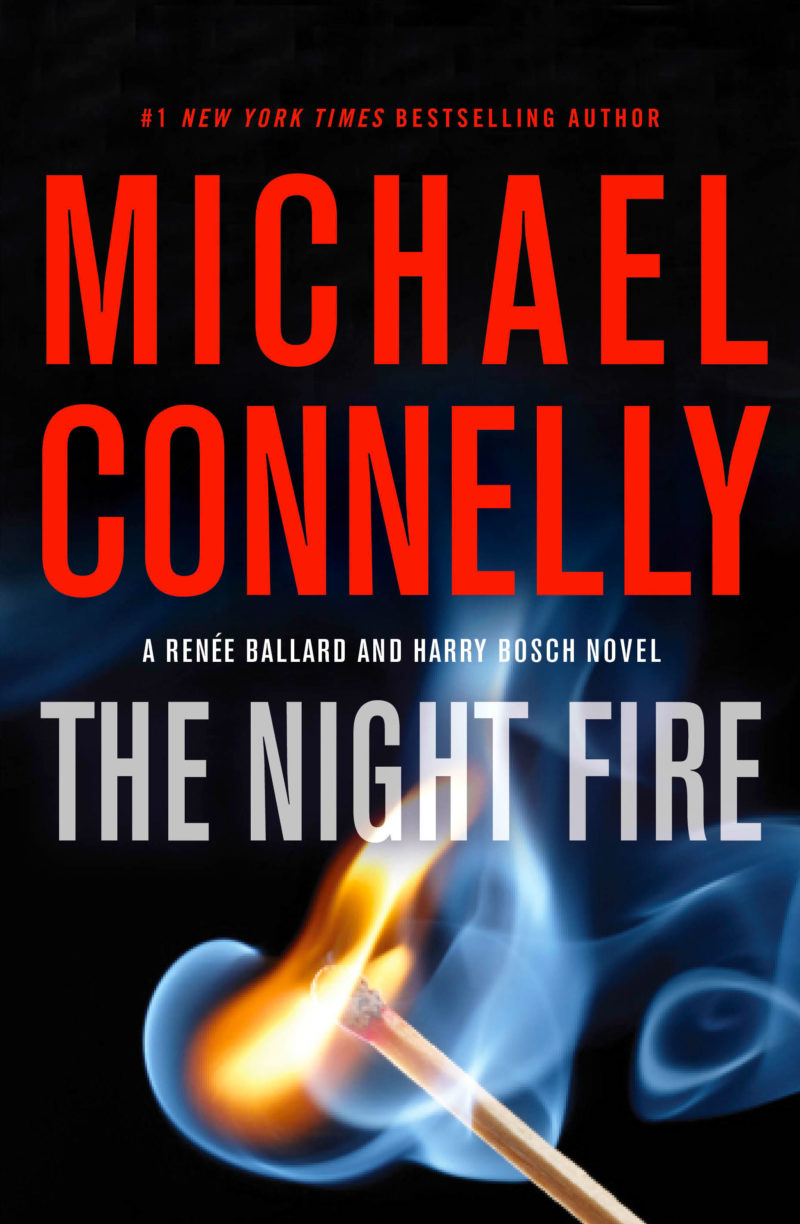
My Summer Reading by Michael Connelly (2019)
We are well into summer at this point and I am well into my summer reading. I have an eclectic stack on my reading list. Here are a few of the highlights. Some you have had the chance to read for a while, some are new, and at least a couple are not out yet, but you can always pre-order them so you get them as soon as they are out.
First off, I just finished If She Wakes by Michael Koryta. A couple of disclaimers first. Those of you who have read my recommendations before will know he is a perennial favorite of mine. This started at least because I love the way he tells a story. Therefore, I love his books. But, of course, we are a friendly bunch in the crime fiction genre and get the chance to meet and greet each other at conventions, books signings and so forth. I met Koryta at a book convention and he’s a friend. His books led to that friendship. So, yes, the caveat here is that I am recommending a friend’s book but it’s a damn good book. The other disclaimer is that this one I listened to instead of reading the printed page. Thanks to this book I increased my stats on my pedometer because I walked more because I wanted to listen more. Every day I put in the buds and went out for my paces, only to go further and last longer so I could get more story in. This book may have helped me lose weight – what better recommendation than that! Told in multiple points of view – including through the point of view of a woman locked but alert in a coma. Ingenious stuff to go with an ingenious story with a lot of switchbacks.
The thing with me is that I can be writing when most people are reading; on a plane, lounging by a pool, even while in bed. So, I listen to a lot of books so I can get to these stories while walking or driving – believe me, in L.A. there is a lot of driving. My next suggestion is also a book I listened to, but of course is readily available in print. Bloodshed by Michael Lister. (what’s with all the Michaels?) I am particularly fond of the John Jordan series set in the panhandle of Florida and this is the 19th book in that amazing run. Lister has really mastered the art of the crime novel and this one – no spoilers – really draws from issues very important in the world today. I hate the cliché “Torn from the Headlines!” and this story is not, but it is certainly inspired by the news of the day and worth the read.
This next recommendation has a couple caveats too. It’s not available yet and I am not even finished it before recommending it. I’m lucky. I get to read it now because I have a galley. You won’t get to read it until October. I write about L.A. and so I am always looking for L.A. voices. It’s not about competition. It’s about getting other takes on this great and flawed city and its vast expanse. In the past I have told you about Joe Ide’s books and Ivy Pochoda’s book Wonder Valley. Many years back I worked with a newspaperman named Al Martinez who wrote a book about L.A. called City of Angles. One of the few titles I was ever jealous of. But he was right about this place and every writer has his or her own angle of view on it. That’s what makes their books so interesting to me. I am right in the middle of reading Steph Cha’s book Your House Will Pay coming out October 15th. I don’t know how it will end yet but to say it is so far so good is a big understatement. I am marveling at what is going on here and where it is going on. Cha has new angles on a city that has been the focus of myriad stories and films. But this one is unique and totally gripping. And her prose at times are pretty stunning. Check out this line I came across this morning:
“Smoke rose in a pillar like something from the Bible, dark and alive and climbing, becoming one with the gray sky. Shawn felt a pinprick of heat on his forehead. Touched it and gazed at his finger. Ash. It was everywhere. Flakes of it landing like snowfall.”
All I can say is, you want to know about that fire. You want to read this book.
Okay, so I told you where I have been and where I am at the moment. Now the future. The next book I’ll read is Cari Mora by Thomas Harris. It’s been out a couple of months and so far the word is that its Thomas Harris light. That’s okay. It’s been over a decade waiting for something from Harris and I’ll take anything. I am pretty sure I would not be doing what I am doing today if I had not gone to school on Thomas Harris books. Red Dragon will always be top five for me. So I am looking forward to this new lesson from the teacher.
After that, I’m reading Gone Too Long by Lori Roy. Roy doesn’t have a lot of work out there but everything she has published has been fantastic. She brings a literary sensibility to the crime genre and this book uses the lens of the past to give us a view on what is happening in our world right now. I can’t wait to dig in to this one.
Then it will be back to L.A. Robert Crais has a new one coming out in August called A Dangerous Man and that is on the schedule with me. Do you know that purely by coincidence, Harry Bosch and Elvis Cole have lived on the same street in L.A.? Yep, good ol’ Woodrow Wilson Drive. It’s actually a long street and they are not exactly neighbors, but it underlines how Elvis and Harry have trod some of the same streets for many, many years and I always want to see what Elvis and Joe Pike are up to.
Lastly, a few books on my stack that I ordered because I got excited by a review or by the words of a bookseller. I got the books and just haven’t gotten to them yet. American Spy by Lauren Wilkinson is a debut spy thriller that got raves. I want to read Bearskin by James A. McLaughlin because it won the Mystery Writers of America’s Edgar award for best first novel. I read all of those. Next week I am also going to get a copy of Colson Whitehead’s novel The Nickel Boys. I seem to favor, at least on this list, Los Angeles and Florida stories. I grew up in Florida and am always drawn to stories about it. So, many on this list are Florida writers or their stories are set in Florida or both. The Nickel Boys is set in Florida and about a hellish reform school for boys. It sounds like it was inspired by a true and horrible story I know of through local newspaper stories. I look forward to reading this book as well before the summer ends.
-Michael Connelly
Source: My Summer Reading – Essays & Articles – Michael Connelly
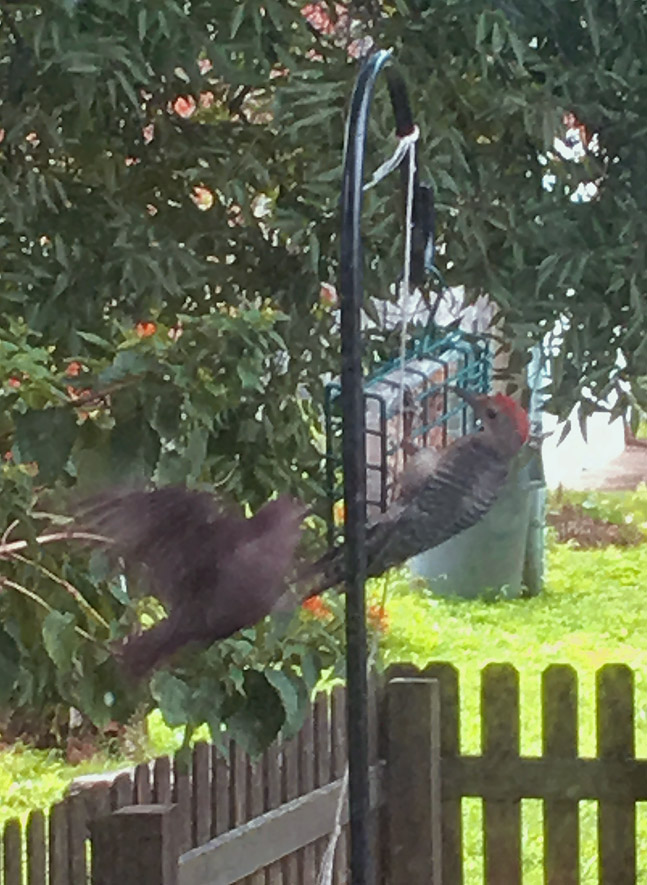
Grackle challenges /
The world in a winged moment. /
Woodpecker defends.
The fox said, pointing to the open field, “Maybe that’s where the cow jumped over the moon. Which brings up the philosophical question: Why did the cow jump over the moon?”
“Because it was trying to avoid the cattle drive.”
“But cows can’t drive,” the fox said.
“Cows can’t fly, either,” said the chicken hurriedly crossing the road.
Filed under 2019, joke by author, Monday morning writing joke
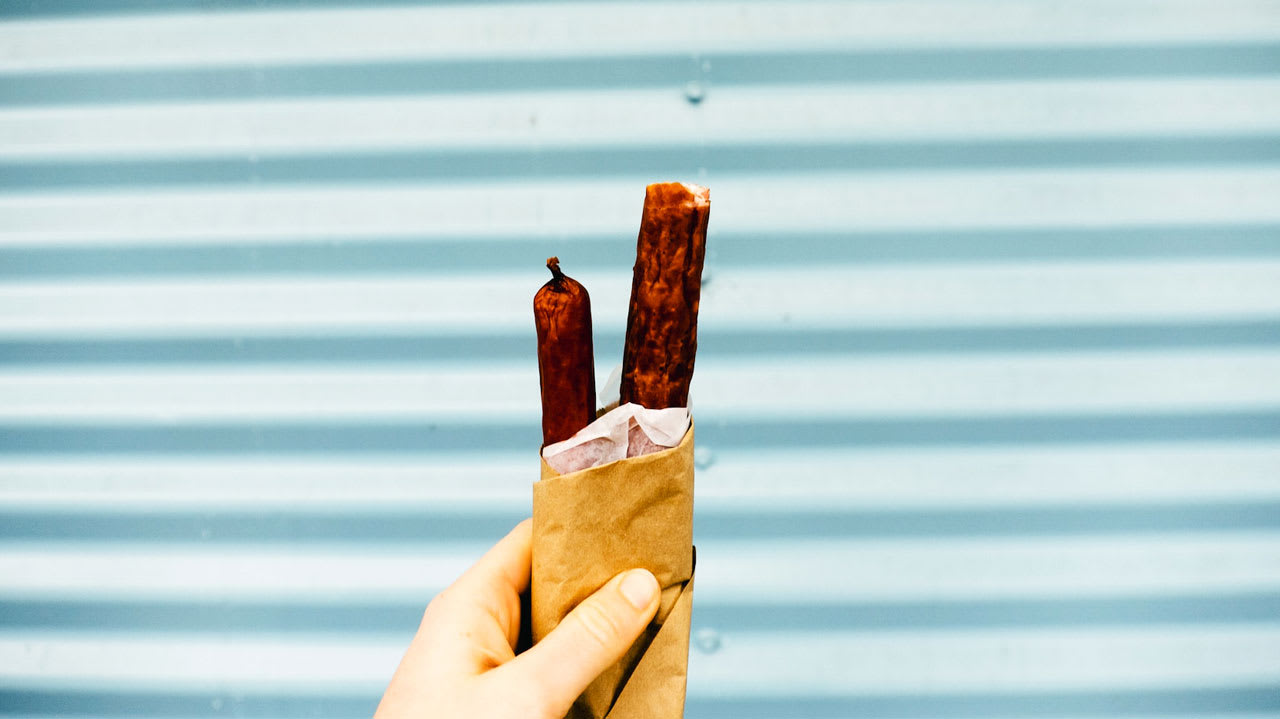 Neuroscientist Tara Swart argues that snacking and comparing yourself to someone else can lessen your cognitive functions.
Source: Why these 4 habits are bad for your brain
By Tara Swart 5 minute Read
If someone asks you how you spend your time when you’re not at work, do you know where most of your day goes? It still surprises me that most busy people have their workday mapped out meticulously, yet they don’t realize how their time outside of work slips away. Partly, this is a consequence of the increasingly blurred lines that now exist between work and home. And partly, it’s a result of the fact that the tasks that take up time in our personal and home lives are difficult to quantify and account for.
But there is a more insidious reason for the time vortex. Many of us unknowingly fall into “harmless” habits that eat into our day. You probably don’t even realize that you’re doing them. If you are, you’re probably only marginally aware that they are a distracting drain on resources.
Here are the four habits that are probably lessening your cognitive function:
Checking the headlines
Most of us like to know what’s going on in the world. Once upon a time, we’d wait for the evening news or the next day’s headlines in the morning newspaper. However, now we can access breaking news anywhere and anytime from our phones. This setup has conditioned us to check in all the time to find out what’s happening and remind us to stay informed.
Most people understand that setting some boundaries around social media is a good idea. They switch off notifications, take breaks from particular apps, and designate a set time of day to check feeds.
However, they don’t apply the same self-discipline when it comes to checking news apps. A 2018 survey sponsored by global technology solutions company Asurion shows most of us check our phones every 12 minutes. And it isn’t just time that your news habit steals.
A number of my neuroscience colleagues actively avoid the news because they recognize that its negativity—and their impotence to do anything about most of what they hear—can lead to a sense of hopelessness. It saps mental energy and focus. In a study by the American Psychological Association, 56% of people said that following the news caused them stress. Opting out of following the news won’t work for everyone—I’d suggest setting some clear boundaries around it. Consider deleting, even for a while, apps that you’re tempted to open all the time.
Toxic comparison
Toxic comparison is a habit that’s as old as time. Sure, social media has given us more raw materials to compare to, but there’s nothing new about the urge to compare. As humans, we’re hardwired to compare ourselves to others in our group; to benchmark our successes and failures against others. It’s an evolutionary hangover from times when we lived in tribes and understanding our place in the social order was key to survival.
Nowadays, comparing ourselves to others is more likely to keep us stuck. This is whether we’re doing what psychologists call downward comparison (comparing ourselves to those less fortunate) or upward comparison (comparing ourselves to those we envy.) Both of these types of comparison can be bad for the brain. Downward comparison activates the brain’s “lack” network, emphasizing our insecurity and focuses on safeguarding the status quo at the expense of risk and adventure. Upward comparison can excite feelings of envy and low self-esteem.
To break free from the temptation to compare, you need to audit your social media feeds. That means deleting anyone whose posts make you feel envious. If you find that you’re comparing yourself to a particular friend, then it might be smart to mute them. If you haven’t already, set limits around social media, and do regular digital detoxes.
If you find yourself thinking about how your life matches up to a friend’s when you’re not on social media, try to shift your perspective. Think about their human traits, vulnerabilities, and things that you have in common. When you change your mindset, you can move from a place of jealousy to a place of empathy.
Comfort eating
The phrase “comfort eating” conjures an image of one consuming a pint of Ben & Jerry’s in their pajamas. But comfort eating can also be triggered by boredom: it’s something to do when we’re idle. Eating can also be a self-soothing activity. For some people, food is a coping mechanism for stress or anxiety.
So how do you change a habit that’s deeply rooted in emotions? The first trick is to notice you’re doing it. Try to keep a diary on your phone for a few days, noting whenever you find yourself reaching for a snack. Can you spot any patterns? Do you feel the urge to eat when you are bored, procrastinating, upset, or angry? When you notice your cues and responses, you’ll learn to pause before you eat, rather than doing it automatically.
It’s also important to remember that unhealthy foods are addictive. Eating foods high in sugar and fat conditions us to crave more of the same, and those kinds of foods do little for your brain function. When you do eat, make sure to fill up on nutrient-dense foods. Not only will you find them more satiating, but they’ll also give you a cognitive boost.
Multitasking
When you’re trying to juggle what seems like a million responsibilities, multitasking might seem like a necessary evil. But research shows that when we multitask, our brains suffer. Each time we try and batch unrelated tasks together, we tax our brain and use up energy in the transition. The more complex the tasks we are switching between, the higher the cognitive cost.
To stop making multitasking a habit, you need to set boundaries around what you will be working on when. Give yourself longer chunks of time to complete one thing at a time, and shut down other distractions such as email when you’re working on something.
On their own, these habits might seem harmless. But if you do them repeatedly, they can ruin your cognitive function in ways you don’t realize. Pay attention next time you find yourself doing any of these things, and ask yourself if there’s a better habit that can go in its place. Your brain will thank you.
Tara Swart is a neuroscientist, executive adviser, author, and medical doctor. Her book, The Source: The Secrets of the Universe, The Science of the Brain, is out in the U.S in October.
Filed under 2019, brain, writing tip
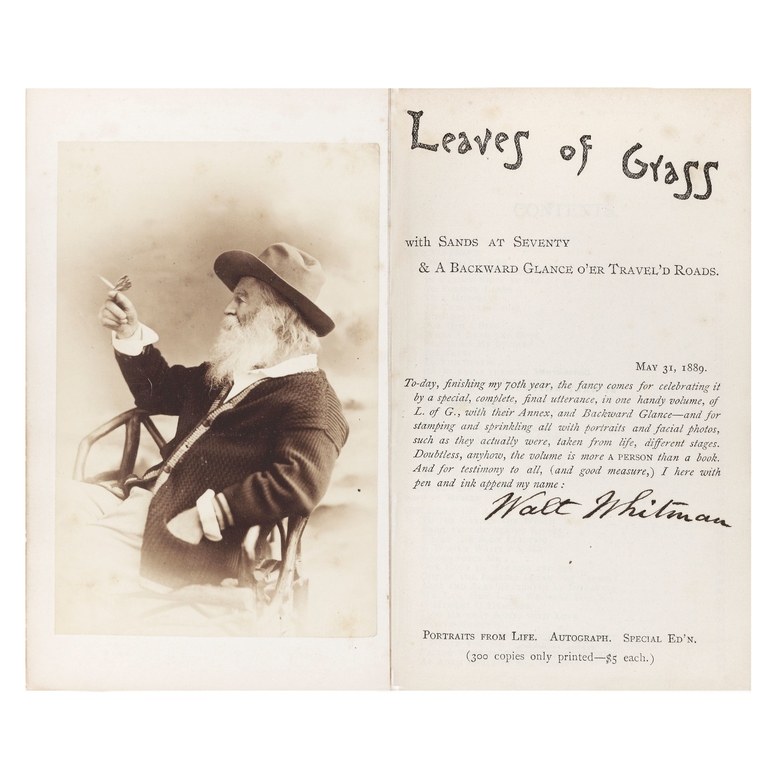
Loaf at your ease, luxuriating in the poet’s unhurried, insinuated cadences.
Source: How to Celebrate Walt Whitman’s Two-Hundredth Birthday | The New Yorker
This year we celebrate the two-hundredth birthday of Walt Whitman; and by “we” I mean all of us who take conscious pleasure in speaking American English. Whitman invented a poetry specific to this language and open to the kinds of experience, peculiar to democracy in a polyethnic society on a vast continent, that might otherwise be mute. Public events commemorating the bicentennial include three summer shows in New York—at the Morgan Library, the New York Public Library, and the Grolier Club—that touch on the story of his life. There are books, manuscripts, prints, photographs, audio and video elements, and relics—at the Public Library, a lock of his hair, and, at the Grolier, snips that may be from his beard. The shows are excellent of their kind: informational and evocative, about remembering. But I don’t much care for them. They have unavoidably cultish auras, akin to celebrity worship; not that Whitman would have minded, he having been a shame-free self-promoter who ghosted rave reviews of “Leaves of Grass” and played to his sappy popular image as “the Good Gray Poet” (less good if brunet, less gray if bad?). Such exhibits are to poetry as museum wall texts are to art works—supposedly enhancing but often displacing aesthetic adventure.
I recommend observing the occasion at home, or on vacation. Sit down with a loved one and read aloud two poems: the miraculous “The Sleepers” (1855), in which Whitman eavesdrops on the slumber of multitudes, alive and dead, and interweaves dreams of his own—at one point joining a merry company of spirits, of whom he says, “I reckon I am their boss, and they make me a pet besides”—and “When Lilacs Last in the Dooryard Bloom’d” (1865), his epic elegy for Abraham Lincoln, in which the President isn’t named, even as his loss interpenetrates nature, symbolized by the unearthly song of “the gray-brown bird,” a hermit thrush. (I’ve gone online to hear its call: a melancholy arpeggio, repeated at different pitches.) In either case, see how far you get before you’re in tears, then pull yourself together and continue to the end. Reading Whitman silently enriches, but hearing your own or a partner’s voice luxuriate in the verse’s unhurried, insinuating cadences, drawn along on waves of alternately rough and delicate feeling, can quite overwhelm. That’s because your voice, if you are fluent in American, is anticipated, pre-wired into the declarative but intimate, easy-flowing lines. It’s as if you were a phonograph needle dropped into a vinyl groove.
Whitman was born the second of nine children on a farm in West Hills, on Long Island, where his father struggled in various lines of work. When Whitman was three, the family moved to Brooklyn, and, in 1830, he left school, at age eleven, to help support the household. He took jobs as a printer, meanwhile roaming the city and, an insatiable reader, haunting libraries. After the printing district burned down, in 1835, he returned to Long Island, working unhappily as a schoolteacher and pursuing a knockabout career in journalism. By 1846, he was the editor of the prestigious Brooklyn Daily Eagle, from which he was fired, two years later, for his radical free-soil and anti-slavery politics. Among subsequent ventures, he founded a weekly newspaper; another fire destroyed the office after its initial issue.
In 1855, Whitman self-published the first of an eventual nine editions of “Leaves of Grass.” He advertised it by printing, without permission, a private letter of praise that he had received from Ralph Waldo Emerson, whose essay “The Poet,” from 1844, reads in parts like a directive—“America is a poem in our eyes; its ample geography dazzles the imagination, and it will not wait long for metres”—that young Walt more than carried out. The book gradually gained wide notice, while often coming under attack for alleged obscenity. Whitman’s homosexuality became unmistakable in his impassioned “Calamus” poems of “adhesiveness,” named for a plant with phallus-shaped “pink-tinged roots,” but, even before then, his sensuality, regarding women as well as men, was earthy enough to rattle the genteel. He expressed fervent Union patriotism at the start of the Civil War and, in 1862, travelled south of Washington, D.C., to find his brother George, who had been wounded in the Battle of Fredericksburg. For the next three years, he served indefatigably as a volunteer nurse and comforter of wounded, sick, and, too often, dying soldiers in Washington hospitals. “The real war will never get in the books,” he wrote, but certain of its awful aspects are etched in his own writing.
Those harrowing years amplified Whitman’s already Romantic conceptions of death. If Keats was “half in love with easeful death,” Whitman was head over heels for it, as a subject fit for his titanic drive to coax positive value from absolutely anything. (“What indeed is beautiful, except Death and Love,” he wrote. Note that death has pride of place.) Meanwhile, he piloted his soul in genial company with all other souls, afoot like him on ideal democracy’s Open Road, exulting in human variety. If he failed any definitive American experience, it was aloneness. That lack was made good by his younger contemporary Emily Dickinson: the soul in whispered communication with itself. Both poets dealt with the historical novelty of a nation of splintered individuals who must speak—not only for themselves but to be reassured of having selves at all. There have been no fundamental advances in the spiritual character—such as it is, touch and go—of our common tongue since Whitman and Dickinson. It’s a matter of the oneness of what they say with how they sound saying it. Admittedly, Whitman can be gassy and Dickinson obscure, but they mined truth, and mining entails quantities of slag. They derived messages from and for the mess of us.
Whitman’s flaws were at once eccentric and typical of his day. He was a sucker for modish philosophies and supposed sciences, from positivism to phrenology. In “Salut au Monde!” (called “Poem of Salutation” on its first publication, in 1856), he exalted the “divine-souled African, large, fine-headed, nobly-formed, superbly destined, on equal terms with me!” But he was less universalist in his journalism and made pointedly racist remarks in later years, calling blacks “baboons” and “wild brutes”—a serious matter in any era but especially today, at a moment of newly concerted will to face down the pestilential afterlife of slavery. Whitman had imbibed a version of social Darwinism that predicted the decline of nonwhite peoples, Asians sometimes excepted. It’s not for me to say that this, much less his slurs, should be forgiven. Even so, in liberalism he was miles ahead of his most penetrating modern critic, D. H. Lawrence, whose apposite essay in his alternately profound and infuriating “Studies in Classic American Literature” leaps to my mind whenever I think of Whitman.
Lawrence is sardonic about Whitman’s hyperbolism. Quoting the line “I am he that aches with amorous love,” Lawrence comments, “Better a bellyache.” He taxes Whitman with a disintegration of personhood, “leaking out in a sort of dribble, oozing into the universe.” But then he writes, “Whitman, the great poet, has meant so much to me”—as “a strange, modern, American Moses” and “a great changer of the blood in the veins of men.” Lawrence quails at democracy, from which he wants to rescue Whitman. “The only riches, the great souls,” he concludes, with bullying confidence in having one himself. But for Whitman the soul is fungible, shared by all. It’s a terrific contrast: Lawrence bitterly struggling to be free of Old World constrictions, Whitman born free to “loaf at my ease, observing a spear of summer grass.” Lawrence craved the American’s freedom without surrendering his own alpha-male prerogative, recoiling from a charity of spirit that was a common sense of citizenship to Whitman. Having no use for prerogatives, Whitman took in all the world that was and returned himself to it, giving himself continuously away. ♦
Filed under 2019, author tribute


 Booker's Blog