Monthly Archives: June 2018

Harlan Ellison, Intensely Prolific Science Fiction Writer, Dies at 84 – The New York Times

By Richard Sandomir

Harlan Ellison, Intensely Prolific Science Fiction Writer, Dies at 84

9-12 minutes

By Richard Sandomir

Harlan Ellison, a furiously prolific and cantankerous writer whose science fiction and fantasy stories reflected a personality so intense that they often read as if he were punching his manual typewriter keys with his fists, died on Wednesday at his home in Los Angeles. He was 84.

His wife, Susan Ellison, confirmed his death but said she did not know the cause. He had had a stroke and heart surgery in recent years.

Mr. Ellison looked at storytelling as a “holy chore,” which he pursued zealously for more than 60 years. His output includes more than 1,700 short stories and articles, at least 100 books and dozens of screenplays and television scripts. And although he was ranked with eminent science fiction writers like Ray Bradbury and Isaac Asimov, he insisted that he wrote speculative fiction, or simply fiction.

“Call me a science fiction writer,” Mr. Ellison said on the Sci-Fi Channel (now SyFy) in the 1990s. “I’ll come to your house and I’ll nail your pet’s head to a coffee table. I’ll hit you so hard your ancestors will die.”

Mr. Ellison’s best-known work includes “A Boy and His Dog” (1969), a novella set in a postapocalyptic wasteland of the United States, which was made into a 1975 movie; “I Have No Mouth and I Must Scream” (1967), a short story about a computer that tortures the last five humans on earth; “The City on the Edge of Forever,” a beloved back-in-time episode of the “Star Trek” television series in 1967; and “ ‘Repent, Harlequin!’ Said the Ticktockman” (1965), about a futuristic society in which time is regimented by a fearsome figure called the Ticktockman.

“But no one called him that to his mask,” Mr. Ellison wrote. “You don’t call a man a hated name, not when that man, behind his mask, is capable of revoking the minutes, the hours, the days and nights, the years of his life. He was called the Master Timekeeper to his mask.”

Mr. Ellison was a fast-talking, pipe-smoking polymath who once delighted talk-show hosts like Merv Griffin and Tom Snyder with his views on atheism, elitism, violence and Scientology.

He could be wild, angry and litigious. He said that he lost his job with the Walt Disney Company — on the first day — when he stood up in its commissary (with company executives watching) and described how he wanted to make an animated pornographic film starring Mickey and Minnie Mouse.

He is said to have sent a dead gopher to a publisher and attacked an ABC executive, breaking his pelvis.

He frequently criticized studios and television producers when he believed they had copied his stories. His many lawsuits included one against the makers of the movie “The Terminator,” which accused them of plagiarizing “Soldier,” a script he wrote in 1964 for the TV series “The Outer Limits.”

And he remained upset for years that Gene Roddenberry, the creator of “Star Trek,” and others had made rewrites to his script for “The City on the Edge of Forever.” Decades later, he sued CBS Paramount TV for merchandising royalties that he felt he was owed from the episode.

Ms. Ellison said that her husband eventually put his “Star Trek” imbroglio behind him. But he would never watch the classic episode.

“Let’s not go that far,” she said in a telephone interview.

Harlan Jay Ellison was born on May 27, 1934, in Cleveland. His father, Louis, was a dentist and jeweler, and his mother, Serita (Rosenthal) Ellison, worked in a thrift store. Growing up, partly in Painesville, Ohio, about 30 miles northeast of Cleveland, he was bullied in school, largely for being Jewish. The experience made him feel like an outsider and fueled his anger.

“I survived their tender mercies with nothing more debilitating to show for it than a lifelong, blood-drenched obsession for revenge,” he wrote in “Harlan Ellison’s Watching,” a collection of film reviews first published in 1989.

That anger imbued his writing, said James Gunn, the founding director of the Gunn Center for the Study of Science Fiction at the University of Kansas in Lawrence.

“Some writers were able to detach themselves and write objectively,” Mr. Gunn said in a telephone interview, “but you could always sense that Harlan was in there yelling. You could hear Bradbury in his stories, but he was not violent at all; he had a melancholy attitude.”

After his father died, Harlan moved back to Cleveland with his mother and his sister, Beverly, in 1949 and started the Cleveland Science Fiction Club, became a frequent moviegoer and worked as a runner for local mobsters, he told The Plain Dealer of Cleveland.

He left home several times, traveling around the country and variously working on a tuna boat, as a truckdriver and as a short-order cook, among other jobs.

Mr. Ellison attended Ohio State University but left after two years. At one point he punched an English professor who had told him that he did not see any writing talent in him. Thereafter, Mr. Ellison sent copies of his published stories to the professor.

In the mid-1950s he began publishing a torrent of work — in publications like Galaxy and Fantastic Science Fiction — that would continue for years. He wrote stories, novels and novellas. He edited anthologies like “Dangerous Visions” (1967) and a sequel. And he wrote episodes of television series like “Route 66,” “The Man From U.N.C.L.E.,” “The Alfred Hitchcock Hour,” the 1980s revival of “The Twilight Zone” and, improbably, “The Flying Nun” (an episode in which Sally Field’s character, Sister Bertrille, and two other nuns land on a remote island).

In 1965, he found he had become a character in Gay Talese’s celebrated New Journalism article “Frank Sinatra Has a Cold, published in Esquire magazine. By Mr. Talese’s account, Sinatra, annoyed at the boots that Mr. Ellison was wearing in the pool room of a private club in Beverly Hills, asked him what he did for a living.

“I’m a plumber,” Mr. Ellison answered.

When someone interjected that Mr. Ellison had written the screenplay of “The Oscar,” a forthcoming film, Sinatra replied: “Oh, yeah? Well, I’ve seen it, and it’s a piece of crap.”

Mr. Ellison then said, “That’s strange, because they haven’t even released it.” (It was released in 1966.)

He left after few more testy exchanges with Sinatra. (Sinatra, coincidentally, had a cameo role in “The Oscar.”)

By the time he encountered Sinatra, Mr. Ellison was already reviewing movies and writing essays about buddy films and other genres.

Most of the movies he reviewed were mainstream productions like “Rosemary’s Baby” (which he loved) and “Star Trek: The Motion Picture” (which he called “stultifyingly predictable”).

In a review of “Harlan Ellison’s Watching” in The New York Times in 1989, Robert Moss wrote that “one is never tempted to stop reading” despite Mr. Ellison’s occasional windiness. His criticism, Mr. Moss added, “has some of the spellbinding quality of a great nonstop talker with a cultural warehouse for a mind.”

In recent years, Mr. Ellison wrote a graphic novel, “7 Against Chaos” (2013),” with the artist Paul Chadwick for DC Comics. About 30 of his stories were reissued digitally. He published “None of the Above,” an unproduced screenplay based on “Bug Jack Barron,” a story by Norman Spinrad, a science fiction writer who had been his friend since the 1950s.

Mr. Ellison was also the star of “Dreams With Sharp Teeth” (2008), a documentary feature about his life directed by Erik Nelson. In the film, which showcases Mr. Ellison’s fierce, volcanic and argumentative personality, he is described as a “hurricane,” “an alternately impish and furious 11-year-old boy” and, by his friend Robin Williams, “a skin graft on a leper.”

In describing her husband’s friendship with Mr. Williams, Ms. Ellison said, “Talent will find talent.”

His marriage to Susan Toth, his only immediate survivor, was his fifth; his four previous marriages ended in divorce.

Isaac Asimov once called Mr. Ellison “one of the best writers in the world.” But he lamented that Mr. Ellison had too often been sidetracked by his furies.

“It is simply terrible that that he should be constantly embroiled in matters which really have nothing to do with his writing and which slow him down tragically,” Mr. Asimov wrote in 1994 in his autobiography, “I, Asimov.”

He added: “He claims he is five feet four inches tall, but it doesn’t really matter. In talent, energy and courage, he is eight feet tall.”

Leave a comment

Filed under 2018, author obituary, author tribute

Photo finish Friday (and haiku): “Bumblebee”

Summer bumblebee /

exploring the cone flower, /

your fall is unknown.

ING_6617_Bubblebee on flower 100dpi_6x6_4c copy


Leave a comment

Filed under 2018, photo by David E. Booker, Photo Finish Friday, poetry by author

Haiku to you Thursday (and photo): “Gold heart”

My heart in my hands /

Golden against gritty palms /

Each soft beat your name.

IMG_6521_golden heart 100dpi_6x6_4c

Leave a comment

Filed under 2018, Haiku to You Thursday, poetry by author

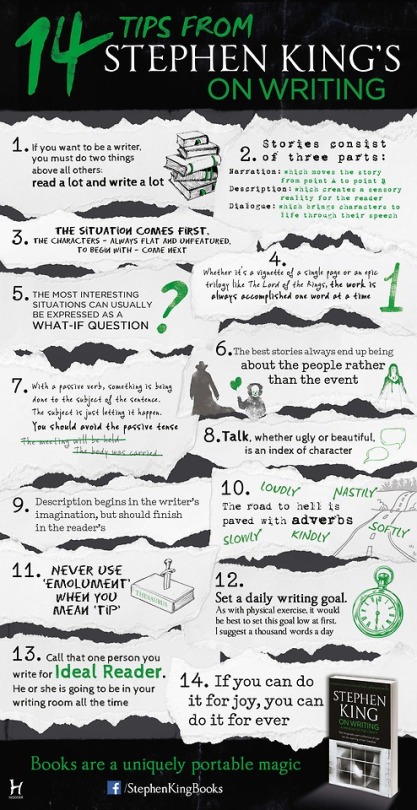
Writing tip Wednesday: “King me”

Stephen King's 14 rules for writing


Leave a comment

June 27, 2018 · 9:21 pm

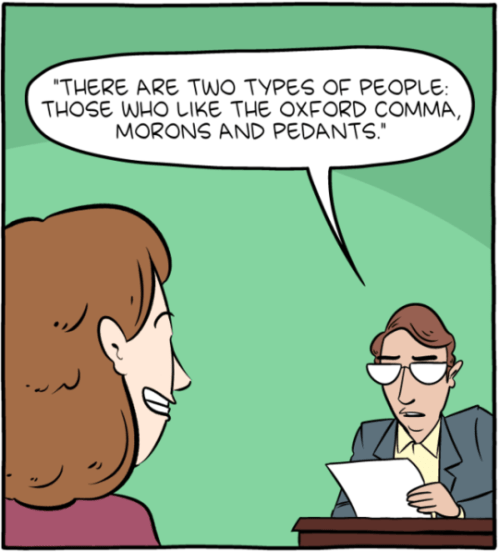
cARtOONSdAY: “cOMMA”

00 writing oxford comma

Leave a comment

June 26, 2018 · 11:41 pm

Announcing the 2018 Locus Awards Winners | Tor.com

Locus Magazine announced the winners of the 2018 Locus Awards during the Locus Awards Weekend in Seattle, WA, which took place June 22 to 24, 2018, with Connie Willis serving as MC of the awards ce…

Source: Announcing the 2018 Locus Awards Winners | Tor.com

Locus Magazine announced the winners of the 2018 Locus Awards during the Locus Awards Weekend in Seattle, WA, which took place June 22 to 24, 2018, with Connie Willis serving as MC of the awards ceremony. Congratulations to the all of the winners and finalists!

The list of finalists and winners is below. Winners for each category appear in bold.

SCIENCE FICTION NOVEL

FANTASY NOVEL

HORROR NOVEL

YOUNG ADULT BOOK

FIRST NOVEL

NOVELLA

NOVELETTE

SHORT STORY

ANTHOLOGY

COLLECTION

MAGAZINE

  • Tor.com
  • Analog
  • Asimov’s
  • Beneath Ceaseless Skies
  • Clarkesworld
  • F&SF
  • File 770
  • Lightspeed
  • Strange Horizons
  • Uncanny

PUBLISHER

  • Tor
  • Angry Robot
  • Baen
  • DAW
  • Gollancz
  • Orbit
  • Saga
  • Small Beer
  • Subterranean
  • Tachyon

EDITOR

  • Ellen Datlow
  • John Joseph Adams
  • Neil Clarke
  • Gardner Dozois
  • C.C. Finlay
  • Jonathan Strahan
  • Lynne M. Thomas & Michael Damian Thomas
  • Ann & Jeff VanderMeer
  • Sheila Williams
  • Navah Wolfe

ARTIST

  • Julie Dillon
  • Kinuko Y. Craft
  • Galen Dara
  • Bob Eggleton
  • Gregory Manchess
  • Victo Ngai
  • John Picacio
  • Shaun Tan
  • Charles Vess
  • Michael Whelan

NON-FICTION

ART BOOK

Leave a comment

Filed under 2018, awards

Monday morning writing joke: “Acknowledgements”

There once was writer of acknowledgements /

Who was in a pickle over compliments. /

To make them clear and sincere /

And not sound in arrears /

Or as if she were paying emoluments.

Leave a comment

Filed under 2018, Monday morning writing joke, poetry by author

Older British Accents Actually Sounded More Like Americans Speak Today – Comic Sands

Source: Older British Accents Actually Sounded More Like Americans Speak Today – Comic Sands

It’s no secret that English is a mutt language, originating from a mixture of the Germanic and romantic languages. But what’s less appreciated is why Americans and Brits sound so different from one another.

The most distinct difference between American English and British English is how each culture pronounces their “R”s, which is known as rhoticity.

A dropped or unemphasized “R” is a trademark of British speech, while a voiced, or rhotic “R,” is the typical American style.

Some regions of Northern England, Scotland and Ireland sound different because they kept the rhotic pronunciation. And some regions in the United States dropped it like Boston and New York and the American south, where “R”s tend to be nearly non-existent.

Would you believe that the American way is actually the older version of English?

Have you ever thought about why we don’t all sound the same?

The first English came to North America in 1607. English settlers in the 17th Century sounded closer to today’s Americans, according to the science website, Curiosity.

“…the modern American accent is a lot closer to how English used to be spoken than the [modern] British accent is.”

What then, you ask, did the Brits do with their “R”s?

Simply put, the wealth boom of the Industrial Revolution prompted well-to-do English people to drop their “Rs” because voicing them “instantly marked them as a commoner.”

“In order to distinguish themselves from their lowlier roots, this new class of Brit developed their own posh way of speaking. And eventually, it caught on throughout the country.”

“It’s called “received pronunciation,” and it even influenced the speech patterns of many other English dialects — the Cockney accent, for example, is just as non-rhotic but a lot less hoity-toity.”

This quirk developed by the English upper classes eventually found its way to the United States in the form of the Transatlantic Accent, which has been forever immortalized in recordings and films from the first half of the 20th Century.

However this time, the purpose was not to distinguish from the lower classes. The change had to do with changing technology, namely the rise of the “talkie” when silent films were phased out and motion pictures got voice tracks.

The Transatlantic or Mid-Atlantic Accent is the familiar, quasi-British sounding twang used by President Franklin Delano Roosevelt and many influential actors, such as Cary Grant, Katherine Hepburn, and Vincent Price, through the end of World War II.

Its popularity grew out of the clarity it provided on early audio recordings, on microphones and on the radio where rhotic speech could be difficult to understand.

For this speech evolution, the “R” is dropped and the “T” is highly articulated. All vowels are softened.

It was also a way to appeal to diverse English-speaking populations. It blended both the American and English accents of the time.

The accent fell out of favor after World War II however.

The Transatlantic or Mid-Atlantic Accent was a beautiful way of speaking and we should bring it back. Let’s make Transatlantic Accents Great Again!

You’re welcome.

Leave a comment

Filed under 2018, accent

7 Sci-Fi Novels for When You Want to Laugh

From not-so-super heroes to socially-anxious killer robots, here are seven humorous stories of people who are in over their heads.

Source: 7 Sci-Fi Novels for When You Want to Laugh

When characters discover new worlds, take on galactic invaders, time travel or gain extraordinary powers, it can lead to heroic, epic adventures—or everything going hilariously wrong. Or, even better, some combination of both. So from not-so-super heroes to socially-anxious killer robots, here are seven humorous stories of people who are in over their heads.

Gate Crashers by Patrick S. Tomlinson

When the crew of the exploration vessel Magellan discovers an alien artifact during humanity’s furthest trip into space, they decide to bring it back to Earth so they can study the technology. Unfortunately, the aliens happened to be rather fond of this artifact. As the people of Earth put themselves on a collision course with the rest of the potentially hostile galaxy, they find the only thing as infinite as the universe is humanity’s ability to mess up.

Super Extra Grande by Yoss

Bizarre, hilarious, and a scathing critique of Western politics, Cuban author Yoss’s satire follows Dr. Jan Amos Sangan Dongo, a veterinarian who specializes in treating large alien animals. When Earth faces colonial conflicts with the other intelligent species, Dr. Sangan is forced to embark on a mission to rescue two ambassadors from the belly of an enormous creature. It’s intergalactic road trip meets raunchy satire and you need it in your life.

All Systems Red by Martha Wells

In this first book in the Murderbot Diaries, a self-aware security android hacks its settings and dubs itself “Murderbot”… because it sort of killed several people. Now free of restraints and bugs that might send them on another killing spree, the introverted droid has discovered soap operas and just wants to be left alone. But when something goes wrong on a mission to protect scientists on an alien planet, Murderbot gets strangely attached to their pesky humans and decides to risk discovery to protect them all—even if humans are much more complicated than they look on TV.

Old Man’s War by John Scalzi

The good news is humans have made it to interplanetary space and discovered inhabitable planets. The bad news is that aliens want these planets too, and humans, led by the Colonial Defense Force, will have to fight for them. But the Defense Force doesn’t take young recruits—it enlists the elderly and transfers their experienced minds into younger bodies. John Perry joins the military on his 75th birthday. And while there’s plenty of drama and battle, there’s also a lot of old dudes making fart jokes and getting excited about their new abs. Old Man’s War is another one of the books on this list that show an outer space is full of sarcasm and witty rejoinders.

All Those Explosions Were Someone Else’s Fault by James Alan Gardner

When dark creatures start to offer immortality in exchange for money (and maybe your soul) and magic and science combine to create beings with extraordinary powers, a battle ensues between the Dark and the Light. Caught in the middle of it all are Kim Lam, our snarky, gender-fluid hero, and their three roommates, turned into the super-powered Sparks by a freak accident. Equipped with capes and costumes, the friends use their new-found abilities to seek truth and justice…for the most part. The explosions were definitely someone else’s fault.

To Say Nothing of the Dog by Connie Willis

This Hugo and Locus-award winning comedic novel begins in the year 2057, where they use time machines to study history. Ned Henry, suffering from time-lag due to jumping back and forth to often from the 1940s, is in desperate need of a rest. But when a historian takes something from Victorian times that could upset the results of World War II and destabilize the timeline, Ned is the only available man to go back and set things right. Hijinks, mischievous butlers, boating accidents and social snafus ensue as the historians of Oxford pop back and forth in time and search for a gaudy artifact of dubious proportions.

Hitchhiker’s Guide to the Galaxy by Douglas Adams

A classic when it comes to humorous science fiction, this story follows Arthur Dent and his best friend and actual alien Ford Prefect. They, and of course all the dolphins and mice, survive when Vogons destroy Earth to make way for an intergalactic highway. Joined by a two-headed alien, a human woman, a depressed robot, and a graduate student obsessed with the disappearance of his pens, they begin a journey full of wit and lunacy to discover the answer to some of life’s most important questions.


Leave a comment

Filed under 2018, science fiction

Photo finish Friday (and haiku): “Mobile home”

Homemade mobile home /

Old truck and dreams unbound /

Rust winks at all hopes.

IMG_6479_Homemade moble home 150_6x4_4c

Leave a comment

Filed under 2018, Photo Finish Friday, poetry by author