Monthly Archives: June 2017

New words to live by: “Shill hanging” or “Shanging”

Time, once again, for New words to live by. This is a word or phrase not currently in use in the U.S. English lexicon, but might need to be considered. Other words, such as obsurd, crumpify, subsus, flib, congressed, and others, can be found by clicking on the tags below. Today’s New Word is created by taking two nouns and creating a compound word. Without further waiting, shill hanging or sometimes called a shanging.

OLD WORD
Shill, n. a person who publicizes or praises something or someone for reasons of self-interest, personal profit, or friendship or loyalty.

Hanging, n. 1.) a suspending or temporary attaching. 2.) a form of capital punishment by which someone is suspended by the neck with a gallows, gibbet, tree limb or similar method until dead.

NEW WORD
Shill hanging or Shanging, n. The act of temporarily suspending somebody with obsequious words of praise, flattery, or even falsehoods in order to keep from being suspended, firmed, or hung out dry from his or her position.

Other forms of the word:
Shanger, n. = person who does the shanging.

Shang, v. = the act of shill hanging.

The other day when the president held his first public shanging. Each cabinet member in turn introduced himself or herself, and then proceeded to shang the president with unctuous flattery.

Leave a comment

Filed under 2017, new word, New words to live by

Photo finish Friday: “Film at Eleven”

Some things you can’t ig-noir.

From my limited understanding, they were filming scenes for one of the cable true crime shows, which is interesting if not ironic because the owner of the house used to read true crime books. Then she married and had two sons, and found them to be scary enough, as young children often are.
 
When we arrived, the entryway — foyer — was strewn with magazines, papers, and other chaos to make the house looked ransacked, and two actors — too young, too thin, and too nattily dressed to be real police detectives, were putting on blue surgical gloves as if they were about to inspect a crime scene.
 
I wonder what cops wore before latex.

Save

Leave a comment

Filed under 2017, photo by David E. Booker, Photo Finish Friday

Haiku to you Thursday: “Delight”

Is delight just a word

or will I find its candle

resting in your smile?

Leave a comment

Filed under 2017, Haiku to You Thursday, poetry by author

Writing tip Wednesday: “Vary the Very”

In writing there a few words a good writer is wary of, and one of those words is very. As a modifier, very has its place and its use, but its best use is sparingly. Maybe even very sparingly. Below is a list of words to use in place of very.

Leave a comment

Filed under 2017, writing tip, Writing Tip Wednesday

Monday morning writing joke: “Old drunks”

First writer points to two old drunks sitting across the bar: “That’s us in ten years.”

Second writer: “Dipshit, that’s a mirror.”

2 Comments

Filed under 2017, Monday morning writing joke

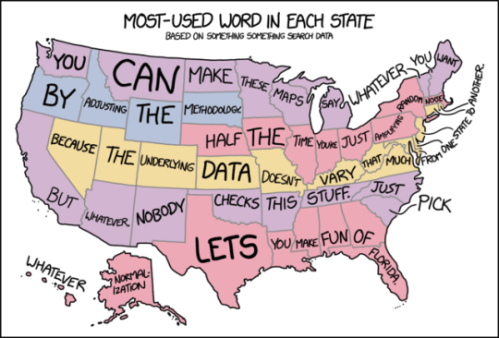
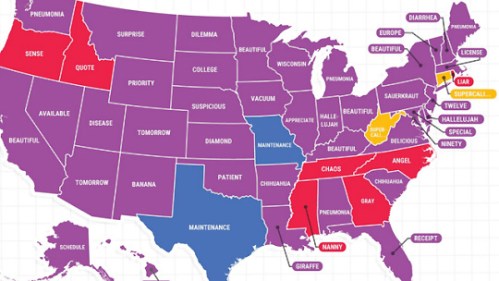
Sunday silliness: “Most used; most abused”

And the word for your state is…?


Where do you fit in?


So, take the most-used word in a state and the most misspelled word and see what happens. For example, for Tennessee is is Chaos is the most misspelled work and Stuff the word used most often. Chaos and Stuff. Well, too much stuff can lead to chaos, and it gets more Kayotic if you can’t spell Kayos. Or California where the most misspelled word is Beautiful and the most-used work is But. Everything is Beautiful in its own way, but not necessarily Butteful. Or Kentucky, where you can be Vary Butteful.

Save

Save

2 Comments

Filed under 2017, Sunday silliness, word play, words

A thought about writing

Save

Save

Leave a comment

June 10, 2017 · 10:11 pm

Photo finish Friday: “New World Order”

Some days your world is right side up. some days, upside down.

Save

Save

Save

Save

Leave a comment

Filed under 2017, photo by David E. Booker, Photo Finish Friday

Haiku to you Thursday: “Strawberry moon”

Strawberry moon ripens, /

descending the night sky /

into fields of dreams.

Leave a comment

Filed under 2017, Haiku to You Thursday, poetry by author

Bad memories: Colm Tóibín urges authors to lose the flashbacks | Books | The Guardian

Speaking at the Hay literary festival, the Irish novelist said modern writers should emulate Jane Austen and stop overdoing the backstory

Source: Bad memories: Colm Tóibín urges authors to lose the flashbacks | Books | The Guardian

By Mark Brown

Colm Tóibín has issued a rallying call against what he sees as the scourge of modern literature: flashbacks.

The Irish novelist said the narrative device was infuriating, with too many writers skipping back and forward in time to fill in all the gaps in a story.

“We are living in the most terrible age,” Tóibín told the Hay literary festival in Wales. “I know people are worried about Brexit and I know people worry about Donald Trump. But I worry about the flashback.

“You can’t read any book now – any book – without suddenly, on chapter 2, [the writer] taking you back to where everybody was 20 years ago. How their parents met, how their grandparents met.”

Tóibín was taking part in a panel discussion on Jane Austen, who, he said, wrote complex, layered characters without ever contemplating a flashback.

For example, he said, Mr Bennet in Pride and Prejudice is a number of different characters, with the reader feeling less on his side as the novel progresses. Fanny Price in Mansfield Park, meanwhile, is not very bright and then she is. “That lack of being obvious gives her a depth, especially her stubborn feelings.”

Tóibín urged writers to leave it to readers to figure out a person’s character. “I like the business of: we don’t know, it is left out, just imagine it yourself… you do it! I do not want to know how Mr Bennet met Mrs Bennet.” Having said that, how they met is a complete mystery, he said. “What happened that night?”

Tóibín said that although Mr and Mrs Bennet are not physically described in Pride and Prejudice’s first chapter, you know how to read both of them straight away from the things they say.

The panel was one of a number of Austen-themed events taking place in the run-up to the 200th anniversary of her death on 18 July. Tóibín was also launching his new book House of Names, a retelling of the classical Greek tales of the house of Atreus, including the stories of Agamemnon and his wife Clytemnestra, their son Orestes and daughters Iphigenia and Electra.

Leave a comment

Filed under 2017, writing tip, Writing Tip Wednesday