Monthly Archives: February 2017

Bookstores Stoke Trump Resistance With Action, Not Just Words – The New York Times

By JULIE BOSMAN

A hundred people packed a bookstore in Brooklyn to write postcards to elected officials and, as the invitation urged, “plot next steps.” In St. Louis, bookstore owners began planning a writer-studded event to benefit area refugees. At a bookshop in Massachusetts, a manager privately asked his senior staff members how the store should respond to the Trump presidency.
“Go hard,” they told him.

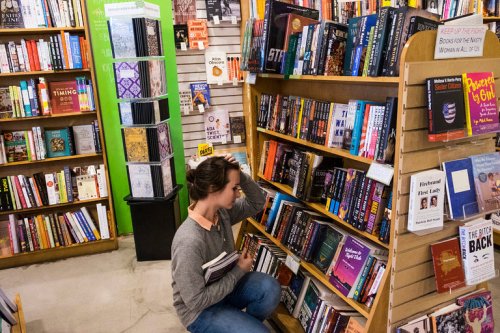
In the diffuse and suddenly fierce protest movement that has sprung up on the left since President Trump took office, bookstores have entered the fray, taking on roles ranging from meeting place to political war room.

Many stores have distributed information for customers who are mobilizing against Mr. Trump’s actions: his cabinet choices, his threat to cut off funding for sanctuary cities and his immigration bans on refugees and many Muslims. At City Stacks, a bookstore in Denver, employees printed out forms with elected officials’ contact information in a gentle nudge to customers. On Inauguration Day, Broadway Books in Portland, Ore., handed out free copies of “We Should All Be Feminists,” a book-length call to arms by Chimamanda Ngozi Adichie, the novelist.

All over the country, independent bookstores have filled their windows and displays with “1984,” by George Orwell; “It Can’t Happen Here,” by Sinclair Lewis; and other books on politics, fascism, totalitarianism and social justice. Booksellers have begun calling the front table devoted to those titles the #Resist table.

“A lot of people are saying, ‘We’ve turned our store over to the revolution,’” said Hannah Oliver Depp, the operations manager for Word, which has bookstores in New Jersey and New York. “I do think that it is going to fundamentally change bookstores and book selling.”

Some stores, including large chains like Barnes & Noble, with customers from across the spectrum, have steered away from the political realm. Some stores say they have worked to keep the latest book displays balanced — with titles from the left and the right.

“My taste comes into play,” said Cathy Langer, the director of buying for the Tattered Cover in Denver, “but my politics do not, ever.”

But many places have become buzzing hubs of protest, like Women & Children First in Chicago, which last month hosted a forum on “Art and Resistance,” a craft circle to knit pink “pussyhats,” and a gathering with customers for coffee and doughnuts on the morning after the inauguration, before they all rode the “L” to join in the downtown Women’s March.

“Let’s raise our voices together and let the incoming administration know that they do not speak for us,” the store wrote to customers in an email before the rally.

Political organizing is perhaps a natural extension of what bookstores have done for centuries: foster discussion, provide access to history and literature, host writers and intellectuals.

“All bookstores are mission-driven to some degree — their mission is to inspire and inform, and educate if possible,” said Elaine Katzenberger, publisher and executive director of City Lights in San Francisco, a store with a long history of left-wing activism.

“When Trump was elected, everyone was just walking around saying: ‘What do I do. What do we do?’” she added. “One of the places you might find some answers is in books, in histories, in current events, even poetry.”

For many booksellers, the urge to join a protest movement is new. Several who were interviewed said they had never before tried to mobilize their customers politically; many are, for the first time, making their own political views crystal clear.

“In the past, we hadn’t really been like, ‘O.K., here’s where we stand,’” said Lacy Simons, the owner of Hello Hello Books in the seaside town of Rockland, Me. Ms. Simons said she was jolted into action the day after the election, when customers began drifting into the store, not to buy books, exactly, but in search of solace.

“This is just one of the places where people went,” she said. “If they were gutted from the election, people just came in to pet the books.”

Her plans to push back against Mr. Trump’s policies are just beginning: Later this month, the store’s new social justice reading and action group will meet for the first time (suggested reading: “What We Do Now: Standing Up for Your Values in Trump’s America”). She also intends to distribute political leaflets and other materials to customers, on the model of bookstores that handed out mimeographed resistance newspapers during the Vietnam War.

Stephanie Valdez, an owner of Community Bookstore in Brooklyn, has already hosted a postcard-writing event, and lately she has paged through books on political organizing, looking for guidance for getting her store more involved.

“I think bookstores are a place where people go to understand the world,” she said. “And I think we’re just one of many places that will become a center of activism.”

Gayle Shanks, a co-owner of Changing Hands in Phoenix, said her store’s Facebook page had gone political, as staff members filled it with articles about national politics and First Amendment issues. At the suggestion of one of her young employees, staff members began piecing together a display of books written by authors from the seven majority-Muslim countries from which Mr. Trump suspended immigration.

Ms. Shanks took her regular email newsletter in December, usually a chatty vehicle for suggesting new books or sharing publishing-industry news, to write about her sorrow over Mr. Trump’s election and the “cronies” he had selected to serve in his cabinet.

More than 50 recipients wrote back with praise, thanking her for airing her views. One man did not. “Shut up and sell books,” he wrote.

And some stores have been more muted, conscious of alienating more conservative customers.

“A lot of bookstores kind of want to be everything to all people,” said Josh Christie, an owner of Print, a bookstore in Portland, Me. “They want to be apolitical and carry everything from every viewpoint. People are worried about losing that sale.” (Print announced that in light of Mr. Trump’s immigration ban, it was donating all profits from sales on the first Saturday this month to the American Civil Liberties Union of Maine.)

Ann Patchett, a novelist and an owner of Parnassus Books in Nashville, said she had simply embraced the notion of her bookstore as a place where anyone could come, get information and exchange ideas.

“I have written on the bookstore website about the election and the importance of reading and community and how more than ever we need to,” Ms. Patchett said. “That is outwardly as political as we’ve gotten.”

She echoed one of the biggest blows of Mr. Trump’s election for people in the literary world: the realization that the new president is not much of a reader. That is a stark contrast to former President Barack Obama, a devoted reader, writer and frequent visitor of independent bookstores while he was in office.

“Now more than ever, books are so important,” Ms. Patchett said. “The only way we’re going to get out of this in the larger sense is through education.”
Leave a comment

Filed under 2017, bookstore, politics

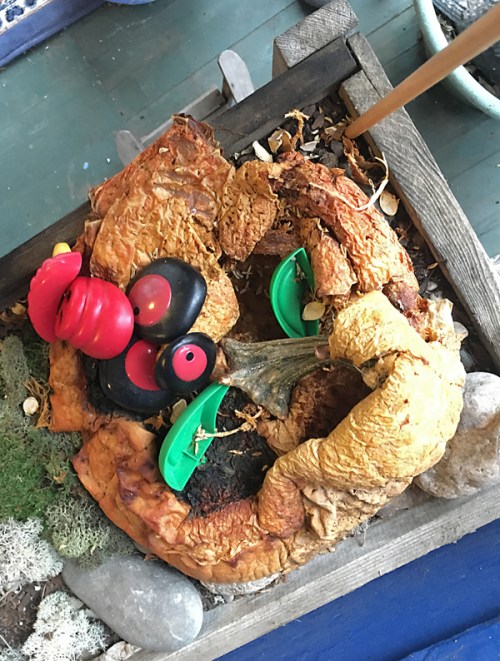
Photo finish Friday: “Deliquescing”

Sometimes you start anew by first melting away.

Sometimes you start anew by first melting away.

Leave a comment

Filed under 2017, photo by David E. Booker, Photo Finish Friday

Haiku to you Thursday: “The sky”

You were once mine, /

Arrayed with the dawn’s fire: /

Reds and clouds and sun.

Leave a comment

Filed under 2017, Haiku to You Thursday, poetry by author

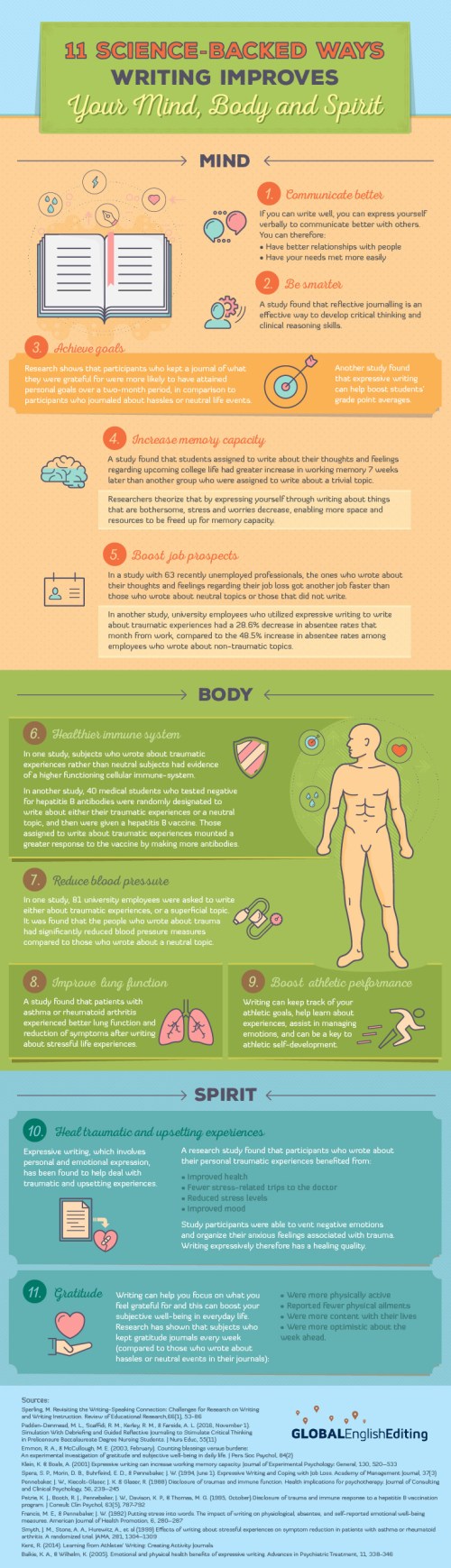
Writing tip Wednesday: “Healthy writing”

11-reasons-writing-is-good-for-your-health

Source: http://www.writersdigest.com/editor-blogs/there-are-no-rules/11-reasons-writing-good-health?utm_source=wir&utm_campaign=wir-bak-nl-170214&utm_content=921445_WDE170214&utm_medium=email

Leave a comment

February 15, 2017 · 11:56 am

Monday morning writing joke: “Offer”

Author to his agent: “What’s the latest on my manuscript?”

Agent to author: “I sent it out to six publishers at the same time hoping to stir up the most interest in the shortest amount of time. But no response yet.”

Author, thinking the agent is trying to start a bidding war for his masterpiece. “Maybe you’re asking too much.”

Agent to author: “I offered it to them for free.”

Leave a comment

Filed under 2017, joke by author, Monday morning writing joke

Librarians take up arms against fake news | Family | herald-review.com

Source: Librarians take up arms against fake news | Family | herald-review.com

SEATTLE — Janelle Hagen is a school librarian whose job goes far beyond checking out books. She and many other librarians are equipping students to fight through lies, distortion and trickery to find their way to truth.
Helping students become smarter evaluators of the information that floods into their lives has become increasingly necessary in an era in which fake news is a constant.

Two University of Washington professors recently announced a new class that will focus on the ways data are misused to mislead the public. Younger students may need guidance even more.

Hagen, the middle-school librarian at Lakeside School in Seattle, said the students she serves are online every day, and they need to be able to figure out what’s trustworthy and what isn’t.

Besides running the library, Hagen said, she teaches a class called “digital life.” She meets with fifth-graders twice a week and with eighth-graders once a week. The classes are a mix of technology and information-literacy skills, but since the presidential election, she’s increased the focus on the latter.”It was because of all of the buzz (about fake news). You can look at the Google analytics, and the search for ‘fake news’ was unprecedented.” she said. “It’s our job as teachers to address what’s going on in the world.”

One Monday morning, her eighth-graders took a group quiz in which they were asked to identify different kinds of information — advertising, publicity, propaganda, news, opinion pieces. They worked on their laptops choosing from multiple options, and their choices showed up on a big screen at the front of the classroom. There was discussion after each question, especially when not everyone got the answer right.

Hagen introduced the new focus to students by showing them the results of a Stanford History Education Group study in which students from college, high school and middle school were tested on their understanding of various types of information.

Most middle-school students were able to distinguish advertisements from news stories, but more than 80 percent confused native advertisements with news stories. Native advertisements are designed to look like news stories, but they carry a label that sets them apart, usually “sponsored content.” That wasn’t enough.

There is a great need for more education in the critical-thinking skills that are part of information literacy.

Remember when many people thought librarians were going to become obsolete because the world of information was migrating to the web? But then we became enthralled by the possibilities of big data, and library schools became information schools, turning out people who could help navigate vast troves of online data. That’s where the discipline was when Hagen graduated from the University of Washington Information School in 2011.

Librarians and libraries are still with us, and those new data skills are increasingly valuable, but an older skill is now rising in importance. Hagen said librarians have always helped people sort fact from fiction, reliable sources from deceptive ones. Usually that happened as students worked on research papers, but now those lessons need to cover daily life.

“It’s a difficult time to work in education because we are seeing what’s happening in the world and how opinions are really first and foremost rather than facts,” Hagen said.

Lakeside’s high-school librarians put up a display in the entrance to their building that offers several tips for spotting fake news. One says: “What’s the evidence?” Underneath a flap there’s more detail: “As you read an article, make sure to see if they have any evidence to back up their claims. Furthermore, research the evidence to see if it is real, made up, or used in a way not intended by its creators.”

Are claims in an article backed up by verifiable facts? Check the authors’ backgrounds to see if they have credibility on the topic they are writing about.

Hagen likes The News Literacy Project, a collaboration between journalists and educators to improve students’ information literacy through lessons in the classroom and its online program Checkology.

Hagen’s eighth-graders use AllSides, a website that rates the bias of news stories and other articles, labeling them according to where they fit on a political spectrum from left to center to right. And it posts multiple versions of major stories and their ratings. Readers can test their own biases on the site.

As the site says, “if you have a pulse, you have a bias.” And Hagen tells her students that even the most honest media have biases, but they also try hard to be fair, and articles must past muster with layers of editors, so a reader or viewer is more likely to get a more reliable version of a given story.
Awareness is the key, she said. And it is. Read, listen, watch with an active, questioning mind.

Leave a comment

Filed under 2017, library

Fighting Fake News | American Libraries Magazine

Librarians can play a vital role in helping everyone, of any age, fight fake news and become critical and reflective media consumers.

Source: Fighting Fake News | American Libraries Magazine

Librarians—whether public, school, academic, or special—all seek to ensure that patrons who ask for help get accurate information.

Given the care that librarians bring to this task, the recent explosion in unverified, unsourced, and sometimes completely untrue news has been discouraging, to say the least. According to the Pew Research Center, a majority of US adults are getting their news in real time from their social media feeds. These are often uncurated spaces in which falsehoods thrive, as revealed during the 2016 election. To take just one example, Pope Francis did not endorse Donald Trump, but thousands of people shared the “news” that he had done so.

Completely fake news is at the extreme end of a continuum. Less blatant falsehoods involve only sharing the data that puts a proposal in its best light, a practice of which most politicians and interest group spokespeople are guilty.

The news-savvy consumer is able to distinguish fact from opinion and to discern the hallmarks of evasive language and half-truths. But growing evidence suggests that these skills are becoming rarer. A November 2016 study by the Stanford History Education Group (SHEG) showed that students have difficulty separating paid advertising from news reporting, and they are apt to overlook clear evidence of bias in the claims they encounter. These challenges persist from middle school to college.

According to SHEG Director Sam Wineburg, professor at Stanford Graduate School of Education, “nothing less than our capacity for online civic reasoning is at risk.”

Librarians and journalists: natural allies
Librarians can help change this trend. “Librarians are natural allies for educators in helping students become critical news consumers,” says Wineburg. The profession’s deep commitment to verified sources and reliable information mirrors similar values—accountability for accuracy, careful research before drawing firm conclusions, and a willingness to correct errors—that drive responsible journalism.

One emerging solution among journalists is the Trust Project, an initiative of the Markkula Center for Applied Ethics at Santa Clara (Calif.) University.

Headed by longtime reporter Sally Lehrman, director of Santa Clara’s journalism ethics program, the Trust Project has partnered with nearly 70 media organizations to develop a collection of color-coded digital “Trust Indicators” that signify reliable and responsible reporting. Indicators include a commitment to seeking diverse perspectives, linking out to credible sources of further information, offering clear markers regarding whether an article presents opinion or news, and providing information about an article’s author. The complete set is available at the Trust Project website.

Still in the works for the project is computer code that will allow partner media organizations to note when they have achieved a Trust Indicator, which serves as a proxy for reliable journalism. This code should be broadly available by mid-2017. Services such as Facebook and Google would surface these materials more prominently in news feeds and search results, while readers would see clear visual icons that demonstrate fulfillment of the Trust Indicators. As Lehrman explains, “These icons would be cognitive shortcuts to route readers to more reliable sources of news.”

She also notes a strong desire by consumers to be active participants in the shaping of the news, rather than merely a passive audience. In that spirit, she welcomes input and feedback from librarians about how to best achieve the aims of the Trust Project.

Direct collaboration with journalists is another route to increasing media literacy. For example, the Dallas Public Library (DPL) will host an eight-week training course in community journalism for high school students. Its “Storytellers without Borders” project, one of the winners of the 2016 Knight News Challenge, includes oversight from professional librarians as well as reporters at the Dallas Morning News. Students will rotate among three DPL branch locations that represent the socioeconomic and cultural diversity of the city. Journalists will mentor students on how to ask focused questions, while librarians will describe how to use research databases to find accurate information. Library staffers will also provide instruction on how to use multimedia editing tools. In April 2017 these budding digital journalists, with their new skills in the art of providing credible and engaging content, will showcase their efforts at the Dallas Book Festival.

Information literacy at your library
The Trust Project and “Storytellers without Borders” are high-profile efforts, but any library can lead educational programs about the importance of media literacy.

As the SHEG study reveals, this training should begin with young students and continue through college. Resources that range from free LibGuides to enhanced school curricula are available for libraries around the country.
Librarians at Indiana University East in Richmond have developed a LibGuide about how to identify fake news, complete with detailed images of what questions to ask while perusing a site. The News Literacy Project, founded by former Los Angeles Times reporter Alan Miller, offers a comprehensive curriculum of classroom, after-school, and e-learning programs for middle and high school students; the Center for News Literacy at Stony Brook (N.Y.) University offers similar resources for teaching college students.

Despite the clear need for increased media literacy, one risk is that this topic will always be perceived as optional—nice to know but not essential. Wineburg argues that this is misguided. “Online civic literacy is a core skill that should be insinuated into the warp and woof of education as much as possible,” he says. In a paper for College & Research Libraries News, Brian T. Sullivan, information literacy librarian, and Karen L. Porter, sociology professor, of Alfred (N.Y.) University map out how to convert those one-shot information literacy training sessions into full programs with embedded librarians.

Librarians can play a vital role in helping everyone, of any age, become critical and reflective news consumers. One positive outcome of the current furor about fake news may be that information literacy, for media and other types of content, will finally be recognized as a central skill of the digital age.

Leave a comment

Filed under 2017, library

Photo finish Friday: “Downtrodden”

Sometimes the stairs in your own back yard seem a bit strange.

Sometimes the stairs in your own back yard seem a bit strange.

Leave a comment

Filed under 2017, photo by David E. Booker, Photo Finish Friday

Haiku to you Thursday: “Dark blooms”

Dark blooms the heart. /

Empty shines the unmade mind. /

Crisp, cold, slow night.

Leave a comment

Filed under 2017, Haiku to You Thursday, poetry by author

Writing tip Wednesday: “Write better Villains”

How to Write Better Villains: 5 Ways to Get Into the Mind of a Psychopath

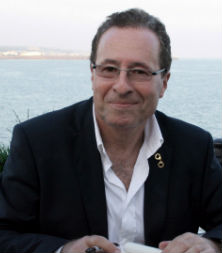
By Peter James

http://www.writersdigest.com/online-editor/write-better-villains-5-ways-get-mind-psychopath?utm_source=wir&utm_campaign=wir-bak-170124&utm_content=915933_WDE170124&utm_medium=email

1. Where to find a psychopath who will talk to you – the importance of meeting your monster.
Over my years of research for my Roy Grace mystery novels I’ve given many talks in prisons for the charity, The Reading Agency, which encourages literacy in UK prisons, as it gives me the opportunity to meet many different kinds of criminal face to face.

I had been wanting to write about a female “black widow” character for some time, and had been studying past cases, and thinking hard about creating a convincing character. Three years ago I was talking in a women’s prison and there was a well-spoken middle-aged woman in the audience who was asking particularly smart questions about literature. She fascinated me, being clearly well educated and I wondered what crime she had committed. Perhaps she killed someone drunk driving, or something like that, I wondered?

steve-james-featuredOne big perk of my talks is that I get to mingle with the prisoners after and chat to them one-on-one. I made a beeline for her. I never ask a prisoner outright what they have done – it’s not proper etiquette! So as an icebreaker I said, ‘How much longer do you have to serve?’

She replied, in a booming voice, ‘Nine and a half more bloody years – and it’s just not fair! A woman did exactly what I did, in London, and she’s only got six more years to go.’

‘So, what brought you in here?’ I asked, somewhat startled.

‘I poisoned my mother-in-law, the old bag!’

‘OK,’ I replied, somewhat astonished. Then she went on.
‘The thing was, she went into hospital to die, so I embezzled her bank account. Then the bloody woman didn’t die – she came home. I realized she would find out so I had to poison her. Then I realized my husband would find out so I had to poison him, too. And it’s just not fair – this woman in London did exactly what I did and she’s only got six more years!’

As I was being taken back out by a prison officer I said to him, ‘Is this woman for real?’

‘Oh yes sir, he replied. ‘Her husband was three months on life support and he has permanent brain damage – and she’s just angry about the length of her sentence…’

I knew at once I had found my character for Love You Dead!

2. Make your monsters lovable.

If you think about the most endearing – and enduring – characters in the history of literature they are the ones that are not simply portrayed as black and white evil, but with shades of coloring. Think about Dracula – he is a monster but he has huge charisma and charm. Frankenstein’s monster turns to his creator, Dr Frankenstein and tells him he never wanted to be born. Hannibal Lecter, perhaps the most success monster in all of modern literature, is enormously charming, charismatic, he has style and people find themselves rooting for him, despite knowing just how utterly evil he really is.

3. Avoid stereotypes. A psychopath isn’t always a man in black in a dark alley with a sharp knife.

It may be a surprise to some people, but yes, there really are good psychopaths as well as bad ones. Or perhaps, paraphrasing from George Orwell’s Animal Farm, puts it into better perspective: Some psychopaths are less evil than others. He could be a past or a President of the United States? The CEO of a Fortune 100 company? Being a psychopath is the best qualification to get you to the top of a chosen path in life, but the worst to have once you are there: The reason most serial killers get away with it so long is that they are bright and cunning – and often total chameleons, able to blend into society. Ted Bundy, America’s worst to date is a classic example. A good-looking, charismatic former law student, estimated to have killed and raped over 100 young women. But it’s not just a good qualification if you want to be a serial killer, it’s a great one if you want to become a captain of industry or a top politician. The combination of charm, intelligence and utter ruthlessness is potent. The psychopath is capable of saying anything just to get to the top – how many politicians do we all know who’ve said totally opposing things many times during their climb up the greasy pole. But ultimately it is hubris that can be their downfall because their lack of empathy means they fail to read the warning signs. President Richard Nixon is a classic; Idi Amin; Saddam Hussein; Gadhafi. And how many CEOs of major companies, like Bernie Madoff and the late Robert Maxwell?

4. How to come up with a well-developed backstory for your psychopathic character.

Some years ago I spent a day at Broadmoor, the UK’s premier high-security psychiatric hospital. It took me a year before my request was accepted, but it was worthwhile because what I saw and learned there has helped me with so many subsequent characters. The qualification for admission to Broadmoor is, essentially, to be violently criminally insane. I asked the resident chaplain if he felt that there were some people who were born evil, or did something happen in their lives to turn them that way?

He replied that the inmates were divided roughly 50/50 into schizophrenics and psychopaths. Schizophrenia was a chemically treatable mental illness, and provided they took their medication, around 70% of the inmates in this category could eventually go back into the world and live ordinary lives. But for the psychopaths, it was very different.

He explained a psychopath is likely to first present symptoms at around the age of four. The majority is male but there are female ones also – as we will see. The earliest signs are likely to be a lack of empathy and no real sense of a moral code of right or wrong. A boy steals his best friend’s favourite toy – with absolutely zero guilt. He will also from an early age be an accomplished liar – and rarely found out.

The psychopath brought up in a loving, stable family may well go on to become a hugely successful businessman or politician. But the one brought up in a broken home, or a violent, abusive situation, is likely to become dangerously warped. Many serial killers come from such latter backgrounds, as did Adolf Hitler who had a bullying father who would not let him pursue the career as a painter he wanted in life.

5. Talk through any major villain you are creating with a forensic psychiatrist or psychologist.

I was chatting at lunch with former armed serial bank robber, and self-confessed psychopath, Steve Tulley. As a teenager in prison, for his first robbery, he met criminal legend Reggie Kray, and persuaded him to let him be his pupil and teach him everything he knew. At 58, broke, Tulley is living in a bedsit in Brighton and has spent more of his life in jail than free. I asked him what was the largest sum he had ever got away with. He told me it was £50k in a bank job. So what did he do with the money? He replied, excitedly that he’d rented a suite in Brighton’s Metropole Hotel and, in his words, ‘Larged it for six months until it was all gone.”

I asked Steve if he had the chance to live his life over again would he have done it differently? ‘No,’ he replied with a gleam in his eyes. ‘I’d do it all again. It’s the adrenaline, you see!’

From subsequently talking to forensic psychiatrists and psychologists, I’ve learned that this “adrenaline” buzz that Steve talks of goes hand-in-hand, with some criminals, with the ruthless, chaotic, hand-to-mouth existence they lead. One of the most chilling things I ever saw was the police video of Dennis Rader – the BTK Strangler– confessing. When asked why he had bound, tortured and killed – horrifically – his victims he replied, simply and matter-of-factly, ‘It was erotic, I got a buzz from it.”

Leave a comment

Filed under 2017, writing tip, Writing Tip Wednesday, writing tips